

17 Gender Reveal Balloon Garland Layouts That Keep the Surprise Until the Reveal
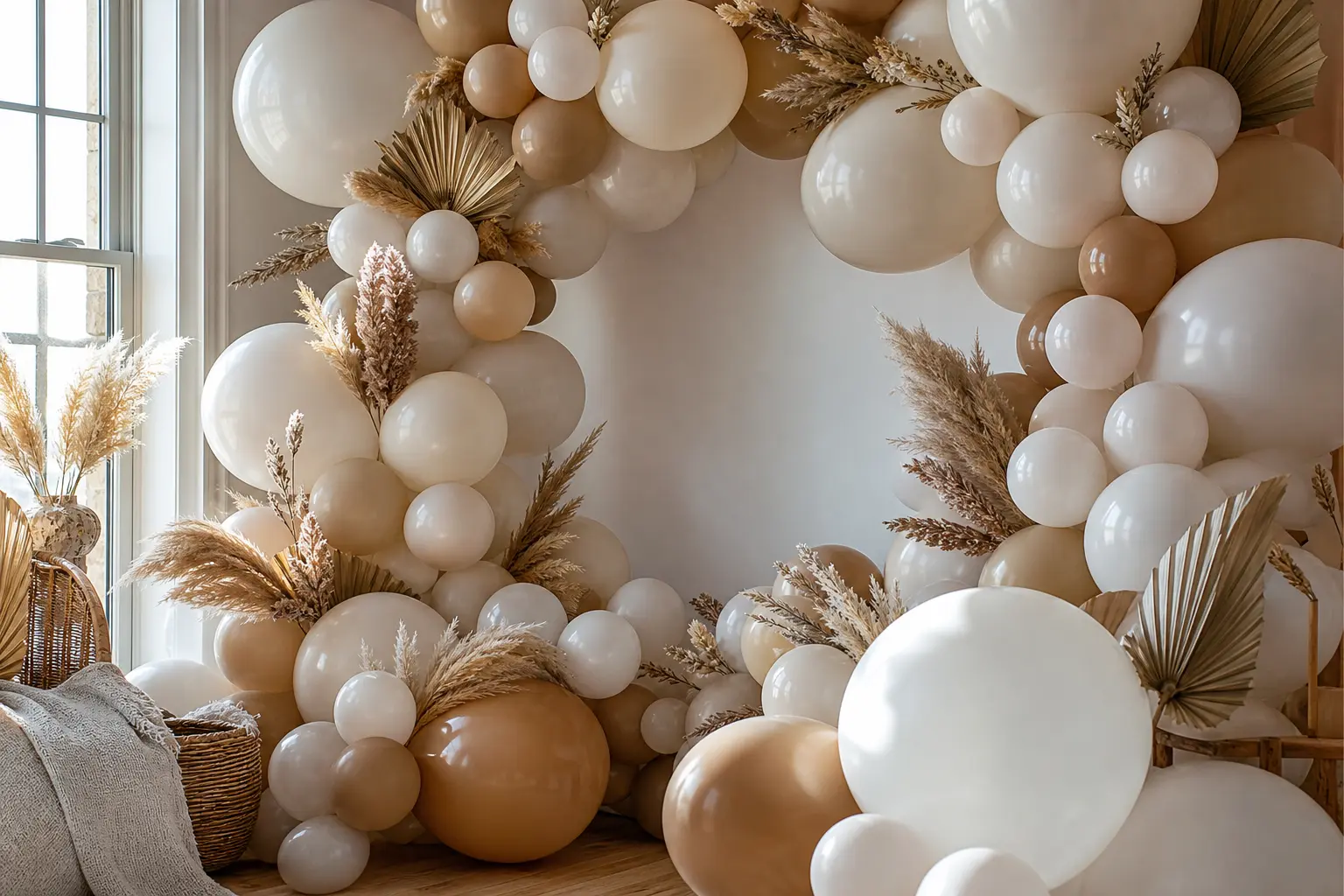
A gender reveal balloon garland is the backdrop every guest photographs, which means you need it built, styled and camera-ready before the moment anyone knows what colour it should be. Every layout here starts from a neutral base, cream, gold, white, sage, black, or a mix, and keeps exactly one slot open for the reveal colour to drop into at the last second.
Nothing here commits you to pink or blue in advance. If you want a deeper look at construction basics, the main balloon garland hub covers technique from start to finish. For ideas that pair well with the backdrop, 16 Gender Reveal Party Games to Build the Suspense is worth a read before the day.
The 17 layouts below are grouped by the type of neutral palette they use. Pick the one that matches your venue, build it the night before, and let the reveal do the rest.
This post contains affiliate links. If you buy through them, I may earn a small commission at no extra cost to you.
Cream and Gold Neutral Bases
Cream and gold read as celebratory without hinting at a gender. The warmth of gold against ivory balloons photographs beautifully in natural light and holds up equally well under Edison-bulb string lights indoors.
These garlands feel finished and intentional even before the reveal colour arrives. That matters when guests are photographing the room the moment they walk in.
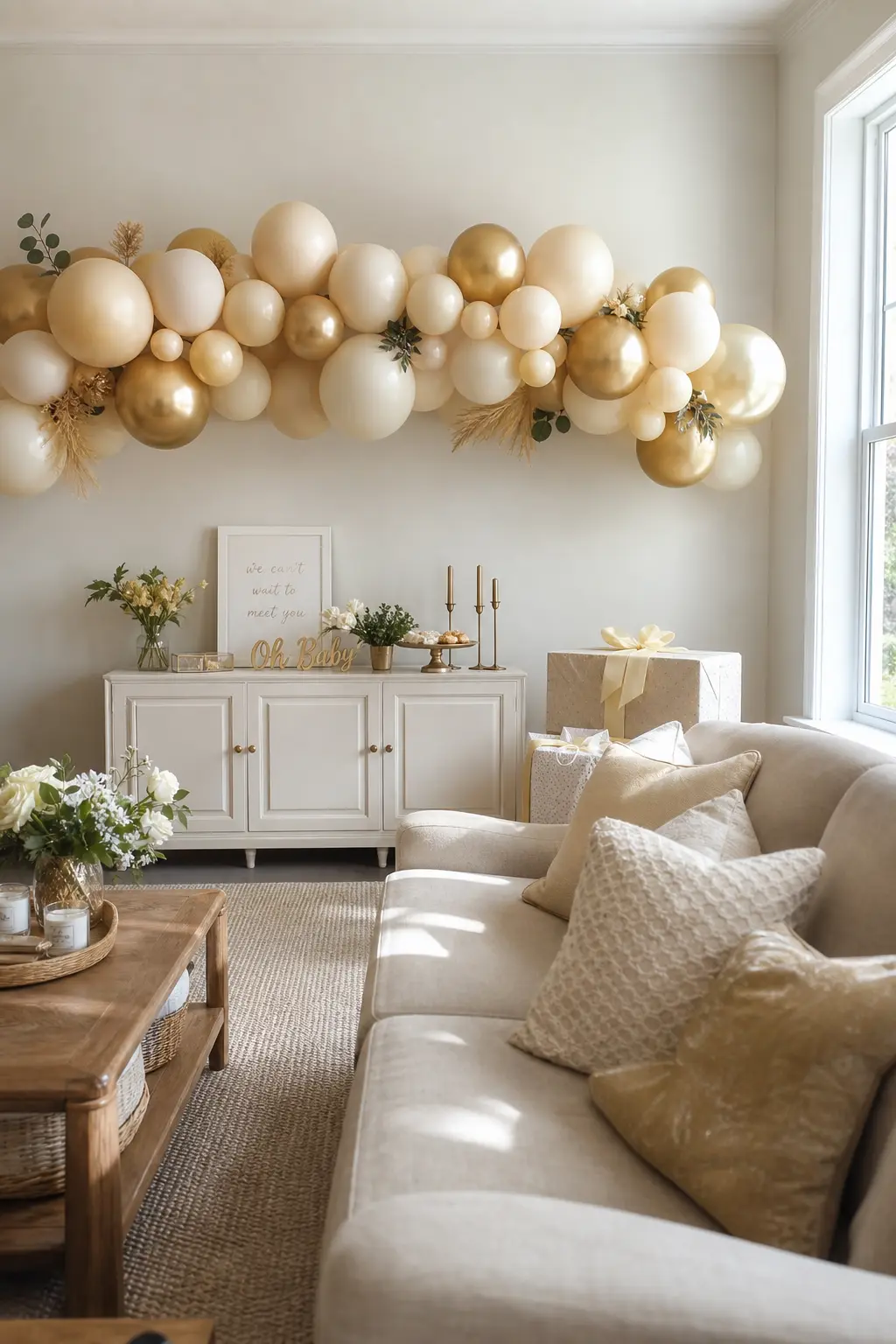
Cream and Gold Neutral Garland
A mix of ivory, cream and champagne balloons with gold chrome balloons scattered through at roughly one in five gives a garland that could live at a wedding, a baby shower or a reveal equally comfortably. Build the whole thing in advance. Nothing about the colour scheme tips the hand.
Use a balloon decorating strip for structure and attach gold ribbon tails at intervals so the garland has movement in photos. The reveal colour arrives as a single large balloon, a 36-inch sphere in pink or blue, placed at the centre after the moment.
🛍 Shopping guide
Garland in White and Gold
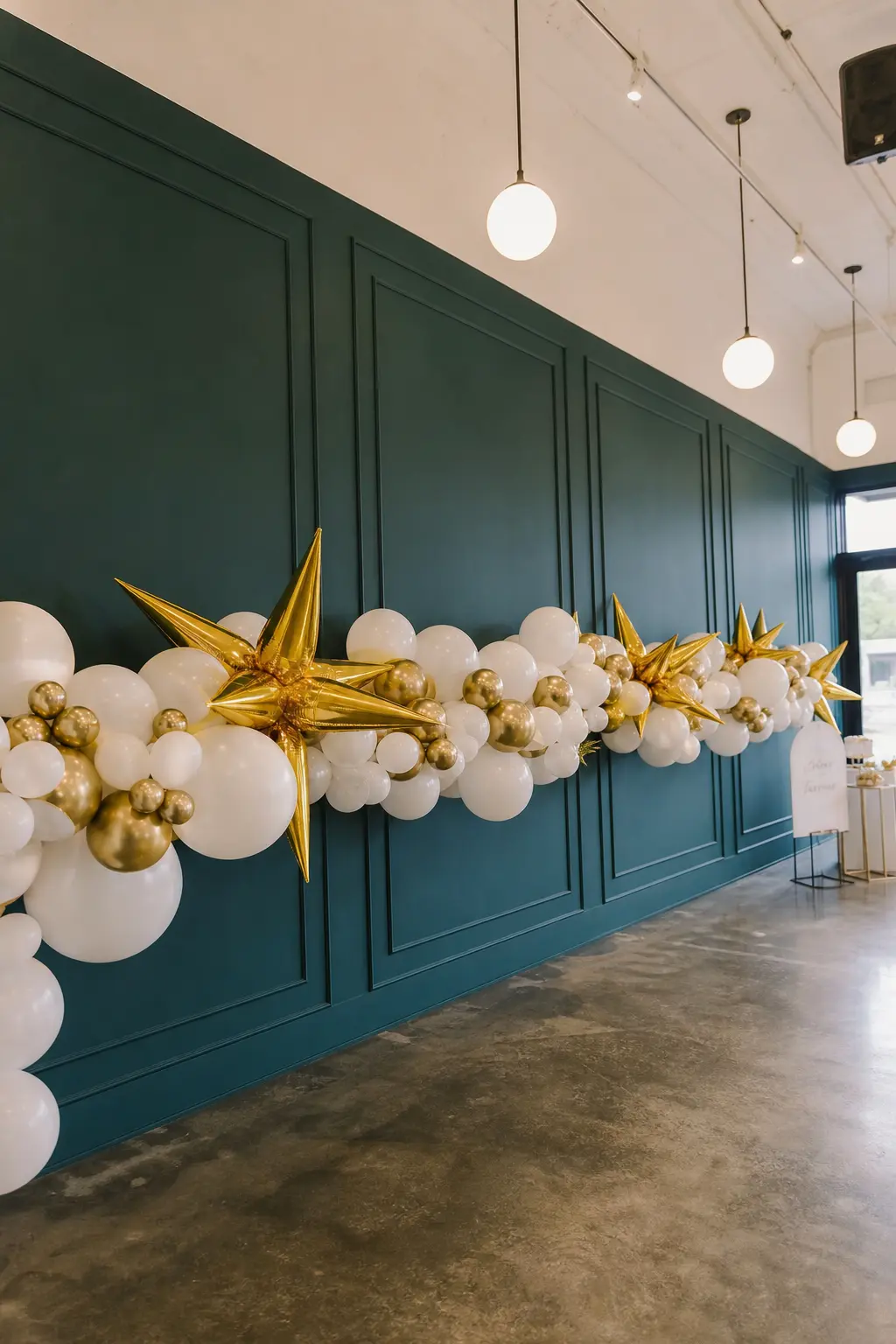
White and gold is more graphic than cream and gold: the contrast is higher and the look skews modern. Use a ratio of roughly three white balloons to one gold, with an occasional oversized gold foil balloon threaded through at intervals.
This palette works especially well against a dark accent wall or a deep green foliage backdrop, where it reads as editorial rather than generic party decor. The reveal colour lands as a foil number balloon, a large star, or a bouquet tied to the garland after the moment.
🛍 Shopping guide
Black, White and Monochrome Bases
A monochrome palette gives the reveal colour maximum contrast. Whether the final colour lands as pink or blue, it pops hard against black, white or a mix of both.
These layouts also suit venues with existing dark or industrial decor, where cream might wash out.
Elegant Black and Gold Neutral Garland
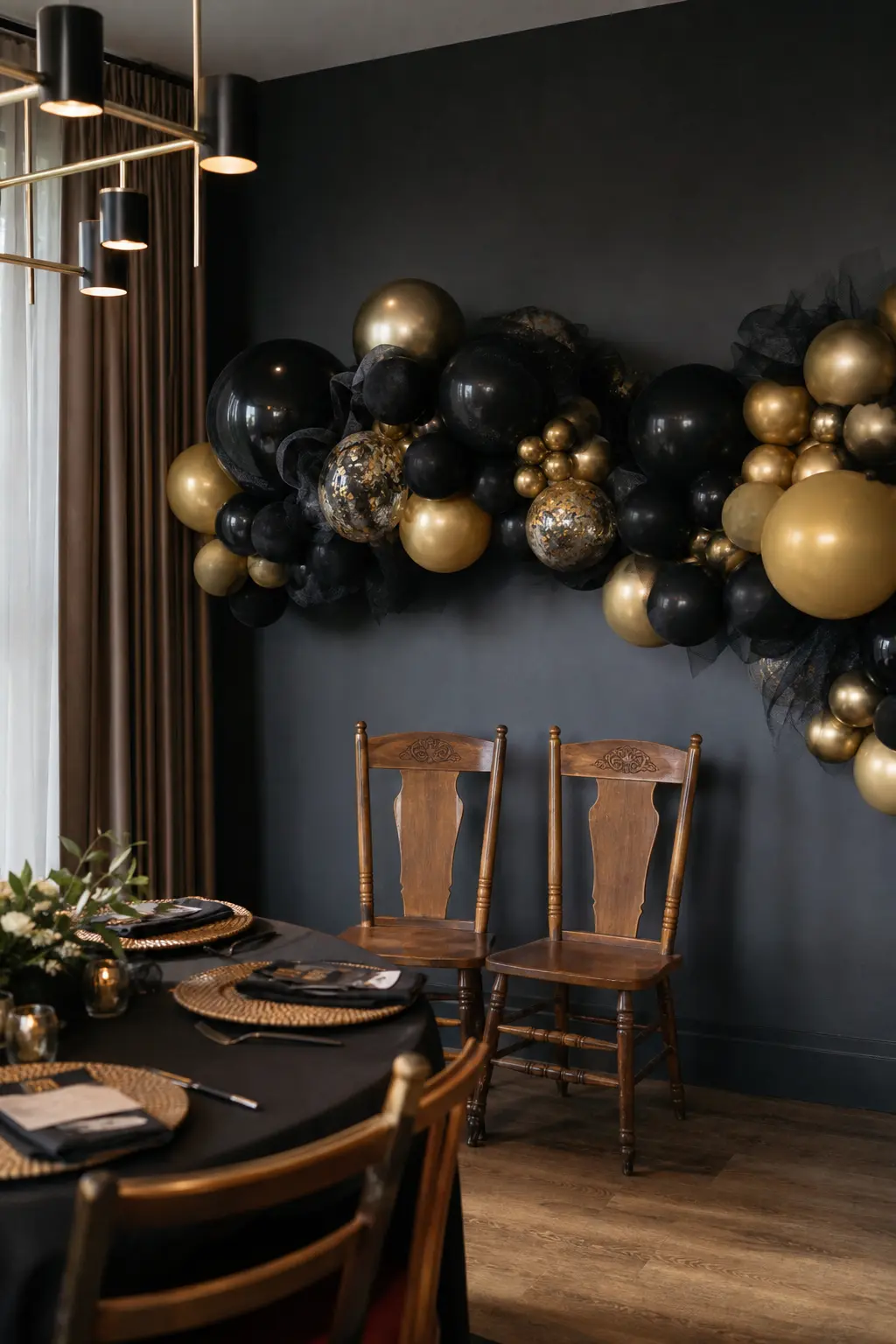
Black and gold is one of the few palettes that reads zero gender. It is also graphic enough that any reveal colour, bright pink or sky blue, will photograph with real contrast against it.
Mix matte black, black chrome and gold chrome balloons in a loose organic cluster shape. Keep white balloons out of this one entirely: the starkness of black and gold is the point. The reveal element can be a bouquet of latex balloons in the reveal colour held above the black-and-gold garland for photographs.
🛍 Shopping guide
White Garland
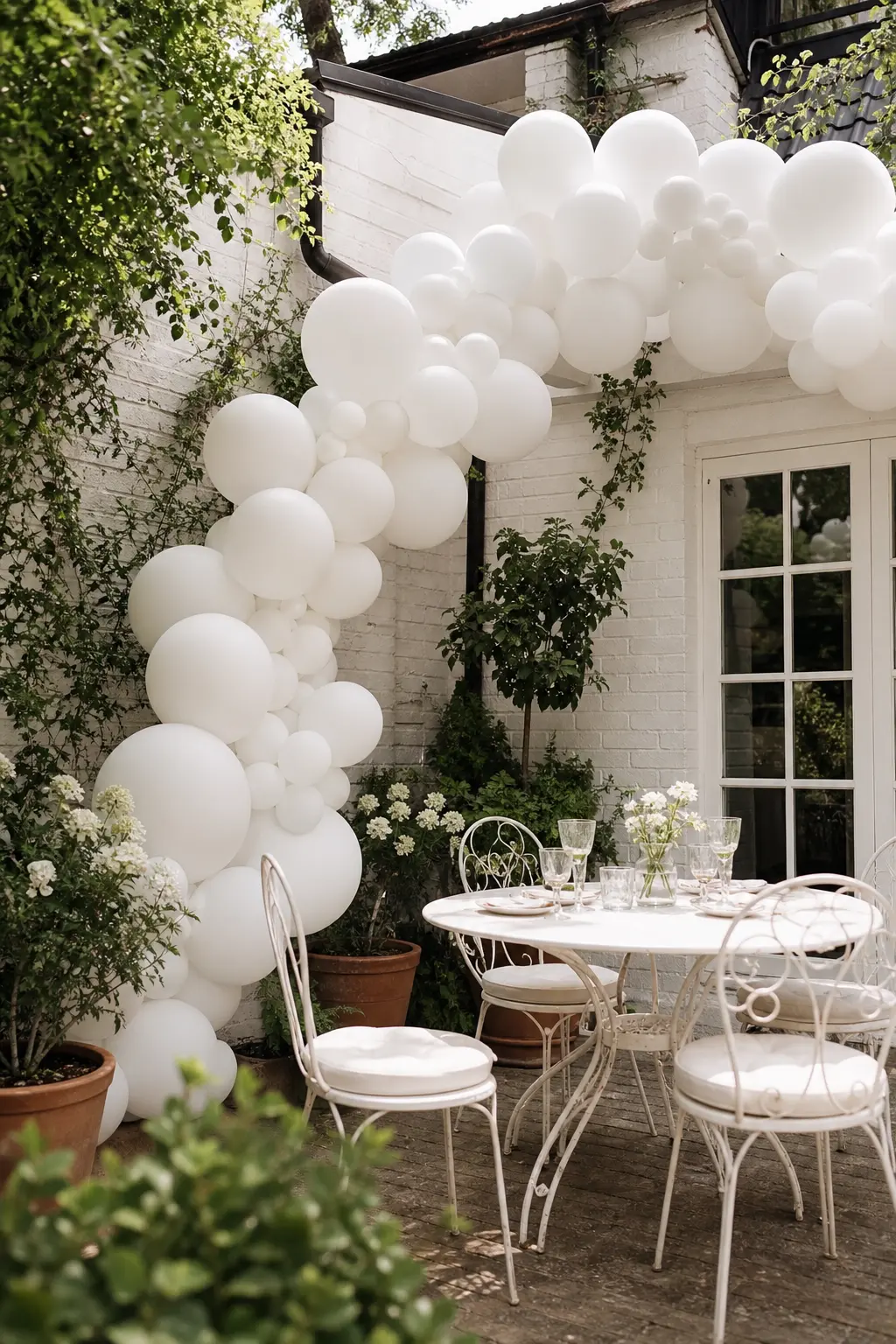
All-white is the ultimate blank canvas. A garland of pearl-finish and matte white balloons in two or three sizes hangs cleanly in any venue and costs very little to build.
Because white reads flat in photographs, add texture with white tissue pom-poms tucked between clusters and a strand of warm fairy lights behind the garland. When the reveal colour arrives, it is the only saturated thing in the frame, which makes for a strong photograph.
🛍 Shopping guide
Garlands Built Around a Gap
The smartest structural trick in this list is leaving a deliberate gap or a removable cluster. You build ninety percent of the garland, photograph it, and slot the reveal element in at the last possible moment.
For more structural approaches, how to make balloon garland walks through armature and attachment so the gap actually holds its shape.
Garland With One Gap for the Reveal Colour
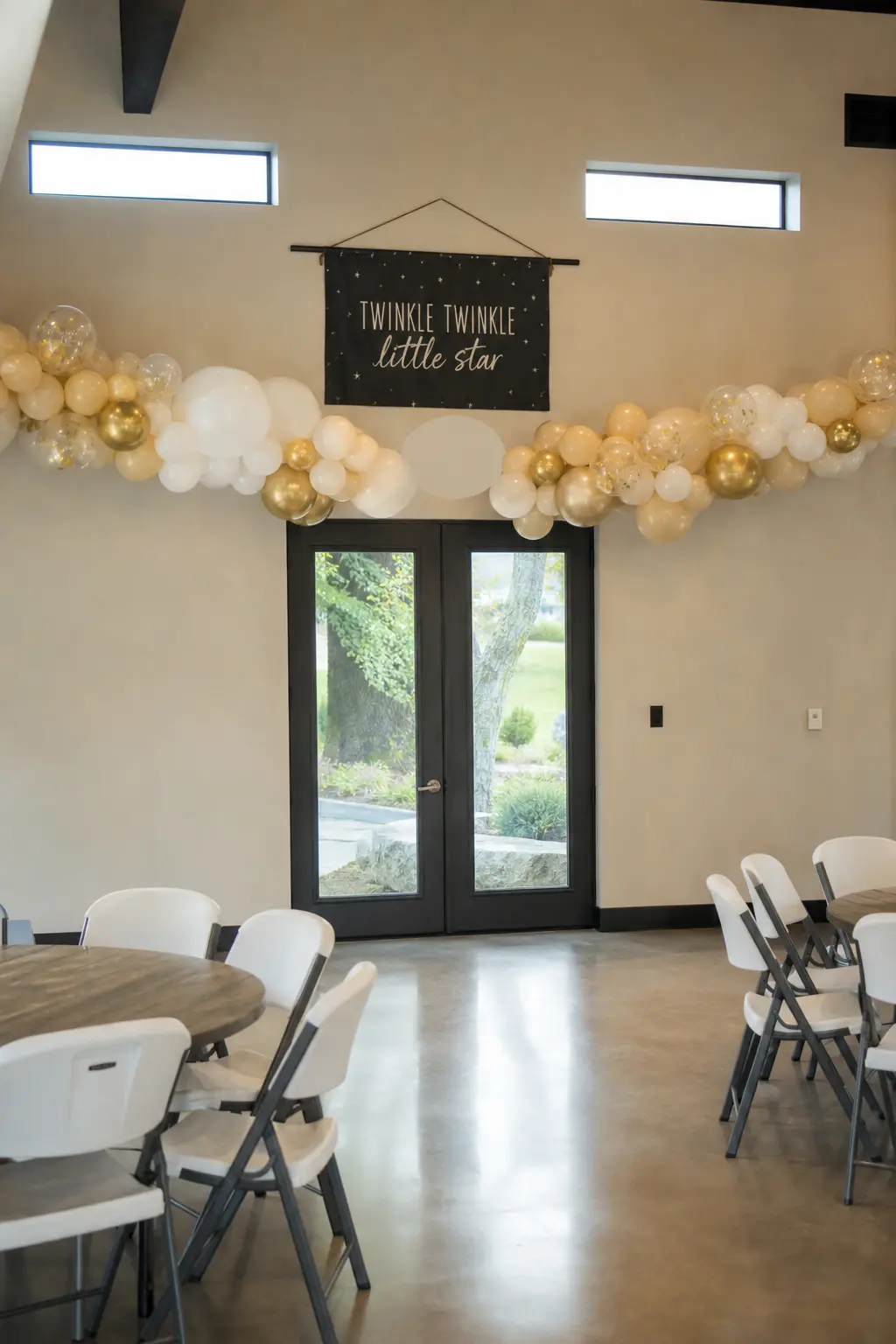
Build a full-length neutral garland and leave a deliberate oval gap at the centre, roughly the width of three or four standard balloons. Tie a small length of decorating strip across the gap so it does not sag. Photograph it as-is: the gap reads as an intentional design choice, not an error.
At the reveal, fill the gap with a cluster of pink or blue balloons already inflated and clipped together on a small strip. The whole swap takes under thirty seconds. For a structural reference on building around a gap, how to make balloon garland covers armature techniques that keep the shape stable.
🛍 Shopping guide
Two-Piece Garland, Neutral
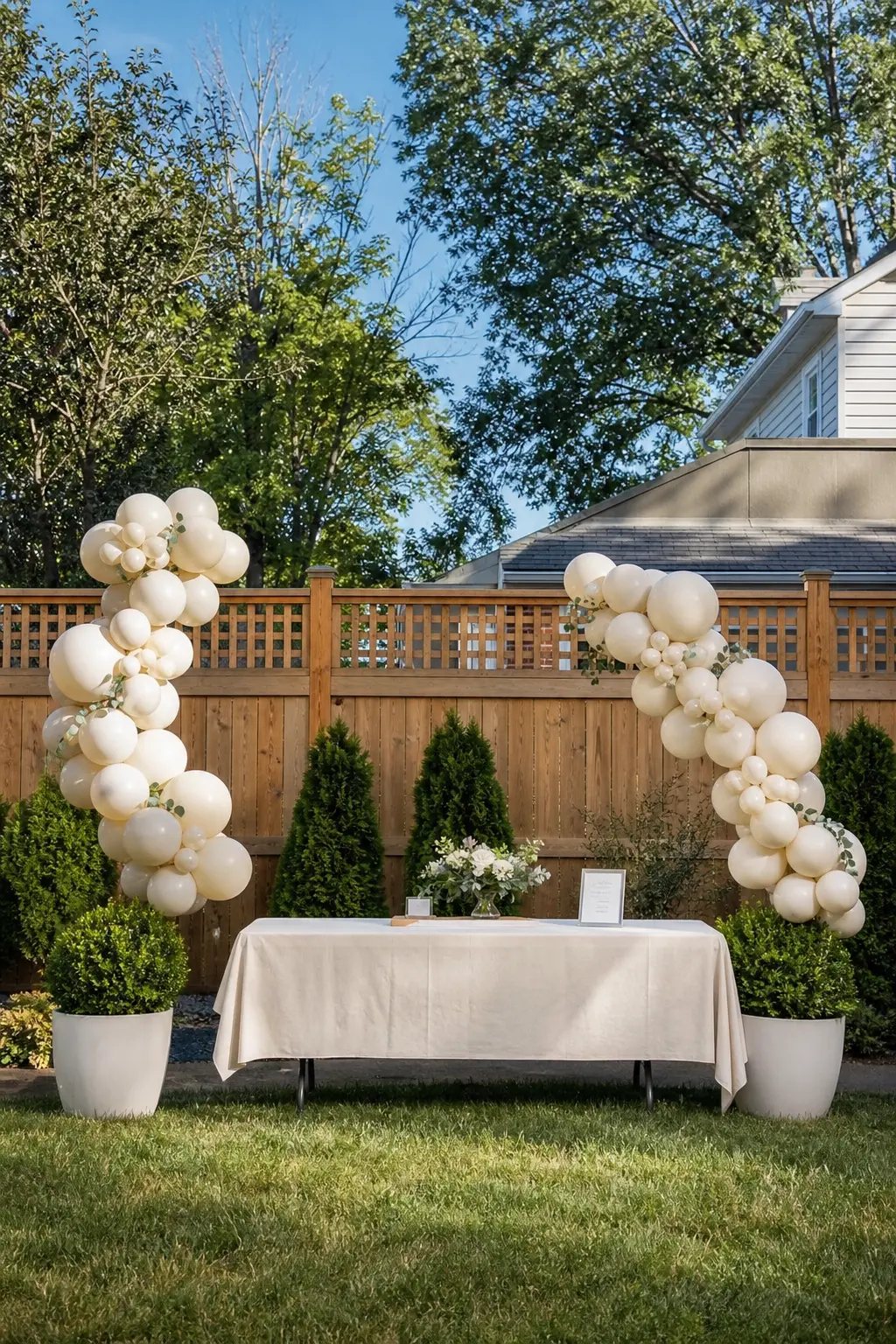
Build two separate garland sections of equal length, both in the same neutral palette. Hang them on either side of the reveal space with a gap between them large enough for a person to stand in. The gap is the reveal zone.
After the reveal, fill the gap with a third section already built in the reveal colour and hang it to complete the arch. Guests see the transformation happen in real time, which makes for a strong moment and an even stronger photograph.
🛍 Shopping guide
Garland With Removable Clusters
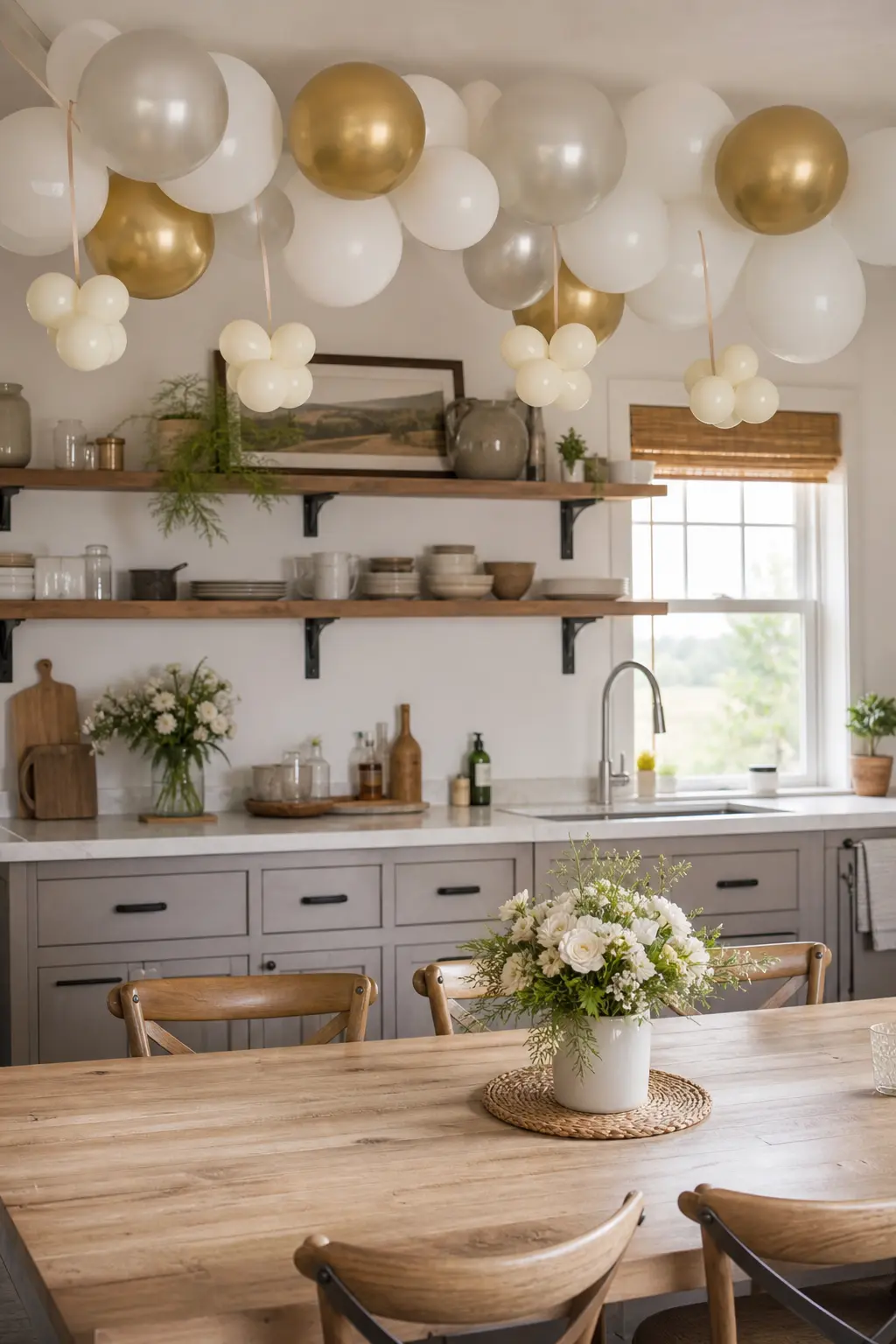
This one uses the neutral garland as a permanent base and attaches small four-balloon clusters with a loop of thin ribbon rather than threading them onto the strip. Any cluster can be unclipped and replaced in seconds.
Before the reveal, the swappable clusters are neutral. The moment the colour is known, you swap three or four of them for clusters in the reveal colour. The garland does not come down, guests notice the change, and the photograph shows the final version. A dusty blue balloon garland uses a similar modular cluster method if blue turns out to be the result.
🛍 Shopping guide
Garland With the Reveal Colour Hidden
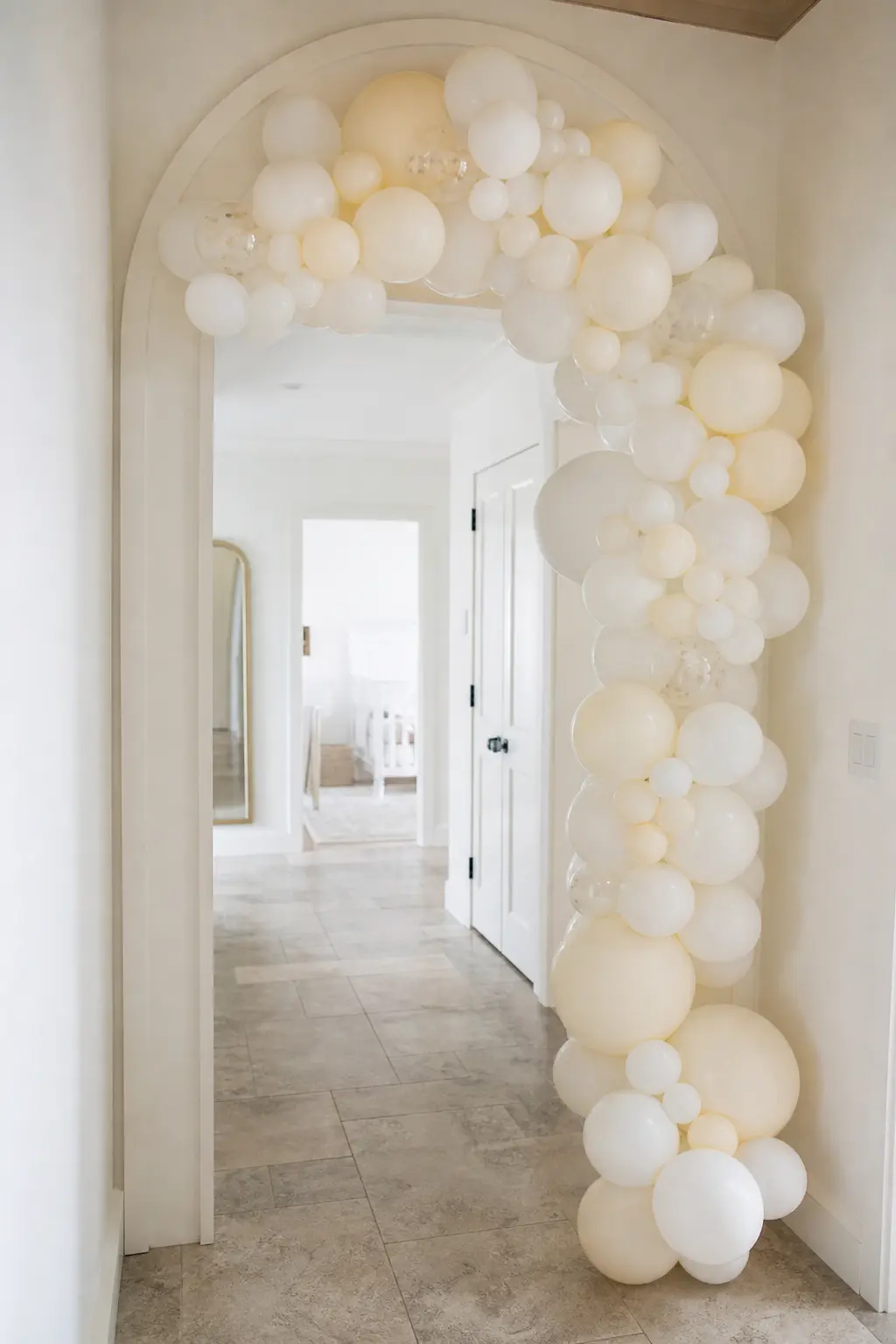
This version hides the reveal colour inside the garland structure itself. Confetti-filled clear balloons in the reveal colour sit tucked into the interior of the garland, facing inward, where they look clear from the front. Only when they are pulled forward and popped does the interior colour become visible.
The garland photographs as a neutral cream or white structure before the reveal. The hidden element is the reveal. Guests pull a balloon from the garland on cue and pop it to see the colour inside.
🛍 Shopping guide
Garlands That Need Zero Adjustment at the Reveal
Some palettes are simply colour-agnostic. A rainbow garland, a confetti-filled garland with mixed interior colours, or a sage-and-cream arrangement works regardless of the outcome and requires no last-minute changes at all.
These are the lowest-stress options if you are hosting solo or if the reveal itself will be chaotic enough without having to swap balloon clusters mid-party.
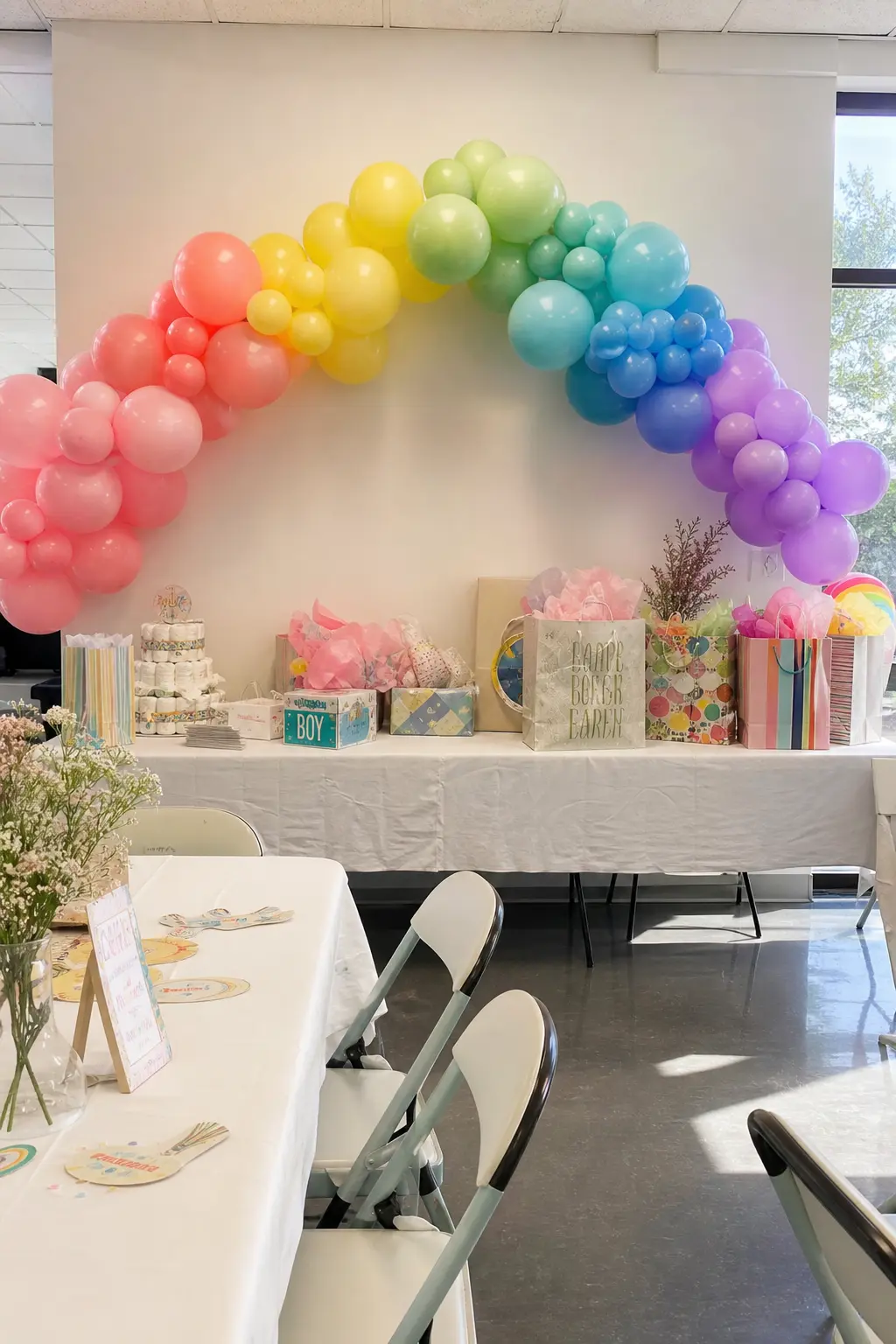
Rainbow Garland Needing No Adjustment
A full rainbow garland is the only layout in this list that genuinely does not care what the reveal colour is. Pink and blue are both already in it. Nothing needs to change, nothing needs to be added, and no one needs to stand by with a reserve cluster.
Use a classic ROYGBIV sequence or a pastel-toned version if the venue skews soft. The garland reads joyful and festive in every photograph taken before, during and after the reveal.
🛍 Shopping guide
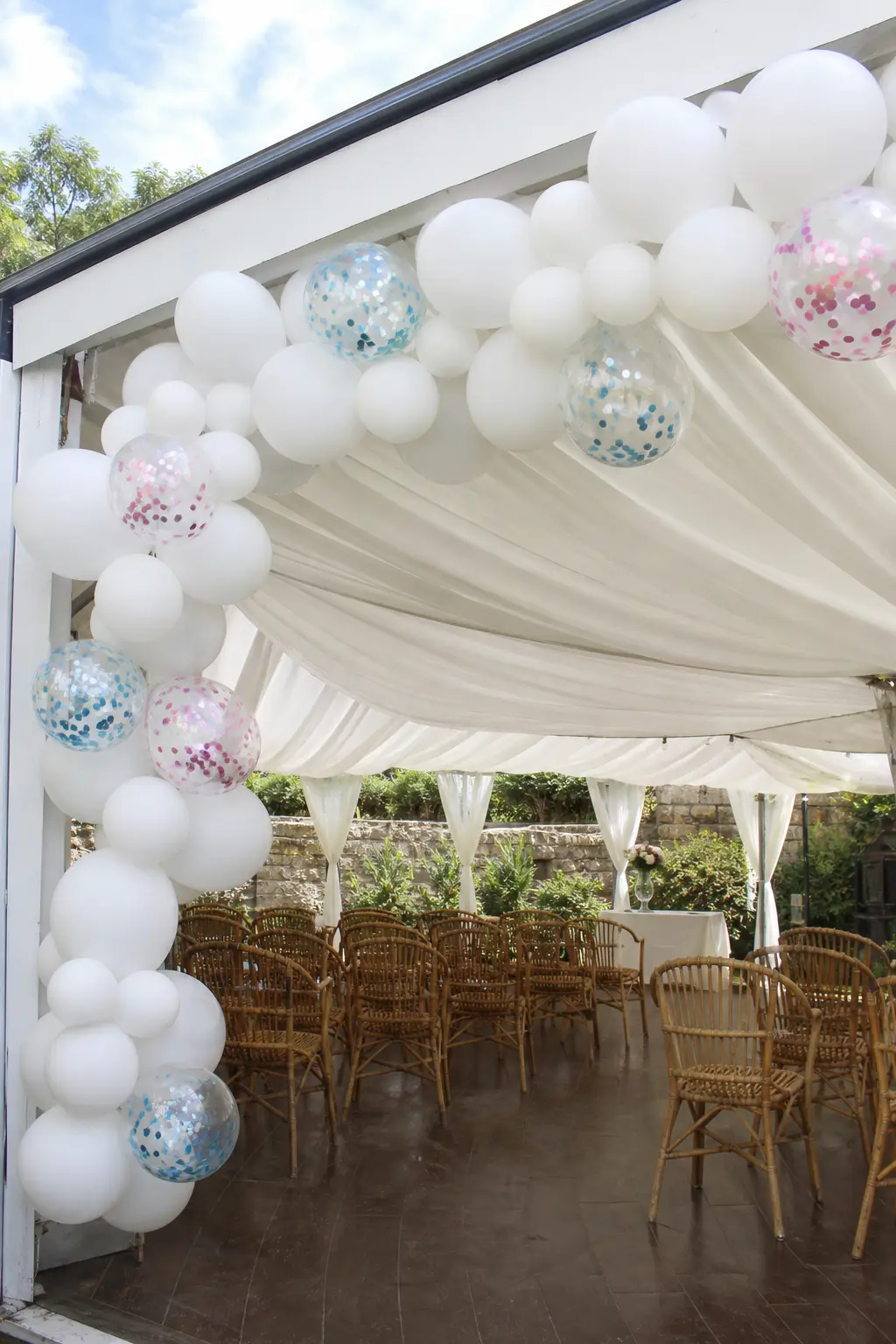
Garland With Confetti-Filled Balloons
Clear latex balloons filled with mixed pink and blue confetti are genuinely neutral: neither colour dominates from the outside. Thread them through a white or gold garland base at regular intervals and the result looks celebratory and reveal-ready without committing to either outcome.
When the reveal happens, the confetti balloons can be popped as part of the moment itself, releasing both colours at once. The garland stays up, the confetti creates the photo, and the base remains intact for the rest of the party.
🛍 Shopping guide
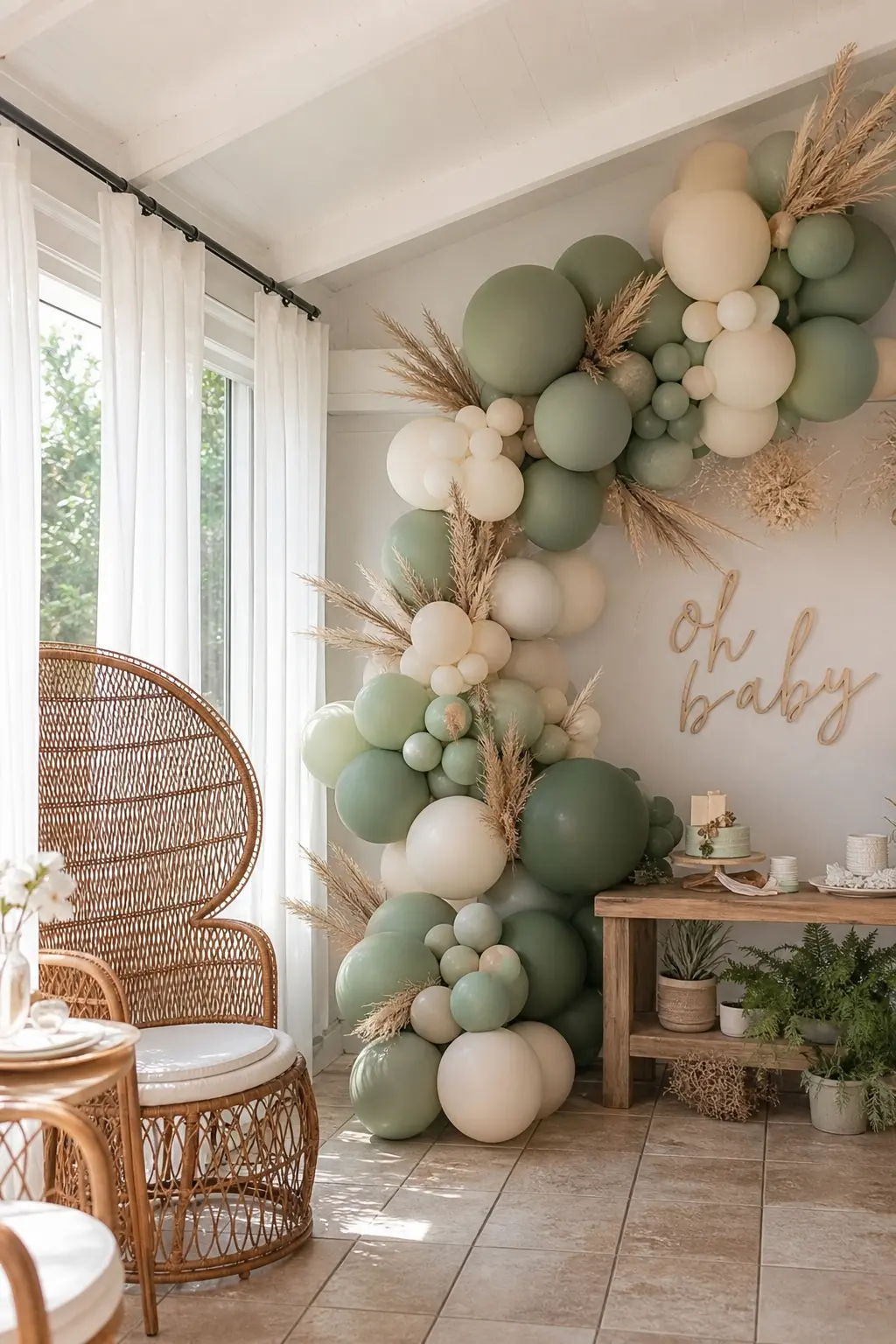
Neutral Sage and Cream Garland
Sage green and cream together are about as far from pink-or-blue as a palette can get. The combination reads botanical, grown-up and current without any seasonal association. It also photographs well in both natural and artificial light.
Use sage matte, cream matte and white chrome in a loose organic cluster arrangement. Tuck in a few dried pampas grass stems between clusters for texture. The garland looks complete without any reveal element at all, which makes it perfect for a host who wants the backdrop to photograph well before guests arrive.
🛍 Shopping guide
Fully Neutral Garland Photographed
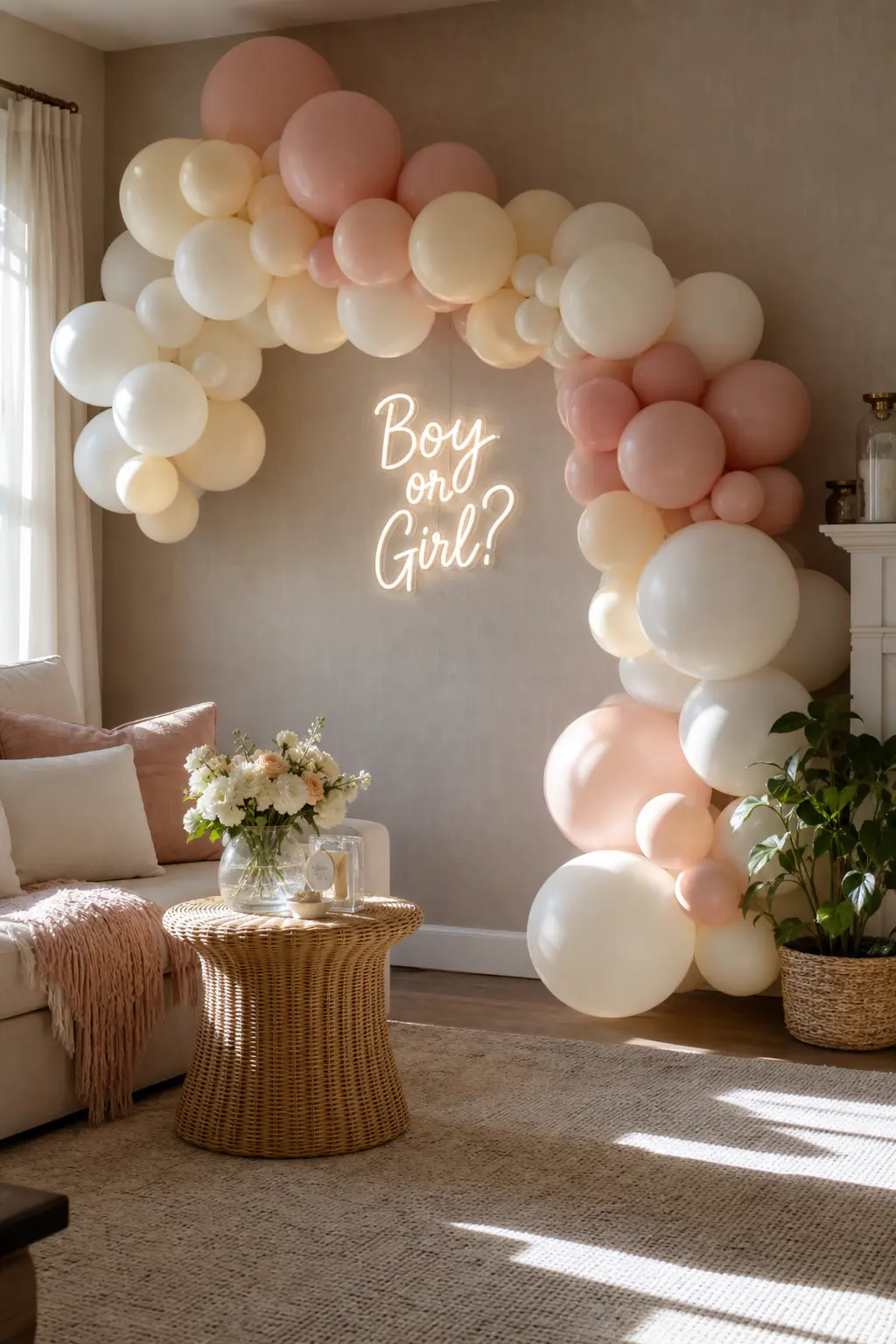
Some hosts want a garland that serves only as a photogenic backdrop and does not interact with the reveal at all. A fully neutral garland in cream, white and dusty rose (which is pale enough to read as skin-tone rather than pink) does exactly that.
Build it for the photograph. Style it with a neon sign or a letter board in front of it. Let the reveal happen elsewhere in the room. The garland stays clean in every image taken before and after. For a version in a specific muted blue-neutral, dusty blue balloon garland shows how pale blue reads as neutral in photographs.
🛍 Shopping guide
Garlands That Frame a Prop
When the reveal device, a box, a cannon, a curtain, is the centrepiece, the garland functions as a frame rather than the star. Neutral tones keep attention on the prop rather than competing with it.
If you are working with a small footprint, small balloon garland has scaled-down frame layouts that fit a six-foot wall section.
Garland Framing a Reveal Box or Cannon
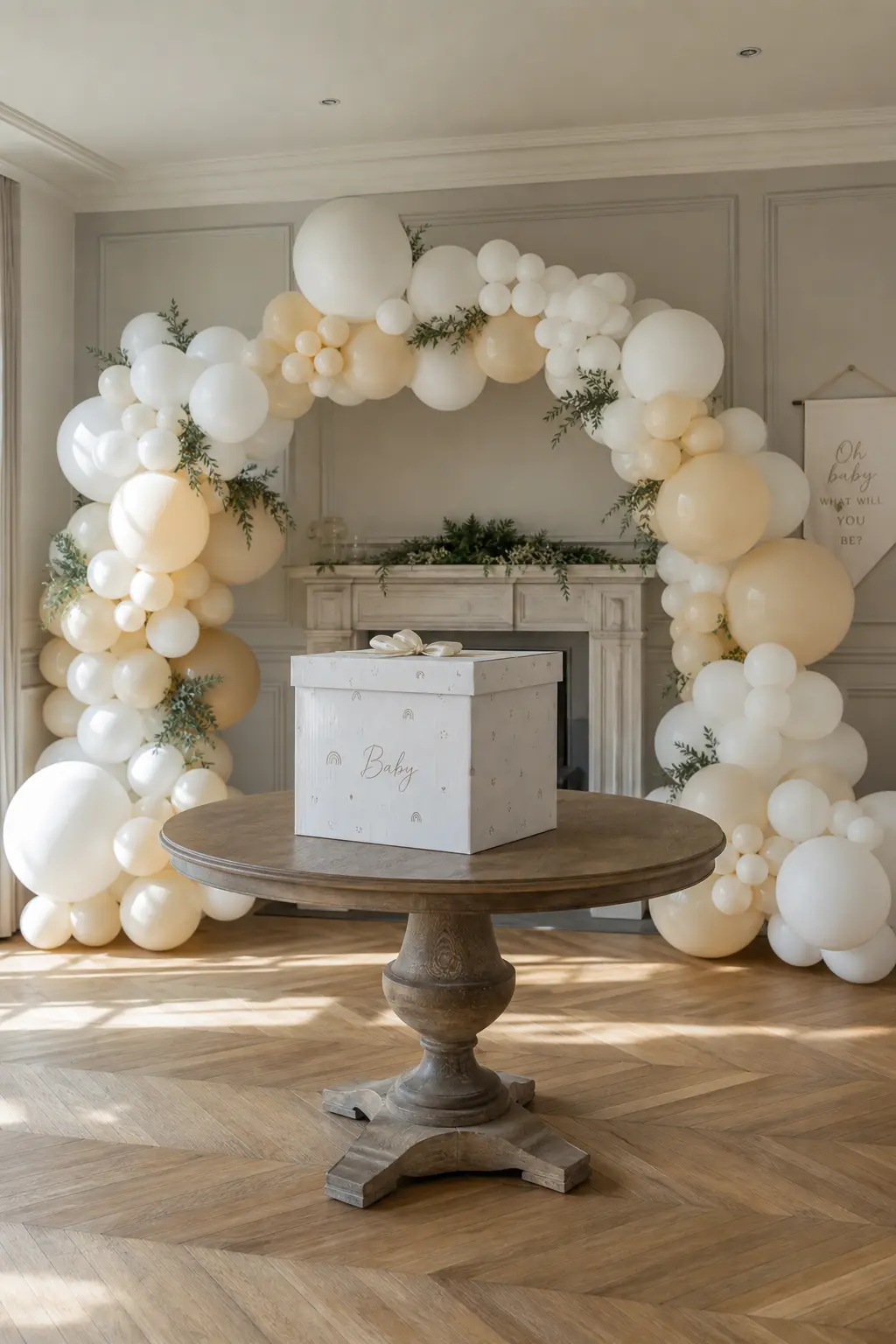
When the reveal device is a box or a confetti cannon, the garland serves as a frame behind it rather than the main event. Build a horseshoe or arch shape in cream, white and gold that sits behind the table where the box will be placed.
Keep the garland proportional to the prop, not bigger than it, so the focus of every photograph stays on the box and the moment of opening. The garland provides structure and colour without competing. For more arch-proportion ideas, balloon garland backdrop covers sizing against a table setup.
🛍 Shopping guide
Two-Tone Garland
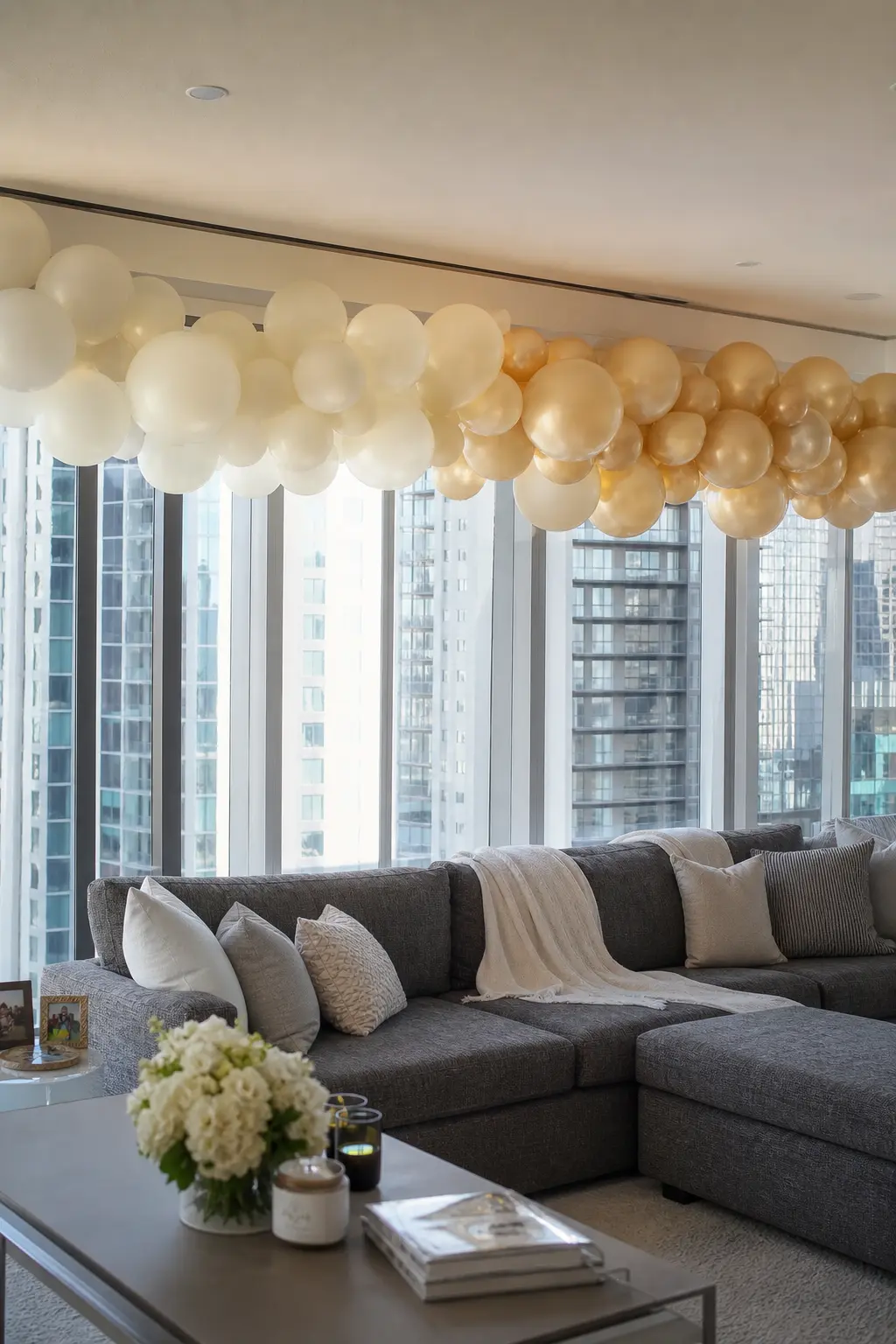
A two-tone garland splits into two colour bands along its length, one cream and one white, or one champagne and one ivory, creating a subtle ombre or block-colour effect. The tonal shift reads as intentional design, and neither tone names a gender.
The structural interest of two distinct zones means the garland holds up as a backdrop on its own merit. The reveal colour can arrive as a single large foil number balloon clipped to the join point between the two zones.
🛍 Shopping guide
Two-Stage and Split Garland Structures
A two-stage garland is built in two physically separate sections. You display the neutral section for the party, then add or reveal the second section at the moment of the reveal. The split-by-curtain version uses fabric to conceal one half entirely until the right second.
These take slightly more rigging but produce the most dramatic reveal photograph. For backdrop construction that supports a two-part structure, balloon garland backdrop covers the frame options worth using.
Garland Split by a Curtain
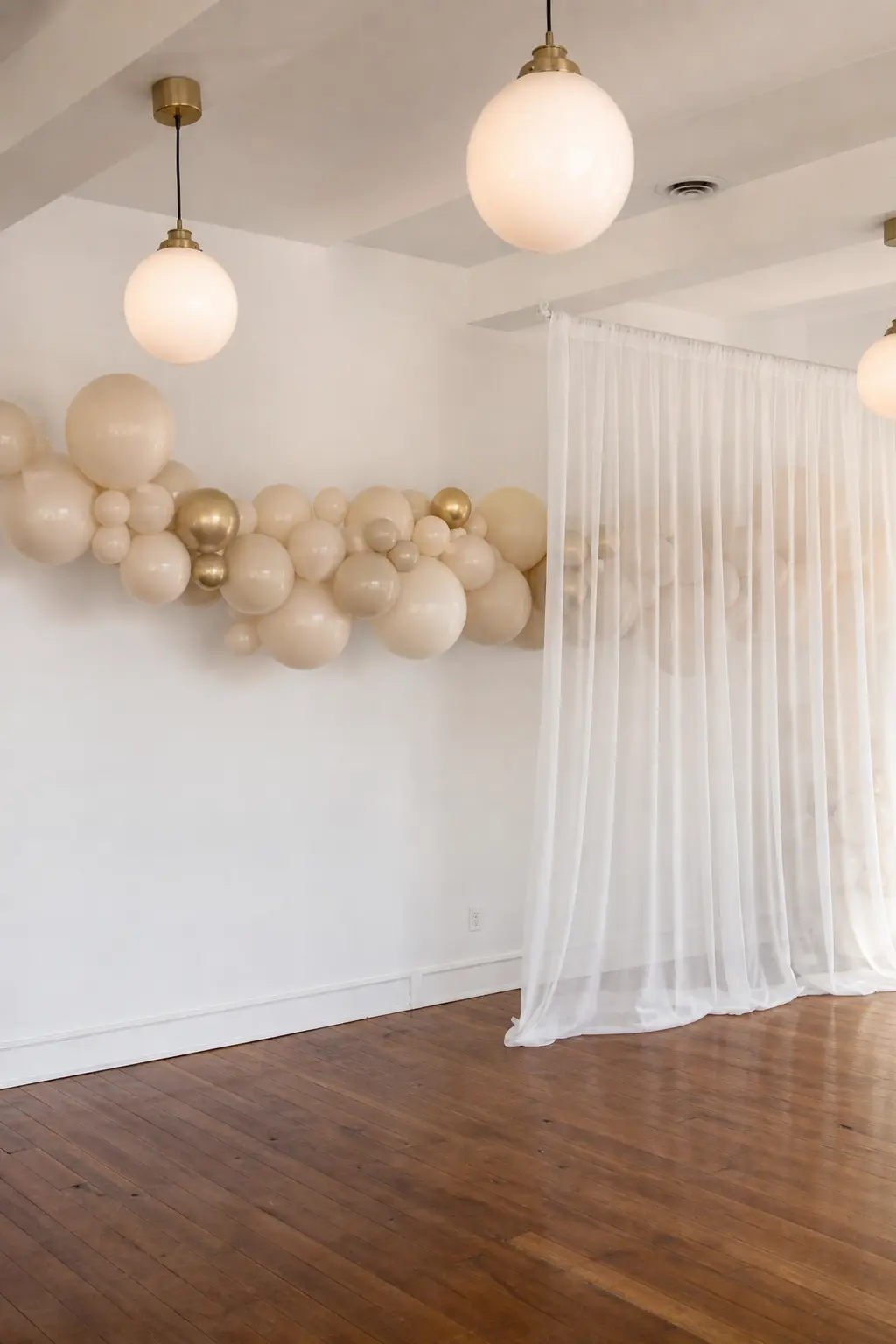
Hang a sheer or opaque curtain vertically down the centre of the garland. The left half of the garland is visible and neutral. The right half is concealed behind the curtain and already built in the reveal colour.
At the moment of the reveal, someone pulls the curtain aside and the reveal half is visible. The garland was fully complete the whole time. There is no inflation, no swapping, no delay. The photograph captures the two halves together in the same frame.
🛍 Shopping guide
Garland Where the Clusters Hold the Reveal
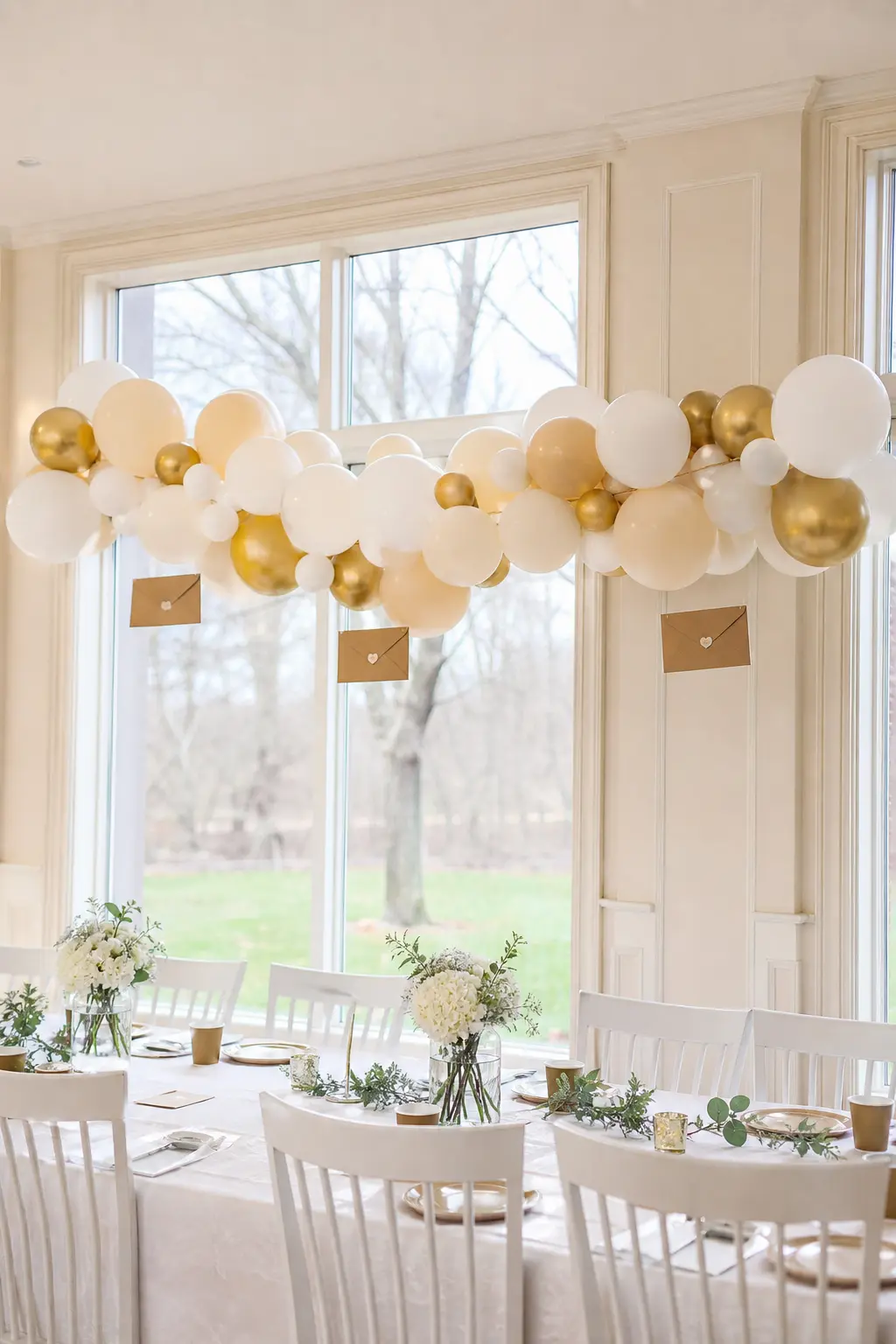
Build the garland base in white and gold. Attach sealed kraft-paper envelopes to the garland at three or four points. Each envelope holds a small cluster of the reveal-colour balloons, folded flat. Guests open the envelopes on cue, pull out the balloons, inflate them with a hand pump and attach them to the garland in front of everyone.
The garland transforms in real time, which turns the inflation itself into the reveal moment. The photograph taken thirty seconds later shows the finished garland with the reveal colour in it, and every guest is in motion around it.
🛍 Shopping guide
Two-Stage Garland, Plain
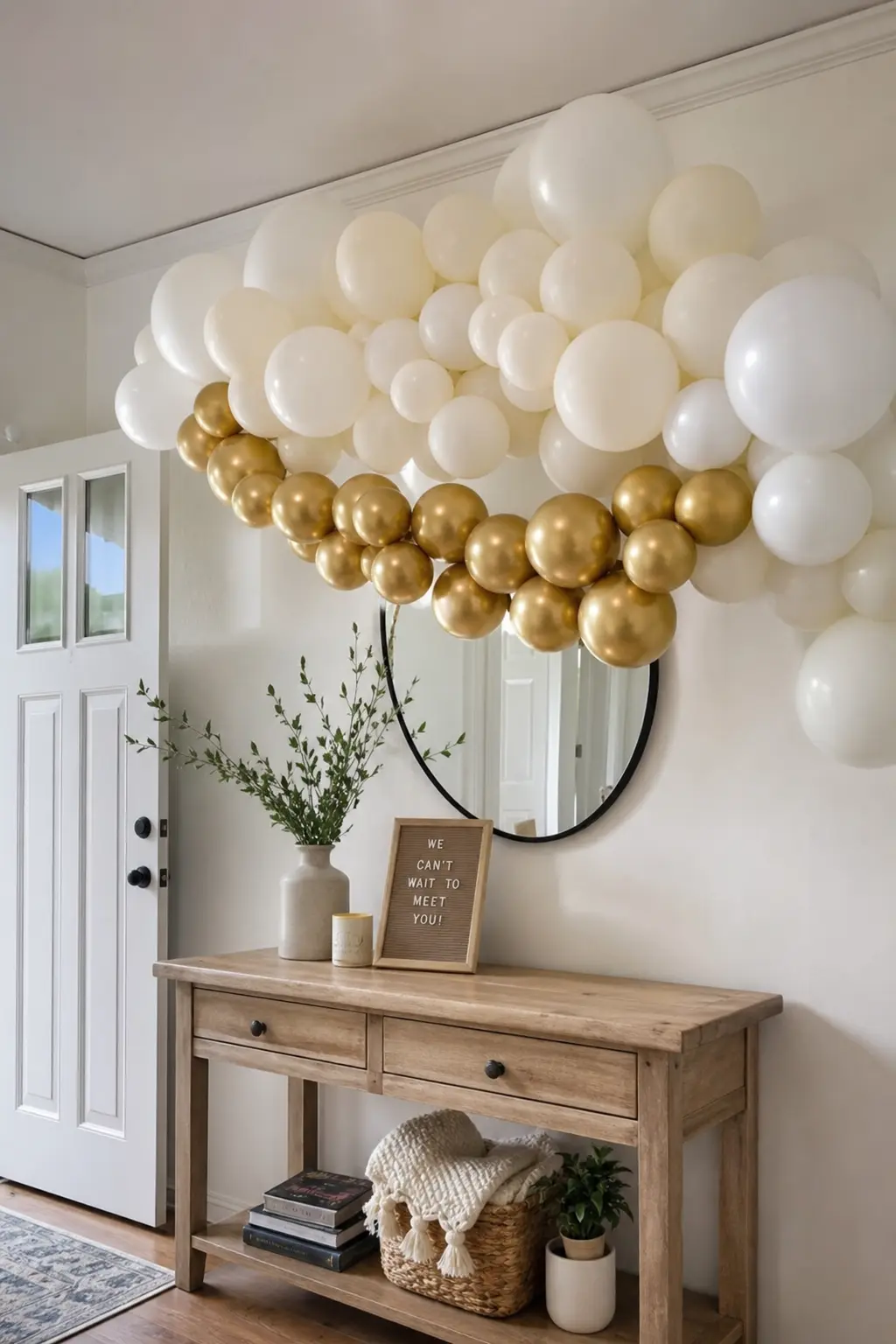
Stage one is a complete, photographable neutral garland that goes up the night before and greets guests at arrival. Stage two is a second, shorter garland in the reveal colour that is stored in a box until the reveal moment, then layered directly in front of the first one on the same hooks.
The neutral garland becomes the background layer, the reveal garland the foreground. The combined effect is richer than either alone, and the transition from stage one to stage two is visible and immediate. For a deeper look at layering and small balloon garland techniques that work at stage-two scale, that guide covers compact builds built to layer.
🛍 Shopping guide
Gender Reveal Balloon Garland: Pulling It Together
That means less panic on the day, a cleaner timeline and a backdrop that looks deliberate rather than hurried.
Order neutral balloons first and hold back on the reveal colour until you know it, or buy a small bundle of both pink and blue and use whichever one you need. A baby shower balloon arch uses the same neutral-first logic and can share supplies if you are combining events. For a coordinated reveal keepsake that also skips gendered assumptions early, 12 Gender-Neutral First Birthday Invitation Ideas shows how that palette carries forward after the party.
Build the garland the night before. Sleep. Let the reveal be the surprise it is supposed to be.
Frequently Asked Questions
How many balloons do you need for a garland?
A five-foot garland uses roughly 30 to 40 balloons when you mix 11-inch and 5-inch sizes. A ten-foot garland needs 60 to 80. Always buy ten percent more than the calculation suggests: a few will pop during inflation or look uneven once attached and need replacing.
What size balloons go in a balloon garland?
Most garlands use a mix of 11-inch balloons as the main volume, 5-inch balloons to fill gaps, and occasional 18-inch or 24-inch balloons as accent pieces. Using at least two sizes creates the organic, clustered look. Using only one size produces a flat, uniform result that reads as less professional.
How long does a DIY balloon garland last?
An air-filled latex garland indoors lasts 12 to 24 hours at comfortable room temperature before balloons begin to shrink noticeably. Helium-filled latex lasts 8 to 12 hours. Building the garland the evening before the party and keeping the room cool overnight is the standard approach for a reveal event.
Can you make a balloon garland without a balloon strip?
Yes. You can thread balloons onto a length of fishing line by piercing the tied knot with a needle, or hot-glue clusters directly to a rope or wire frame. A decorating strip is faster and produces a more even result, but it is not essential. Both methods work for a gender reveal garland where you need modular sections that can be added or swapped.
13 bridal shower ideas covering themes, decor, balloon arches, centerpieces and gifts, grouped so yo
30 simple gender reveal ideas for home, no big party needed: balloon boxes, colored cake, scratch ca
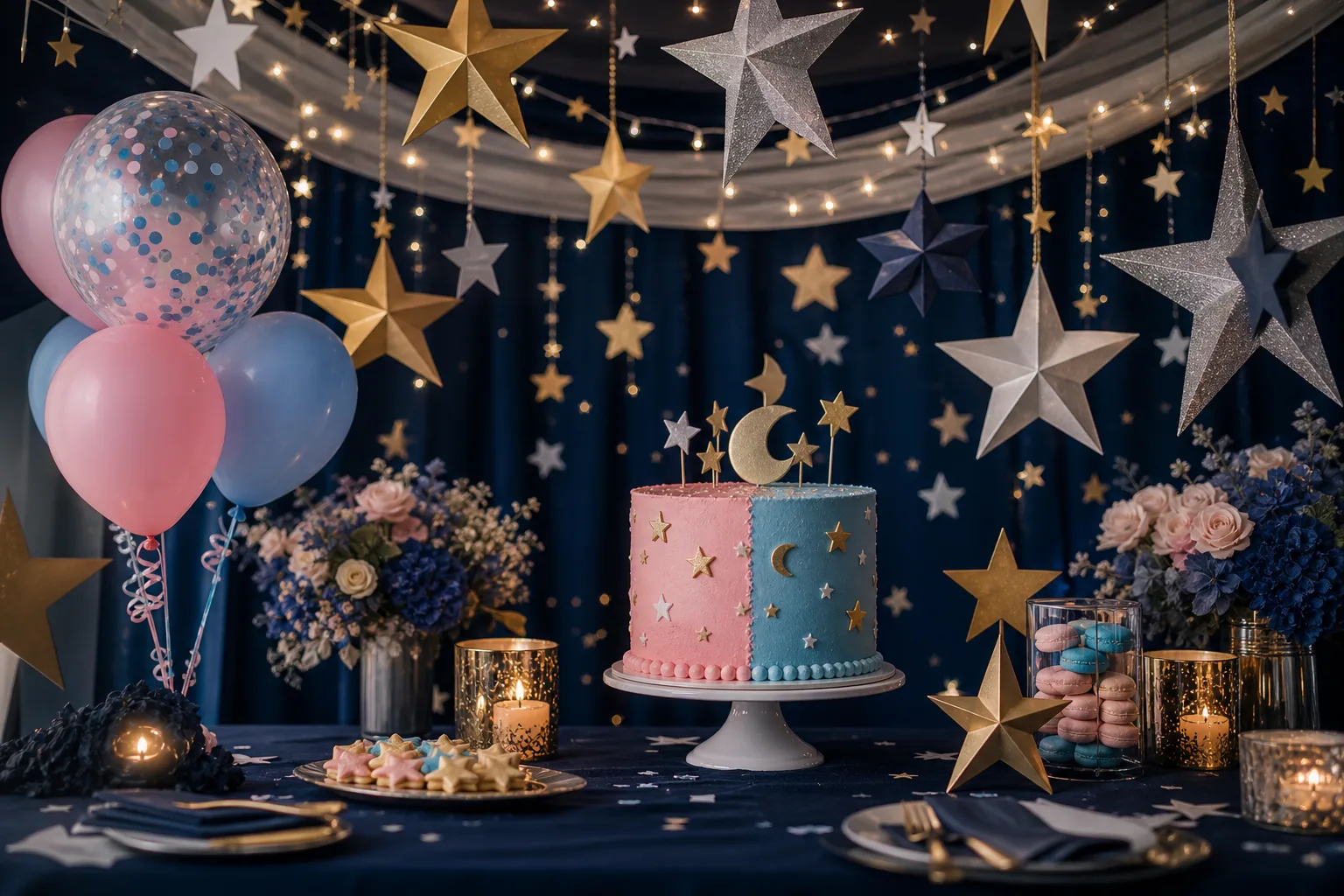
18 twinkle twinkle gender reveal ideas, from the night sky backdrop and giant star balloon to the mo
Leave a Reply