

25 DIY Christmas Decorations Crochet Beginners Can Finish in One Sitting
Every piece of diy christmas decorations crochet on this list is finished in a single sitting, worked flat or in a short round, and uses nothing beyond a chain and a double crochet. If you have started and quietly shelved two blankets, this is your reset. Nothing here asks you to count beyond a magic ring and a handful of rows.
The list runs from the smallest stitch count to the largest, so you can pick your energy level before you even reach for the hook. Palette is cream, oxblood, hunter green, camel and twilight blue: mix two of those on any project and it already looks considered. For more general inspiration, browse the full guide to christmas decor and christmas crafts for adults.
Each entry names the stitch pattern rather than writing it out in full, because you do not need a pattern book, you need a prompt. Grab a 4mm or 5mm hook, a small ball of DK or aran, and give yourself an afternoon.
This post contains affiliate links. If you buy through them, I may earn a small commission at no extra cost to you.
Quick Ornaments and Hangings
These six pieces are all finished in under twenty minutes and weigh almost nothing on the tree. They work in any yarn you already own, so reach into the stash before buying anything new.
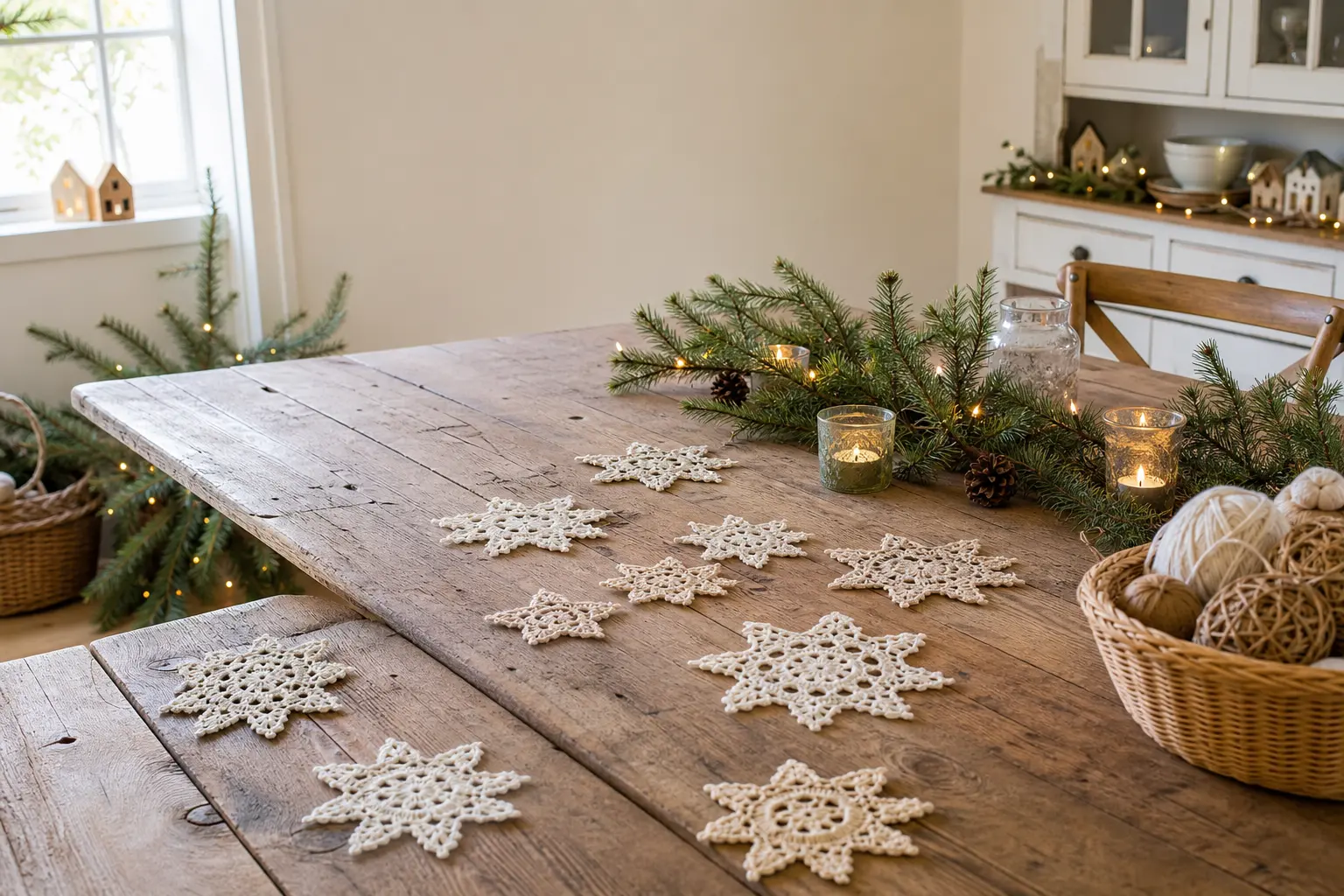
A Flat Snowflake in One Round
The starburst stitch pattern worked in one round into a magic ring gives you a six-pointed snowflake with no seams and no second pass. Pull the magic ring tight, work six clusters, fasten off. Total stitch count sits under thirty.
Work it in cream DK on a 3.5mm hook, stiffen with a light spray of sugar water, and pin flat to dry. It goes straight onto the tree or ties into a garland with a length of baker’s twine.
A Small Star Worked Flat
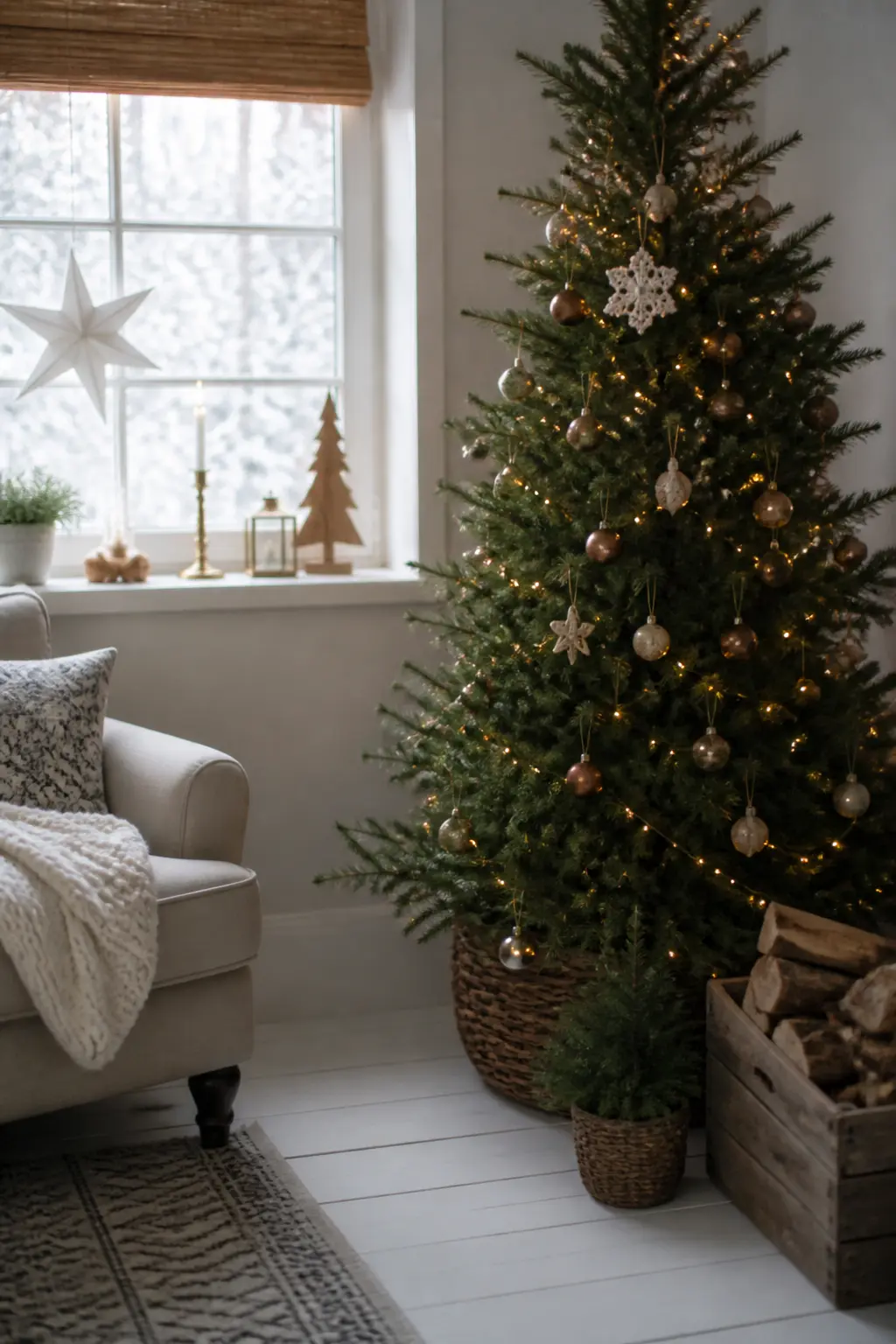
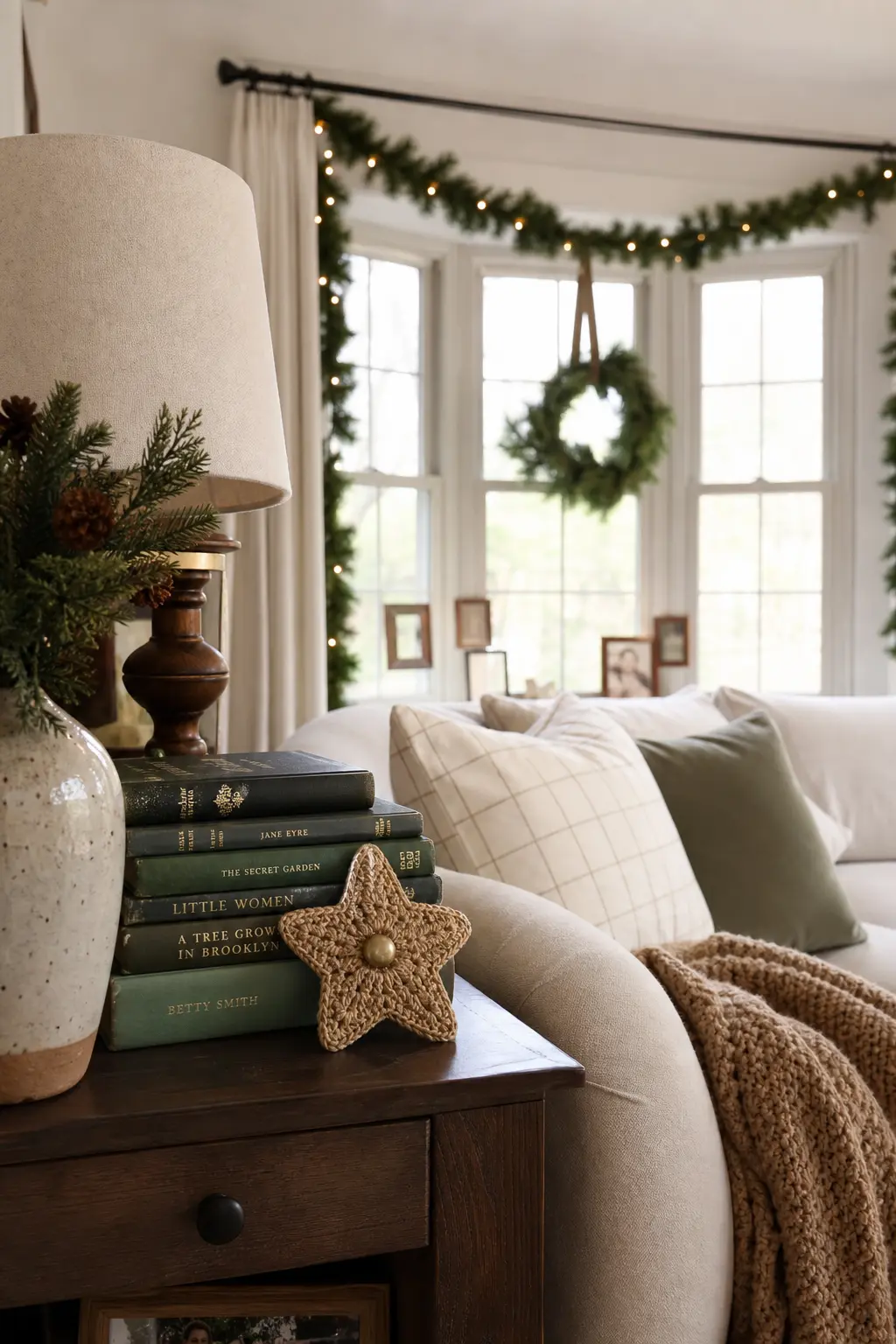
Five rows of increasing then decreasing double crochet build a five-pointed star entirely in flat rows, no magic ring needed. The crochet star in rows pattern is beginner-friendly and finishes in one colour with a single tail to weave in.
Work it in camel aran on a 5mm hook for a warm, vintage-looking topper or tree ornament. A small button sewn to the centre adds a decorative dot without any extra crochet.
A Bauble Cover Over a Plain Ball
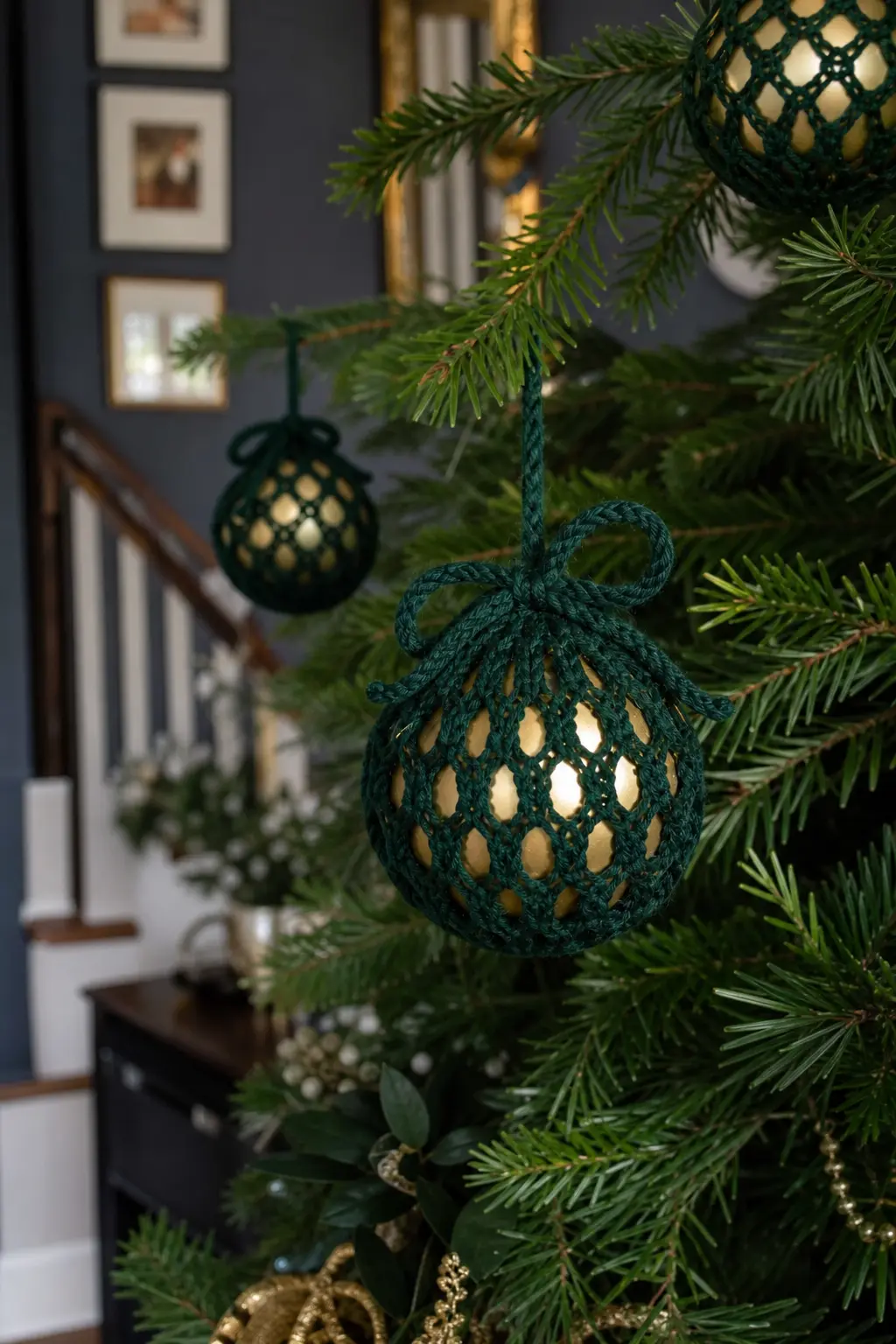
The crochet mesh stitch worked in the round slips over a plain glass or polystyrene bauble and is tied at the top with a yarn bow. Work in two colours, changing every round, so the mesh shows the bauble colour through the gaps.
Hunter green mesh over a gold bauble reads traditional; twilight blue mesh over a white ball reads modern. Neither requires counting beyond six stitches per round.
🛍 Shopping guide
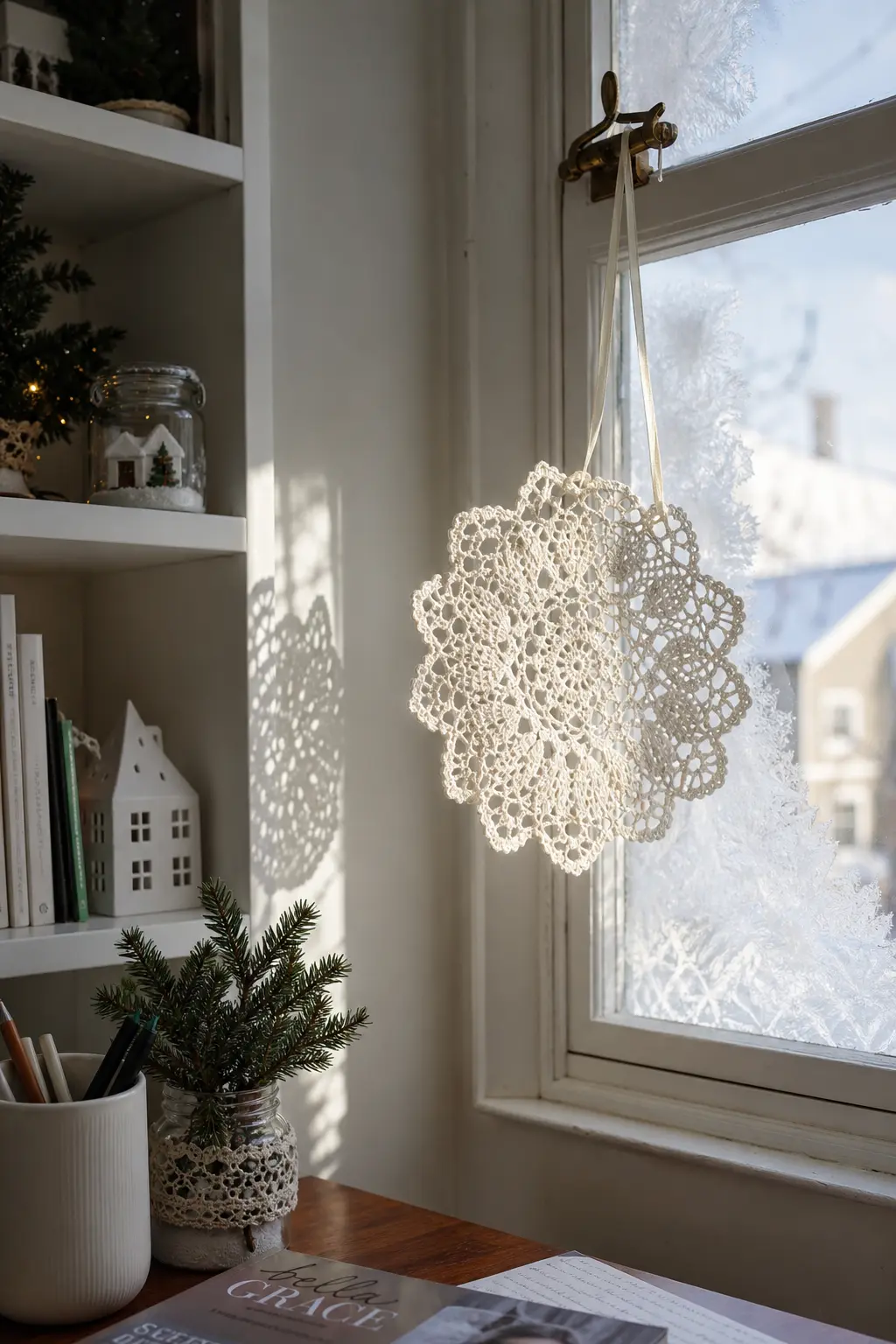
A Stiffened Doily Hung as an Ornament
A small vintage doily pattern worked in cotton thread in three rounds stiffens into a rigid disc that hangs like a snowflake. The pineapple stitch doily pattern is the classic choice: it gives heavy texture that holds a starch well.
Spray with starch, pin to a foam board in a circle, and leave overnight. Attach a ribbon loop before the starch is fully dry so it sets around the yarn and never slides. Cream cotton on a 1.5mm steel hook gives the finest result, but a 2.5mm hook in fingering weight is faster and almost as delicate.
🛍 Shopping guide
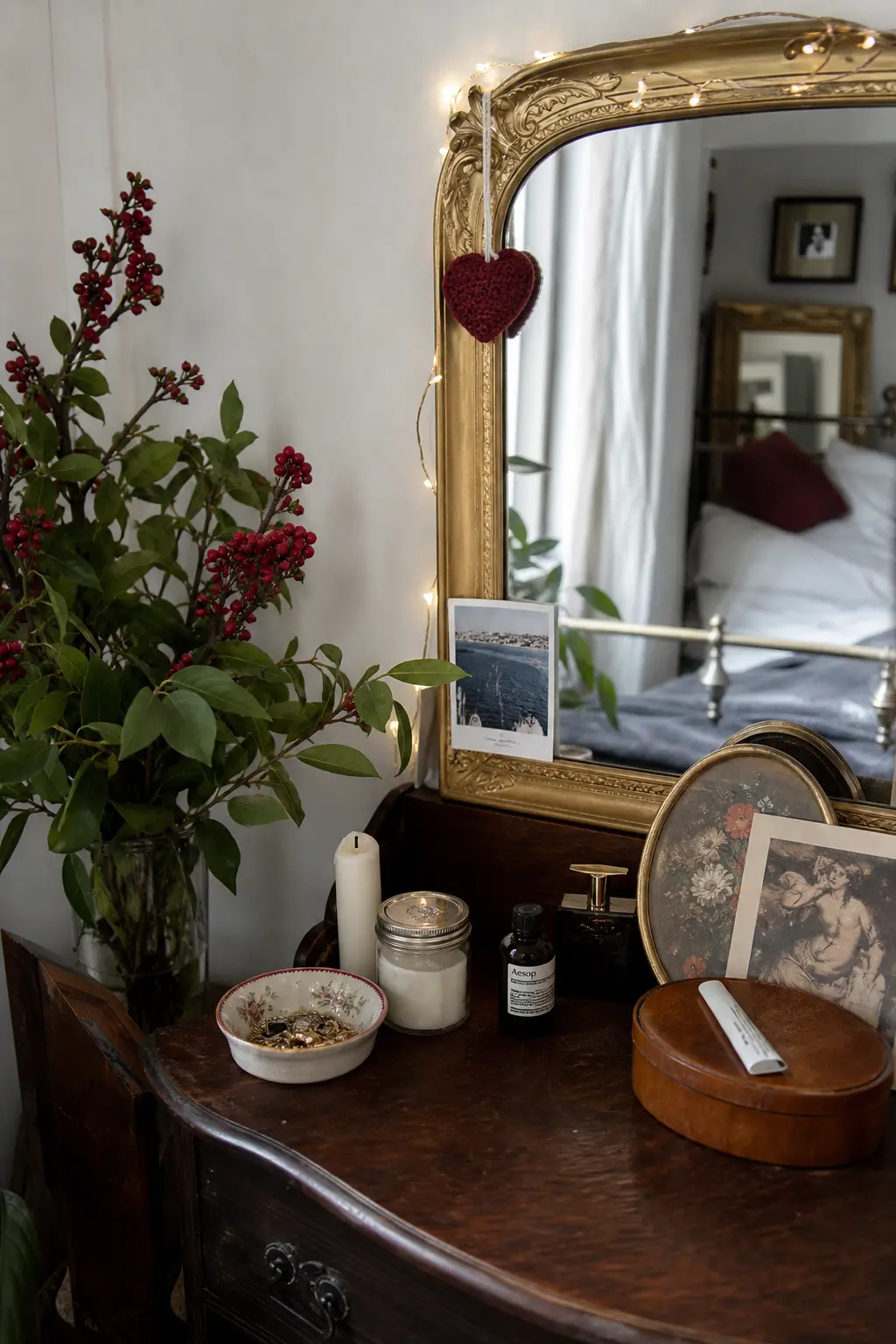
A Heart Worked in One Piece
The joined-top heart pattern works two small half-circles then joins them at the top and works down in a V to a point, all in one pass. It uses only double crochet and chain, and the whole piece takes about fifteen minutes in DK.
Work it in oxblood for a rich contrast against cream wrapping paper, or in twilight blue as an unusual tree ornament. Sew a hanging loop from a leftover tail so no extra yarn is needed.
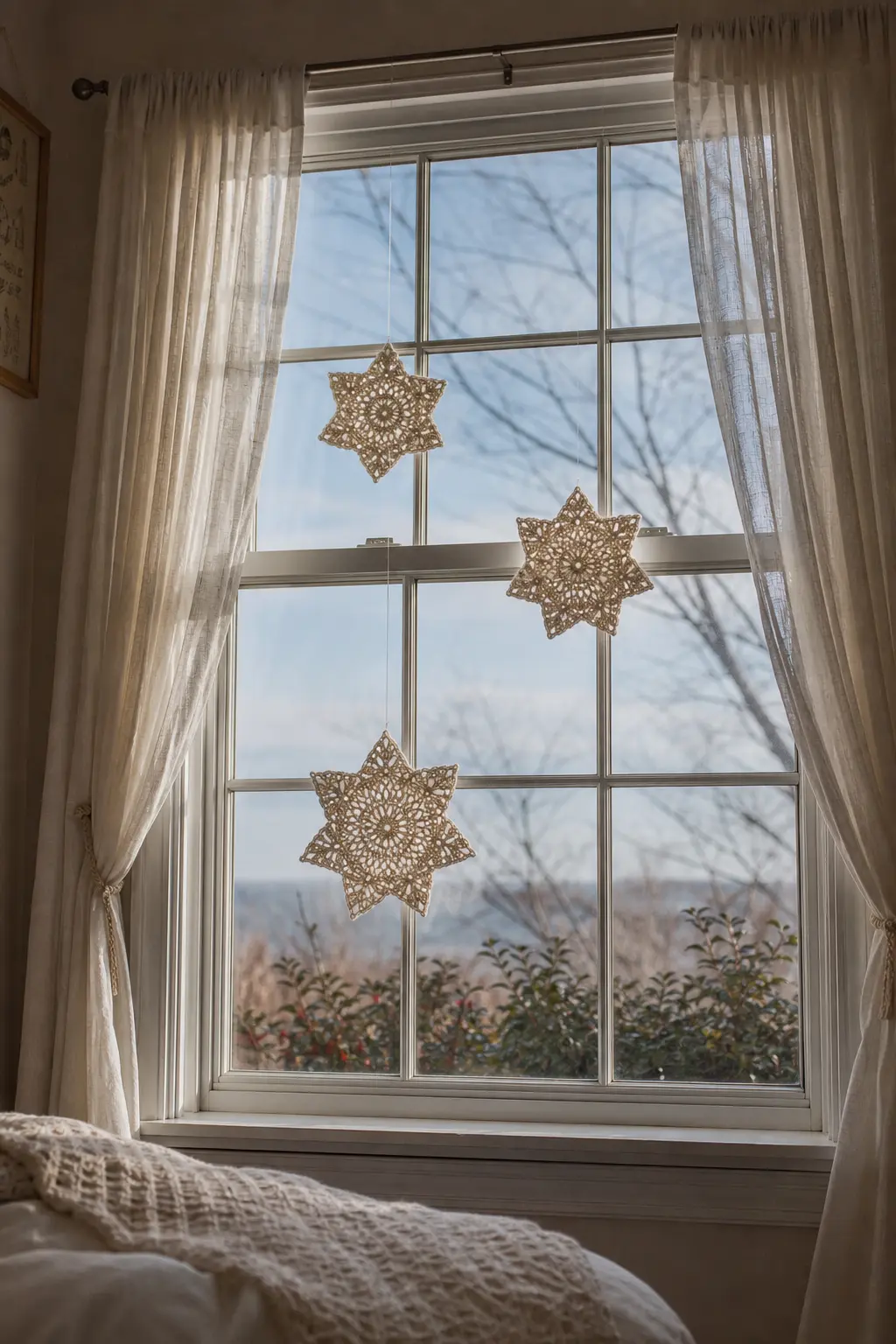
A Plain Circle Stiffened as a Snowflake
A plain flat circle worked in the basic flat circle increase pattern in fine cotton thread is pinned into a star shape while wet with starch. Six pins placed at equal intervals pull six points out of a circle and dry into a snowflake silhouette with no actual snowflake stitching required.
It is a good use of a circle that went slightly uneven, because the pinning disguises any wobble. Work in cream thread, stiffen hard, and hang in a cluster of three at different sizes for a window installation.
🛍 Shopping guide
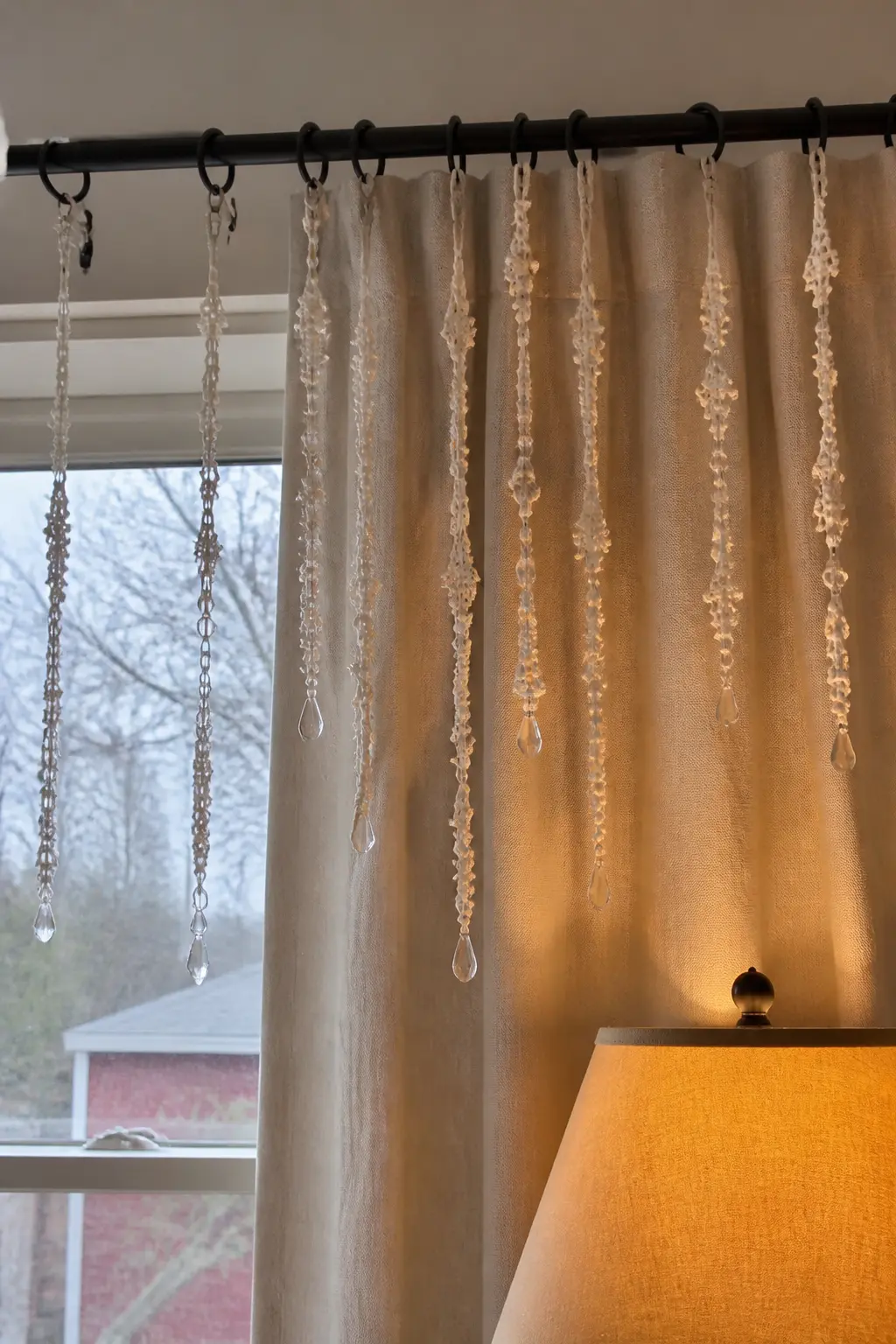
A Beaded Chain Icicle
Thread clear or white glass beads onto a length of fine yarn before you begin, then chain, sliding one bead down to sit between each stitch. The beaded chain icicle pattern creates a weighted, glittering drop in about five minutes per icicle.
Work in cream or twilight blue fingering weight so the beads sit flush against the chain. A pointed slip stitch tail at the bottom mimics the drip of a real icicle. Make twelve and hang them from a curtain pole at varying lengths.
🛍 Shopping guide
Garlands and Bunting
A garland earns its place because it covers a lot of visual ground for very little yarn. Each piece in this group can be made in batches of five during one film, then strung together in minutes.
A Chain Garland with No Stitches at All
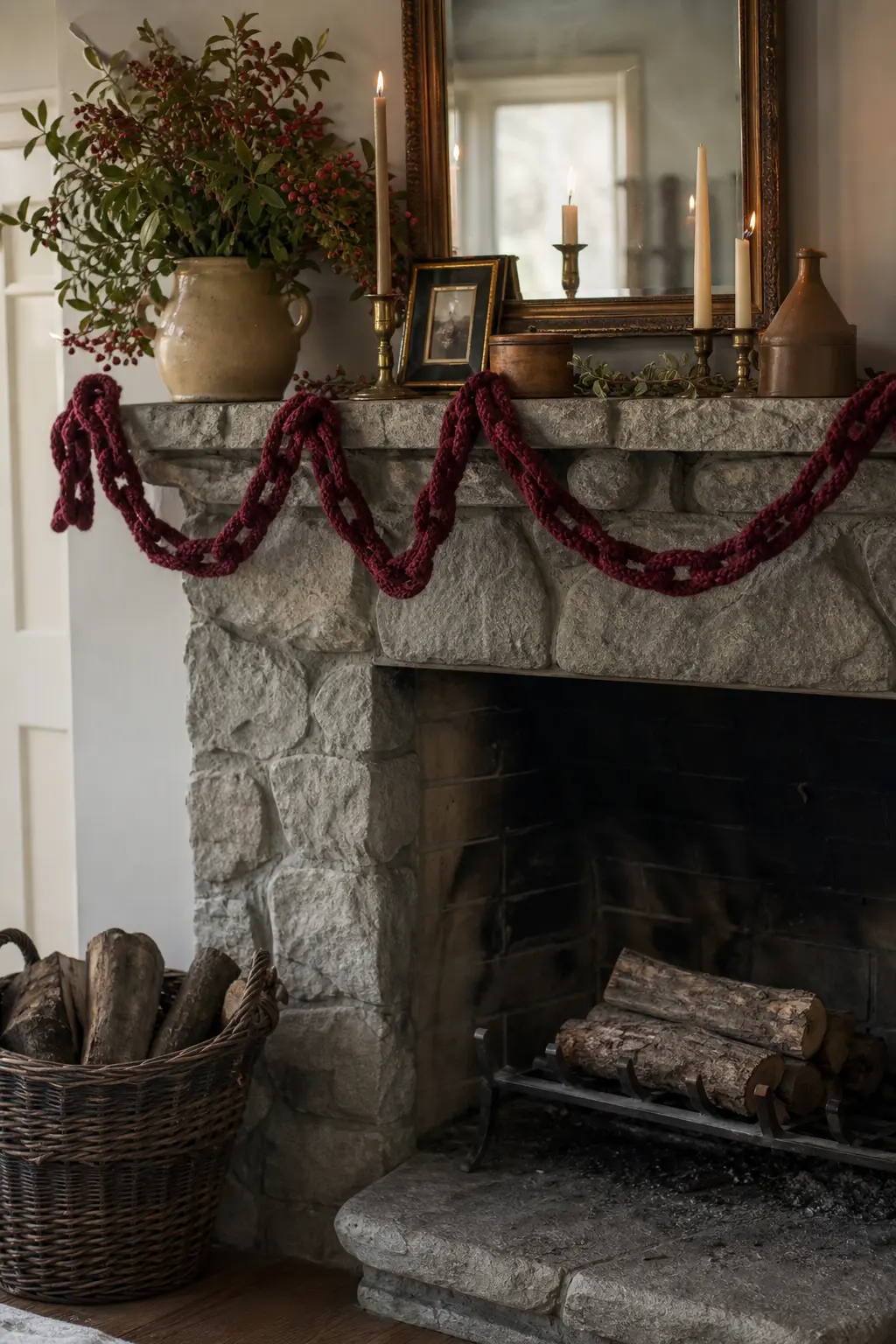
A single foundation chain in chunky yarn, left as a chain with no return row, is the quickest crochet project that still counts as crochet. Work a 200-chain length in oxblood chunky, fasten off, and drape it across a mantlepiece or weave it through a wreath.
The texture of the chain links catches candlelight and reads as deliberate rather than unfinished. This is the project to make while watching the credits roll. It costs less than a metre of yarn and takes under five minutes.
A Bunting Triangle
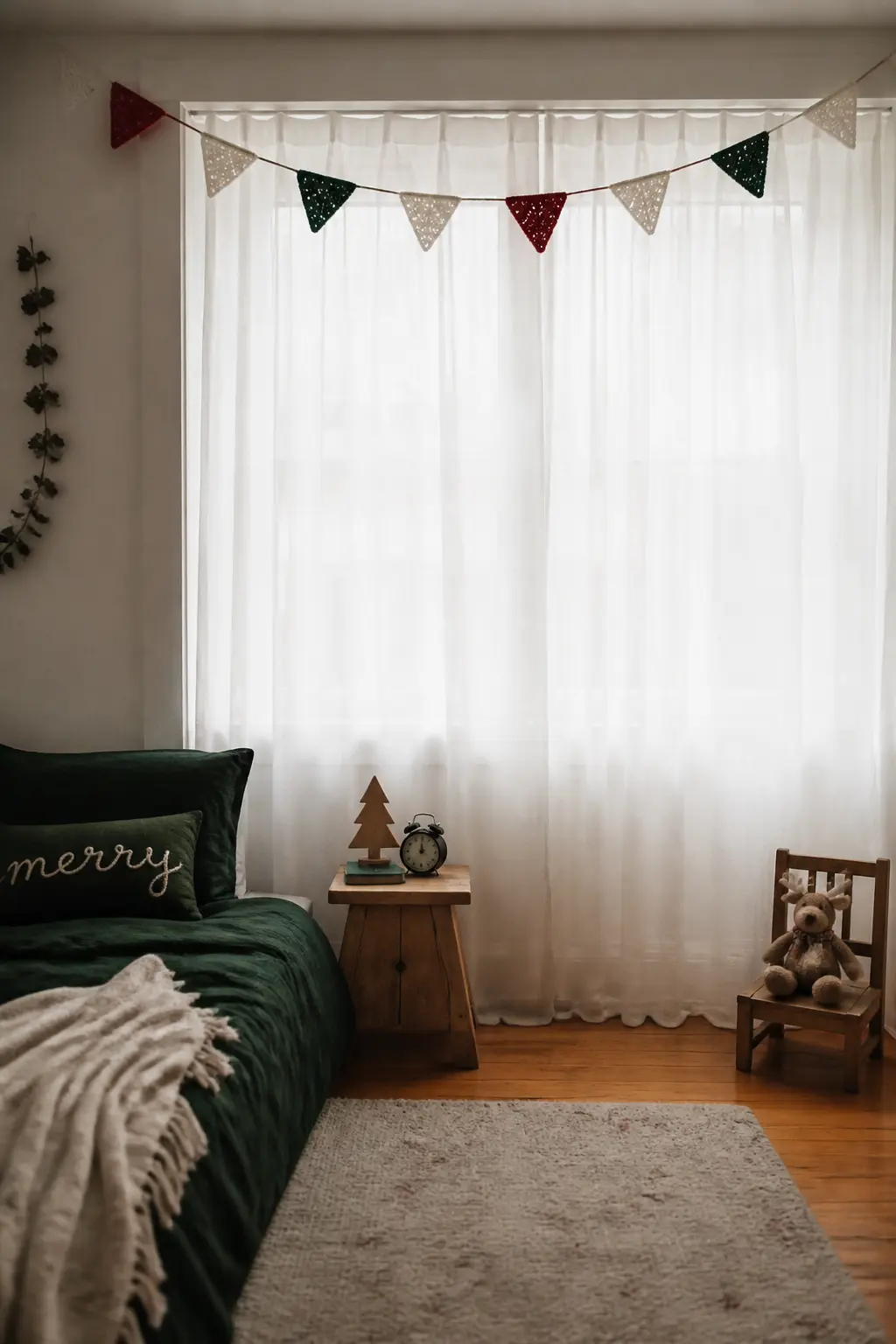
The basic decrease triangle worked in double crochet starts with a foundation chain and loses one stitch each side every row until a single stitch remains. That is the entire pattern. Work each flag in a different palette colour and string them onto a long chain with spaces between.
Five triangles make a mantel garland; ten cover a doorway. Attach them to the string chain by folding the top edge over it and slip stitching through both layers while the chain runs between.
🛍 Shopping guide
A Star Garland of Five Points
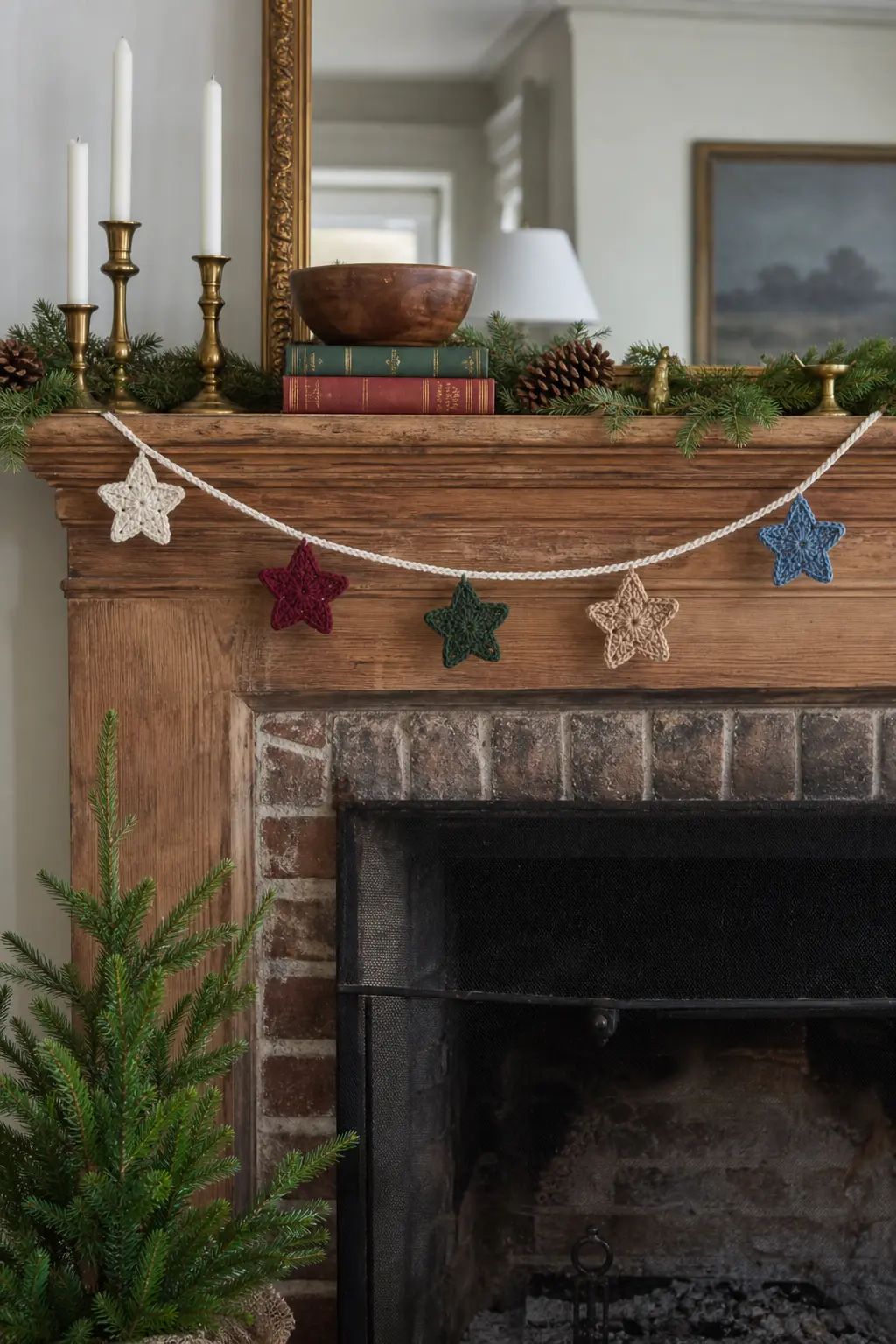
Five small flat stars worked in the five-point star in rows pattern, each in a different palette colour, are threaded onto a single length of chain with ten chains between each star. Work all five stars first, then make one long chain and attach them as you go.
Space them evenly for a formal mantel garland or let them cluster slightly for a more relaxed window drape. The chain itself can be twisted with a strand of the oxblood colour to add depth without any extra stitches.
🛍 Shopping guide
A Bookmark with a Tassel
A long, narrow rectangle of moss stitch in DK with a tassel at one end is the most useful small gift on this list. The moss stitch bookmark pattern is ten stitches wide and as long as a standard paperback, about twenty centimetres.
Make the tassel from leftover yarn in a contrasting colour: cut twelve lengths, fold them over a loop, and bind the neck with a few wraps. Twilight blue bookmark with an oxblood tassel is a strong combination and takes about fifteen minutes total.
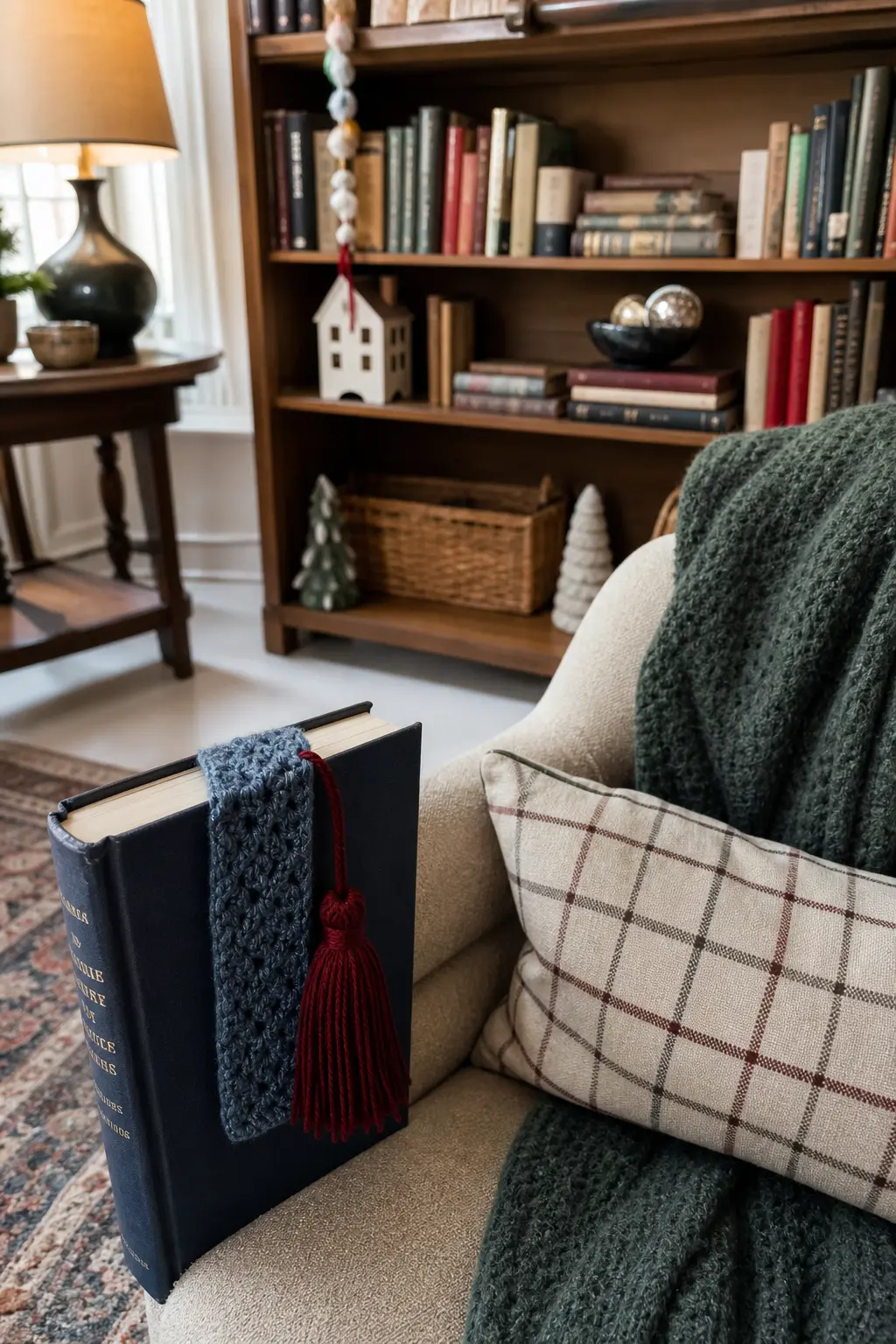
Table and Kitchen Pieces
These sit on surfaces rather than hanging from them, which means they carry more weight in the room. Work them in a slightly heavier yarn, DK to aran, so they hold their shape without stiffening agent.
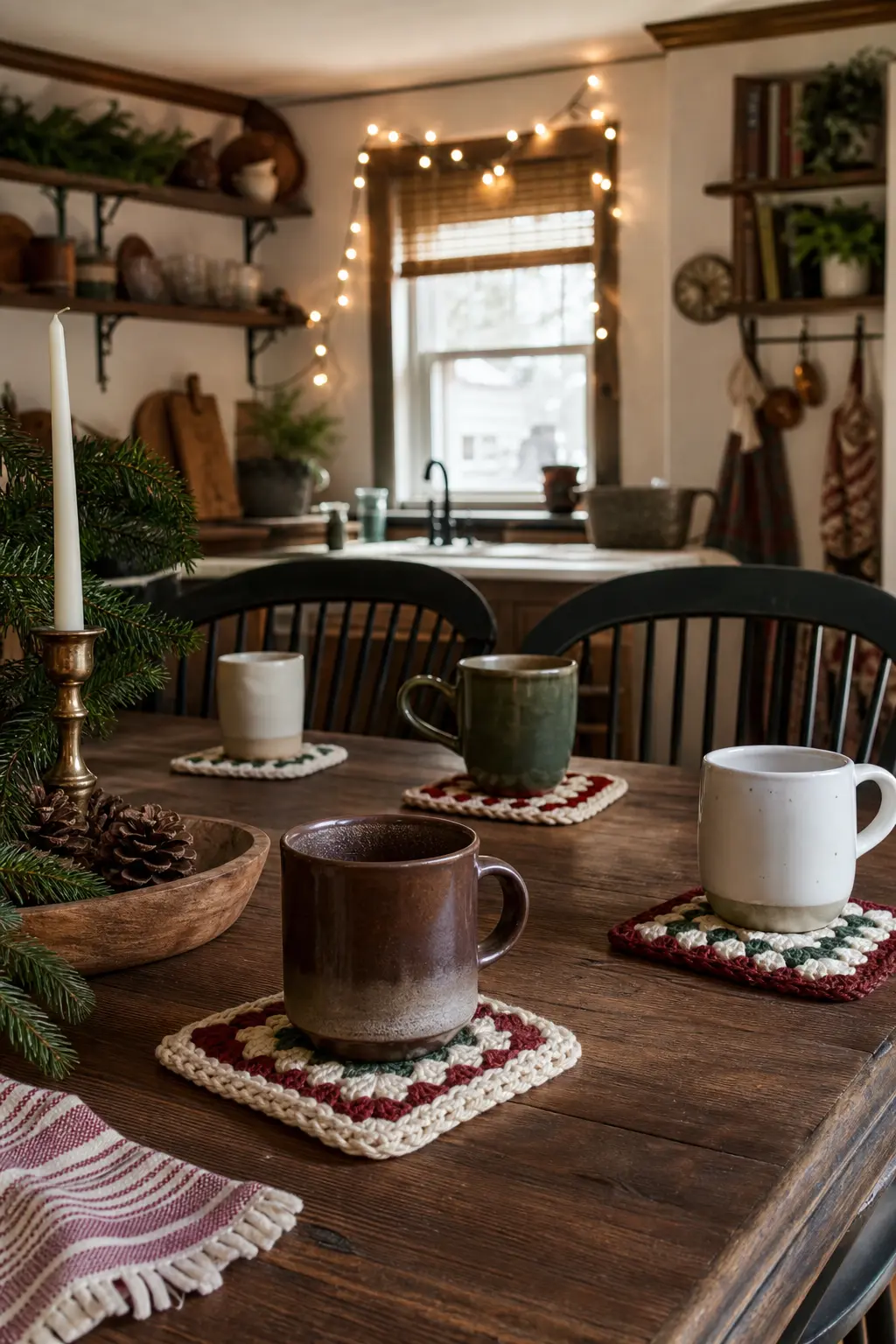
A Granny Square Coaster
The traditional granny square worked in three rounds gives you a firm, flat coaster in about twelve minutes. Round one: oxblood. Round two: cream. Round three: hunter green. Fasten off and weave in two ends.
It protects mugs at a drinks table and doubles as a small trivet under a candle. Make four in an afternoon and stack them as a gift with a ribbon around the bundle.
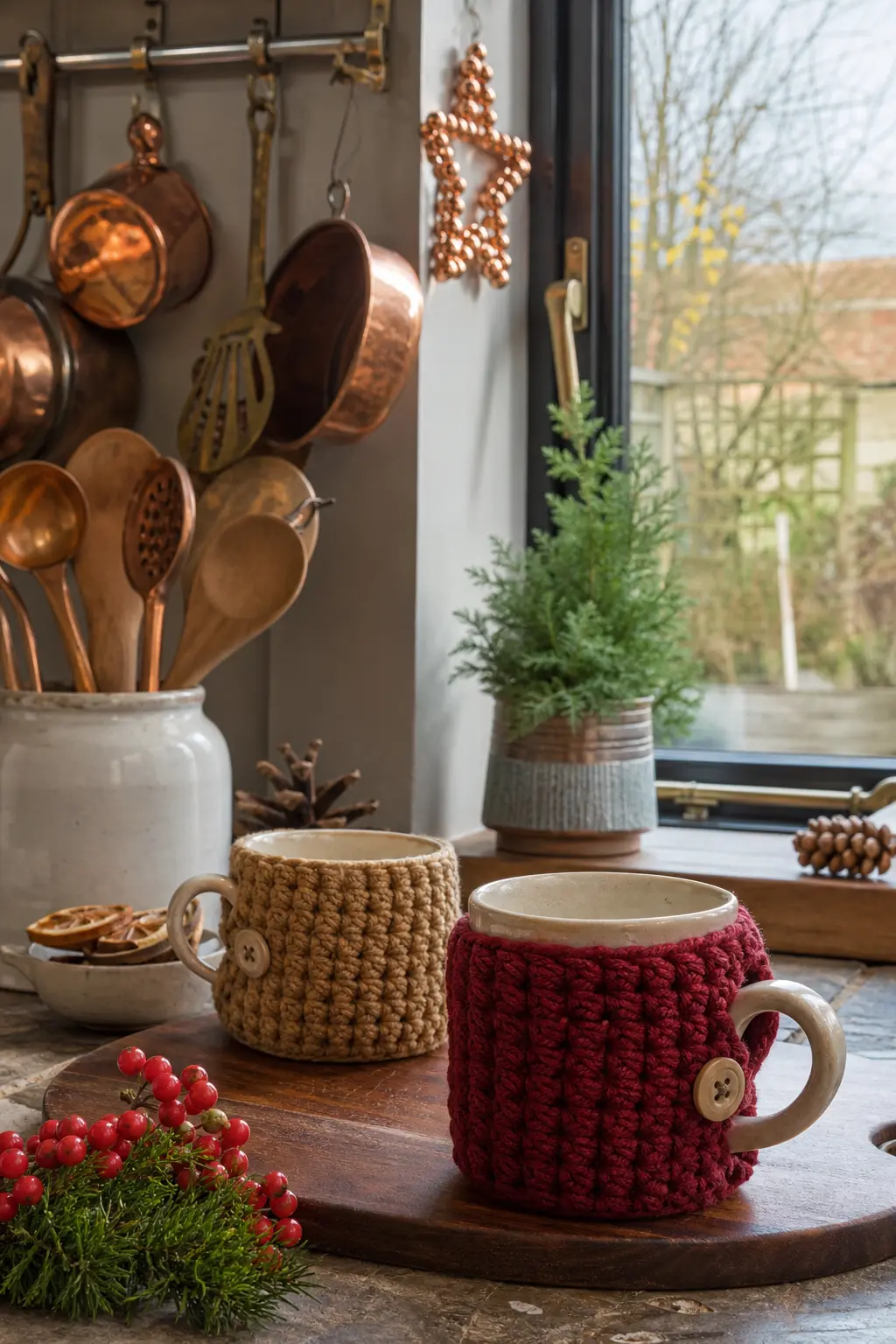
A Mug Cosy in Half Trebles
The half treble ribbed rectangle pattern gives a stretchy, padded cosy that fits any standard mug. Work a rectangle of half treble crochet in the back loop only, then seam the short ends together with a slip stitch. Button closure optional.
Camel aran with a cream button is the warmest version. Oxblood on a white mug looks sharp for a styled drinks table. One cosy takes about twenty minutes at aran weight.
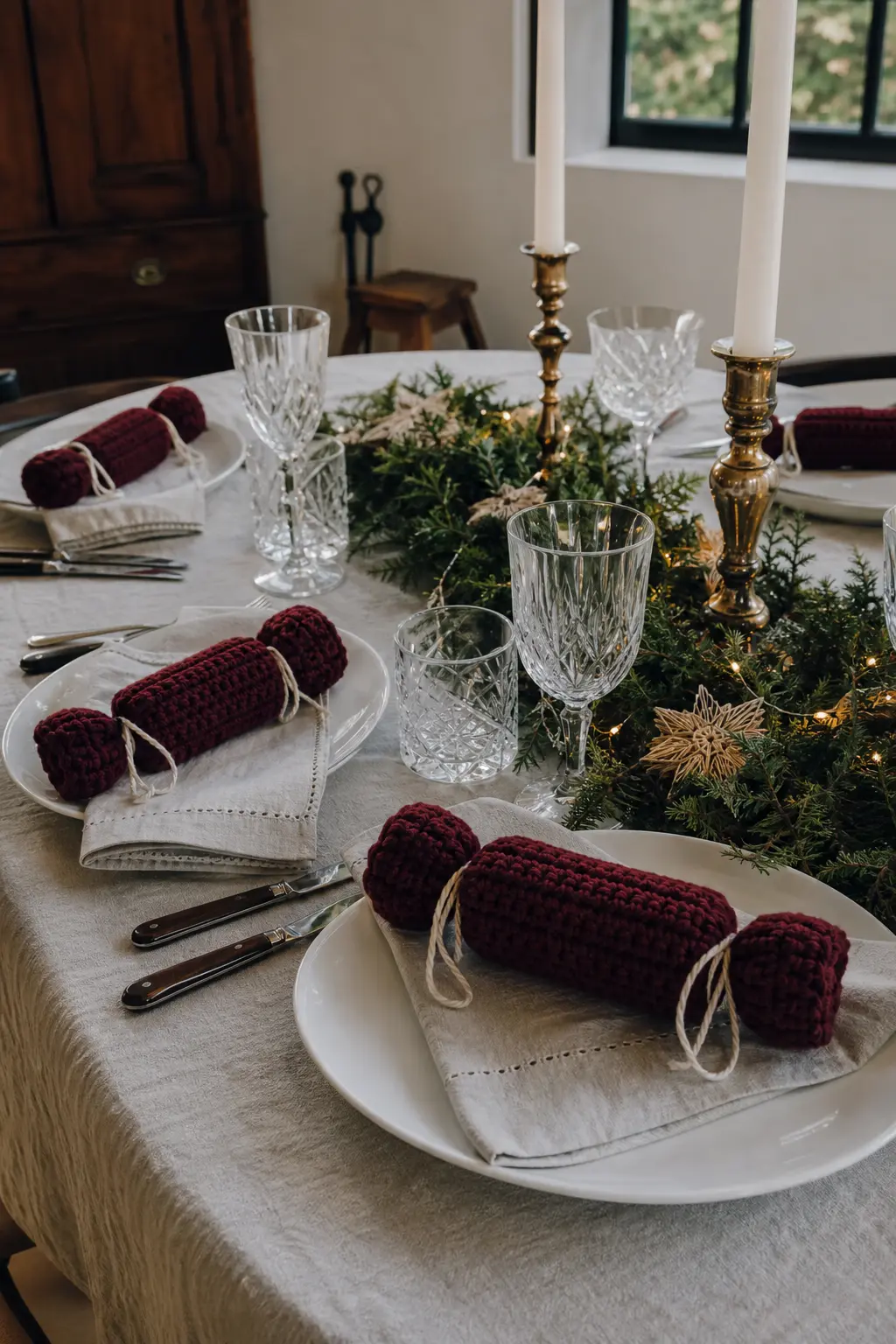
A Cracker Cover
A simple rectangle of treble crochet with a moss stitch border folds around a plain shop-bought cracker and is tied at each end with yarn in a contrasting colour. The cracker cover in treble and moss pattern is one piece, no seaming.
Work the rectangle wider than the cracker by about two centimetres so it gathers slightly when tied. Oxblood with cream ties looks like a gift before it is even pulled.
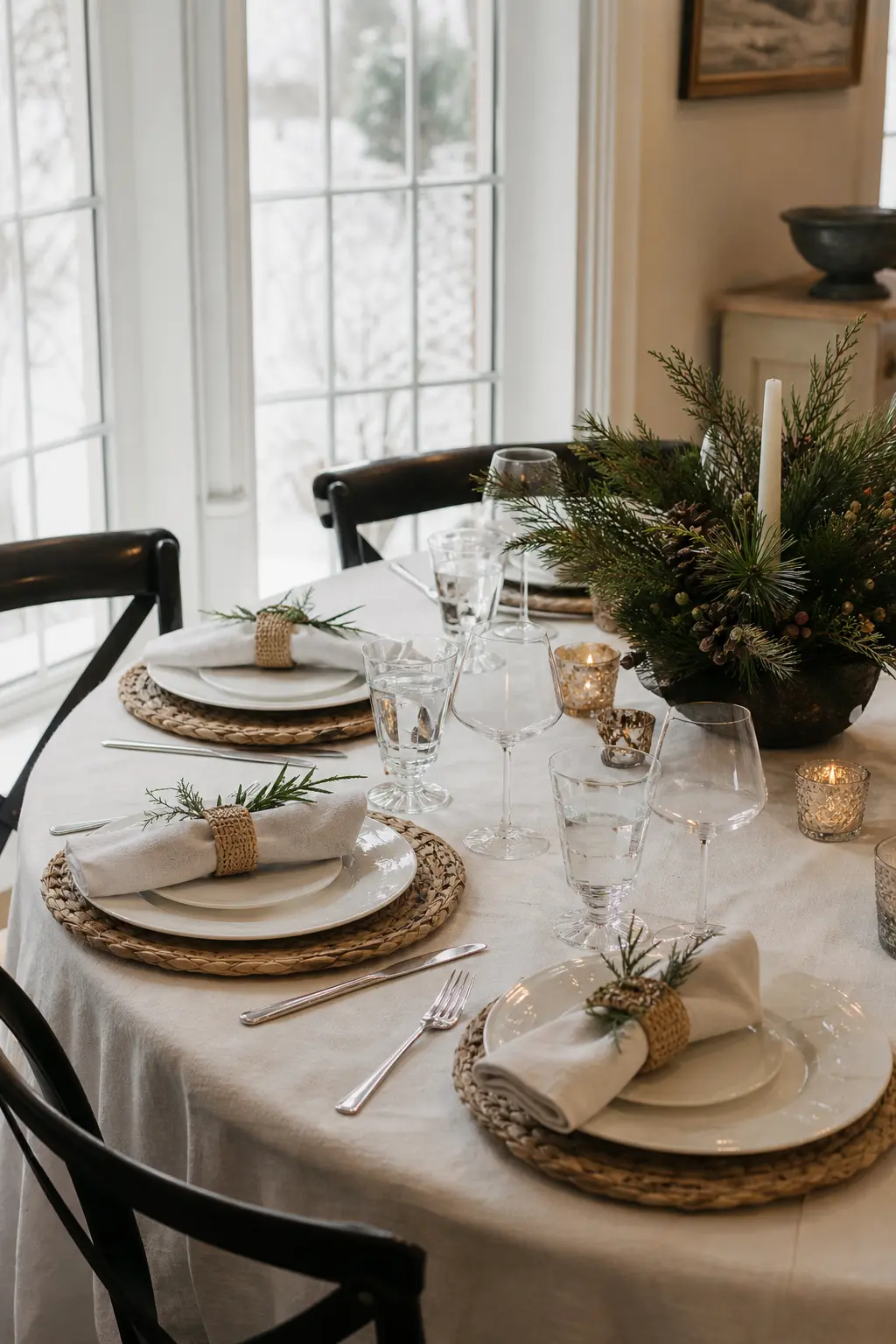
A Napkin Ring
A short rectangle of ribbed half treble crochet, seamed into a ring, holds a folded napkin neatly. The finished ring needs to measure about twelve centimetres long and five centimetres wide before seaming: that is all the measuring required.
Work four in camel for a warm, neutral table, or mix camel and hunter green for one of each. The seam sits at the back once the napkin is inside, so it never shows.
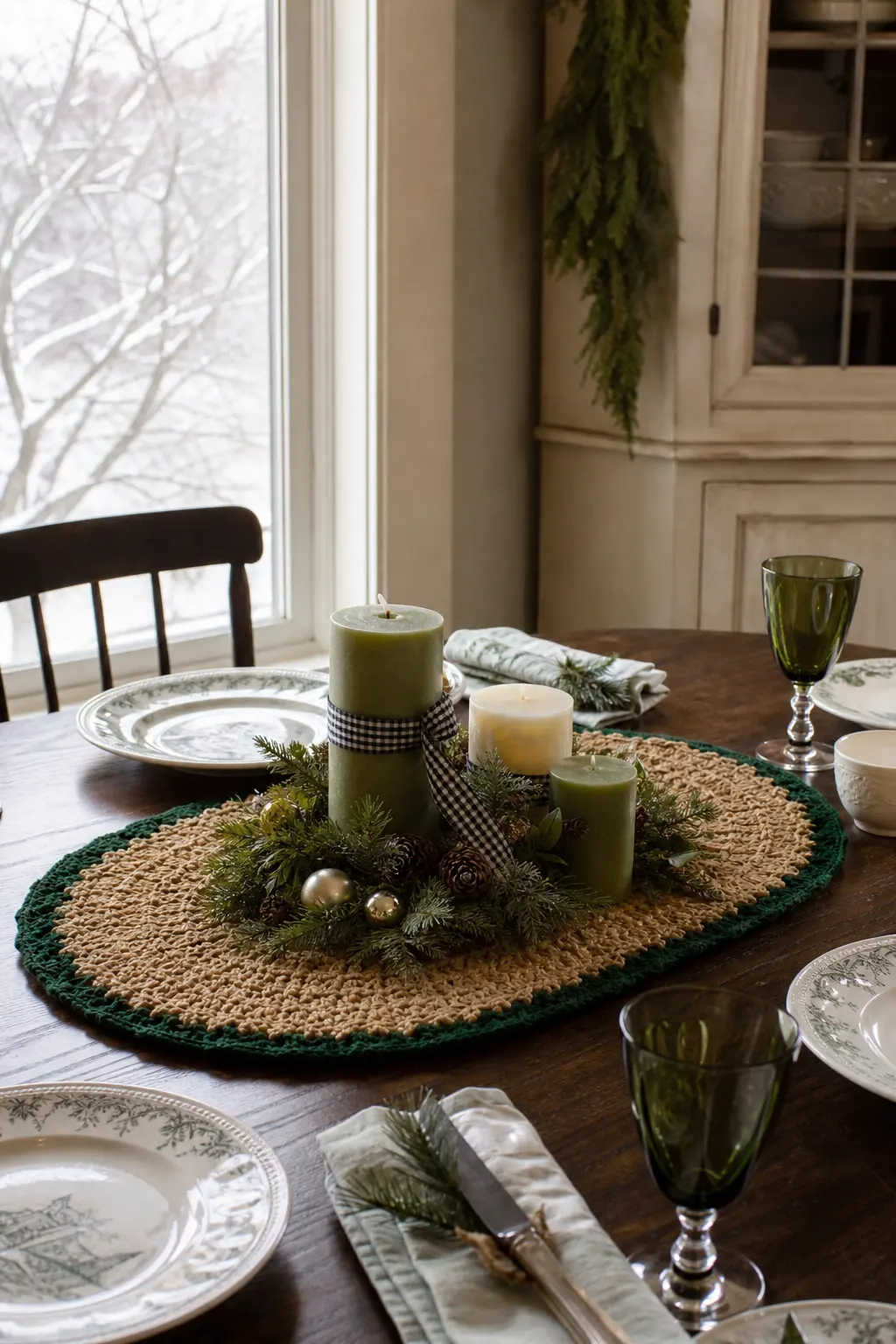
A Table Mat in One Long Round
The oval table mat pattern begins with a foundation chain, works around both sides of it in the round, and increases at each short end every round to stay flat. In aran on a 5mm hook it reaches a useful 30cm x 20cm in under fifty minutes.
Work the main body in camel and switch to hunter green for the final two border rounds. It sits under a centrepiece, a plant or a candle grouping and stops any surface marking. This is the largest project on the list, and it still finishes in one sitting.
🛍 Shopping guide
Jar and Candle Covers
Wrapping a glass or a tin costs almost no yarn and transforms a plain vessel into a centrepiece. All four pieces here fit over a standard jam jar or votive holder without any measuring: crochet until it reaches, then fasten off.
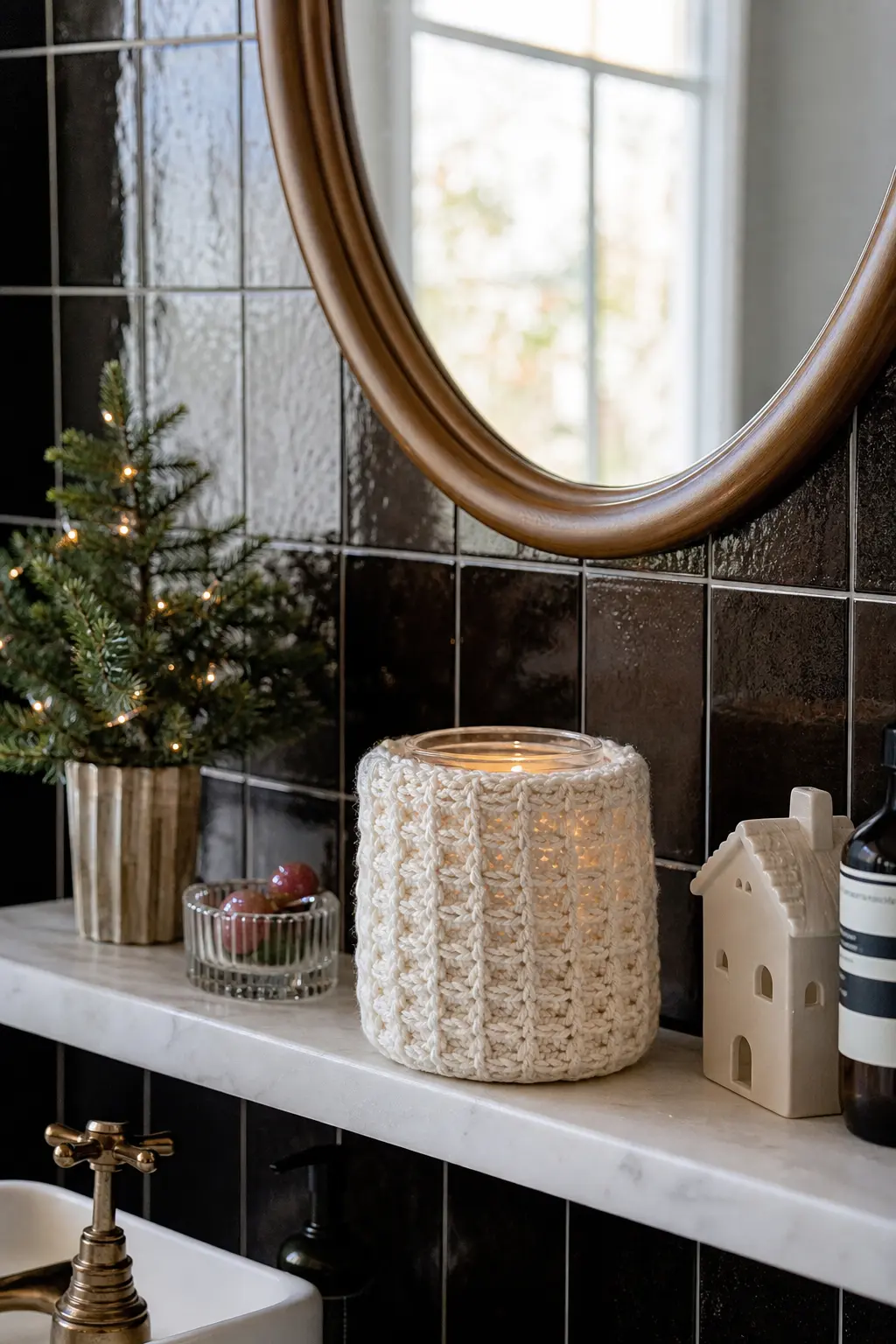
A Candle Jar Sleeve
The waffle stitch worked in the round fits over a standard 200g candle jar in about twenty minutes of aran-weight crochet. The raised texture of the waffle stitch pattern insulates the glass slightly and gives a tactile surface that plain glass never offers.
Work in cream for a clean look, or start the first round in oxblood and switch to cream for a two-tone effect. Leave the top two rounds unworked so the lid still fits.
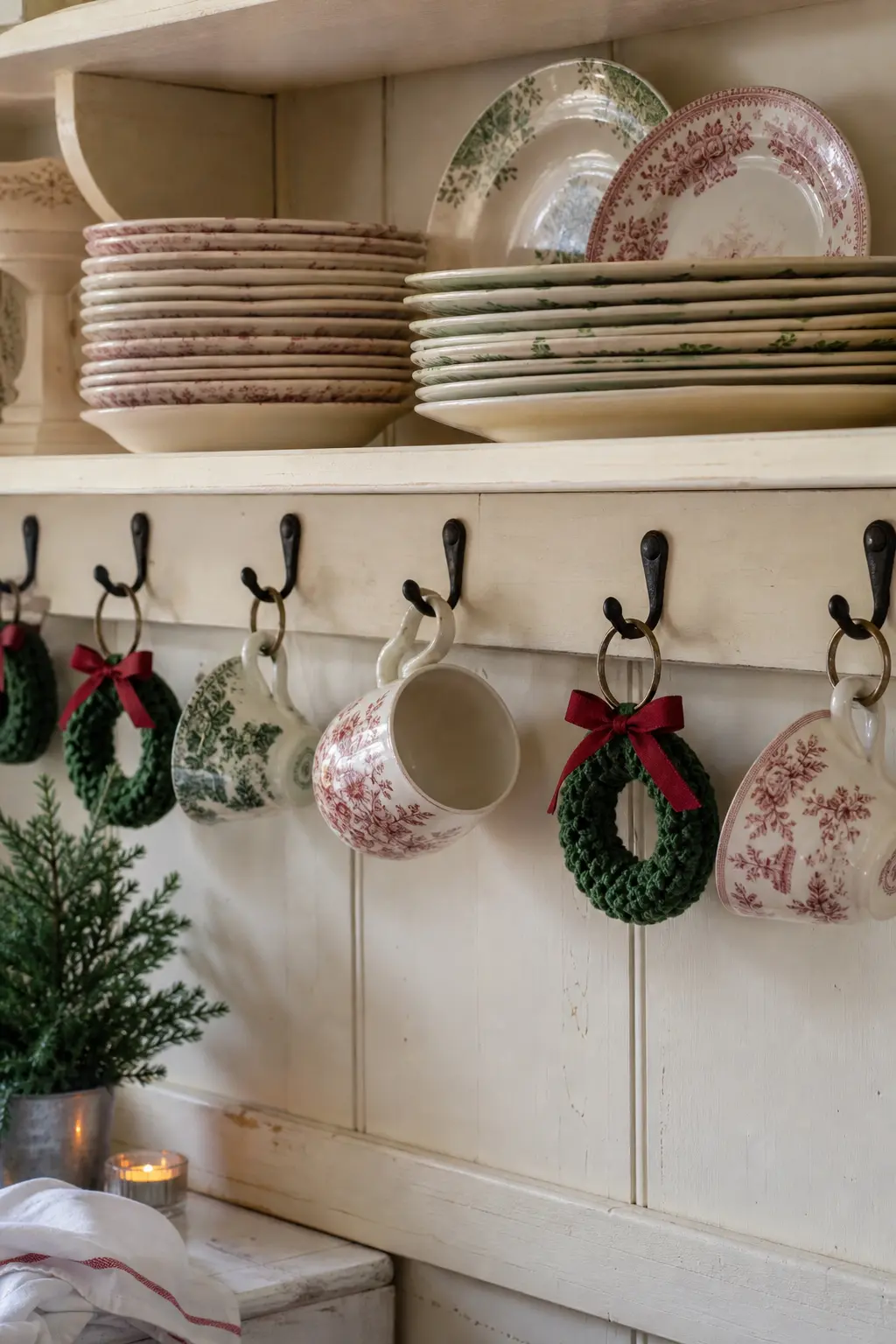
A Tiny Wreath on a Curtain Ring
A 5cm wooden or metal curtain ring covered in slip stitches of hunter green DK makes a miniature wreath in about eight minutes. Work the ring until the yarn meets the start, fasten off, and tie a small oxblood bow from narrow ribbon.
Hang from a gift tag, a bottle neck, a drawer handle or an earring hook. Make ten during one cup of tea and use them as gift toppers that outlast the wrapping paper.
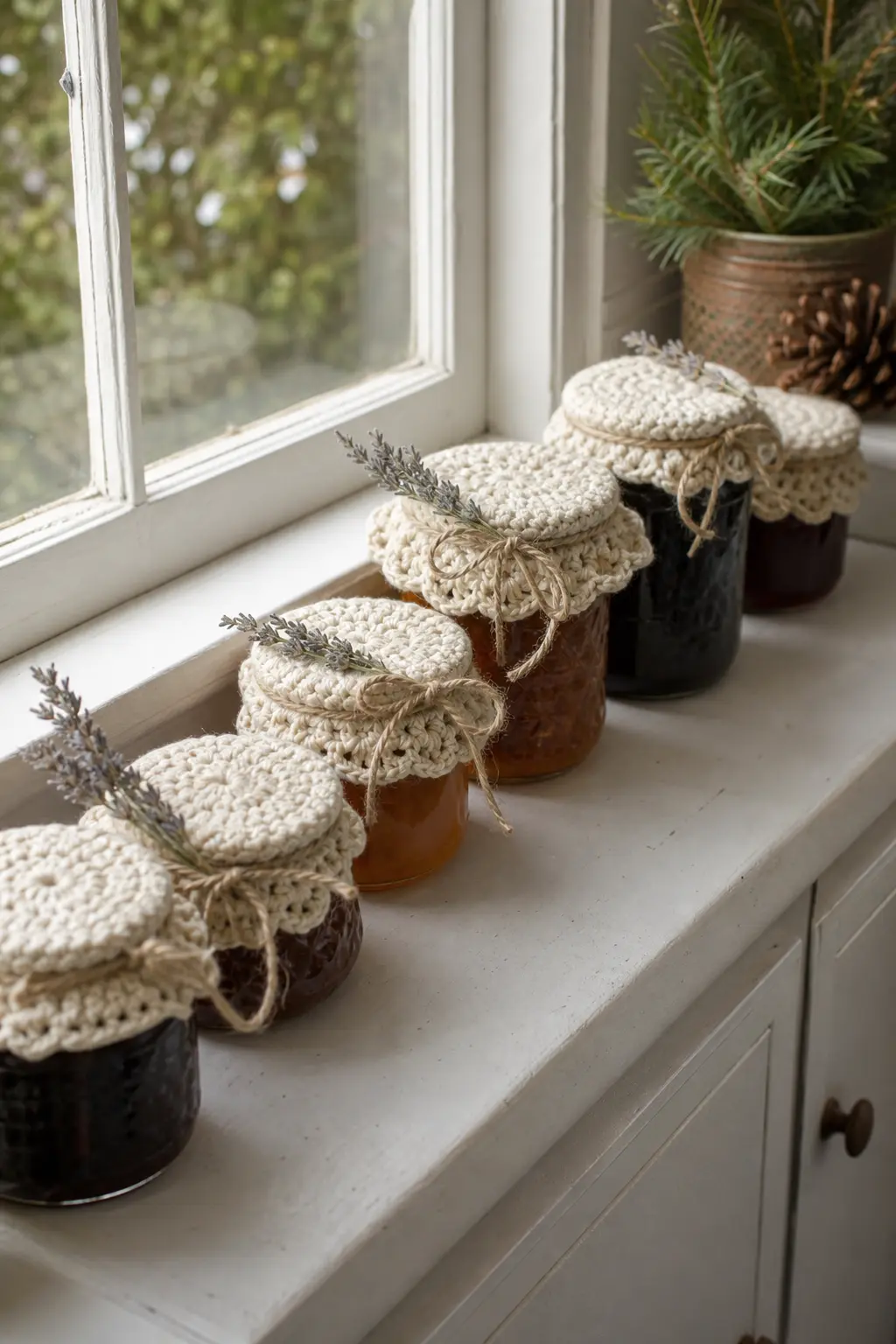
A Jar Lid Cover
A flat circle worked from the centre out in the basic flat circle increase pattern fits over a standard jam jar lid in three to five rounds, depending on lid size. Work in cream with a hunter green last round to frame it like a mat.
Secure it to the lid with a rubber band hidden under the edge, or tie it with a length of jute twine around the neck of the jar. It turns a plain jar of homemade chutney or jam into a ready-made gift.
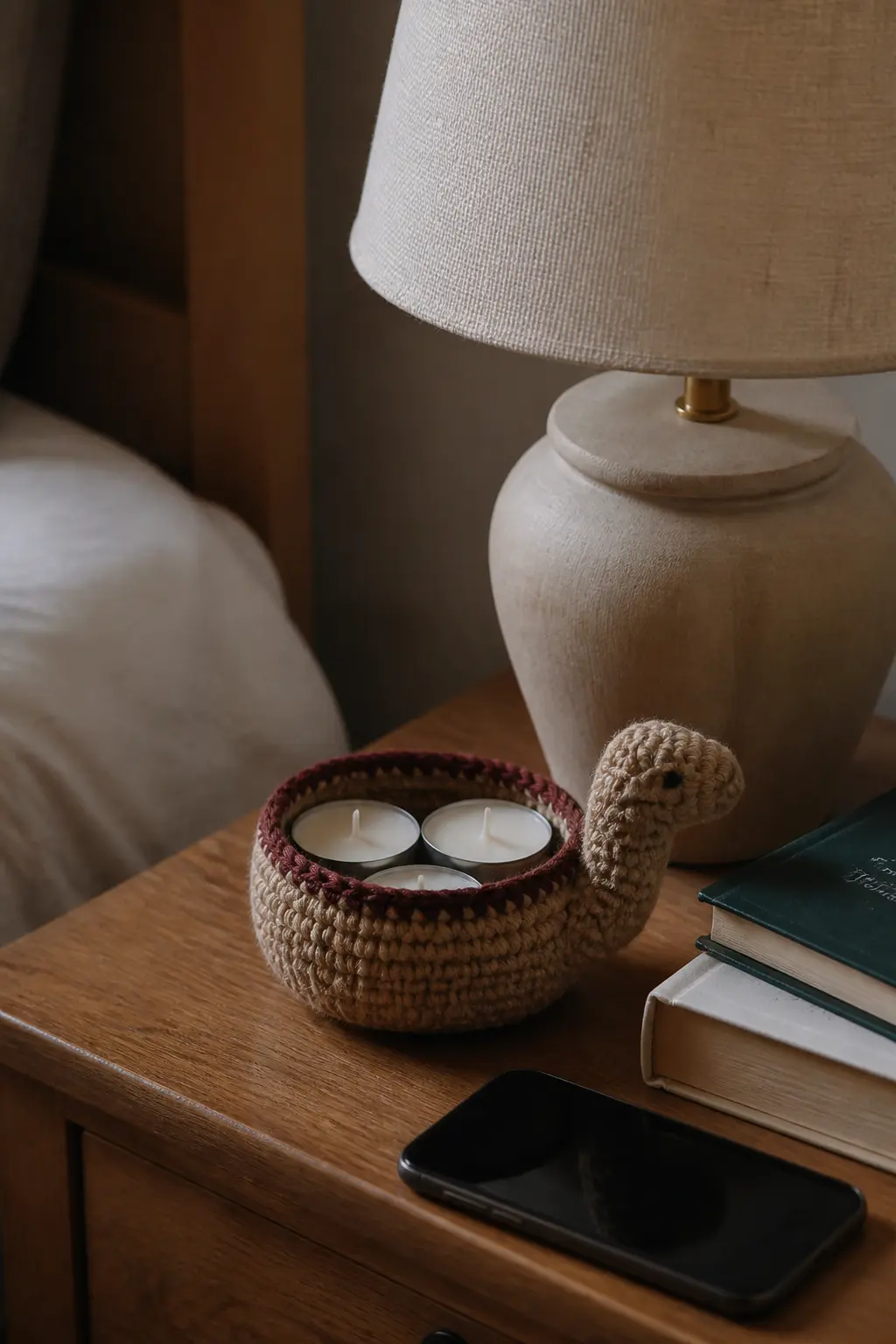
A Small Basket for Tealights
The basic basket in the round pattern uses the magic ring and increases in the first three rounds for a flat base, then works straight for four rounds to build sides. In camel aran on a 5mm hook it is solid enough to hold three tealights upright without flopping.
The finished basket is about eight centimetres across and five centimetres tall: small enough for a side table, large enough to read across the room. A contrasting round in oxblood at the top edge frames it neatly.
Shaped Pieces Worked Flat
Working flat means you can see exactly where you are and stop the moment it is done. Every entry here uses simple row-based shaping or front post stitches, nothing more advanced than that.
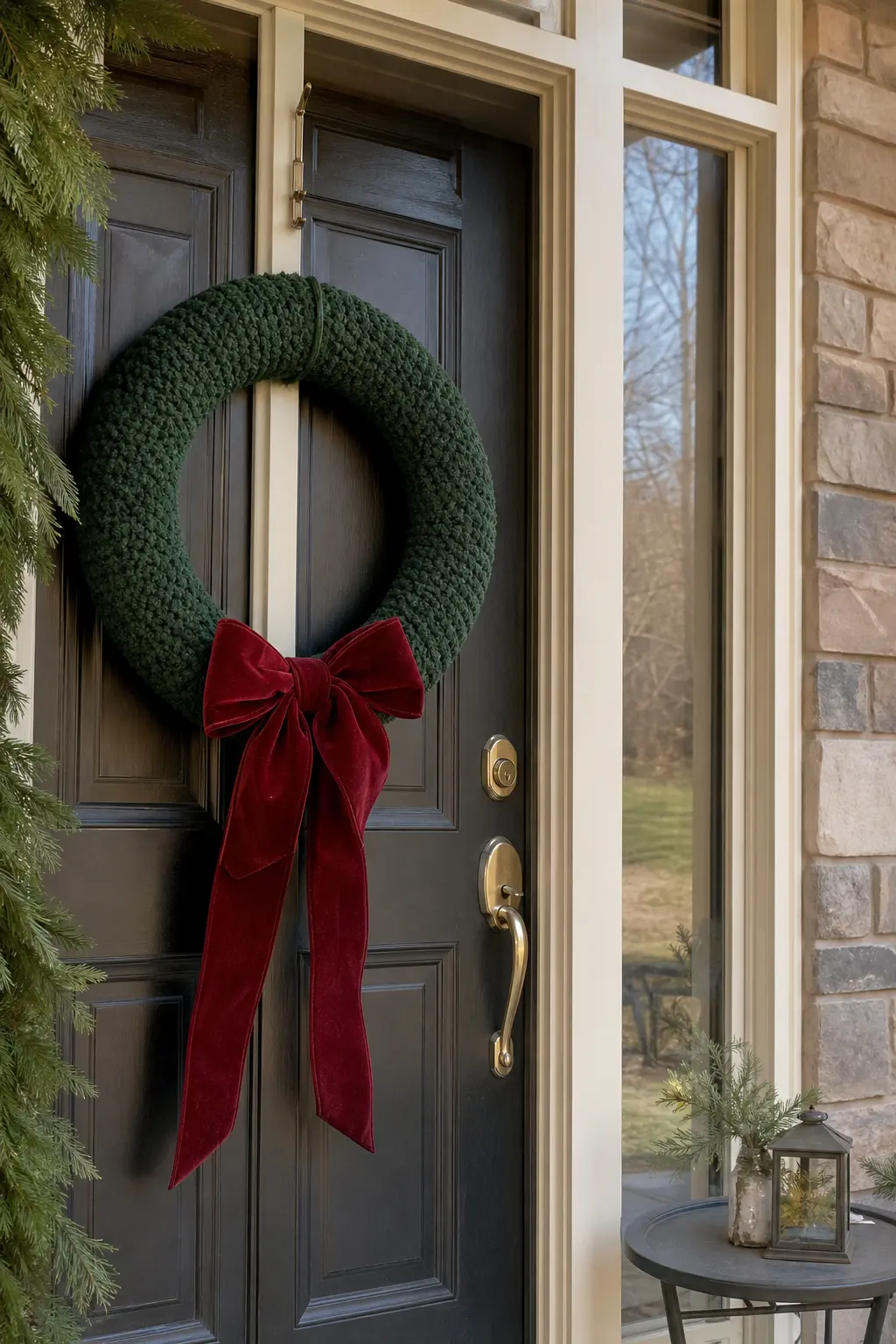
A Chunky Wreath Ring Cover
The slip stitch cover worked directly over a wire or foam wreath ring covers the form completely in under thirty minutes. Use a 6mm hook and super chunky yarn in hunter green, working slip stitches tightly around the ring until it disappears.
Add a simple oxblood bow cut from ribbon at the base. No sewing, no wiring: just tuck the ribbon ends under a stitch and the tension holds it. Hang on a door or prop on a plate stand on the table.
🛍 Shopping guide
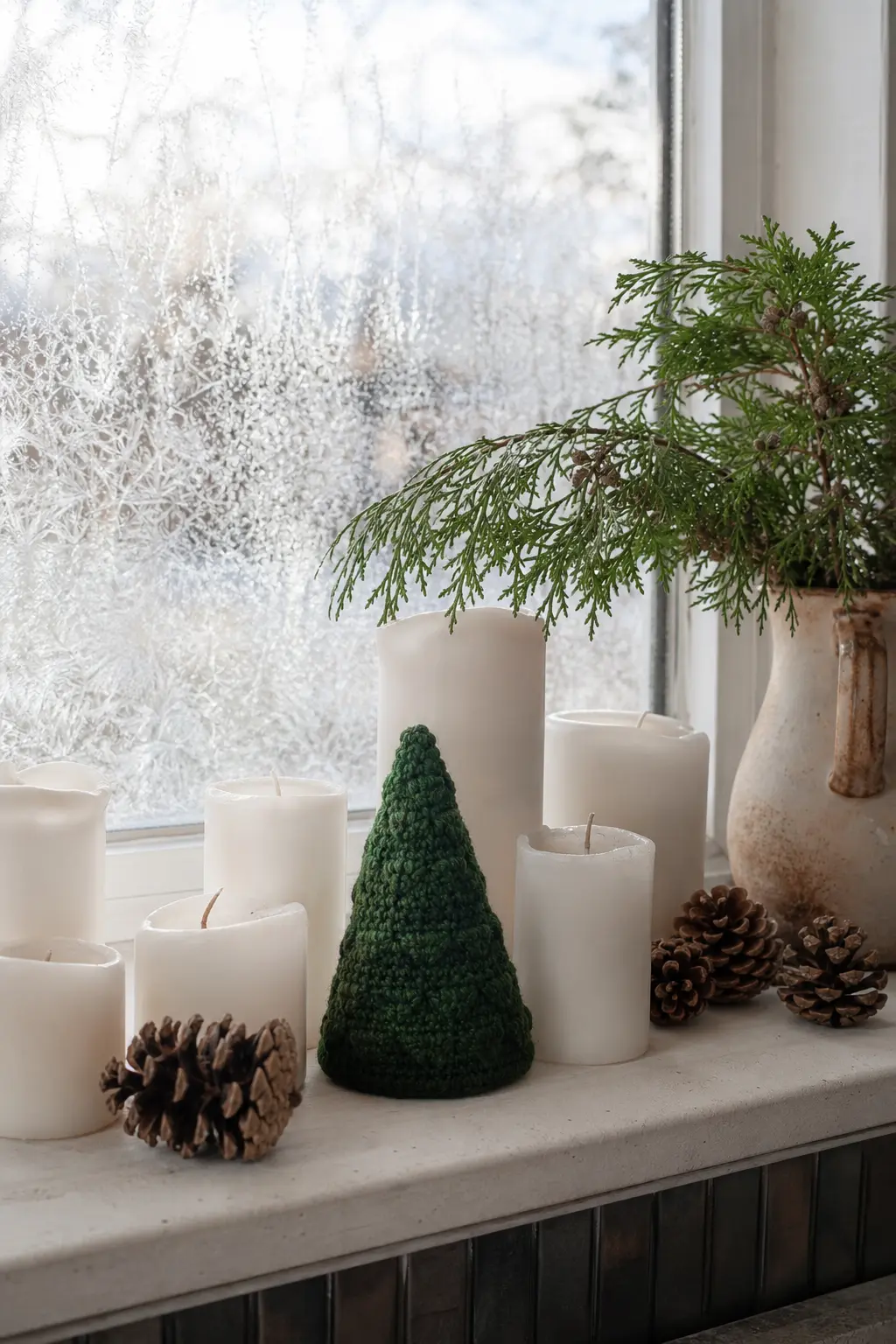
A Tree Shape in Rows
The stepped increase triangle tree pattern adds one stitch each side every two rows to build a wide, stepped silhouette that reads as a tree without any colour changes. Work it in hunter green aran, add a short stem in camel, and fasten off.
It stands up propped against a surface or hangs from a loop. Sew a single gold bead or sequin at the tip if you want a star, but it looks complete without one.
A Mini Stocking Worked Flat and Seamed
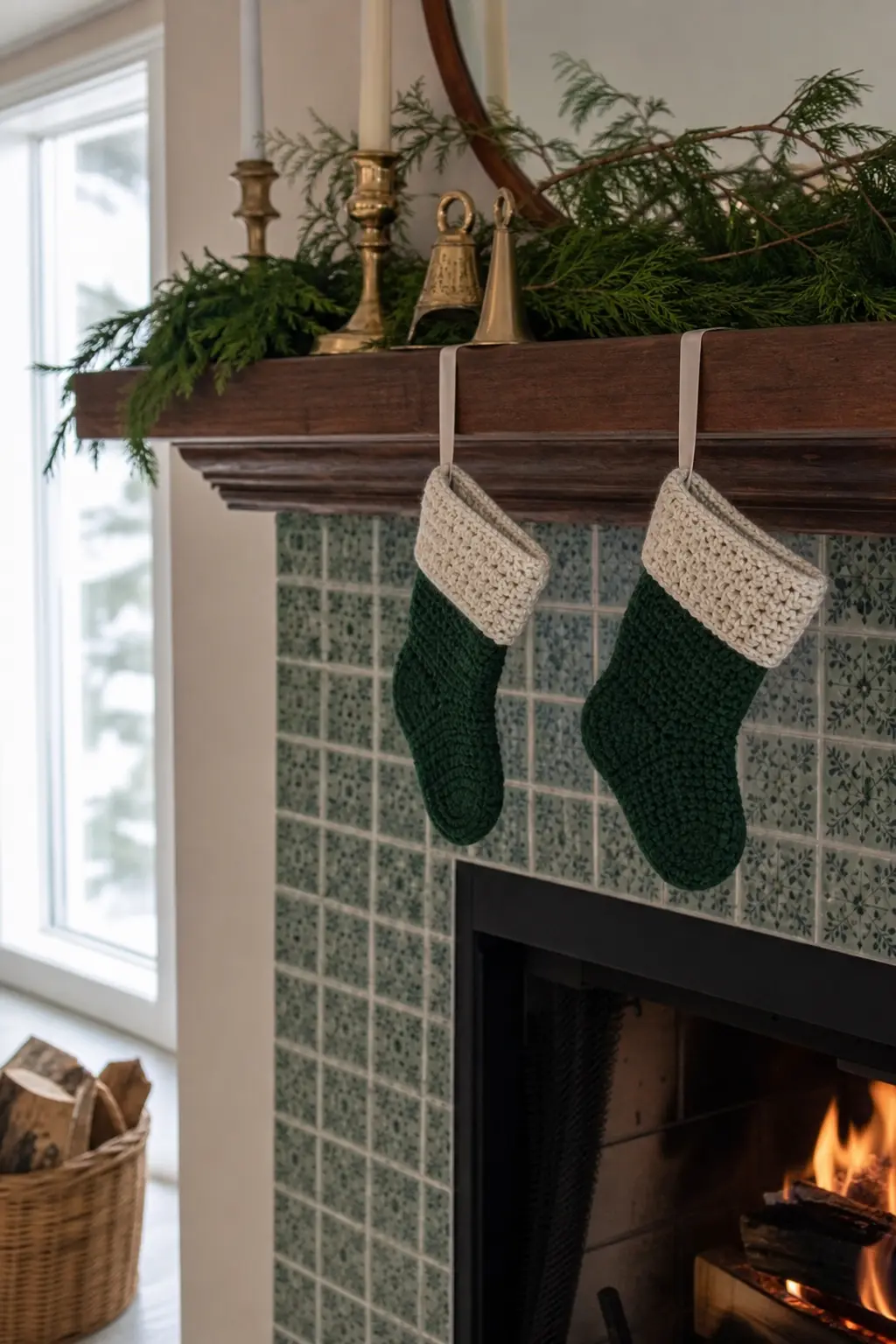
Two identical flat stocking shapes worked in double crochet rows, held together and seamed on three sides with a slip stitch border, give a small hanging stocking in about forty minutes. The flat stocking in rows pattern uses only straight rows until the heel shaping, which is just a decrease.
Work the body in hunter green and the cuff in cream, or reverse the colours for variety. Leave the cuff open and unsewn so it flips down to reveal what is inside.
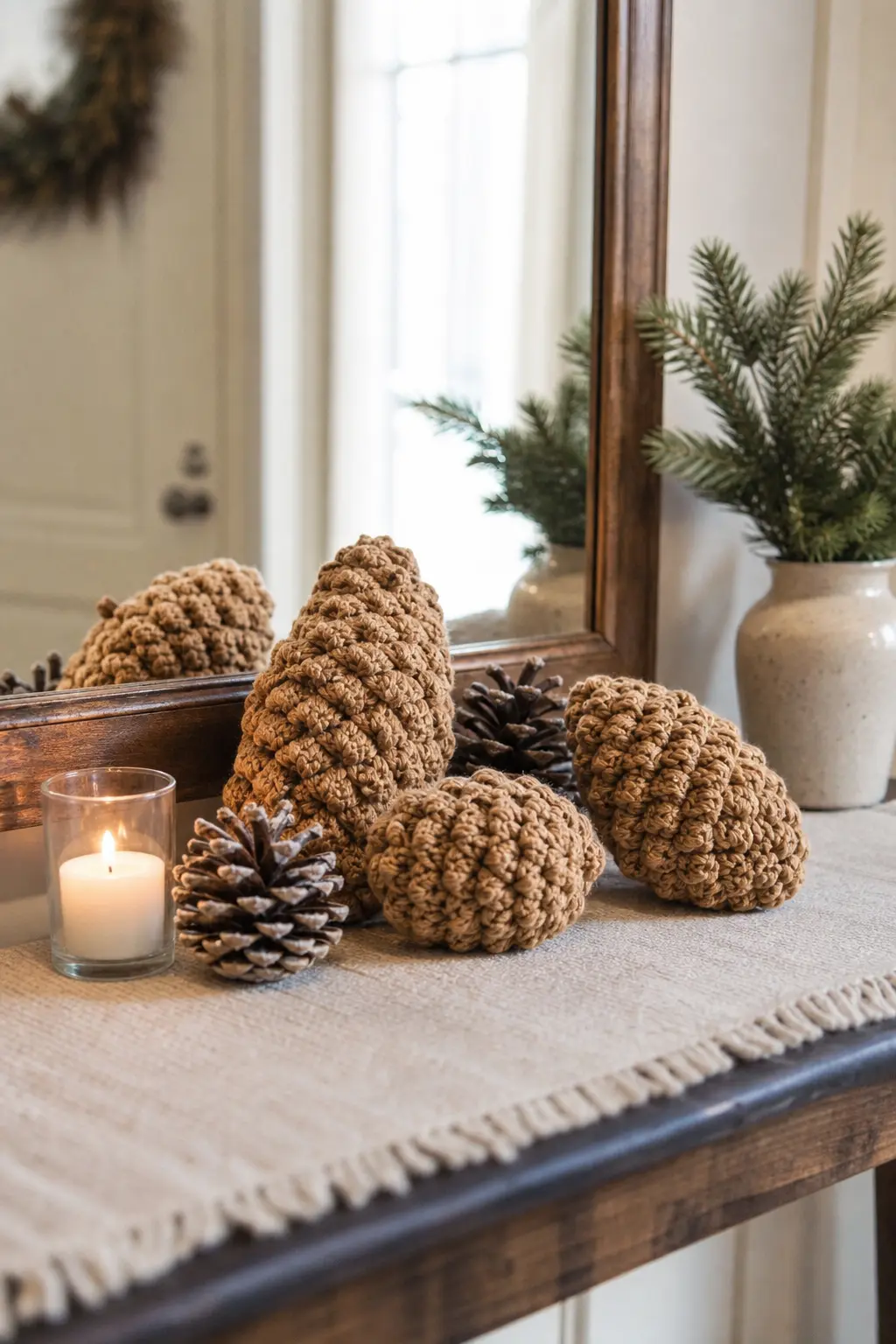
A Pinecone Shape in Front Post Stitches
The front post double crochet worked in overlapping V-shapes on a flat oval base gives a pinecone texture that is convincing and tactile. The front post pinecone pattern works entirely in camel or warm brown DK: no colour changes, no complicated joining.
Stuff lightly with a small amount of toy filling before closing so it holds a three-dimensional shape without any armature. A few drops of cedarwood oil on the filling gives it a seasonal scent.
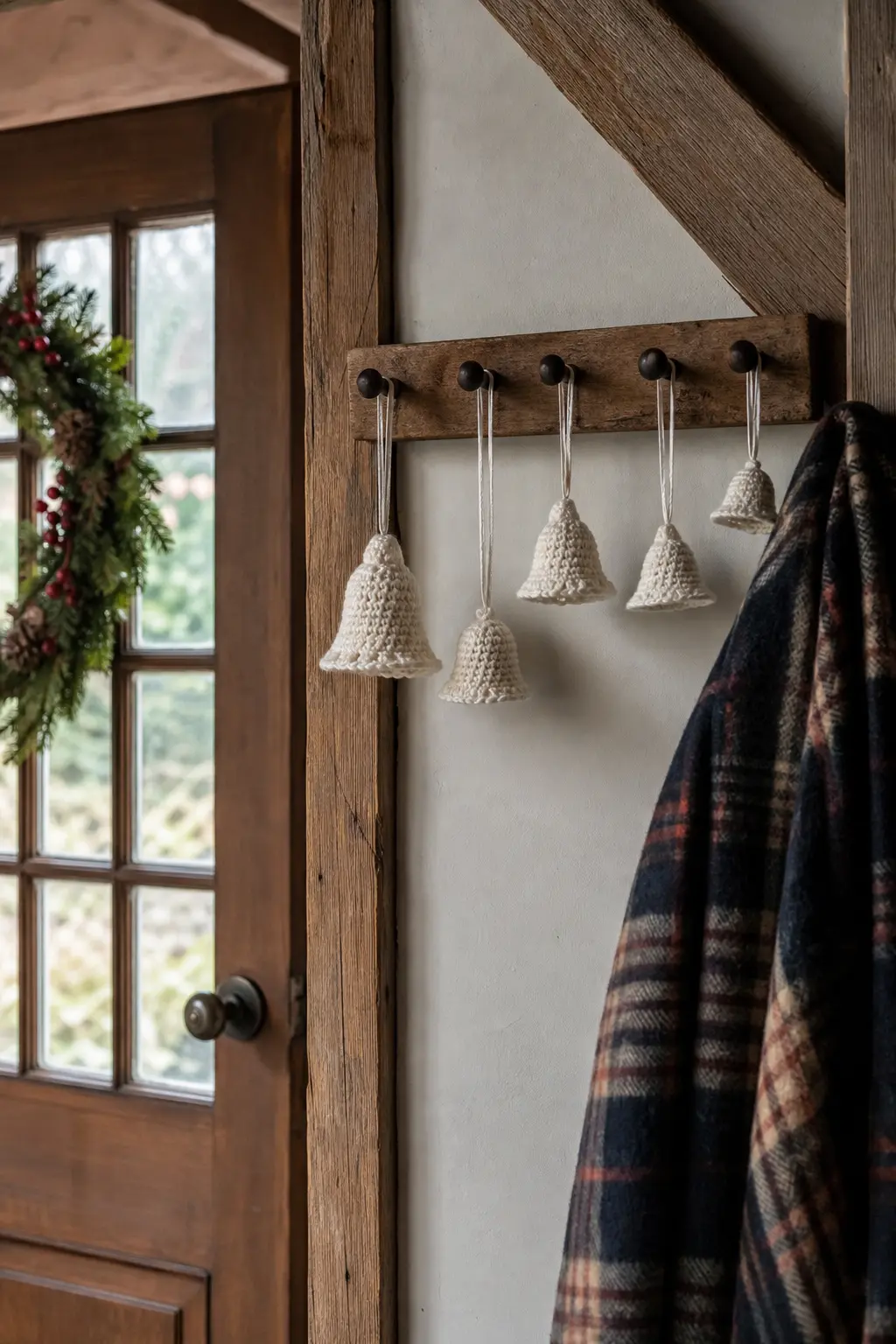
A Bell Shape in Decreasing Rounds
The crochet bell in decreasing rounds pattern starts with a wide round at the hem and reduces every other round to pull into a narrow opening at the top. It works in aran on a 5mm hook and finishes in about thirty minutes.
Work it in cream, stuff loosely, and close the top around a small jingle bell so it actually rings when touched. A length of ribbon sewn through the top round acts as the hanging loop and the clapper tie in one.
diy christmas decorations crochet: How to Choose Your First Project
Read the stitch count and the time note on each entry before you pick up a hook. The chain garland takes three minutes; the table mat takes closer to fifty. Neither is wrong, they are just different afternoons. Start with whatever matches the time you actually have right now, not the time you wish you had.
Yarn weight matters more than hook size here. DK gives crisp detail on small ornaments; aran works quickly on larger pieces like the wreath ring cover and the mug cosy. Either way, use a 100 percent cotton or a wool-acrylic blend: both stiffen cleanly with a sugar-water spray when needed, and both hold a pressed shape overnight. See diy christmas ornaments and felt christmas ornaments for companion craft ideas that use the same palette.
The five palette colours travel well together. Oxblood and cream is the classic contrast; hunter green and camel reads warmer; twilight blue with cream looks Scandi rather than traditional. Pick one dominant, one accent, and leave it at that.
Frequently Asked Questions
What crochet Christmas decorations are easiest?
The easiest options for a beginner are the chain garland (which uses no stitches beyond a basic chain), the flat snowflake in one round, and the tiny wreath on a curtain ring. All three finish in under ten minutes and require only a hook, a small amount of yarn and the ability to make a chain or a slip stitch.
How do you stiffen a crochet snowflake?
Mix one part white granulated sugar with two parts warm water and stir until dissolved. Submerge the finished snowflake, squeeze out the excess liquid, then pin the piece flat to a foam blocking board using rust-proof pins. Leave it to dry completely, usually overnight. Spray starch from a can also works and dries faster, though the sugar-water method gives a firmer result.
What yarn works for Christmas ornaments?
DK weight cotton or a wool-acrylic blend in 4ply to DK is the most practical choice. Cotton gives crisp stitch definition on small pieces and stiffens cleanly; a wool-acrylic blend is faster to work at DK or aran weight and holds its shape without stiffening. Avoid 100 percent acrylic for anything you plan to stiffen, as it does not absorb starch well. For very fine ornaments such as the stiffened doily or the beaded icicle, a size 10 crochet cotton thread on a steel hook gives the most delicate result.
Can a beginner crochet a Christmas decoration?
Yes, provided the project suits the skills they already have. Anyone who can make a chain and work a double crochet can complete the flat snowflake, the chain garland, the bunting triangle, the granny square coaster and the jar lid cover without needing to learn a new technique. The key is choosing a project with a low stitch count and a simple flat construction, rather than starting with a shaped or joined piece.
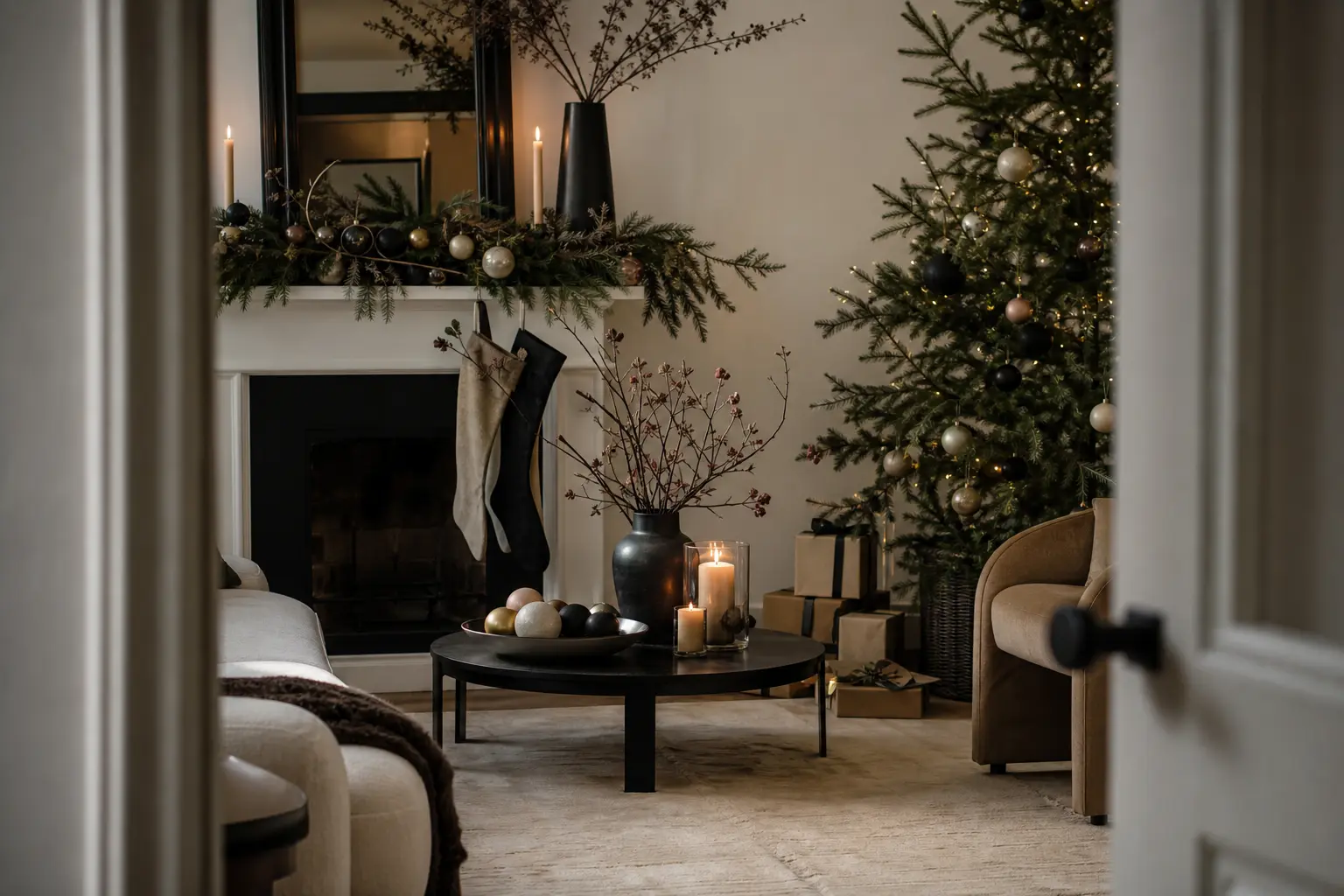
21 modern Christmas decor ideas in chalk, graphite, walnut and brass, carried from the tree to the p
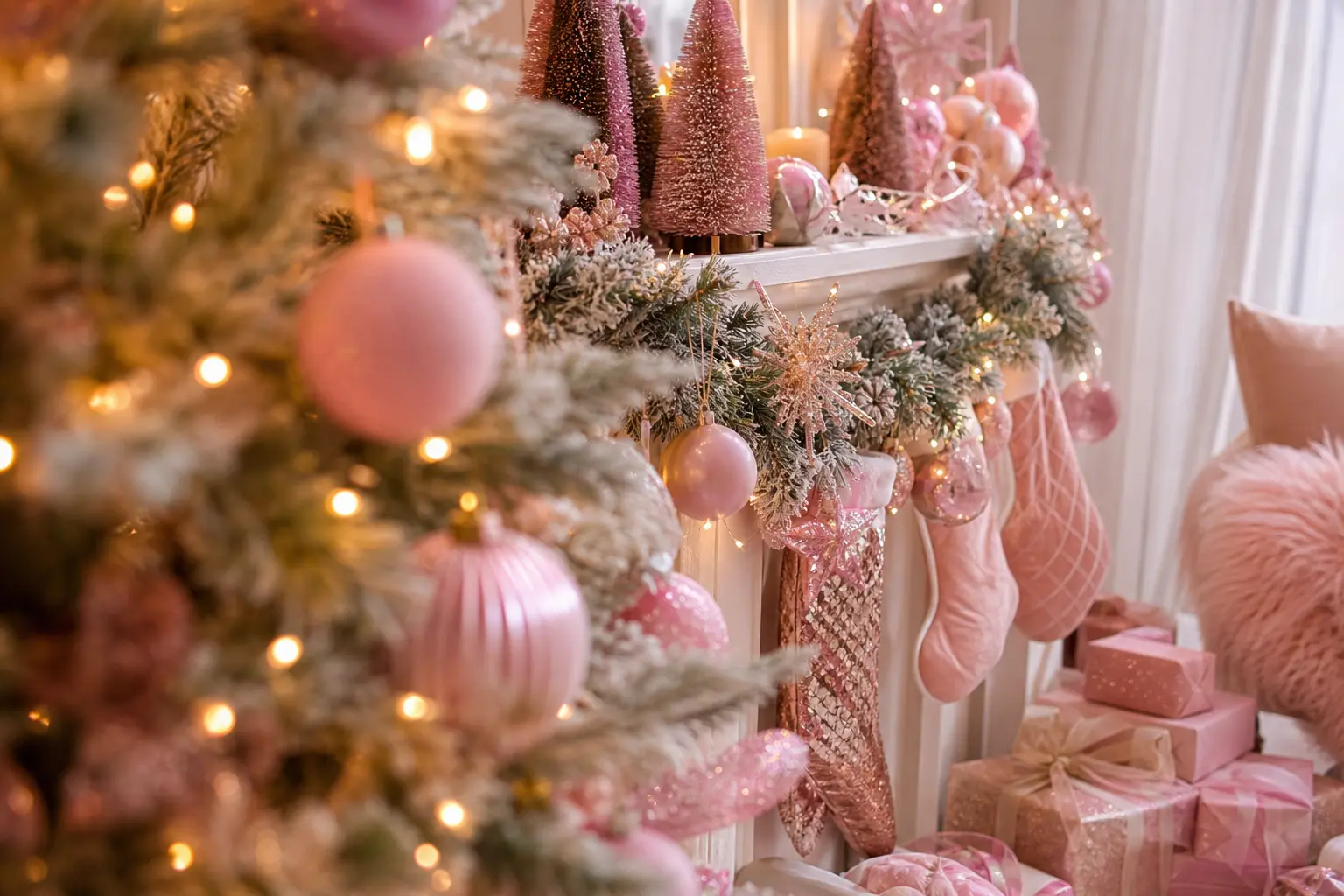
26 pink Christmas decorations for a whole house, blush to bubblegum with gold and velvet bows, room

Uncover 15 thoughtful last-minute gifts that will transform you from panicked shopper to beloved dau
Leave a Reply