

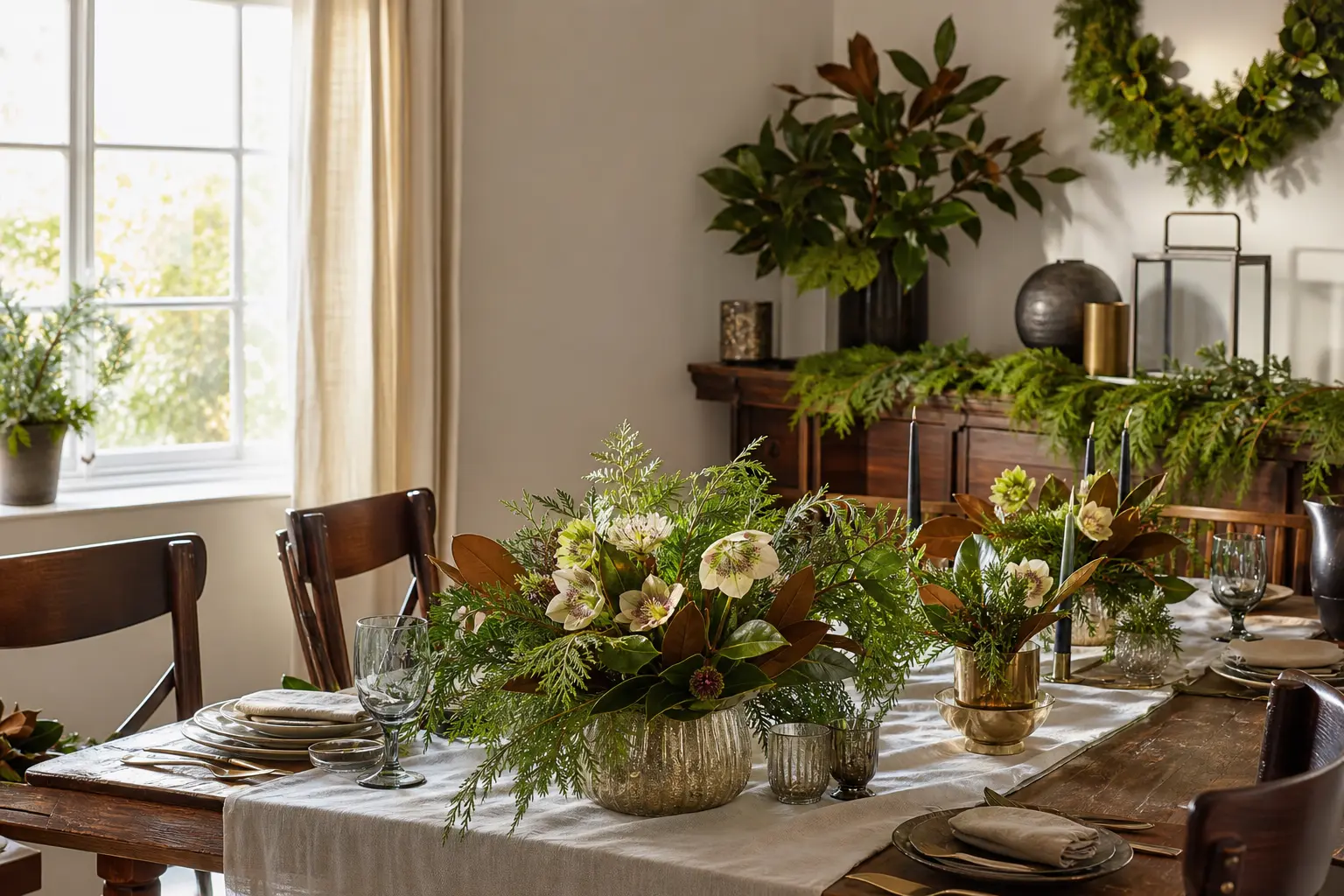
The honest question nobody in the floral world answers: you want christmas floral arrangements that look right on the twenty-fifth and are still standing on the twenty-seventh, in a room where the heating has been running since noon. Designers have swung back hard to real greenery and away from faux, which is the right call aesthetically and the wrong call if you forget that a warm sitting room is essentially a slow oven for cut stems.
Every idea here is sorted by staying power, longest to shortest, so you can match the flower to its job. The palette runs through cedar green, magnolia brown, oxblood, cream and brass, because that combination photographs well and looks intentional rather than assembled in a panic. No floral foam anywhere, no arrangement that needs daily water changes, nothing that will drop petals on a polished table.
Read down for the full list, or jump straight to christmas party ideas and games if the flowers are sorted and the evening is not. For the broader table picture, the hub on christmas table decorations has everything else.
This post contains affiliate links. If you buy through them, I may earn a small commission at no extra cost to you.
The Long-Haul Stems (Five Days and More)
These are the workhorses. Cut them on the twenty-second and they will still look composed on the twenty-seventh, even with the heating on full and a room full of people breathing warm air at them. They form the backbone of any arrangement in this list.
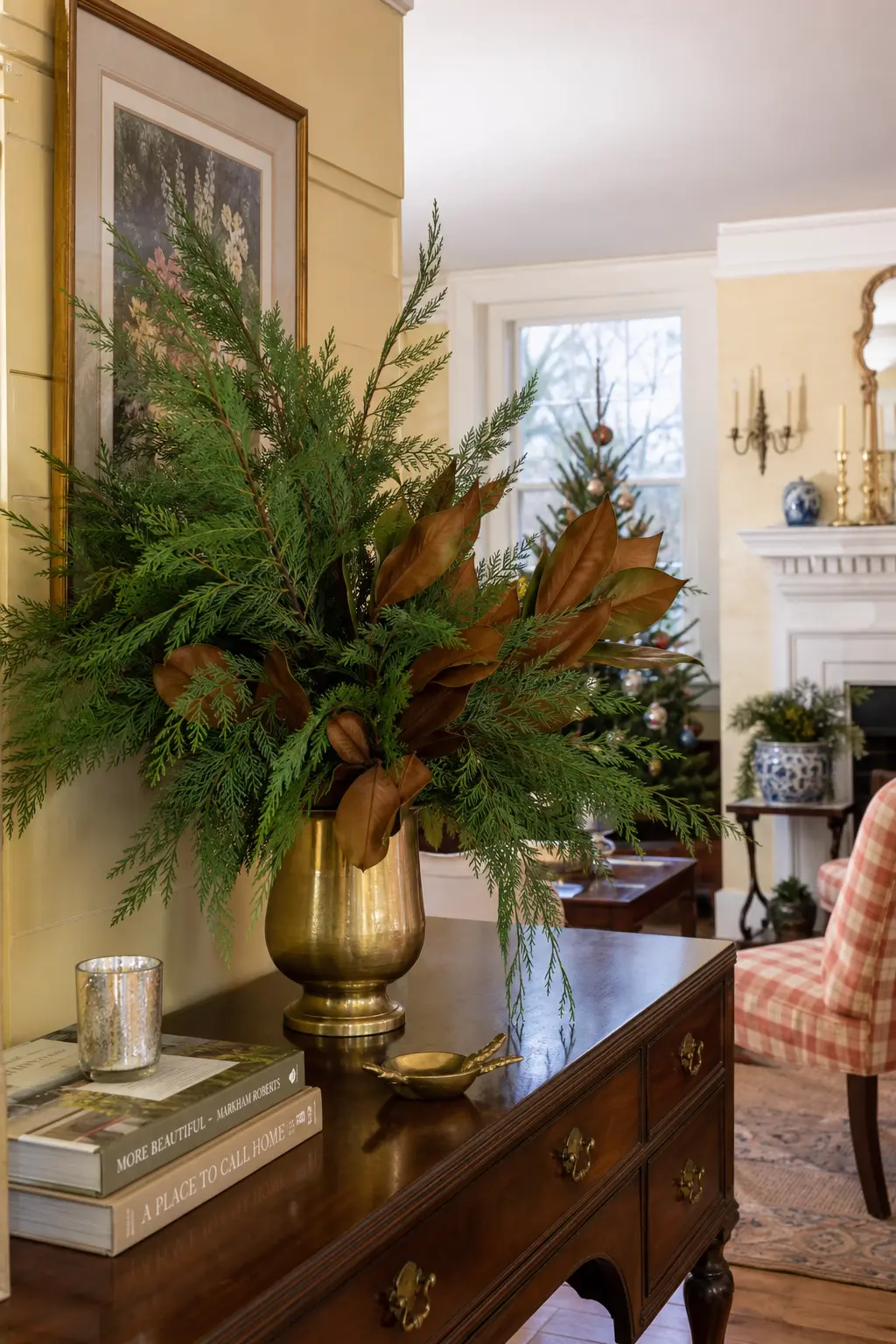
Cedar and Magnolia: The Five-Day Anchor
Cedar branch and dried magnolia leaf are the two things a heated room cannot kill before the twenty-seventh. Cedar holds its colour and its scent for well over a week once cut; magnolia leaves, brown and leathery, look as good on day seven as on day one because they are effectively already dried when you buy them.
Build everything else around these two. A wide-necked brass or terracotta vase, cedar branches pushed in first for height, magnolia leaves layered around the base so they spill over the rim slightly. The combination reads as composed without looking arranged, which is the whole point.
No water needed for the magnolia leaves. The cedar drinks from a vase with about eight centimetres of cold water, refreshed once if you remember.
🛍 Shopping guide
Berried Holly With Woody Stems
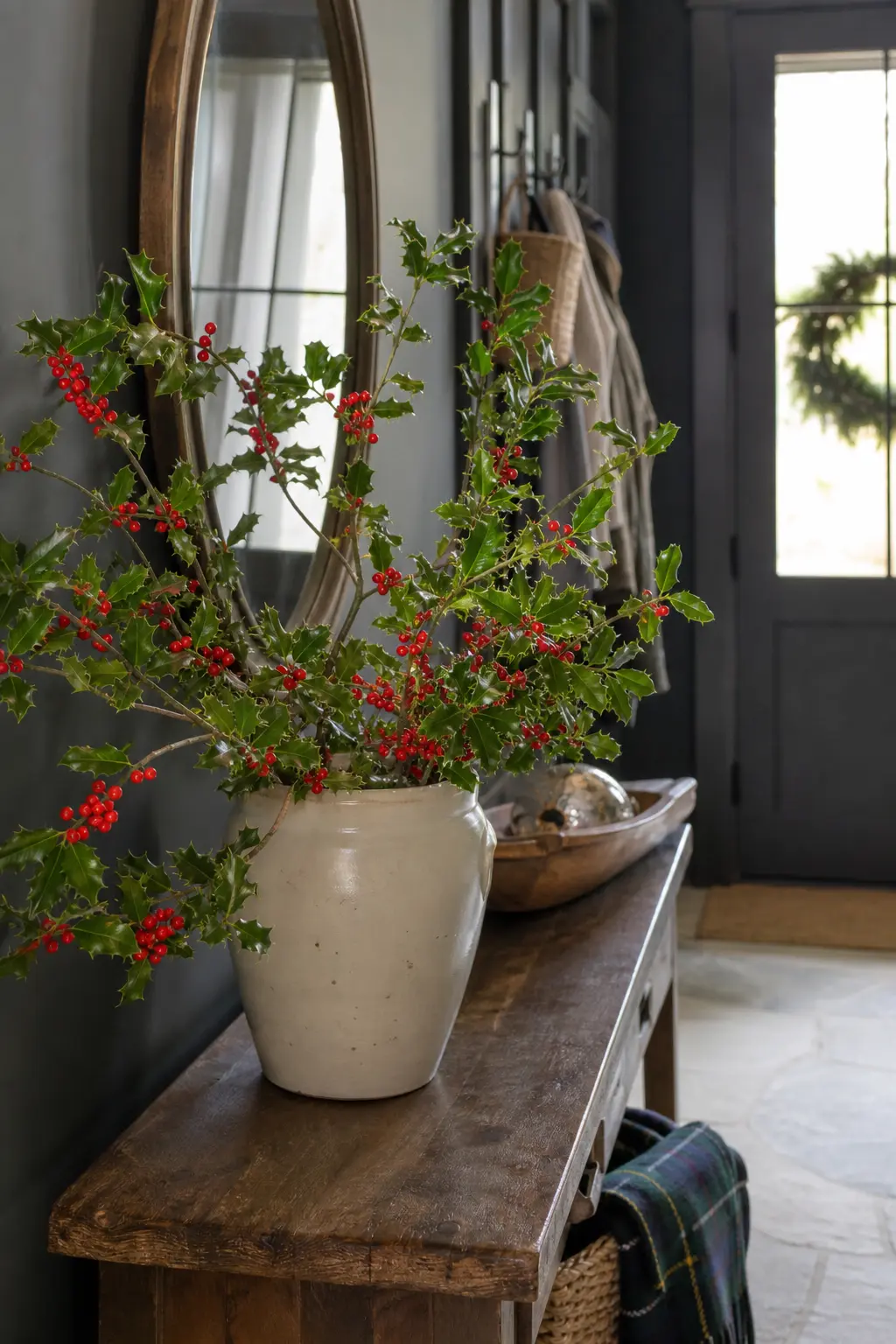
Holly with berries is a five-day stem when you treat it correctly. The mistake is cutting the stem straight across like a soft flower. Split the bottom two centimetres vertically with sharp scissors and the woody stem can actually draw water, which changes everything.
Oxblood berries against cedar green leaves in a short, heavy vase in cream or brass: this is the arrangement that photographs in candlelight and looks like someone knew what they were doing. Keep the water level consistent rather than deep, and remove any leaves that sit below the waterline before they rot.
Holly does drop, but only if you buy stems already overloaded with ripe berries. Choose stems where some berries are still slightly orange-red rather than full oxblood, and they will ripen in the vase rather than fall.
🛍 Shopping guide
Pine and Rosemary Together
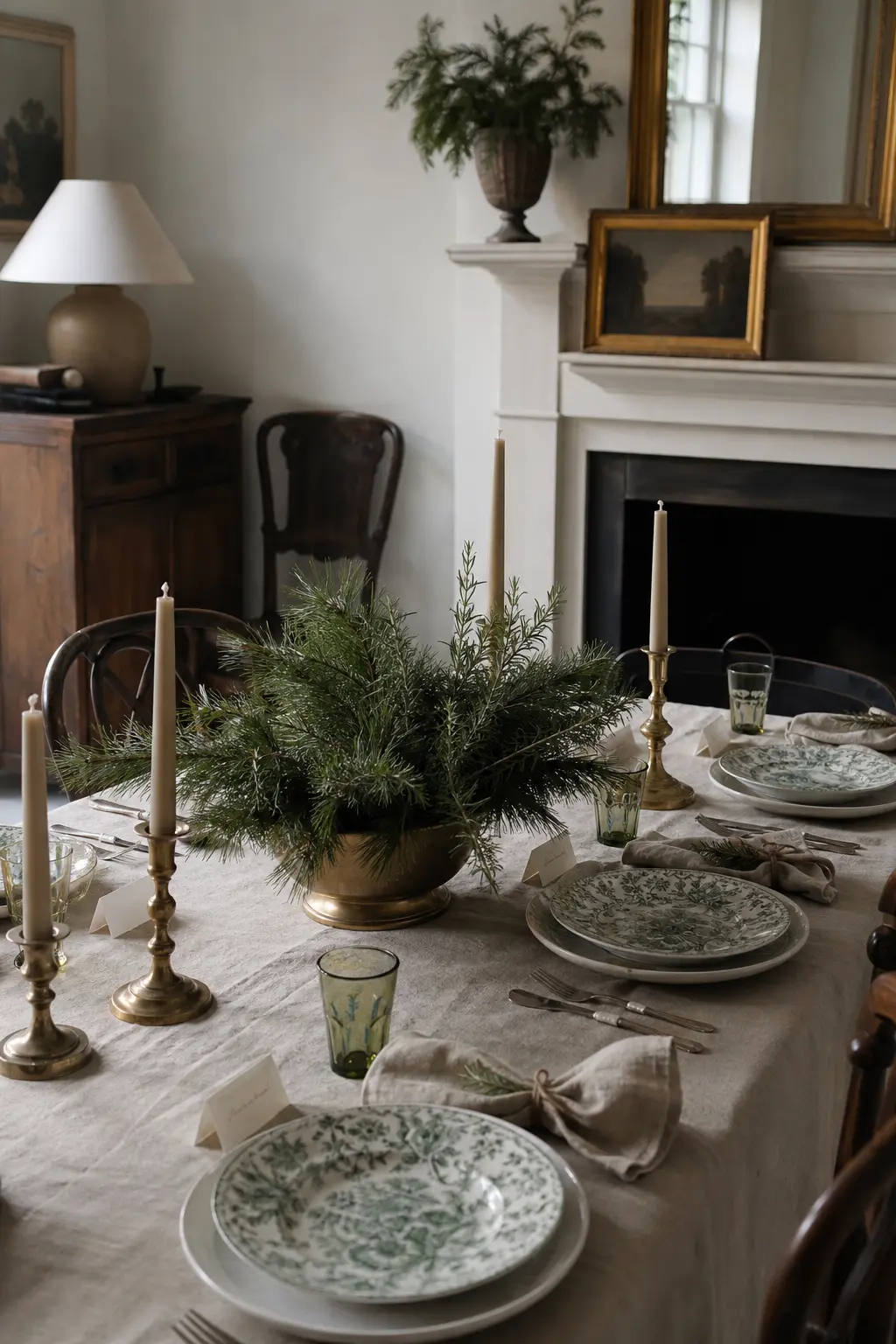
Pine and rosemary are both tough and both fragrant, and together they read as a deliberate pairing rather than two things that ended up in the same vase. Pine holds for a full week in water; rosemary, technically a herb, lasts just as long and adds a fine texture that pine alone cannot provide.
Use a low, wide bowl in brass or dark terracotta. Cut the stems short enough that the arrangement sits below eye level on a dining table, so it does not block conversation. The scent travels without any candle needed.
Rosemary stems are woody, so split them at the base the same way you would holly. Remove the lowest needles and leaves before they go into the water.
Spruce Tips in a Low Bowl
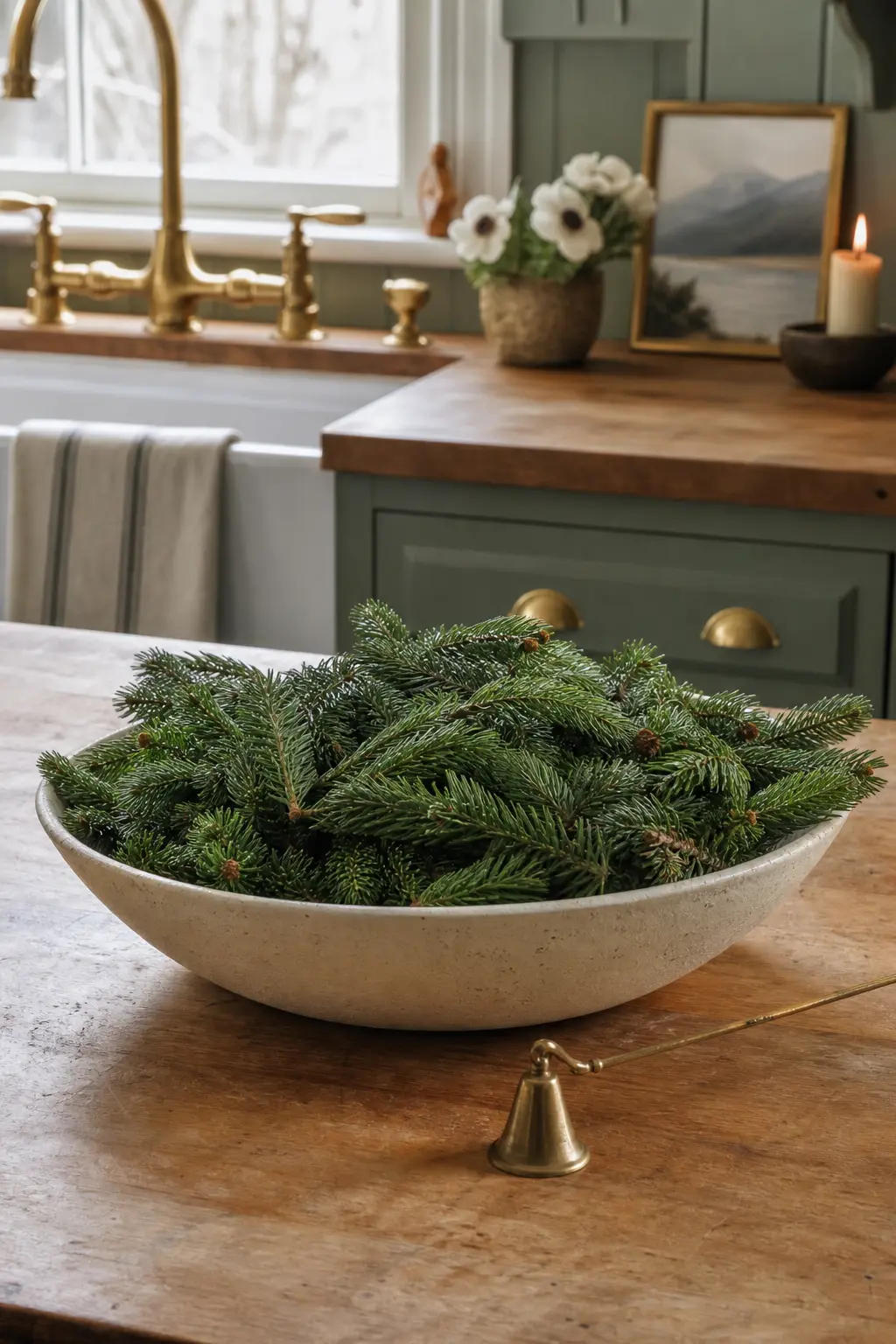
Spruce tips, cut from any Christmas tree branch with sharp scissors, last four to six days in a shallow bowl of water. They stay springy, stay green and, if the bowl is wide enough, they spread naturally into a low cushion of dark green that needs no arranging beyond the initial placement.
A wide, flat bowl in cream or smoke-grey, eight to ten centimetres of water, tips packed in close so they support each other. Add a few brass ornament balls between them if the occasion calls for it, then remove them after the twenty-fifth and the bowl continues working through the week as pure greenery.
This is the arrangement for people who do not arrange flowers. There is no wrong way to place a spruce tip in a bowl of water.
🛍 Shopping guide
Eucalyptus That Dries in Place
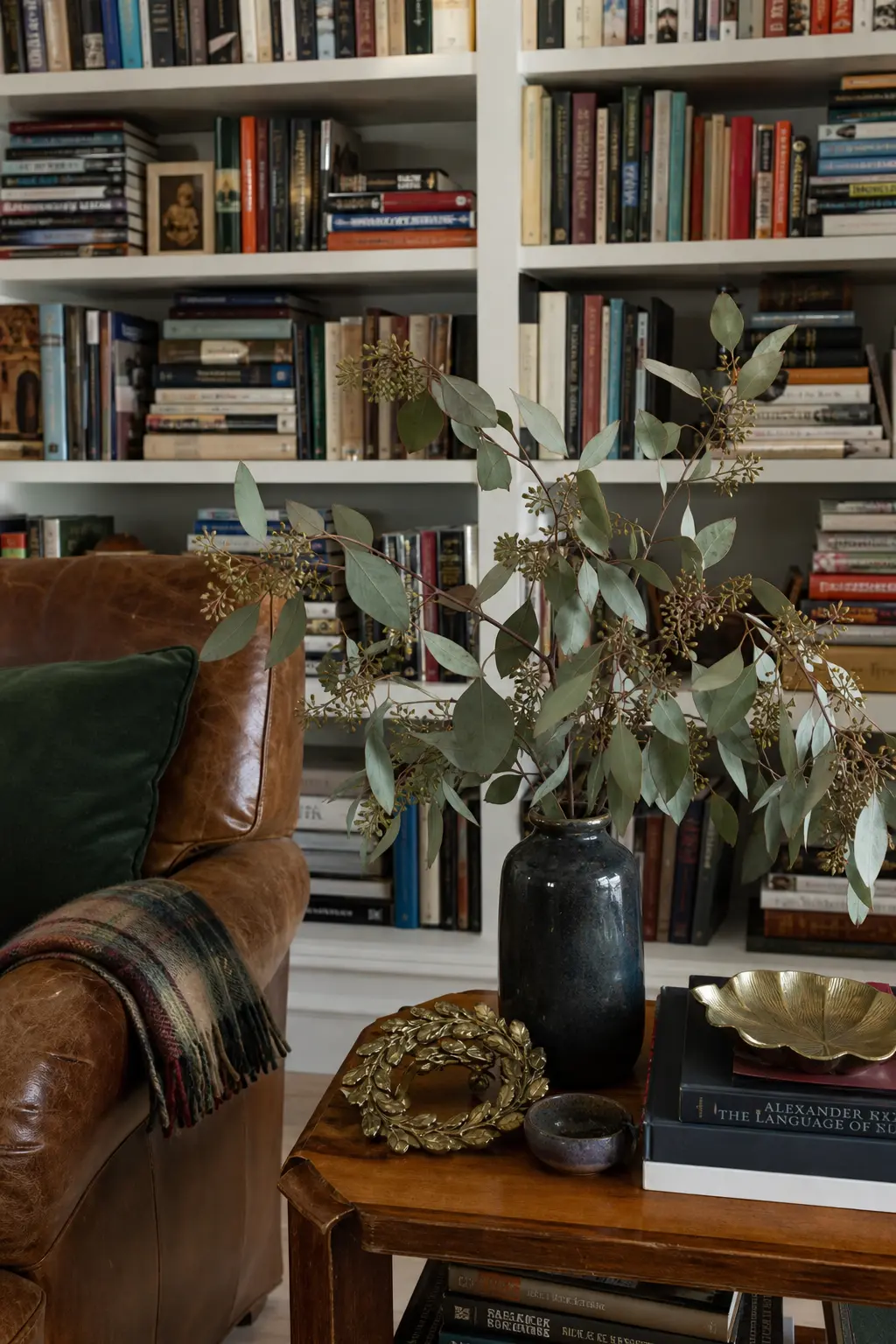
Eucalyptus is the most forgiving stem on this list because it does not die in a heated room: it dries. The silver-green leaves hold their shape, fade very slightly to a dustier tone that still reads as intentional, and the stems stay firm. An arrangement built on eucalyptus on the twenty-second will look just as composed on New Year’s Eve.
Use seeded eucalyptus for the texture of the seed clusters, or silver-dollar eucalyptus for the round, coin-shaped leaves that photograph well in candlelight. Mix both in a tall glass or dark ceramic vase and add one fresh stem from another entry in this list at the front for contrast.
No water is strictly necessary once the stems are established, but a small amount of water in the early days slows the transition from fresh to dried so the colour stays truer for longer.
🛍 Shopping guide
The Middle Ground (Three to Five Days)
Solid performers that will carry you through Christmas Day and the day after, as long as you give them a clean vase and fresh cold water to start. They reward a little preparation and punish none.
Dried Hydrangea With Fresh Ivy
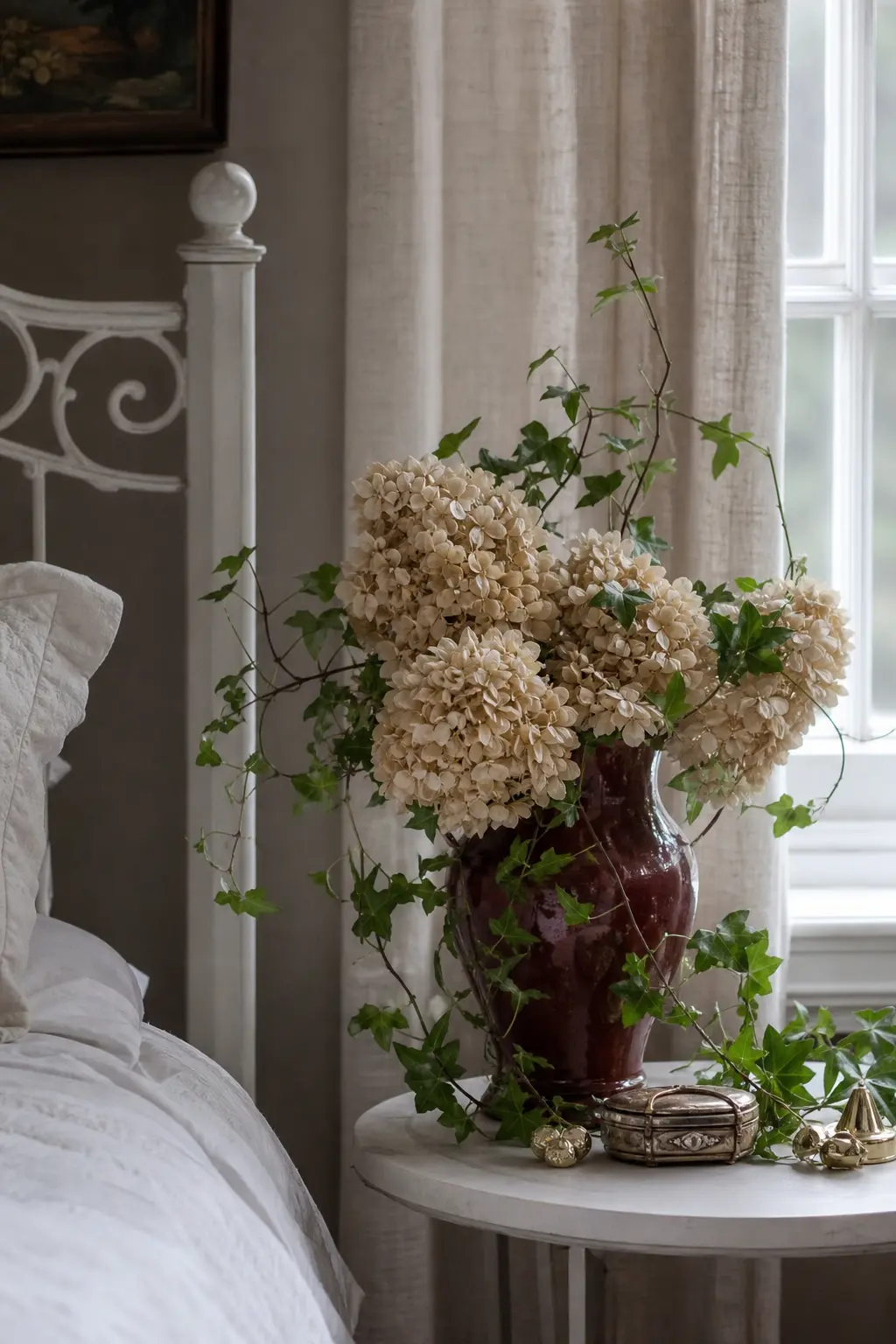
Dried hydrangea heads in cream or dusty rose hold indefinitely in any temperature, which makes them the anchor for an arrangement that also contains something live. Fresh ivy, which lasts three to four days in water in a heated room, trails forward from the vase while the hydrangea heads sit behind it, stable and unchanging.
When the ivy begins to go on day four, pull it and replace it with a sprig of rosemary or eucalyptus. The hydrangea stays. This is the closest thing to a modular arrangement on this list: one permanent layer and one rotating fresh layer that costs almost nothing to swap.
A medium-height vase in oxblood or dark brass suits dried hydrangea better than anything clear or pale, because it keeps the eye on the texture rather than the water level.
🛍 Shopping guide
Amaryllis as a Single Stem
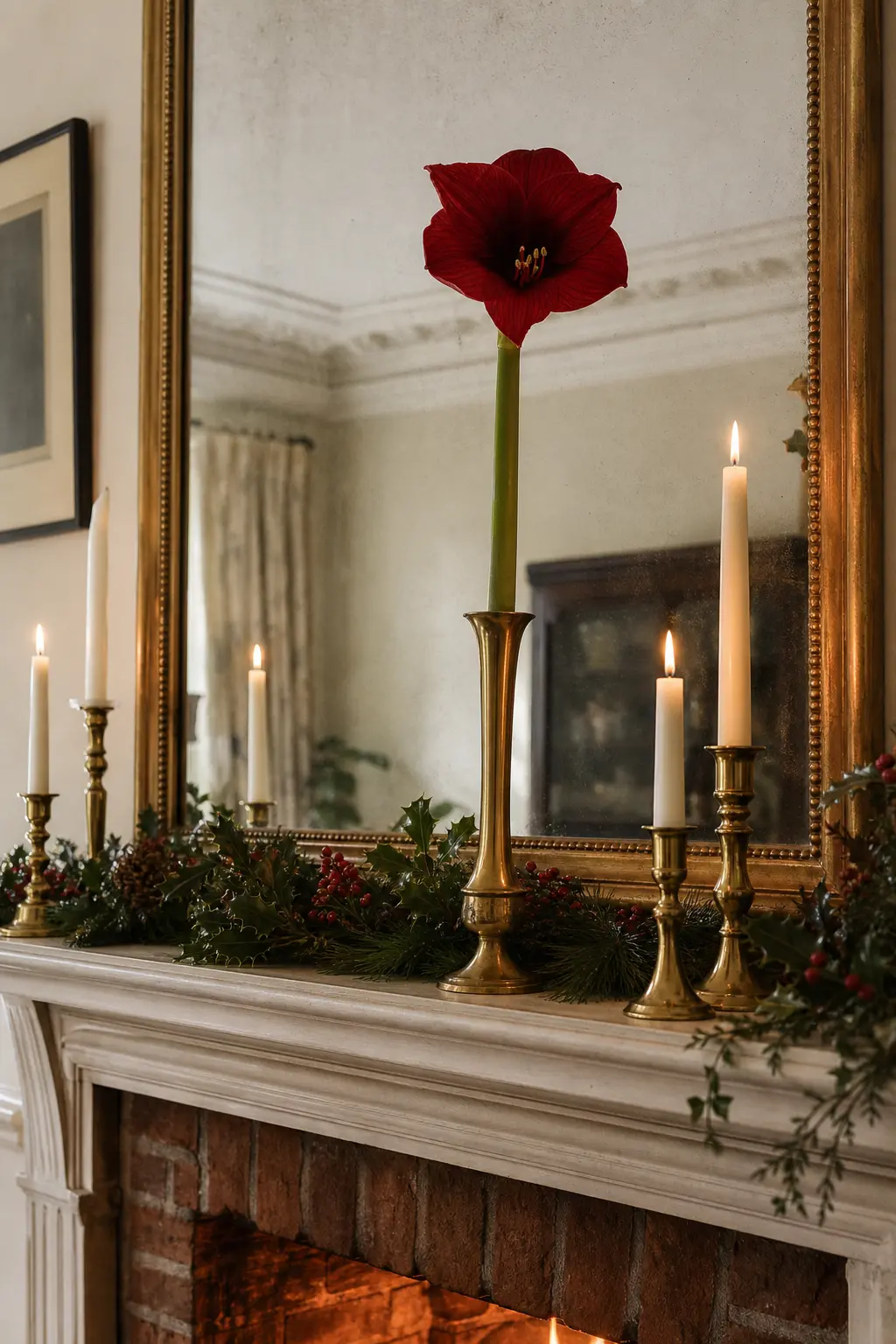
One amaryllis stem in a narrow vase is a complete arrangement. The flower is large enough that it fills the space on its own, the stem is architectural, and the whole thing takes thirty seconds to put together. Choose oxblood or deep burgundy over red: the darker tones hold better in candlelight and do not compete with everything else on a dressed table.
Amaryllis lasts four to five days in a heated room if you buy it with the bud just starting to open rather than fully blown. The hollow stem is the weak point: keep it full of water by inverting the stem, filling it, then plugging the base with a small piece of cotton wool before placing it in the vase.
A single stem in a tall, thin vase of dark glass or brass has more presence than a bunch of almost anything else. This is confidence, not minimalism.
Dried Seed Heads With One Fresh Stem
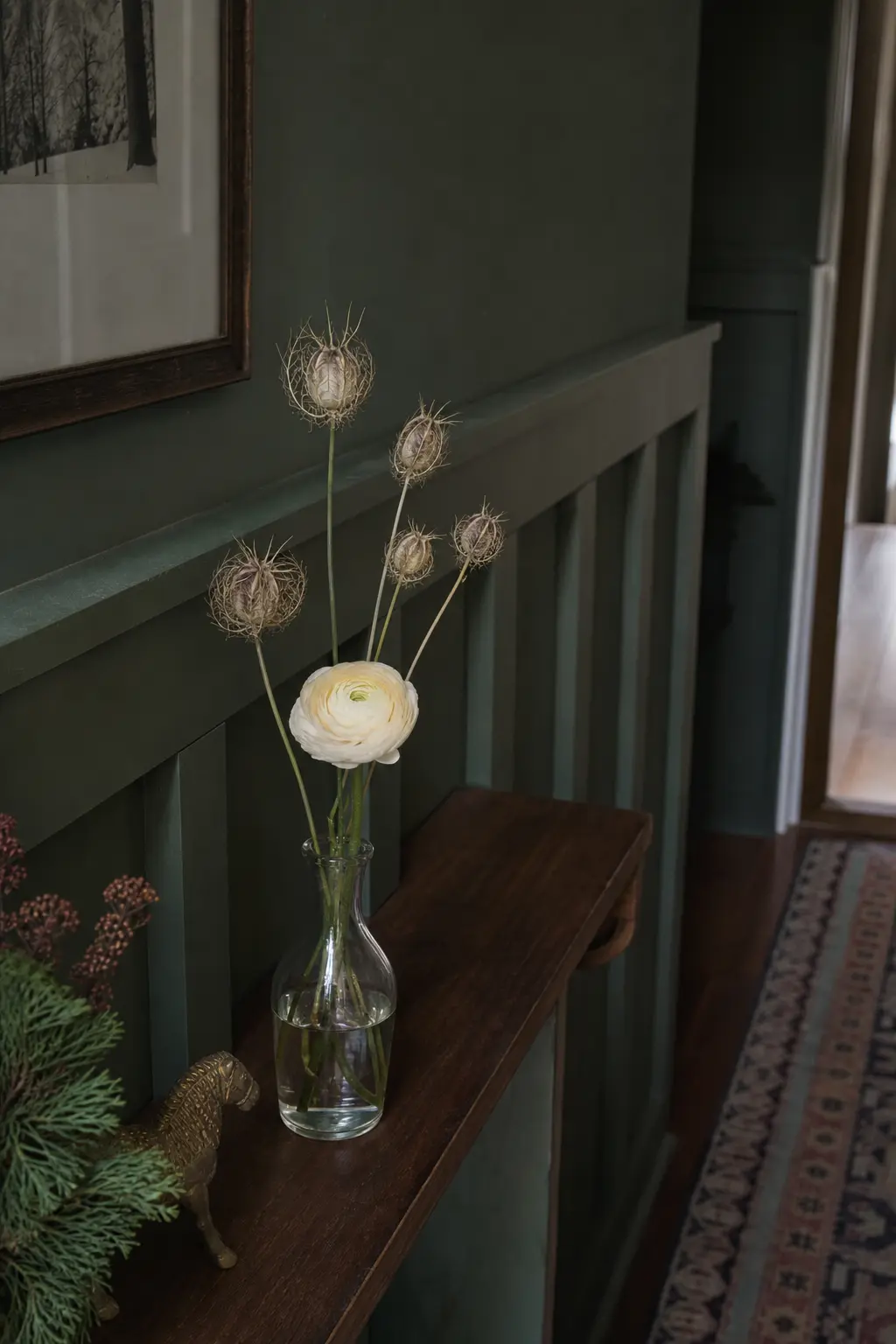
Dried nigella, poppy or allium seed heads last forever and cost very little. Pair one type with a single fresh stem from this list, such as a hellebore or a ranunculus, and the combination looks considered in a way that neither does alone. The fresh stem is the guest of honour; the dried heads are the setting.
Use an odd number of dried stems and one fresh one. Three dried, one fresh. Five dried, one fresh. The fresh stem goes at the front, slightly lower than the dried heads behind it, so it reads as the focal point.
When the fresh stem finishes, the dried arrangement continues without it, which means you are not dismantling anything. You are simply moving forward.
🛍 Shopping guide
Waxflower for Texture That Holds
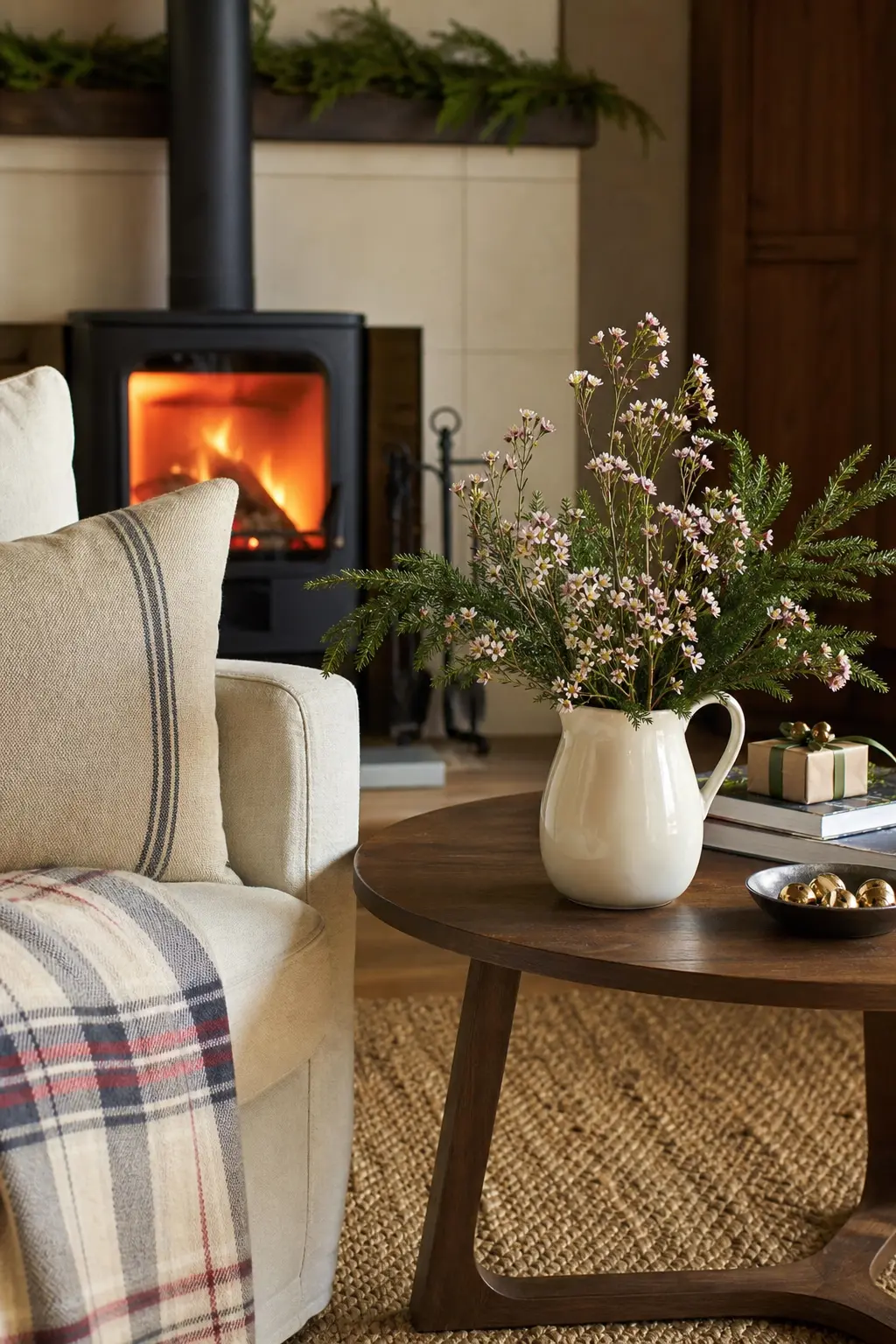
Waxflower is the filler flower that earns its place in a heated room: it holds for four to five days, the tiny buds open slowly, and the stems are woody enough to survive conditions that would collapse softer flowers. The scent is faint and clean, which pairs well with pine and rosemary without competing.
Use it to fill the gaps in an arrangement built from one of the longer-lasting entries here, particularly around cedar or holly where the structure is strong but the texture is coarse. Waxflower softens the edges without adding fragility to the whole arrangement.
White or blush-cream waxflower suits this palette best. Pink tips read as festive in a quieter way than anything more saturated.
🛍 Shopping guide
The Reliable Unfashionables (Four Days or More)
These flowers have been out of the style conversation long enough that using them well now reads as a considered choice rather than a default. They also simply last, which matters more than anything else in a heated room.
Carnations: Unfashionable and Unkillable
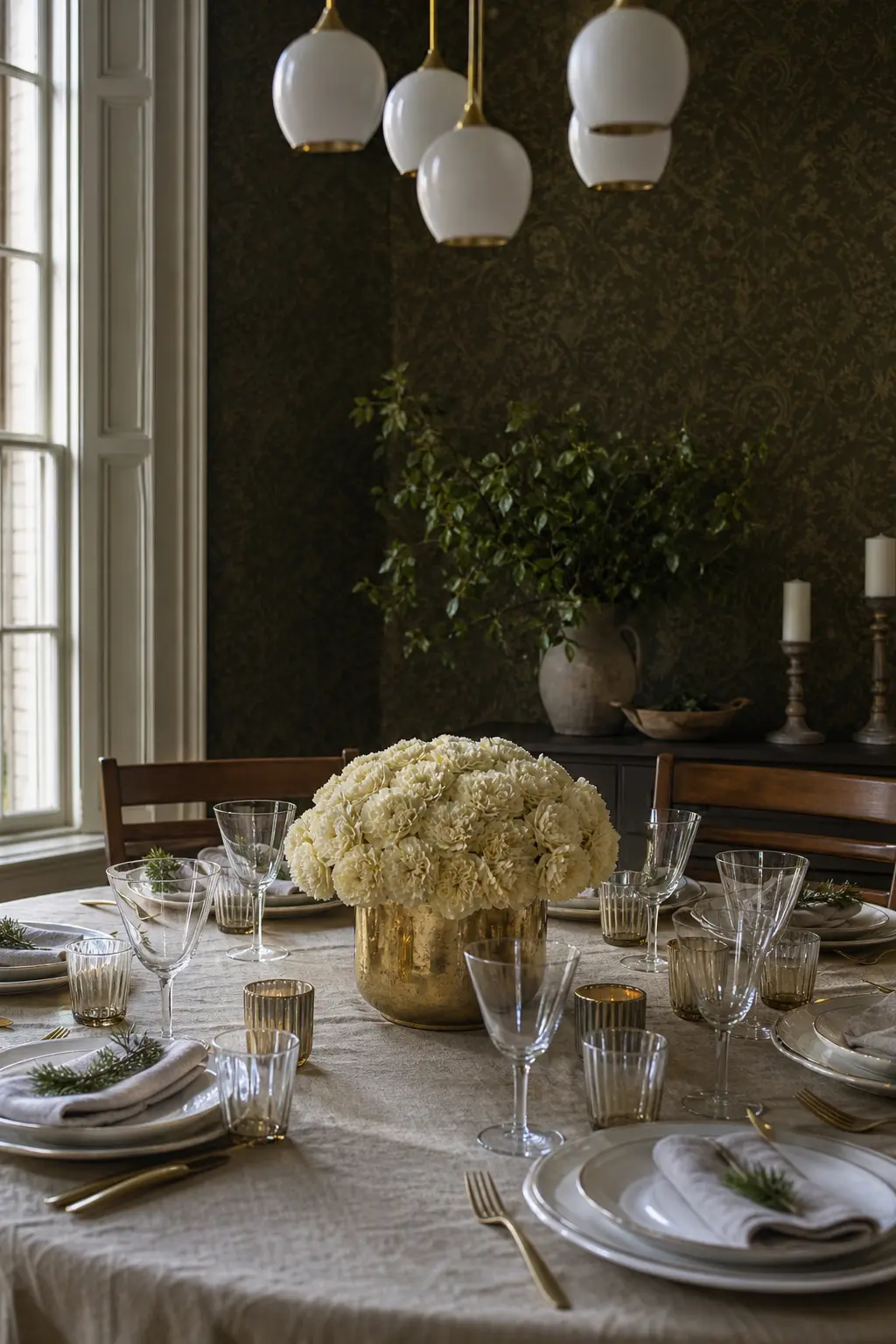
Carnations last longer than almost every flower on this list in a heated room, sometimes seven or eight days, which is the real reason to use them. Fashion has moved against them and that is precisely the moment to use them with confidence, in a vase that signals the choice was deliberate.
Cream or dusty burgundy carnations in a dark brass or oxblood vase, tightly grouped with stems cut to the same length so the heads sit just above the rim: this looks like a nineteenth-century Dutch still life rather than a petrol-station bunch, and the difference is entirely in the presentation.
Cut carnations are also cheaper than almost everything else here, which means you can fill a large vase without anxiety. Use the budget saved on the vessel.
🛍 Shopping guide
Hellebores in a Shallow Dish
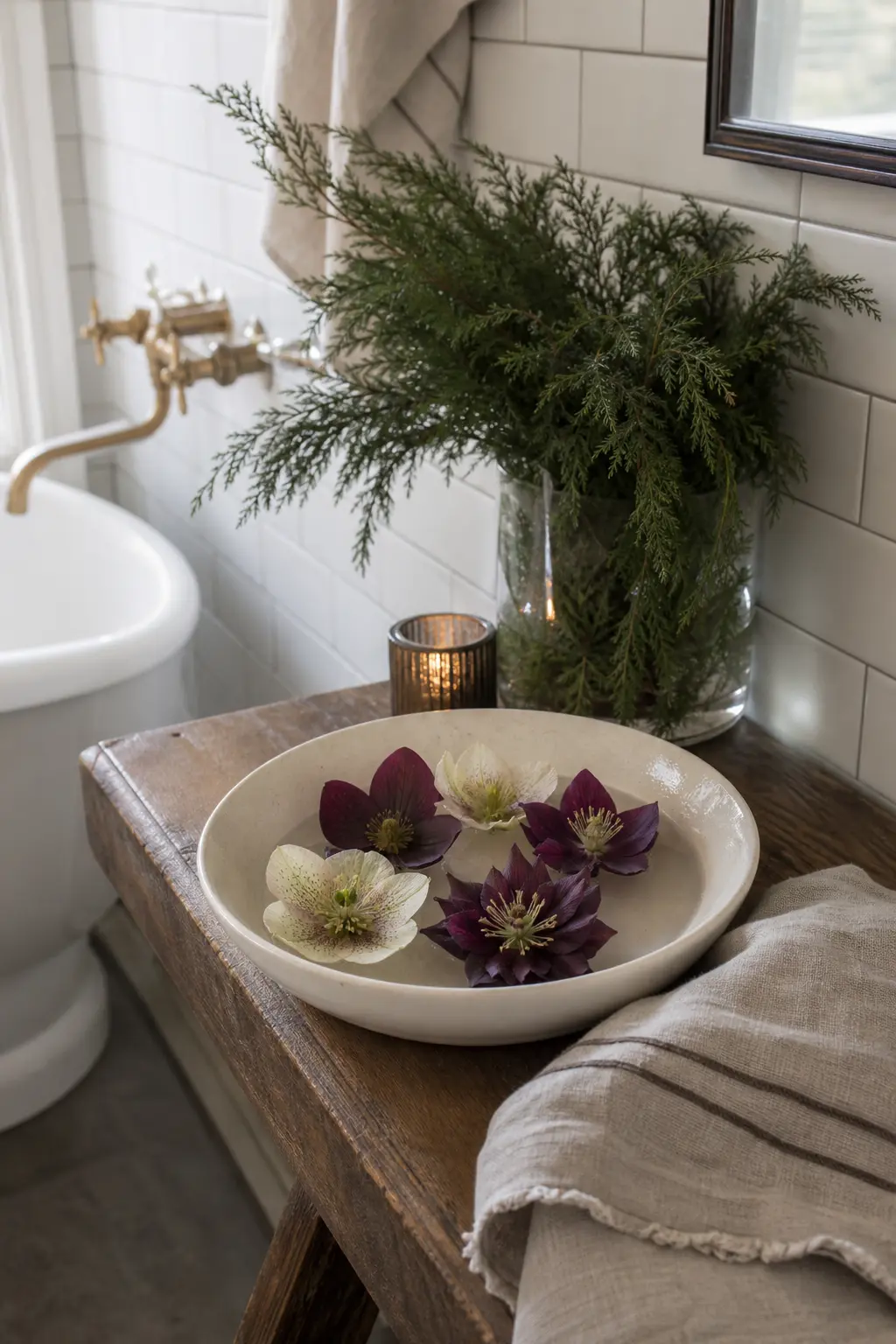
Hellebores are the flower that wilts dramatically in a tall vase and thrives in a shallow dish. The stems are short-lived at the best of times; in a heated room they need to be in water almost up to the base of the flower head. A wide, shallow dish solves this exactly.
Float four or five hellebore heads in a low dish of cold water: they will last three to four days this way, facing upward, which is actually the direction they are most beautiful. Oxblood, deep plum or cream varieties suit this palette; mix two tones in the same dish for depth without complication.
Keep the dish away from the heating vent. Refill the water once, on the twenty-fourth. Then leave them alone.
🛍 Shopping guide
Handle With Conditions (Two to Three Days, Placement Matters)
Beautiful, brief, and non-negotiable about where they sit. Put these where the heating vent does not reach and the sun does not hit directly. Treat the placement as part of the arrangement and they will earn their spot.
Narcissus Kept Away From Other Flowers
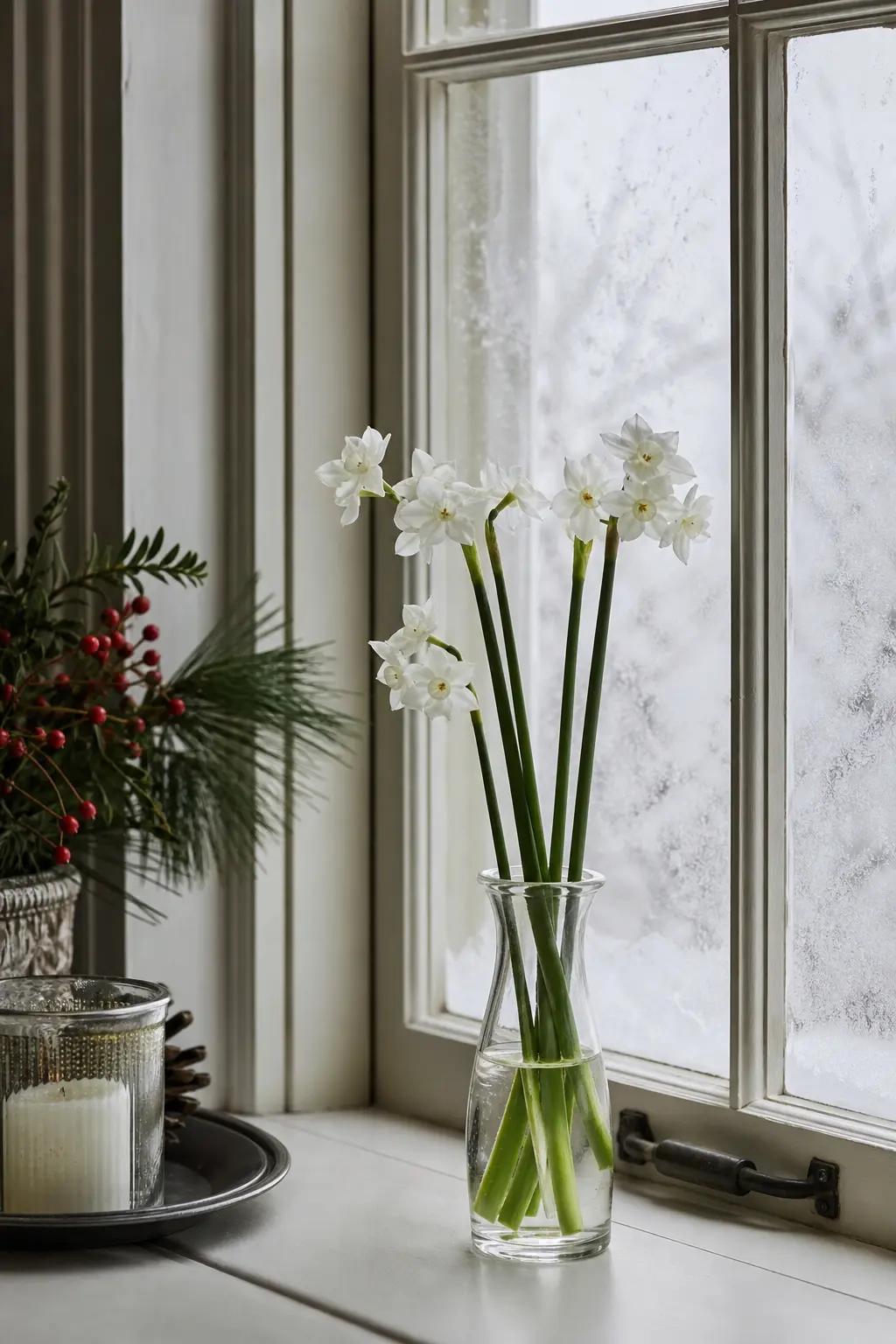
Narcissus is the rule-breaker on this list: it lasts four or five days on its own but shortens the life of every other stem it shares water with. It must have its own vase, in its own spot, with no other flowers nearby. Follow that rule and it earns its place.
A cluster of narcissus in a simple glass or cream ceramic vase, placed on a windowsill or a bathroom shelf where it is isolated and slightly cool, smells extraordinary and looks right without any styling. The stems are delicate, so handle them once, place them, and do not rearrange.
Paperwhites are the variety best suited to this palette: cream petals, fine stems, a scent that carries without overpowering.
Tulips That Will Bend and Are Meant To
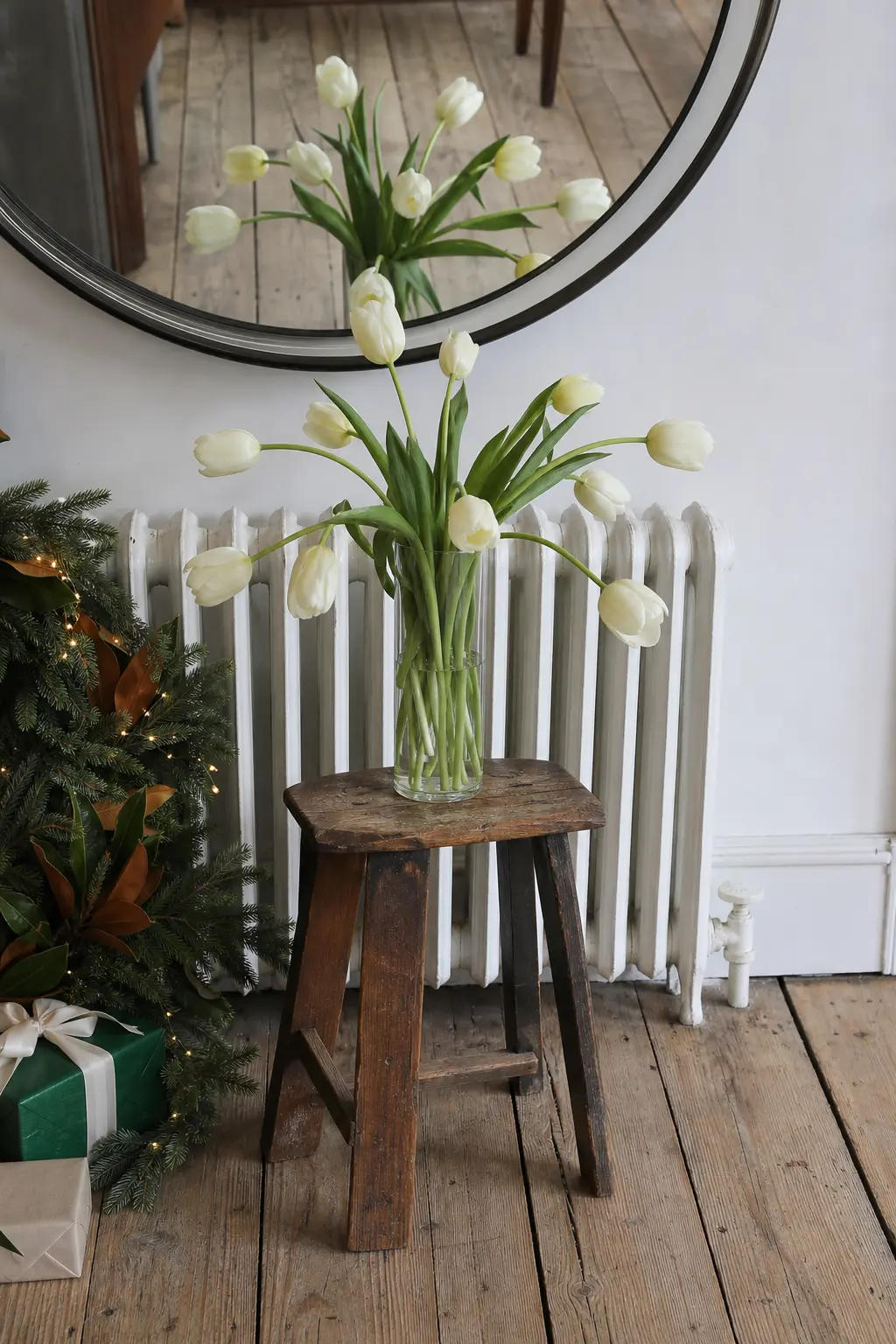
Tulips move. They bend toward the light, they lean, they droop and curve in ways that cannot be controlled and should not be resisted. In a heated room they last two to three days before the heads begin to open fully. The question is not how to stop them bending: it is how to choose a vase where the bending is the arrangement.
A tall, clear glass vase with ten or twelve tulips in cream or oxblood, stems long and uncrowded, allows each stem to find its own angle. By the twenty-fifth, the arrangement looks like something a Dutch master placed deliberately. It is not the arrangement you started with and it is better.
Buy tulips with buds tightly closed on the twenty-second and they will peak on the twenty-fourth or twenty-fifth.
🛍 Shopping guide
Anemones in a Cool Spot Only
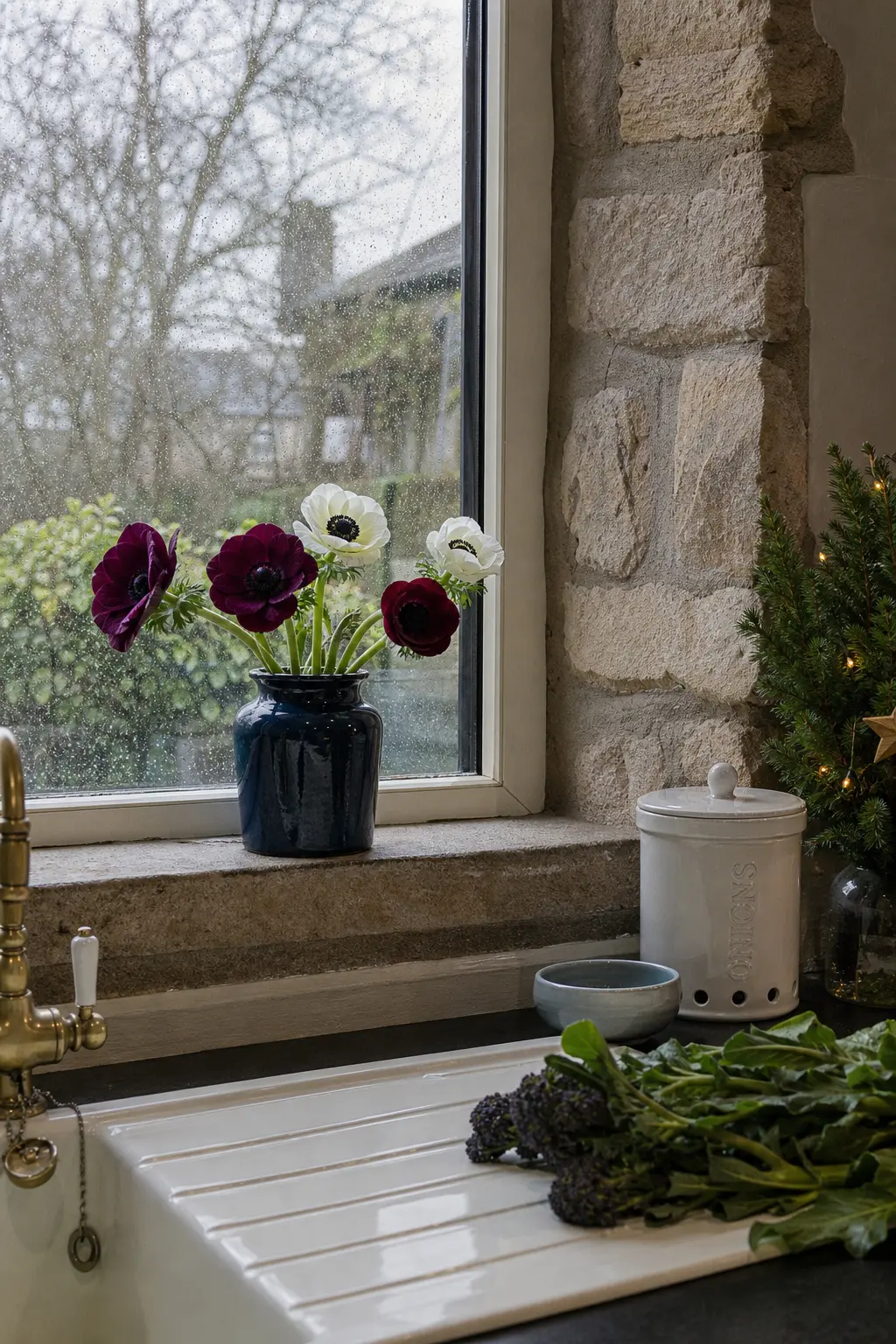
Anemones with black centres and deep oxblood or cream petals are among the most beautiful flowers in this palette and among the least tolerant of heat. Two days in a warm room is generous. Three days requires a spot that stays genuinely cool: a north-facing windowsill, a room that is closed off from the central heating, a conservatory that is not overheated.
If the placement is right, anemones are worth the constraint. Group them in a small, dark vase, stems cut short, heads close together. The black centres need no other decoration around them.
Buy them on the twenty-third rather than the twenty-second, and accept that they are the short-lived centrepiece for Christmas Day itself rather than the whole week.
Ranunculus for Two Days at Most
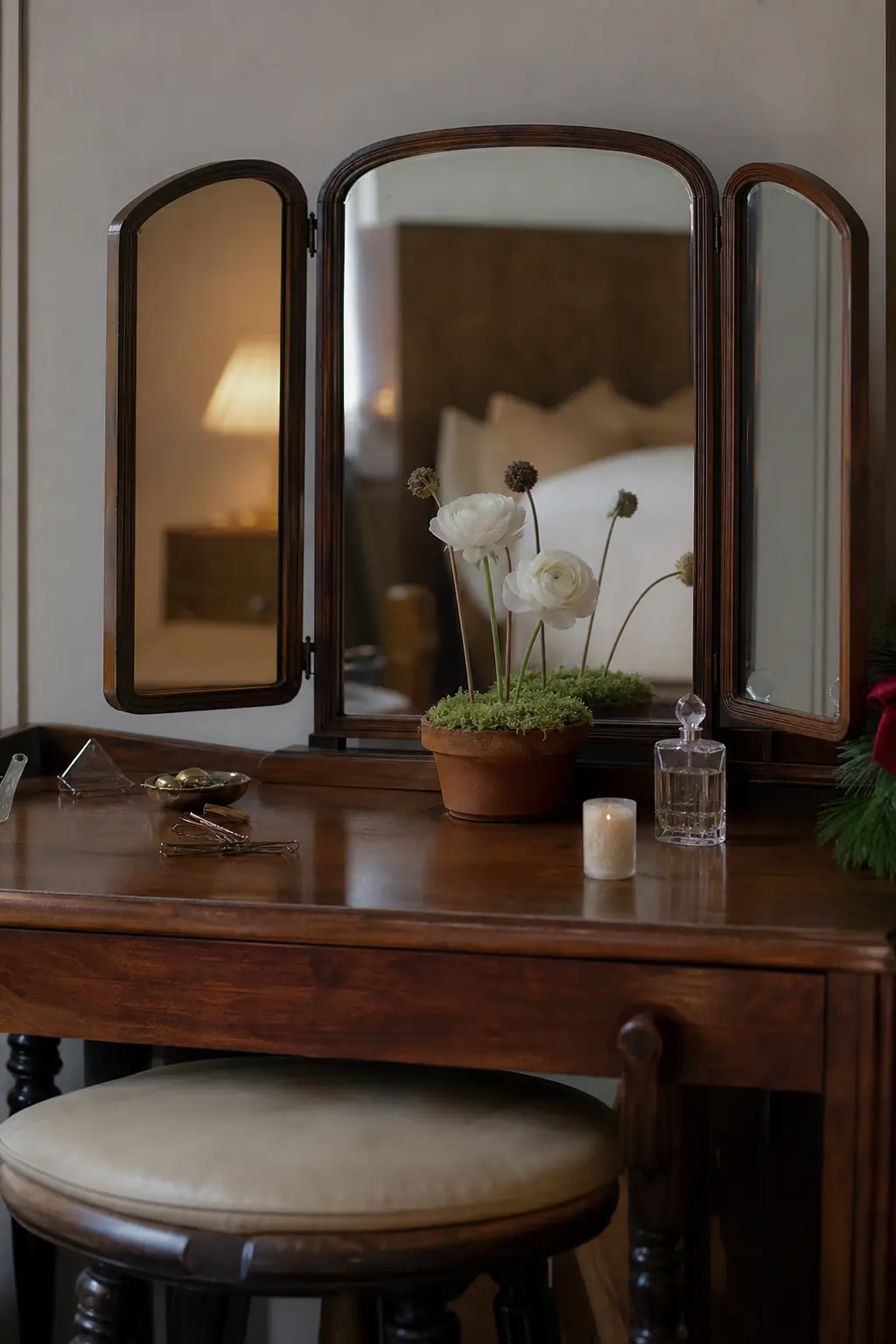
Ranunculus is on this list because it is genuinely beautiful and because two days done well is still worth doing. The petals are layered and dense, the stems are strong, and in cream or pale blush they suit this palette without competing with anything else on the table. They simply do not last in a heated room beyond forty-eight hours once fully open.
Buy them tightly closed and place them in cold water in the coolest spot available. They will open slowly, reaching their best on day two, which makes the twenty-third the right day to buy them if you want them perfect on the twenty-fifth.
Pair ranunculus with dried seed heads in a single small vase so when the ranunculus is finished, the arrangement continues. Remove the spent flower, add a fresh sprig of eucalyptus, and the vase still has a reason to be on the table.
🛍 Shopping guide
Christmas Floral Arrangements
The single rule that covers all fifteen: buy stems with tight buds, not open heads, recut the stems at an angle before they go in the vase, and keep the water level topped with cold water rather than warm. For woody stems like holly and pine, split the bottom two centimetres with scissors so the stem can actually drink.
Narcissus must live away from every other flower in this list: they release a compound that shortens the life of whatever shares their water. Give them their own vase, in a cool corner, and they will reward you. Pair any of the dried elements here with a single fresh stem from a lower-numbered entry and the contrast does the decorating work for you.
For more on building the full table picture, start with christmas centerpieces, and if you want to go further without a florist, diy christmas flowers and christmas wreath diy will take you there. The broader table setup lives at christmas table decorations.
Frequently Asked Questions
What flowers last longest at Christmas?
Cedar, magnolia leaves, holly with woody stems, pine and rosemary all last five days or more in a heated room. Eucalyptus does not just last: it dries in place and still looks good. Carnations, though unfashionable, reliably reach seven or eight days in water. Buy stems with buds not yet open to extend the life of any cut flower.
How do I keep Christmas flowers alive in a heated room?
Recut stems at an angle before they go into the vase, use cold rather than warm water, and keep the water level topped up rather than deep. For woody stems like holly and pine, split the bottom two centimetres with scissors so the stem can drink. Place arrangements away from heating vents and direct sun. Keep narcissus in a vase of their own, away from every other flower, because they release a compound that shortens the life of whatever shares their water.
What greenery works in a Christmas arrangement?
Cedar, pine and rosemary are the three longest-lasting fresh options in a heated room. Eucalyptus is almost unique in that it dries in place rather than dying, so it transitions from fresh to dried without looking spent. Spruce tips work well in a shallow bowl of water and last four to six days. Holly with berries, cut with the stem split at the base, holds for five days or more.
Do I need floral foam for a Christmas arrangement?
No. Every arrangement in this list uses a vase or dish with water, or works as a dried stem that needs no water at all. Floral foam is excluded here for two reasons: it dries out quickly in a heated room, shortening the life of every stem in it, and it is not easy to dispose of sustainably. A heavy vase with a narrow neck, or a low dish, does the same structural job without the drawbacks.
24 christmas lights on house exterior ideas, from warm white rooflines to nostalgic multicolor bulbs
16 flocked Christmas tree ideas, from heavy snowbound firs to tinted flock in blush and black, with

Forty-eight christmas would you rather for kids questions across four silly rounds, plus free printa
Leave a Reply