

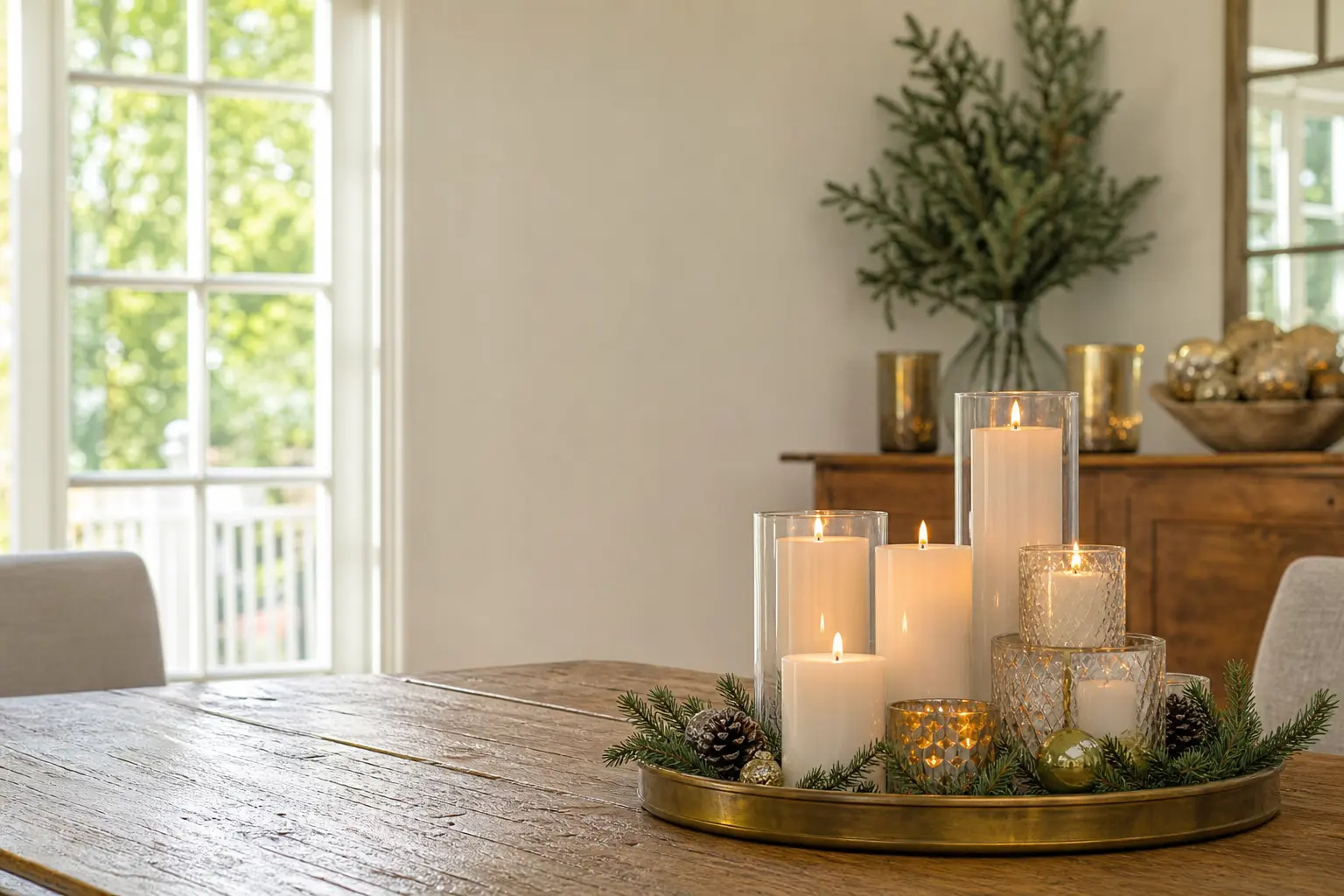
Christmas candles do one thing a string of LEDs cannot: they make a room feel inhabited. Not decorated. Inhabited. The shift this season is away from bright overhead light and toward low, layered warmth, and the people who get it right are not the ones with a fireplace.
Each of the 21 groupings below comes with a height, a surface and a count, because a single taper on a sideboard disappears into the room. Two dozen tealights along a windowsill, stepped pillars on a brass tray, hurricanes standing on the floor beside a reading chair: those read. For more ways to build out the whole room, see our full guide to christmas decor.
The palette throughout is brass, cream, amber glass, oxblood and twilight blue. None of these ideas require a hearth. All of them require at least three candles and a considered surface. That is the entire rule.
This post contains affiliate links. If you buy through them, I may earn a small commission at no extra cost to you.
Floor and Window Level
The lowest tier of a layered scheme anchors everything above it. Glass on the floor, tealights at sill height: these catch the eye before your guest has even sat down, and they cost almost nothing to pull off.
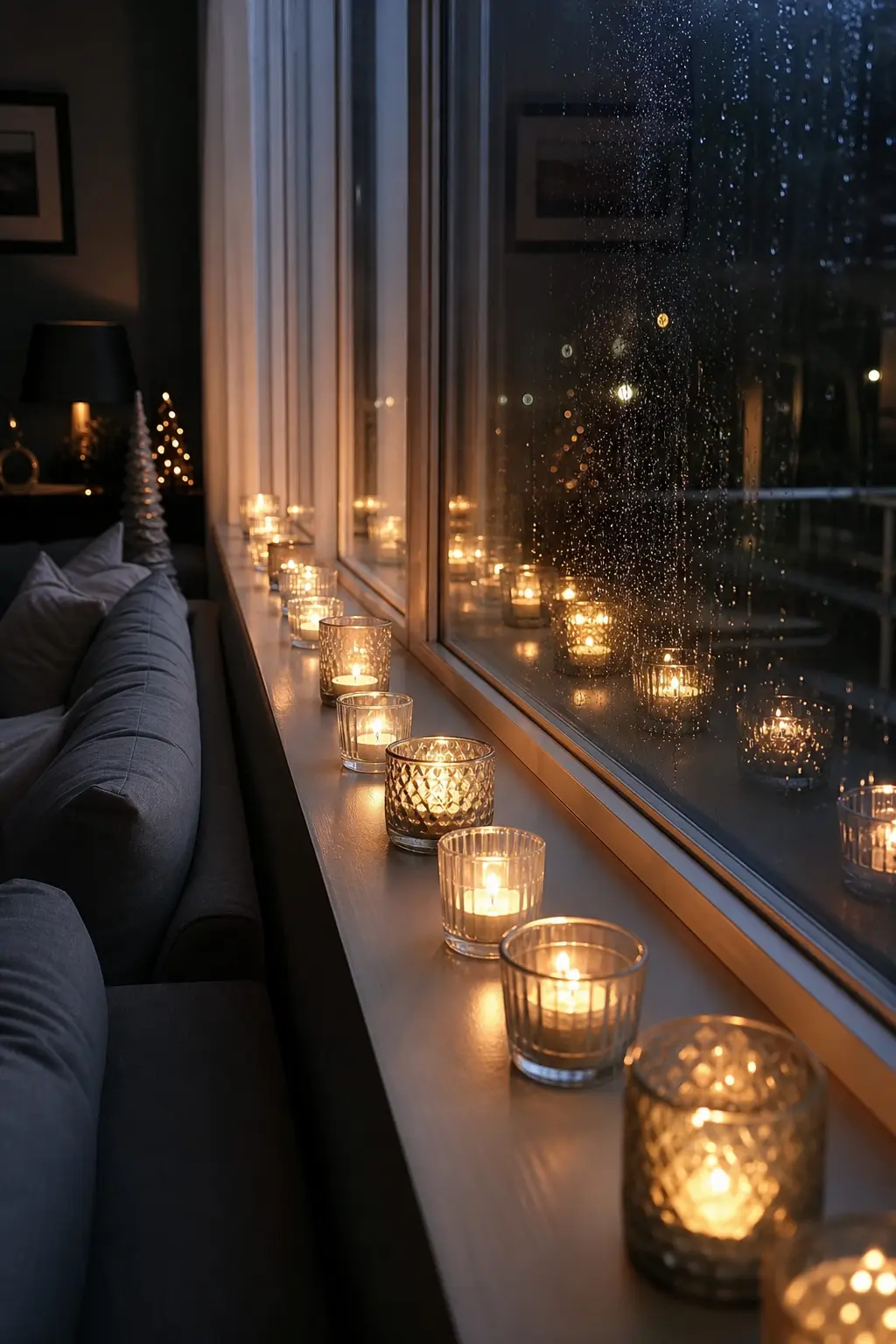
Tealights Along a Windowsill
Line fifteen to twenty tealights in plain glass holders along the full length of a windowsill. Space them evenly, and let the dark glass of the window double every flame behind them.
This works in any room because the sill is already a shelf. Use amber or clear glass holders, not white plastic cups. The reflection in the night window gives you roughly twice the candle count for free.
🛍 Shopping guide
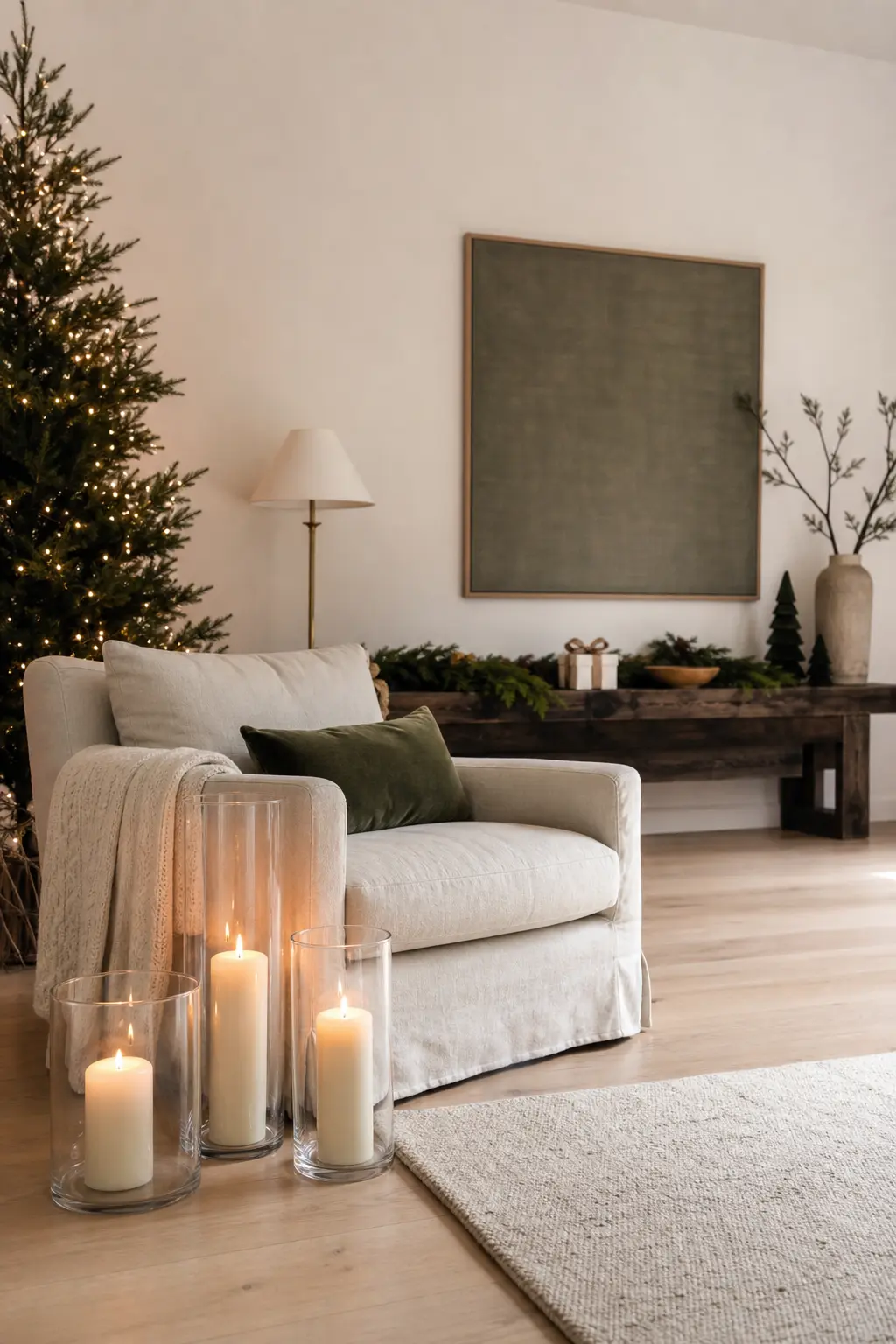
Hurricanes on the Floor Beside a Chair
Place three hurricane lanterns of different heights directly on the floor beside a reading chair or sofa. Use pillar candles inside, not tealights: the flame needs to sit above the rim to throw light outward.
Floor-level light is the detail that makes a room feel expensive. It reads like a fireplace glow from across the room. Group the hurricanes close together so they read as a single mass, not three random objects.
🛍 Shopping guide
Tabletop and Tray Groupings
A tray is the single best tool in this kind of decorating. It contains the grouping visually, catches drips, and lets you move the whole arrangement in one lift. Work in odd numbers and vary the height within the tray by at least two candle sizes.
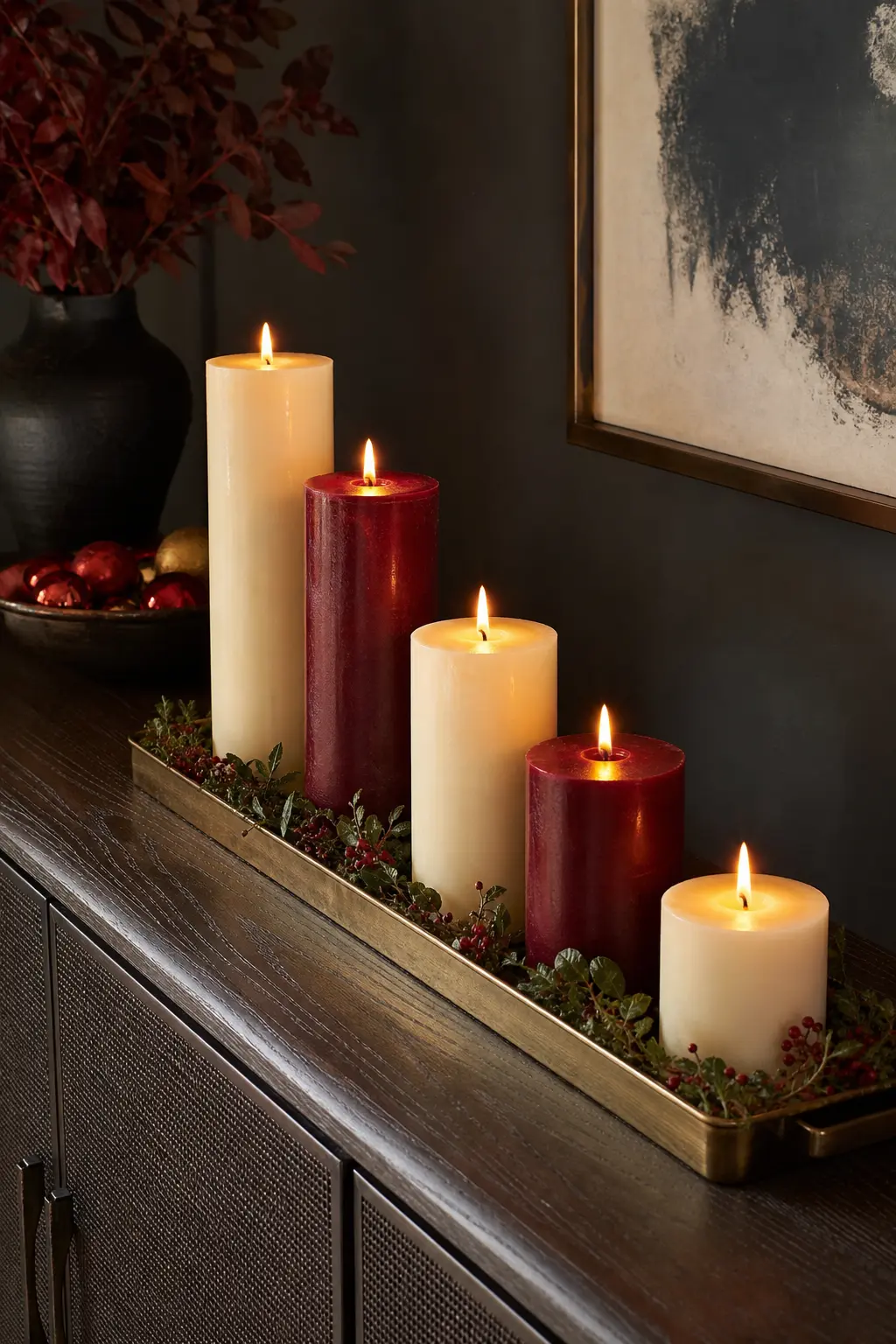
Five Pillars of Stepped Heights on a Tray
Arrange five unscented pillar candles on a low brass or slate tray, tallest at the back and shortest at the front, so none blocks another. The tray is not decorative: it is a safety measure and a visual base that makes the grouping look intentional.
Keep the palette tight. Cream and oxblood together on brass is the combination that reads as a considered choice rather than a collection of leftovers. This grouping suits a sideboard, a coffee table or any low surface where you want a sculptural moment.
🛍 Shopping guide
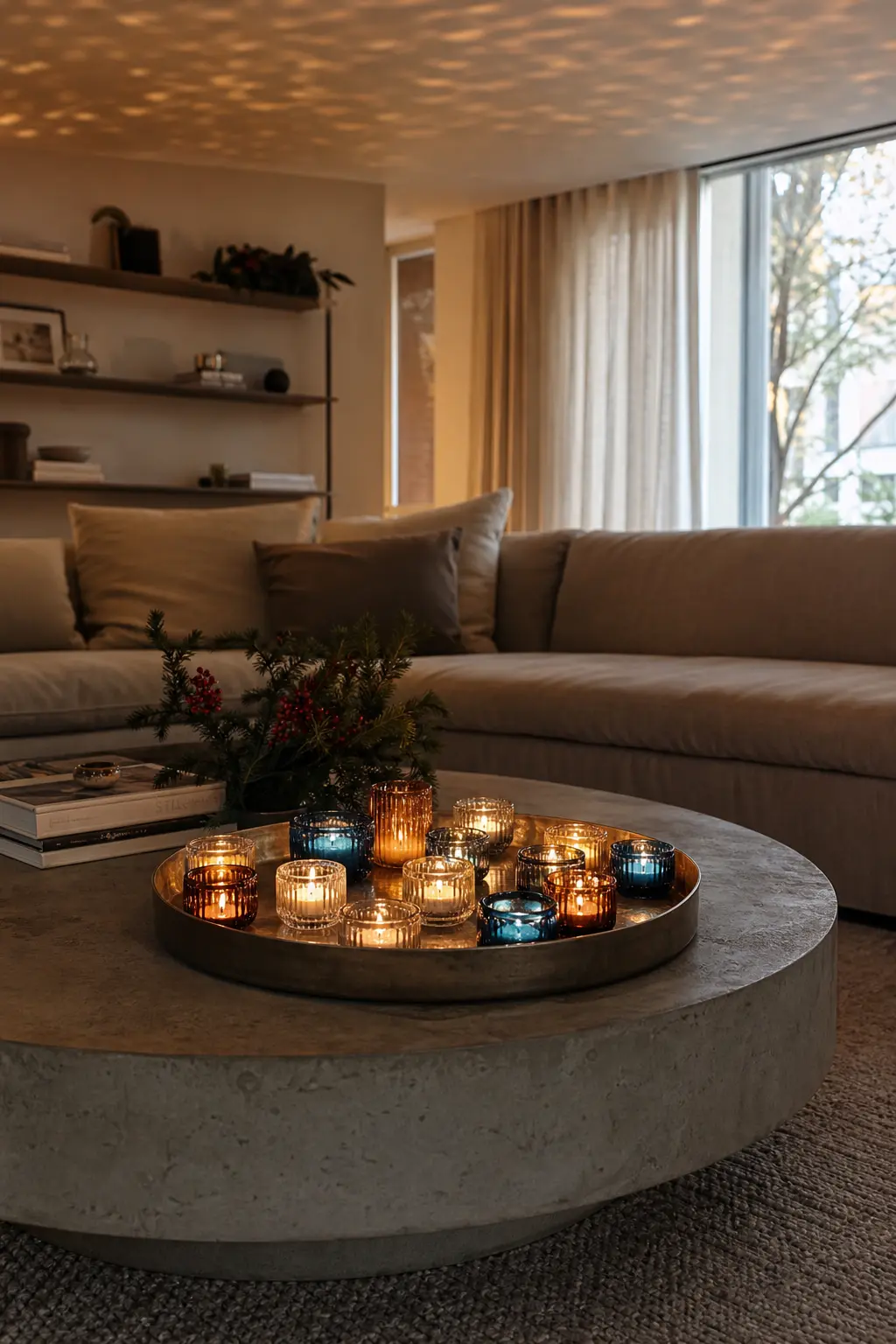
A Tray of Tealights on a Coffee Table
Cover the surface of a tray with tealights in mixed glass holders: amber, clear, and twilight blue. Pack them close so the tray reads as a field of light, not a loose scatter.
This is the easiest grouping in the article and the most forgiving. The coffee table is at knee height, so the glow spreads across the ceiling. A round tray suits a round table; a long tray suits a rectangular one. Twelve to sixteen tealights fills a standard coffee table tray without looking sparse.
🛍 Shopping guide
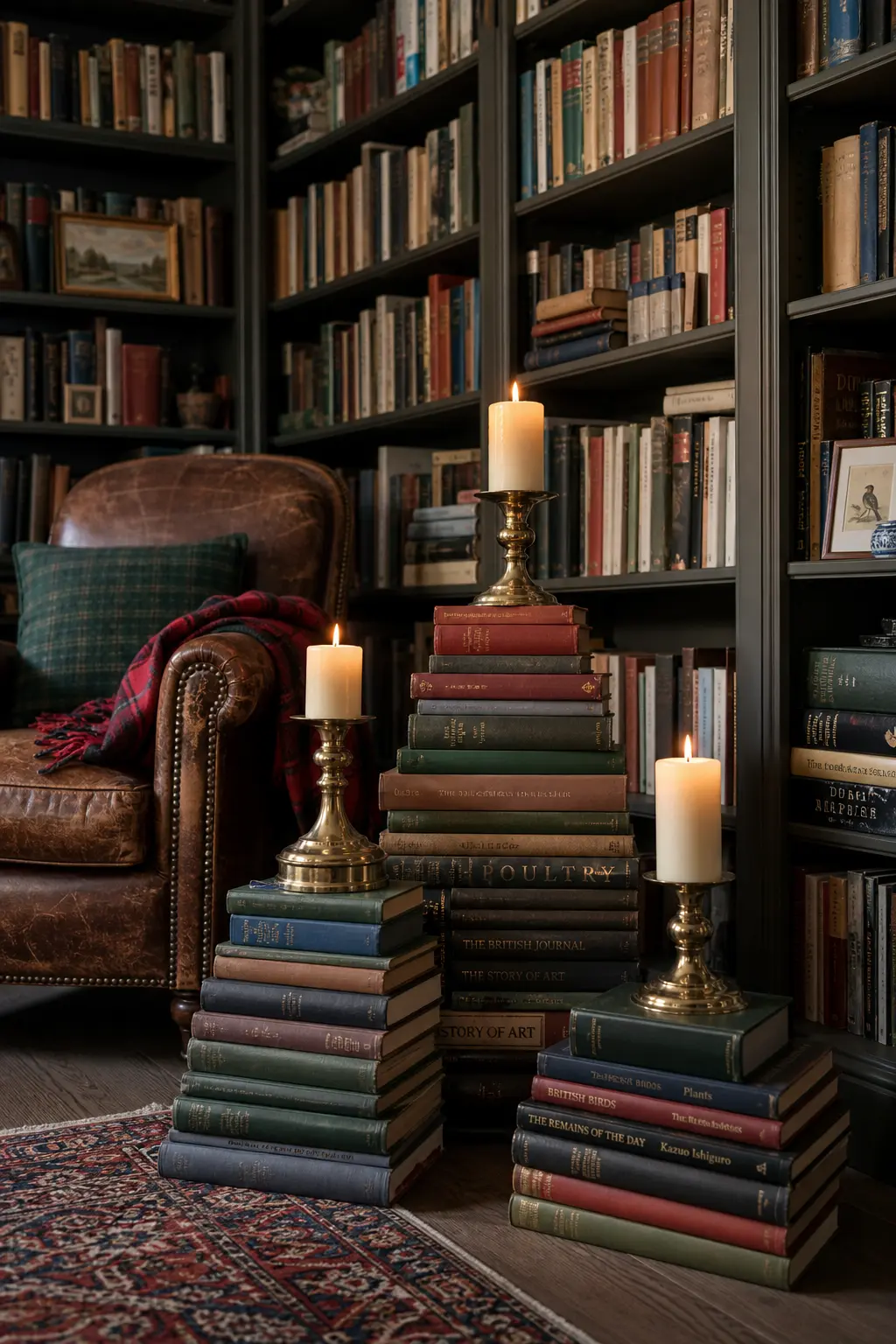
Candles Raised on Stacked Books
Stack two or three hardbacks to create a plinth, then set a pillar candle directly on top in a secure holder. The raised height means the flame sits at mid-room level instead of below eyeline, which changes how the light reads from across the room.
This works best in a corner or on a low bookcase. Vary the height of your stacks: one tall pile, one medium, one barely raised. Three groupings read as a composition. One looks accidental.
Centrepiece and Table Arrangements
A table lit only by candlelight changes the mood of an entire evening. Keep the centrepiece below eye level when seated, and use the full length of the table rather than clustering everything in the middle.
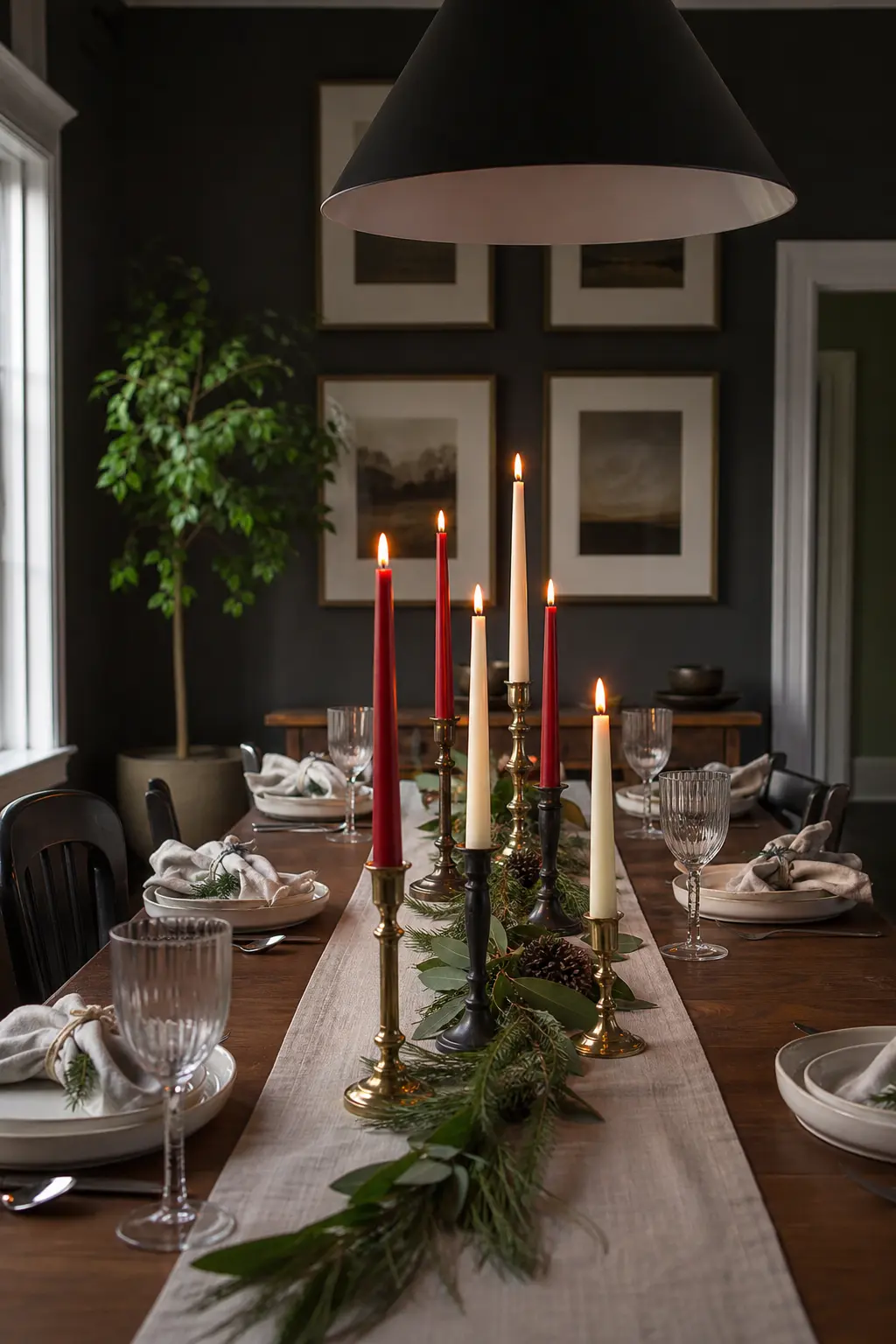
Candlesticks Down the Centre of a Table
Run five or seven candlesticks of varying heights down the full length of a dining table. Keep them within 15 cm of the centre line so guests can see each other across them. Taper candles, not pillars: the narrow flame at height gives you light without bulk.
Mix brass and dark iron holders for a result that looks collected rather than bought as a set. Cream and oxblood tapers together read as deliberate. The odd number matters: an even row has a symmetry that feels stiff on a table where you want warmth.
🛍 Shopping guide
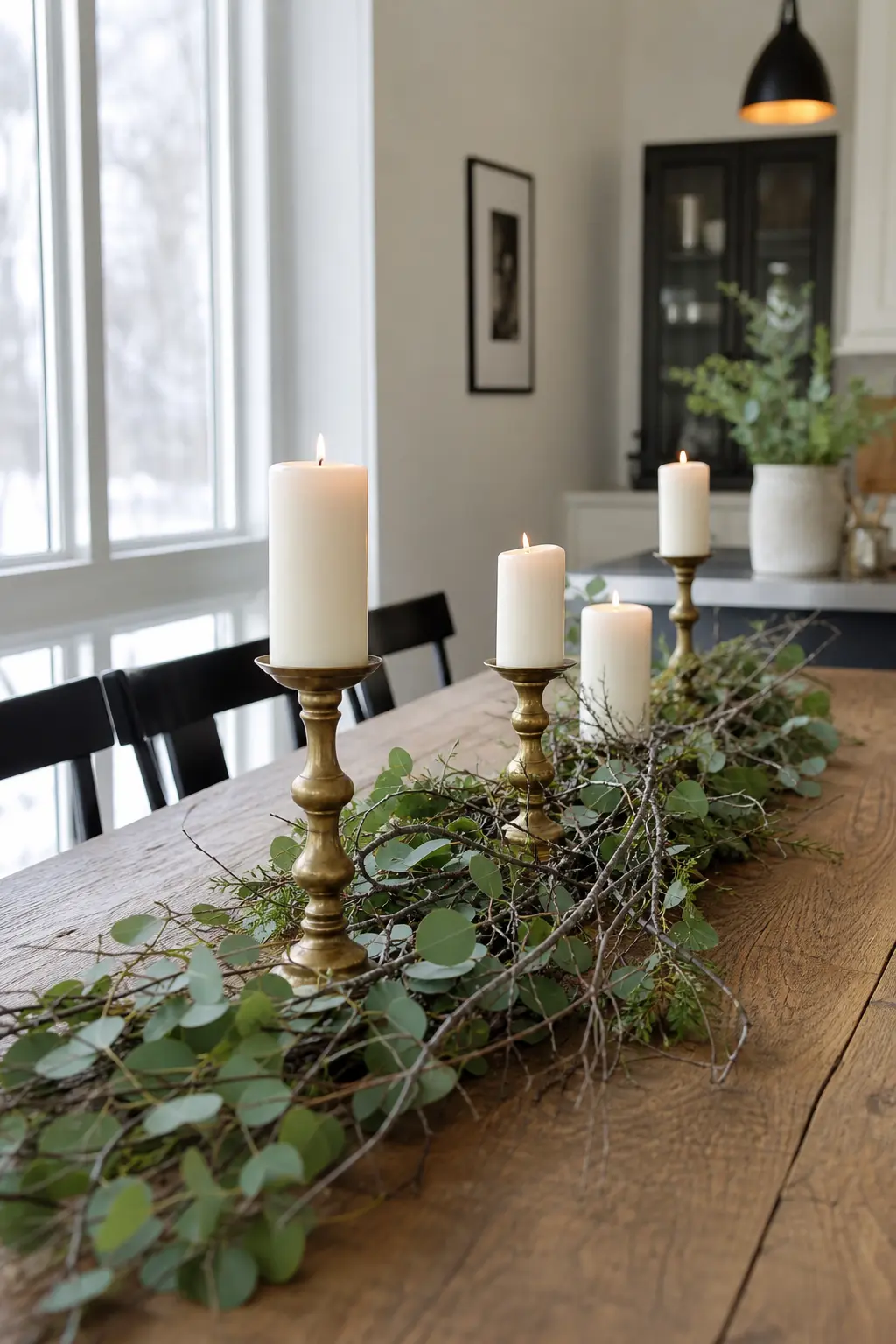
Candles Among the Table Greenery
Lay branches of fresh eucalyptus or bare winter stems flat down the table centre, then tuck low pillar candles in holders directly among them. The greenery does not hold the candles: each candle sits in its own holder, with stems arranged around it, never over or under the flame.
The result looks effortful and is not. Spacing: one candle every 25 to 30 cm. This is where the instruction to keep fabric and greenery away from flames is not optional, it is basic: clear a 10 cm radius around each flame before you light anything.
🛍 Shopping guide
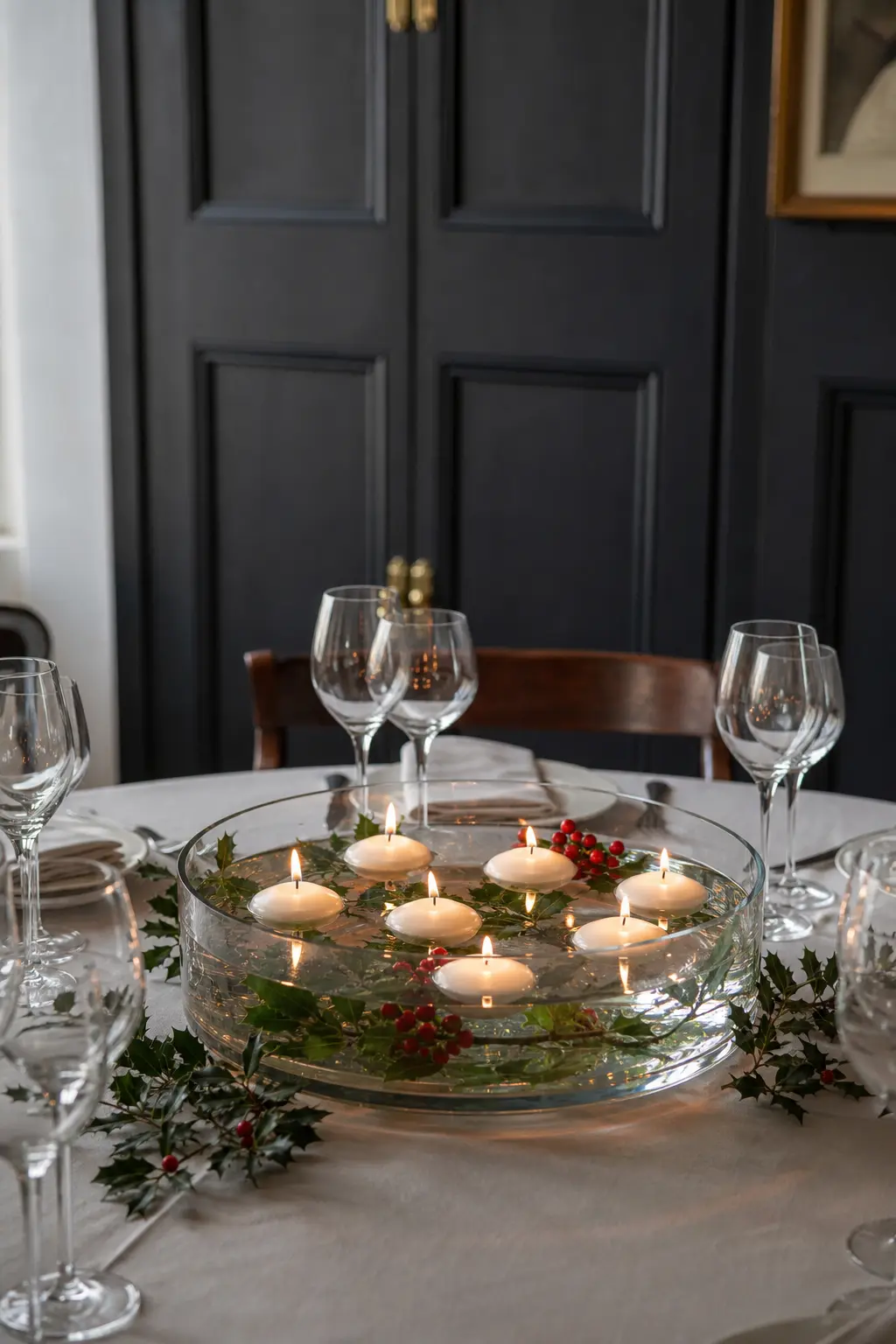
Floating Candles in a Wide Bowl
Fill a wide, low glass bowl with water and float five or seven unscented candles on the surface. A round bowl 35 cm or wider gives the candles room to drift without clustering. Add a handful of glass pebbles to the base for weight and refraction.
This is the quietest centrepiece in the list and the one that photographs best. The reflections inside the bowl move constantly. Place it where it will not be knocked: the centre of a table works, a console less so.
🛍 Shopping guide
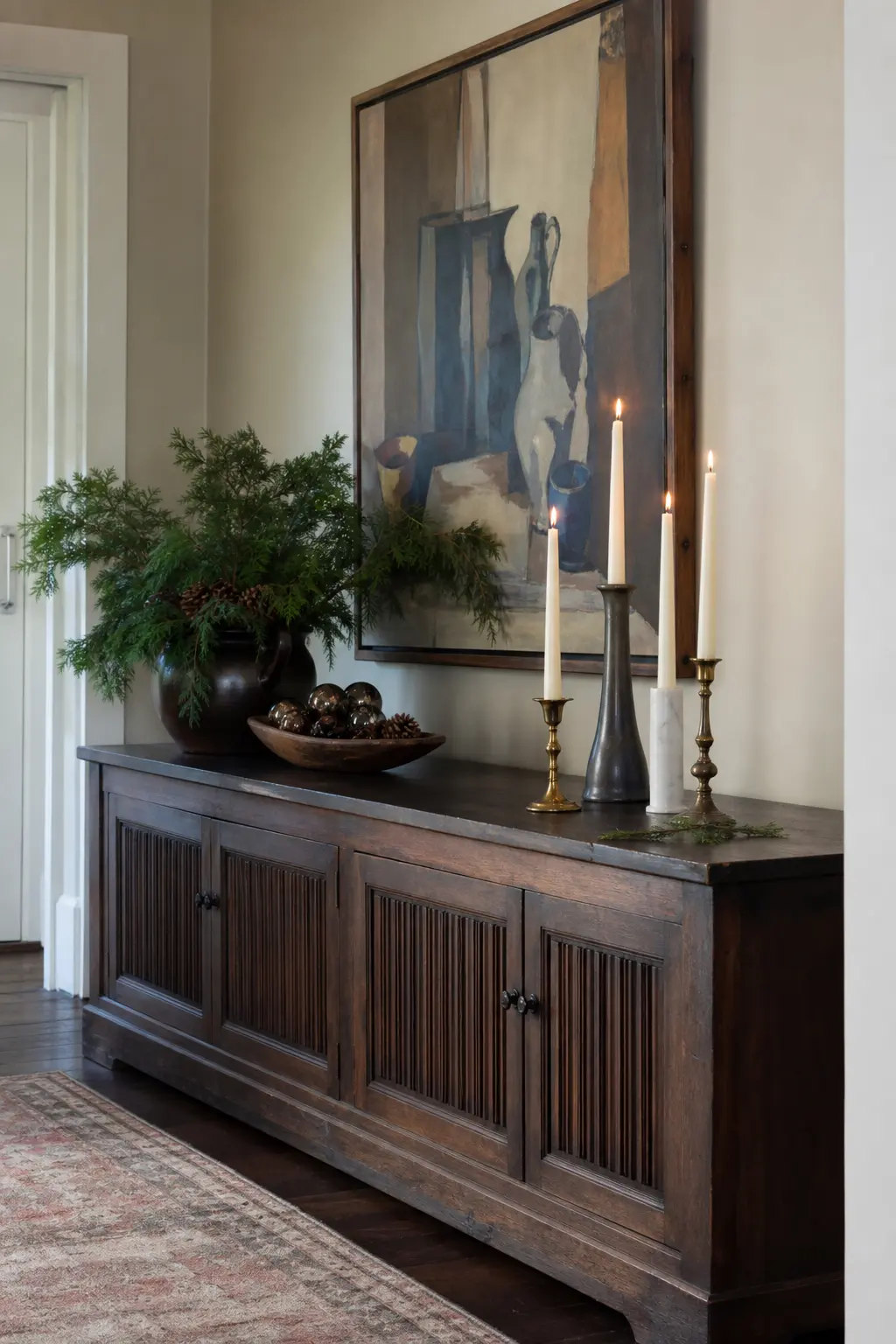
Tapers in Mismatched Holders
Collect five or seven taper holders in different materials: brass, ceramic, marble, blown glass, iron. Each one holds a single cream taper. Arrange them in a loose cluster on a sideboard or console, varying height by choosing holders of different sizes rather than candles of different lengths.
The mismatched look is intentional and takes more thought than a matching set. Keep the candle colour uniform so the holders do the varying. This is a grouping that rewards being added to slowly over time.
🛍 Shopping guide
Alcove, Hearth and Shelf
Empty architectural recesses are an untapped resource. A fireless grate, a deep alcove, a run of shelf: each one frames candlelight the way a painting frame focuses a print. Fill the space rather than dotting single candles across it.
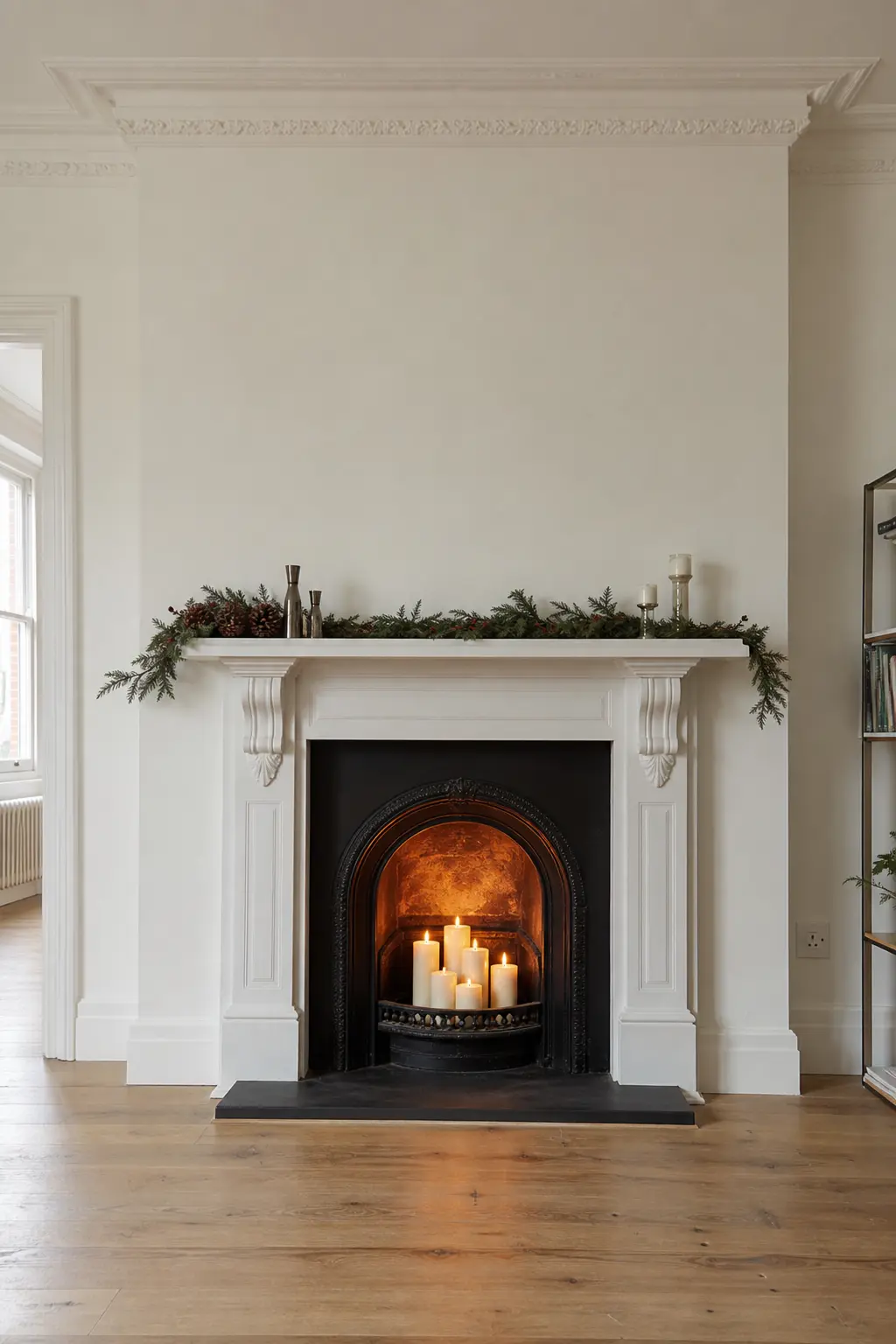
A Cluster Inside an Empty Grate
If the fireplace has no working flue and no fire, fill the grate with a cluster of five to nine pillar candles at different heights. Set them on a fireproof surface: a slate tile or a metal plate inside the grate, never directly on carpet or bare wood.
This is the most direct answer to the no-hearth problem: you use the hearth architecture without the fire. The blackened interior of a grate throws the warm light forward dramatically. Group the candles tightly so they read as a mass of flame, not isolated pillars.
🛍 Shopping guide
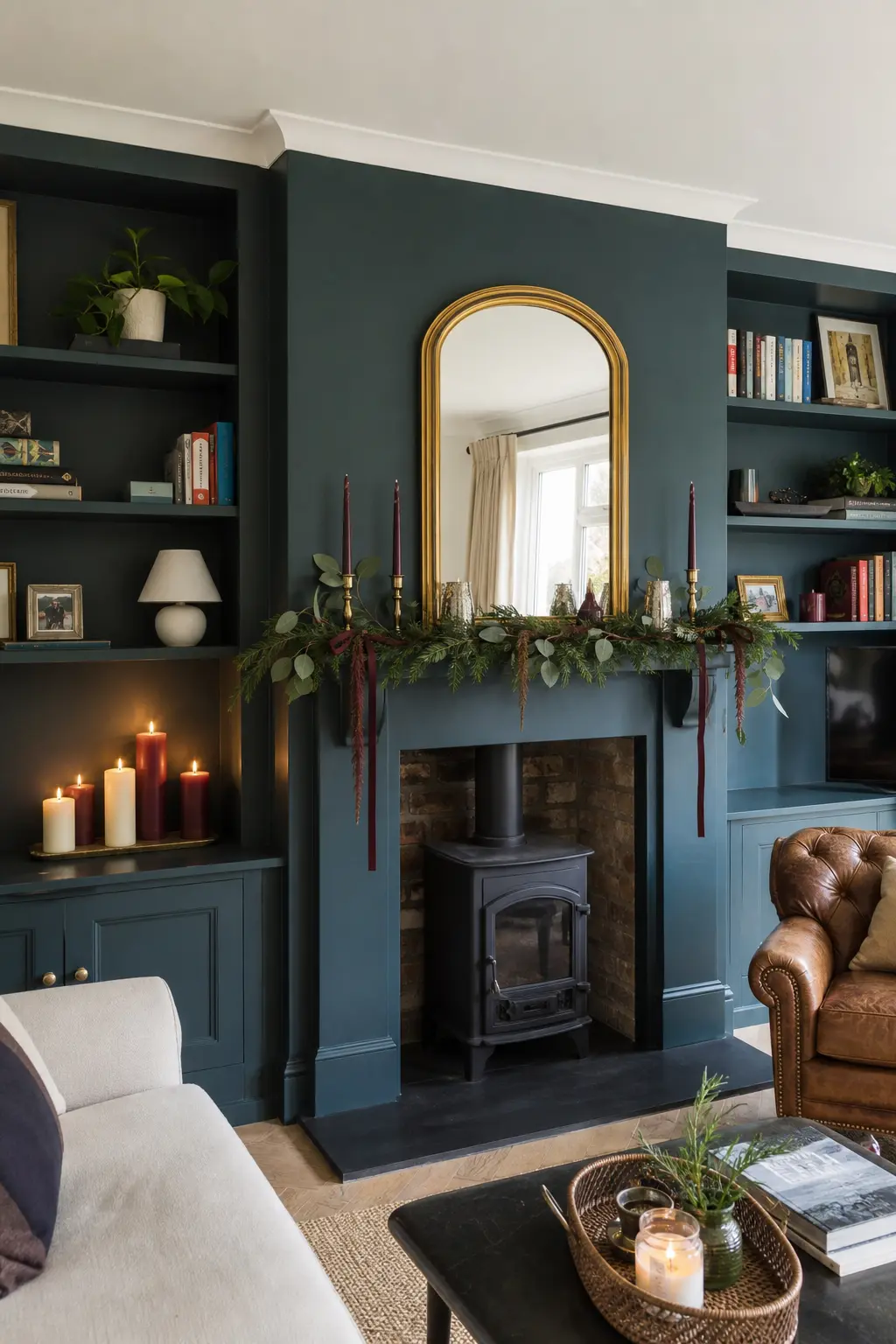
Pillars in a Fireplace Alcove
The alcoves either side of a chimney breast are vertical spaces that frame objects naturally. Line the base of one or both alcoves with a row of pillar candles at floor level, tallest at the back, shortest at the front, all on a long tray.
Three candles per alcove is minimum. Five is better. The alcove wall behind the flames acts as a reflector and the glow reaches the ceiling, which is the effect you are after. This also works in any deep recess, built-in shelf removed or not.
🛍 Shopping guide
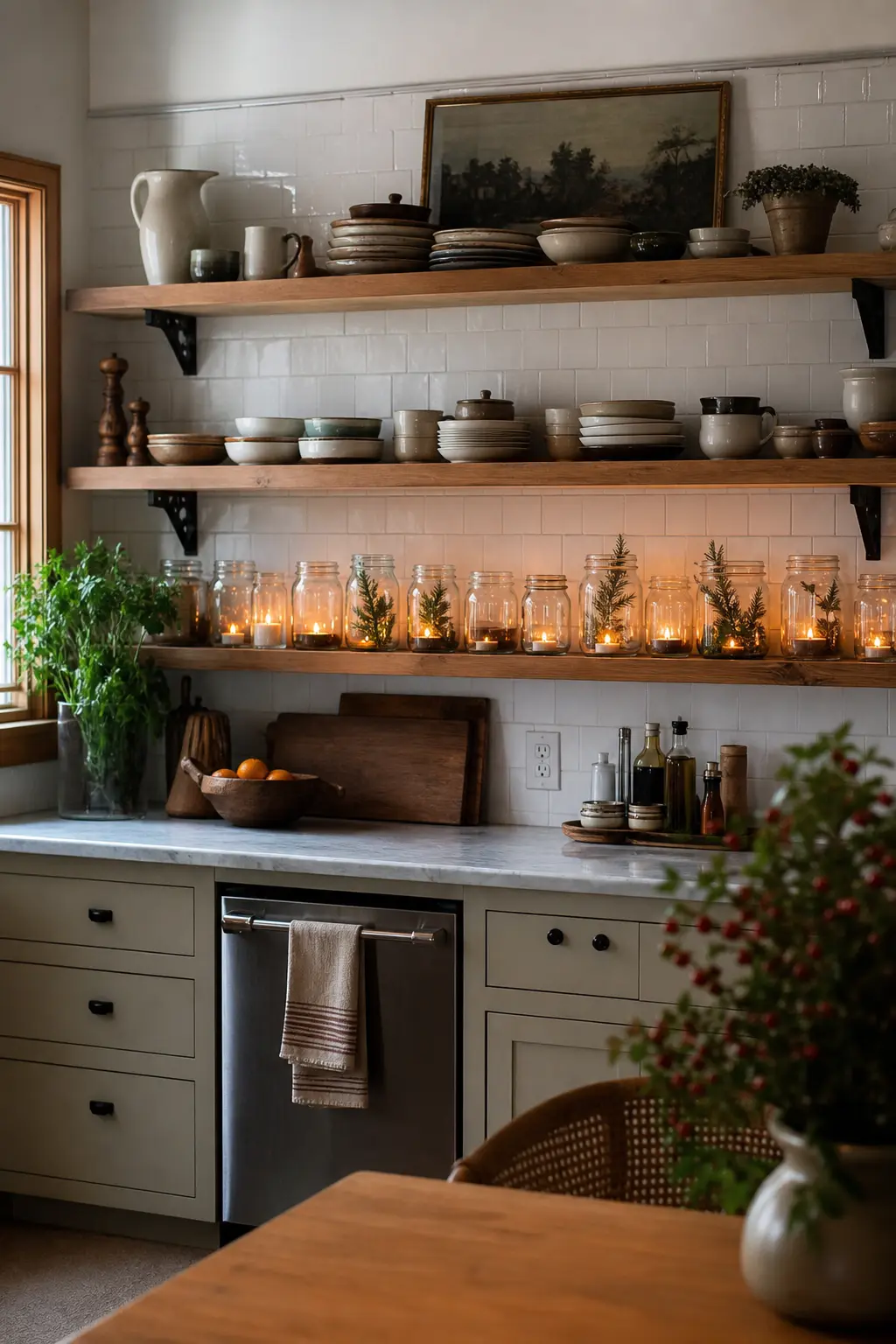
Glass Jars Along a Shelf Edge
Line a row of glass preserving jars along the front edge of a bookshelf or kitchen shelf, a tealight inside each one. The jar acts as a chimney and a light-disperser. Use jars of the same height for a clean run, or alternate two sizes for rhythm.
Eight to twelve jars reads as a proper installation. Fewer looks sparse. This works on any shelf that has at least 10 cm of depth and nothing flammable within 15 cm above the flames.
🛍 Shopping guide
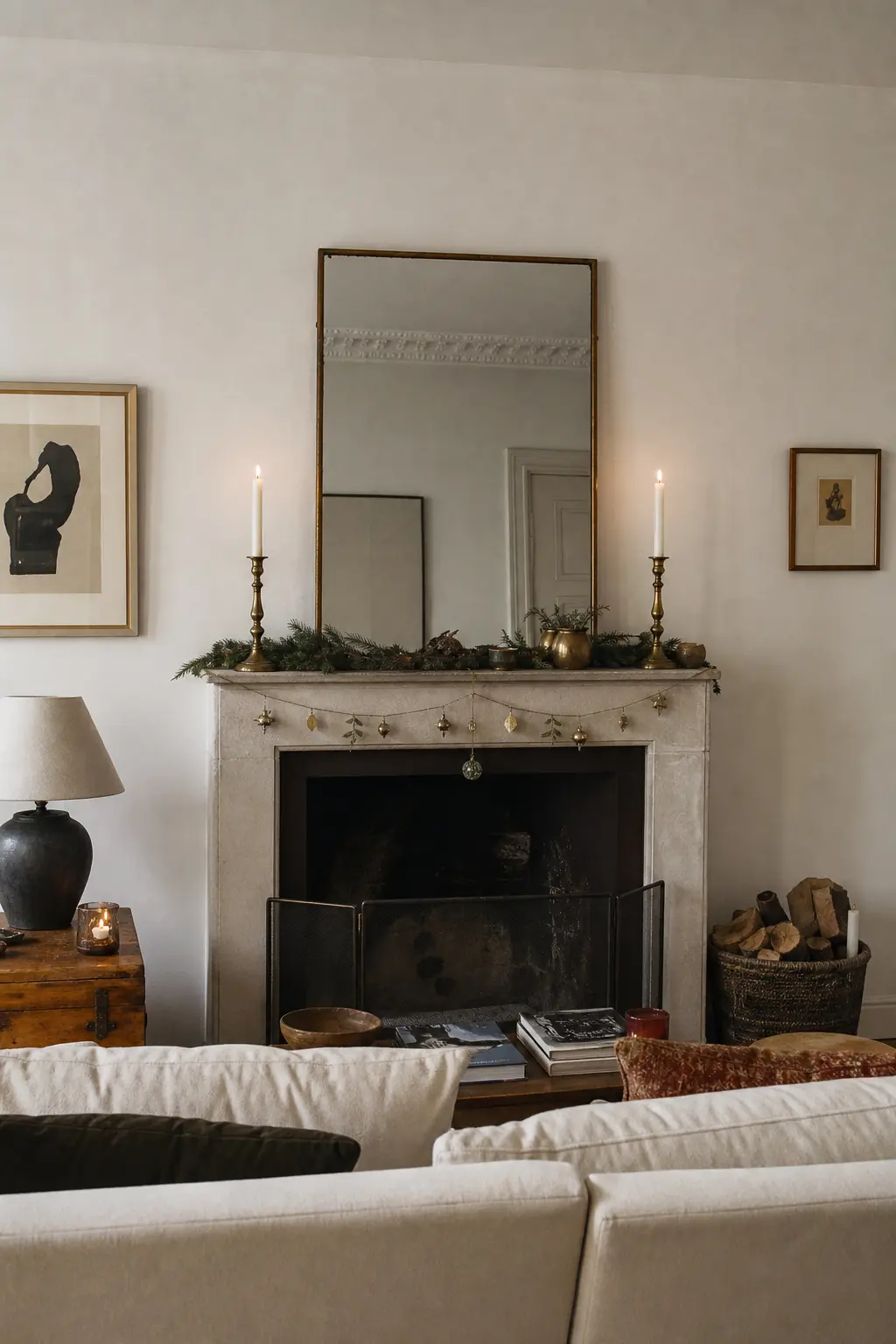
A Pair on the Mantel With a Mirror Behind
Set two tall candlesticks of the same height at either end of a mantelpiece, each holding a long taper. Lean a mirror against the wall behind the mantel so the flames reflect and the room appears twice as lit.
The mirror does not need to be decorative or antique. A plain flat mirror propped rather than hung doubles the light immediately. Keep the mantel surface otherwise clear, or nearly so: this grouping needs breathing room to work.
🛍 Shopping guide
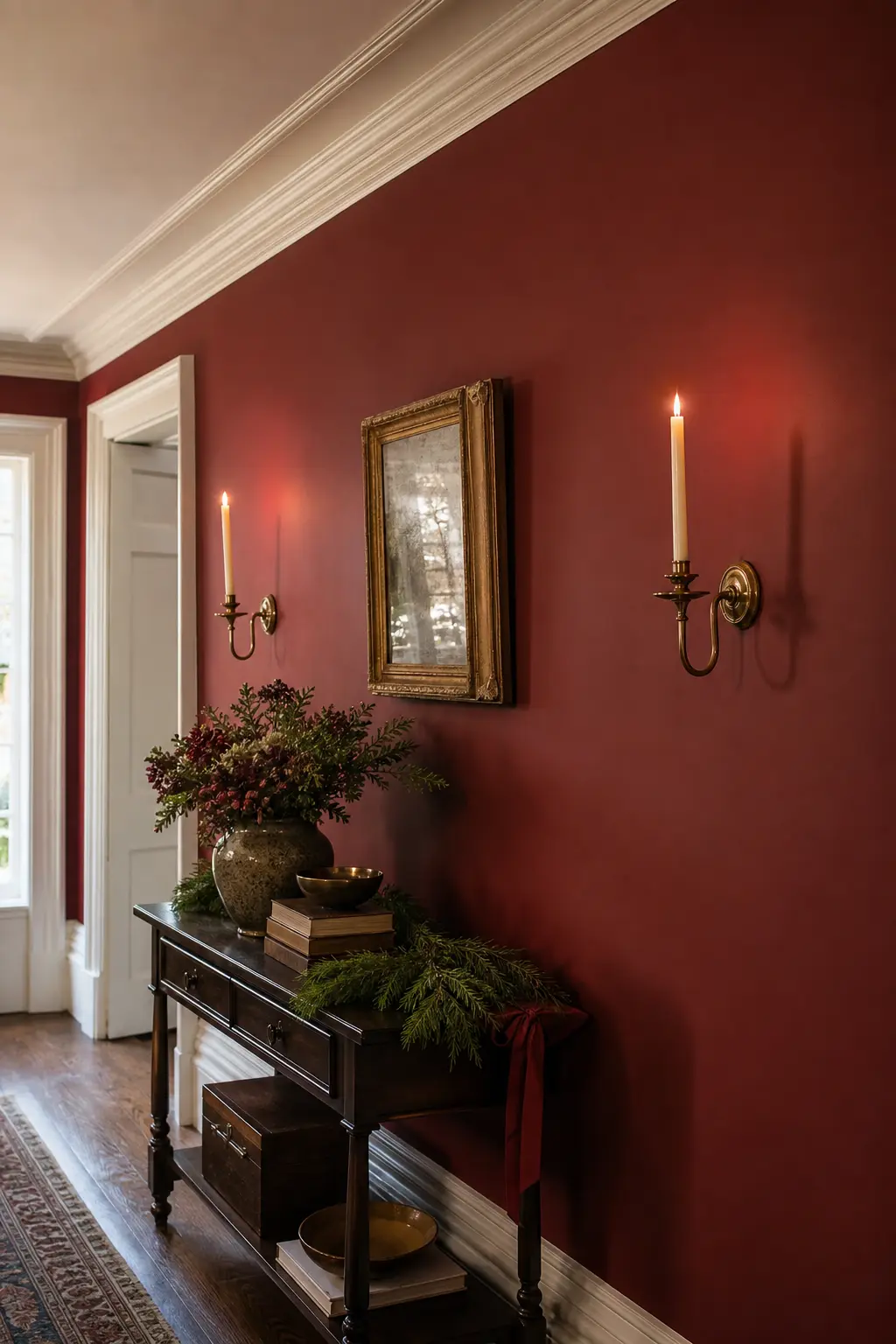
Wall Sconces With Real Tapers
Two wall sconces with real taper candles change the vertical dimension of a room. At eye level on the wall, flame reads completely differently to flame on a surface: it is seen against the wall rather than against the ceiling, and the pool of light falls down and outward.
Brass or wrought iron sconces in a classic arm style carry a taper without looking rustic. Space them symmetrically or repeat a single sconce three times down a corridor wall.
🛍 Shopping guide
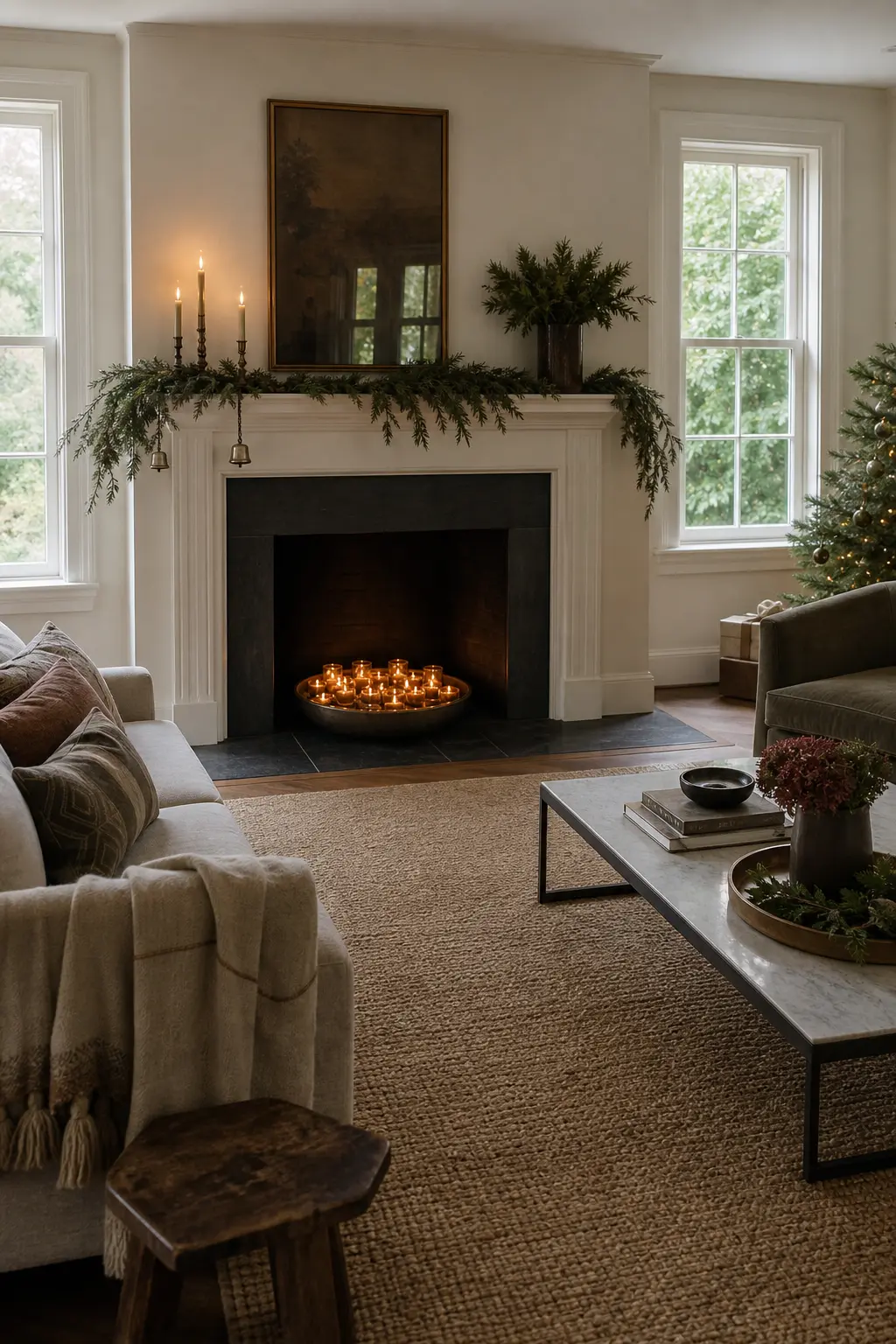
A Low Bowl of Tealights on the Hearth
Whether or not the fireplace works, place a wide low ceramic or brass bowl directly on the hearth tiles and fill it with fifteen to twenty tealights in amber glass holders. The hearth is already a fireproof surface designed for heat, which makes it the safest place in the room for a large grouping.
The bowl contains the arrangement and makes it look curated rather than strewn. From a sofa a few metres away, a packed bowl of tealights at floor level reads as a fire. It genuinely does.
🛍 Shopping guide
Staircase, Hallway and Door
The entrance to a home sets the tone before a coat comes off. A lantern inside the front door, candles stepping up a staircase: these read immediately and require no rearranging of furniture.
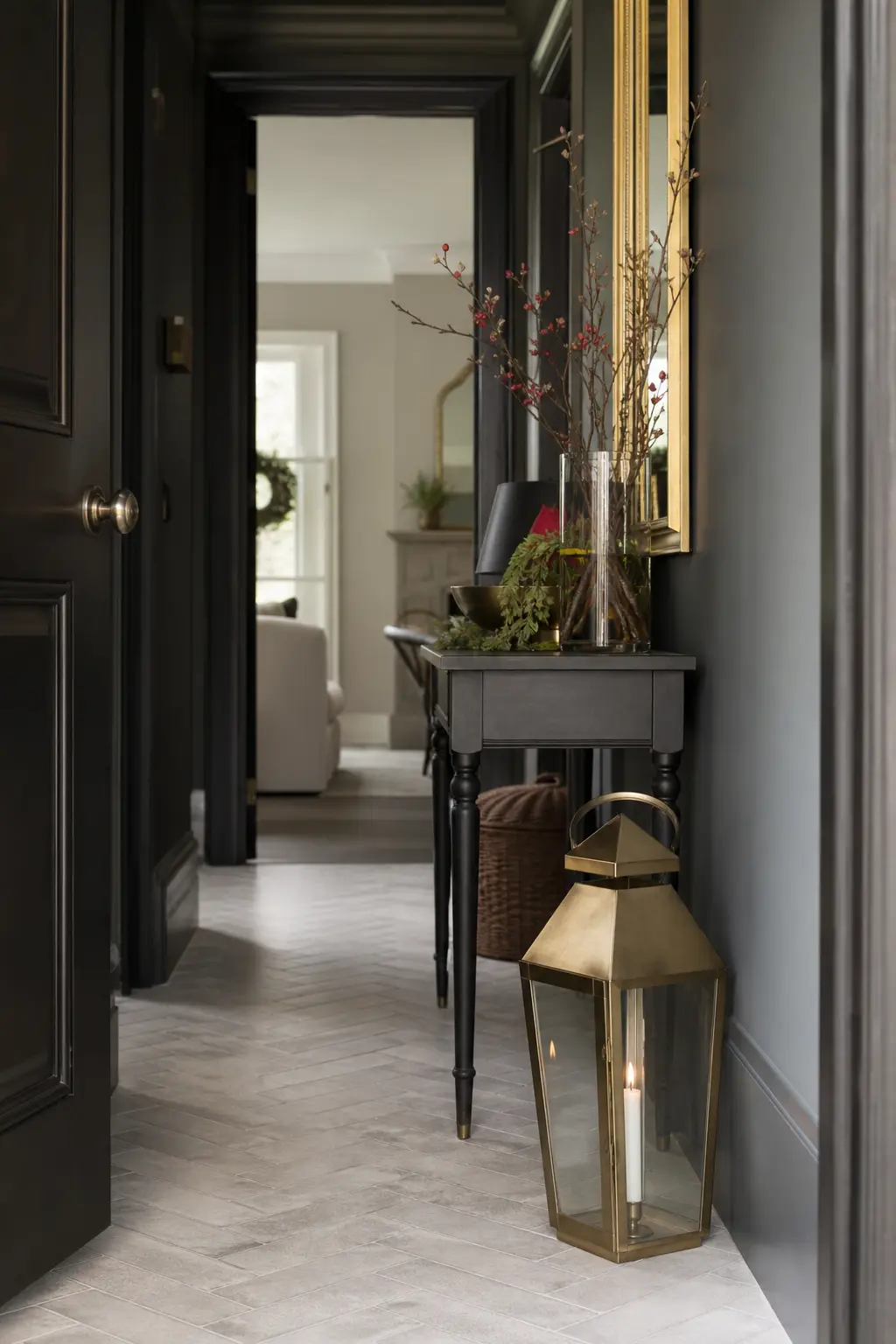
A Lantern by the Front Door Inside
Set one substantial lantern on the floor or on a low console just inside the front door. A lantern with a real taper inside outperforms a battery one every time: the flicker is visible through the glass panels the moment the door opens.
Brass or aged iron suits the palette here. One lantern is enough because the entry hall is a small space, and adding more makes it look like a shop display rather than a home.
🛍 Shopping guide
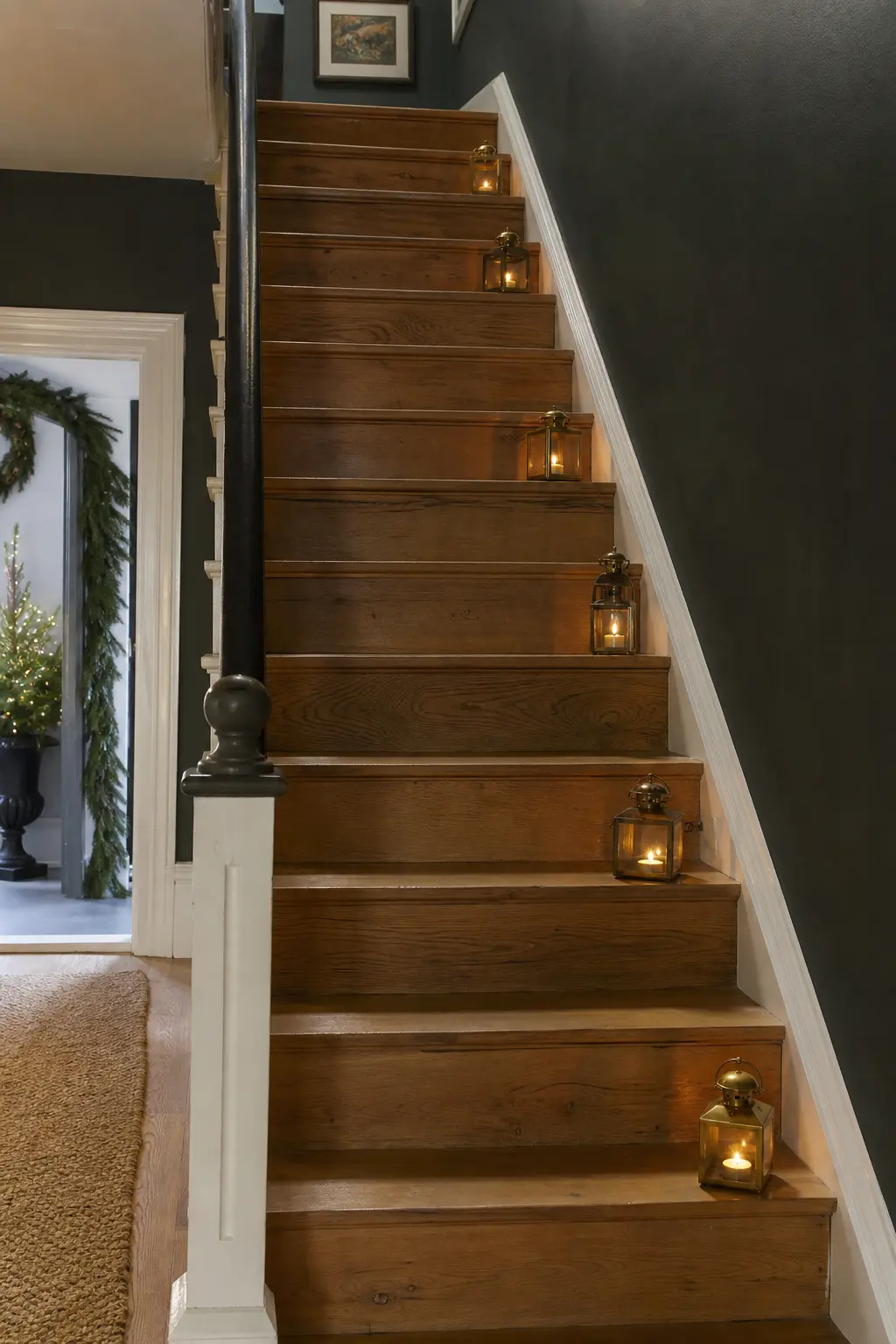
Lanterns on Stair Treads
Place a small lantern on every other stair tread, pushed to the back and far side so the staircase stays safe to use. Lit from below, a staircase becomes a proper focal point rather than a corridor you walk through to get somewhere else.
Use lanterns of the same style but two alternating sizes for rhythm. Four to six lanterns is enough for a standard flight. More starts to look like a theatrical set.
🛍 Shopping guide
Bedroom and Bathroom Moments
A single well-placed candle in a private room is a small luxury that costs almost nothing. The key is restraint: one strong statement rather than a scatter of votives that reads as afterthought.
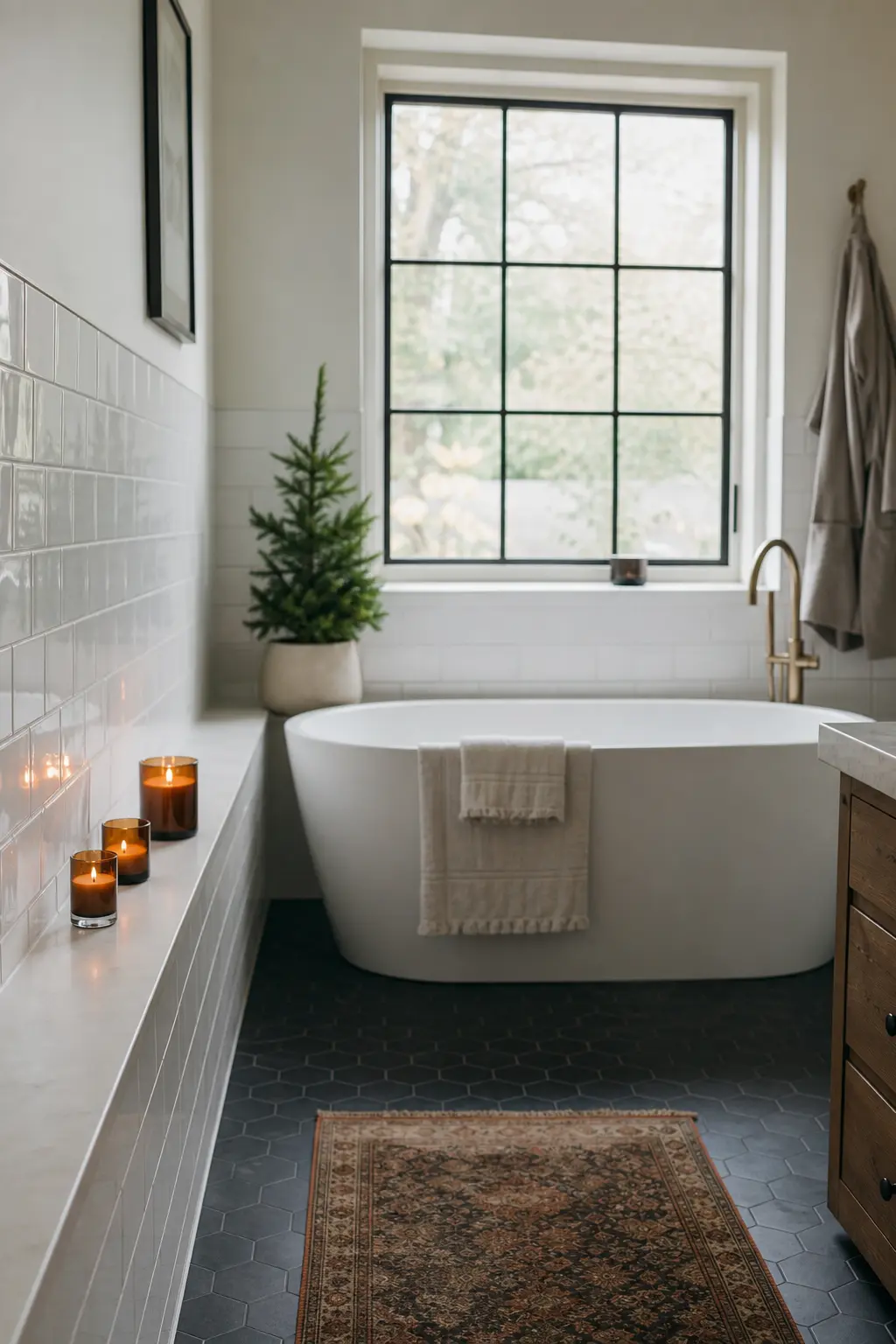
Votives on a Bathroom Shelf
Line three to five votive holders along a bathroom shelf or the ledge of a bath, using small pillar or votive candles rather than tealights. Votives at bath level read as a deliberate choice rather than an afterthought.
The bathroom is a small space, so the heat and light from even three candles is noticeable. Amber or smoked glass holders suit the palette and give the room a warmth that the typical white bathroom tile does not otherwise have.
A Single Tall Taper on a Bedside Table
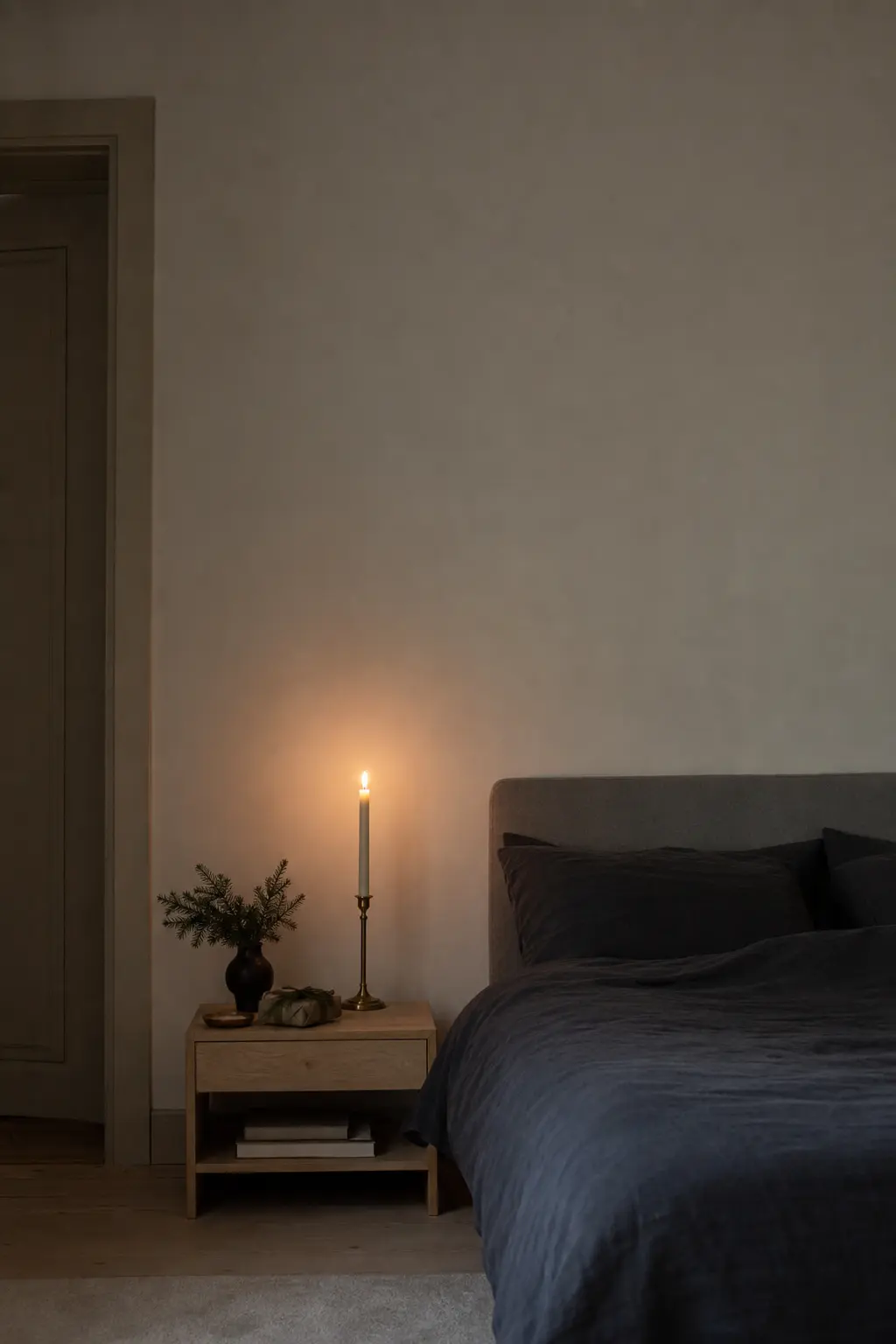
One tall taper in a good holder on a bedside table is the most restrained entry in the list and the one most likely to become permanent. The flame at that height and proximity is intimate in a way that a lamp is not.
The holder matters more here than anywhere else: it is seen close-up, so quality reads. A turned brass or solid marble candlestick about 15 cm tall, holding a 30 cm cream taper, is the specific combination that works. Never burn it unattended.
Glass and Water Effects
Water multiplies flame. Coloured glass filters it. Both techniques give you more visual interest from fewer candles, which matters in a small flat where every surface is already doing a job.
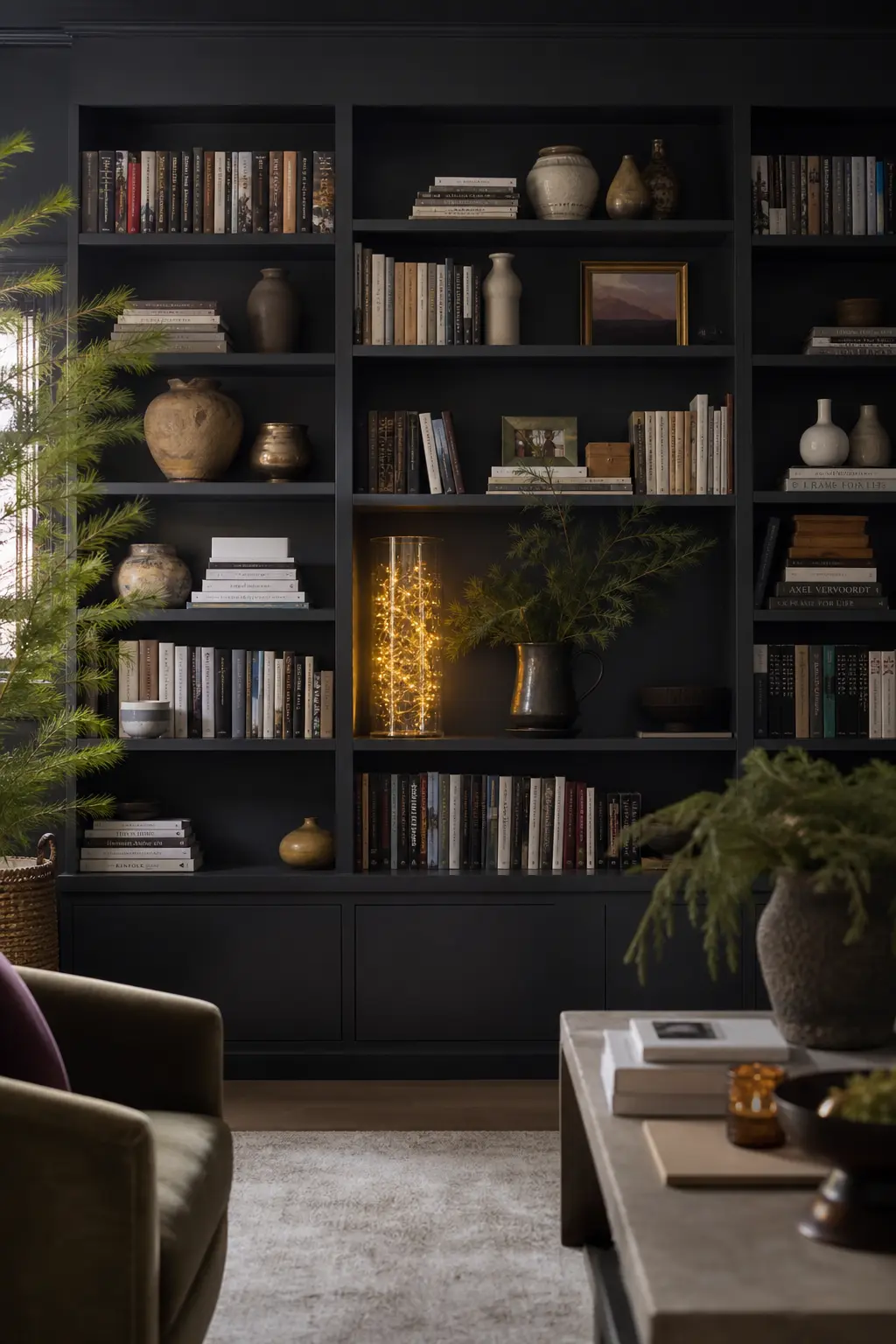
Fairy Lights Inside a Glass Vase
Coil a warm-white (not cool-white) battery fairy light string inside a tall clear glass vase. The glass bends and multiplies the light, and the effect from across the room reads as candlelight even though nothing is burning.
This is the one entry that uses artificial light, and it earns its place because it is genuinely safe on a windowsill or a shelf where a real flame would be impractical. The rule: warm white only, wire hidden inside, battery pack tucked behind. No cold white, ever.
🛍 Shopping guide
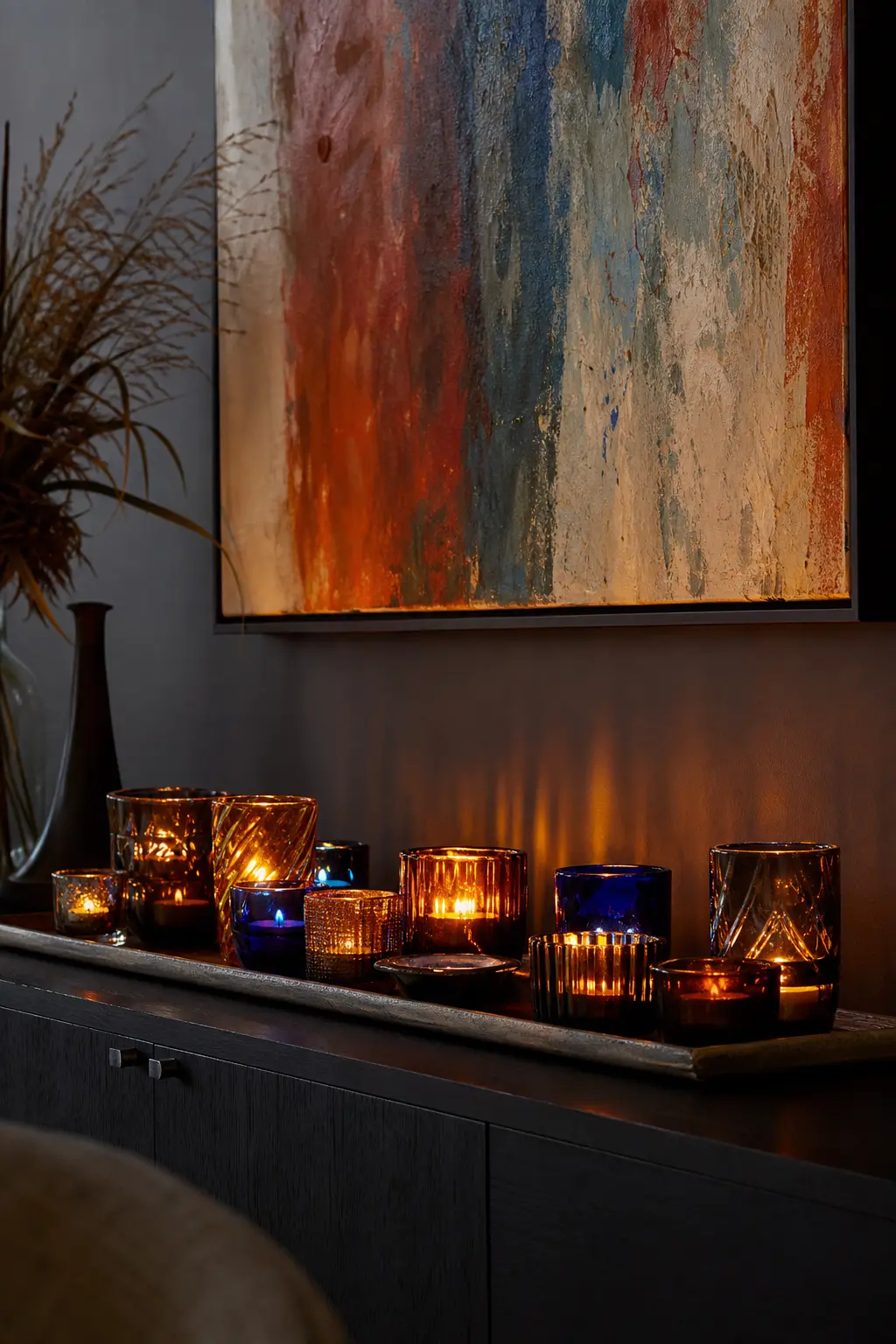
Candles Behind Coloured Glass
Place tealights or small pillars inside coloured glass holders: deep amber, twilight blue and smoked glass together on a single tray. The glass filters the flame and projects colour onto the surface beneath, which is an effect you cannot get from clear holders.
Amber warms everything around it. Twilight blue is unexpected and reads well against cream or dark walls. Smoked glass quiets the flame into a barely-there glow. Combining all three on one tray gives you a small stained-glass window effect at table level.
🛍 Shopping guide
Frequently Asked Questions
How do you decorate with candles at Christmas?
Work in groupings, never singles. Each arrangement needs a height, a surface and a count: five pillars on a tray, a row of tealights along a windowsill, three hurricanes on the floor beside a chair. A single candle on a table does not read as decoration. Choose a tight palette, brass, cream, amber glass and oxblood work well together, and repeat it across the room rather than buying different holders for every surface. For more ideas see our guides to christmas candles decorations and christmas candles diy.
How many candles do you need to light a room?
A standard living room needs a minimum of three separate groupings to feel lit by candlelight rather than lit by one candle with two guests. Each grouping should have at least five flames. So roughly fifteen flames as a floor, spread across different heights and surfaces: floor, tabletop and shelf. More is better as long as the groupings are intentional.
What candles are best for a Christmas table?
Taper candles in brass or iron holders, run down the full length of the table in an odd number, give the best combination of height, flame quality and sight lines. Keep them below 35 cm so guests can see each other. Unscented only: food and fragrance compete. Cream tapers with one or two oxblood ones mixed in read as a deliberate colour choice rather than a default. See our full guide to vintage christmas mantle decor for more table and room styling.
How do I get a cosy glow without a fireplace?
The three moves that work best without a hearth: hurricanes on the floor beside a sofa (flame at ground level reads as a fire from across the room), a packed bowl of tealights on the hearth tiles even if the grate is empty, and fairy lights coiled inside a tall glass vase using warm-white bulbs only. Layer all three at different heights and the room reads as warm regardless of the light fitting on the ceiling.

16 flocked Christmas tree ideas, from heavy snowbound firs to tinted flock in blush and black, with
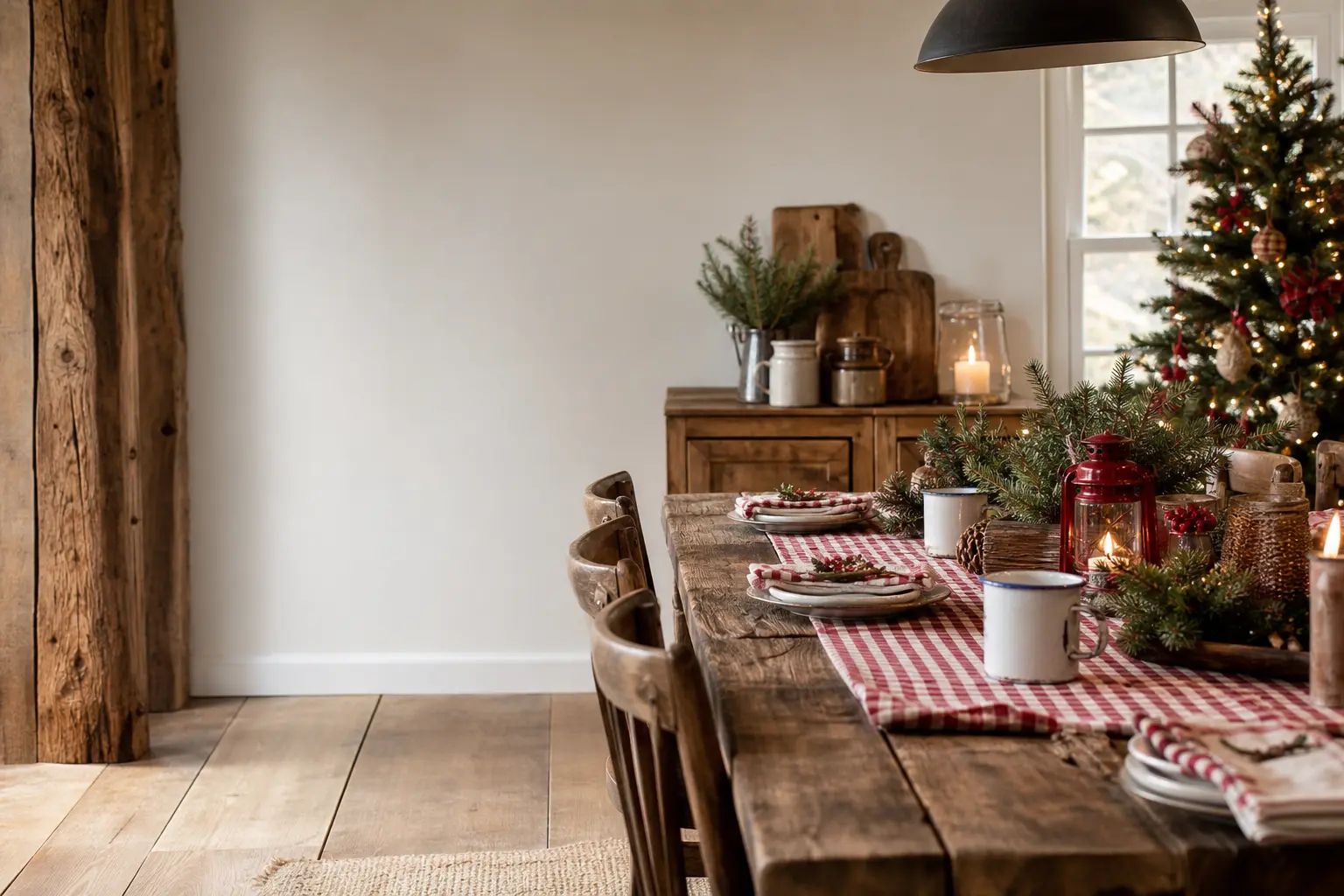
Get the country christmas look in a flat, new build or terrace using worn wood, checked cloth, real

15 painted salt dough ornaments: gingerbread shapes, tiny handprints and rosy-cheeked faces, with th
Leave a Reply