

The problem is never a lack of inspiration. The problem is forty-seven saved pins that belong to twelve different houses, and none of them yours. You buy a rattan charger, then a black taper, then a gingham napkin, and by Thursday the table looks like it cannot decide who it is.
Sixteen named looks, each with a tight colour story, a hero object that anchors every other purchase, and enough direction that you can scroll, pick one, and stop second-guessing. For ideas on what to actually do once everyone sits down, these Thanksgiving table games pair well with almost any of the looks below.
Read the sixteen, circle the one that sounds like you, and use the shop links to build from there. One aesthetic, bought with intention, beats fifty pins every time.
This post contains affiliate links. If you buy through them, I may earn a small commission at no extra cost to you.
Nature and the Forest Floor
These looks pull directly from what is already happening outside. Mushrooms, bark, moss, acorns: the table becomes an extension of a walk in the woods rather than a room dressed up for a holiday.
Woodland and Mushroom
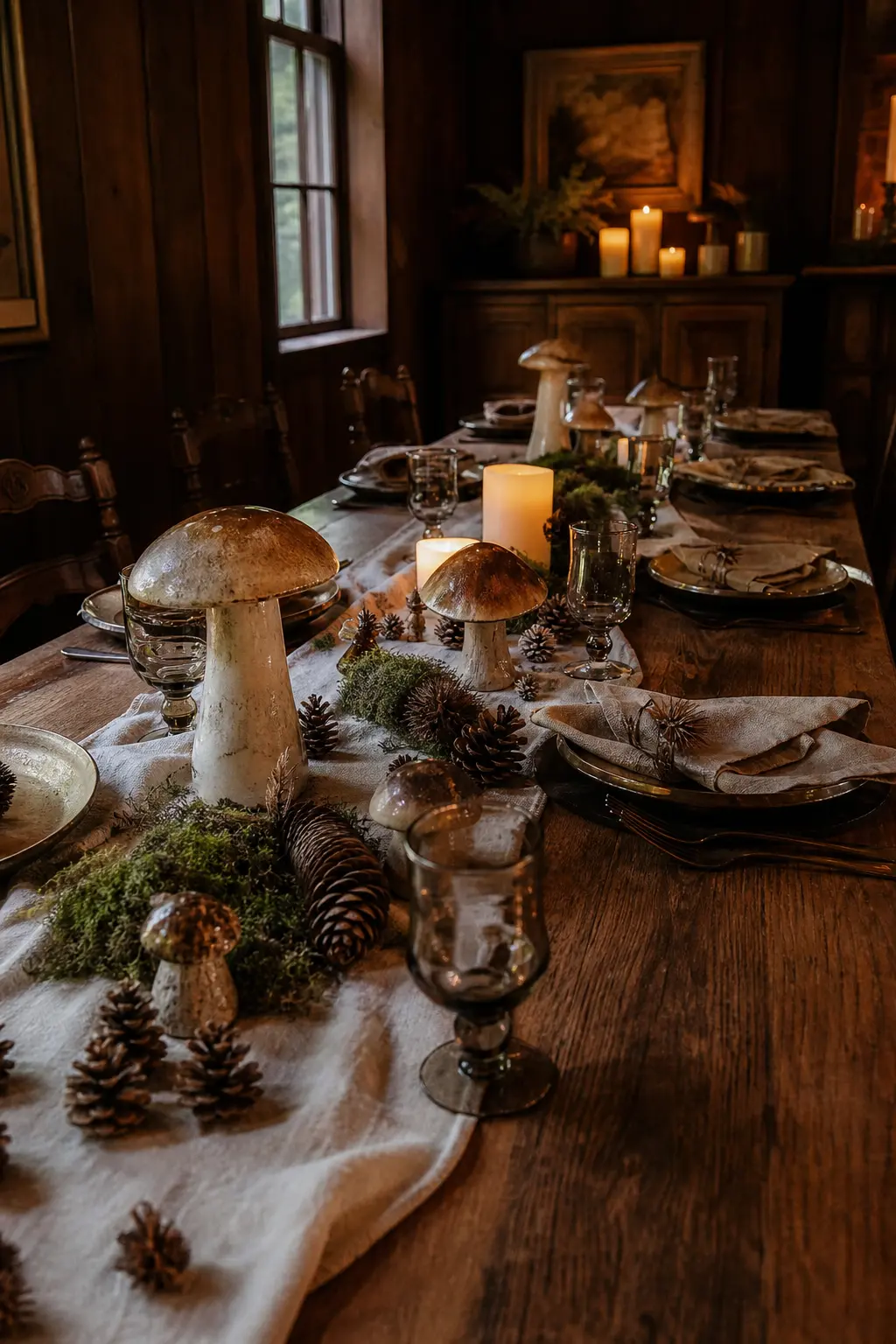
Palette: warm taupe, slate grey, ivory, and the deep caramel of dried oak leaves. The hero object is a cluster of ceramic or dried mushrooms placed at the centre of the table as though they grew there.
Layer a stone-coloured linen runner over bare wood. Tuck small foraged elements, pinecones, acorn caps, a piece of birch bark, between the place settings. Keep the candles short and unscented so they read as stumps rather than candlesticks.
Every purchase rule: if it could have been picked up on a forest floor, it belongs. If it looks manufactured and cheerful, it does not.
🛍 Shopping guide
Rich and Jewelled
Deep colour does the heavy lifting here. These looks use saturated hues against raw or natural backdrops so the contrast reads as intentional luxury rather than maximalist clutter.
Organic Luxury, Jewel Tones on Bare Wood
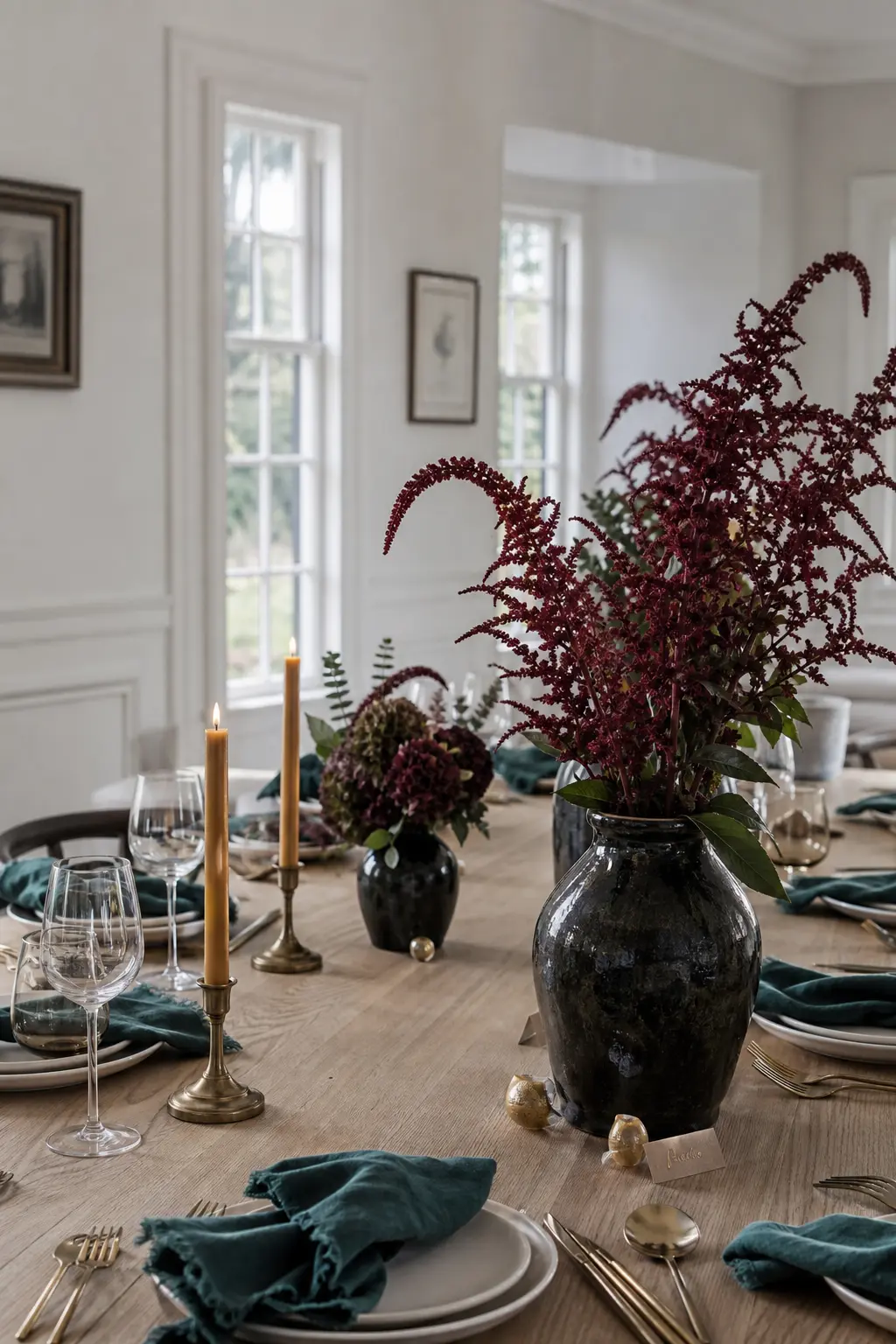
Palette: deep emerald, amber, and burnt sienna against the pale grain of unfinished or lightly oiled wood. The hero object is a wide-mouthed ceramic vase in a dark glaze, filled with one or two large stems.
No tablecloth. Let the wood surface show. Place settings in earthy stoneware, a single jewel-toned taper per seat, and stems of dried amaranth or beech leaves for colour. The luxury reads through the quality of each object, not through quantity.
Every purchase rule: one ceramic piece, one textile, one stem. Repeat that unit down the table and stop before it tips into crowded.
🛍 Shopping guide
Dark Academia, Black Tapers and Old Books
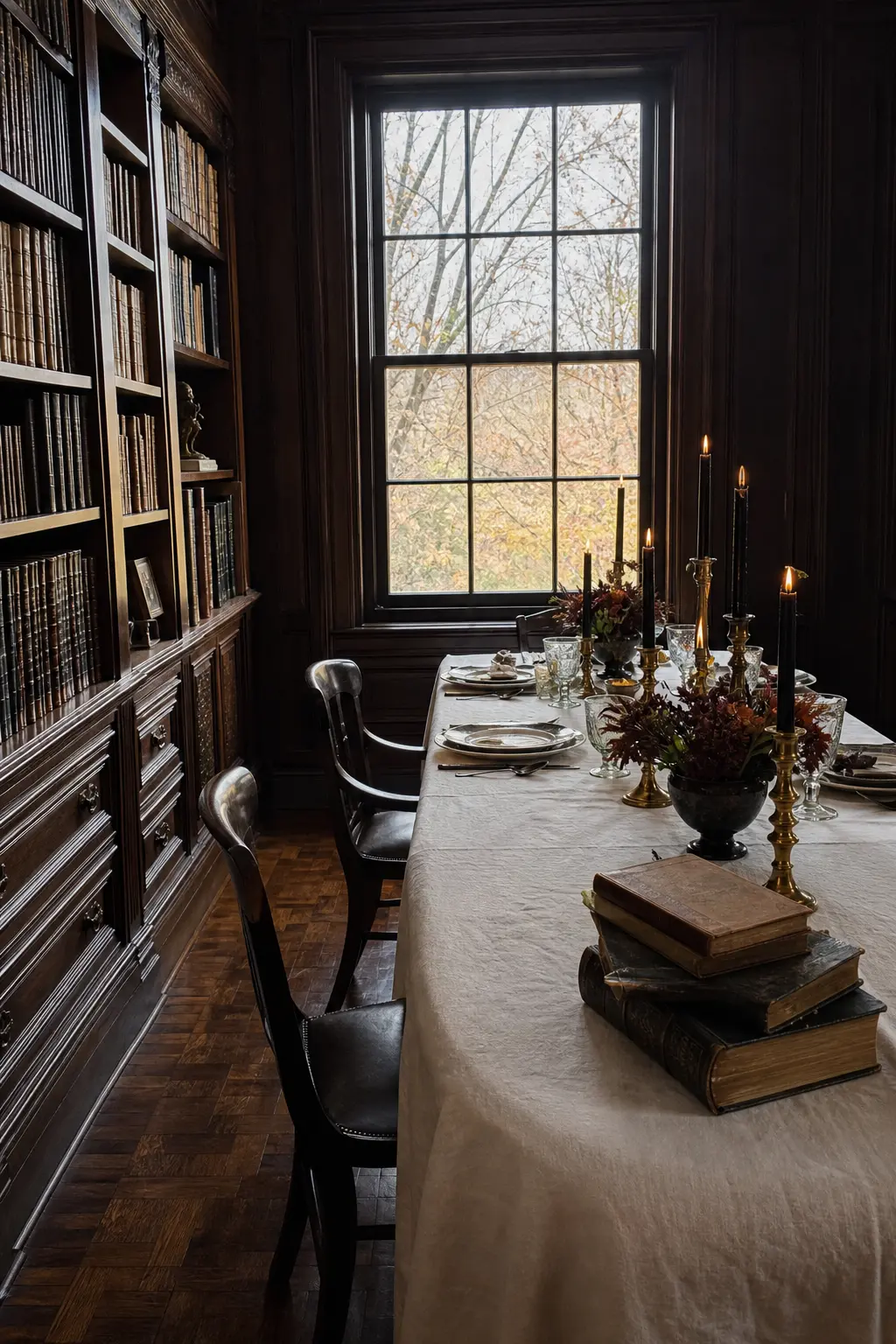
Palette: near-black, aged ivory, tobacco brown, and the dull gold of a cracked leather spine. The hero object is a pair of tall black taper candles in mismatched brass holders.
Stack two or three old hardcovers at one end of the table. Use ivory or ecru table linen with visible texture. Add a small inkwell or glass bottle as a bud vase. No orange, no gourds: this look treats autumn as atmosphere, not motif.
Every purchase rule: if it could sit on a university professor’s desk circa 1940, it passes. If it is festive in an obvious way, it fails.
🛍 Shopping guide
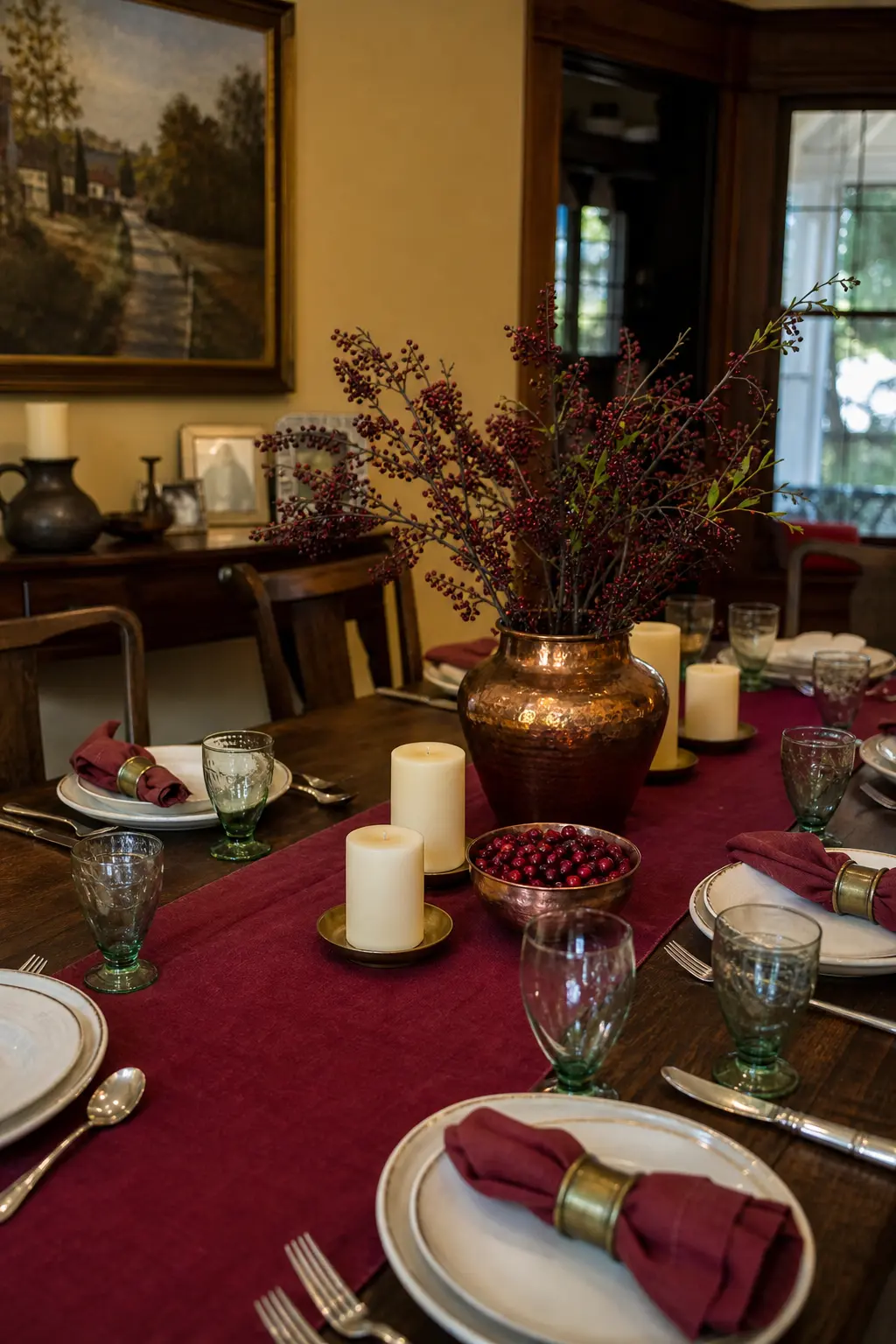
Copper and Cranberry
Palette: burnished copper, deep cranberry red, and warm brass. The hero object is a copper or copper-finish vase or serving vessel at the table centre, catching the candlelight.
Use a cranberry linen runner or cloth. Add pillar candles in cream or beeswax so they do not compete with the red. A bowl of fresh cranberries alongside the copper vessel costs almost nothing and adds a hit of glossy colour that reads as intentional. Brass flatware or brass-ring napkin holders close the circuit.
Every purchase rule: warm metals only. If it is chrome or silver-toned, it breaks the warmth of the palette.
🛍 Shopping guide
Quiet and Considered
Restraint is the move. These looks keep the palette narrow and the objects few, which means every single piece has to earn its place on the table.
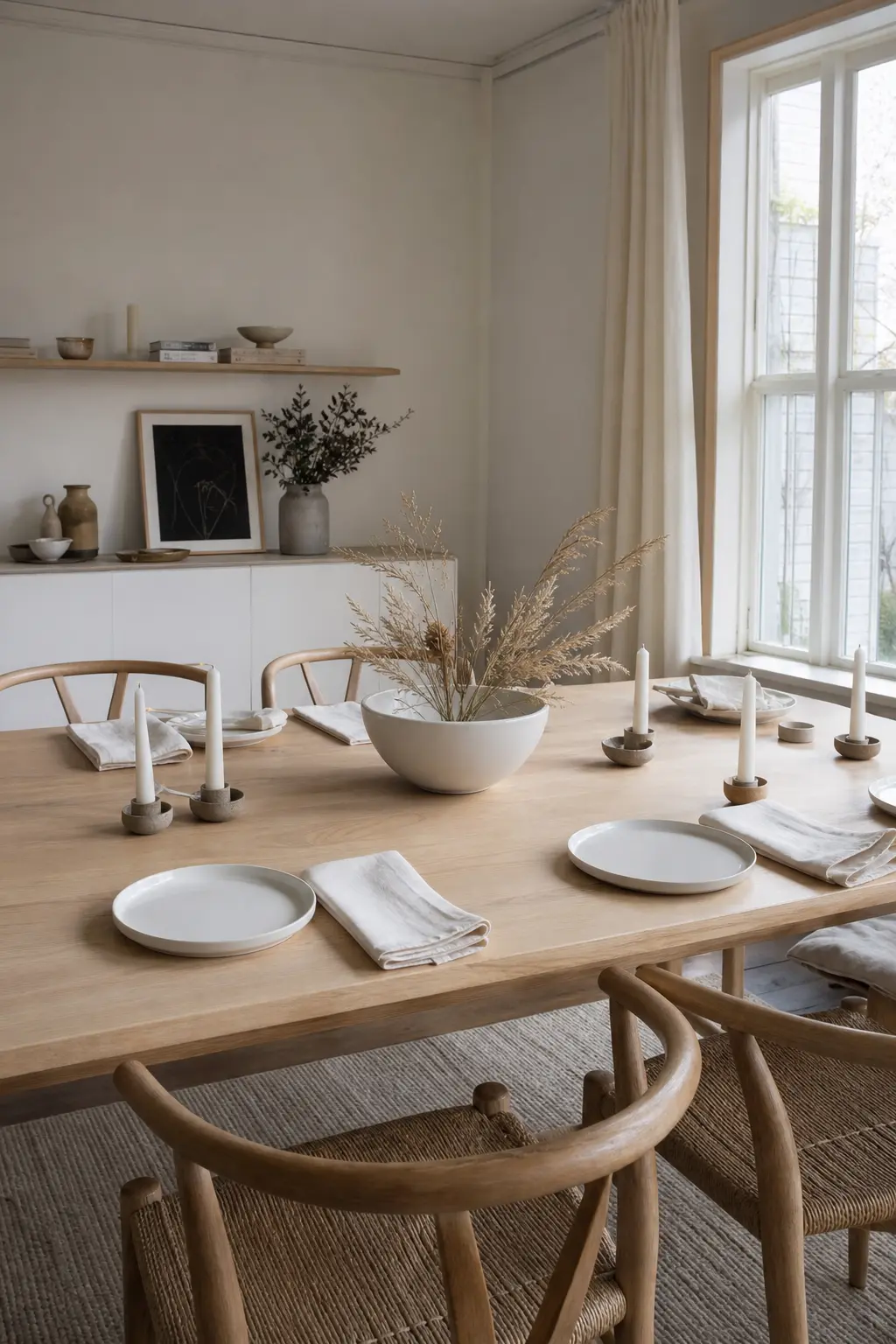
Scandinavian Pared Back
Palette: chalk white, birch, and one accent: a single stem of rosehip or dried grass in the same neutral family. The hero object is a hand-thrown matte white ceramic bowl used as the centrepiece vessel.
No runner. No overlapping textures. One candle per place setting in a simple clay holder. The restraint is the point: this look communicates confidence through what it leaves out. Linen napkins folded flat, no rings.
Every purchase rule: subtract before you add. If the table already reads as complete, it is.
🛍 Shopping guide
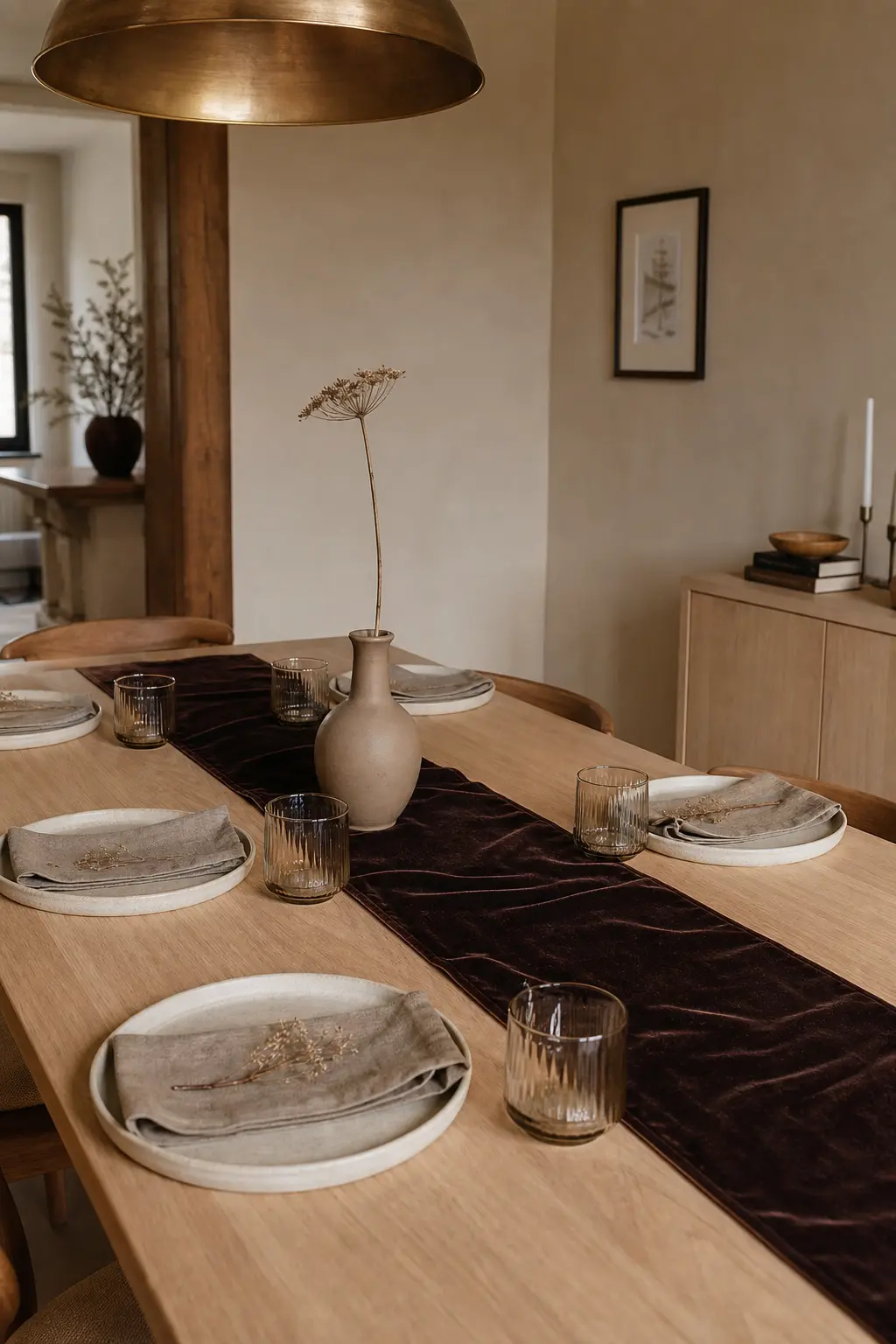
Chocolate Brown Minimal
Palette: deep cocoa, warm sand, and one hit of off-white. The hero object is a chocolate-brown velvet or heavy cotton table runner laid over a raw wood or pale surface so the contrast does the decorating.
Keep everything else sand or cream: plates, napkins, candle colour. One low vessel in a matte tan glaze holds a single large stem. The look is warm without being autumnal in a cliche way, and it photographs well in low light.
Every purchase rule: if the item introduces a new colour, it is the wrong item.
🛍 Shopping guide
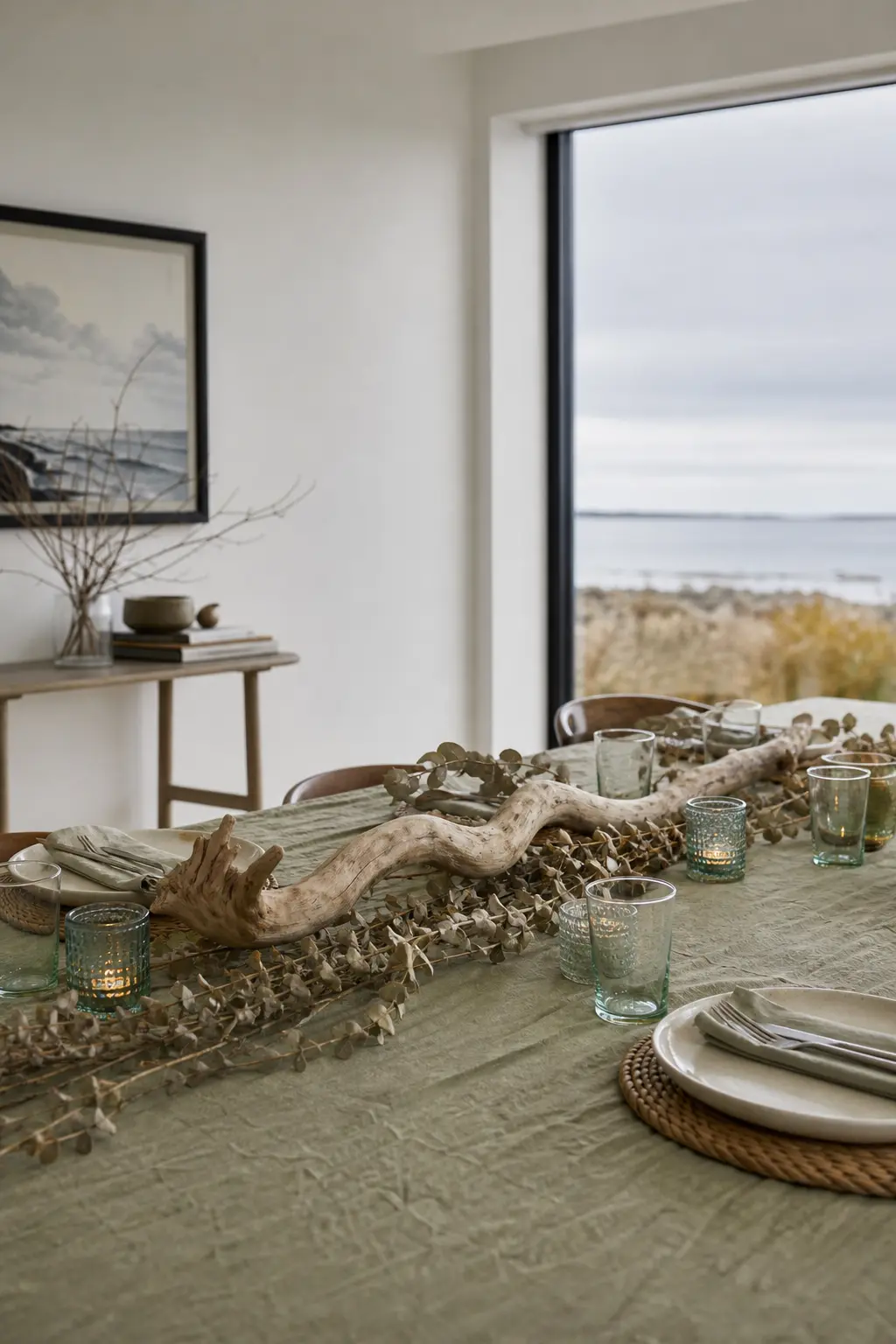
Coastal Autumn, Driftwood and Sage
Palette: driftwood grey, sage green, sea-glass blue-green, and the pale buff of sand. The hero object is a piece of smooth driftwood used as a centrepiece base or place card holder, sitting on a sage linen runner.
Use sea-glass coloured votives or short pillar candles in sage or grey-green. Add sprigs of eucalyptus or dried sea lavender for scent and texture. Plates in matte white or stone keep the base neutral. This look works best in rooms that already have grey, white, or natural wood tones.
Every purchase rule: if a beachcomber could have found it, yes. If it reads as inland harvest, no.
🛍 Shopping guide
Vintage and Found
Nothing here is new, or should look it. The appeal is pieces that carry a history, mismatched on purpose, grouped so the whole is more interesting than any one part.
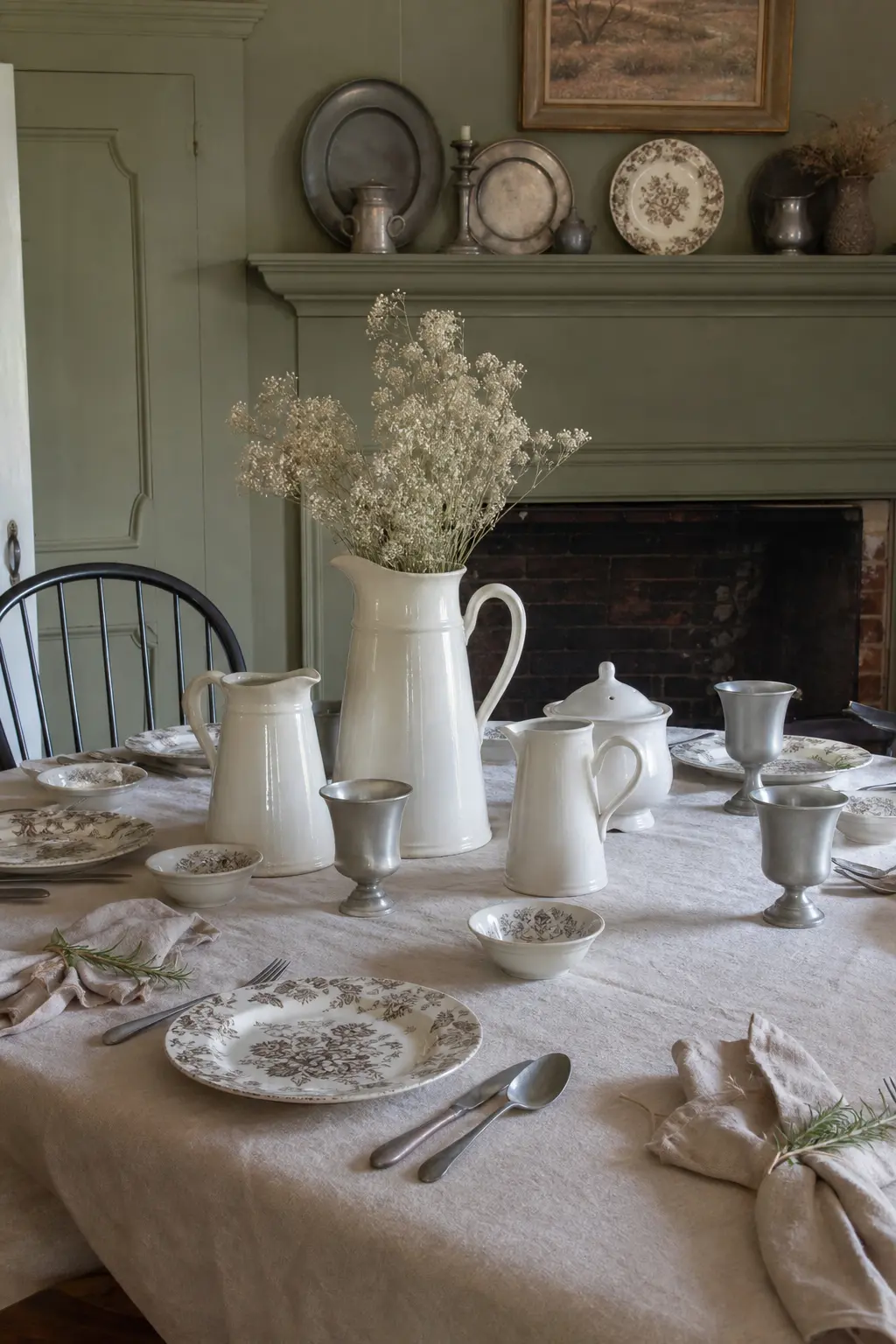
Vintage Ironstone and Pewter
Palette: cool grey, aged white, pewter, and the faintest blush of old rose. The hero object is a collection of ironstone pitchers and platters in varying sizes, grouped as the centrepiece.
Layer a grey linen cloth beneath everything. Use pewter flatware or anything with a dull silver finish. Add one small bunch of white dried flowers in the tallest pitcher. The look depends on the pieces feeling gathered over time, so mix sizes and shapes rather than buying a matching set.
Every purchase rule: the older it looks, the better it works.
🛍 Shopping guide
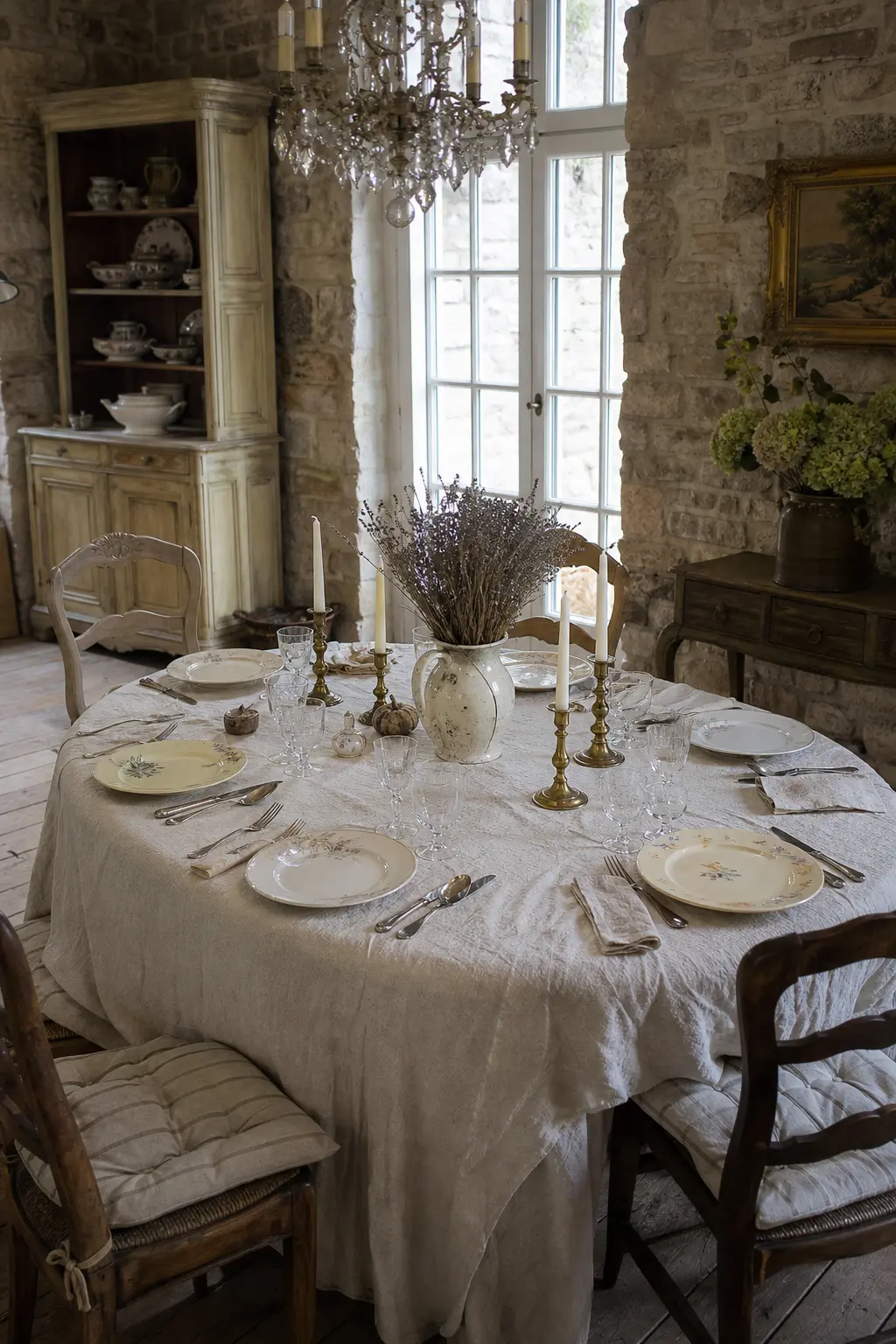
French Country with Linen and Brass
Palette: aged ivory, faded ochre, warm brass, and the grey-green of old French shutters. The hero object is a brass candlestick, taller than expected, holding an ivory or ochre taper.
Use a washed linen tablecloth with visible wrinkle: pressing it flat kills the look. Add a ceramic pitcher of dried or fresh herbs at the centre. Mismatched but related crockery in cream and pale yellow works better than a matched set. The whole effect should suggest a farmhouse outside Lyon rather than a table styled for a shoot.
Every purchase rule: if it looks like it was bought new this season, age it or replace it.
🛍 Shopping guide
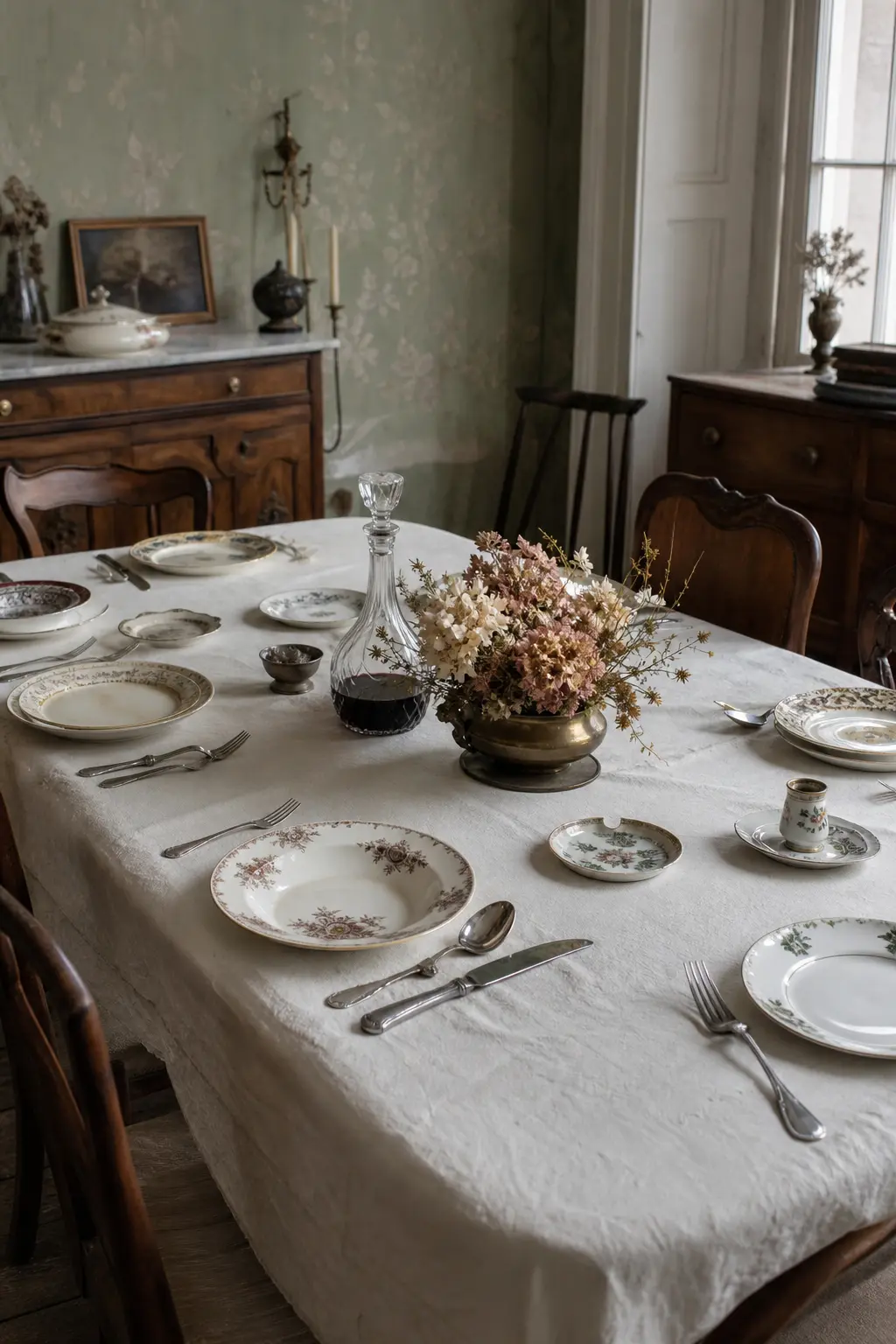
Collected Antiques, Nothing Matching
Palette: no single palette, the coherence comes from age and patina. Every piece looks old. The hero object is a single antique item that is genuinely special, a silver sugar bowl, a pressed-glass decanter, a carved wood serving board, placed where it will be seen first.
Each place setting can differ. Mismatched antique or vintage plates, different glassware, different flatware. The rule is that nothing can look new. One cream or white cloth underneath unifies without imposing. This look takes the most curation but the least actual spending if you use what you already have and add one good antique market find.
Every purchase rule: age is the only requirement. Condition is optional. Matching is forbidden.
🛍 Shopping guide
Botanical and Pressed
Plants, preserved or fresh, become the visual anchor. The look is part apothecary, part garden room, and it works in spaces that have good light and a neutral base to build on.
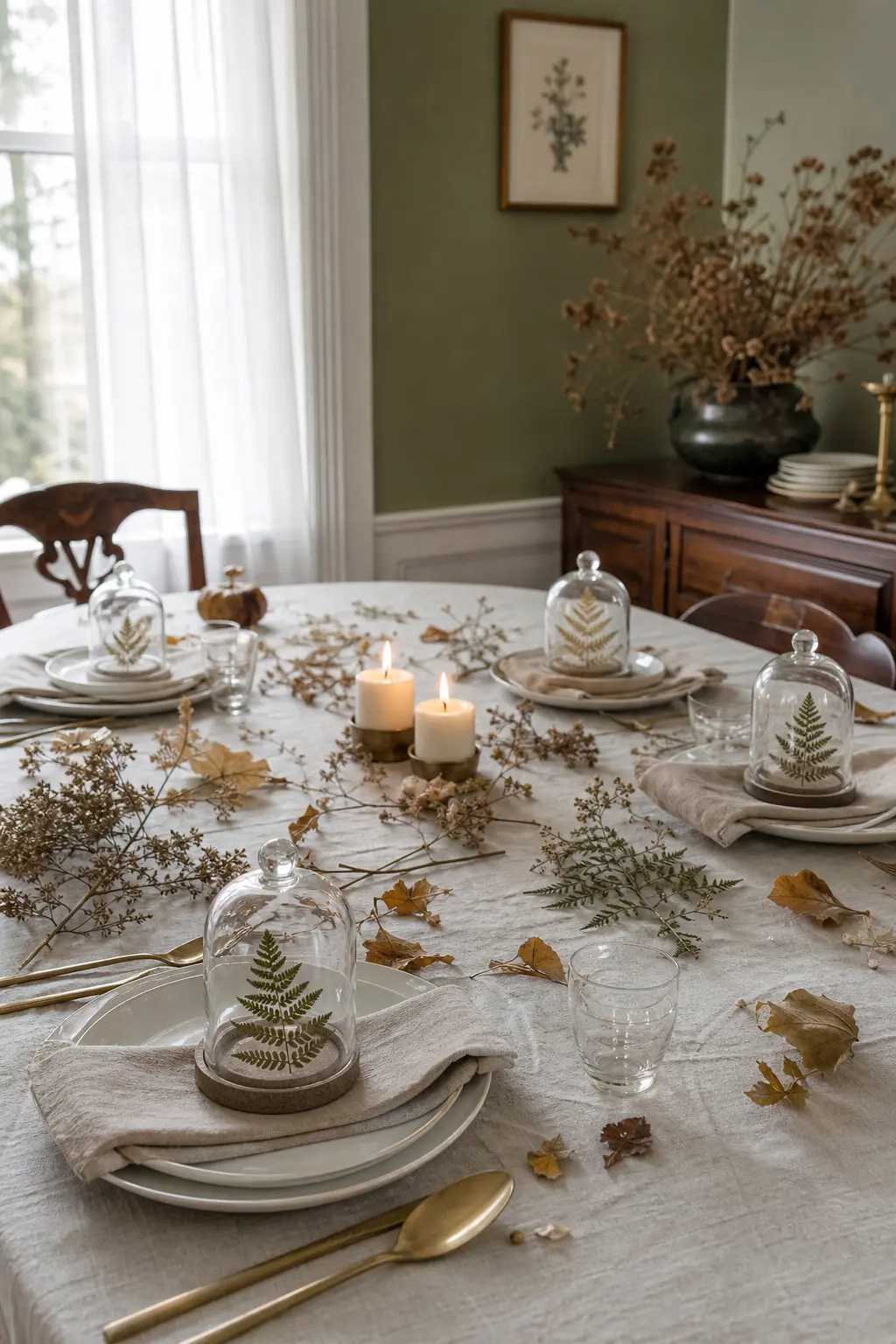
Pressed Botanicals Under Glass
Palette: pale sage, fern green, dusty rose, and the soft yellow of dried fern fronds, all seen through the slight wash of glass. The hero object is a glass-fronted frame or cloche displaying pressed leaves or flowers used as a place card or table feature.
Use a natural linen or white cloth as the base. Small glass cloches or herbarium-style frames at each place setting tell guests where to sit and give them something to take home. Add a few loose pressed leaves scattered across the cloth for texture. Keep candles low and smokeless.
Every purchase rule: anything that could live in a botanical archive fits. Anything plastic does not.
🛍 Shopping guide
Harvest and Country
Familiar, warm, and built on texture rather than colour. These looks reference the farm without being costumey about it: the difference between a tablecloth that happens to be linen and a table dressed as a barn.
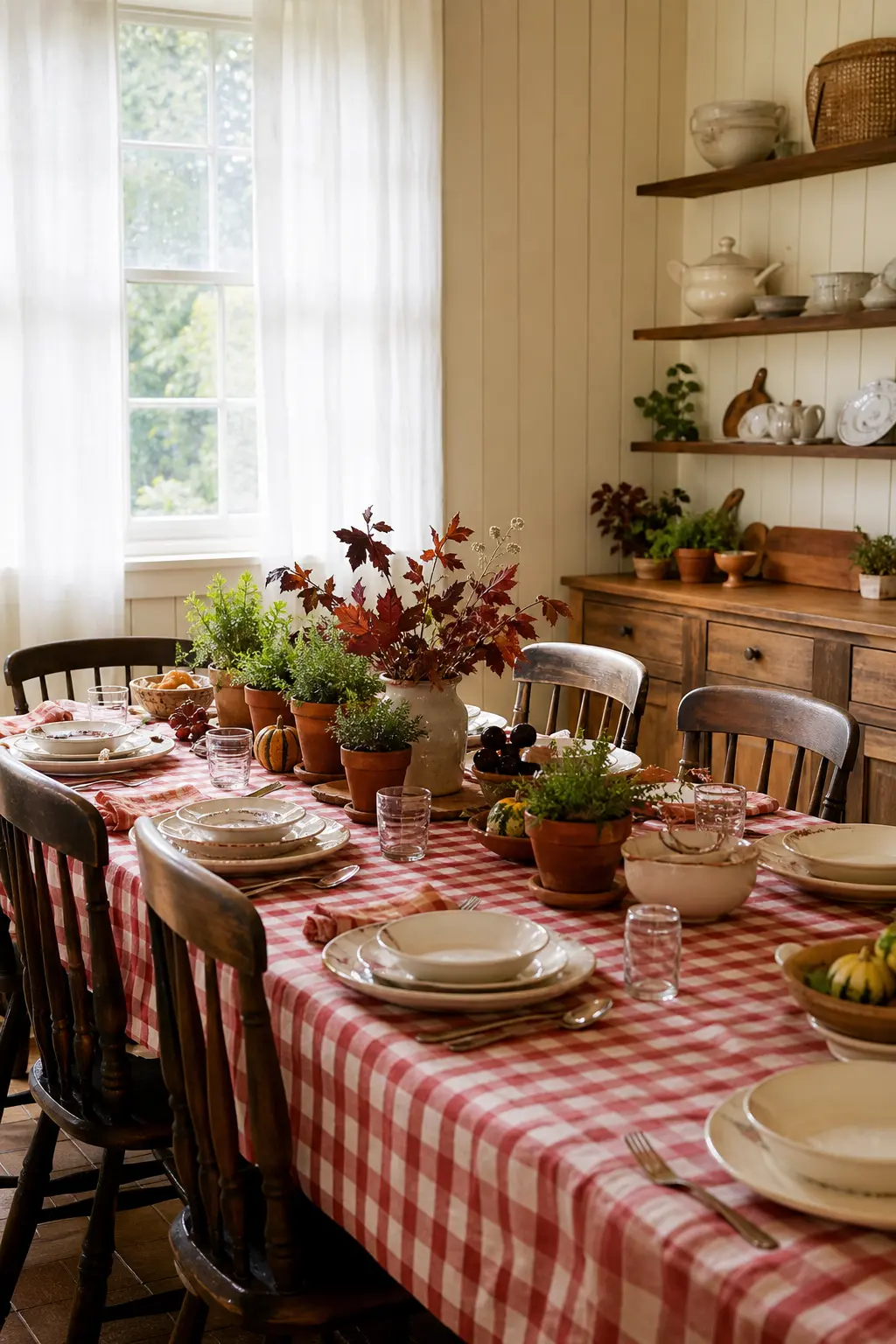
Cottage Harvest with Gingham
Palette: cream, soft red, and sage green. The hero object is a gingham tablecloth, full size, not a runner, laid flat and pressed so the checks sit crisp.
Layer small terracotta pots of herbs down the centre. Add beeswax taper candles in simple iron holders. Keep the crockery plain white so the cloth does the talking. A stack of folded gingham napkins in a second colourway adds variety without breaking the scheme.
Every purchase rule: if the pattern is gingham or the material is natural, yes. If it is printed with a leaf or a turkey, no.
🛍 Shopping guide
Orchard, Apples and Crates
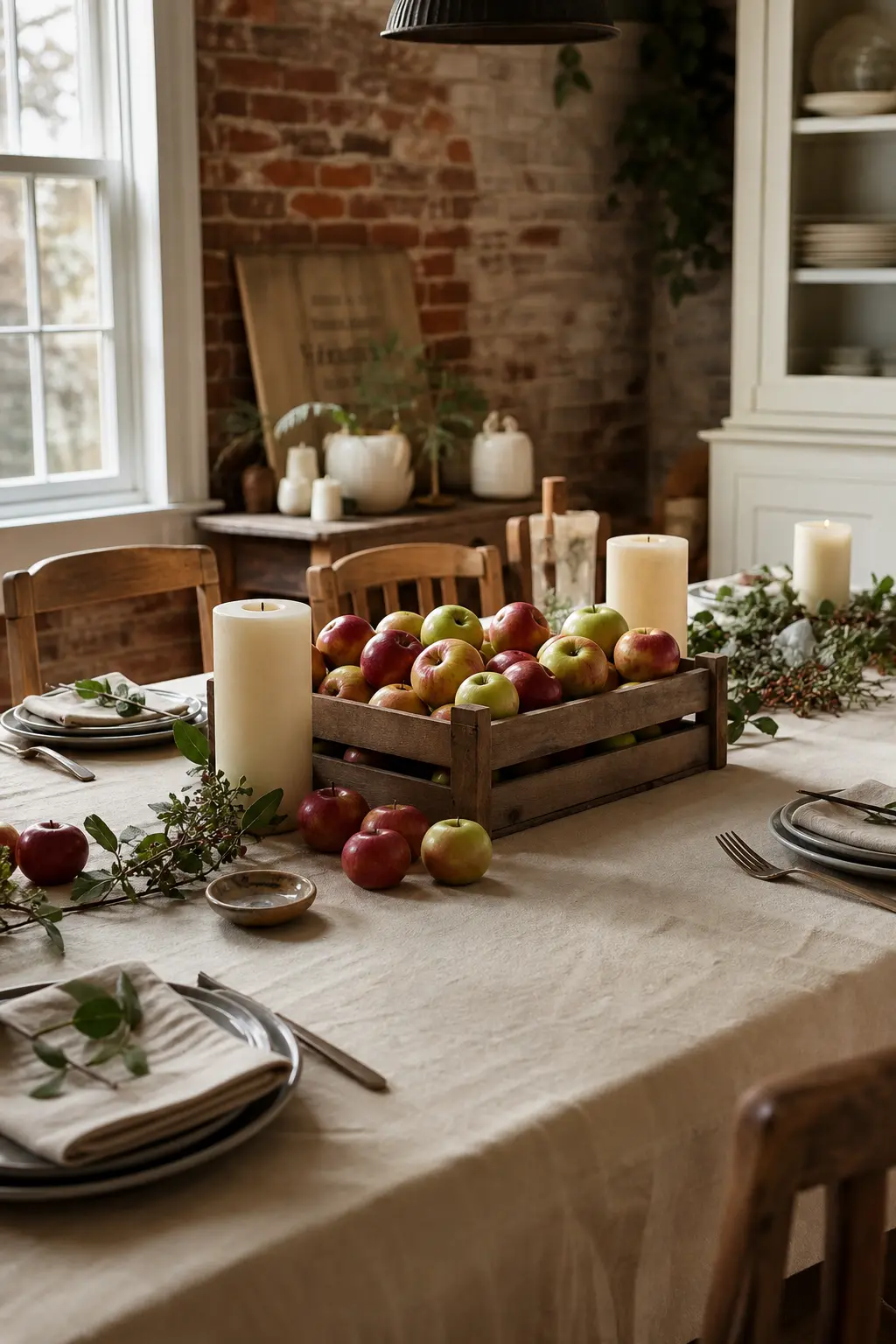
Palette: barn red, leaf green, weathered grey, and the warm straw of old wood. The hero object is a small wooden crate or slatted box used as an elevated centrepiece platform, filled with real apples.
Stack apples in the crate and let a few roll naturally onto the cloth beside it. Use a plain cream or oatmeal tablecloth so the fruit colour reads clearly. Add simple pillar candles in red or cream. This look is entirely edible: the centrepiece can be raided for dessert.
Every purchase rule: if a real orchard would have it, yes. If it is decorative fruit made of resin, hard no.
🛍 Shopping guide
Farmhouse with Wheat and Burlap
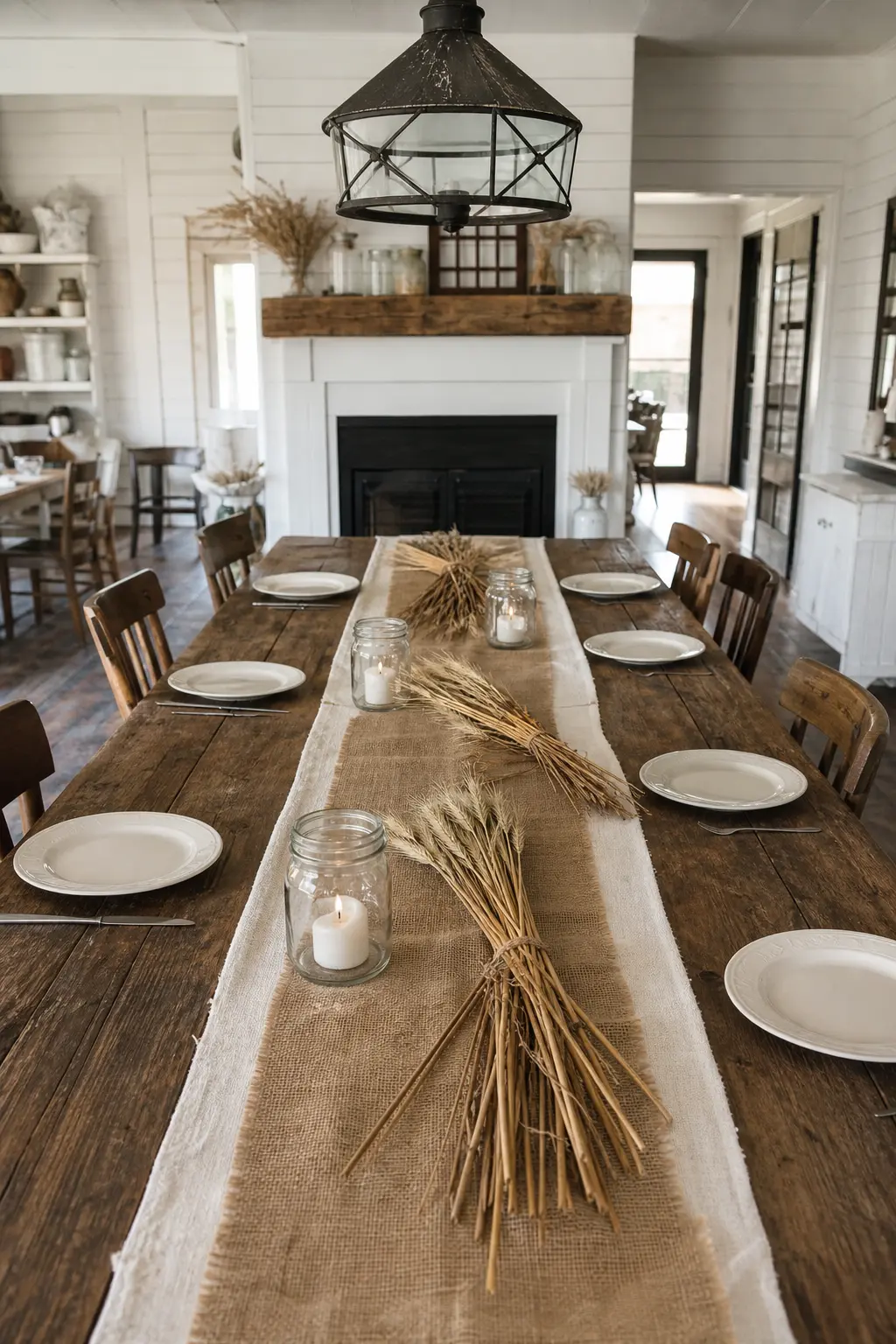
Palette: golden wheat, raw burlap, cream, and weathered white. The hero object is a bundle of dried wheat stalks tied with twine, laid flat along the table runner or standing in a wide-mouth jar.
Layer a burlap or hessian runner over a cream cloth. Use mason jars or plain glass bottles as candle holders or small vases. Keep the crockery white and simple. The texture of the materials does the work: rough against smooth, woven against smooth linen.
Every purchase rule: if the material is rough or woven, it belongs. If it is shiny or printed, it is from a different table.
🛍 Shopping guide
Atmosphere and Candlelight
The light is the decor. These looks strip back or double down on wax and flame so the room itself does the work, and the objects on the table are chosen to catch that light rather than compete with it.
Moody Plum and Candlelight
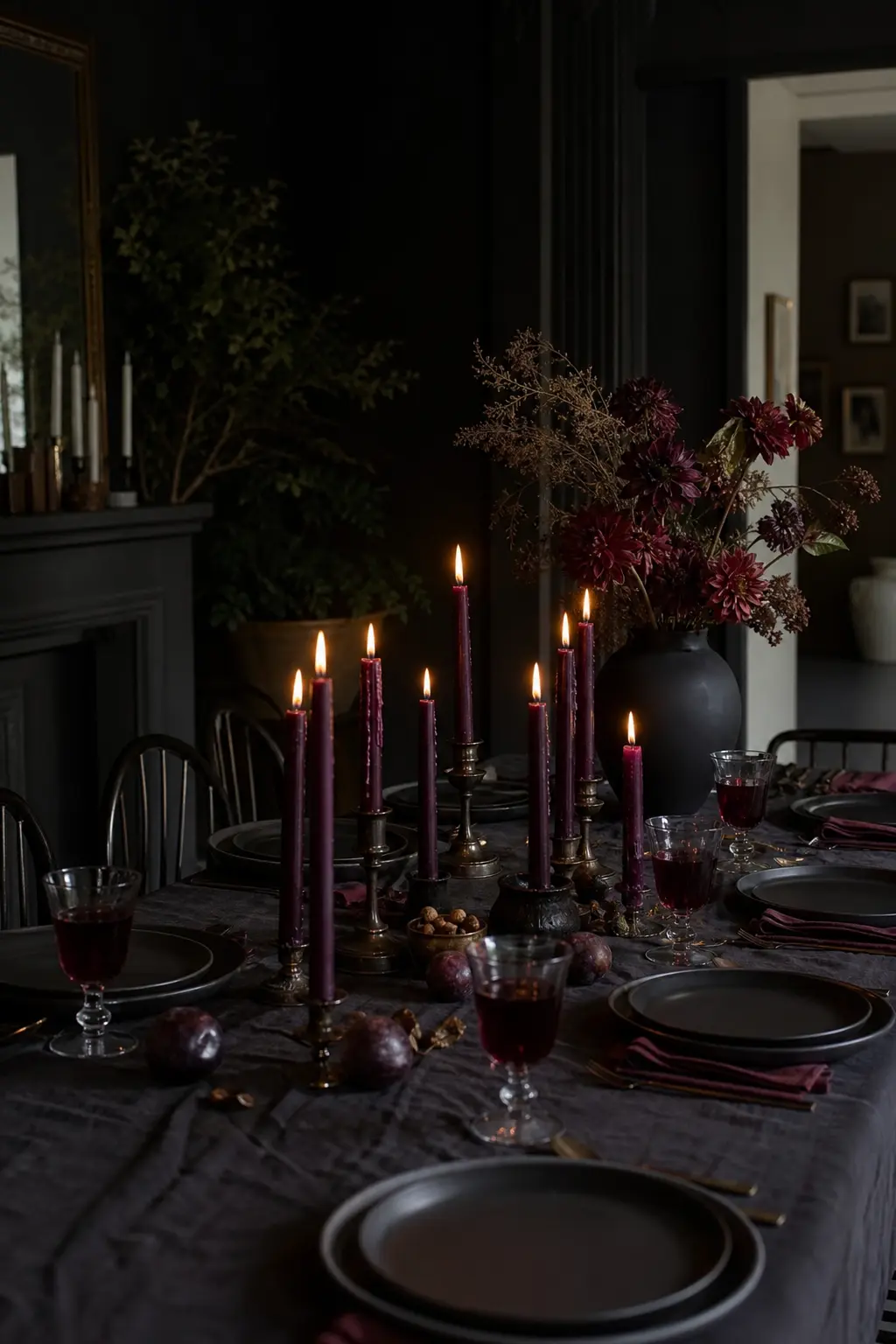
Palette: deep plum, near-black, dried rose, and the amber of beeswax flame. The hero object is a cluster of plum or aubergine taper candles in varying heights grouped at the table centre.
Use a dark cloth, charcoal or deep plum, as the base. Add dried roses or dried dahlias in a matte black vase. Keep tableware dark: matte black or very deep grey plates read beautifully in this light. The room does not need to be dark to start: the candles create the atmosphere on their own once lit.
Every purchase rule: if it does not look good by candlelight, it does not belong at this table.
🛍 Shopping guide
Stripped Back, Food and Candles Only
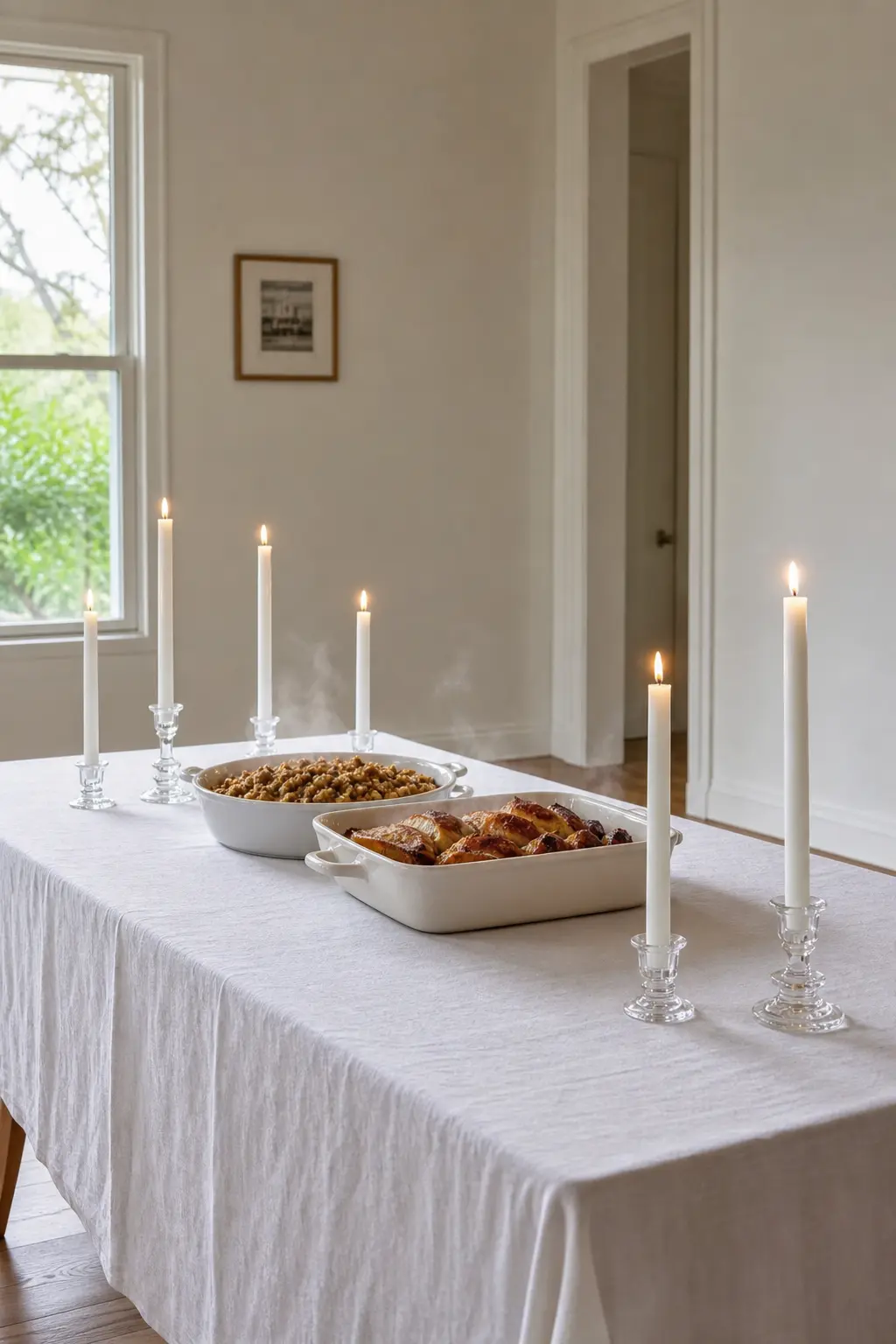
Palette: whatever the food is. The table has no dedicated decor colour because the table has almost no decor. The hero object is the food itself, served in good vessels and placed where the centrepiece would normally go.
No runner, no arrangement, no scattered leaves. Use the best cloth you own, white or cream, pressed flat. Add enough candles that the light is warm and generous. Put the serving dishes on the table before guests sit down so the steam and colour of the food become the visual. This is the most confident look of the sixteen because it assumes the food is good enough to carry the room, and it always is.
Every purchase rule: one good tablecloth, one set of matching white candles in simple holders. Everything else is groceries.
🛍 Shopping guide
Closing Thoughts
Pick the one look that made you stop scrolling and felt like recognition rather than aspiration. That instinct is correct. Buy the hero object first, then fill in around it, and resist every pin that belongs to a different aesthetic no matter how pretty it is on its own.
If you want the table to feel alive beyond the food, Thanksgiving games for adults and dinner games to play around the table give everyone a reason to linger once the plates are cleared.
Frequently Asked Questions
How do you choose one Thanksgiving aesthetic when you like several?
Pick the hero object, not the mood board. If you would genuinely use a copper vase every day and a piece of driftwood makes you hesitate, the copper table is your table. The object you will keep after November is the one that tells you which look is actually yours.
Can you mix two of these aesthetics on the same table?
You can mix the woodland look with the cottage harvest look because both share warm naturals and rough textures. Mixing dark academia with coastal autumn pulls in opposite directions and usually reads as confused rather than eclectic. The safest rule: if the two looks share a colour temperature, they can share a table.
Which of these aesthetics works in a rental or a room with no interesting architecture?
Stripped back, food and candles only, Scandinavian pared back, and chocolate brown minimal all work because they depend on what is on the table, not on the room around it. A good tablecloth and good light neutralise almost any uninspiring background.
What is the fastest of these sixteen looks to execute the morning of the dinner?
The stripped-back look requires the fewest objects and no arrangement decisions. The orchard look with a wooden crate and real apples is a close second: the crate arrives, you fill it, three loose apples roll out onto the cloth, and you are finished.
Which Thanksgiving aesthetic photographs best for sharing?
Moody plum and candlelight, dark academia, and copper and cranberry all perform well in low light on a phone camera because high contrast and warm tones compensate for imperfect phone photography. Scandinavian pared back works well in daylight with a window behind the table.
14 practical Friendsgiving ideas for hosting 14 people in a one-bedroom apartment: seating, flow, fo
Tired of cooking a turkey nobody loves? These 19 Thanksgiving dinner ideas skip the bird entirely an

15 office-appropriate thanksgiving games for work — desk-safe, hybrid-friendly, and actually fun.
Leave a Reply