

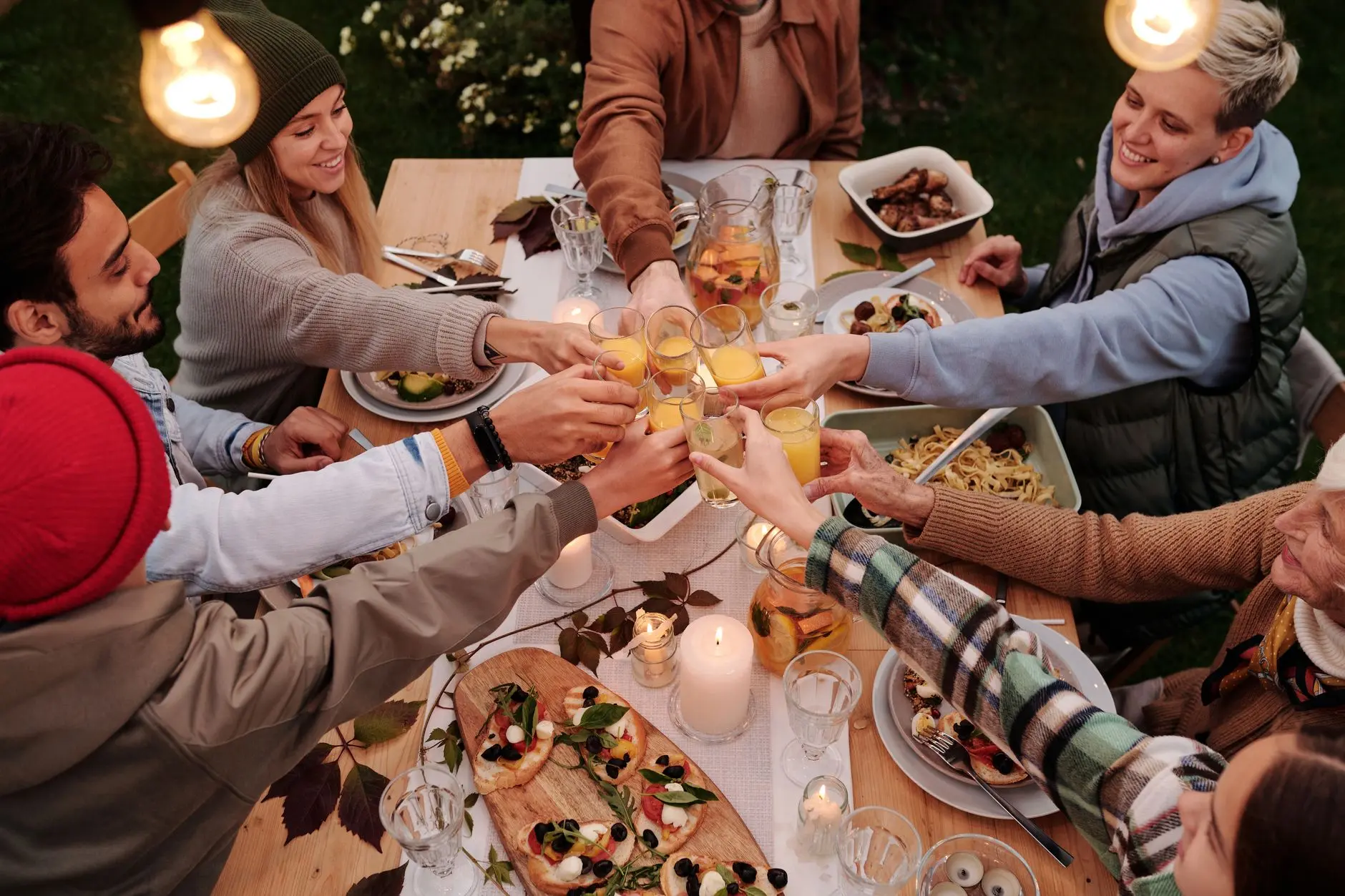
The meal itself will be fine. What trips up most hosts is the two hours before it, when guests arrive in waves, children need somewhere to be, and teenagers have already gone silent.
Every idea here addresses one specific moment in a long family day, from the front door opening to the last car leaving. Some are quiet anchors, some are active releases, and most cost almost nothing to set up. The palette running through all of it: rust, cream, oak, and brass, warm enough to feel intentional without requiring a shopping spree.
If you also want structured games for around the table, 25 Thanksgiving Family Games Grandma to the Grandkids Will Play and 15 Thanksgiving Dinner Games to Play Around the Table are worth bookmarking alongside this one.
This post contains affiliate links. If you buy through them, I may earn a small commission at no extra cost to you.
Set the Stage Before Anyone Arrives
The first ten minutes of a guest’s arrival set the tone for the whole day. A little visible effort at the entrance signals that someone thought about them before they walked in, and that alone relaxes a crowd faster than any playlist.
A Welcome Table with Name Cards
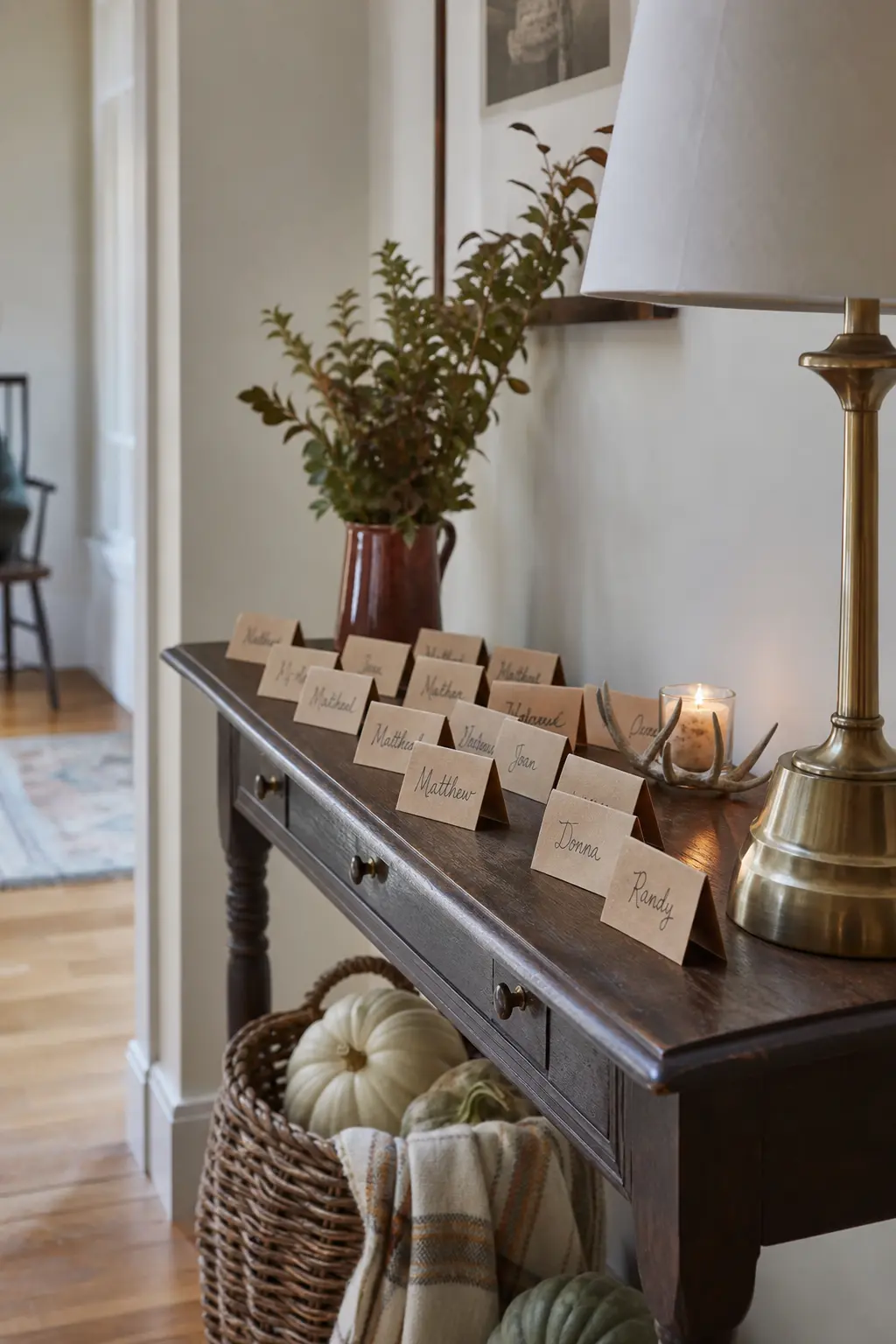
Put a small table just inside the front door, dressed in a cream runner with a brass tray holding folded name cards. It tells people immediately that they were expected, individually.
Use kraft card stock and a dark marker. No calligraphy required. The names alone do the work, and children especially love finding their own. It also removes the guessing game of where to sit, which, in a three-generation house, is always a guessing game.
Add a small candle, a couple of oak leaves, and one cider-scented thing and the table earns its corner of the hallway. Swap paper napkin rings for the name cards if you want something that doubles as a keepsake.
🛍 Shopping guide
Photo Wall of Past Thanksgivings
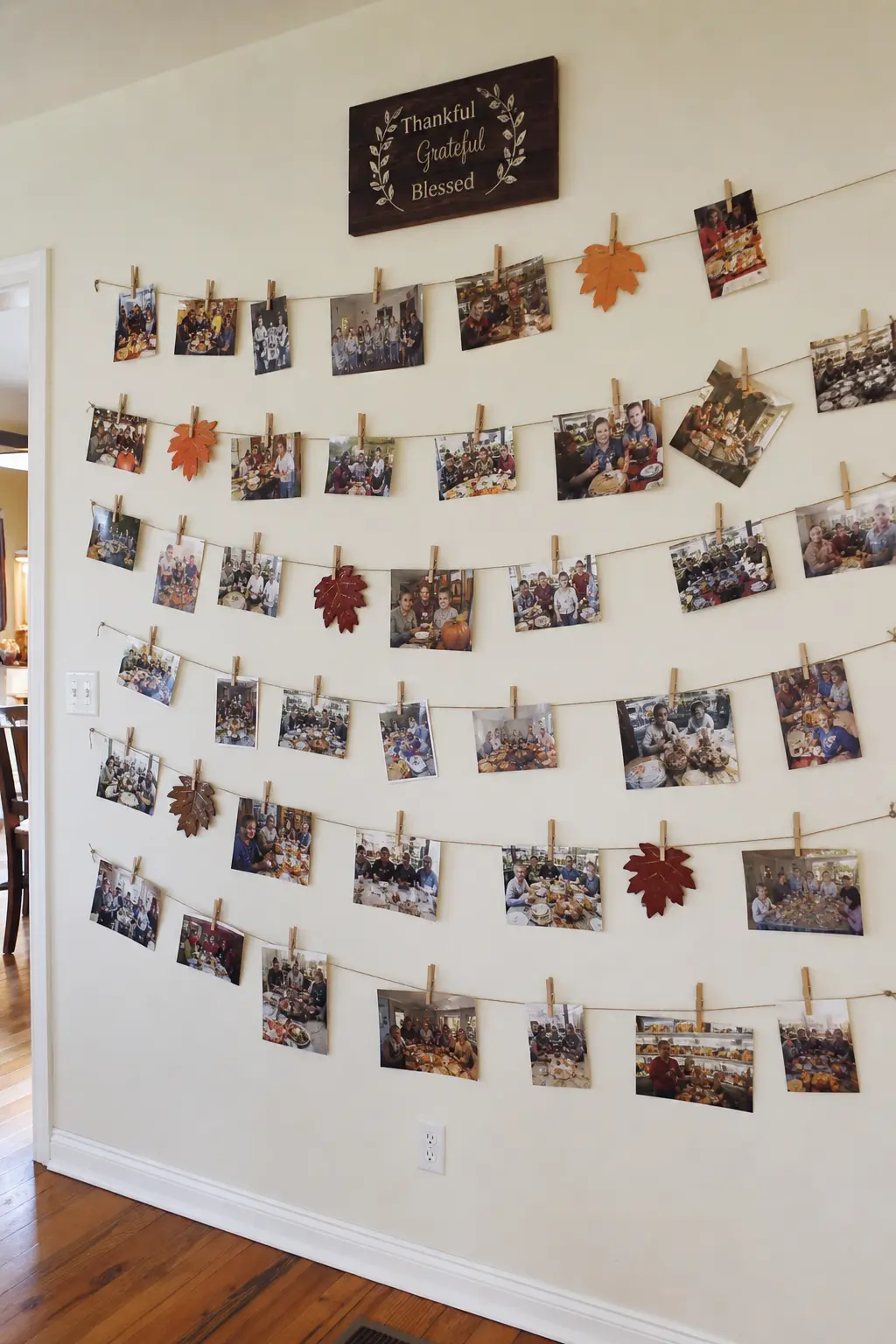
Print twenty to thirty photos from past years, clip them to a length of twine strung across a blank wall, and step back. That wall becomes the most-visited spot in the house before dinner.
Use photos spanning every generation present. Grandparents in their forties, parents as children, the current kids as babies. People stop, point, and start talking without any prompting from you.
Rust and cream clips, raw wood clothespins, or small brass paper clips all work. The prints can be 4×6, which is cheap to run off at any pharmacy the week before. Leave a couple of blank clips at the end: someone will take a photo on the day and want to add it.
🛍 Shopping guide
Fill the Gap: Quiet Activities
Not everyone wants to stand in the kitchen or watch the game. Give the quieter guests a reason to settle in without having to ask for one. Cards, boards, and conversation starters do that without any instruction from you.
A Gratitude Board Everyone Adds To
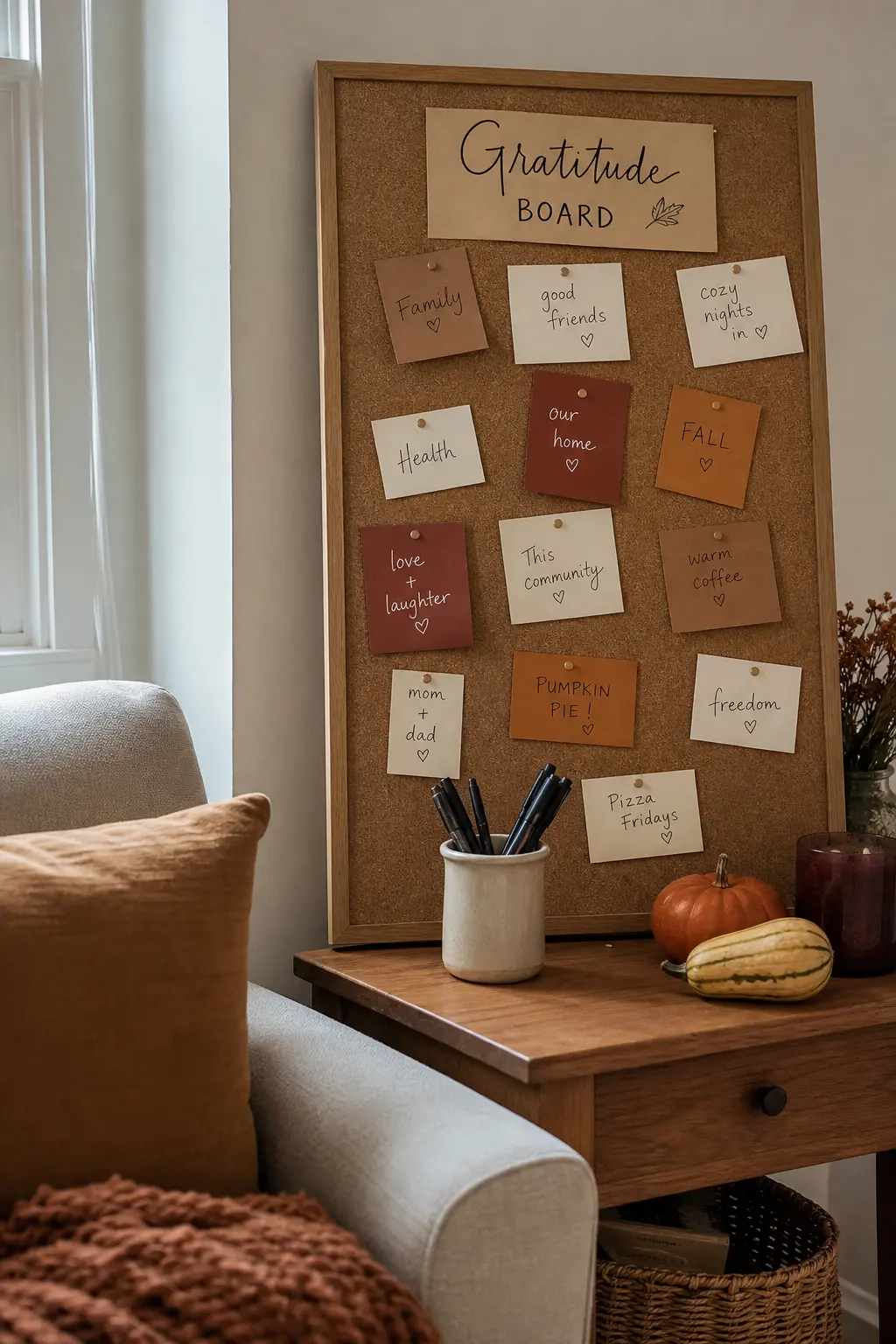
Lean a chalkboard or a framed corkboard against a wall in the living room, set out a marker or small cards with a pin, and write ‘What are you grateful for this year?’ at the top. Then leave it alone.
People add to it throughout the arrival period, often without mentioning it to anyone else. By the time dinner is called, it is full. Reading it aloud before the toast is one of those moments that lands without any stagecraft.
A corkboard with small paper cards and pins works even better than a chalkboard because guests can take their card home. Use rust-coloured cards if you want it to match the palette.
🛍 Shopping guide
Cards Left Out on the Side Table
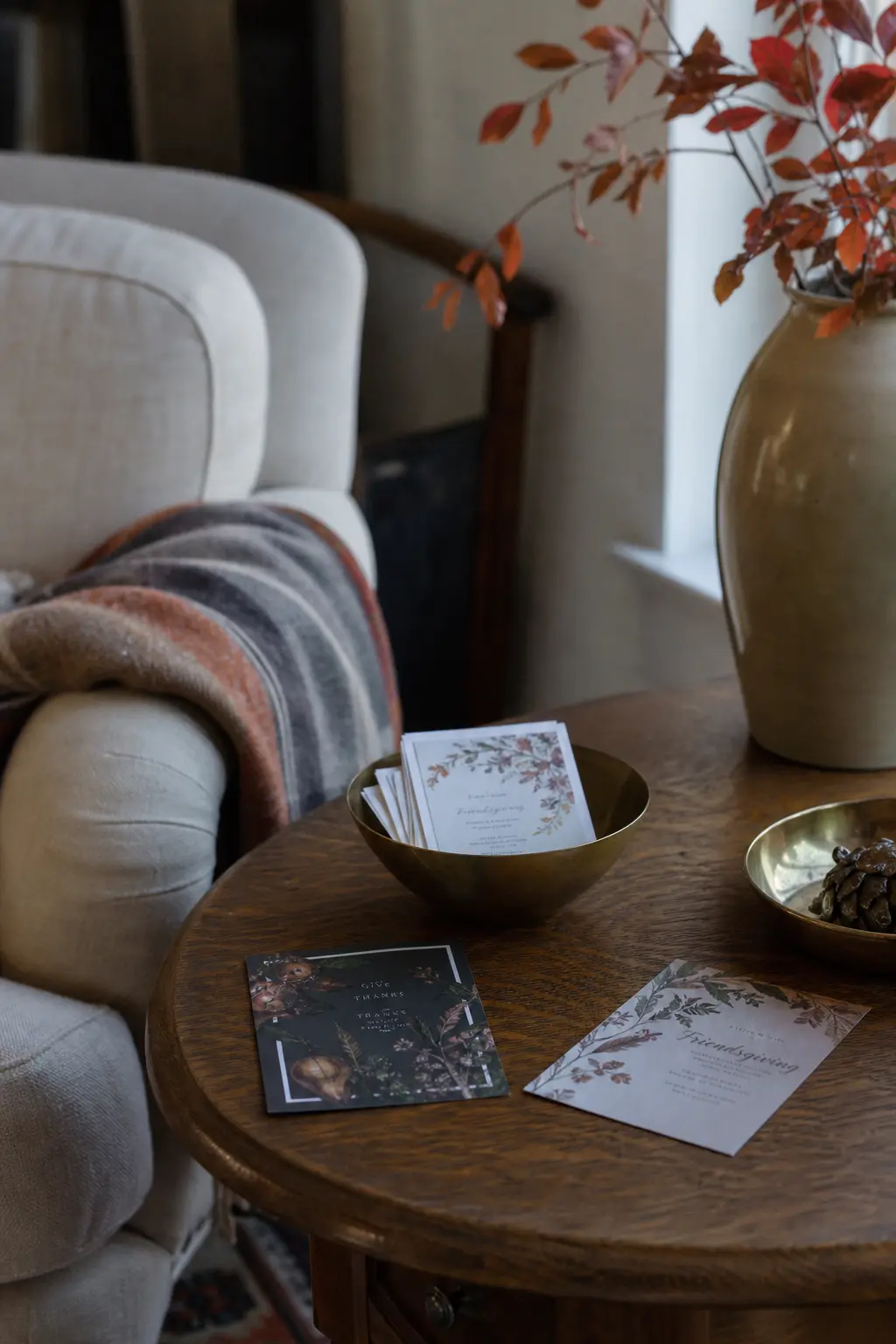
A deck of conversation starter cards, left casually on the side table with no announcement, gets picked up. People look through them, read a question aloud, and suddenly a conversation is happening that would not have happened otherwise.
Choose a set with questions that work across ages: ‘What is a skill you wish you had learned younger?’ lands for a grandparent and a teenager in the same breath. Avoid anything competitive or timed. The point is a gentle opening, not a game night.
Stack the cards in a small brass bowl or a wooden tray. The visual cue matters: a messy pile says ‘we have not thought about you yet’, and a neat bowl says ‘we noticed you were coming’.
For more structured table games, 15 Thanksgiving Table Games You Can Play Without Getting Up has options that work in exactly this format.
🛍 Shopping guide
Recipe Cards from the Grandmothers, Printed
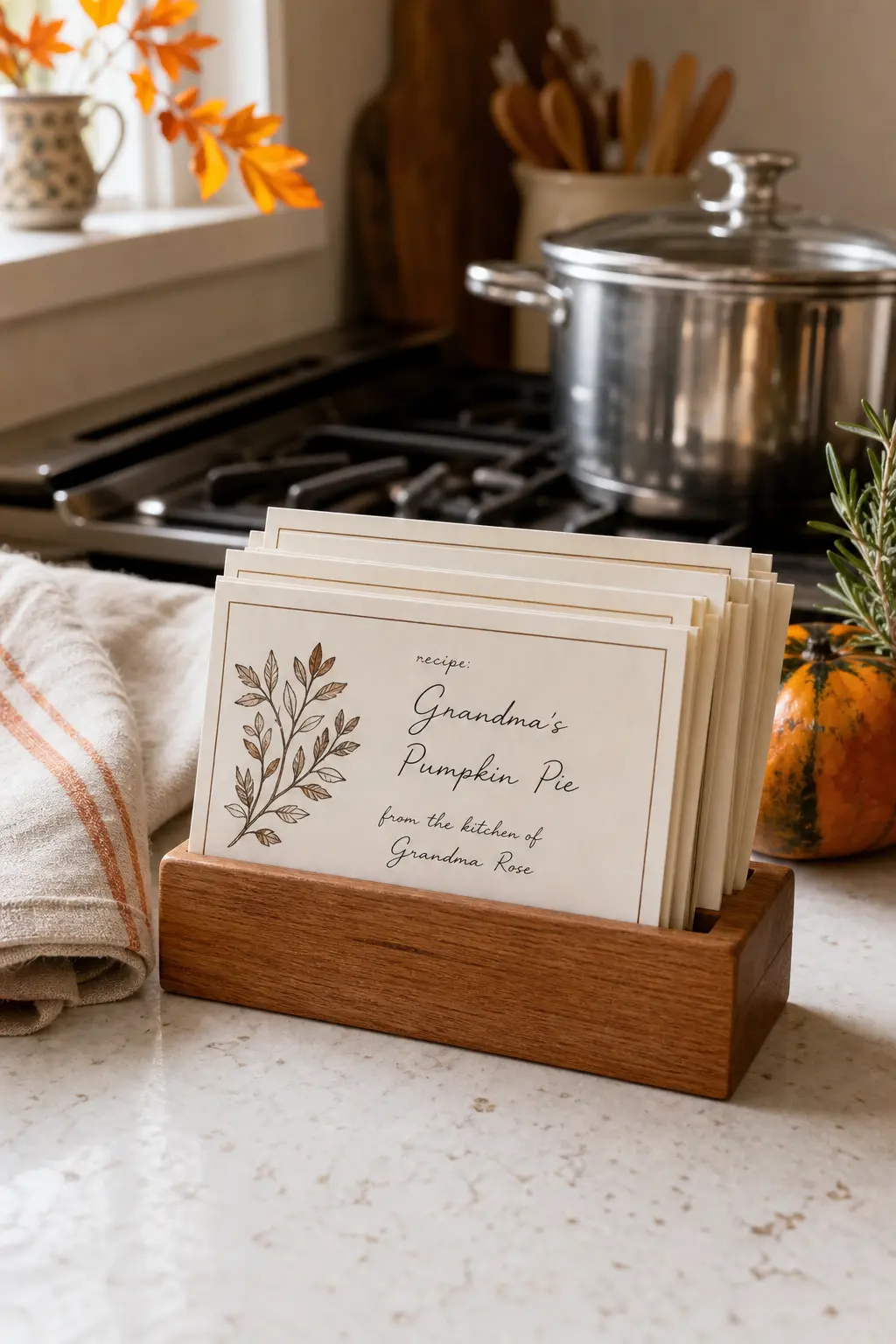
Ask the grandmothers (or whoever holds the family recipes) for one dish each in the weeks before. Type them up, print them on card stock, and set them in a small wooden holder on the kitchen counter or side table.
This is a quiet activity in the best sense: people pick one up, read it, and feel something. It also becomes a natural conversation starter between generations without requiring anyone to perform.
Print extras so guests can take one home. Use a simple template: recipe name, contributor’s name, and the handwritten note they gave you. That last part matters. ‘Add the butter when you think you have added enough, then add more’ is the whole inheritance in one line.
Grandparents Interviewed on Video
Ask one of the teenagers or a parent to sit down with a grandparent for fifteen minutes and record a casual interview on a phone. Three questions is enough: ‘What was Thanksgiving like when you were a child?’, ‘What dish do you remember most?’, ‘What do you want us to remember?’
This is the highest-value thing on this list, and it will not happen unless someone makes it happen deliberately. The footage does not need editing. It just needs to exist.
The teenager doing the recording often gets more out of it than anyone else. Frame it that way when you ask: ‘Would you be willing to interview Gran before dinner?’ It is a role, not a chore, and that difference is everything.
🛍 Shopping guide
Fill the Gap: Lively Activities
Some guests need to move. Kids especially will circle the table three times before dinner if there is nothing pulling their attention. A little structured energy now means a calmer table later.
For a bigger roster of crowd games, 18 Thanksgiving Group Games for a Big Crowd has options that scale well for large families.
Kids Table with Paper Covering and Crayons
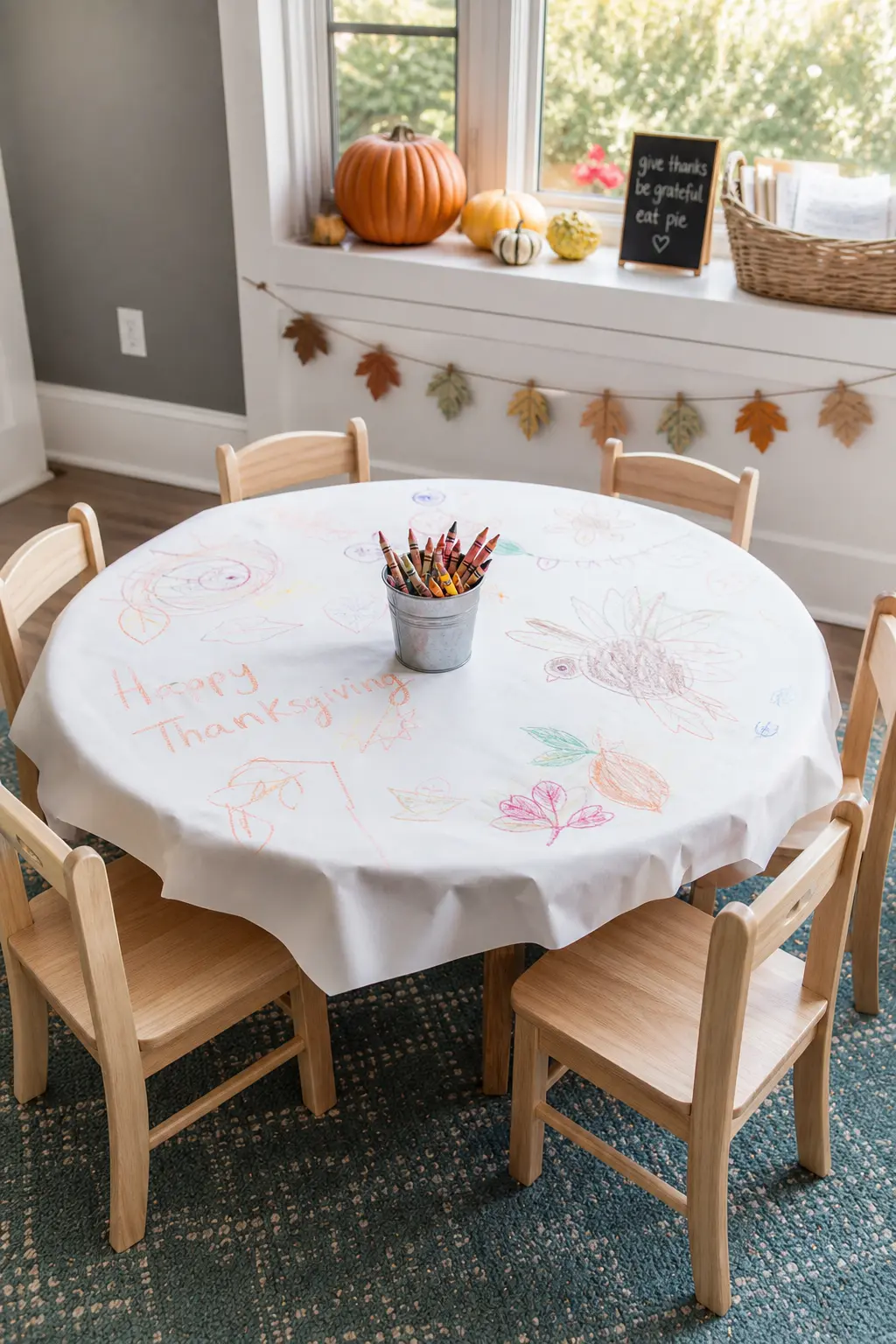
Cover the kids table in a roll of white or kraft paper and set out a cup of crayons in the centre. No instructions needed. Children draw, write their names, trace their hands, and argue pleasantly about who gets the orange.
This keeps small people contained and happy for a surprisingly long stretch. It also doubles as the most charming tablecloth you will own for exactly one day. Roll it up at the end and save a section if you want a keepsake.
Add a small prompt in the centre with a marker before guests arrive: ‘Draw what you are thankful for.’ It gives even the youngest child a sense of purpose and gives parents something to photograph.
🛍 Shopping guide
Football in One Room, Quiet in Another
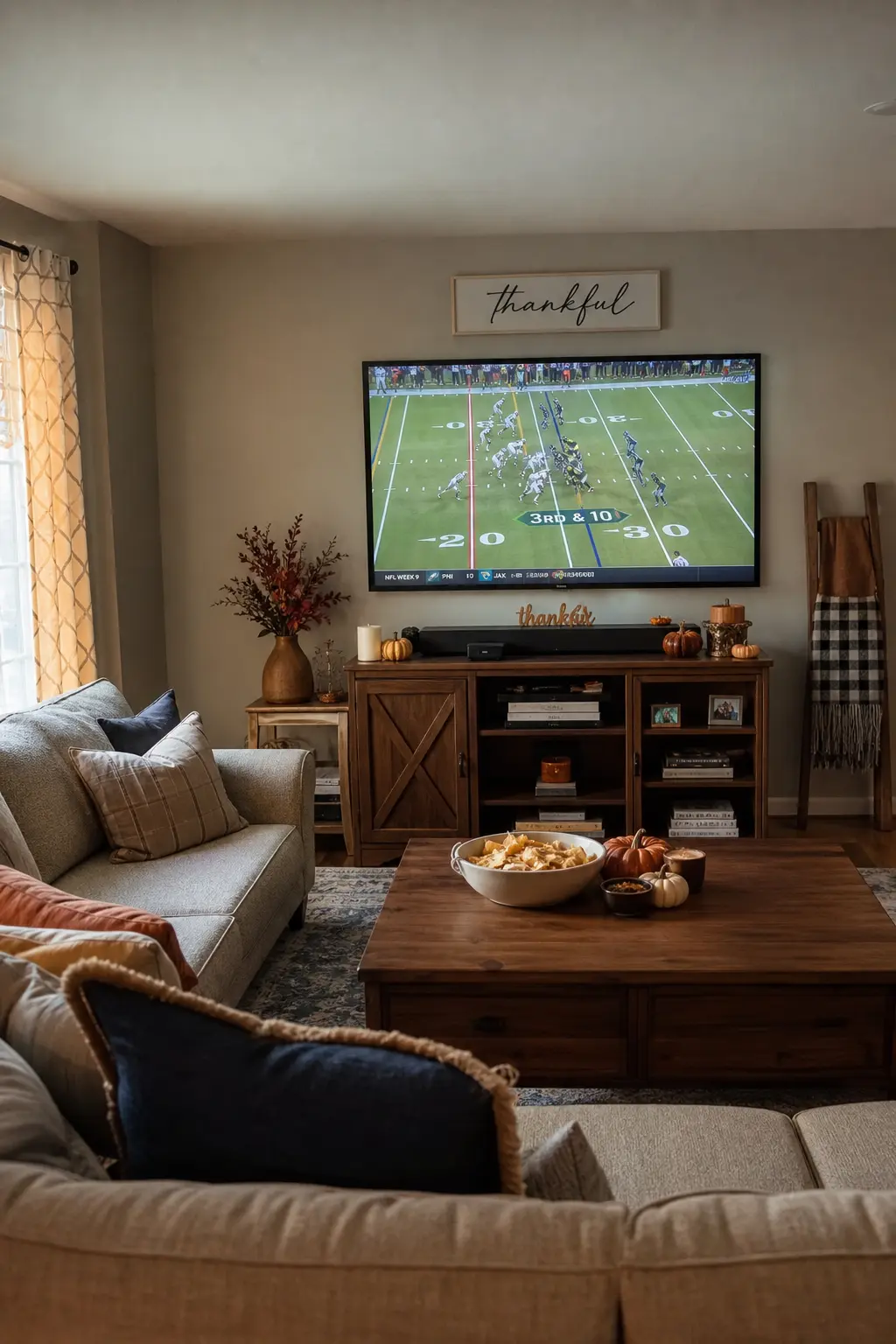
Say it out loud to arriving guests: the living room has the game on, the dining room or den is quiet. Two sentences. Done.
Most hosts assume this is obvious, and it is not. People drift toward noise by default, and then the quieter guests feel they have no legitimate place to land. Naming both rooms gives everyone permission to choose.
Put something worth sitting with in the quiet room: the gratitude board, the photo wall, or the card deck from idea 6. The game room needs nothing except the television and enough seating. Placing a snack bowl in each room reinforces that both are real destinations, not waiting areas.
🛍 Shopping guide
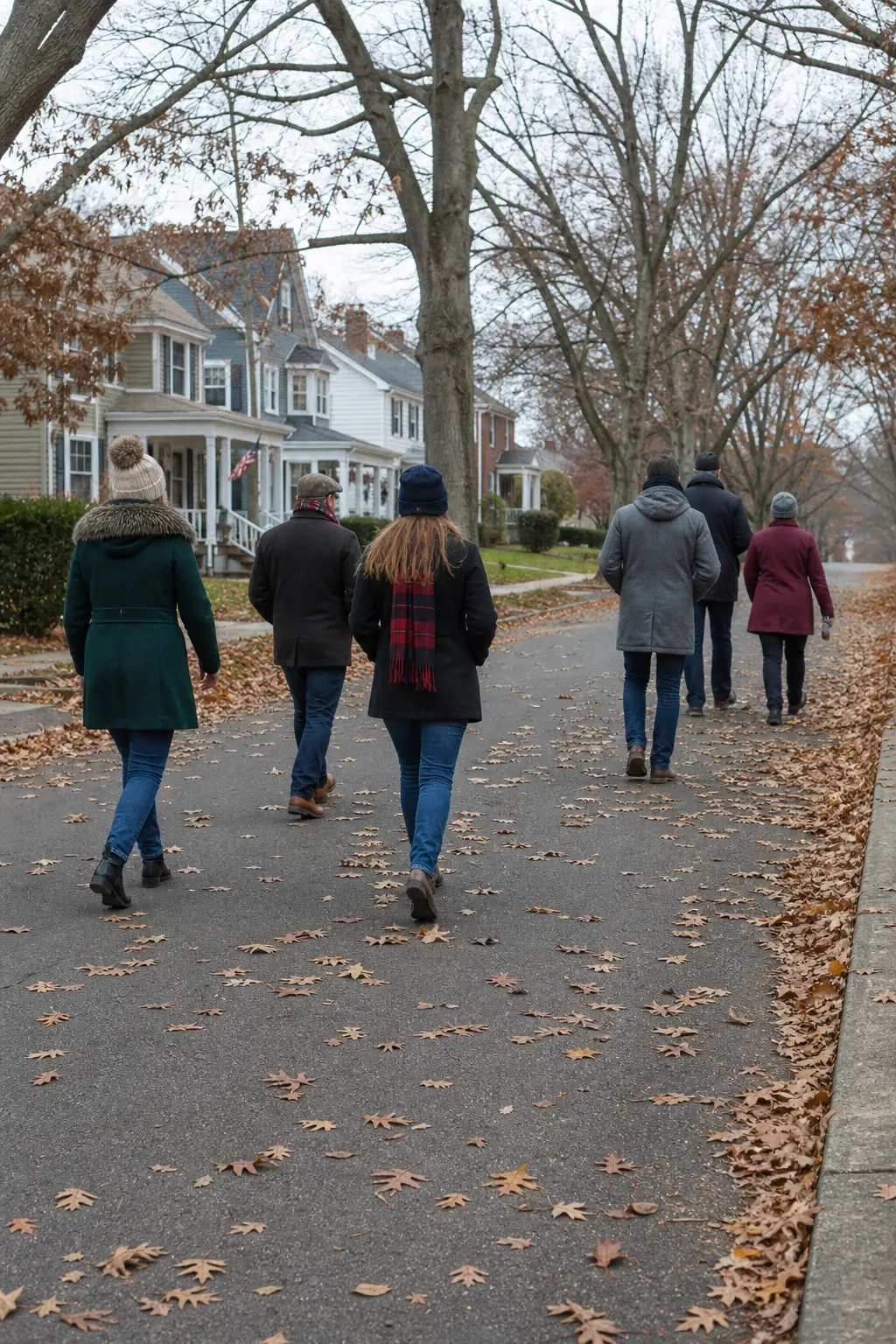
A Walk Before Dinner
Announce it casually, about forty minutes before the meal: ‘Anyone who wants to stretch their legs, we are heading out in ten minutes.’ Keep it short, fifteen to twenty minutes, and make it optional with no pressure.
This one idea does more to reset the room than almost anything else on this list. Children burn off energy. Teenagers get a natural exit from the house. Adults get a conversation that is not about the kitchen. And the grandparents who stay behind get twenty minutes of quiet.
No route planning required. Down the street and back is enough. Bring a thermos of cider if the weather is cold. The point is air and movement, not a destination.
🛍 Shopping guide
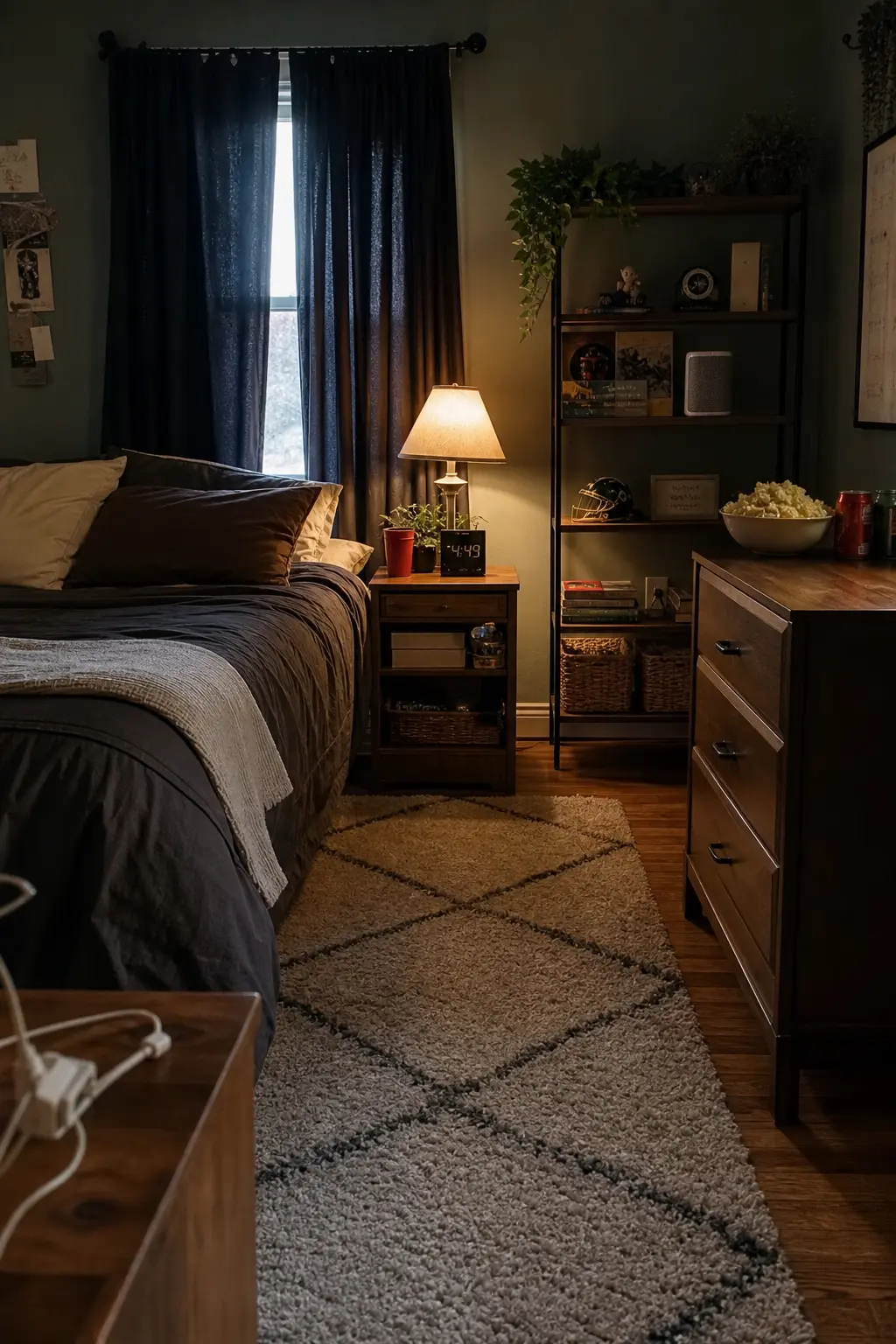
Somewhere for Teenagers to Escape To
Name a room for them. A bedroom, a basement, a back den: wherever it is, tell them it is theirs for the day. Add a charging station, a Bluetooth speaker, and something to eat that is not the fancy appetisers meant for adults.
Teenagers who have a sanctioned escape will often come back. They circulate more willingly when they know they can leave again without making it a thing. Fighting the pull toward their phone is a losing game: give them a room where the phone is fine.
One practical note: keep a small snack basket in that room stocked before anyone arrives. Teenagers who are not hungry are significantly more sociable.
🛍 Shopping guide
The Drinks and Food Stations
A self-serve station does two things: it keeps guests out of the kitchen while you work, and it gives people something to do with their hands in that first awkward half-hour. Set it up the night before so it is ready before the first car pulls in.
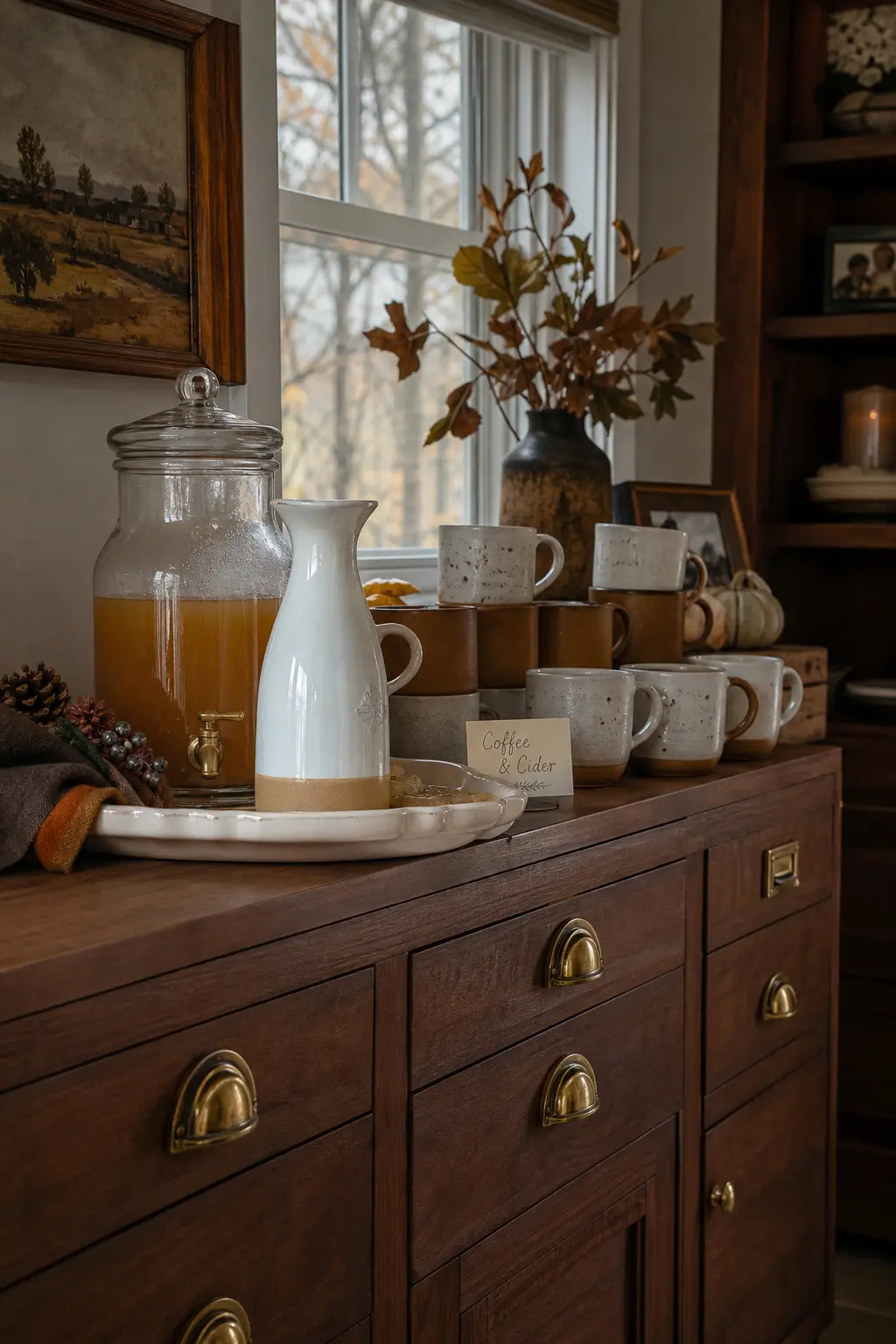
Coffee and Cider Station Ready Before Anyone Arrives
Set this up the night before and it runs itself on the day. A thermal carafe of coffee, a drink dispenser of warm apple cider, mugs, small glasses, cinnamon sticks, and one bowl of brown sugar cubes.
Position it on a sideboard or kitchen island away from the stove so guests can serve themselves without orbiting you. This is the single highest-return setup in the whole day: it gives early arrivals something to do, warms up the room, and makes the house smell exactly right.
Label each dispenser with a small folded card. Keep a basket of tea bags nearby for anyone who does not drink either. The station stays relevant all the way through dessert.
🛍 Shopping guide
At the Table
Dinner is the centrepiece, but what happens at the table beyond the food is what people remember. A little structure here makes sure every generation gets a moment, not just the loudest voices in the room.
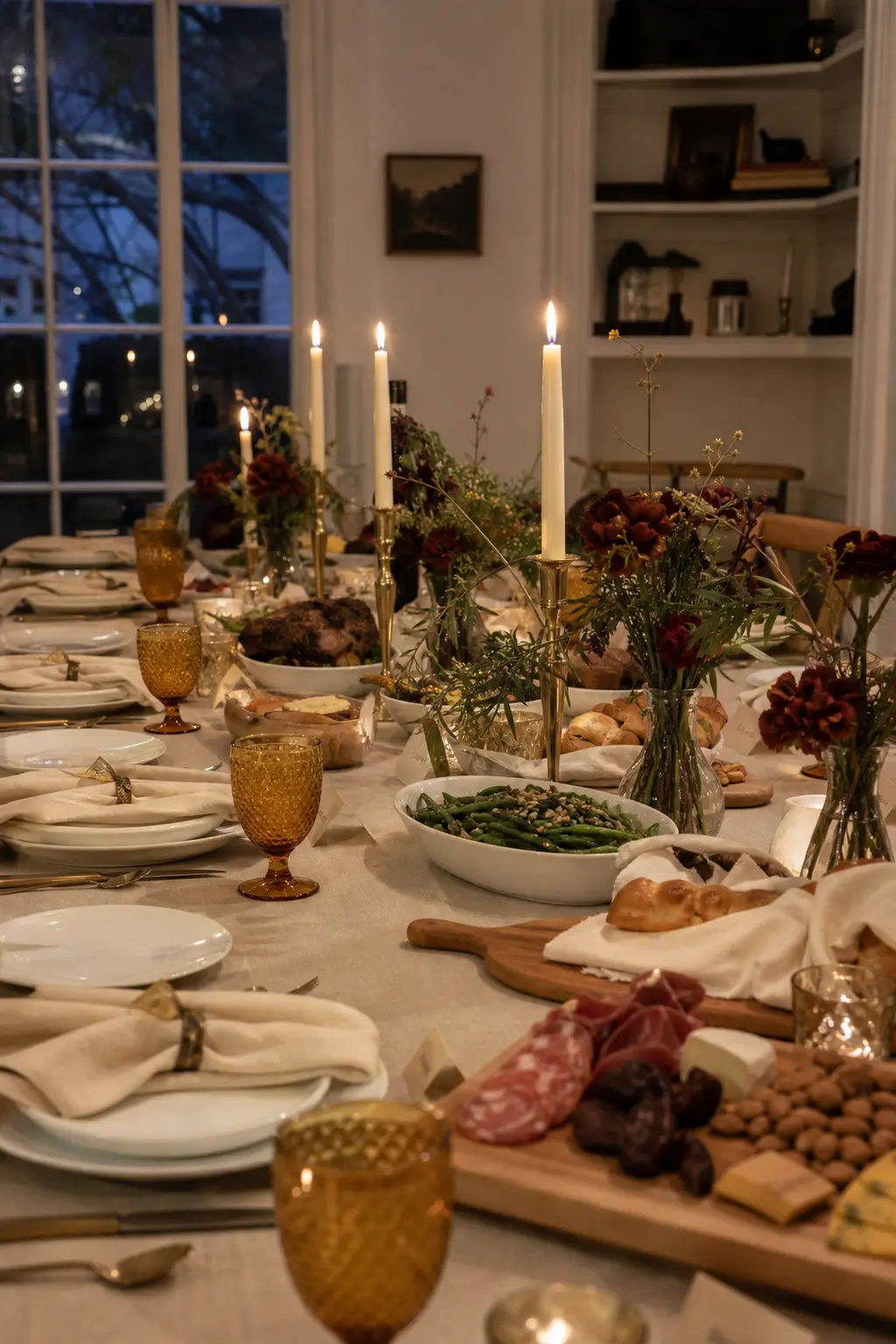
Toast Rotation So Everyone Speaks
Before dinner, let the table know that everyone will get thirty seconds to say one thing they are grateful for this year. Frame it as a rotation, not a request for a speech. Thirty seconds is specific enough to remove the anxiety of not knowing when to stop.
Start with a child, not an adult. Children go short and honest, which sets the tone perfectly. The grandparents usually go last, and by then the room is warm enough that whatever they say lands exactly right.
If someone passes, let them. One hard rule: no phones during the rotation, including for recording. It changes the energy completely. The moment is for the room, not for a caption.
🛍 Shopping guide
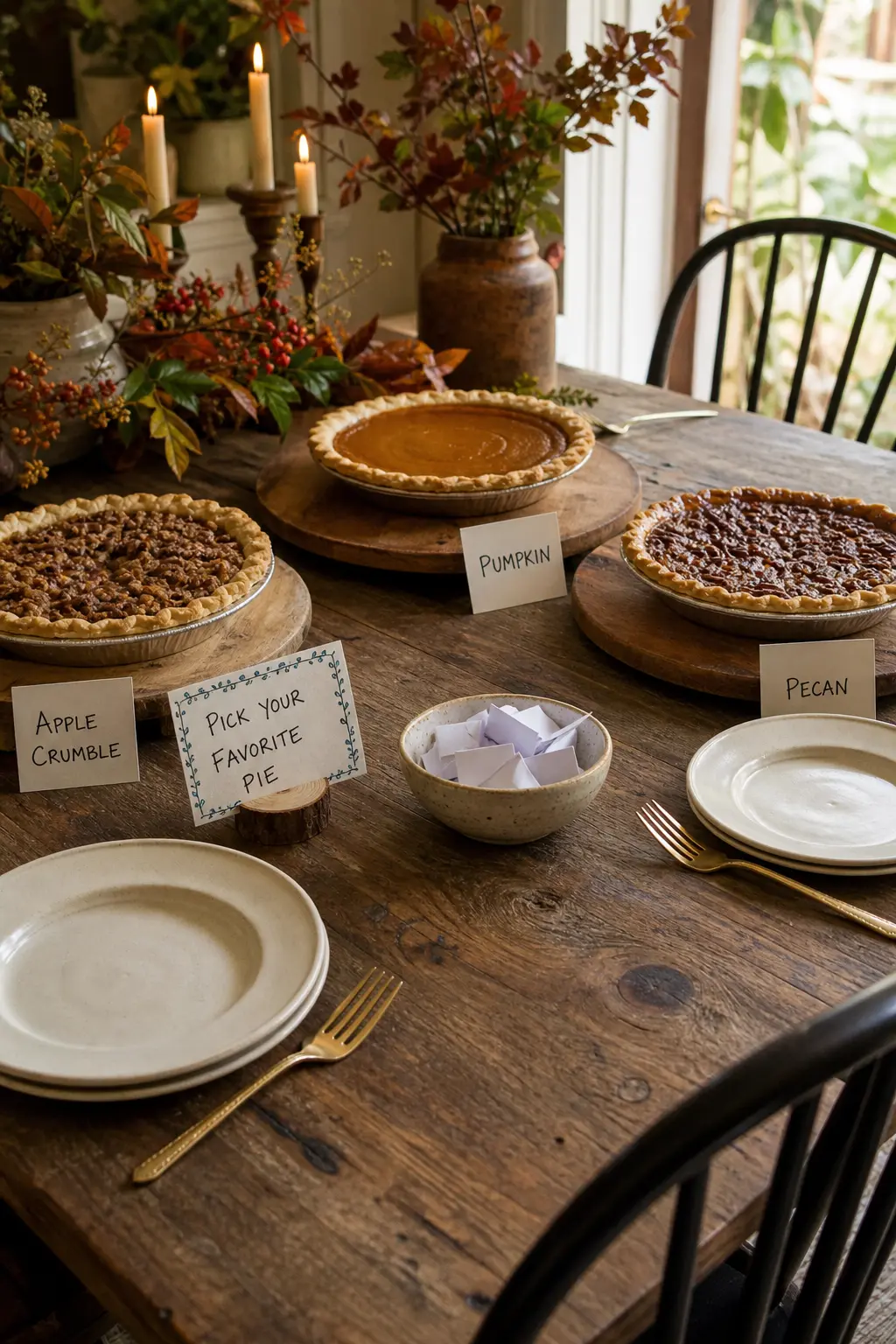
Pie Voting with Slips of Paper
Before dessert, set out small slips of paper and a pen at each place. Everyone votes for their favourite pie. Fold the slips, collect them in a bowl, and read the results aloud.
It is a thirty-second activity and it generates a disproportionate amount of delight. Children feel the weight of their vote. Adults argue warmly about whether pecan should even be on the table. The maker of the winning pie gets to feel genuinely pleased.
Tally marks on a small chalkboard or a sheet of paper work as the scoreboard. Keep the losing pies on the table: the point is never elimination, it is attention. Every pie gets eaten.
The Leaving Moment
Endings matter. A small gesture at the door turns a good day into one people will talk about, and it costs almost nothing to arrange the night before.
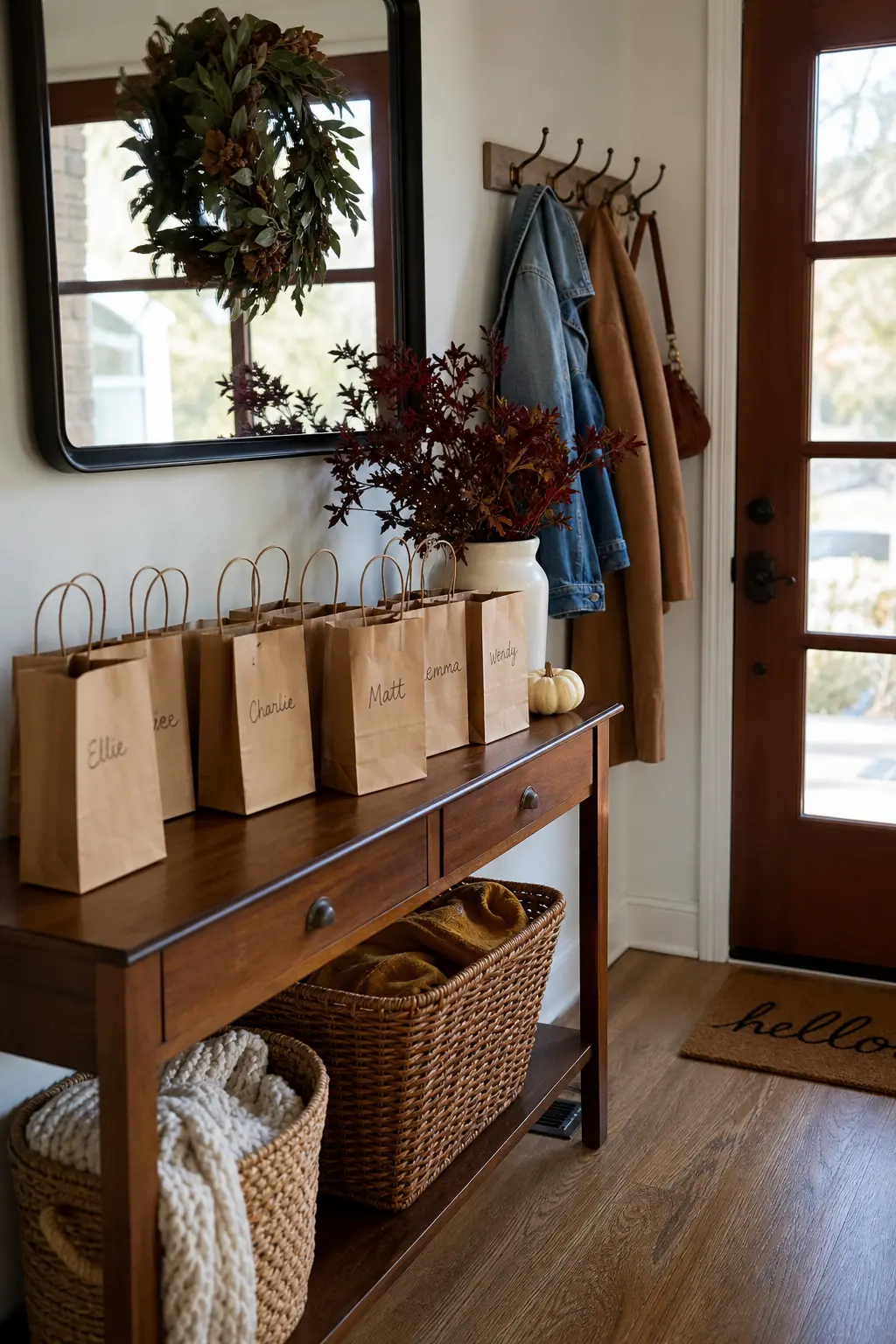
Goodbye Bags at the Door
Set a small kraft bag by the door for each household leaving. Inside: a slice of leftover pie in a container, a printed recipe card, and one small thing, a tea bag, a packet of cider mix, or a piece of chocolate.
Prepare these the night before and stack them by the door. When the first coat goes on, the bags are already there. No scrambling, no sad tupperware handoffs in the driveway.
Label each bag with the family’s name in marker. Guests who were ambivalent about coming will remember this small moment more clearly than the meal itself. Leaving should feel as considered as arriving.
🛍 Shopping guide
A Few Last Thoughts
None of these ideas require a craft supply run or a Pinterest board saved in forty-seven parts. Most need one trip to a supermarket or a five-minute Amazon order placed the week before. Choose the four or five that match your crowd and let the rest go.
The goal is a house that feels thought-about, not over-produced. Guests who feel seen arrive hungry and leave happy, and that is the whole brief.
Frequently Asked Questions
How do you keep guests entertained in the hours before Thanksgiving dinner?
Set up two zones before anyone arrives: one active, one quiet. A self-serve drinks station, a photo wall, and a gratitude board handle themselves with no hosting effort on your part. Name the game room and the quiet room out loud so guests feel free to choose. The gap before dinner fills itself when people know where to land.
What do you do with kids at a Thanksgiving party?
A dedicated kids table with a paper covering and crayons keeps small children occupied for most of the pre-dinner window. A short walk outside before the meal burns off energy. Give teenagers a named room with a charger, a speaker, and snacks, and they will circulate more willingly than if you try to include them in everything.
How do you make Thanksgiving feel special without spending a lot of money?
The ideas with the most impact are almost free: a toast rotation, pie voting with paper slips, conversation cards, and goodbye bags assembled from leftovers. The welcome table with name cards and the recipe cards from the grandmothers require a printer and some card stock. The photo wall needs only prints from a pharmacy and some twine. Thought costs less than product.
What is a good Thanksgiving activity for all ages?
The gratitude board works for every age without requiring participation: a shy child can write one word, a grandparent can write a paragraph, and a teenager can draw something. The toast rotation before dinner is similarly low-pressure when it is framed as thirty seconds each rather than an open-ended speech. Both activities give every generation a visible moment.
How do you include grandparents meaningfully at Thanksgiving?
Print their recipes and set them out for guests to read. Have a teenager record a short video interview with them before dinner. Include them in the toast rotation and let them go last, when the room is warmest. These are not grand gestures: they are the difference between a grandparent feeling like a guest and feeling like the point of the whole day.

Sixteen distinct Thanksgiving aesthetics, each with its own colour story and hero object, so every p
15 thanksgiving table games you play without leaving your seat — perfect between courses, no mess,
14 thanksgiving table games played between courses, no props needed. Eight free printables, six no-p
Leave a Reply