

15 Kids Birthday Party Ideas That Suit Five Year Olds and Nine Year Olds at Once
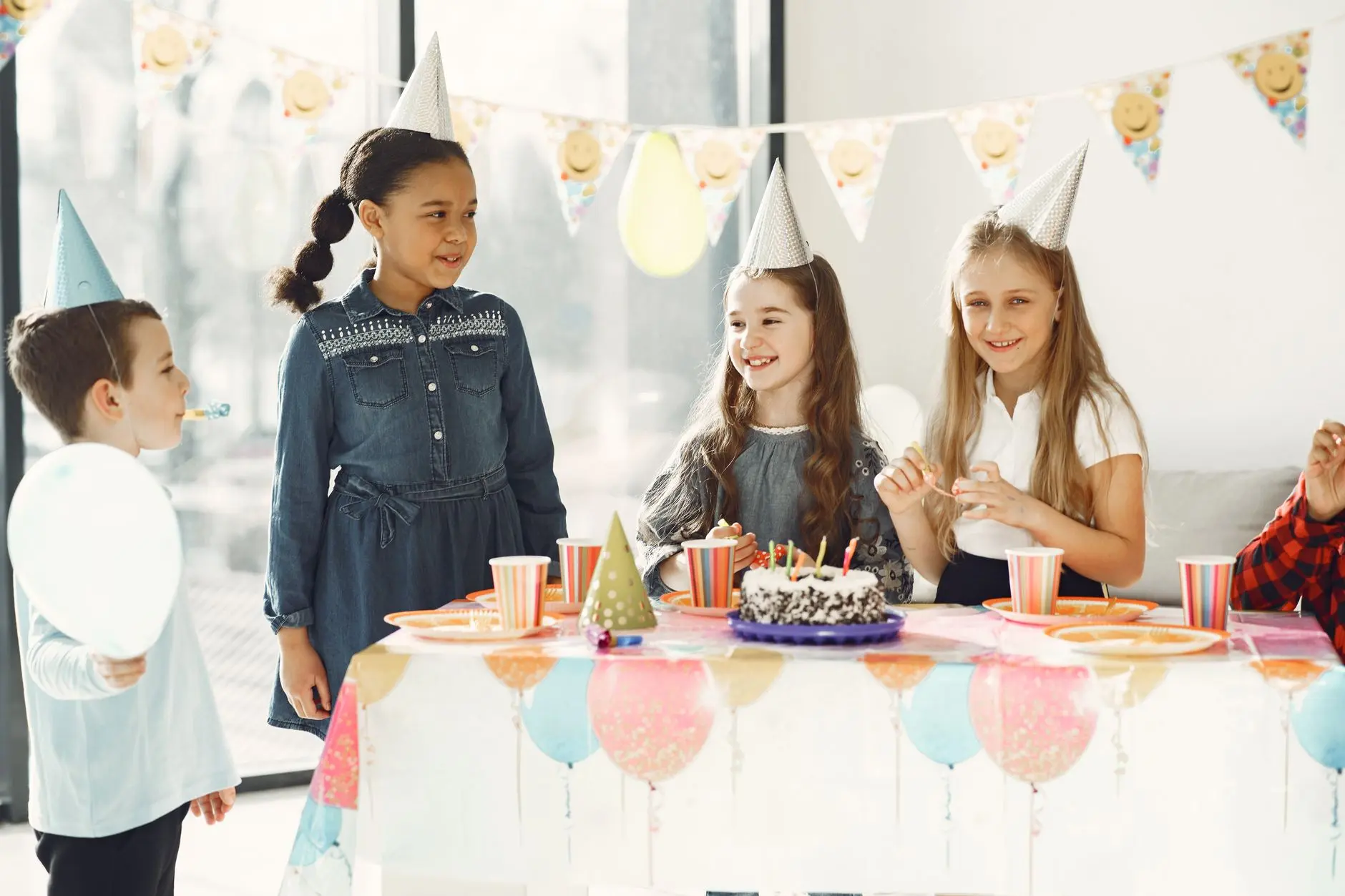
Mixed ages at one party table is the real brief, not the one parents admit to when they start searching. A five-year-old wants sparkle and a hat. A nine-year-old wants to feel like the activity was designed for someone their age. Both of them will be in the same room for two hours.
Every idea below holds that tension on purpose. The setup is simple enough that a kindergartner can join straight away, and layered enough that an older sibling does not stand at the edge looking bored. Bright kit, clear rules, low fuss.
You will also find a closing section on running any one of these at two speeds simultaneously, so you can pick the theme that suits the birthday child and adapt on the day without a second plan. For even more structured play once the cake is cut, the round-up at 25 Birthday Party Games for Kids That Burn Off the Sugar is worth bookmarking alongside this one.
This post contains affiliate links. If you buy through them, I may earn a small commission at no extra cost to you.
Active and Outdoor
These themes get bodies moving and work especially well when the guest list covers a wide age range. Younger children can follow along physically while older ones take on more complex roles, whether that is navigator, team captain or clue-writer.
Treasure Hunt
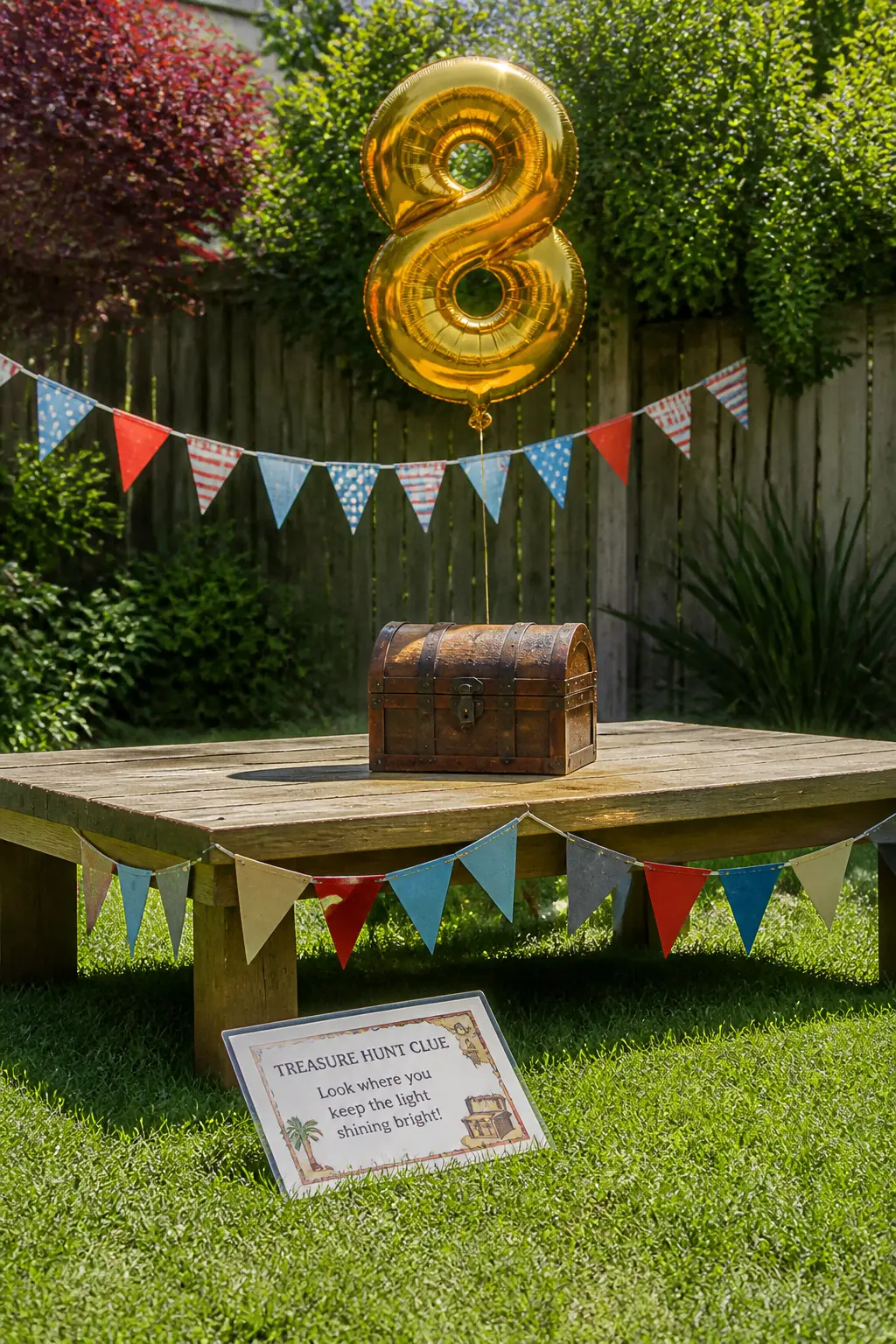
A treasure hunt works at five because children love finding things. It works at nine because they love solving things. Give younger guests picture clues laminated on card. Give older guests written riddles that send them to the same locations.
Set the final chest somewhere dramatic: under the garden table, inside a tent, behind the shed. Fill it with small prizes and one number balloon tied to the handle so it bobs above the scene. Everyone reaches the chest together, which means everyone wins together.
Keep clue stops to six or seven so the pace stays high. Pair each older child with a younger one at the start and call them a team. The older child navigates; the younger one carries the clue bag. Both feel essential.
Space Station
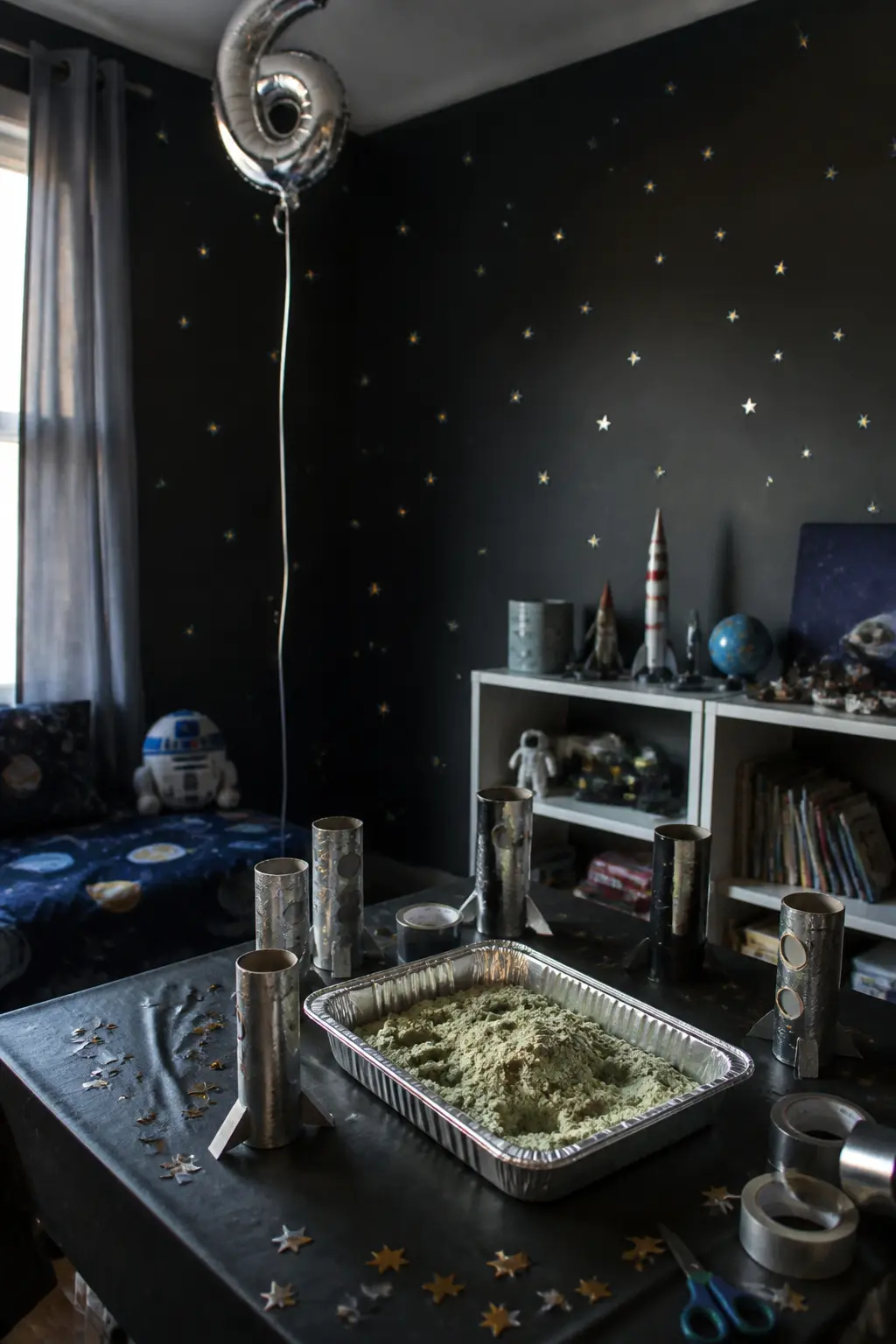
Cover the walls of one room with black paper and stick on glow-in-the-dark stars. Set up mission stations around the room: one for building a rocket from cardboard tubes, one for a planet-sorting activity, one for a moon-sand tray.
Every guest gets a mission badge with their astronaut name on it. Younger children complete each station with a visual checklist. Older ones follow a written mission brief and record their results on a clipboard. Both finish the party feeling like the mission was accomplished.
The birthday cake is an easy convert here: a dark icing base with silver sugar stars and a number balloon in metallic silver or gold floating above it on a long ribbon. The glow of the stars in a dimmed room at cake time is genuinely memorable for any age.
🛍 Shopping guide
Camping in the Garden
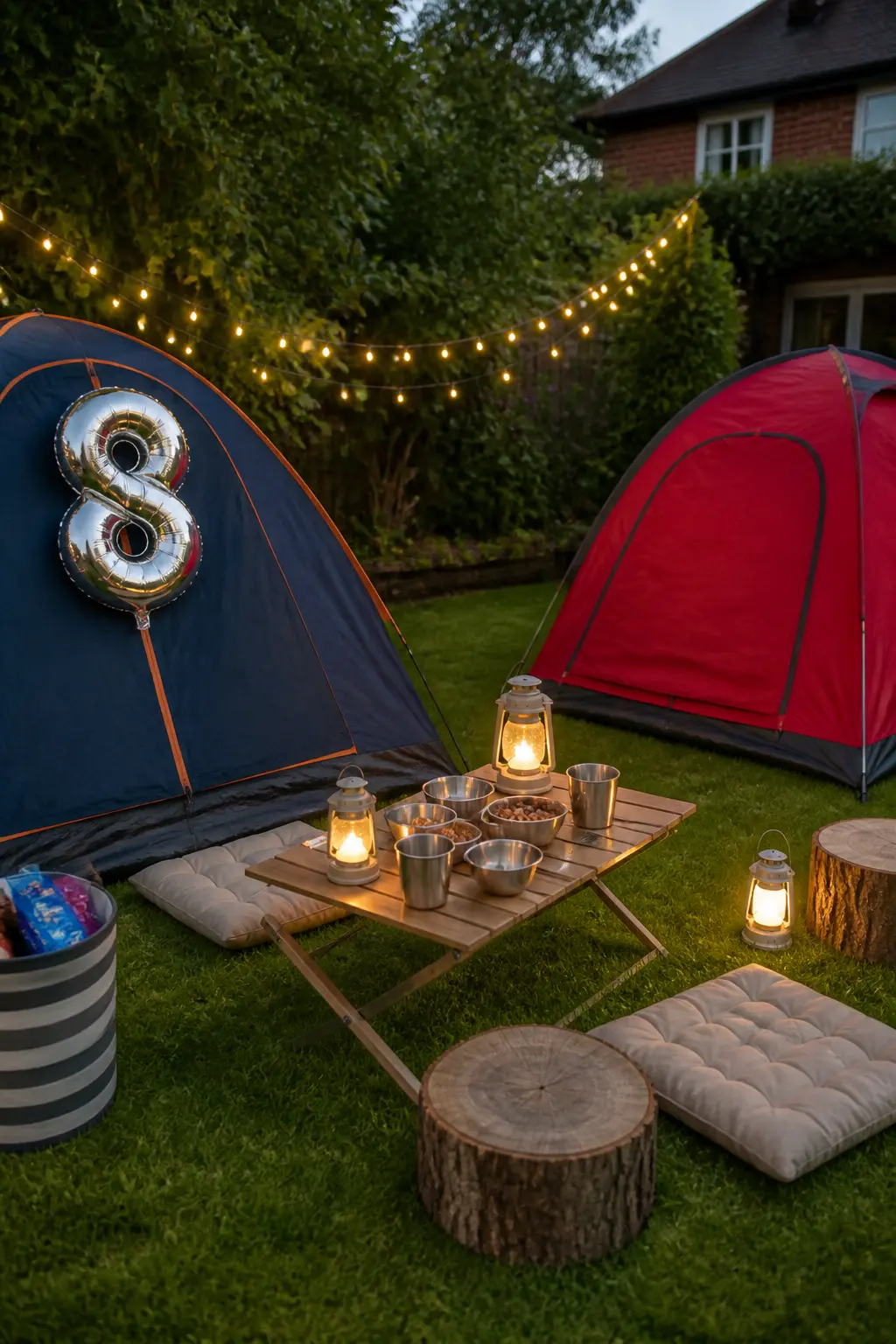
Pitch one or two tents in the garden before guests arrive. String fairy lights between them. Set up a low table outside with lanterns, tin cups and a pile of trail mix ingredients for children to build their own mix. That table is the camp kitchen and it runs itself.
Younger children love the tent itself: crawling in, arranging sleeping bags, pretending to sleep. Older ones want a camp activity with a point. Give them a star chart, a nature scavenger list or a simple orienteering challenge around the garden boundaries.
The birthday cake comes out at the camp table after dark or at dusk if the party finishes early. Number candles and a foil balloon above the tent entrance photograph well in low evening light.
🛍 Shopping guide
Den Building With Sheets
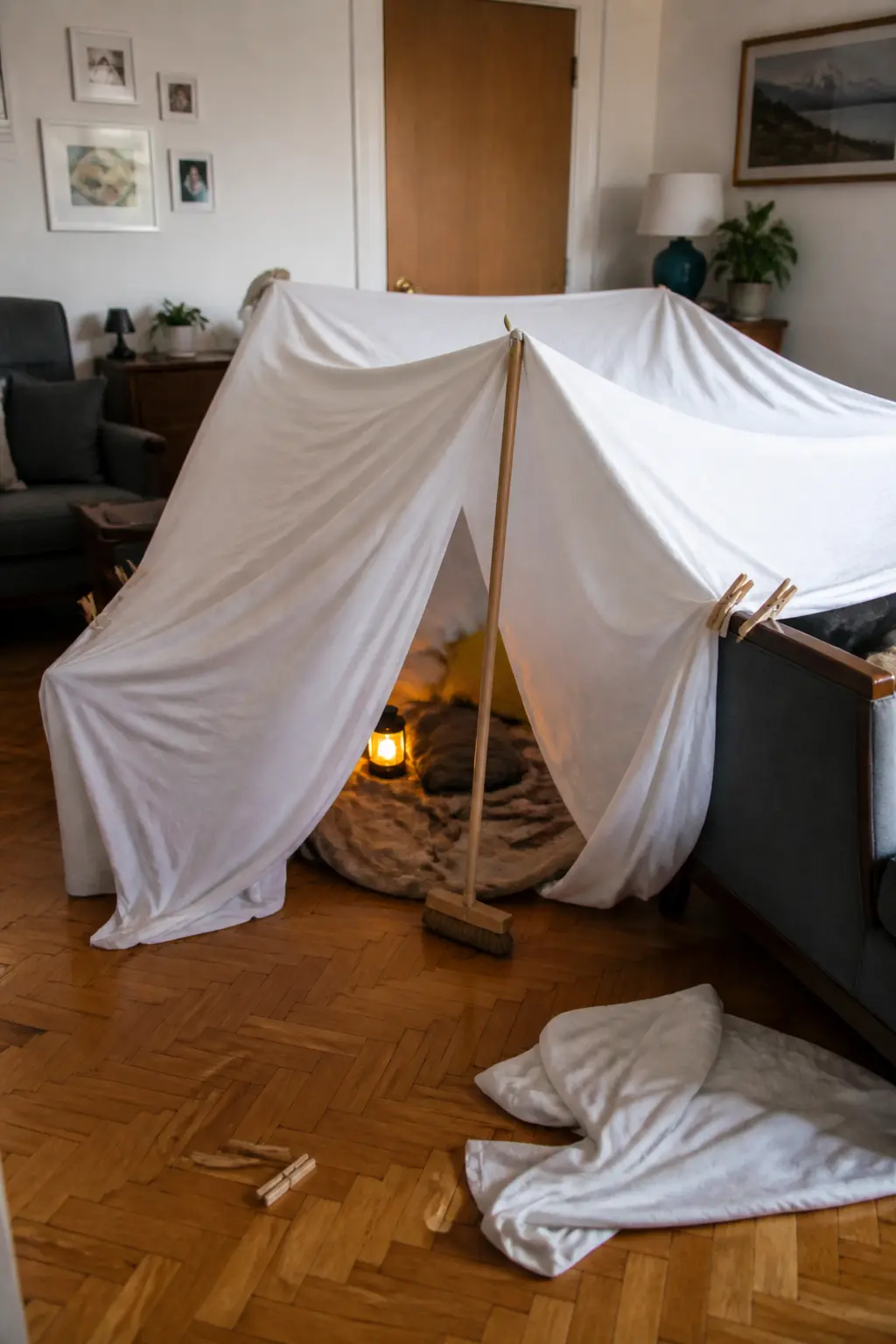
Lay out a pile of old sheets, clothes pegs, bungee cords and a set of chairs in the middle of the living room or the garden. The instruction is one sentence: build the best den you can in twenty minutes.
Split the group into teams of mixed ages so each team has at least one older child. Younger ones carry and hold. Older ones engineer and problem-solve. The dens go up fast and collapse dramatically, which is most of the fun.
Hold judging at the end with categories: tallest, most rooms, cosiest, most creative. Every team wins something. Serve the birthday cake inside the winning den if it is structurally sound enough, which adds a small but satisfying bonus challenge to the build.
🛍 Shopping guide
Pirate Ship
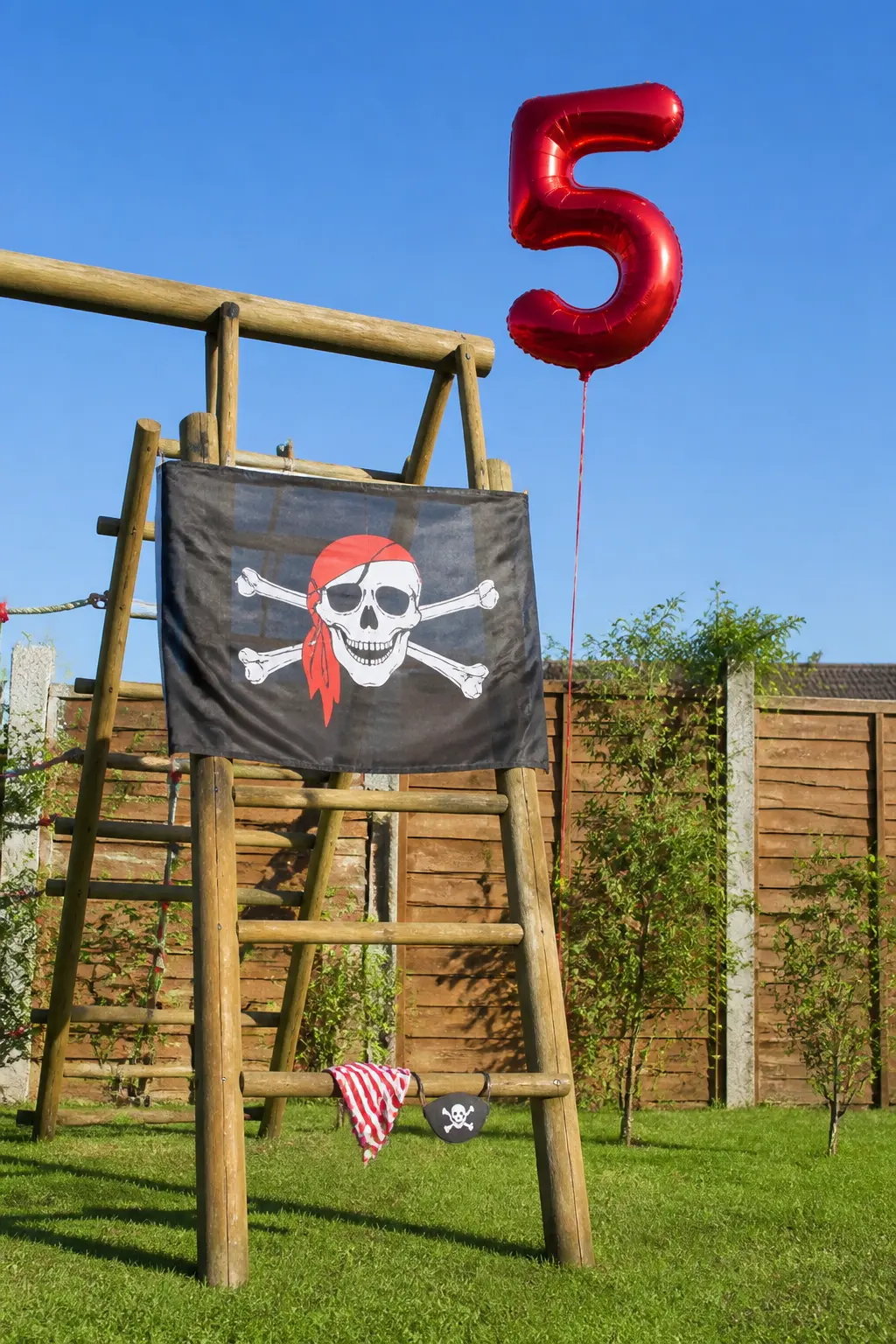
Turn the garden trampoline or a wooden climbing frame into the ship by draping a flag from the top and calling it the deck. The garden becomes the ocean. Every child gets a bandana and an eye patch on arrival.
Run two activities from the ship: a walking-the-plank balance challenge (a length of masking tape on the ground) for younger guests, and a map-and-coordinates treasure hunt for older ones. Both happen in the same garden at the same time, which means no waiting and no segregation.
Bring the birthday cake out on deck at the end. A number balloon tied to the mast, a skull-and-crossbones flag in the background and a ring of candles on the cake makes a photograph that needs no filter. Every age looks genuinely delighted in it.
🛍 Shopping guide
Hands-On Making
Give every child something to build, mix or cook and the age gap narrows fast. The five-year-old is proud of what came out of their hands. The nine-year-old is competing to make the best one. Neither notices the other is playing at a different level.
Science Laboratory
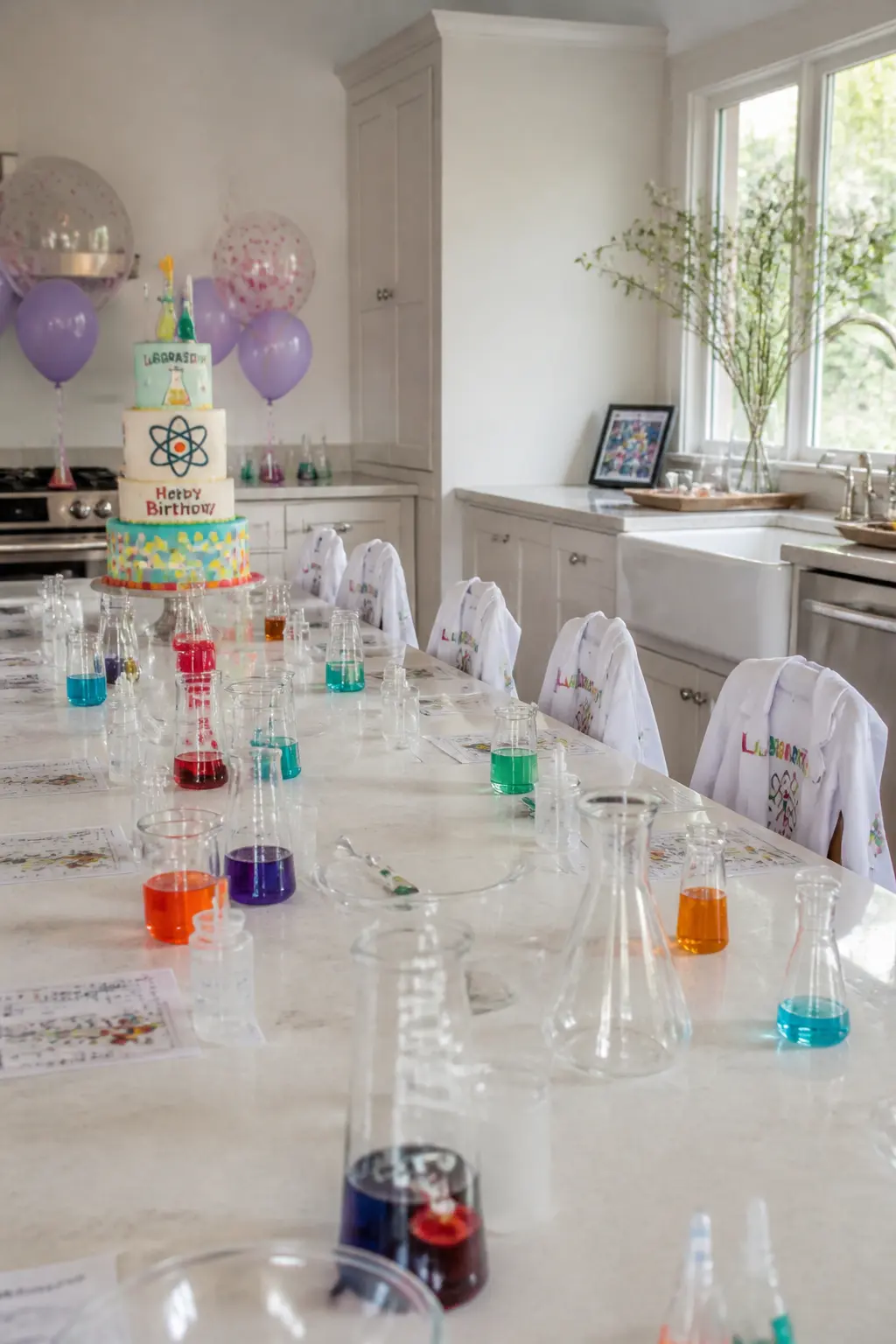
White lab coats and safety goggles make any age feel serious about what they are doing. Set up stations on a long table: one for baking-soda volcanoes, one for colour-mixing in pipettes, one for making slime.
Younger children follow the visual recipe cards and watch the fizz with genuine awe. Older children can read the method card fully, adjust quantities and write a one-line result on a mini clipboard. The birthday cake sits at the far end of the table dressed as a beaker, with candy in primary colours on top.
Label every bottle and pot with a made-up scientific name on masking tape. It costs nothing and makes the whole room feel like a real lab rather than a kitchen.
🛍 Shopping guide
Bakery Morning
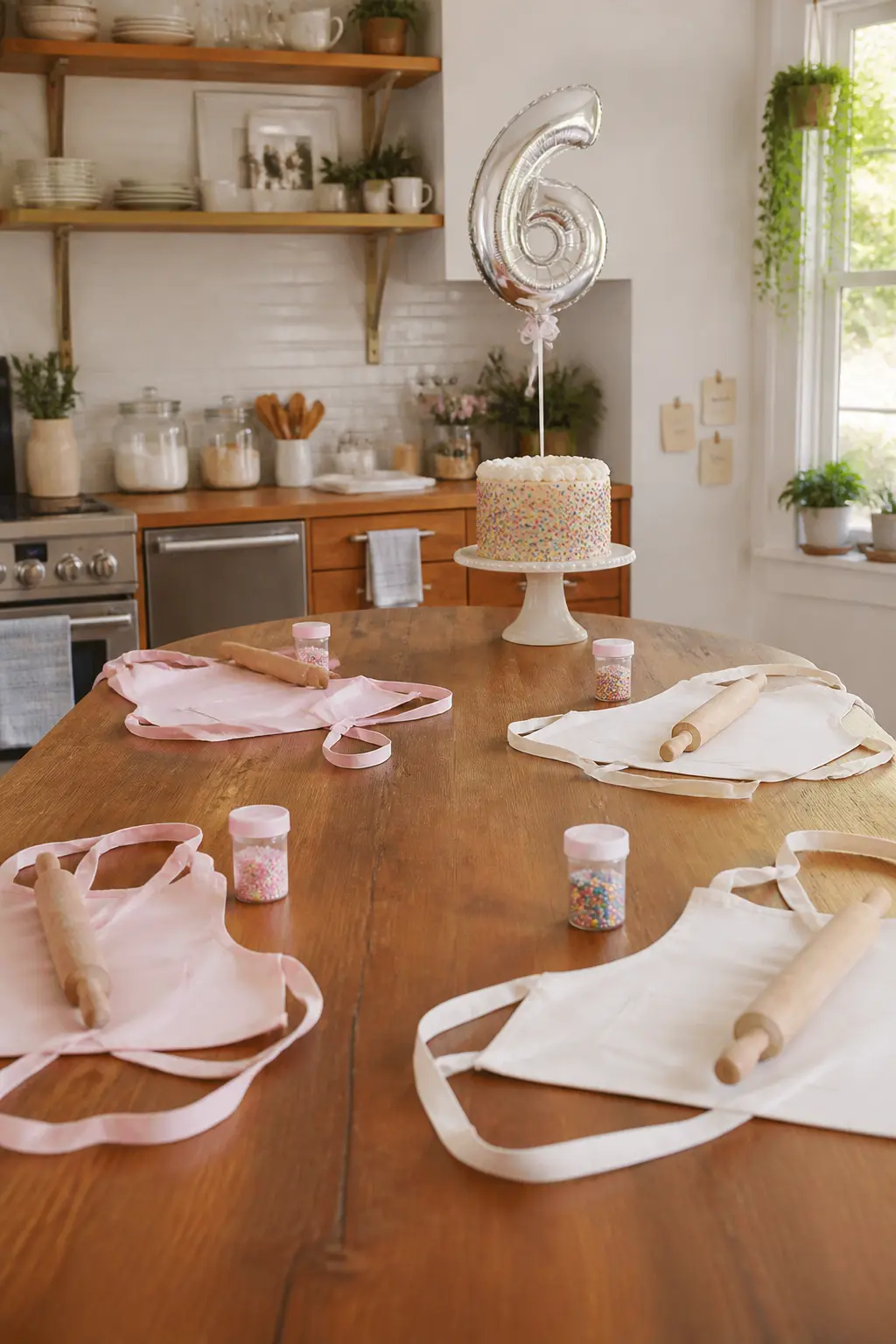
Set every child up at a section of counter with a ball of pre-made dough or a cooled cupcake ready for decorating. Younger guests use pre-measured toppings in small pots. Older guests get a recipe card and measure their own mix-ins from a central station.
Aprons and small rolling pins are the key prop here. They signal that what is happening is real baking, not a craft table, and older children respond to that distinction more than you would expect.
Send each child home with their creation in a paper bag tied with ribbon. The birthday cake lives on a stand at one end of the counter and stays visible the whole morning, a number balloon floating above it from a ribbon tied to the stand.
🛍 Shopping guide
Pizza Kitchen
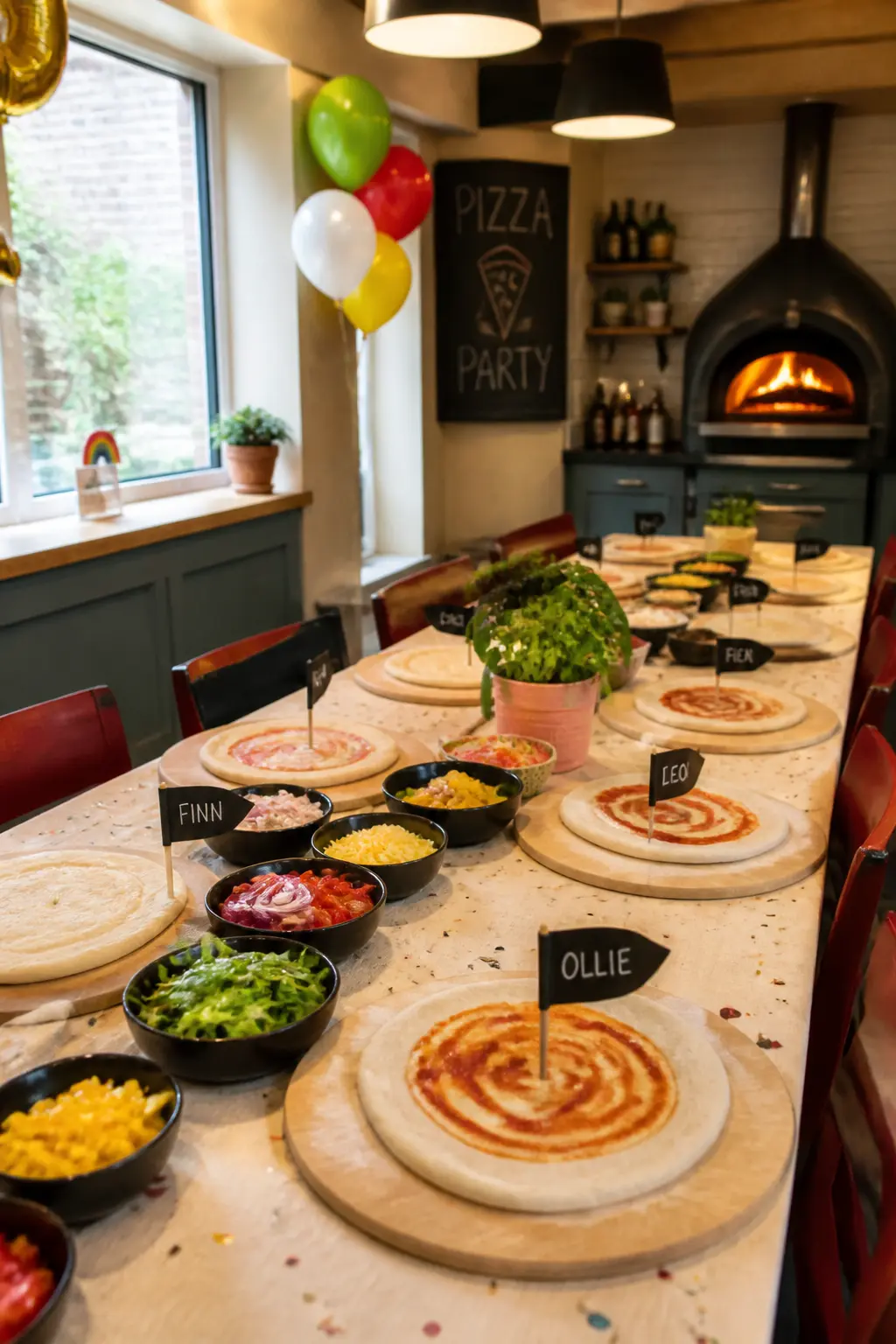
Buy plain pizza bases and set out toppings in small bowls down the centre of the table. Every child builds their own. Younger guests pile on whatever they like. Older ones can take a laminated recipe card and attempt a specific regional style: a margherita, a four-cheese, a white pizza with no tomato sauce.
Personalise each base with a small flag on a cocktail stick bearing the child’s name before it goes in the oven. They come out in the right order and no one argues about whose is whose. Serve the birthday cake after the pizzas so the savoury meal and the celebration moment stay separate and both get proper attention.
🛍 Shopping guide
Performance and Play
Themes built around a show, a game or a challenge let older kids lead while younger ones have a clear, low-stakes part. The structure does the work of keeping everyone included without you having to referee constantly.
Magic Show for Half an Hour
Half an hour is the right length for a magic show when the audience spans five to nine. Any longer and the youngest guests drift. Any shorter and no one feels they got a full show.
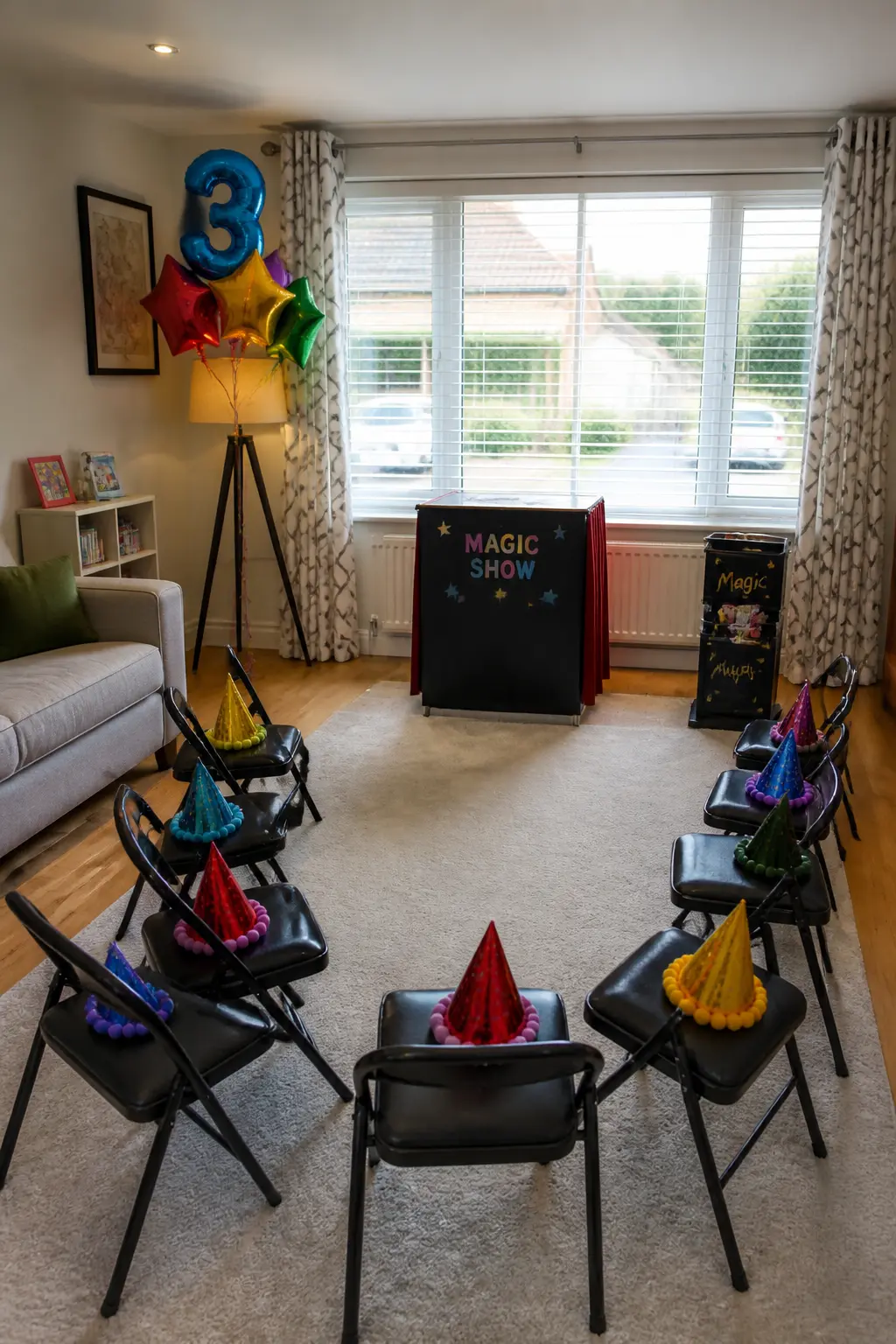
Hire a children’s entertainer for that slot, or teach the birthday child three simple tricks in the week before the party and let them perform with a cape and a wand. Younger guests are the ideal audience: they gasp on cue and believe completely. Older guests enjoy being chosen as assistants.
Set rows of chairs with a party hat on each seat. The hats mark the audience area, keep children from crowding the performer and give every seat a small gift to discover. A number balloon cluster behind the performance spot reads clearly in every photograph.
🛍 Shopping guide
Cook Off With Two Teams
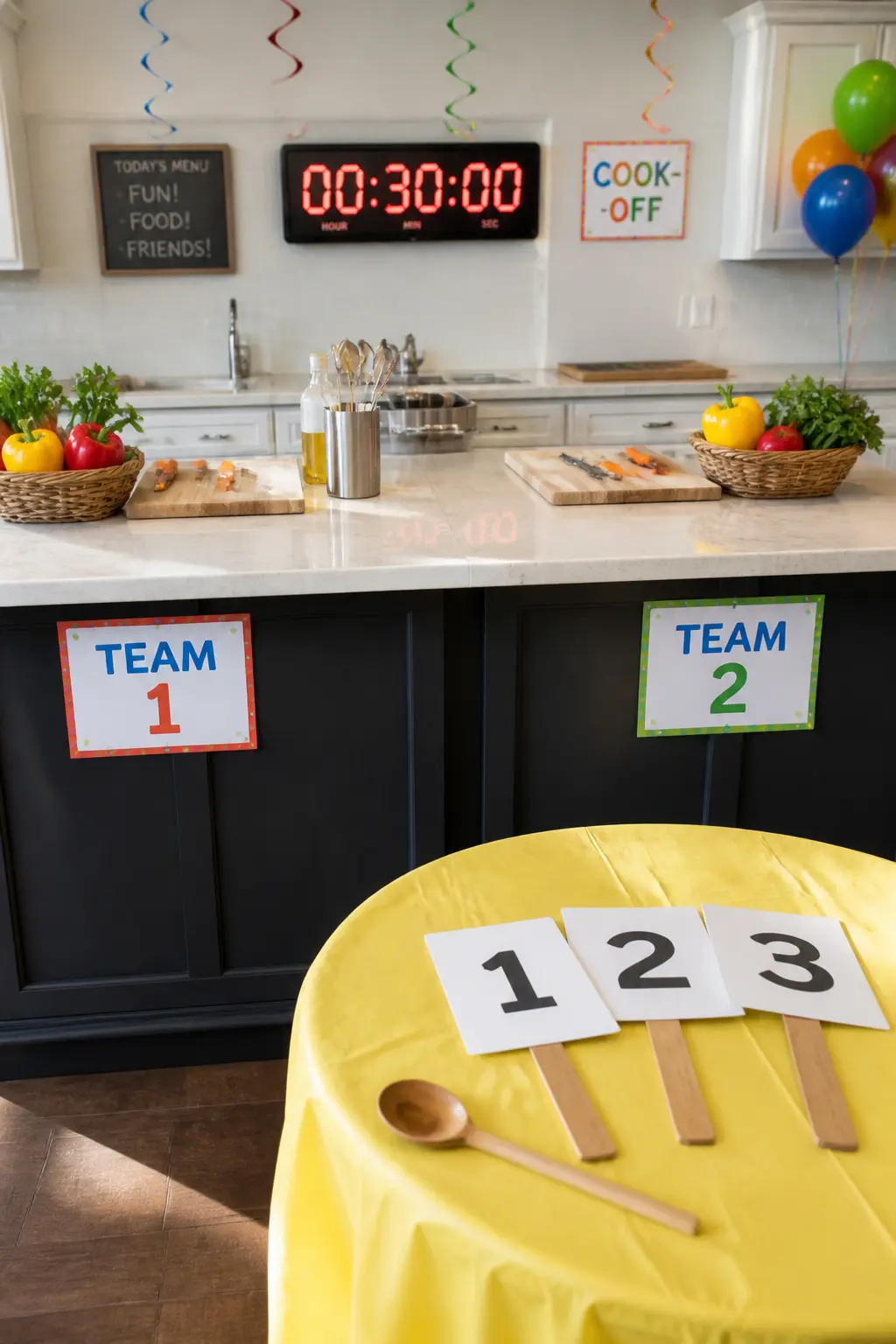
Divide guests into two teams with mixed ages in each. Give both teams the same basket of ingredients and the same time limit: thirty minutes to make one dish. The dish can be a decorated sandwich tower, a layered trifle or a savoury pinwheel plate depending on what you have prepared.
Older children lead the planning. Younger ones wash, tear, pour and arrange. Every role is visible and necessary, which keeps everyone engaged without requiring you to invent tasks on the spot.
Judge the result with three cards: presentation, creativity and taste. Announce scores out of ten with a wooden spoon as the gavel. Serve the birthday cake immediately after judging so the meal and the celebration flow together naturally and the cook-off energy carries straight through.
🛍 Shopping guide
Puzzle and Strategy
Older guests often feel most respected when the party asks them to think. These themes pair well with a younger buddy system: pair a nine-year-old with a five-year-old on purpose, and the older child gets to feel capable while the younger one gets a guide.
Detective Agency
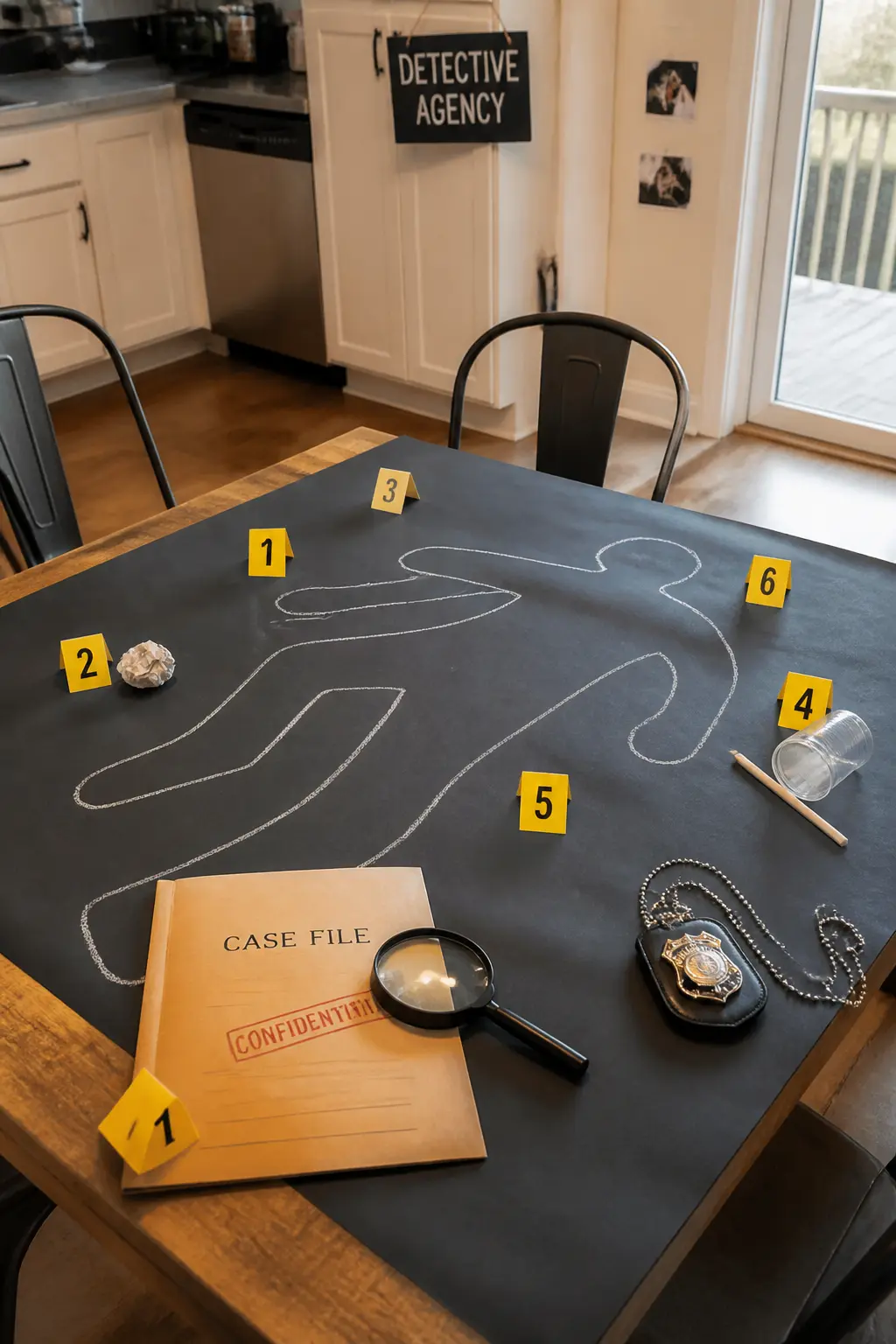
Someone has stolen the birthday cake. That is the premise and you set it up before the first guest arrives. The cake is hidden. A fake crime scene with a chalk outline of the missing cake tin sits on the kitchen table, and an envelope marked CASE FILE waits at the door.
Older children read the evidence notes and direct the investigation. Younger ones handle the physical tasks: using a magnifying glass to find fingerprint cards, matching shoe prints to suspects, delivering objects between stations. Give every child a detective badge on arrival so the roles feel official from the moment they walk in.
The case ends when the cake is found. Bring it out still in the hiding spot, number balloon attached, and serve it immediately as the reward.
🛍 Shopping guide
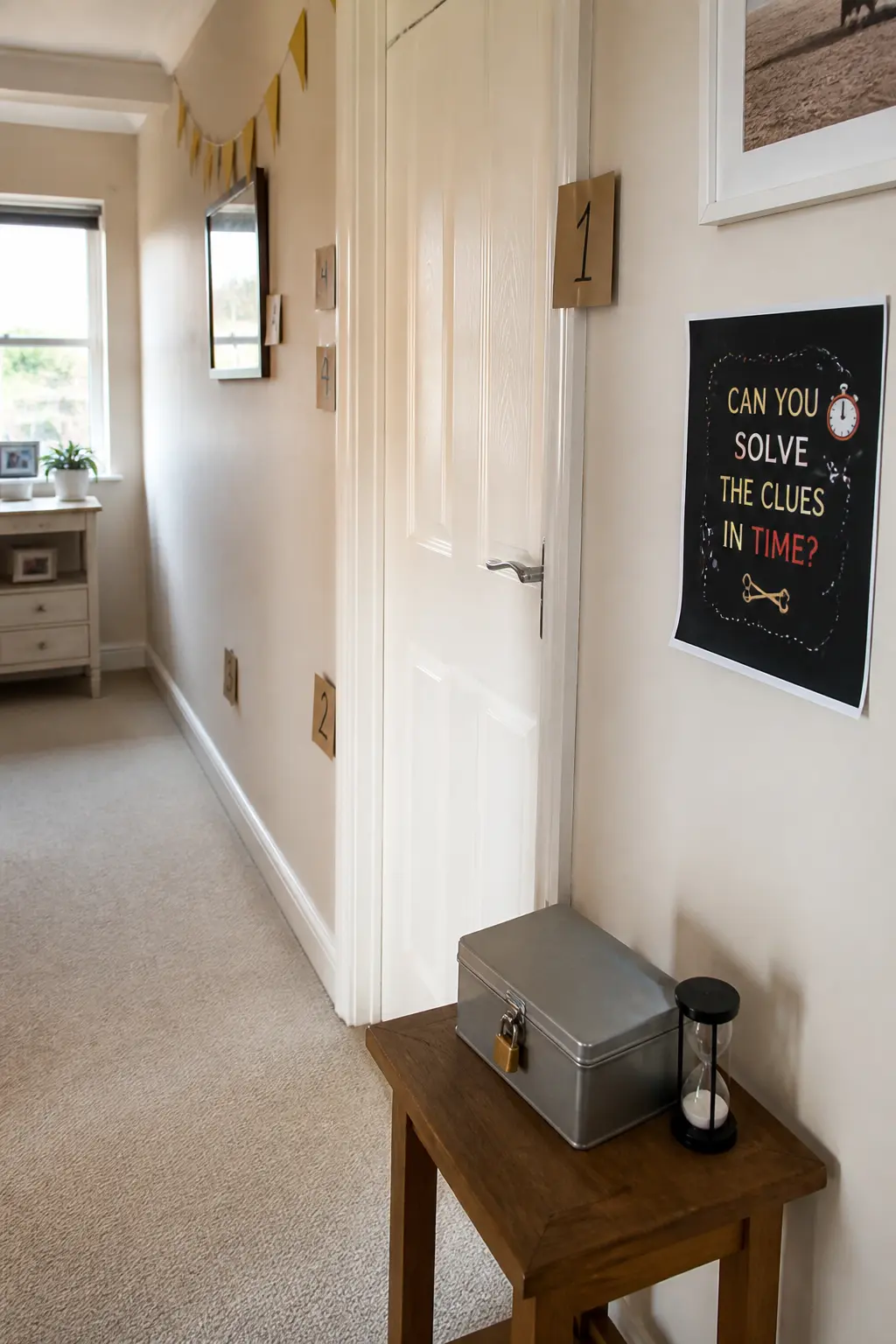
Escape Room at Home
Lock a room, metaphorically. Put the party bags inside a box with a combination padlock. The clues to the combination are hidden around the house in a chain: clue one leads to clue two, which reveals a number, which opens the lock.
Write two tracks of clues: an easier set with pictures and simple maths for younger guests, a harder set with wordplay and riddles for older ones. Both tracks converge at the same final location. Teams solve it together when the two streams of children compare their answers.
Sixty minutes is the right window. Set a sand timer at each stage so children feel the pressure without you having to manage it. For a broader library of structured games that work at mixed-age parties, see 25 Birthday Party Games for Every Age and Any Budget.
🛍 Shopping guide
Quiet and Creative
Not every child wants to run. These themes lower the noise and raise the concentration, which suits some five-year-olds and many nine-year-olds equally well. They also give you natural points to pause, eat cake and regroup.
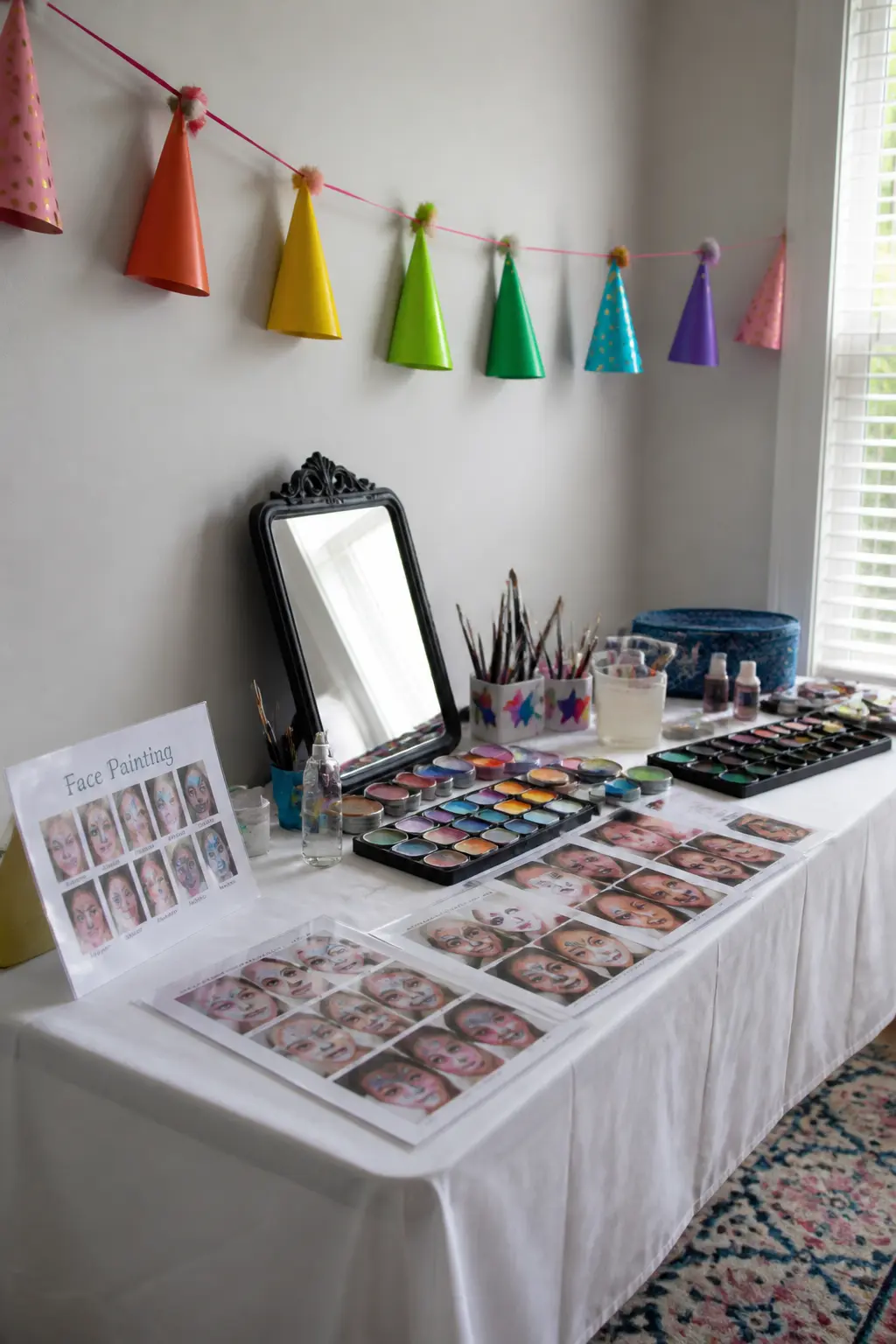
Face Painting Table
A face painting table works for every age because the output is personal. A five-year-old wants a butterfly. A nine-year-old wants a dragon or a skull. Both walk away with something they chose themselves, which matters more than people credit.
Hire one face painter if the guest list runs past ten children, or set up a self-paint mirror station with stencils and water-activated palettes for smaller groups. Lay out reference cards showing twenty designs from simple to complex. Younger children point to a picture. Older ones mix and request.
Keep a party hat available at the table. Many children will wear the hat straight after being painted, and that combination photographs beautifully without any staging.
🛍 Shopping guide
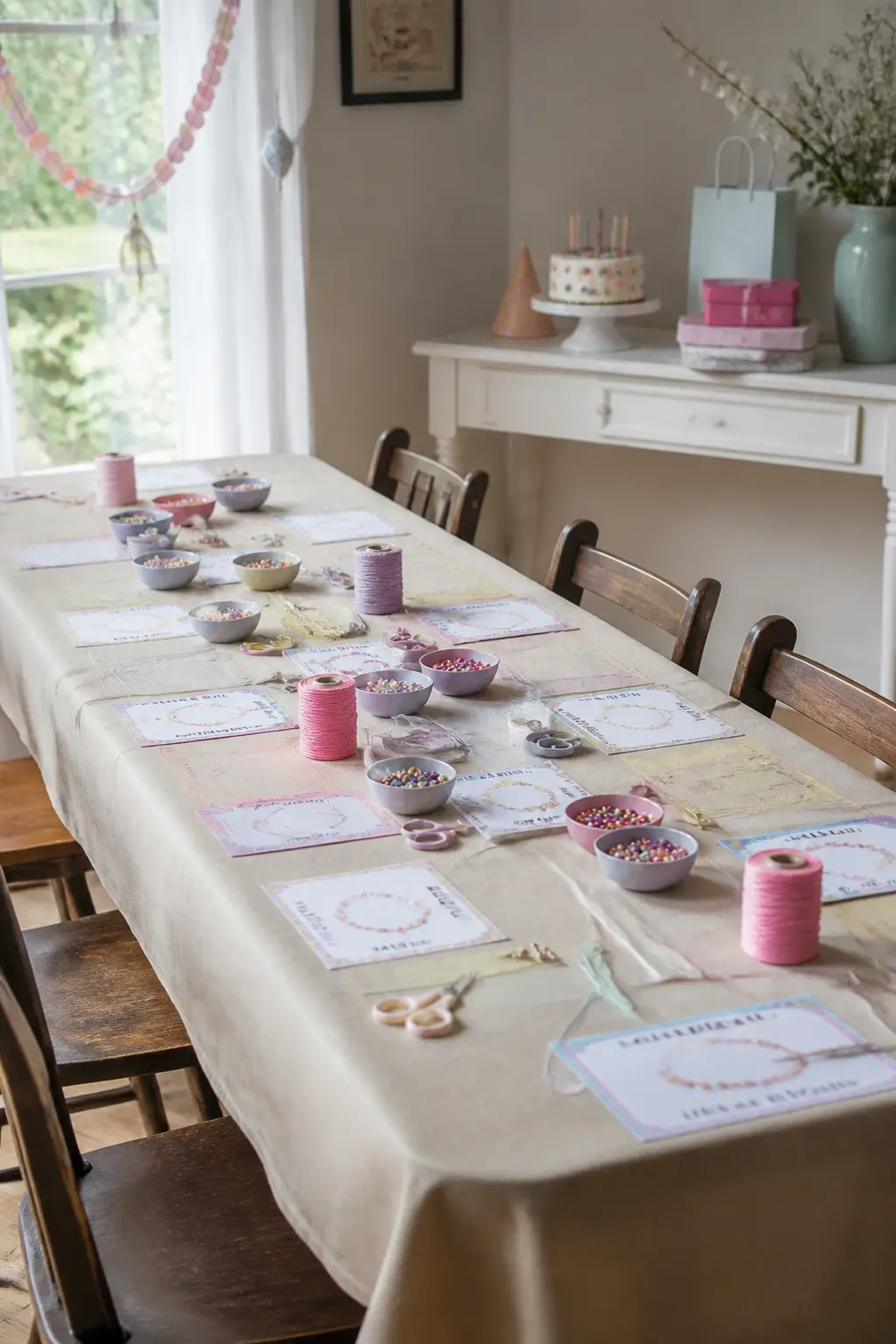
Craft Workshop
Choose one craft that has a simple version and a complex version in the same medium. Friendship bracelet kits fit this well: younger guests string beads in any order onto an elastic cord; older ones follow a pattern card to create a knotted chevron bracelet. The same table, the same materials, two results.
Set out every material before guests arrive and label each pot clearly. Younger children work faster with less choice, so give them four bead colours. Older children welcome the full range. Running both sets from the same large tray means you spend the party enjoying it rather than restocking.
Put the birthday cake at a separate small table away from the craft supplies so there is no risk of glitter in the icing. A party hat propped against the cake stand reads clearly in photographs and ties the table together visually.
🛍 Shopping guide
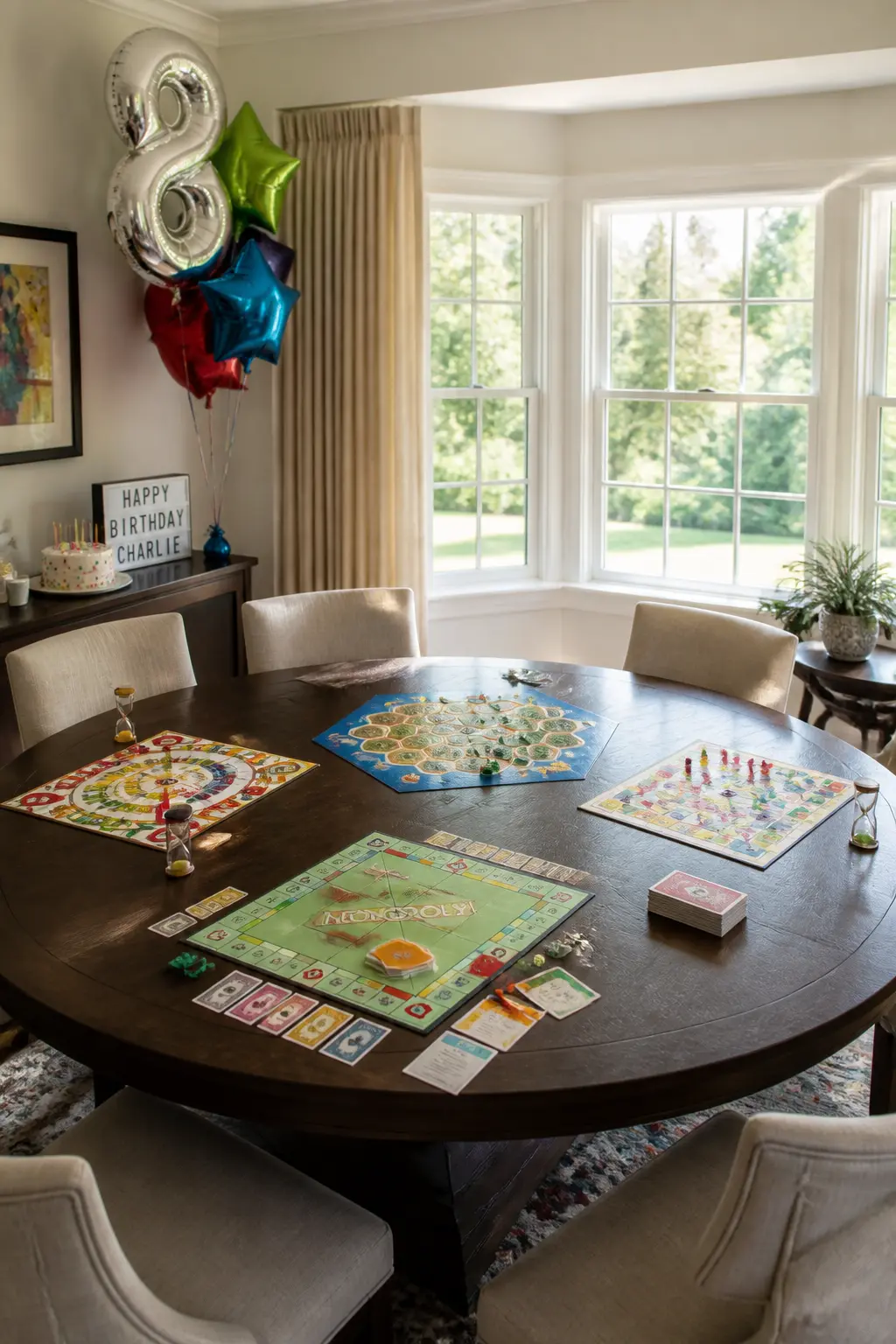
Games Afternoon Around the Table
A rotation of three or four board and card games around one large table is one of the most underrated party formats for mixed ages. Keep each rotation to fifteen minutes so everyone moves on before anyone gets bored or frustrated.
Choose games at different complexity levels and put a simple guide card next to each one. Younger children often pick up rules faster from watching for two minutes than from reading, so pair them with an older child at each game. For a ready-made list of games that already work across ages, the round-up at 25 Birthday Party Games for Kids That Burn Off the Sugar and the charades list at 120 Charades Ideas for Kids both save preparation time.
The birthday cake sits at a side table visible from every seat. A number balloon cluster above it and a cake slice ready beside it signals that the afternoon has a proper ending, which children find more satisfying than a game that just stops.
🛍 Shopping guide
How To Run One Theme at Two Speeds for Older and Younger Guests
Choose one theme. Then write two versions of the central task: a simpler instruction card for younger guests and a harder one for older ones. The room looks identical. The experience scales.
For active themes like Treasure Hunt or Pirate Ship, give younger children picture-based clues and older ones written riddles. They are hunting the same space, just with different maps. For making themes like Bakery Morning or Craft Workshop, set younger guests up with pre-measured ingredients or pre-cut pieces, and challenge older ones to measure, plan and problem-solve from scratch.
For puzzle themes like Escape Room or Detective Agency, assign older children the deduction steps and younger ones the physical tasks: finding hidden objects, matching colours, carrying items from one station to the next. Neither group waits for the other because each group always has something in hand.
One rule makes it work: never announce the two tiers out loud. Post the cards quietly, let children self-select by reading level, and most will land in the right stream without any adult direction. The birthday child moves between both groups freely, which is exactly the role a host should have.
Frequently Asked Questions
How do you keep older kids from getting bored at a younger child’s birthday party?
Give them a role that uses their age as an advantage: team captain, clue-reader, judge or lead builder. When an older child has genuine responsibility rather than a simplified task, they stay engaged without needing separate entertainment.
What is a good birthday party length for mixed ages?
Two hours is the sweet spot. Younger guests start to tire after ninety minutes and older ones lose interest in a structured activity after two and a half hours. Two hours allows one main activity, food, cake and a calm wind-down before parents arrive.
How many kids birthday party ideas should you plan for a two-hour party?
Plan one main theme with two activities inside it, plus the cake moment. Three anchors across two hours is enough. More than that and you spend the party transitioning rather than doing.
Do you need a separate activity for toddler siblings at a school-age birthday party?
Not if the main activity has a physical component they can join. Give toddler siblings the simplest version of the task: a small tub of dough, a basket to carry, a bead to thread. They feel included and parents can relax.
What kids birthday party ideas work in a small flat with no garden?
Den Building, Escape Room, Craft Workshop, Magic Show and Games Afternoon all run entirely indoors in a small space. Move the furniture to the walls and the floor becomes the venue. A single room can hold up to ten children comfortably for any of these.
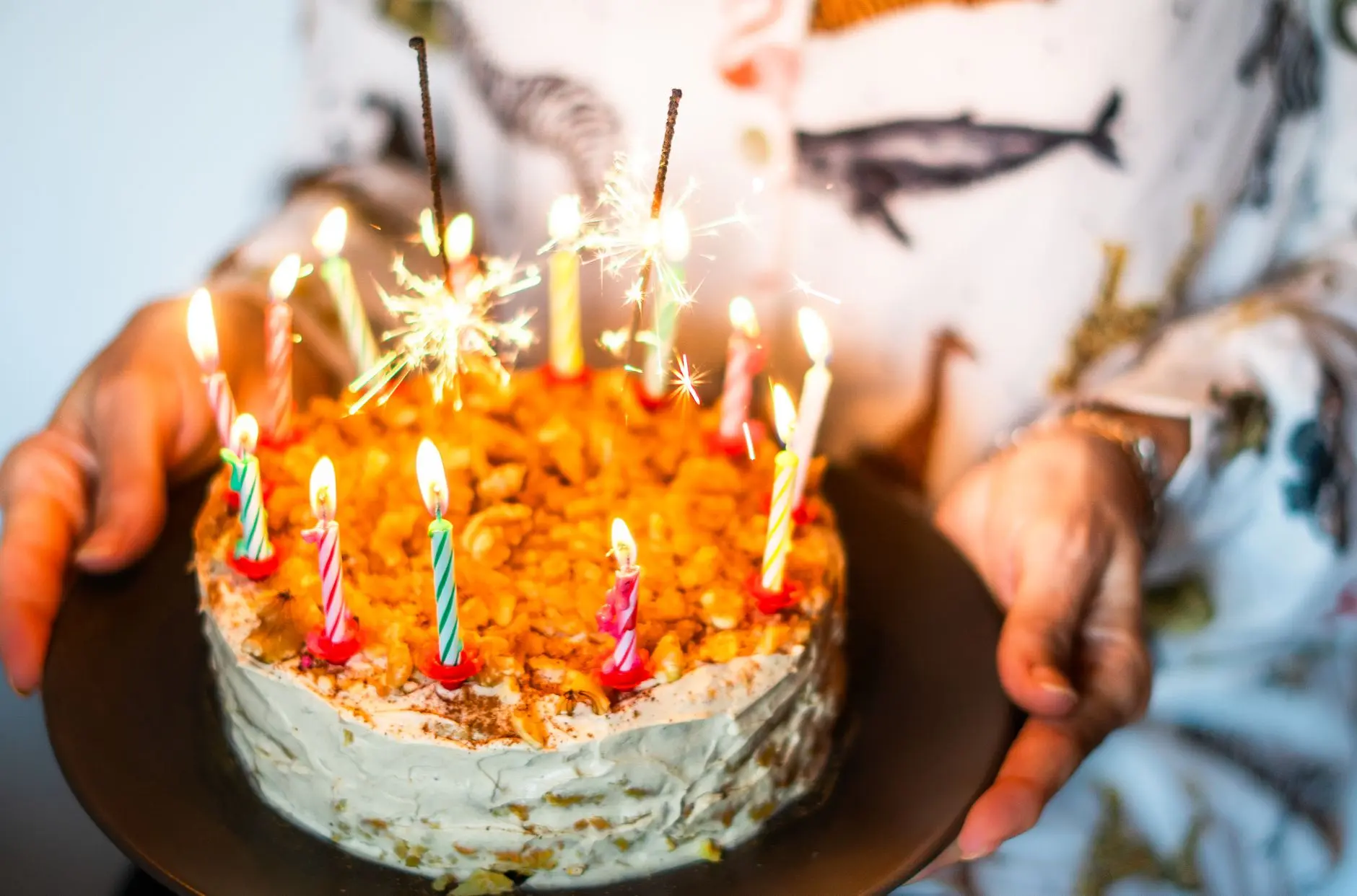
Fifteen 13th birthday party ideas for teens, each built around the one detail that makes guests reac
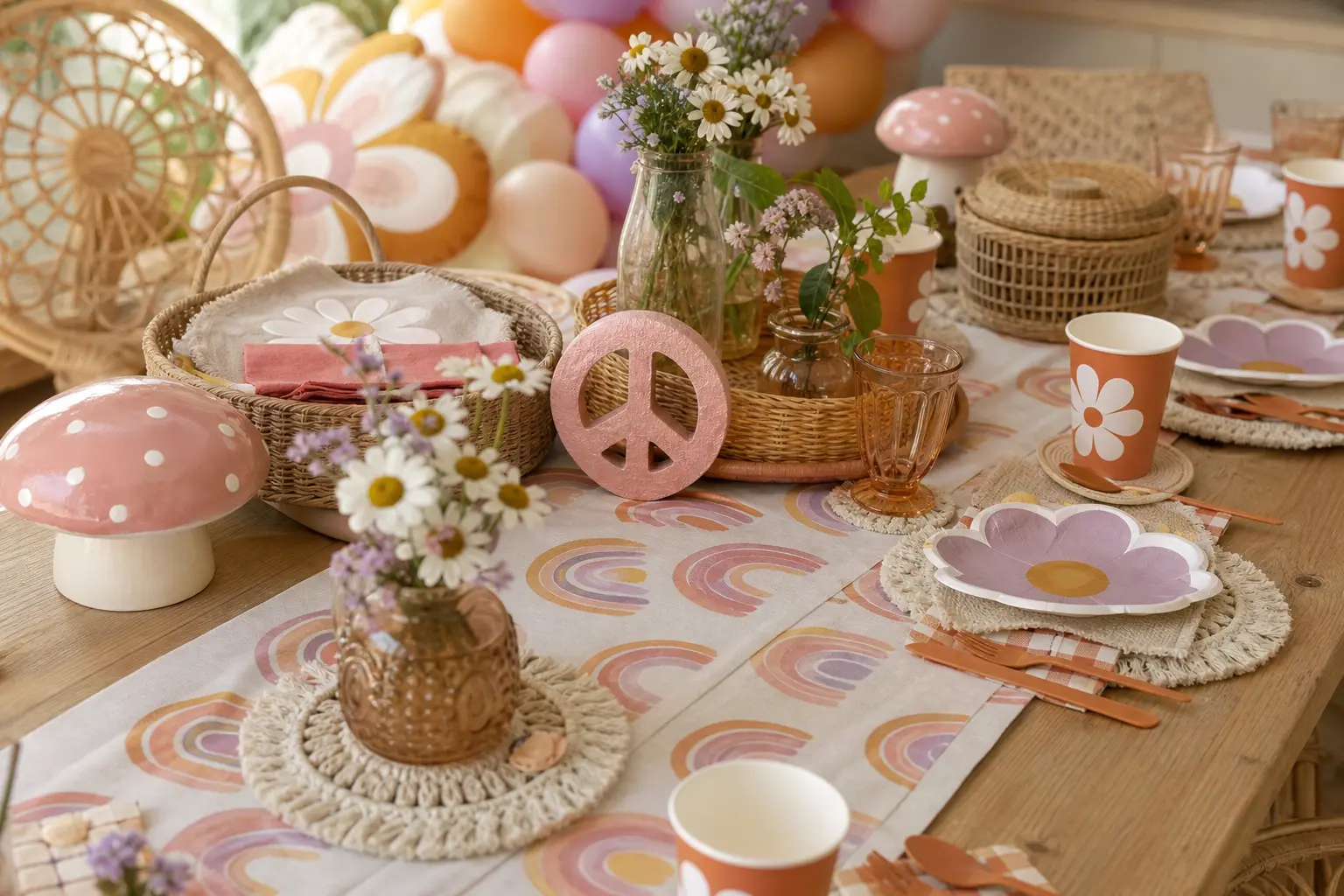
29 two groovy birthday party ideas covering centerpieces, photo zones, table styling, balloons and f
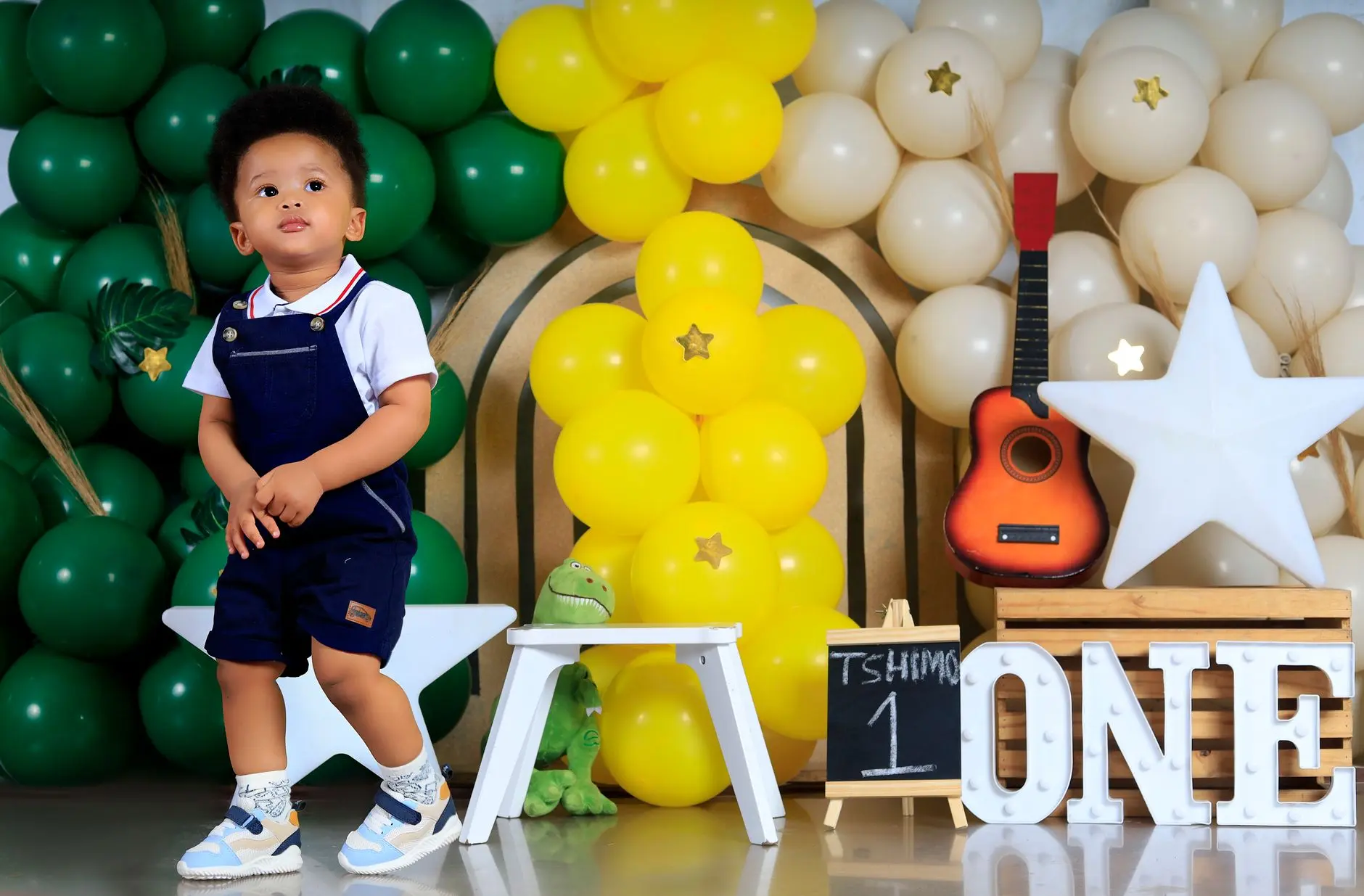
12 printable first birthday invitation ideas for a baby boy — the trendiest play-on-words themes f
Leave a Reply