


Okay, real talk: every year I spiral into a Pinterest rabbit hole looking for Christmas cake ideas, and every year I end up staring at the same tired round cake smothered in fondant holly leaves. Not this year.
This year the cake world is having an actual moment — Lambeth piping came roaring back from the 1940s and went completely viral, the coquette aesthetic crashed the bakery aisle in the best possible way, and metallics got a cool-girl silver upgrade.
There is genuinely something here for every taste, from the most maximalist holiday table to the cosiest kitchen counter.
I’ve rounded up 18 designs that cover the full spectrum — elegant enough for a Christmas dinner centrepiece, sweet enough for a hostess gift, cosy enough for a lazy festive Sunday at home.
Each one is rooted in what’s actually trending right now, not what was trending three years ago.
Some you can make yourself with a piping bag and a good tutorial; others are absolutely worth a call to your local custom baker (and yes, I’ll tell you exactly what to ask for). Ready? Let’s find your cake.
A quick note before we dive in: if you’re ordering a custom cake with detailed piping or special finishes, most bakers recommend booking four to eight weeks ahead for complex designs, so don’t leave it until December 20th and panic. You know who you are.
This post contains affiliate links — if you buy through them, I may earn a small commission at no extra cost to you.
- Vintage & Lambeth-Piped Christmas Cakes
- Coquette & Bow Christmas Cakes
- Metallic & Minimalist Christmas Cakes
- Botanical & Cottagecore Christmas Cakes
- Retro & Playful Christmas Cakes
- Textured Buttercream Christmas Cakes
- Sculptural & Statement Christmas Cakes
- Mini & Gifting Christmas Cakes
- Frequently Asked Questions
Vintage & Lambeth-Piped Christmas Cakes
The ornate, over-piped Lambeth style is having its biggest mainstream revival in decades — and Christmas is the perfect occasion to go full maximalist. These designs reward the baker who loves detail and the guest who can’t stop staring.
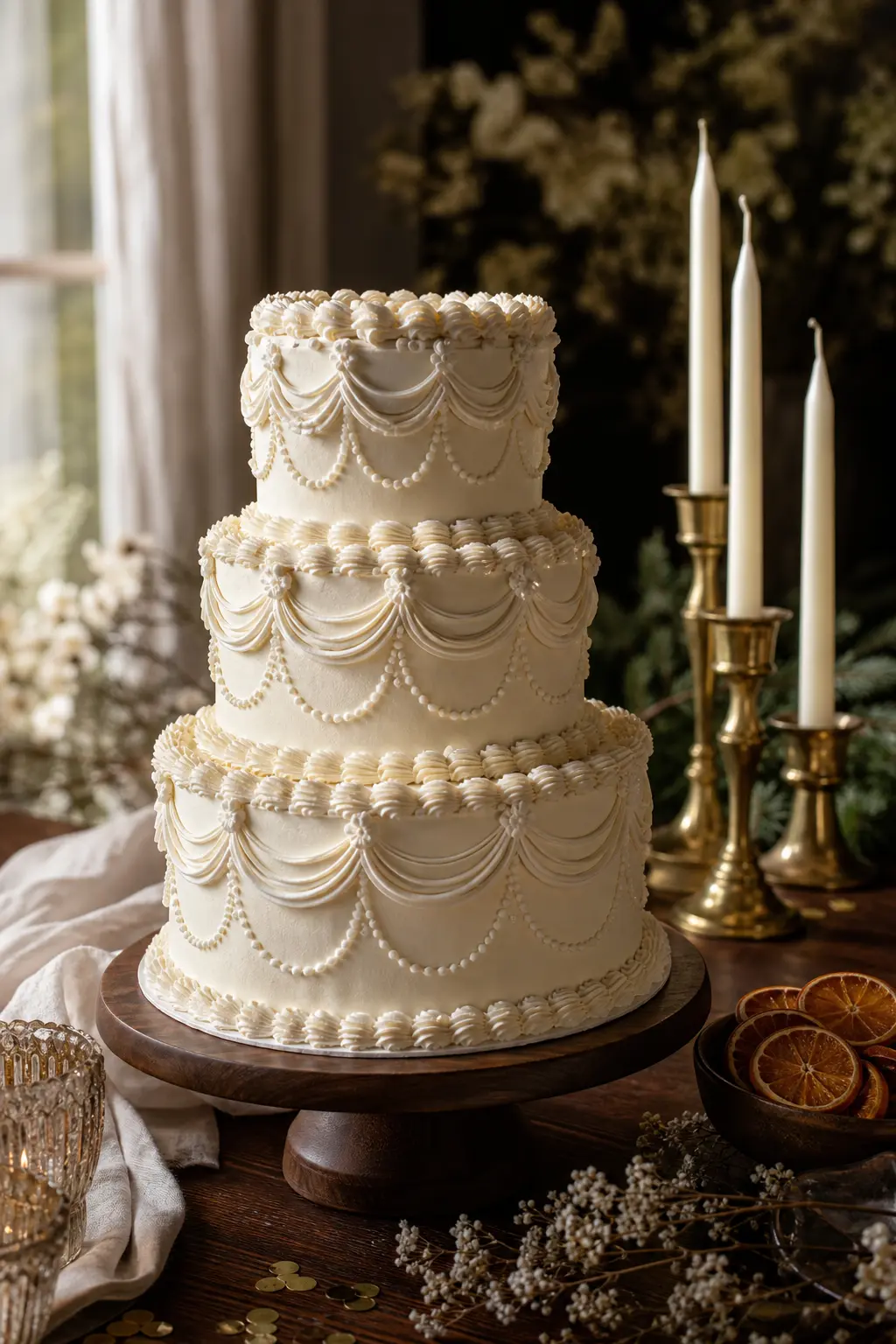
1. Vintage Lambeth-Piped Cake with Swags and Pearls in Cream
There is something almost breathtaking about a Lambeth-piped cake in person — the way the piped swags cast tiny shadows, the way strings of piped pearls catch the candlelight, the sheer density of skill visible in every tier.
The Lambeth method’s defining characteristic is overpiping: you pipe a shape, let it set, then pipe on top of it again to build height — which is exactly what gives these cakes that extraordinary three-dimensional quality that photographs so beautifully.
In cream-on-cream, the effect is pure old-world elegance: a Victorian wedding cake reimagined for a modern Christmas dinner table, where the absence of colour makes every curl and swag pop through shadow alone.
This design is having a serious moment right now. After years of minimalist naked cakes dominating celebration tables, decorators and clients are leaning hard into craftsmanship and visible labour — and nothing says ‘someone really cared about this’ quite like a full Lambeth cake.
If you’re ordering from a baker, ask specifically for scalloped swags, string-work, and shell-border overpiping in ivory Swiss meringue buttercream — and give them at least six weeks’ notice, because this is not a same-week order.
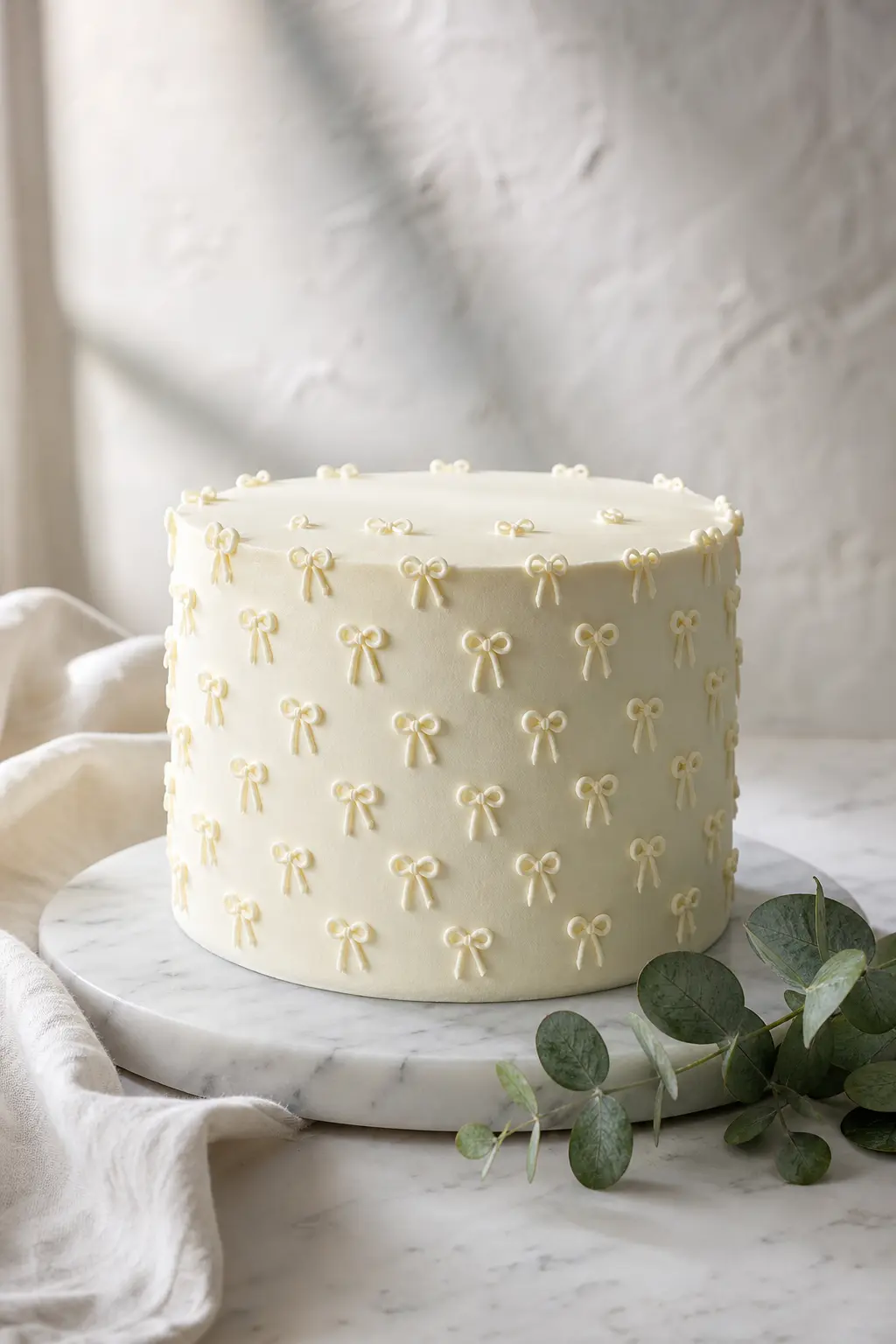
2. Smooth White Cake with Tiny Piped Buttercream Bows in a Grid
Imagine a flawlessly smooth white buttercream cake — and then imagine its entire surface covered in a perfectly spaced grid of tiny, hand-piped bows, each one no bigger than a thumbnail, each one identical.
The effect is somewhere between a Chanel tweed and a vintage wallpaper, and it is completely irresistible in person.
This is one of those designs where the restraint of the colour palette (white on white, or ivory bows on a white base) actually amplifies the intricacy rather than hiding it.
For home bakers, the key tool here is a small star tip (a Wilton 1M or a #18 works well) and genuine patience — pipe one row at a time, refrigerate between rows to keep the base firm, and use a toothpick to mark your grid lightly before you start.
If you’re ordering, ask the baker for a ‘piped buttercream bow grid’ and specify whether you want the bows in the same shade as the base (more subtle and editorial) or in a contrasting colour like pale red or forest green for a more festive pop.
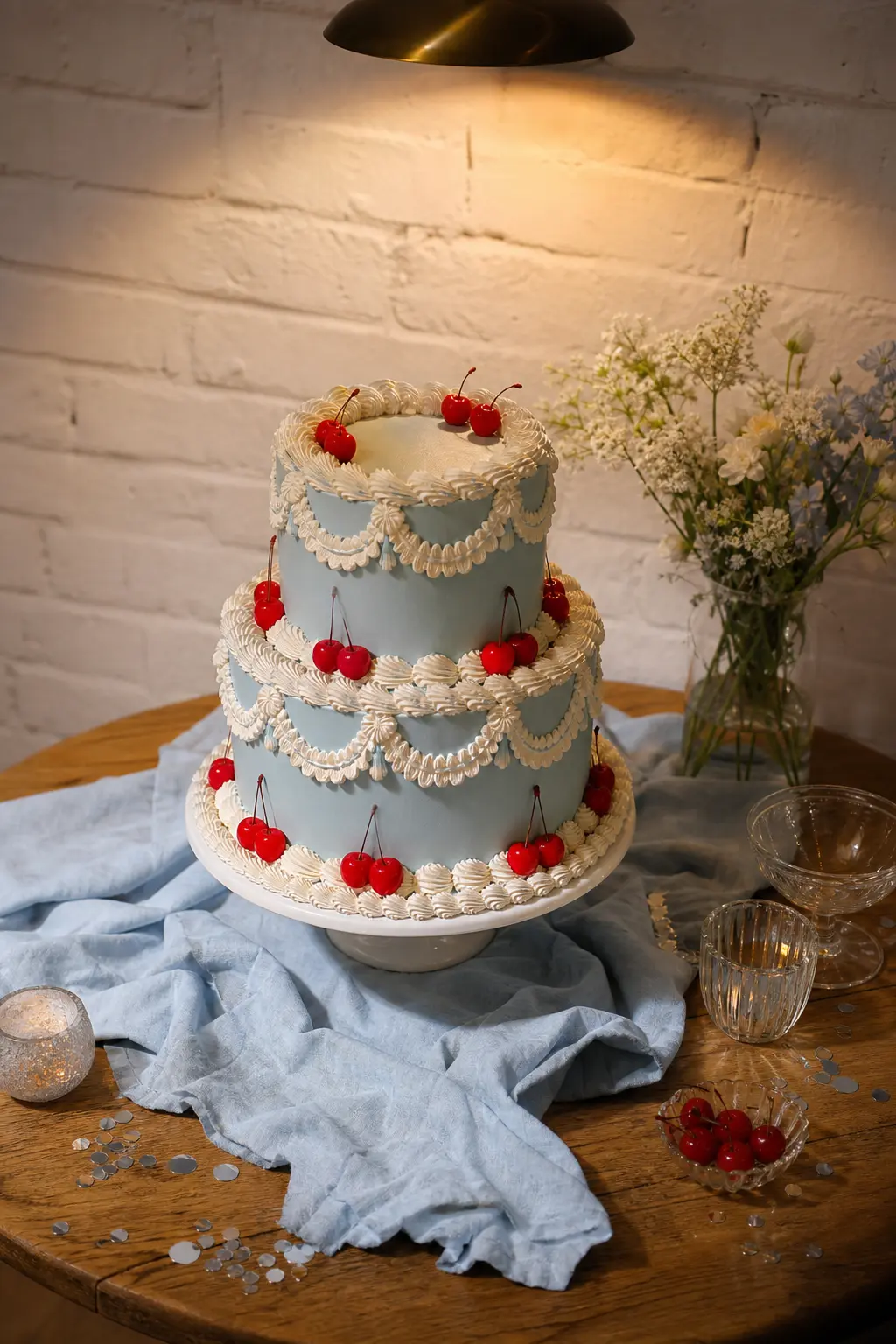
3. Dusty-Blue Vintage Cake with White Piping and Bright Red Cherries
Dusty blue and cherry red is the retro colour combination that keeps showing up everywhere this year — in fashion, in ceramics, in stationery — and it looks absolutely stunning on cake.
Picture a matte dusty-blue buttercream base, piped all over with crisp white scalloped borders and rosette details in the Lambeth style, and then finished with plump, glossy bright-red fondant or sugarpaste cherries clustered at the base of each tier.
The white-on-blue palette exudes a timeless vintage elegance, with cherries adding a dash of coquette charm that keeps the whole thing feeling current rather than dusty.
The cherry element is what really makes this design sing at Christmas — they read as both retro kitsch and genuinely festive, and they photograph beautifully against the cool blue.
Tbh, this is the cake I’d order if I were having a dinner party this December and wanted the table to look like a set from a very stylish vintage film.
Ask your baker for a dusty-blue Swiss meringue base, white Lambeth borders, and either fondant cherries or (even better) fresh maraschino-style sugar cherries on wire stems for a more dimensional finish.
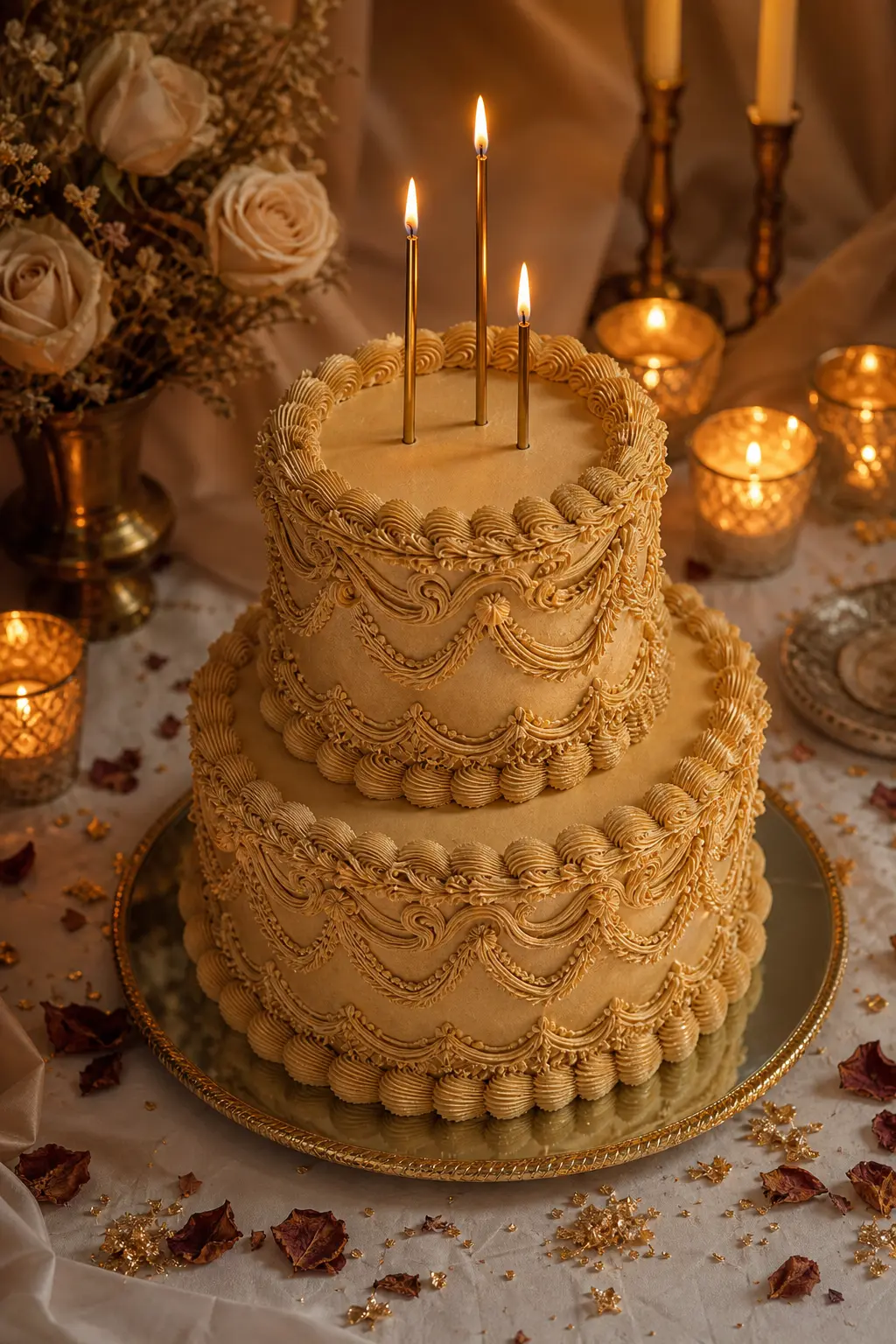
4. Champagne-Gold Lambeth Cake with Taper-Candle Styling
Champagne-gold is the colour of every elegant New Year’s Eve party and every candlelit Christmas dinner, and it translates to cake with extraordinary results.
A warm champagne-toned buttercream base — achieved by adding tiny amounts of gold and ivory gel colour to your white buttercream until you hit that particular burnished warmth — decorated with Lambeth overpiping in the same shade creates a monochromatic richness that is genuinely hard to look away from.
Bakers are updating the Lambeth technique this year by applying it to monochromatic colour schemes, and champagne-gold monochrome may be the most dinner-party-ready version of all.
The taper-candle styling elevates the whole thing — push three slim brass or gold taper candles directly into the top tier at slightly varied heights (use proper food-safe candle holders or wrap the bases in foil so wax doesn’t touch the cake).
The warm candlelight will interact with the champagne-gold piping in a way that makes the whole table look like a magazine shoot. Serve this one at a late dinner with the overhead lights dimmed and watch people’s faces when they see it.
Genuinely, it’s one of those moments. Ask your baker for ‘champagne-gold monochrome Lambeth piping with scroll and swag detailing’ — any decorator worth their piping bag will know exactly what you mean.
🛍 Shopping guide
Coquette & Bow Christmas Cakes
Hyper-feminine, dainty, and deeply photogenic — the coquette aesthetic hit fashion and home décor before landing firmly in the cake world this year. Think bows, candy-cane stripes, satin ribbons, and enough blush-pink sweetness to make your heart skip.
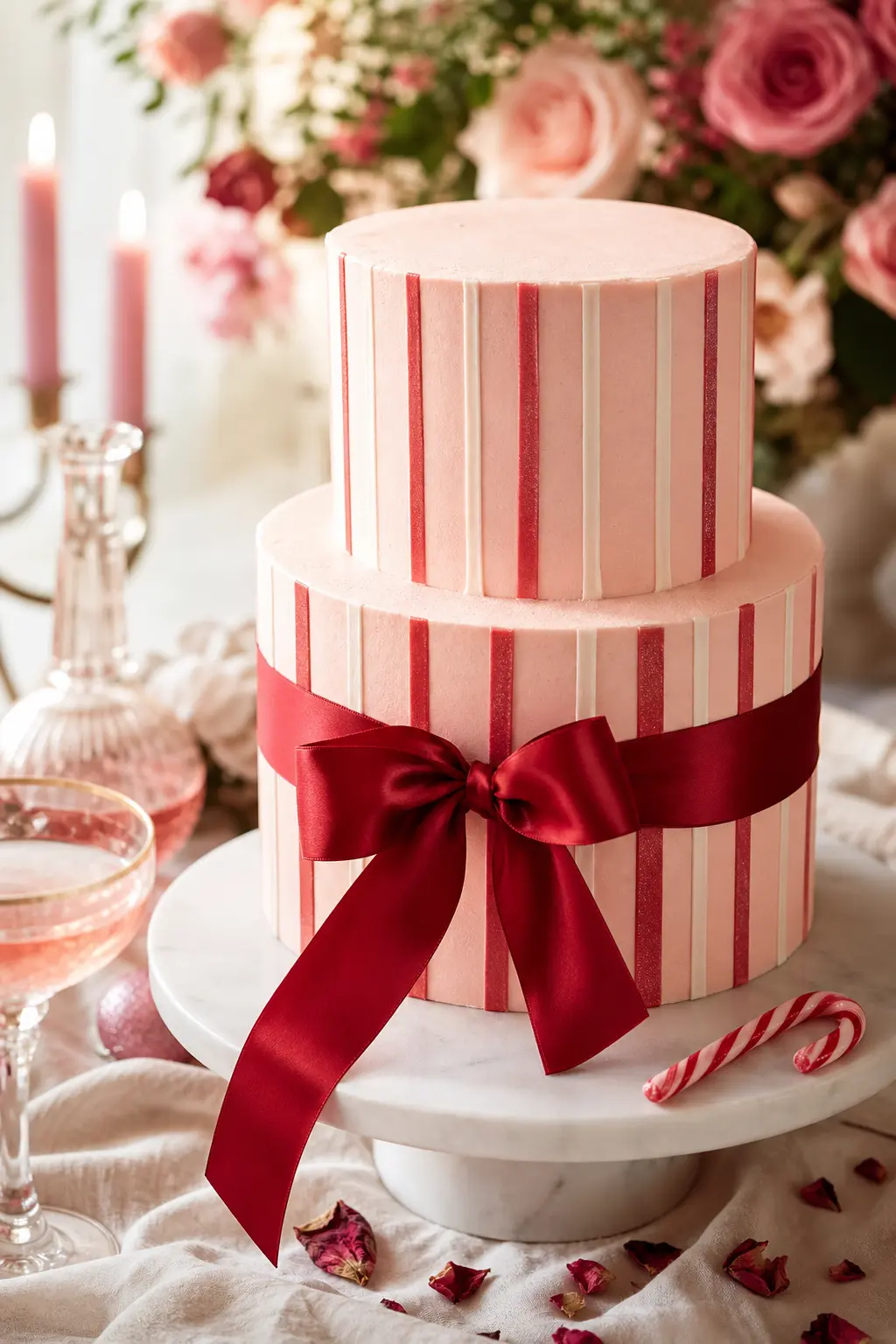
5. Blush-Pink Coquette Cake with Satin Ribbon and Candy-Cane Stripes
The coquette aesthetic is essentially maximalist femininity with excellent taste, and this cake is its Christmas form.
Imagine a blush-pink buttercream base with vertical candy-cane stripes — alternating white and pale red — wrapping around the sides, and then a wide satin ribbon (real ribbon, not piped — the texture difference matters) tied in a generous bow around the middle tier.
The whole thing has that quality of a beautifully wrapped gift that you almost don’t want to open.
The coquette aesthetic — defined by hyper-feminine, dainty details — has firmly hit the bakery world this year, and the candy-cane stripe is its most Christmas-specific expression.
The candy-cane stripes are easier to achieve than they look: chill your smoothly iced base, then use a sharp pastry comb or a ruler and toothpick to mark evenly-spaced vertical channels, fill with a slightly deeper pink or red piped buttercream, and scrape smooth again.
Real satin ribbon (choose a food-safe ribbon in deep red or blush) adds that crucial textural contrast between the matte cake surface and the shiny fabric — it photographs beautifully and feels genuinely luxurious.
This is also a fabulous cake to give as a gift, boxed with the bow tied on top.
6. Polka-Dot Cake in Red and White
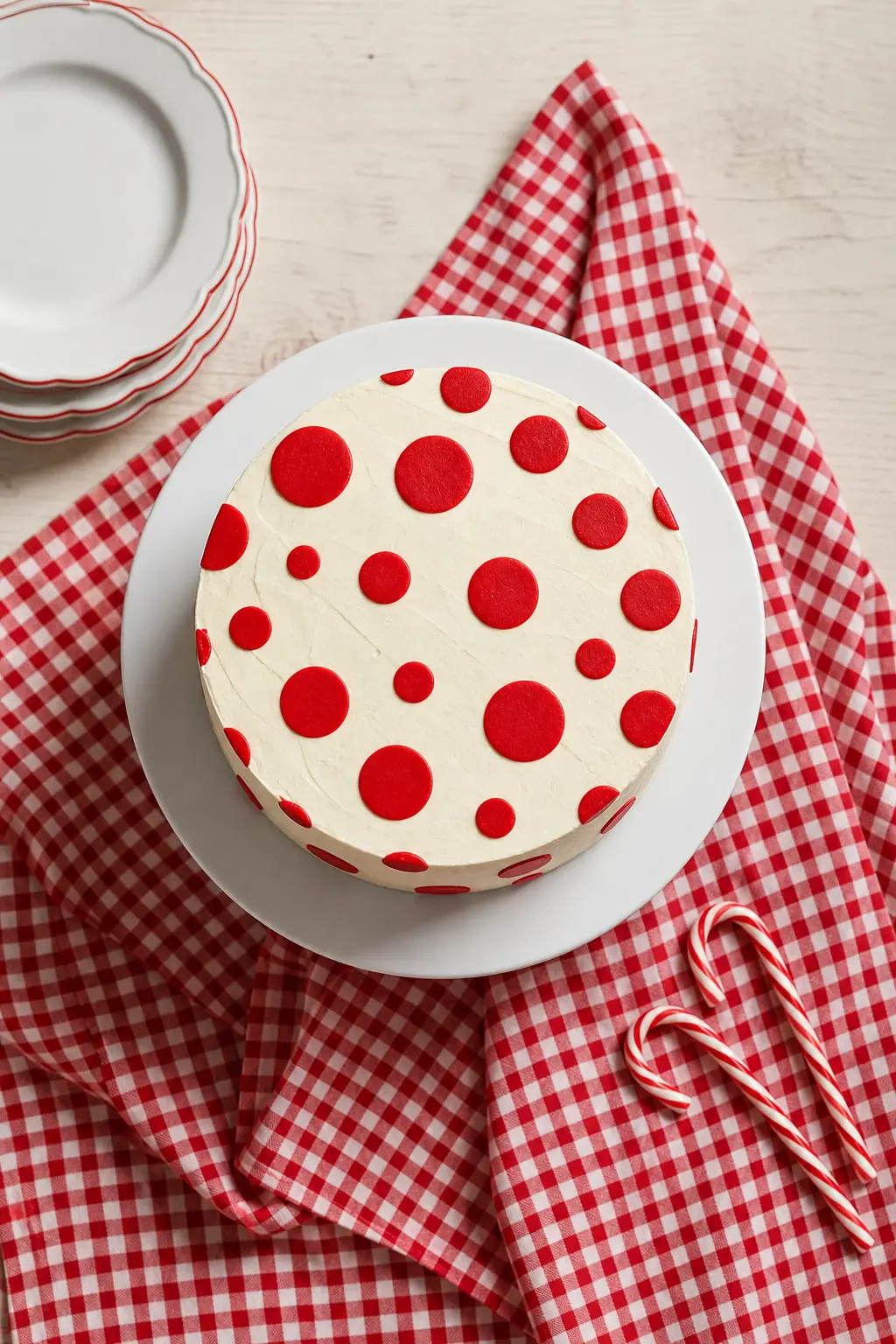
Polka dots on a Christmas cake have absolutely no business being this charming, and yet here we are.
A smooth white buttercream base scattered with hand-piped or fondant-cut red polka dots — varying sizes, placed with that deliberate ‘almost random’ precision that takes more thought than it looks — is the kind of design that makes everyone at the table smile before they’ve even tasted it.
It’s joyful without being childish, retro without being dated, and it photographs brilliantly on a holiday table full of colour and candles.
The key is contrast: the dots need to be a bold, confident red (not salmon, not coral — red) against a genuinely white, not cream, base.
For home bakers, the simplest method is to roll small spheres of red fondant, flatten them slightly between your fingers, and press them gently into a smooth buttercream surface while it’s still just a little tacky — they’ll adhere without any glue and pull off cleanly if you need to reposition.
For a more elevated look, pipe each dot with a round tip filled with red royal icing and let them dry to a smooth dome.
This one also works beautifully as a bento-scale mini cake — a 4-inch polka-dot cake in a white gift box is a festive hostess gift that genuinely doesn’t need anything else.
🛍 Shopping guide
Metallic & Minimalist Christmas Cakes
For the person whose holiday aesthetic is more gallery opening than cosy cottage — these are the cakes that photograph like fine art. Clean lines, pearlescent finishes, and strategic gold or silver leaf do all the heavy lifting.
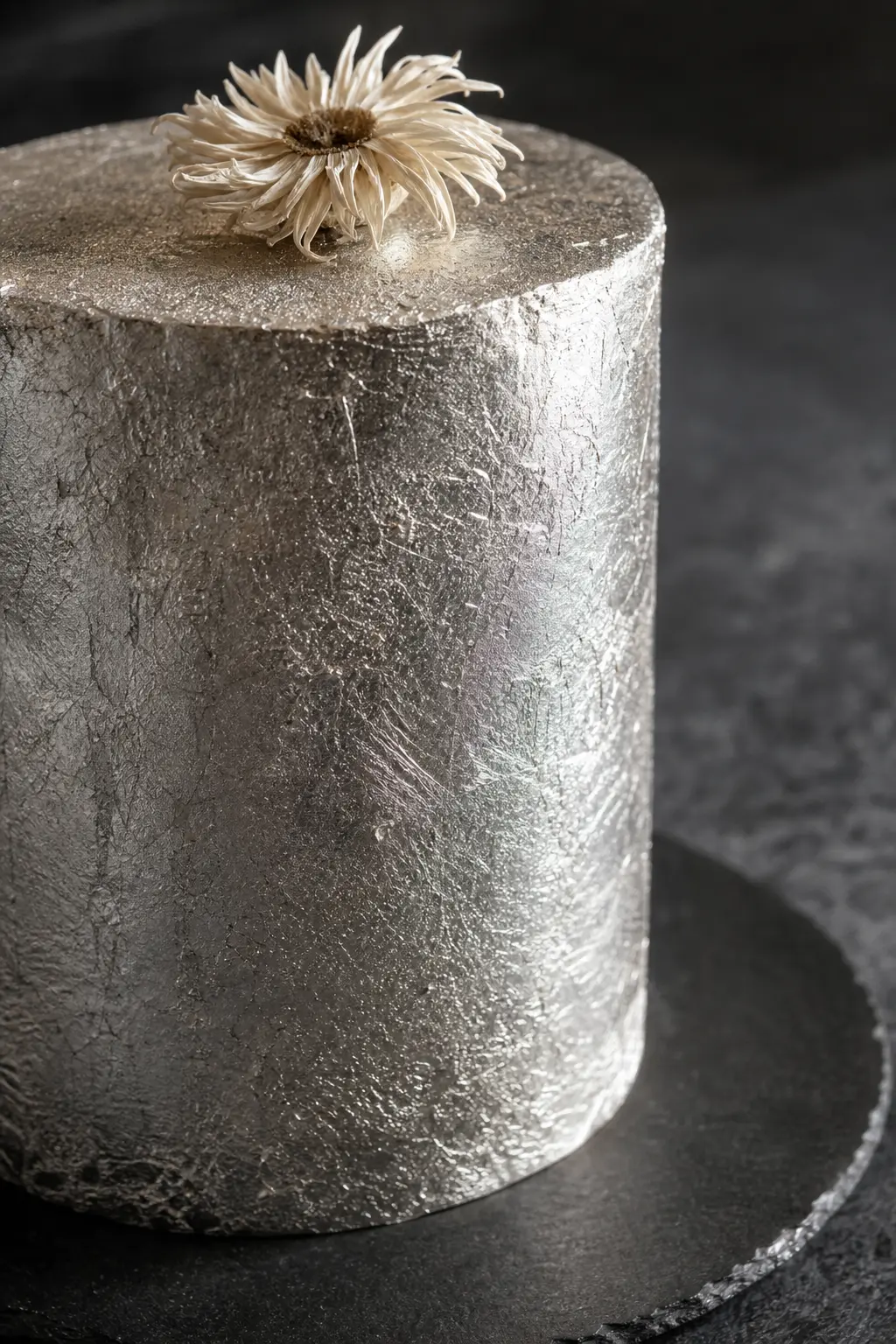
7. Silver-Leaf Minimalist Cake with Pearlescent Sheen
If ever there was a Christmas cake for people who think most Christmas cakes are a bit much, this is it.
A smooth, clean white or ivory base — flawlessly iced, not a spatula mark in sight — covered in sheets and crumbles of edible silver leaf that catch the light differently from every angle.
The effect is less ‘disco ball’ and more ‘fresh snowfall at midnight’: cool, luminous, genuinely beautiful.
Silver has officially overtaken gold as the metallic of choice for cakes this year, with bakers using edible silver leaf, metallic luster dust, and chrome-finished piping to create something that looks more like polished art than a dessert.
The pearlescent version of this — where silver leaf is layered over a fondant base that’s been dusted with white pearl lustre — has an almost holographic quality in candlelight, which makes it an absolute dream for a Christmas evening dinner party.
The key technique is to ensure the cake surface is tacky but not wet before applying the leaf — then lay it gently with a dry paintbrush or food-safe gloves, letting it crinkle naturally for texture.
A minimalist topper — a single dried white flower, a bare twig, nothing more — completes the look without cluttering it.
8. Minimalist White Cake with a Single ‘Merry Christmas’ Script and Gold Leaf
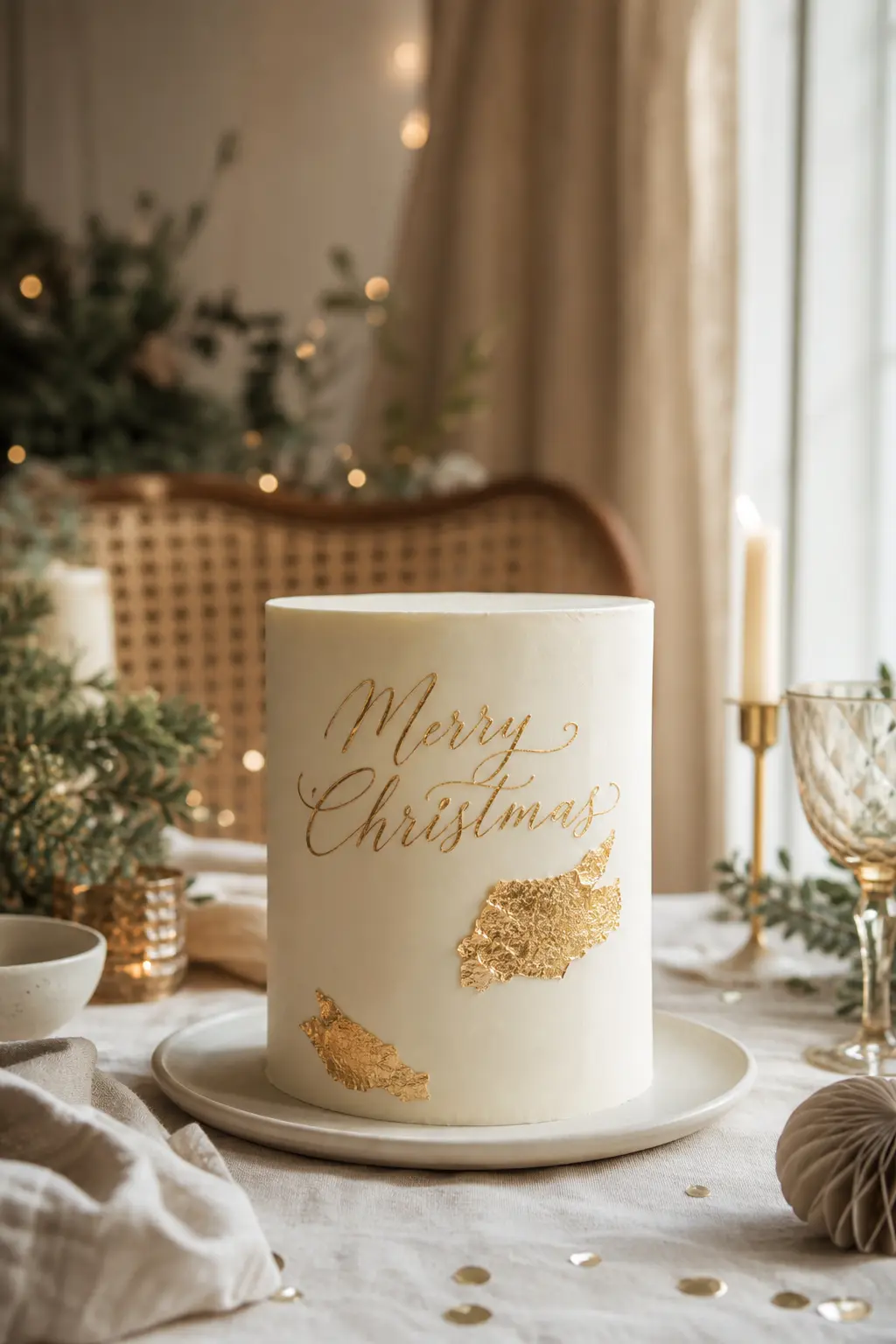
Sometimes the most powerful design statement is the one that knows exactly when to stop.
This cake is a study in restraint: a perfectly smooth white or off-white buttercream tier, clean enough to reflect the room, with a single line of elegant hand-lettered script reading ‘Merry Christmas’ in deep gold — either painted directly in edible gold paint or achieved with gold-foiled lettering.
Below the script, one or two irregular shards of edible gold leaf, placed asymmetrically so they look deliberate and organic rather than nervous. That’s it. Gold leaf adds a stunning shimmer that makes the cake a true centrepiece without a single additional embellishment needed.
This is the design to order when you want your cake to look expensive without looking busy, and it works equally well for a formal Christmas dinner or a small, intimate gathering.
For bakers attempting this at home, the script is the trickiest element — practice your lettering on parchment paper until you’re confident, mix your edible gold paint to a fluid but not runny consistency (vodka or clear alcohol mixed with gold lustre dust is the classic method), and use a fine-tipped food-safe brush.
One clean pass, no touching up — just confidence and a steady hand.
🛍 Shopping guide
Botanical & Cottagecore Christmas Cakes
If your holiday vibe is less tinsel, more dried botanicals arranged beautifully on a linen tablecloth, these are your cakes. Pressed edible flowers, hunter green buttercream, brass tones, and winter greenery make every one of these look like it came straight from an English country kitchen.
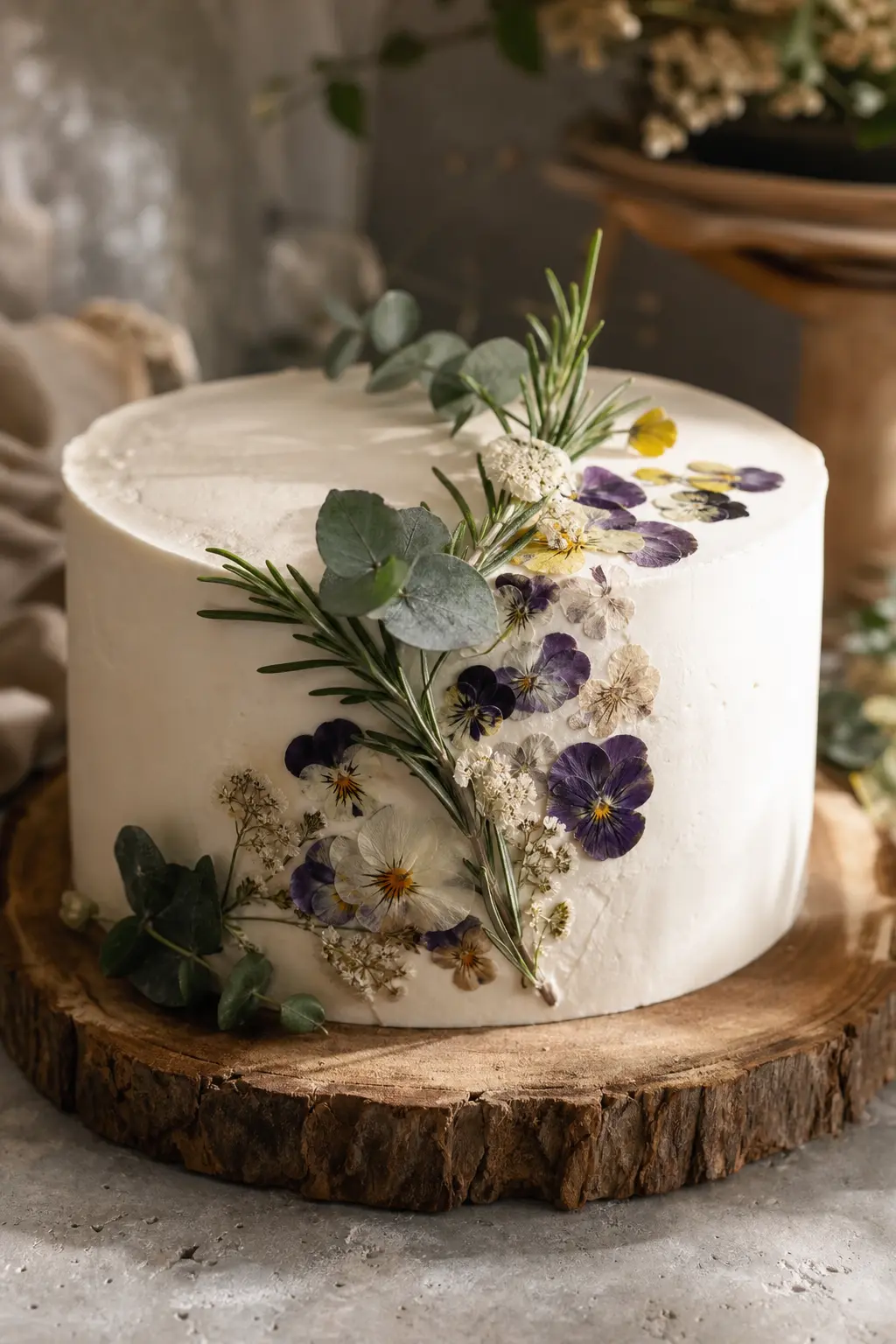
9. Pressed Edible-Flower and Winter-Greenery Cake
There is something genuinely poetic about a cake that looks like it was pressed in a botanical journal — edible flowers and sprigs of winter greenery laid directly onto smooth buttercream as though they drifted there from a garden.
Pressed flower decoration has reached true mainstream status this year, and what’s shifting is how they’re used — asymmetric placements and clusters rather than full coverage, which makes the cake feel considered and editorial rather than simply covered.
For a Christmas version, the palette skews cool and botanical: deep green ivy, pressed violas, white dried blooms, and the occasional sprig of rosemary or eucalyptus for that wintery, slightly herbal quality.
Edible pressed flowers — pansies, violas, cornflowers — are the safest option, so always confirm with your supplier that any botanicals used are food-grade and pesticide-free before they go anywhere near a cake.
If you’re decorating at home, press flowers in a heavy book for at least two weeks before you need them, then apply to a slightly chilled buttercream surface using a clean dry brush — the static cling will hold them in place.
Cluster them asymmetrically on one side of the cake and let the other side breathe; the negative space is part of the design.
10. Jewel-Tone Cake with Velvet-Look Ribbon and Gold Accents
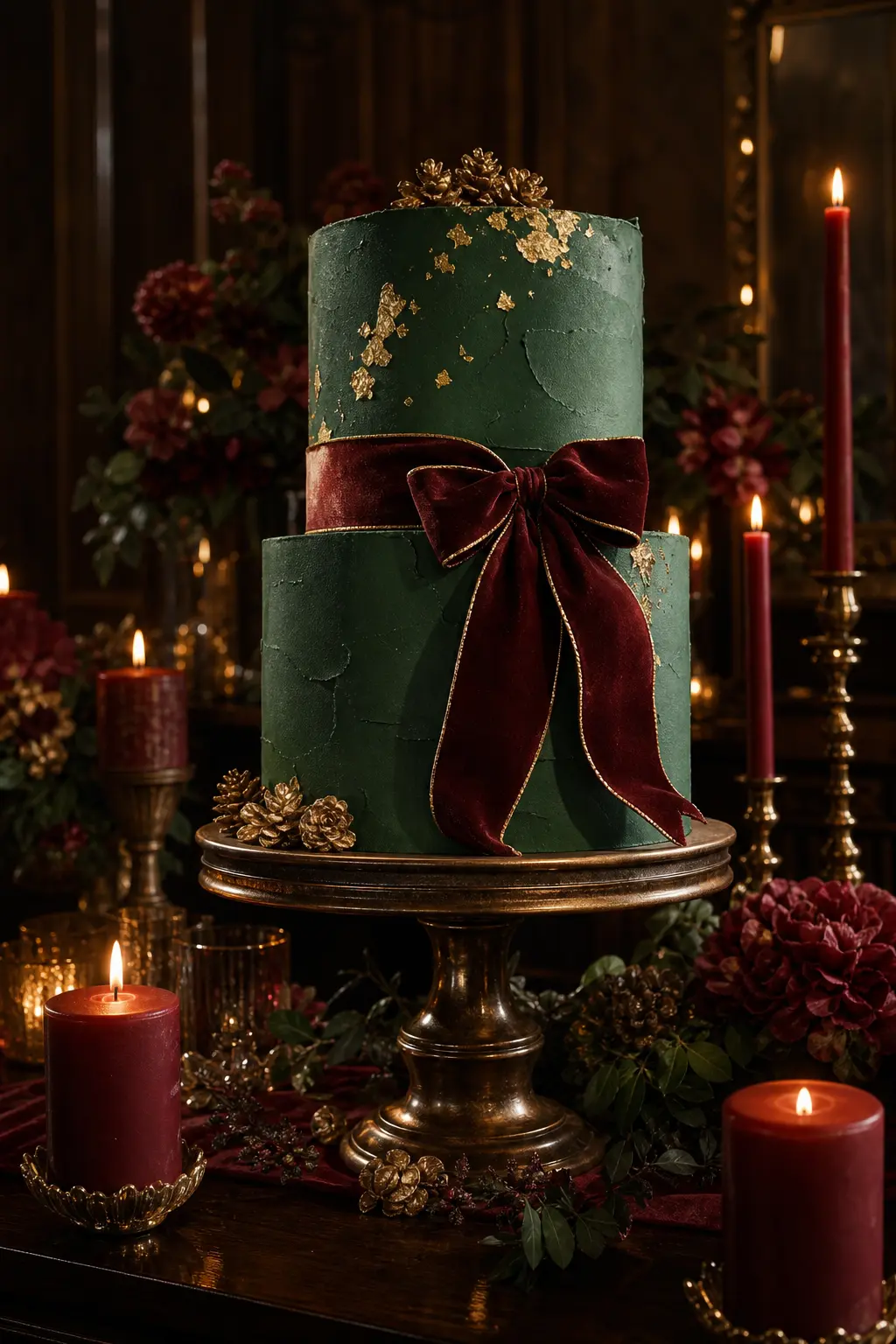
Deep emerald, sapphire, burgundy, amethyst — jewel tones on cake have a richness and depth that reads as genuinely luxurious, especially when paired with the matte, light-absorbing quality of a velvet-look ribbon and the warm shimmer of gold accents.
Modern decorators are taking Lambeth technique into deep jewel tones with gold-painted overpipes — so you can absolutely combine both trends here.
Picture a deep burgundy or forest-green buttercream cake with a wide velvet ribbon (the kind with a slight sheen and that characteristic pile texture) in a contrasting jewel tone, and then a scattering of gold leaf or gold lustre detailing at the ribbon edges and on the top tier.
The visual effect is opulent in a way that feels genuinely festive rather than garish — this is the Christmas cake for the candlelit dinner party, where it will pick up the warmth of the room and glow.
For home bakers, achieving a true jewel-tone buttercream requires gel food colouring (not liquid) in generous amounts; add it in stages and mix thoroughly, then let the finished cake rest overnight in the fridge — the colour deepens significantly as it sets.
The gold accents can be as simple as brushing edible gold lustre mixed with a tiny amount of clear alcohol directly onto the ribbon edges or adding a few torn gold leaf fragments to the top.
11. Cottagecore Hunter-Green Cake with Dried Botanicals and Brass Tones
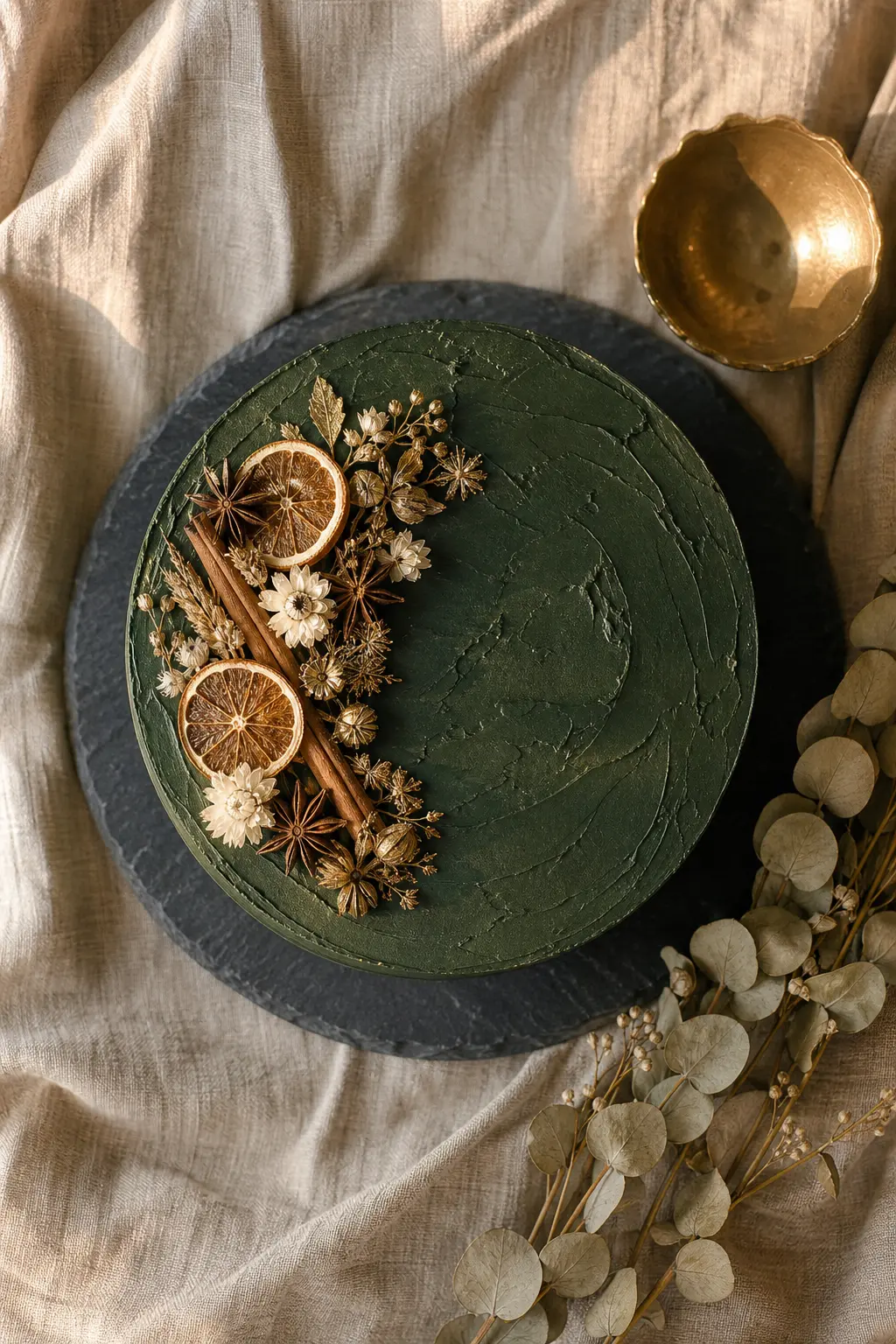
If the pressed-flower cake is the cottage garden in summer, this one is the same garden in December — something about hunter-green buttercream just reads as deeply, correctly wintery, especially when it’s textured with a palette knife and topped with a cluster of dried botanicals that look like they were gathered on a morning walk.
Dried gypsophila, cinnamon sticks, star anise, seed pods, dried orange slices — whatever you can find at a craft or florist supplier — arranged on the top and trailing slightly down one side, all toned with warm brass lustre dust for that cohesive, curated look.
The cottagecore aesthetic embraces a relaxed, romantic quaintness that feels especially at home at Christmas, when we’re all reaching for warmth and texture.
The palette-knife texture on the buttercream is key — it gives the surface a handmade, lived-in quality that smooth icing wouldn’t, and it suits the botanical styling perfectly.
Apply your hunter-green buttercream generously and then drag a small offset spatula across in short, confident strokes at irregular angles.
For the brass tone, brush a small amount of bronze or gold lustre mixed with clear alcohol over any dried elements before arranging — it ties everything together and prevents the botanicals from looking like afterthoughts. (They are not afterthoughts. You put thought into this.
The brass tone proves it.)
Retro & Playful Christmas Cakes
Nostalgia is a genuine design force right now, and these cakes lean into it with full-hearted joy — polka dots, retro calendars, cherries on top, and that brilliant mid-century optimism that makes everything feel a little more festive.
12. Retro Calendar Cake with a Cherry on December 25
This is easily the most charming and conversation-starting cake in the whole list, and I say that as someone who usually gravitates toward the elegant end of the spectrum.
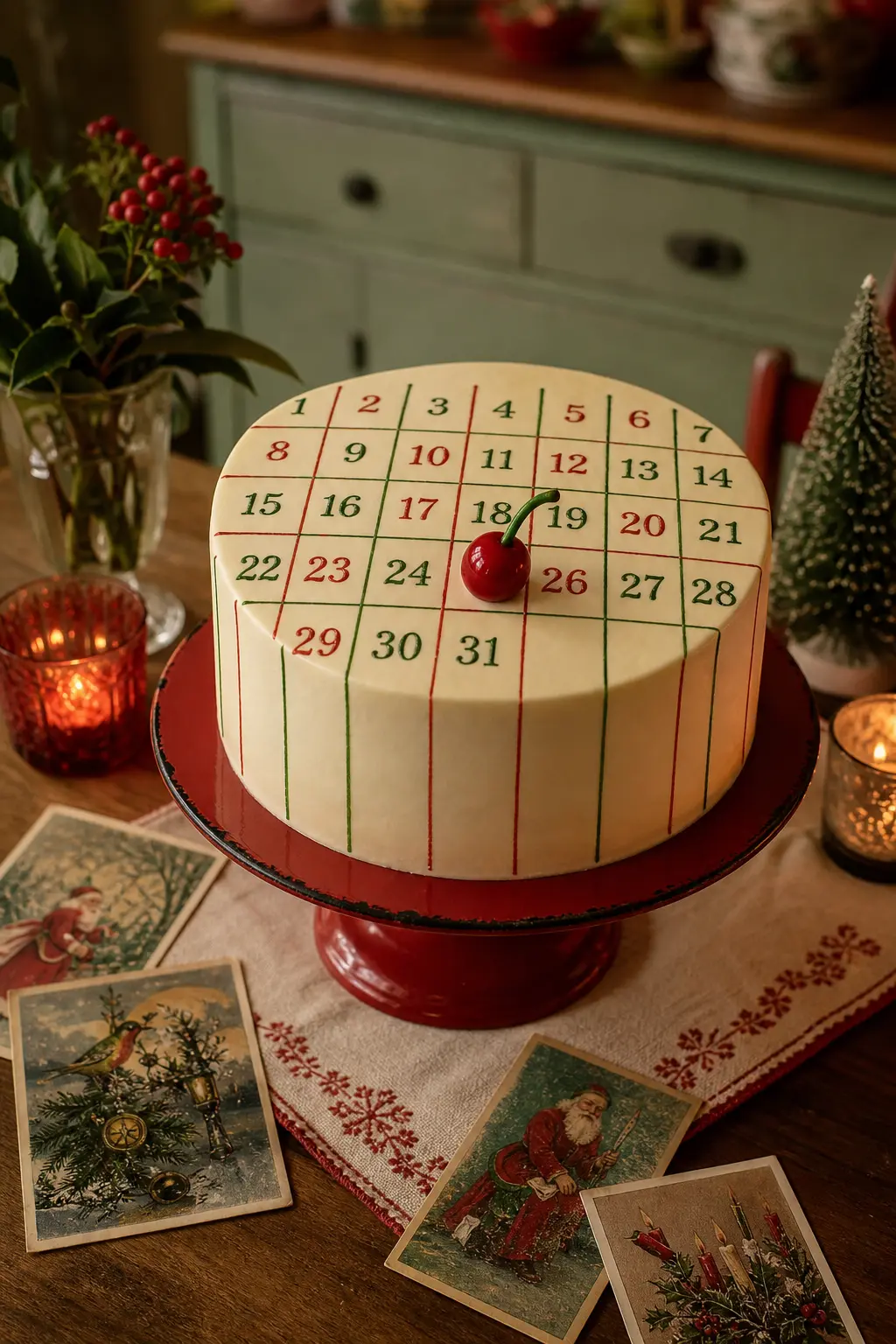
The retro calendar cake takes the format of a hand-painted or piped vintage desk calendar — rows of dates in a sweet mid-century font, all leading inevitably to December 25th, which gets a single bright red cherry on top of the number.
It is unbelievably cute. The colour palette leans into that warm, optimistic 1950s-1960s graphic sensibility: ivory or off-white base, red and forest-green type, maybe a thin red border around the top tier.
This is a design where the fun is very much in the execution — it works at any scale, from a full three-tier showstopper to a flat single-layer sheet cake.
For home bakers with steady hands, the calendar grid can be hand-painted with a fine food-safe brush and edible gel colours thinned with clear alcohol; for those of us whose handwriting is less ‘vintage typographer’ and more ‘tired Tuesday’, a custom edible print from a bakery supply shop will achieve the same result cleanly.
Either way, the cherry on top — fondant or real glacé — is the finishing touch that makes the whole thing click.
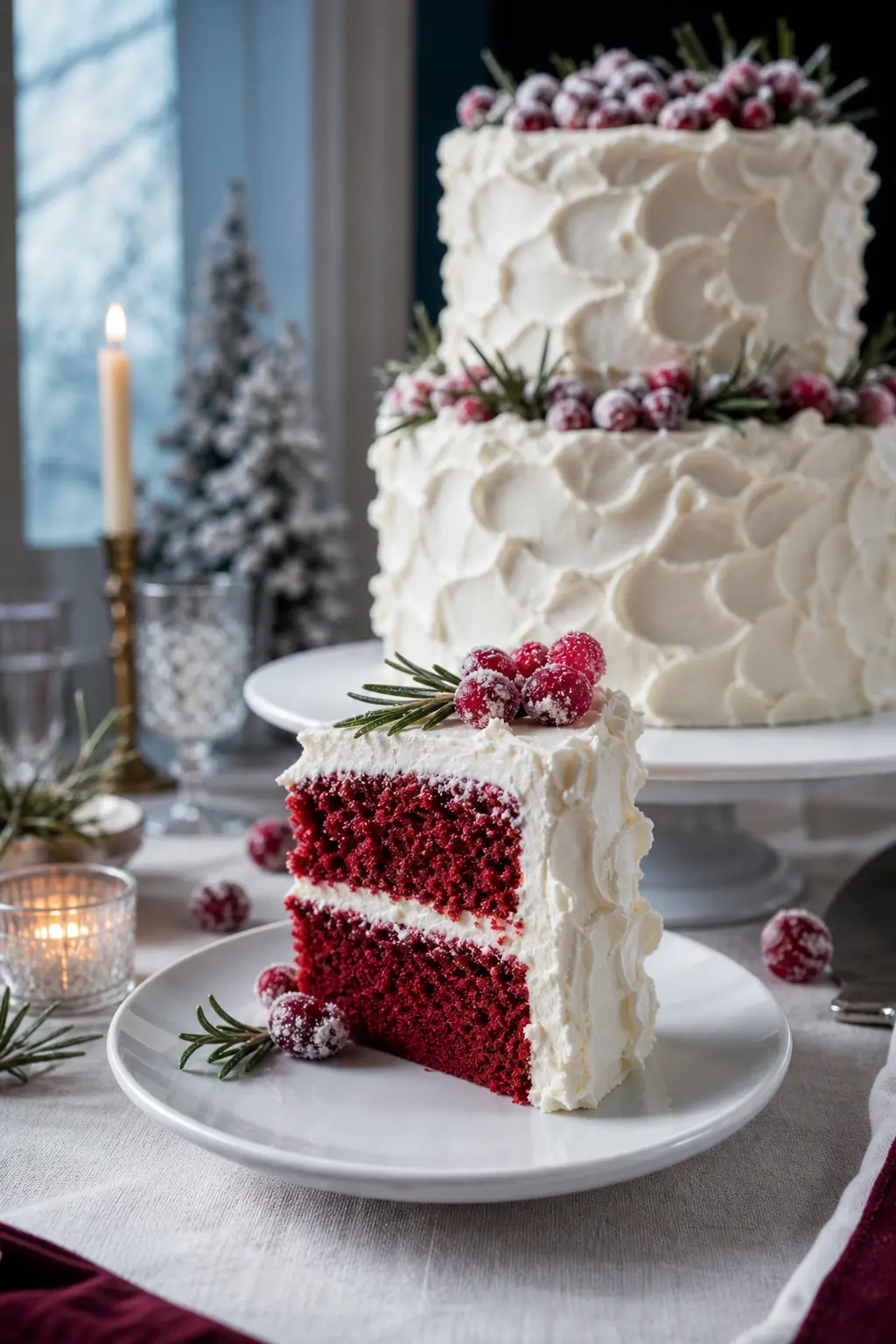
13. Snowy White Textured Buttercream Cake with Sugared Cranberries
There is a reason this cake appears on approximately every beautiful holiday table every single year — it just works.
Thick, swooped, palette-knife-textured white buttercream applied in peaks and swirls to look like freshly fallen snow, and then a generous tumble of sugared cranberries across the top, catching the light like tiny jewels.
Sugared cranberries are genuinely simple to make — soak fresh cranberries in simple syrup overnight, drain, and toss in sparkling sugar — but they look like something that took considerably more effort, which is the kind of culinary deception we can all fully support.
A few sprigs of fresh rosemary dusted with the same sparkling sugar add height and a beautiful dark-green contrast.
The textured buttercream is one of the most forgiving finishes for home bakers because imperfection is literally the point — the more it looks like wind-blown snow, the better.
Apply your white American or Swiss meringue buttercream in a thick, rough coat, then use the back of a large spoon or a small offset spatula to pull it into peaks and swoops all over the surface.
Pile the sugared cranberries while the buttercream is still slightly soft so they nestle in naturally rather than rolling off.
If you want to nudge this further into 2026 territory, add a single metallic taper candle pushed into the top for that champagne-toned contrast against the crisp white.
🛍 Shopping guide
Textured Buttercream Christmas Cakes
Fondant is officially out; textured buttercream is very much in. These designs use the medium itself — palette knife strokes, swirled peaks, hand-painted plaid — as the decoration, proving you don’t need a single additional embellishment to make something truly stunning.
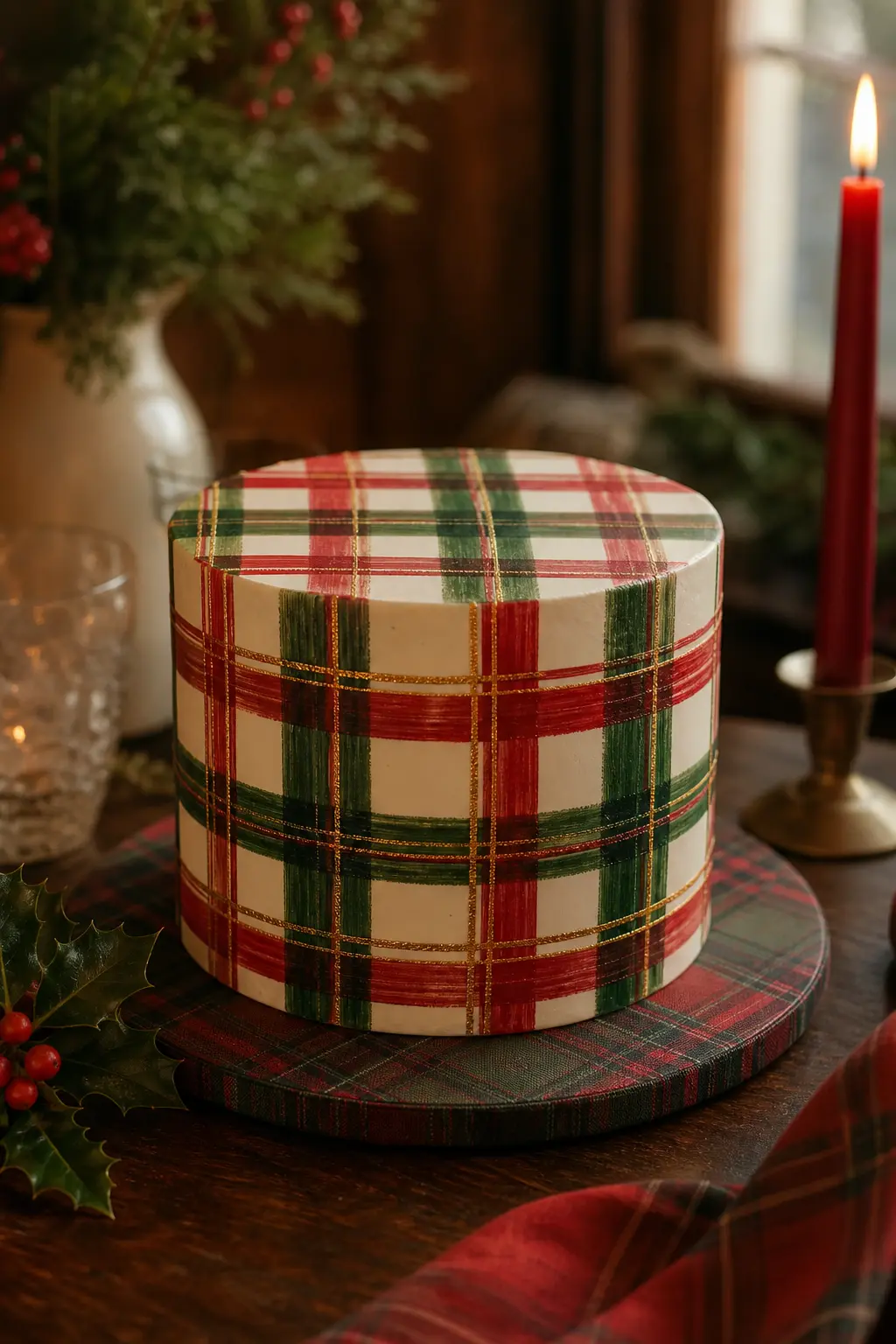
14. Tartan/Plaid Buttercream-Painted Cake in Red and Green
A hand-painted tartan or plaid buttercream cake is one of those designs that looks completely intimidating until you realise the method is essentially just painting intersecting stripes — and then it becomes one of the most satisfying afternoon cake projects you’ll ever do.
The Christmas palette writes itself: rich forest green as the base, then crisscrossing lines in deep red, hunter green, and white, with thin gold lines at the intersections for that properly traditional tartan finish.
The effect on a round cake is remarkable — it wraps around the curve in a way that makes the whole thing look like a gift wrapped in the most beautiful plaid fabric you’ve ever seen.
The technique requires a smooth, chilled buttercream base and then patient hand-painting with a flat food-safe brush and gel colours thinned with clear alcohol, working in thin layers and allowing each colour to set slightly before adding the next.
The key to painted buttercream is choosing your colour palette decisively before you begin and committing to it — the tartan won’t work if the lines are hesitant.
If you’re ordering from a baker, search specifically for ‘hand-painted tartan buttercream cake’ and provide a reference image of the specific tartan pattern you love, because there are hundreds and the details matter enormously.
Sculptural & Statement Christmas Cakes
These are the show-stoppers — the cakes people photograph before they even cut a slice. Marbled glazes, chrome drips, piped embroidery line drawings, and the classic Bûche de Noël all belong here, each one a genuine conversation piece for the holiday table.
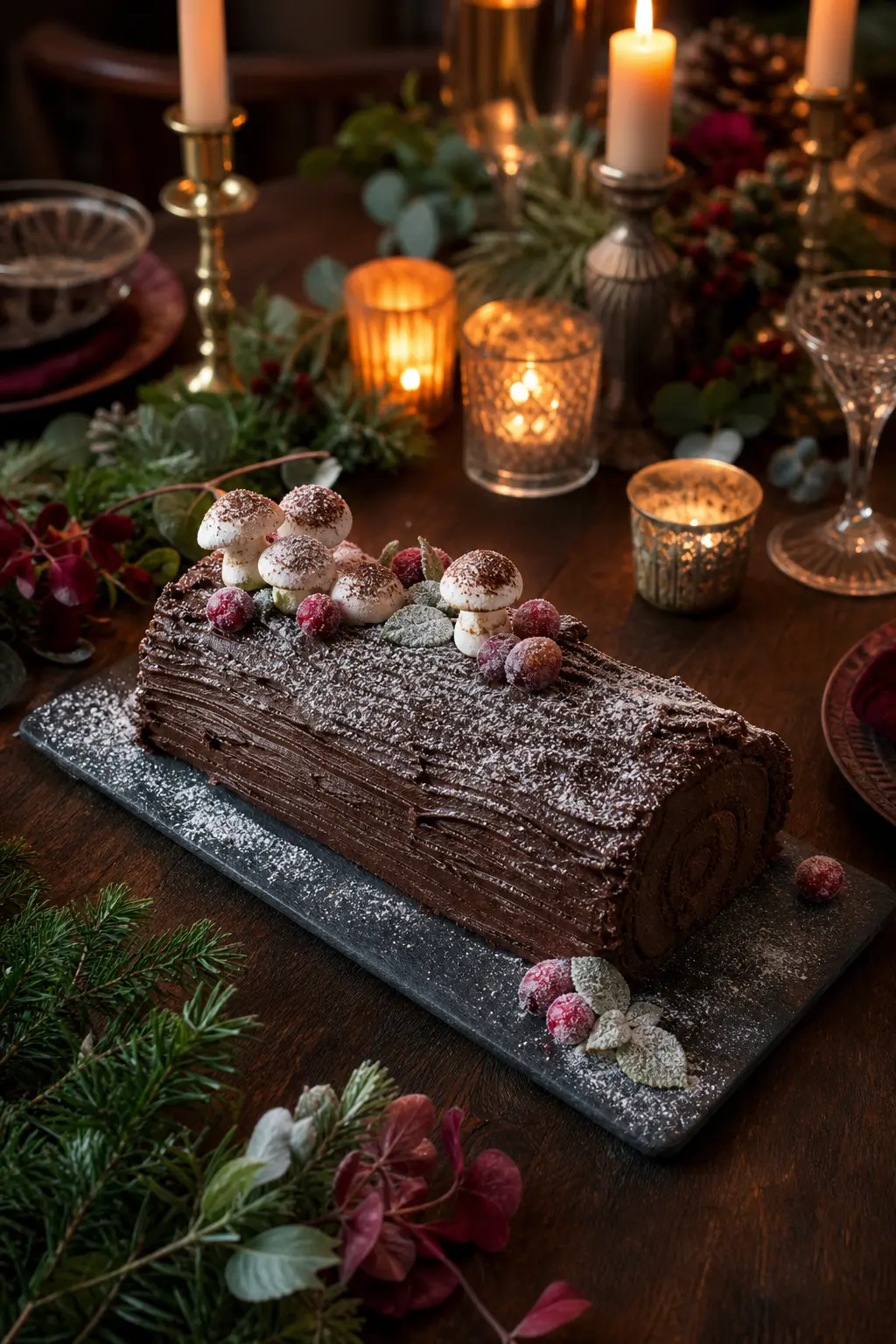
15. Chocolate Yule Log with Meringue Mushrooms and Cocoa Dusting
The Bûche de Noël is one of the great Christmas desserts of the world — and I’m not just saying that because I love chocolate.
This classic French Christmas cake is composed of a jelly-roll sponge filled with buttercream, rolled, covered with ganache textured to resemble bark, and garnished with cocoa-dusted meringue mushrooms — and it has been making people happy for well over a century.
What makes it endure is the fact that every element is genuinely beautiful in its own right: the bark texture (achieved with a fork dragged through soft ganache) looks like real wood; the meringue mushrooms, lightly dusted with cocoa, are almost alarmingly convincing; and the whole composition, dusted with a final drift of icing sugar ‘snow’, is one of the most cinematically beautiful things you can put on a table.
For home bakers, the meringue mushrooms are the element that gets the most gasps per minute of effort — pipe caps and stems separately from stiff meringue batter, bake at a very low temperature (around 200°F/90°C) for two hours, then glue caps to stems with a dot of melted chocolate and dust lightly with cocoa powder.
Adding sugared cranberries and rosemary as a garnish alongside the mushrooms gives a shimmery finishing touch that makes the whole tableau feel like a miniature woodland scene. This is one of those rare cakes that is actually more achievable than it looks.
16. Marbled Red-and-White Cake with a Chrome Drip
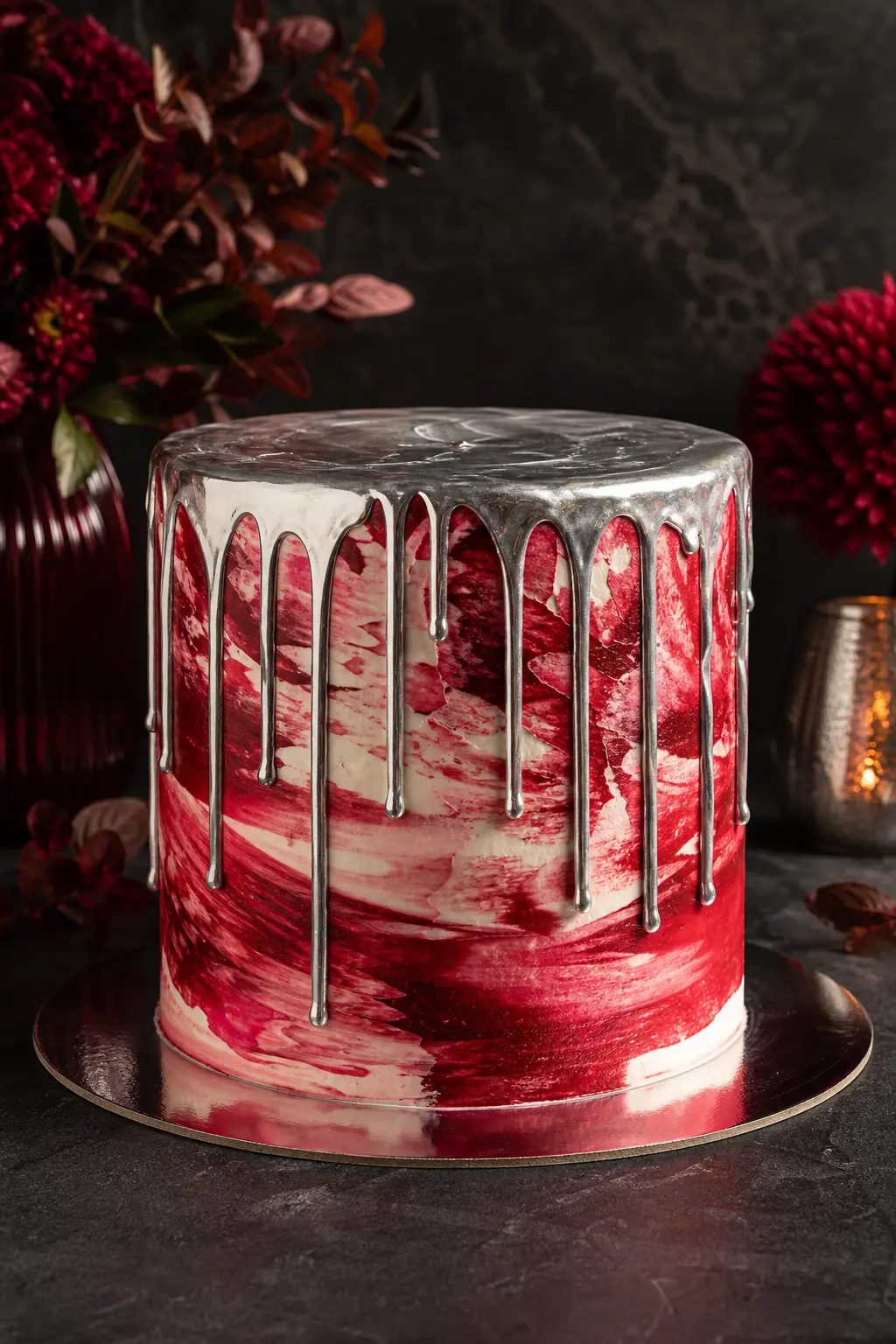
Marbled glazes and chrome finishes are among the boldest cake trends this year, and this design — which marbles swirling red and white into a single dramatic surface and then adds a chrome-silver drip along the top edge — is the Christmas version that makes the most visual impact.
The red-and-white marble has the added genius of reading immediately as Christmas — it’s peppermint bark translated into cake form, basically, and the chrome drip gives it that edge of modernity that stops it looking kitsch.
The marble effect is achieved by mixing red and white buttercream very loosely — barely three or four strokes — and then applying it to the cake with a bench scraper in one smooth pass, letting the colours blend and streak naturally as you go.
The chrome drip is a ganache drip (white chocolate ganache, in this case) mixed with silver luster dust and edible chrome spray; apply it around the top edge while the cake is cold and let gravity do the design work.
This is genuinely one of the more advanced techniques on this list, so if you’re not already comfortable with drip cakes, this is a great one to order from a professional — and worth every penny on the table.
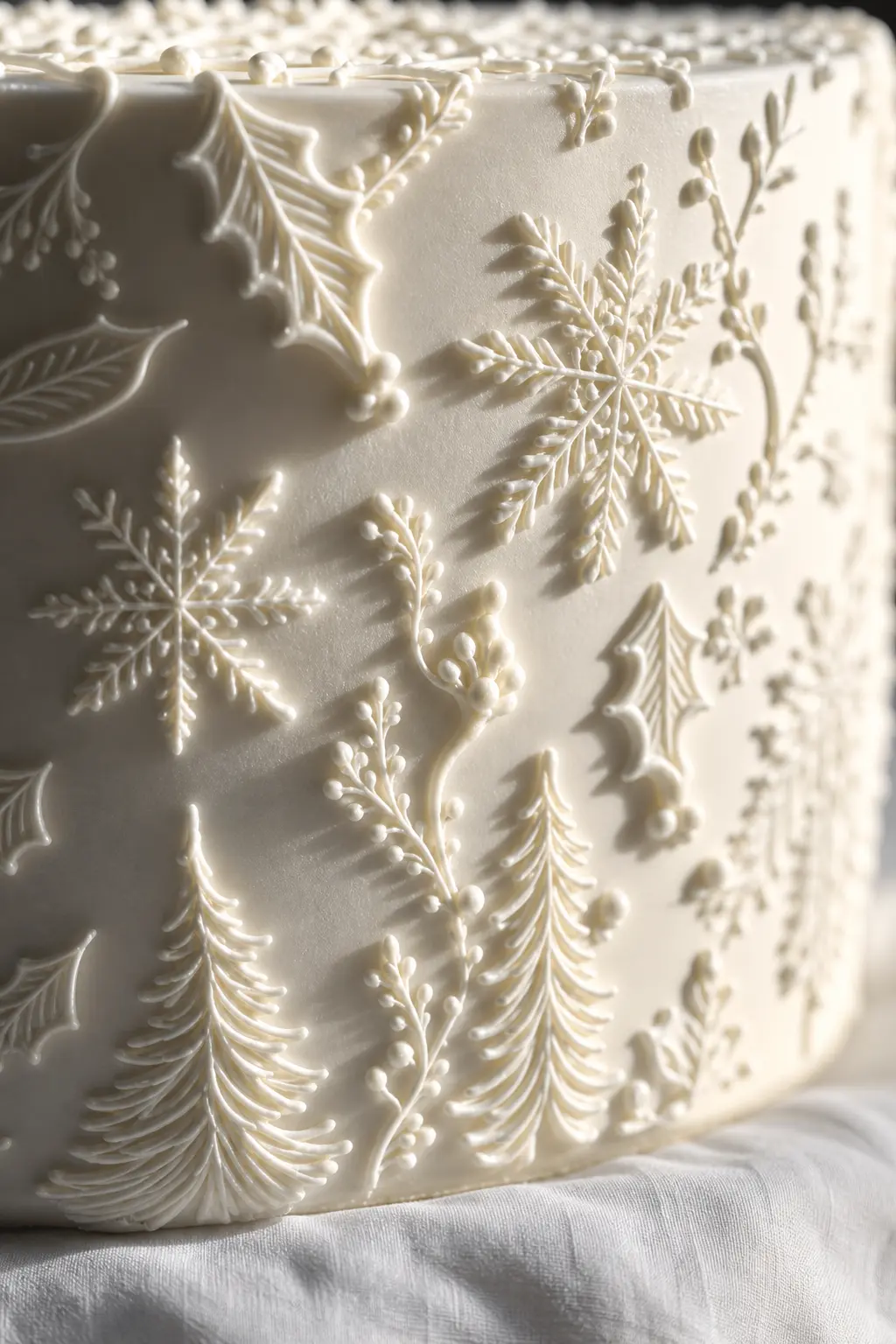
17. Sculptural White Cake with Piped ‘Embroidery’ Line Drawings
This is the cake that makes decorators stop mid-scroll. A smooth white fondant or tight buttercream base used as a blank canvas for fine-line piped ’embroidery’ — delicate illustrations in thin royal icing or very fine buttercream that mimic the look of white-on-white embroidery stitches.
For Christmas, the motifs are the magic: tiny piped snowflakes, fine-line holly branches, minimalist reindeer outlines, the silhouette of a fir tree. All in white-on-white, so the designs are visible only through the subtle texture and shadow they create rather than colour contrast.
The Lambeth revival and the broader return to handcraft and visible labour in cake decorating have created the perfect environment for this kind of ultra-patient, technically demanding work to be truly appreciated.
The piping requires a very fine round tip (a #1 or #2) filled with stiff but fluid royal icing, and a genuinely steady hand — this is not a cake to attempt on a stressful afternoon.
But if you have the patience for it, the result is something that genuinely looks more like textile art than food, and it photographs hauntingly well in low, raking light that picks up every piped line.
For those commissioning this from a baker, expect to pay a significant premium for the time involved, and give maximum lead time — this is one of the most labour-intensive finishes in contemporary cake decoration.
🛍 Shopping guide
Mini & Gifting Christmas Cakes
Bento cakes are one of the fastest-growing cake formats in bakeries worldwide right now, and Christmas is the best excuse to order a whole stack of them. Individually decorated, beautifully boxed, and designed to serve one to three people — they are the edible equivalent of a really good gift.
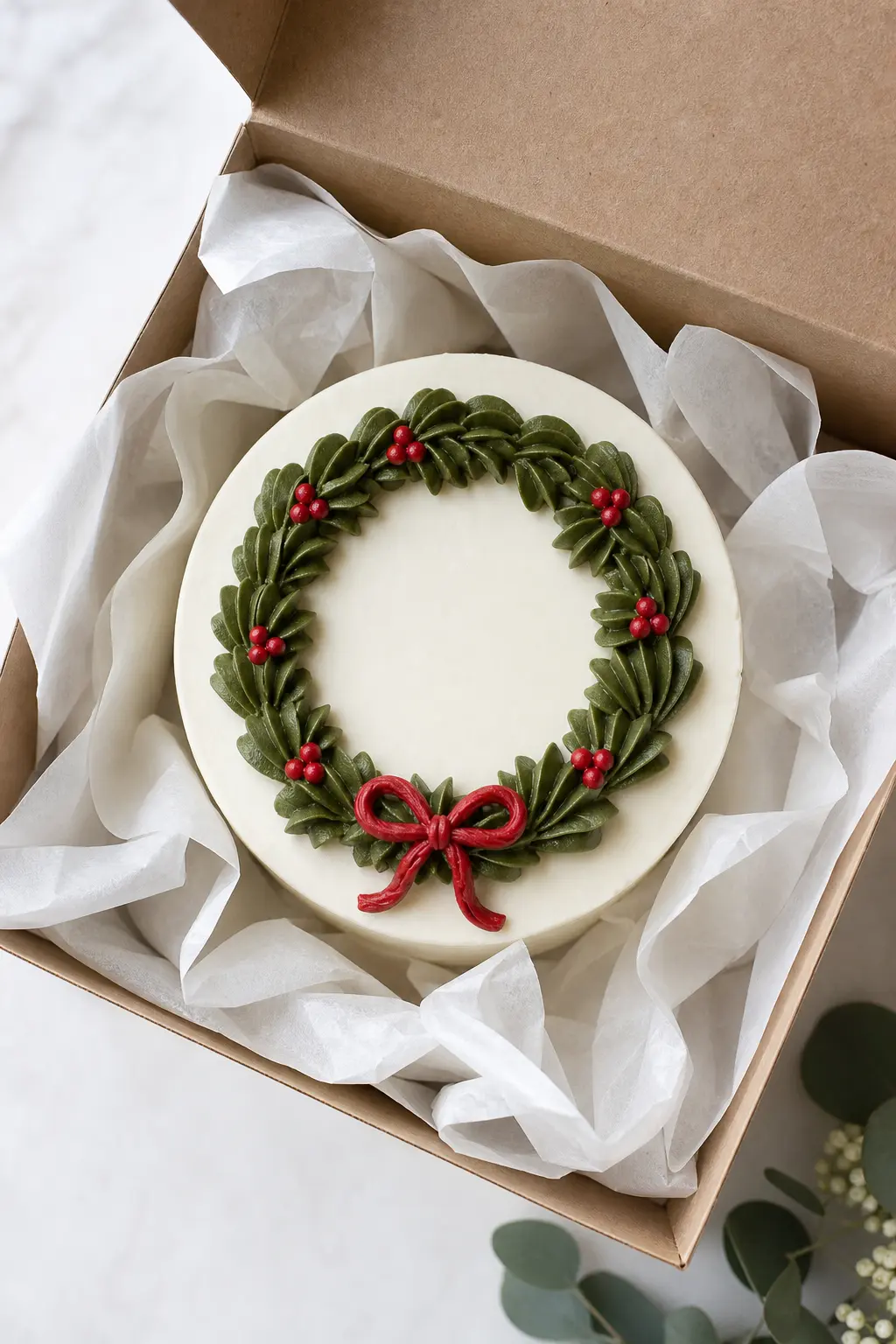
18. Christmas Bento Mini Cake with a Piped Wreath
The bento cake has transitioned from a viral Instagram trend to a permanent bakery staple this year, and the Christmas wreath version is the format at its most gift-ready.
A 4-inch round cake — serves one to two people generously — with a smooth white or cream buttercream base and a single, beautifully piped wreath in forest-green and red right in the centre of the top.
A neat bow at the bottom of the wreath in deep red, a few tiny piped berries, and that’s it. The entire design is contained, intentional, and unfailingly charming.
Bento cakes represent the intersection of luxury and practicality — a full patisserie experience that fits in the palm of your hand and into a giftable box.
These are brilliant to make as a batch — bake six or eight 4-inch layers, fill and frost them all on the same afternoon, and pipe a wreath on each one while you watch a Christmas film.
The majority of bento cakes serve one to three people, making them ideal for personal celebrations or as thoughtful gifts. Pack each one in a clear-lid box with a ribbon, and you have the easiest, most personal hostess gift of the season.
If you’re ordering, most boutique bakeries offer these and can turn them around in one to two weeks — much less lead time than a full custom cake.
Frequently Asked Questions
What is the biggest Christmas cake trend this year?
Vintage Lambeth piping is the dominant trend — the ornate, over-piped style named after British sugar artist Joseph Lambeth that layers scrolls, swags, and shell borders to build extraordinary three-dimensional depth.
It’s been revived by a wave of social media interest in visible craftsmanship, and it pairs perfectly with the equally big coquette aesthetic (bows, ribbons, feminine details). Silver metallics and cottagecore botanicals are also major this year.
How far in advance should I order a custom Christmas cake?
For complex designs — Lambeth piping, hand-painted tartan, embroidery line drawings, marbled chrome drips — book your baker at least six to eight weeks ahead, especially during the holiday season when order books fill fast.
For simpler designs like a bento mini cake or a smooth buttercream cake with a ribbon, two to three weeks is usually sufficient, but earlier is always better.
Are bento cakes a real Christmas option or just a social media thing?
Very much a real option. Bento cakes — small 4-inch round cakes serving one to three people — have moved well beyond trend status and are now a permanent offering at most boutique bakeries.
For Christmas, they make exceptional hostess gifts, can be made in batches easily at home, and are significantly more budget-friendly than full custom cakes. A piped Christmas wreath bento cake in a gift box is honestly one of the loveliest things you can give someone.
What is Lambeth piping and is it difficult to learn?
Lambeth piping is a cake decorating technique developed by British sugar artist Joseph Lambeth in the 1930s, which involves piping a shape, letting it set, and then piping on top of it again to build layered three-dimensional height.
The result is the ornate swags, shell borders, and string-work you see on vintage-style cakes.
It requires practice, patience, and the right piping tips (fine round tips like #1, #2, #3 for string-work; larger shell tips for borders), but with tutorials and practice boards, intermediate home bakers can absolutely achieve a version of this style.
Can I make sugared cranberries at home for my Christmas cake?
Yes, and they’re much simpler than they look.
The basic method: make a simple syrup with equal parts sugar and water, soak fresh cranberries in it overnight in the fridge, drain them, then toss them in granulated or sparkling sugar and spread on a rack to dry.
The result is jewel-like, sparkling berries that look wildly impressive and cost almost nothing. They’re best used within 24 hours of sugaring and should be stored at cool room temperature rather than refrigerated.
What piping tips do I need for Lambeth-style Christmas cake decorating?
The essentials are: fine round tips (#1, #2, #3) for string-work and fine line piping; a medium star tip (Wilton 1M or #18) for shell borders and rosettes; a petal tip (#104 or #125) for ruffles and swags; and a basket-weave tip (#789) for texture effects.
A good rotating turntable is equally important — it’s almost impossible to achieve the consistent pressure and flow of Lambeth piping without being able to rotate the cake smoothly while you work.
How do I apply edible gold or silver leaf to a Christmas cake?
The surface needs to be tacky — not wet, not fully set — to accept the leaf. For buttercream cakes, work quickly after smoothing. For fondant, brush a very thin layer of edible glue.
Lift the leaf gently using a dry clean paintbrush or food-safe tweezers (it’s extremely thin and will fly away from any breath or movement), place it onto the surface and press lightly with a dry brush.
Don’t try to smooth it flat — the natural crinkles and irregularities are part of the beauty. Work in a draught-free space and handle as little as possible.
📌 Save These for Later
Loved these? Pin your favorite image below so you can find this list again when you’re planning.
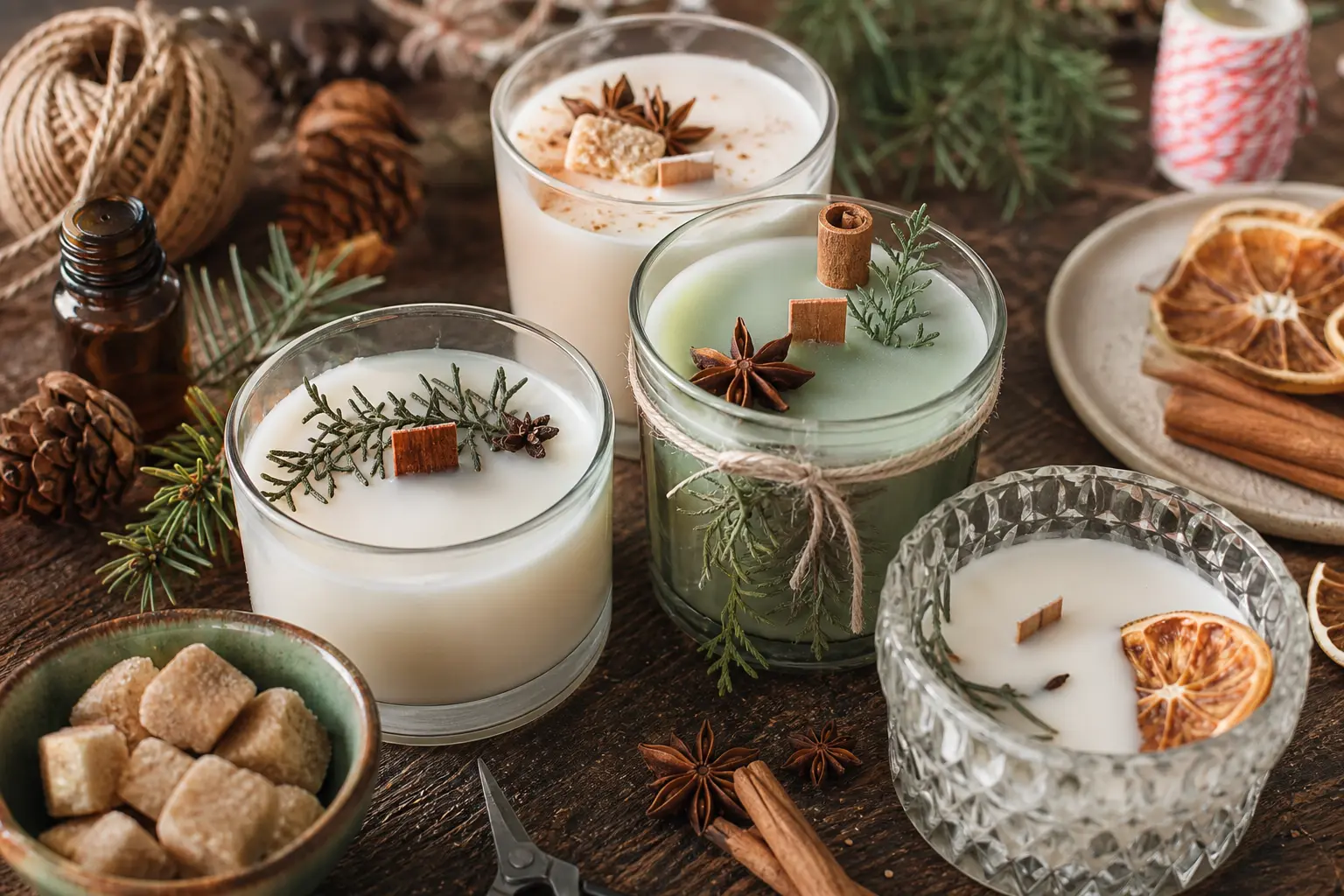
6 christmas candles diy recipes with exact wax, wick and fragrance load numbers, from fresh pine to
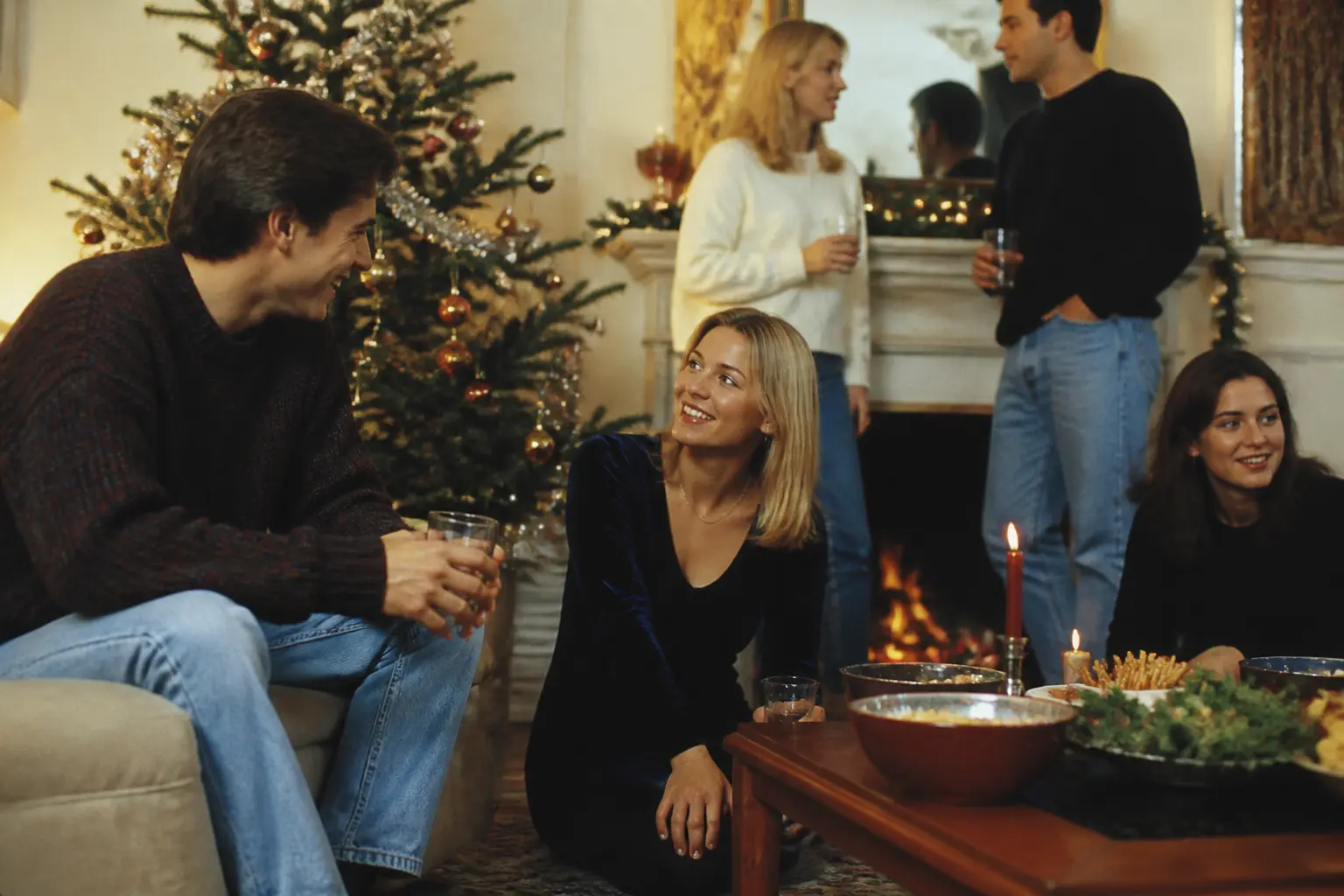
37 90s Christmas party ideas for adults: vintage ornaments, maximalist trees, retro food stations, a
11 magnolia wreath ideas with glossy bronze leaves, from a plain fresh-cut door wreath to a gold-dip
Leave a Reply