

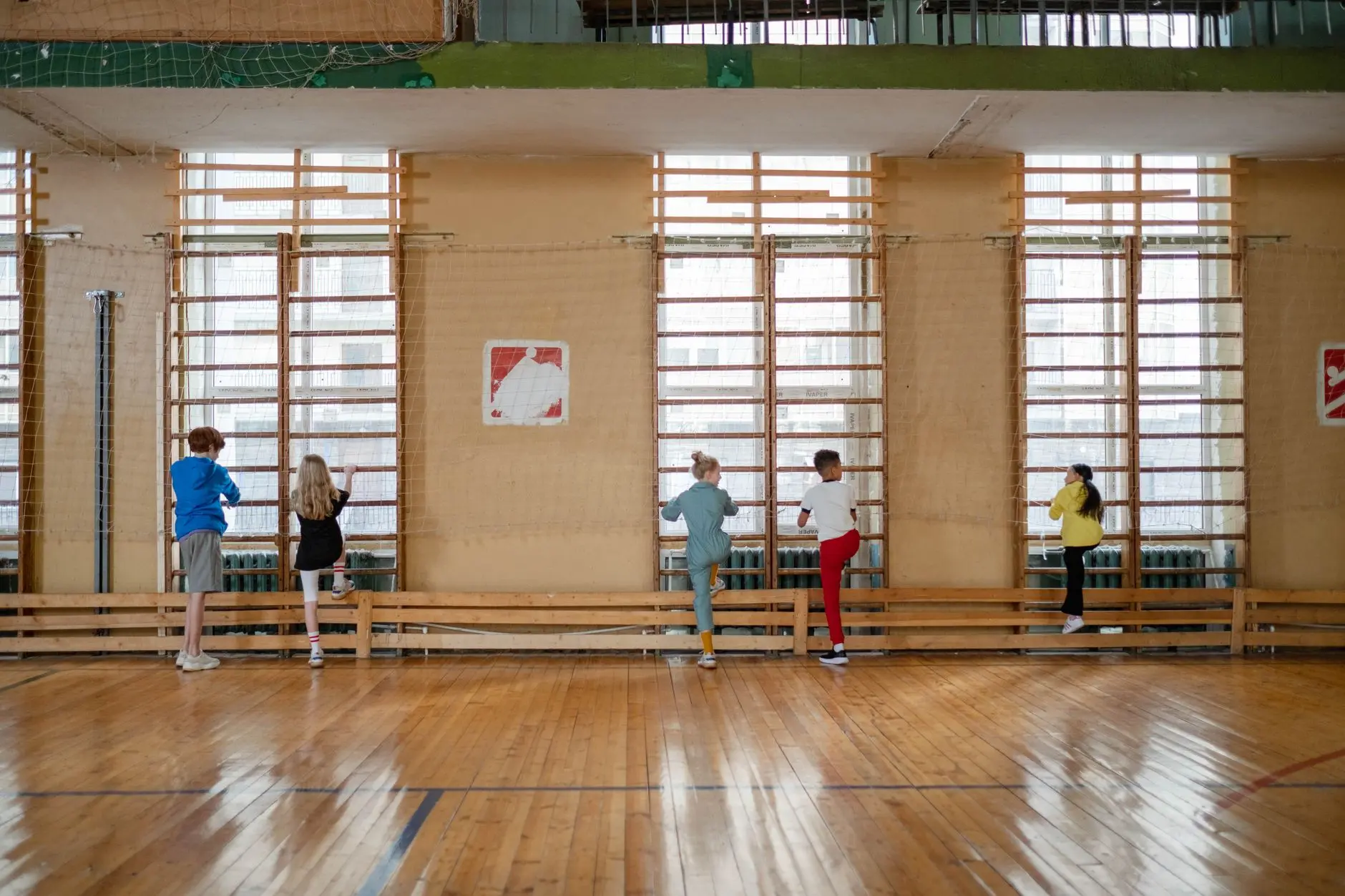
If you’re hunting for thanksgiving pe games that actually get every single kid sweating, sprinting, and laughing until their stomach hurts — you found your list. We’re talking full-gym, whole-class, high-movement games built around turkeys, pumpkins, cranberries, and harvest chaos.
No sitting, no worksheets, just pure organized mayhem that happens to burn off every last crumb of pre-holiday energy. (You’re welcome, classroom teachers.)
And hey, if you’re already thinking about the season ahead, don’t miss these 6 Ways to Save on Thanksgiving — because a good PE teacher always thinks about the big picture.
Whether you’ve got a K-2 class that needs a warm-up game before the big feast or a rowdy group of 5th graders who need to run a literal lap before they can sit still, these 15 games have you covered from whistle to cooldown.
Every single one here is a large-space, whole-class game — relays, sprints, tag variants, throwing challenges, obstacle courses, and circuit stations — so your gym floor is going to see some serious action this November. Lace up, coaches. It’s Turkey Time.
- Pumpkin Pass Line
- Cranberry Relay Race
- Feather Relay
- Turkey Trot Mini Race
- Turkey Waddle Obstacle Course
- Corn Kernel Sprint Sort
- Cornucopia Scooter Relay
- Gobble Gobble Dodgeball
- Pilgrims vs Turkeys Sharks & Minnows
- Harvest Basket Team Race
- Feather Catch Sprint
- Turkey Hop Sack Race
- Wheelbarrow Harvest Race
- Pumpkin Push Relay
- Turkey Trot Circuit Stations
- Frequently Asked Questions
1. Pumpkin Pass Line
Pumpkin Pass Line is the perfect warm-up relay that gets every kid in your class moving right from the first whistle. Divide the class into teams of 6-8 players and have each team stand in a straight line, shoulder to shoulder.
Give the first player in each line a foam pumpkin (or an orange playground ball). On ‘go,’ players pass the ‘pumpkin’ overhead to the next person, who passes it under their legs, then overhead again — alternating over-under all the way down the line.
When it reaches the last player, that kid sprints to the front and the sequence starts again. First team to cycle every player to the front wins the round.
Setup is beautifully simple: you need one foam ball or small playground ball per team (painted orange or wrapped in orange tape earns bonus Thanksgiving points), a large open gym floor, and teams of 6-8 kids — so a class of 24-30 breaks into 3-4 lines perfectly.
Mark each team’s starting position with a cone. Run 3-5 rounds so every player gets a sprint leg. You can add a time challenge in round two: how fast can the whole line cycle once through? Give them a target time and watch them hustle.
This game works as a fantastic PE opener because it builds core stability (the under-the-legs pass is sneakily great for flexibility), shoulder mobility, and cardiovascular fitness all in one tidy package.
The sprint element at the end of each cycle keeps heart rates genuinely elevated rather than just standing in line — the eternal enemy of good PE. Pro host tip: yell ‘TURKEY DROP!’
randomly during a round and make every player freeze and hold their pumpkin overhead for three seconds before continuing. It adds a reaction element and makes the whole gym burst out laughing every single time.
- 1 foam ball or orange playground ball per team (6-8 kids per team)
- Cones to mark starting lines
- Large open gym floor or outdoor field
- Class size: 18-36 works best
2. Cranberry Relay Race
Cranberry Relay Race takes a classic relay and cranks the coordination dial way up. Split your class into teams of 4-6 players.
Each team gets a large spoon (or a flat paddle) and a small red ball representing a cranberry — a red dodgeball, a red tennis ball, or even a balled-up red sock if you’re working with what you’ve got.
The relay runner must carry the cranberry on the spoon from the starting cone to the far cone and back without dropping it. If the ‘cranberry’ drops, the runner must stop, pick it up, replace it on the spoon, and continue from that spot.
Next player in line goes as soon as the spoon is tagged off.
Set up two cones per team: a start cone and a turn-around cone roughly 20-30 feet away (scale the distance to grade level — shorter for K-1, longer for 4-5).
You’ll need one large serving spoon or wooden craft paddle and one small red ball per team. Cone spacing in the gym creates natural lanes so teams aren’t crashing into each other.
Run best-of-three heats and switch up the locomotor skill each heat: first heat is a regular walk/jog, second heat is a sideways shuffle, third heat is a backward walk. That third heat will have your class absolutely losing it with laughter.
Beyond the obvious fun, this game is secretly a masterclass in balance, hand-eye coordination, and spatial awareness — all legit SHAPE America Standard 1 skills wrapped in a Thanksgiving bow.
It also naturally self-differentiates: kids who are really coordinated will run faster, and kids who struggle can still succeed by slowing down and focusing. For middle school adaptation, shrink the spoon to a standard teaspoon and extend the course to 40+ feet.
Suddenly even the ‘easy’ version requires real focus and the whole class is locked in.
Use wooden spoons from a dollar store — they’re bigger than regular spoons and easier for K-2 kids, but challenging enough for older grades if you swap to a teaspoon.
3. Feather Relay
Feather Relay is one of those games that looks easy until everyone’s red-faced and giggling uncontrollably — which is exactly what you want from thanksgiving pe games. Divide the class into teams of 4-6 players.
Each team gets a real craft feather (the big fluffy turkey-style ones from any dollar store or craft store). The relay runner must blow the feather across the gym floor using only their breath — no touching with hands.
They get down low and blow it from the start line to the turn-around cone and back. Tag the next player and repeat down the line.
If you blow the feather out of your lane, you must retrieve it and restart from where it left the lane.
You’ll need one large craft feather per team — the bigger and fluffier, the more unpredictable and hilarious. Mark team lanes with floor tape or cones so runners don’t interfere with each other.
For a class of 24, set up 4-6 lanes of about 15-20 feet. The floor should be smooth (gym floor is perfect; avoid carpet). Laminate or tape down the start and turn-around markers so excited kids don’t kick them.
This game is genuinely low-prep and nearly zero-budget — a bag of 50 craft feathers from a dollar store sets up the whole class for under three dollars.
Why it works so brilliantly in a PE setting is the full-body engagement: blowing effectively requires kids to get low to the ground, move laterally, adjust their body position constantly, and use core stability to control their breathing and direction.
It’s also one of the few relay games where speed alone doesn’t win — strategy and breath control matter just as much.
Variation: in round two, make it a team relay where ALL team members blow simultaneously and must work together to guide one feather as a group. Coordination nightmare, maximum fun. Highly recommend.
- Grades K-4
- Indoor gym with smooth floor (feathers on carpet = not happening)
- Low-budget setup — bag of craft feathers is under $3
4. Turkey Trot Mini Race
Every school does a Turkey Trot, but the Turkey Trot Mini Race brings that beloved tradition right into the gym for a single class period.
Mark out a short looping course inside the gym using cones — think a figure-eight or an oval that uses all four walls. Students run the course continuously for a set time (start with 4 minutes for younger grades, 6-8 minutes for grades 3-5).
The twist: every time a student completes a full lap, they grab a popsicle stick (or a clothespin) from a bucket at the finish line. At the end of the timed run, students count their sticks — that’s their personal ‘trot score.’
Celebrate the top totals and challenge students to beat their own score next round.
Equipment is minimal: a handful of cones to mark the course, a bucket of 50-100 popsicle sticks, and a timer.
This works beautifully for any class size from 15 to 35 kids because everyone runs their own race and there’s no traffic jam at a single bottleneck.
Adjust course complexity by grade — K-2 gets a simple oval, 3-5 gets a figure-eight with a low hurdle (pool noodle laid on two cones) they have to jump.
If you want to go all out, have kids wear turkey-themed accessories: a headband with a beak, a paper feather tail — the full costume energy makes the whole gym feel electric.
The Turkey Trot Mini Race is hands-down one of the best thanksgiving pe games for building genuine cardiovascular endurance in a short class window. Unlike a single-lap sprint, the self-paced looping format lets every fitness level participate at their own intensity without feeling left behind.
It also builds intrinsic motivation beautifully: kids who walked the first round almost always start jogging in round two because they want more sticks.
Teachers can tie the lap count to a class total and add a running-total anchor chart on the gym wall to build toward a whole-class goal across the November PE season. Your classroom teachers will adore you for this one.
- Cones to mark the course (10-15 cones)
- 50-100 popsicle sticks or clothespins in a bucket
- Timer or music with a defined end
- Optional: turkey headbands or paper feather tails for extra festive energy
5. Turkey Waddle Obstacle Course
Turkey Waddle Obstacle Course transforms your gym into a full-scale turkey adventure park, and the name alone gets kids giggling before the whistle blows.
Set up 5-6 obstacle stations in sequence around the gym perimeter: a zig-zag cone slalom, a low tunnel (two chairs with a jump rope stretched between them to duck under), a set of poly spots to hop across, a pool noodle limbo bar, a hula hoop to jump through, and a final ‘gobble sprint’ straight line back to start.
The catch? Students must complete the ENTIRE course while waddling — feet wide apart, arms tucked like little wings, waddling like a turkey. The student with the fastest complete waddle wins each heat.
You’ll need 6-10 cones for the slalom, 2 chairs and a jump rope for the low bar, 6-8 poly spots, a pool noodle and two cones for limbo, a hula hoop held by a cone, and enough space to lay these out in a continuous loop.
Run heats of 3-4 students at a time while the rest of the class cheers in a designated waiting zone. Rotate heat groups every 2-3 minutes. For a class of 24-28, you’ll have about 6-7 heats running smoothly within a 20-minute window.
Mark the course direction clearly with arrows made from floor tape so kids don’t crash into each other at the turns.
This obstacle course format is a PE gem because it targets an enormous range of fundamental movement skills in a single run: agility through the slalom, flexibility under the low bar, jumping and landing on the poly spots, balance through limbo, coordination at the hoop, and speed on the final sprint.
The ‘waddle the whole time’ rule is both the comedy and the challenge — it forces kids to slow down and use their legs in a genuinely unusual movement pattern that builds hip flexibility and eccentric leg strength.
For older grades (4-5), add a timing element and run it as a bracket-style tournament. For K-1, remove the competition and just celebrate everyone completing the course.
- For K-1: remove the waddle rule and let kids run freely through the course so they can focus on the obstacles
- For grades 4-5: add a stopwatch and run tournament heats for extra competitive energy
6. Corn Kernel Sprint Sort
Corn Kernel Sprint Sort is a sprint-and-sort game that packs explosive cardiovascular work into a wildly fun Thanksgiving concept.
Scatter a large pile of mixed-color balls across the center of the gym floor — use yellow, orange, red, and brown balls to represent different ‘corn kernels.’
Divide the class into 4 teams, each assigned a color, and place a hoop or bin at each corner of the gym.
On ‘go,’ every player sprints to the center, grabs ONE ball of their team’s color, sprints back to their corner hoop, drops it in, and immediately sprints back for another.
The team with the most correct-color kernels in their hoop when the timer hits 2 minutes wins.
Equipment: 60-80 soft foam balls or pinnies in four colors (roughly 15-20 per color), 4 hula hoops or laundry baskets placed at gym corners, and cones to mark a ‘neutral zone’ in the center where balls are scattered.
Class size is flexible — this game works with 16 to 36 kids since more players just means more sprint traffic, which honestly makes it more exciting. Time each round at 90-120 seconds to keep the energy at maximum intensity.
Reset by dumping all balls back in the center and scrambling them. Run three rounds with color rotation so each team chases a different color each time.
The magic of this game is that it never stops moving — there are no turns, no lines, and no waiting.
Every child is sprinting the full 90-120 seconds of each round, which means this game delivers more true cardiovascular work per minute than almost any other relay format.
It also naturally builds decision-making under pressure: kids learn quickly that grabbing the nearest ball of their color is faster than running to a far one, and the chaos of 30 kids all sprinting at once is genuinely joyful. Variation: shout ‘HARVEST FREEZE!’
mid-round and everyone must stop and hold their ball overhead for a 3-second balance challenge before play resumes.
- 60-80 foam or soft balls in 4 colors (approx. 15-20 per color)
- 4 hula hoops or laundry baskets for corners
- Cones to mark the center scatter zone
- Timer (90-120 second rounds work best)
7. Cornucopia Scooter Relay
Cornucopia Scooter Relay brings out the gym scooter boards — and if your class doesn’t immediately erupt into chaos-adjacent excitement the moment scooters appear, please check that they’re actually kids.
Each team of 4-6 players gets one scooter board and a ‘cornucopia basket’ (a small laundry basket or bin). A pile of ‘harvest items’ — bean bags, foam balls, or plastic fruit pieces — is scattered on the far side of the gym.
Player 1 sits on the scooter, rides to the harvest pile, picks up ONE item, places it in the basket on their lap, and scooter-rides back. They hand off the scooter to player 2.
The team that fills their cornucopia basket with the most items when the timer goes off wins.
You’ll need one scooter board per team (teams of 4-6 keep it moving fast), one small basket or bin per team, and a central pile of 40-60 bean bags or foam balls to serve as the harvest.
Mark the starting line with tape or a cone and keep teams in their own lanes to avoid scooter collisions — safety first, gobbling second. Always review scooter safety before play: no standing on scooters, no riding face-down, hair tucked back, fingers away from wheels.
Once kids understand the rules, the relay runs itself. For a class of 24-30, four teams of 6 is ideal.
Scooter relays are a PE classic for good reason: they build upper body strength, core stability, and coordination in a way that running relays simply can’t.
The seated scooter position requires kids to engage their core to stay balanced while propelling themselves with their feet — it’s essentially a dynamic seated core workout disguised as the most fun thing ever invented.
Host tip: set up a ‘Cornucopia Tallying Board’ on the wall where teams track their totals across multiple rounds — kids love watching the numbers climb and it adds a competitive arc that carries energy through the whole class period.
And if you’re already thinking holiday shopping while you plan these games, the 2025 Christmas Gift Guide is a great bookmark for later.
Always do a 30-second scooter safety review before play starts — no standing, no fingers near wheels. It takes 30 seconds and prevents 100% of the drama.
8. Gobble Gobble Dodgeball
Gobble Gobble Dodgeball is your standard dodgeball framework transformed into a Thanksgiving showdown, and it absolutely earns its place among the best thanksgiving pe games for middle-to-upper elementary. Split the class into two teams: the Turkeys and the Pilgrims.
Scatter 8-10 foam dodgeballs along the center dividing line. On ‘go,’ players grab balls and throw them at the opposing team.
The twist: if you’re hit, instead of sitting out, you must immediately drop to the ground and do 5 ‘turkey gobbles’ (squat-jumps while yelling ‘GOBBLE!’) before you can rejoin the game. This keeps every student active — there’s no sitting on the sideline watching.
Use 8-12 soft foam dodgeballs for a class of 20-32 students (more balls = more constant action). Mark the center line clearly with floor tape or cones, and establish two clear end lines as boundaries.
Review throwing rules: below the shoulder only, no headshots, no charging across the center line. The ‘gobble respawn’ mechanic is everything here — it eliminates the boredom of being out and keeps the gym at full capacity for cardiovascular work.
Run rounds of 3-4 minutes, switch team compositions, and track cumulative gobble-counts per team as a fun secondary score.
The genius of the gobble respawn is that it transforms what can sometimes be a frustrating game (for kids who get hit early) into a nonstop fitness loop.
Every hit means five squat-jumps — a fantastic lower body power exercise — and an immediate return to action. The louder the gobbling, the better the atmosphere, tbh.
For a middle school adaptation, shrink the playing field and increase the ball count to 15-16 for a faster-paced, more intense version.
You can also add a ‘Golden Drumstick’ rule: one foam ball is gold-colored, and hitting someone with it requires them to do 10 gobbles instead of 5.
Watch the tactical thinking suddenly emerge from kids who five minutes ago were just throwing as hard as possible.
- For K-2: use only soft foam balls and require underhand throws only
- Replace ‘gobble squat-jumps’ with 5 jumping jacks for younger students who find squat-jumps tricky
9. Pilgrims vs Turkeys Sharks & Minnows
Pilgrims vs Turkeys Sharks and Minnows is the Thanksgiving skin on one of PE’s most beloved tag game formats — and it never, ever gets old. Assign 4-6 students to be the ‘Pilgrims’ (the taggers) and place them in the center of the gym.
The remaining students are the ‘Turkeys’ (the runners) and line up on one end wall. On the signal, Turkeys must sprint from one end wall to the other without being tagged.
Tagged Turkeys become ‘Frozen Turkeys’ — they stand in place with their arms out and can tag passing Turkeys by pivoting on their feet (no moving from their spot). Pilgrims keep chasing. The last Turkey running wins and becomes a Pilgrim next round.
No equipment needed beyond your gym floor and a clear set of boundaries — this makes it one of the best low-prep thanksgiving pe games you’ll run all November. Mark the two safe end walls clearly (or designate them with floor tape lines if needed).
Keep Pilgrim-to-Turkey ratio at about 1:5 to start; as more Turkeys get frozen the game speeds up dramatically on its own. Run rounds until 3-4 Turkeys remain, celebrate them, then reset quickly.
A class of 25-30 students can run 5-6 full rounds in a 15-minute window at a brisk pace.
The frozen player mechanic is what makes this version so brilliant for PE: instead of eliminated players standing bored on the sideline, frozen Turkeys become active field hazards that change the running lanes dynamically each round.
Runners have to read the floor, change direction, and make split-second decisions — which is fantastic agility and spatial awareness training.
For an outdoor field version, expand the boundaries to a full soccer field width and add a ‘safe zone’ cone in the center for Turkeys to tag and get a 3-second rest before continuing.
For a more chaotic version, start with 8 Pilgrims instead of 4 and see how fast the Turkey population crumbles — usually under 60 seconds, and it’s spectacular.
- All grades K-6 (universally beloved)
- No equipment needed — perfect for substitute teachers or zero-prep days
- Works indoors or outdoors
- Class size: 15-35
10. Harvest Basket Team Race
Harvest Basket Team Race is a whole-class team relay that combines sprinting, picking, and carrying in a high-energy harvest-themed challenge. Divide the class into 4 teams. Each team has a basket or bin at their starting line.
Spread 40-50 ‘harvest items’ (bean bags, foam balls, rolled-up pinnies in harvest colors) across the far end of the gym floor.
On ‘go,’ one player per team sprints to the harvest field, grabs exactly ONE item, sprints back, drops it in the team basket, and tags the next player. The team with the most items in their basket after a 3-minute round wins.
Second round twist: items have point values marked with stickers — gold items are worth 3 points, orange worth 2, green worth 1. Now it’s not just about speed but strategic item selection.
Setup: 4 baskets or laundry bins at the starting line (one per team), 40-50 bean bags or foam items spread across the far end, and optional point-value stickers on items for rounds 2 and 3.
Cone spacing of 20-30 feet between start and harvest field works well for most gym sizes. Teams of 5-7 keep wait times short and sprint frequency high.
Run three rounds with different rules — pure speed first, point values second, and then a ‘mystery items’ third round where 10 items are face-down and players don’t know their point value until after the round ends.
This game is specifically designed to teach that speed and strategy aren’t always the same thing — a valuable lesson wrapped in a genuinely heart-pounding athletic challenge.
The transition from round 1 (pure sprint) to round 2 (sprint plus think) is where you see kids who aren’t the fastest runners suddenly excel because they’re reading the field better and grabbing high-value items.
That natural differentiation makes it one of the most inclusive thanksgiving pe games in this list. Host tip: pre-label 5 items as ‘Golden Pumpkins’ worth 5 points each and watch the entire strategy of the game shift dramatically when kids realize they exist.
Pure PE gold. (Pun absolutely intended.)
Combines pure sprinting with real-time decision-making, so fast kids AND strategic kids both have an advantage — everyone’s invested.
11. Feather Catch Sprint
Feather Catch Sprint is a partner sprint-and-catch game that builds reaction time, hand-eye coordination, and straight-line speed all at once. Pair up every student. Partners stand 15-20 feet apart, facing each other.
Partner A tosses a large craft feather (or a lightweight scarf) high into the air and immediately sprints toward their partner. Partner B watches the feather and calls ‘CATCH!’ the moment it starts descending.
Partner A must catch the feather before it hits the ground while running at full speed toward the catch point. Each successful catch earns the pair a point. After 5 attempts, partners switch roles. Run 3-minute rounds and track the highest-scoring pair in the class.
Equipment: one large craft feather or lightweight juggling scarf per pair — both are inexpensive and easy to source.
Pairs need about 15-20 feet of floor space each, so a standard gym with 12-15 pairs lined up in two rows works perfectly for a class of 24-30 students. Encourage Partner B to vary the timing of their ‘CATCH!’
call so Partner A can’t predict it and has to genuinely react.
Soft flooring or a gym mat isn’t required but if you have younger students (K-2) doing this game, move the pairs closer together (8-10 feet) to keep it achievable and fun rather than frustrating.
The reason Feather Catch Sprint is so effective in a PE context is that the unpredictability of the feather’s flight path means every single catch is a unique athletic problem to solve.
Feathers don’t fall straight — they drift, wobble, and change direction — which means the running athlete has to adjust their sprint path dynamically, building the kind of reactive agility that most straightforward relay formats can’t replicate.
It’s also brilliantly scalable: advanced students can increase the toss distance to 25+ feet and the coordination challenge scales with it.
As a bonus, there’s something deeply satisfying about sprinting full-speed and snagging a drifting feather mid-air that just makes kids want to do it over and over again. Lean into that energy — it’s pure PE magic.
- 1 large craft feather or lightweight juggling scarf per pair
- 15-20 feet of floor space per pair
- Class size: any even number (pair everyone up)
- Optional: stopwatch for timed rounds
12. Turkey Hop Sack Race
Turkey Hop Sack Race is the holiday classic that every gym teacher keeps in their back pocket for November — and for very good reason.
Students step both feet into a burlap sack, pillowcase, or fabric bag and must hop from the start line to the far cone and back, then pass the sack to the next teammate.
The Thanksgiving spin: runners must hold their arms out to their sides like turkey wings for the entire hop (no tucking arms in to steady themselves — those wings stay spread!). First team to complete all their hops wins each heat.
Run 3 heats with team rotations so students race against new opponents each time.
You’ll need one burlap sack, pillowcase, or large fabric bag per lane — inexpensive ones from a dollar store or fabric scrap bin work perfectly, and if you have a set of gym sacks already, those serve double duty.
Set up 3-5 lanes with cones at both ends, spaced about 20-25 feet apart (shorter for K-2, up to 40 feet for grades 4-5). Teams of 4-6 per lane keep everyone hopping frequently enough to maintain the energy.
Remind students before the first heat: if they fall, they get up, step back in, and keep hopping — no rolling around on the floor being dramatically ‘dead.’ (I say this from experience. Set the expectation early.)
The sack race is a phenomenal lower-body plyometric workout hidden behind a deeply goofy exterior, which is the absolute best kind of PE game. The two-footed hop builds explosive leg power, landing mechanics, and bilateral coordination — all essential movement skills for young athletes.
The ‘turkey wings out’ rule adds a genuine balance challenge because the lack of arm-counterbalancing makes every hop harder.
This game also brings an amazing leveling effect: faster kids don’t always win sack races because the hop-and-balance combination rewards rhythm and technique as much as raw speed.
For an outdoor field day version, extend the course to 50 feet and add an optional egg-and-spoon-style challenge at the halfway point for an extra coordination test.
Pick up a set of burlap sacks from a craft store ahead of time and label each one with a team color — they’ll last you years and every class will know exactly which sack is theirs.
13. Wheelbarrow Harvest Race
Wheelbarrow Harvest Race combines the classic PE wheelbarrow walk with a harvest-themed collection challenge that adds a fantastic strategic layer.
Students pair up: one partner is the ‘wheelbarrow’ (walks on hands while partner holds their ankles), the other is the ‘farmer’ (holds the ankles and steers). Scattered across the far half of the gym are ‘harvest items’ — bean bags in orange, yellow, and brown.
The wheelbarrow pair must travel together to the harvest field, pick up ONE item (the ‘wheelbarrow’ player grabs it with one hand while balancing on the other), carry it back to the start, and drop it in their team bin.
Partners switch roles after every successful delivery. The pair with the most items collected in 4 minutes wins.
Equipment: 40-50 bean bags spread across the far end of the gym, one collection bin per pair or per small team, and clear start lines.
Pair students thoughtfully for safety — wheelbarrow walking requires real upper body strength, so K-2 should shorten the course dramatically (10-12 feet) and consider a modified version where the ‘wheelbarrow’ player keeps their knees on the ground rather than doing a full extension.
For grades 3-5, the full wheelbarrow walk over 20-25 feet is achievable and genuinely challenging. Remind pairs to communicate — the farmer controls the speed and direction, and the wheelbarrow player needs to trust that guidance.
The wheelbarrow position is one of the best upper body strengtheners in elementary PE: it loads the shoulders, triceps, chest, and core simultaneously in a way that most gym games simply never access.
Pairing that with a competitive harvest collection challenge means kids are working incredibly hard physically while being completely focused on the game rather than the exercise — the holy grail of PE design.
This game also builds genuine partnership and communication skills, since a pair that doesn’t coordinate will spend most of their time zigzagging into other lanes.
For an outdoor variation, increase the course length to 30-40 feet and add a small slope or grass surface for an extra grip and strength challenge. Need ideas for holiday gifts after PE planning is done?
Check out what to buy parents for Christmas — you’ve earned a break.
- For K-2: use a ‘modified wheelbarrow’ where the bottom player keeps their knees on the floor instead of full arm extension
- Shorten the course to 10-12 feet for younger or less-strong students
14. Pumpkin Push Relay
Pumpkin Push Relay is exactly what it sounds like — and it is every bit as absurd and physically demanding as you’re imagining. Divide the class into teams of 4-6 players. Each team gets one small foam pumpkin (or an orange foam ball).
The relay runner must push the pumpkin across the gym floor using only their nose — no hands, no feet, just face-to-pumpkin contact.
They push it from the start cone to the turn-around cone and back, then stand up and pass (by picking it up in hands — just that once!) to the next teammate. First team to complete all their laps wins the heat.
Run three heats and award a bonus round for the two fastest teams head-to-head.
Equipment: one foam ball or small soft pumpkin per team, cones to mark start and turn-around points, and 15-20 feet of smooth gym floor per lane.
Make sure you use FOAM balls only — no hard rubber or plastic balls for an activity where kids are literally pushing with their faces.
Set team lanes far enough apart that crawling kids don’t bump into each other; at least 3-4 feet of lane width per team.
This is one of those rare PE games where gym teachers need zero prep time beyond setting up cones, making it a legitimate lifesaver for last-minute November lesson plans.
From a physical development standpoint, the Pumpkin Push Relay demands core stability, neck strength, spatial awareness, and controlled crawling mechanics — movements that are genuinely underrepresented in standard PE curricula.
The comedy factor is also wildly high, which increases peer engagement and enthusiasm for subsequent rounds; even the kids sitting in the relay queue are actively watching, cheering, and mentally rehearsing their own technique.
Pro tip: announce the ‘Pumpkin Push Challenge’ at the start of class without explaining it — just say ‘you’re going to push a pumpkin with your face today’ and enjoy the 30 seconds of stunned silence followed by absolute uproar of excitement that follows.
Worth every second.
Uses crawling mechanics and core control — genuinely underused movement skills in most PE classes, snuck in under the cover of total silliness.
15. Turkey Trot Circuit Stations
Turkey Trot Circuit Stations is the ultimate Thanksgiving PE lesson format when you want to hit a full range of skills and keep 30 kids simultaneously active for an entire class period without a single moment of standing around.
Set up 6-8 Thanksgiving-themed stations around the gym perimeter, each targeting a different fitness skill.
Examples: Station 1 = Turkey Trot Laps (jog 2 laps of the gym), Station 2 = Pumpkin Squat Challenge (squat holding a foam pumpkin 15 times), Station 3 = Feather Balance (balance a craft feather on your hand while walking a balance beam line), Station 4 = Corn Husk Toss (throw bean bags at a target), Station 5 = Pilgrim Broad Jump (standing broad jump over a line of cones), Station 6 = Harvest Plank (hold a plank for 30 seconds with a foam ball on their back), Station 7 = Gobble Sprint (sprint 20 feet and back twice), Station 8 = Turkey Pose Hold (yoga tree pose for 20 seconds each leg).
Set up each station with a clearly labeled sign (a laminated card with the station name and a picture works perfectly) and the necessary equipment: foam balls, bean bags, craft feathers, balance beam tape lines, cones, and a timer.
Divide the class into groups equal to the number of stations — 8 stations means 8 groups of 3-4 kids for a class of 24-28.
Set the timer for 90 seconds per station with a 15-second transition signal (music works brilliantly — when the music stops, everyone rotates clockwise). Students cycle through all stations across the class period, hitting every skill in sequence without a moment of downtime.
Circuit station formats are the gold standard of inclusive PE design because every child is working simultaneously at a personally appropriate intensity without being compared directly to peers — a student who struggles on the Gobble Sprint still succeeds at the Feather Balance or the Turkey Pose, which builds real confidence alongside physical fitness.
Thanksgiving PE circuit stations also tie beautifully to SHAPE America Standards 1 through 4 in a single lesson: locomotor skills, fitness components, self-assessment, and responsible personal behavior all get addressed within one 40-minute class.
As a bonus, these stations are endlessly customizable — swap out any station for a throwing challenge, a dribbling drill, or a jump rope turkey song at any time. This is the game you build a whole Thanksgiving PE unit around, tbh.
- 6-8 labeled station signs (laminated cards with name + picture)
- Foam balls, bean bags, craft feathers, cones for individual stations
- Timer or music with 90-second intervals
- Class size: works for any size 15-35 with group adjustments
- Grades K-5 (adjust exercise difficulty per grade)
Frequently Asked Questions
What are the best Thanksgiving PE games for elementary students?
The best Thanksgiving PE games for elementary students are high-movement, whole-class games that use seasonal themes to motivate kids without requiring complex rules.
Top picks for elementary include Turkey Trot Mini Race (great cardiovascular work at all fitness levels), Pilgrims vs Turkeys Sharks and Minnows (no equipment needed and endlessly replayable), Gobble Gobble Dodgeball (foam balls only, keep everyone active with the gobble-respawn rule), and the Turkey Waddle Obstacle Course for a full-body agility challenge.
For younger grades (K-2), games with simple rules and short rounds work best — Pumpkin Pass Line and Feather Relay are both perfect. For grades 3-5, add competitive scoring and timed challenges to match their developmental love of competition.
What PE skills can be practiced through Thanksgiving-themed games?
Thanksgiving-themed PE games can cover an impressive range of fundamental movement skills and fitness components. Relay games like Cranberry Relay Race and Feather Relay develop balance and hand-eye coordination.
Sprint-based games like Corn Kernel Sprint Sort and Harvest Basket Team Race build cardiovascular endurance and speed. The Wheelbarrow Harvest Race and Turkey Waddle Obstacle Course target upper body strength, core stability, and agility. Gobble Gobble Dodgeball develops throwing mechanics and spatial awareness.
Turkey Trot Circuit Stations can be designed to hit all five health-related fitness components — cardiovascular endurance, muscular strength, muscular endurance, flexibility, and body composition — in a single lesson.
Thanksgiving games align naturally with SHAPE America Standard 1 (competency in motor skills) and Standard 3 (health-enhancing physical activity).
What Thanksgiving PE games require little or no equipment?
Several of the best thanksgiving pe games need almost no equipment at all. Pilgrims vs Turkeys Sharks and Minnows requires only a gym floor and boundary markers — no props needed. The Turkey Trot Mini Race can run with just cones and popsicle sticks.
Feather Relay needs only cheap dollar-store craft feathers (under $3 for a whole class set). Turkey Waddle Obstacle Course can be built entirely with items already in most gym storage closets: cones, a jump rope, poly spots, and a pool noodle.
Feather Catch Sprint just needs one feather or scarf per pair. The Pumpkin Pass Line uses a single playground ball per team — most gyms have those already.
If you’re planning a zero-budget November PE week, those five games give you a full week of high-energy, theme-perfect lessons.
How do you play Turkey Tag in PE class?
Turkey Tag (often played as Pilgrims vs Turkeys Sharks and Minnows) typically works like this: designate 4-6 students as Pilgrims (taggers) in the center of the gym, while the remaining students are Turkeys and line up at one end wall.
On the signal, Turkeys sprint from one end of the gym to the other without being tagged by a Pilgrim. Tagged Turkeys become ‘Frozen Turkeys’ — they stand in place with arms outstretched and can tag passing Turkeys by pivoting on their feet only.
The last Turkey running wins and becomes a Pilgrim in the next round. The frozen player mechanic keeps eliminated students active and changes the field layout each round, making every crossing attempt a unique tactical challenge.
This format works for grades K-6 and requires zero equipment.
What are good Thanksgiving relay race ideas for PE?
There are so many great Thanksgiving relay race ideas for PE that you could fill a whole month of November lessons.
Classic picks include the Cranberry Relay Race (balance a red ball on a spoon while running), Pumpkin Pass Line (overhead-underleg team pass with a foam pumpkin), Feather Relay (blow a craft feather across the floor with your breath), Harvest Basket Team Race (sprint to collect ‘harvest items’ from the far end of the gym), Cornucopia Scooter Relay (ride a scooter to collect harvest items in a basket), and Wheelbarrow Harvest Race (carry items to a bin using the wheelbarrow partner walk).
For maximum variety across a week of PE, vary the locomotor skill (running, hopping, crawling, shuffling) and the object carried to keep the fundamental game fresh while reinforcing different movement patterns each day.
What Thanksgiving PE games work for both indoor and outdoor settings?
Most of the games in this list are designed to be adaptable for both gym and outdoor settings. Turkey Trot Mini Race works beautifully outdoors — just expand the course to a larger loop around the playground or field.
Pilgrims vs Turkeys Sharks and Minnows scales to any outdoor space by widening the boundaries. Gobble Gobble Dodgeball can move outside with the same foam ball setup.
The Turkey Hop Sack Race is actually even more fun on grass because the softer surface is more forgiving when kids inevitably topple over. Corn Kernel Sprint Sort works on a grass field with colored pinnies instead of foam balls.
For outdoor play, increase all distances by about 50% to take advantage of the space, and use bright cones at boundaries so students can clearly see the playing area even in fall sunlight.
What are fun Thanksgiving PE warm-up games for K-2 students?
For K-2 students, the best Thanksgiving PE warm-up games are short, simple, high-energy, and heavily themed so tiny humans stay engaged. Pumpkin Pass Line works as a 5-minute opener that gets every student moving immediately.
Feather Relay is perfect for K-2 because blowing a feather is approachable for every fitness level and universally hilarious. A simplified Pilgrims vs Turkeys tag game with only 2-3 taggers works as a great warm-up run.
Turkey Trot Mini Race with a 2-minute timed lap is another excellent K-2 starter — short enough to maintain excitement, long enough to elevate heart rates.
The key for K-2 warm-ups is short rounds (2-3 minutes), immediately obvious rules, and an enthusiastic teacher who’s willing to gobble loudly and flap their arms. Modeling the actions with full commitment makes a huge difference for this age group.
How can PE teachers incorporate a Turkey Trot into their Thanksgiving lesson plans?
PE teachers can incorporate a Turkey Trot into Thanksgiving lesson plans at several scales, from a single-class game to a full school event.
For a single class period, the Turkey Trot Mini Race format works perfectly: set up a looping course inside the gym using cones, give students popsicle sticks to track laps, and run a 4-8 minute timed run per class.
For a multi-class event, set up a longer outdoor course and run grade levels in heats, with optional Thanksgiving costumes (turkey headbands, pilgrim hats) for teachers.
Add a service-learning layer by tying lap counts to a class canned food donation goal — for every X laps completed, the class donates one food item.
A school-wide Turkey Trot in the week before Thanksgiving break can become a beloved annual tradition with minimal setup and an enormous positive energy payoff for the whole school community.
What Thanksgiving PE station ideas work for grades K-5?
Turkey Trot Circuit Stations is the ultimate framework for Thanksgiving PE stations across grades K-5, with difficulty scaled per grade.
Stations that work across all grade levels include: Turkey Trot Laps (jog around the gym), Corn Kernel Sprint Sort (sprint to sort colored balls), Pumpkin Squat Toss (squat and toss a foam pumpkin to a partner), Feather Balance Walk (balance a feather on an outstretched hand), Gobble Sprint (sprint 20 feet and back twice), and Harvest Plank Hold (hold a plank for 30 seconds).
Scale the difficulty by adjusting distances, reps, and hold times for each grade band: K-1 uses shorter distances and smaller reps, while grades 4-5 get longer courses and higher targets.
Run stations on 90-second intervals with music to signal rotations — it keeps every student active simultaneously with zero downtime.
Are there Thanksgiving PE games that can be adapted for middle or high school students?
Absolutely — most of the games in this list adapt well for middle and high school with a few key modifications to raise the challenge level. Gobble Gobble Dodgeball becomes significantly more intense with a smaller court and more balls.
The Cranberry Relay Race gets much harder with a teaspoon instead of a serving spoon and a longer course. Corn Kernel Sprint Sort works at the high school level as a full-gym sprint interval drill with tighter time windows and a wider scatter field.
For the Turkey Trot, extend the distance to a full mile or 5K format and add a competitive timing element with official results posted. Turkey Trot Circuit Stations can incorporate high school fitness benchmarks: push-up goals, squat depth standards, and plank duration targets.
The key for secondary students is leaning into the competitive framework and peer accountability — they’ll engage fully once the game is clearly challenging enough to be worth their effort.
There you have it — 15 thanksgiving pe games guaranteed to leave your gym smelling like effort, echoing with gobbles, and totally cleared of pre-holiday jitter energy.
From the full-class chaos of Corn Kernel Sprint Sort to the sneaky-hard coordination of the Wheelbarrow Harvest Race, every game here is designed to get every kid moving from whistle to cool-down.
Mix and match these across your November lesson plans, scale them up or down by grade, and don’t forget: the teacher who is willing to also waddle like a turkey or blow a feather across the floor earns instant legendary status.
Pin this list so you’ve got it every November, share it with your fellow PE teachers, and if you’re already thinking of the season ahead, don’t miss these 12 Cheap Thanksgiving Appetizers That Look Expensive for the staff party after the kids go home.
Happy Turkey Trotting!
📌 Save These for Later
Loved these? Pin your favorite image below so you can find this list again when you’re planning.
Find the right Thanksgiving games for your crowd: family, Friendsgiving, work, or drinks, all sorted
Thanksgiving class party games that print in minutes and send every kid home with something. 8 print
Twelve practical thanksgiving entertaining ideas ordered by when they happen, so the work lands befo
Leave a Reply