

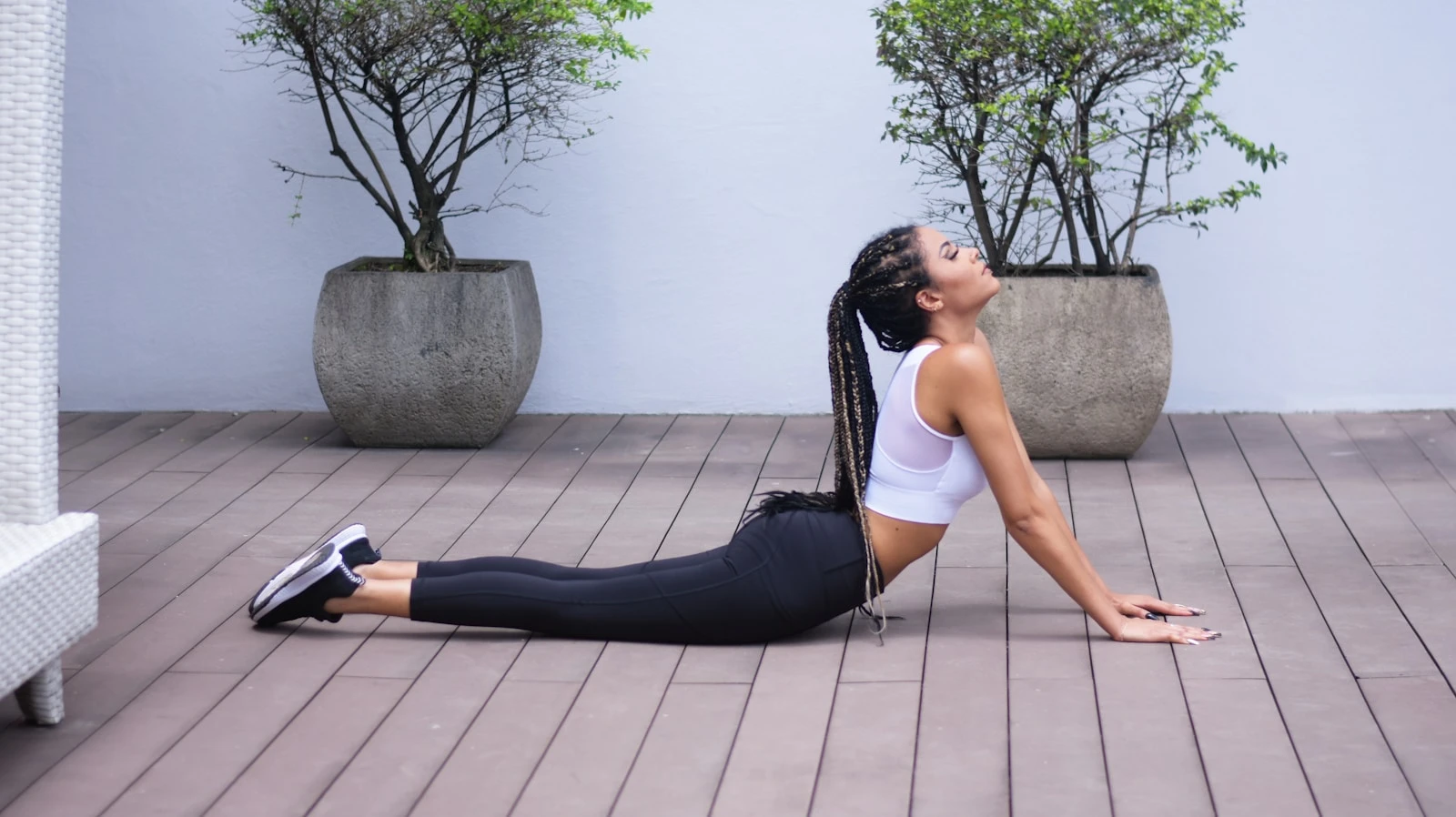
I rolled my eyes at the word “somatic” for a full year.
It showed up everywhere — on wellness TikTok, in therapy circles, in that kind of Instagram content that pairs a blurry photo of someone in a field with a caption about “releasing stored trauma.” Hard pass.
Then I threw my back out in February. Not dramatically — just leaned over to pick up a laundry basket and something in my lower back said no. While I was stuck on the couch googling “why is stress stored in the body,” I fell down a somatic rabbit hole. Read actual research. Felt ridiculous doing the exercises. Kept doing them anyway.
Here’s what happened and what actually helped — no field, no blurry photos.
This post contains affiliate links. If you buy something through these links, I may earn a small commission at no extra cost to you. I only recommend things I’d actually use.
What Somatic Even Means (The Non-Woo Version)
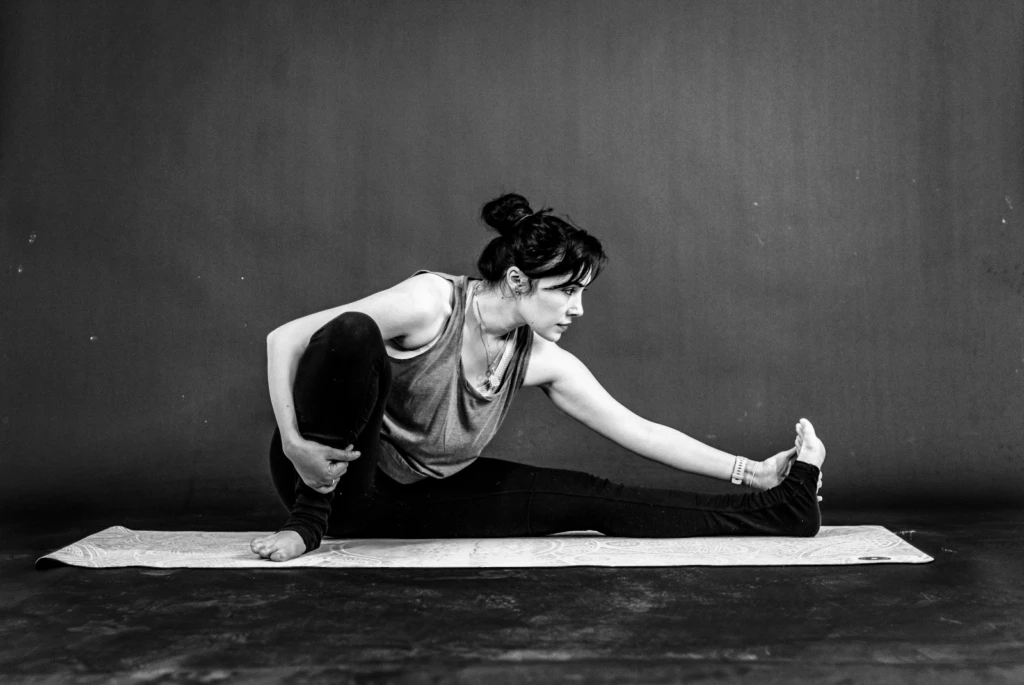
“Somatic” just means body-based. That’s it. It comes from the Greek word for body.
The idea behind somatic exercises is that stress, anxiety, and tension don’t just live in your head — they show up physically. Tight shoulders. A jaw you clench at night. That permanent low-grade knot between your shoulder blades that no amount of stretching fixes. Somatic work tries to address tension by working with your nervous system through movement, breath, and sensation rather than just thinking your way through it.
The research is genuinely interesting. Bessel van der Kolk’s work on trauma and the body has been cited in clinical settings for years. Peter Levine (developer of Somatic Experiencing) built a whole therapeutic framework around the idea that animals in the wild shake off stress physically after danger passes — and that humans, for some reason, stopped doing that.
None of this requires believing in anything mystical. It’s mostly just: your body holds tension, and you can do physical things to help release it. That framing I could work with.
1. The Extended Exhale
This one sounds too simple and it kind of is, which is why I almost skipped it.
Inhale for 4 counts. Exhale for 8. Repeat for 2–3 minutes.
The long exhale specifically activates the parasympathetic nervous system — the branch that handles rest, digestion, and calm. Short, quick breathing (or holding your breath, which I apparently do constantly when I’m stressed) keeps you in a low-level fight-or-flight loop.
I started doing this in the car before walking into the grocery store. Just two minutes. I felt stupid. I also felt noticeably less irritated inside the store, which honestly might just be correlation, but I kept doing it.
If you want something tactile to anchor the breath, I’ve been using a small weighted eye pillow across my chest while I do this lying down. Nothing fancy — it just gives you something physical to breathe against.
2. Shoulder Shrugging
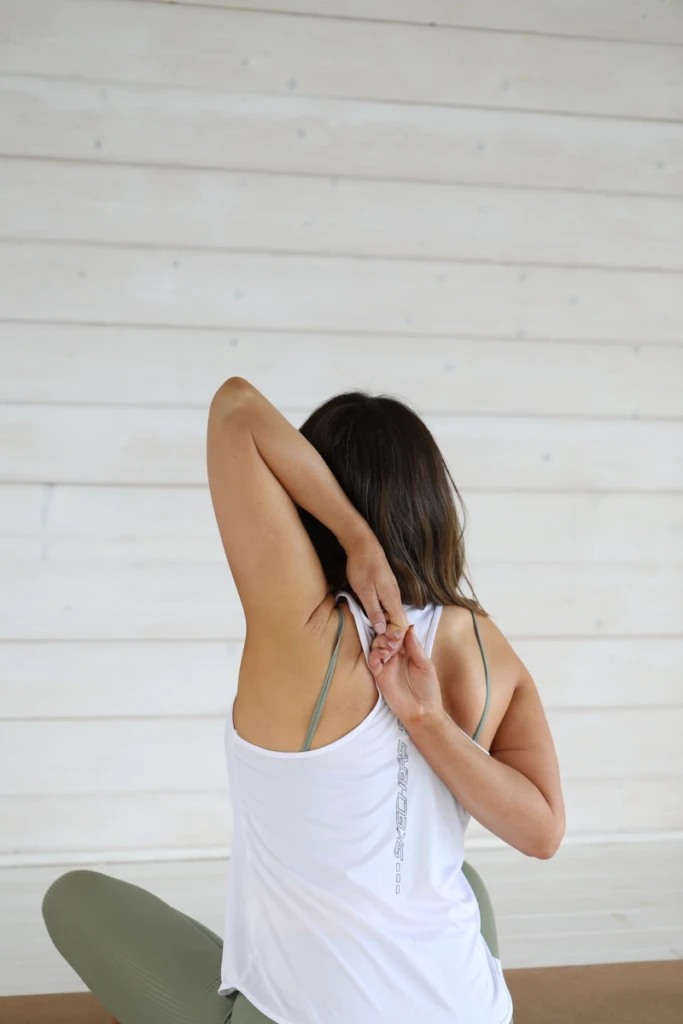
Not a joke. You shrug your shoulders up to your ears as slowly as you can, hold for 2–3 seconds at the top, then let them drop completely. Repeat 8–10 times.
Most of us walk around with our shoulders somewhere between neutral and earlobes without ever consciously releasing them. The shrug-and-drop interrupts that. The hold at the top exaggerates the tension so your nervous system can actually feel the contrast when you release.
I noticed my shoulders were up around my ears almost constantly when I started paying attention. Now I catch it during phone calls and do two or three shrugs. Nobody has ever noticed. Or if they have, they haven’t said anything.
3. Orienting
This one comes straight from Somatic Experiencing and it felt the most “woo” to me at first, but it’s grounded in actual nervous system research.
You slow down and let your eyes move around the room — not scanning, not looking for anything — just noticing. What’s in the corner? What’s the texture of that wall? You might turn your head slowly to look behind you. Let your gaze land on something and just… stay there for a moment.
The theory is that our threat-detection system is constantly surveying the environment, even when there’s no threat. Orienting sends a signal that you’ve checked and everything is fine. The system relaxes.
I tried it during a moment of that low-grade dread feeling — no specific reason, just anxious. Sat at my kitchen table and slowly looked around the room for about 90 seconds. Noticed the light on the counter. The mug. The weird shadow the plant made. It didn’t fix anything. It did take the edge off enough that I could think.
4. Tension and Tremor Release (The Weird Shaking One)
This is the one that made me feel the most ridiculous.
The method comes from TRE (Tension and Trauma Releasing Exercises), developed by David Berceli. The basic idea is that the body has a natural tremoring response — like how your hands shake after something scary — and that this shaking is actually the nervous system resetting. Most of us suppress it because shaking in front of other people feels terrible and wrong.
The simplest version: lie on your back, knees bent, feet flat. Slowly let your knees fall open and closed a few times. Then position them about hip-width apart and let them start to vibrate slightly — you’re not forcing it, just removing the muscular effort that holds them still. For some people, a tremor starts naturally. For some it doesn’t.
Mine didn’t, the first four times. The fifth time, my legs trembled a little and it was genuinely strange. Not uncomfortable. Just strange.
I’m not going to oversell this one. But I’m also not going to tell you it did nothing, because that would be a lie.
5. Diaphragmatic Breathing with a Weight
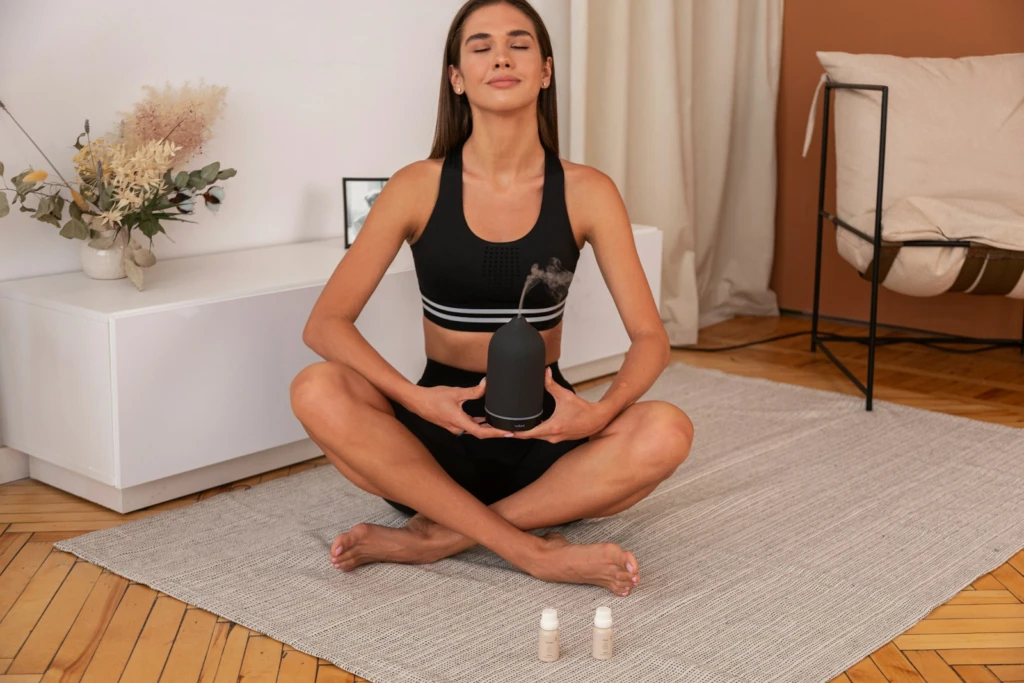
Similar to the exhale exercise but different in purpose — this is less about the nervous system and more about physically retraining where your breath goes.
Most stressed-out people breathe into their chest. Chest breathing is shallow and keeps your body in a low-level stress response. Belly breathing — letting your diaphragm drop and your belly actually expand — is slower and calmer but weirdly hard to do when you first start because most of us have been holding our stomachs in for years.
Put something with a little weight on your belly — I use a folded blanket, or you can get a proper diaphragmatic breathing weight that’s designed for this. Breathe and try to lift the weight rather than your chest. Do this for 5 minutes.
The weight gives your brain feedback. It’s harder to fake belly breathing when there’s something on your stomach telling you whether you’re doing it.
This one is in my actual morning routine now. Five minutes on the floor before I get up. It’s not exciting. It works.
6. Cold Water on the Face (The Dive Reflex Hack)

This is technically a vagus nerve hack, not somatic in the strict sense, but it uses a physical sensation to reset your nervous system so I’m including it.
Splashing cold water on your face — or holding your breath and submerging your face in a bowl of cold water for 15–30 seconds — triggers the mammalian dive reflex. Heart rate slows. Parasympathetic activity increases. It’s fast, measurable, and feels like exactly the kind of thing that shouldn’t work but does.
I do the splash version, not the bowl version (the bowl version requires more commitment than I have at 7am). Cold water on the face during a wave of anxiety or overwhelm. Takes about 30 seconds. Genuinely effective at breaking the spike.
The research on this is pretty solid — it’s used in DBT therapy as a distress tolerance skill called TIPP.
7. Body Scan Without the Guided Audio
Every meditation app has a body scan. I hate the guided audio versions. The voice always sounds either too sleepy or too aggressively calm, and I spend the whole time thinking about the voice instead of my body.
The version I actually do: lie down, close your eyes, and slowly move your attention through your body from feet to head. Not trying to fix anything. Just noticing. Is there tension here? Warmth? Nothing? Just observe it and move on.
The somatic component is that you’re practicing the skill of noticing physical sensation without immediately reacting to it. That skill — just feeling something in your body without immediately catastrophizing or suppressing it — is apparently a big part of what makes somatic work useful over time.
I don’t do this every day. Probably three or four times a week, before sleep. If I fall asleep during it, I count that as a win.
This pairs naturally with the kind of self-care activities that actually help you feel better — not because it’s glamorous but because it genuinely costs nothing and doesn’t require you to believe in anything first.
The Part Where I Tell You What It Didn’t Fix
It didn’t fix the back problem, which turned out to need a chiropractor and a standing desk. It didn’t eliminate anxiety. It didn’t make me a calm person — ask anyone who has driven with me.
What it did was give me a few actual tools for moments when my body was stuck in a gear it couldn’t get out of on its own. The breathing exercises specifically made a noticeable difference in how fast I could come down from a stress spike.
If you’re someone who’s already dealing with higher stress or noticing physical symptoms that seem connected to anxiety, it might also be worth looking at what you’re eating — there’s solid evidence that certain foods affect cortisol levels, and the science behind cortisol-reducing foods is more grounded than a lot of wellness content would suggest.
I’m still skeptical of most wellness trends. I’m less skeptical of this one now. That’s the honest version.
FAQ
Do somatic exercises actually work, or is it placebo?
Some of it is definitely placebo. Some of it isn’t — the breathing and cold water effects on the parasympathetic nervous system are measurable and well-documented. The tremoring work is less studied but has decades of clinical use behind it. I’d say: try the breathing ones first because they have the clearest mechanism, and see if you notice a difference.
How long do somatic exercises take?
The ones in this list take anywhere from 2 to 15 minutes. None of them require special equipment, a mat, or a quiet room (except maybe the shaking one, which is harder to explain to roommates).
Do I need a therapist to do somatic exercises?
Not for the basic ones listed here. If you’re working through actual trauma, it’s worth looking into Somatic Experiencing or EMDR with a trained practitioner — those are clinical modalities and not what this article is about. For general stress and tension, the exercises above are accessible on your own.
Is somatic the same as yoga?
Related but not the same. Yoga includes somatic elements but is a broader practice. Somatic work specifically focuses on nervous system regulation and sensory awareness. You can get the somatic benefits from yoga if you’re paying attention to sensation and breath rather than just moving through poses.
I tried the breathing one and felt worse. Why?
Some people feel dizzy or anxious when they focus on breathing, especially if they already have health anxiety. If that’s you, try the orienting exercise instead — it doesn’t involve any breath manipulation. Or pair the breathing with something grounding, like holding something cold or textured in your hand.

Let’s be honest about something. The version of “getting your life together” that

Finding your way back to self-love can feel like quite a journey. In my experience, it’s

Break free from living someone else's life and discover proven strategies to intentionally design yo
Leave a Reply