

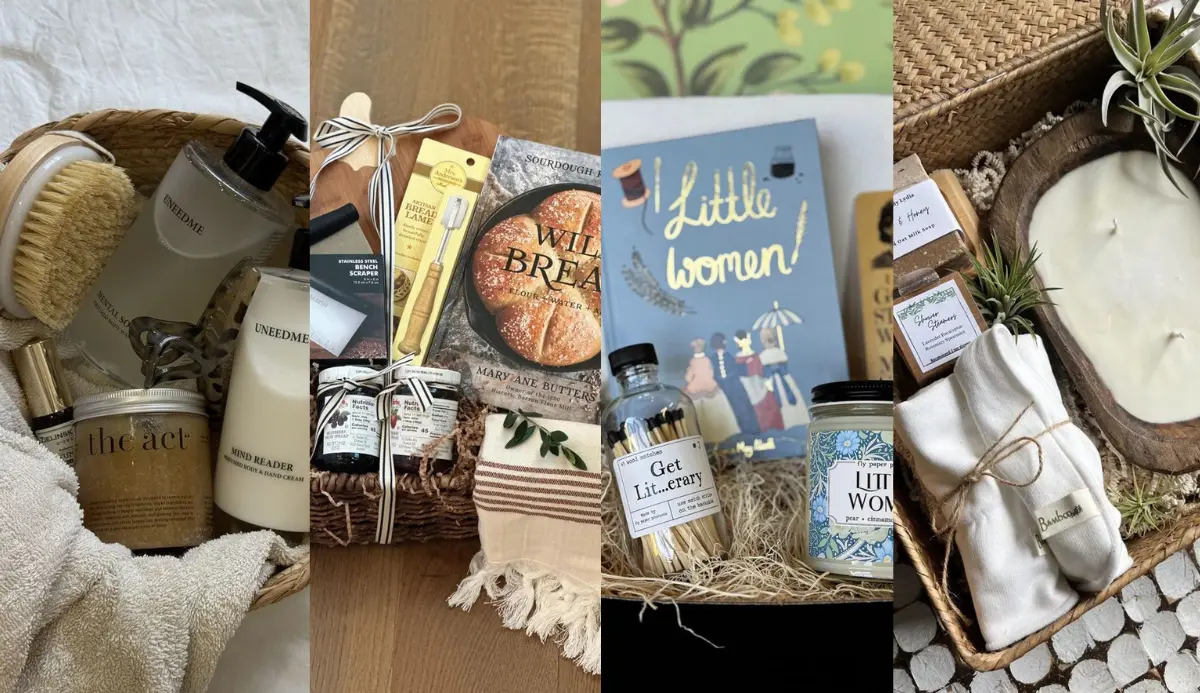
The art of gift basket making has been somewhat lost in our age of one-click shopping and two-day delivery. Yet there’s something undeniably charming about a thoughtfully curated collection of small luxuries, each chosen with care and arranged with an eye toward both beauty and function. A proper gift basket tells a story—about the giver’s attention to detail, certainly, but more importantly, about how well they truly know the recipient.
This Mother’s Day, consider abandoning the predictable bouquet-and-brunch routine in favor of something more personal. The baskets that follow aren’t merely collections of products thrown together. Each represents a different facet of modern motherhood: the early morning coffee ritual that provides a moment of peace before the household awakens, the weekend gardening that offers both exercise and meditation, the evening glass of wine that marks the transition from “mom” back to oneself.
What makes these baskets work is their specificity. Rather than attempting to please everyone, each speaks to a particular interest, a genuine passion. The key is knowing which one matches your mother—not the idealized version from a greeting card, but the real person who might hide her mystery novels under couch cushions or whose kitchen counter perpetually hosts a new sourdough experiment.
Affiliate Disclosure
This post contains affiliate links. If you make a purchase through these links, I may earn a small commission at no extra cost to you. I only recommend products I genuinely use and love.
The Foundation: Building a Proper Gift Basket
Before diving into themes, let’s address technique. A well-made gift basket requires more than enthusiasm; it demands a certain architectural approach.
The vessel matters. Skip the shrink-wrapped wicker monstrosities that scream “last-minute pharmacy run” and think beyond the basket itself. A galvanized metal bucket becomes a utensil holder. A wooden crate transitions to bathroom storage. Even a pair of gardening clogs can serve as a whimsical container for seed packets and hand tools. The container should be as thoughtful as its contents—something that extends the life of the gift beyond Mother’s Day morning.
Composition creates impact. Professional gift arrangers understand what painters and photographers have always known: the eye needs variety to stay engaged. Mix heights by placing a bottle of wine or bag of coffee beans at the back, medium items like jars and boxes in the middle, and smaller treasures—a specialty chocolate bar, a packet of seeds—tucked into the foreground. The negative space between items shouldn’t be an afterthought. Crinkled tissue paper or raffia filling isn’t just packing material; it’s the mortar that holds your composition together.
The details distinguish. A handwritten card explaining why you chose a particular variety of tea or which memory inspired the cookbook selection transforms a nice gesture into a meaningful one. Even the humblest basket becomes significant when accompanied by specificity.
Now, let’s explore what to actually put in these vessels.
For the Morning Coffee Ritualist
Budget: $20-$28
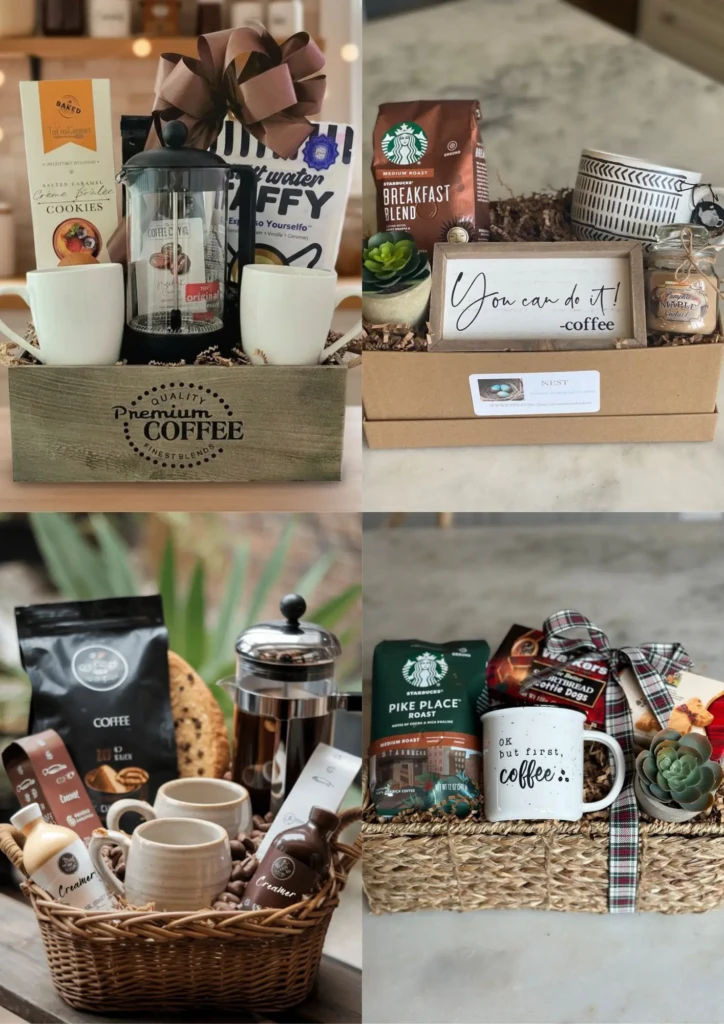
There exists a particular type of person for whom the first cup of coffee isn’t merely caffeine delivery but a sacred ritual. These are the mothers who wake before the household, who know the difference between a light roast and a medium, who’ve been grinding their own beans since 2019.
Start with a generous ceramic mug—not one of those dainty teacup affairs, but something with heft and capacity. Add a bag of single-origin coffee from a local roaster. (Avoid the grocery store’s “gourmet” section; visit an actual coffee shop or order online from a reputable roaster.) Include a bottle of Torani syrup in an unexpected flavor—vanilla is safe, but salted caramel or brown sugar cinnamon shows you’ve thought about it.
Biscotti or shortbread cookies provide the textural contrast coffee deserves. And because even practical mothers appreciate a bit of whimsy, add a kitchen towel printed with something cheeky about caffeine dependence.
For those with slightly more budget flexibility, tuck a gift card to her favorite coffee shop into the mug. It’s not impersonal when it’s specific.
For Those Who Believe Chocolate Constitutes a Food Group
Budget: $22-$30
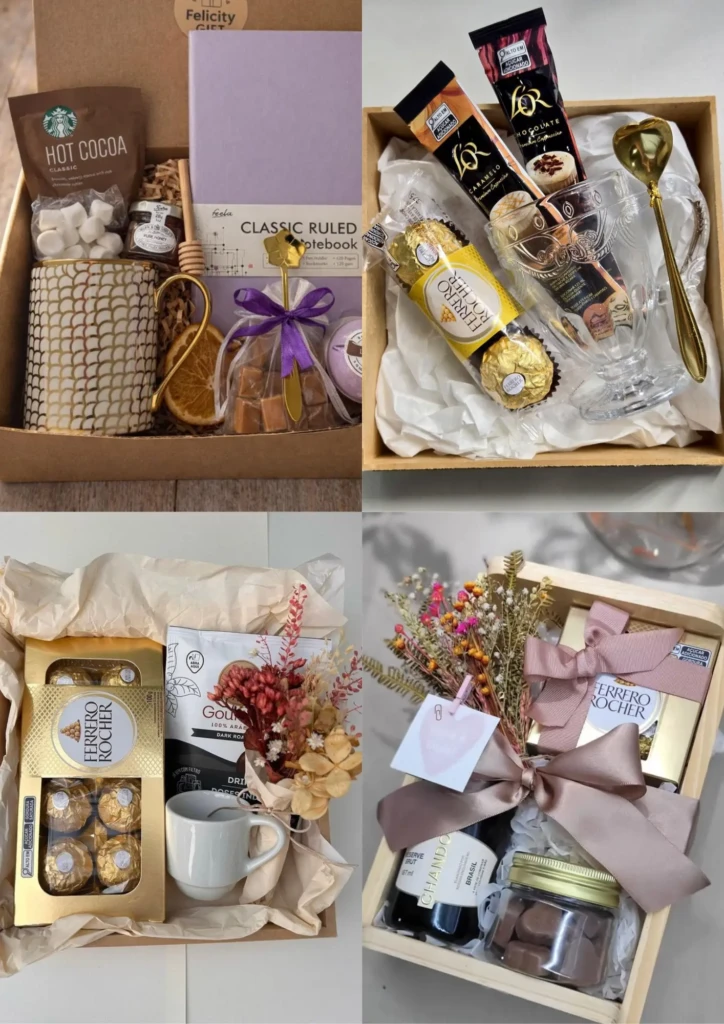
Let’s be direct: some women have a relationship with chocolate that borders on spiritual. This basket celebrates rather than judges that devotion.
Use a vintage-style tin as your base—the kind that will later hold recipes or sewing supplies. Fill it with Ghirardelli squares in assorted flavors, Lindt truffles, and perhaps a bar of single-origin dark chocolate with its tasting notes printed on the wrapper like a wine label.
Include a high-quality brownie mix—the kind that comes in a glass jar and costs an absurd amount but produces brownies worthy of the price. Add a small whisk, because tools matter. If you’re ambitious, bake a batch of cookies yourself and package them in clear cellophane bags tied with twine.
The French have a saying: “One should eat to live, not live to eat.” This basket cheerfully ignores that advice.
The Bath as Sanctuary
Budget: $18-$25
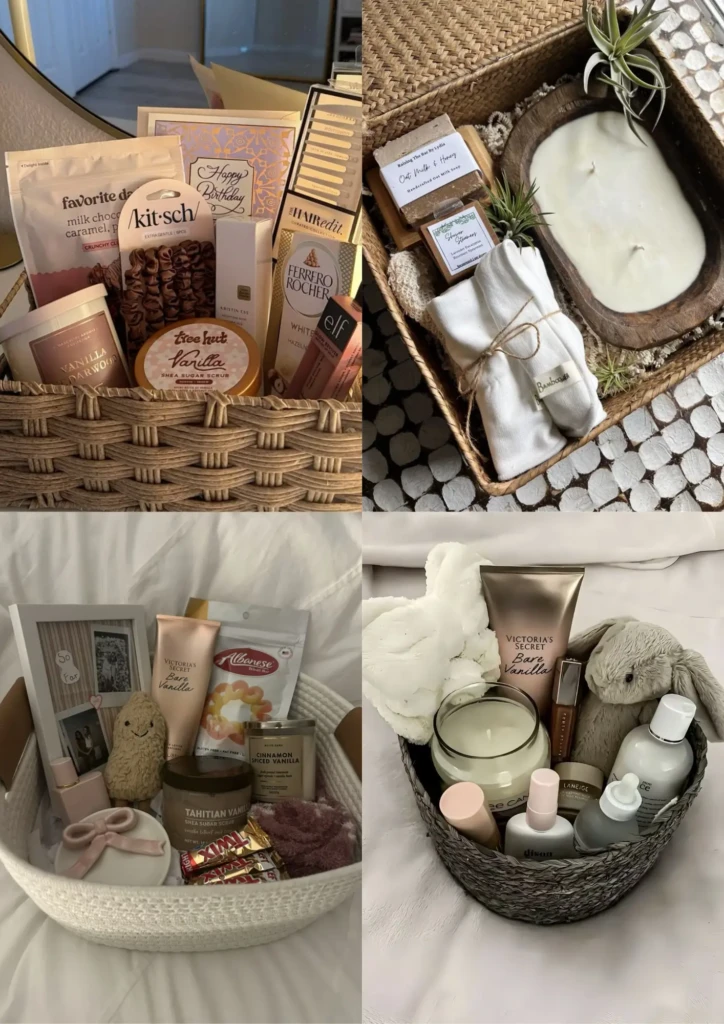
In an ideal world, mothers would have time for elaborate self-care routines involving multiple steps and expensive serums. In reality, a hot bath after everyone’s asleep might be the closest thing to meditation many women experience.
This basket acknowledges that reality. Start with a simple storage basket she can keep on the bathroom counter. Fill it with a variety pack of sheet masks—Korean beauty brands offer excellent quality without luxury price tags. Add bath bombs in scents that don’t smell like a department store perfume counter, a good hand cream, and thick, fuzzy socks.
The secret to making budget spa baskets work is shopping at TJ Maxx or Marshalls, where overstock from expensive brands sells for a fraction of retail. That $40 face cream? It’s $12.99 in the beauty section, same product, slightly dented box. No one cares about the box.
For Hands in the Dirt
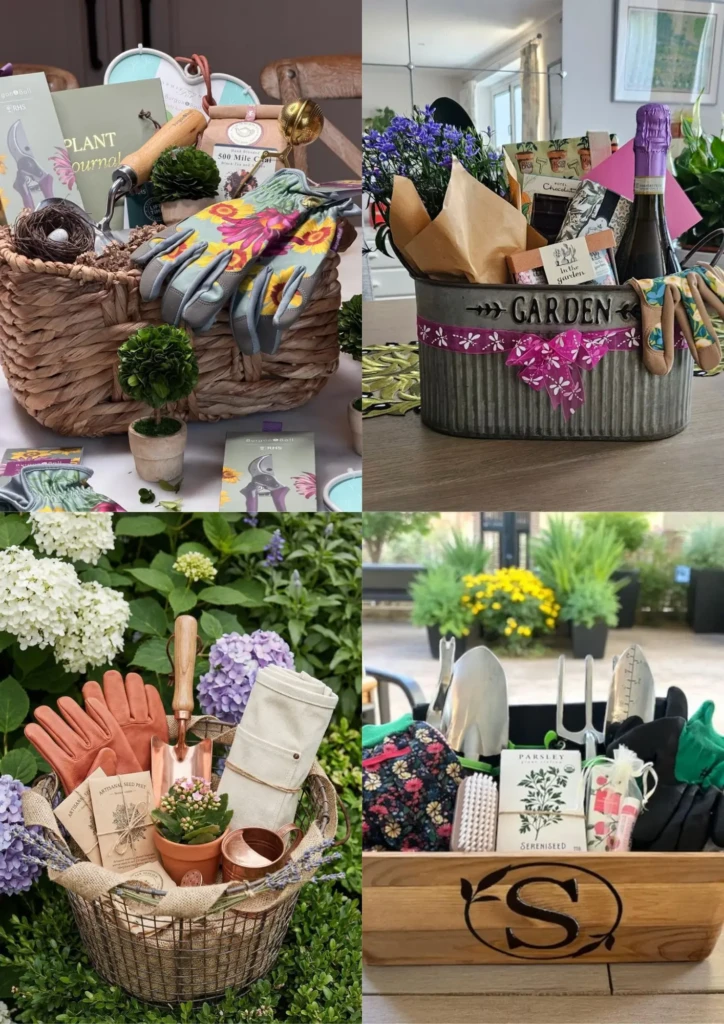
Budget: $35-$48
Serious gardeners—and by serious, I mean those who can identify plants by their Latin names and maintain a compost bin without complaint—require specific tools. This basket provides them.
A galvanized metal planter serves as both container and future plant home. Fill it with seed packets from reputable suppliers—heirloom varieties rather than hybrid, because true gardeners care about such things. Add proper gardening gloves that actually fit women’s hands (surprisingly difficult to find), a quality hand trowel and cultivator, and plant markers for labeling this year’s tomato experiment.
Here’s what makes this basket work: gardener’s hand salve. Not regular lotion—specifically formulated salve that repairs the kind of damage that comes from hours of outdoor work. It’s the difference between someone who Googled “garden gift ideas” and someone who understands what gardening actually does to your hands.
If budget allows, add a small potted herb from the local nursery. Not from a big box store—local nurseries stock healthier plants and employ people who can explain care instructions beyond “water it sometimes.”
Wine as a Legitimate Interest
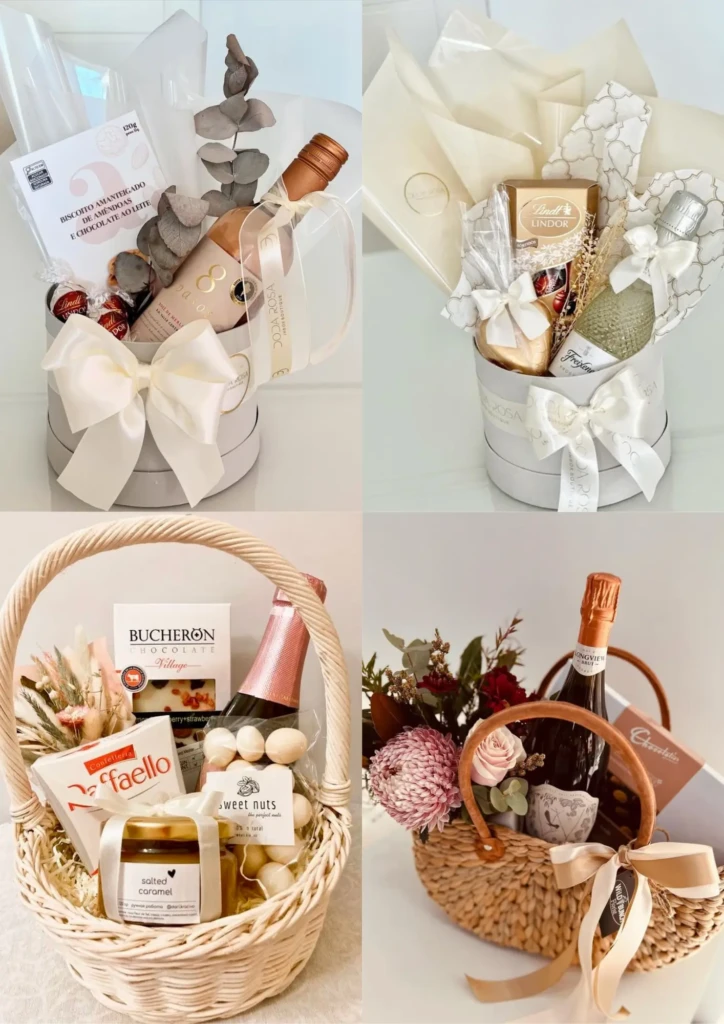
Budget: $32-$50
The “wine mom” trope has been beaten to death on social media, but strip away the cliché and there’s something worth celebrating: women who’ve developed genuine appreciation for a craft beverage and carved out time—however brief—to enjoy it properly.
This basket requires a wire wine caddy or wooden crate. Add one or two bottles of wine—and here’s where homework matters. If she typically buys $10 bottles, a $25 bottle represents a meaningful upgrade. If she belongs to a wine club, find something from a region she hasn’t explored. Trader Joe’s offers respectable wines at reasonable prices; staff recommendations are surprisingly reliable.
Include stemless wine glasses—either elegant or humorous, depending on her personality—plus a proper wine opener if hers is the terrible one that came free with something else. Add artisan crackers and aged cheese or chocolate specifically meant for wine pairing.
A wine-themed kitchen towel provides the finishing touch—preferably one with a saying that’s clever rather than obvious.
For the Woman Who Always Has a Book
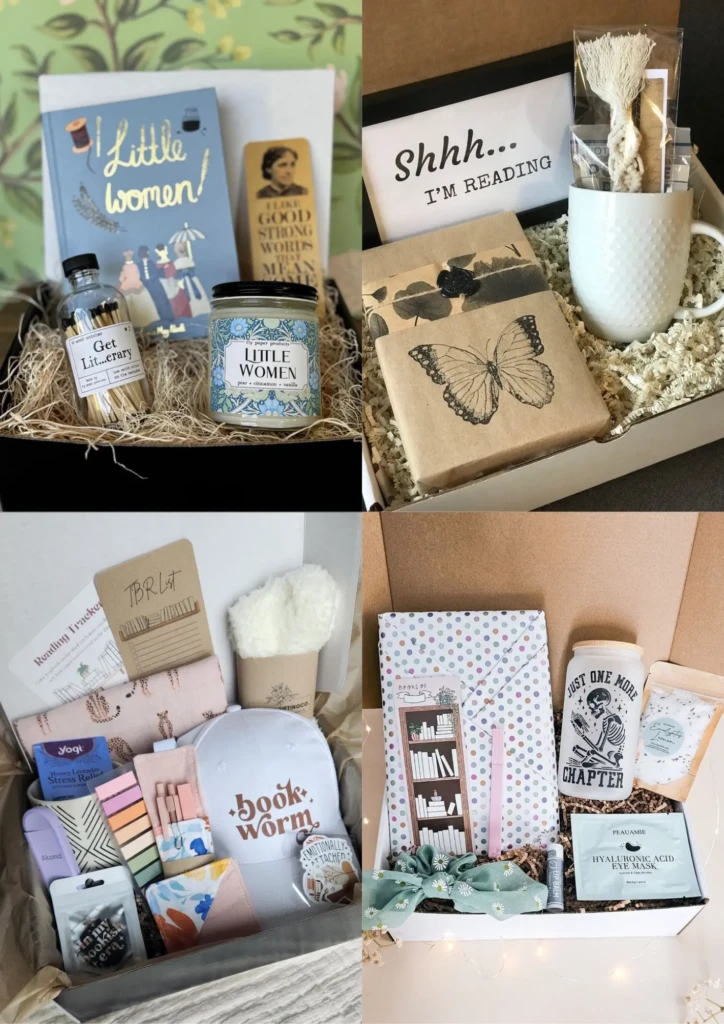
Budget: $30-$45
Book lovers represent a specific challenge: they’re particular about what they read, they already own most classics, and suggesting books can feel presumptuous. The solution is creating an environment that makes reading more pleasurable rather than dictating the reading material.
Start with a sturdy canvas tote—readers need bags for library trips, bookstore visits, and carrying the three books currently in rotation. Add a clip-on book light bright enough to read by but not so bright it wakes sleeping partners. Include interesting bookmarks—metal, leather, or fabric rather than the flimsy cardboard variety.
A tea sampler or quality hot chocolate acknowledges that reading and warm beverages pair naturally. Thick reading socks complete the cozy reading environment.
If you do include a book, make it something she wouldn’t buy herself—perhaps a beautiful hardcover edition of a favorite, or a memoir by someone whose work she admires in another field. Include a note explaining your choice. “I thought of you when I read this because…” carries more weight than just handing over a bestseller.
The Breakfast She Deserves but Rarely Gets
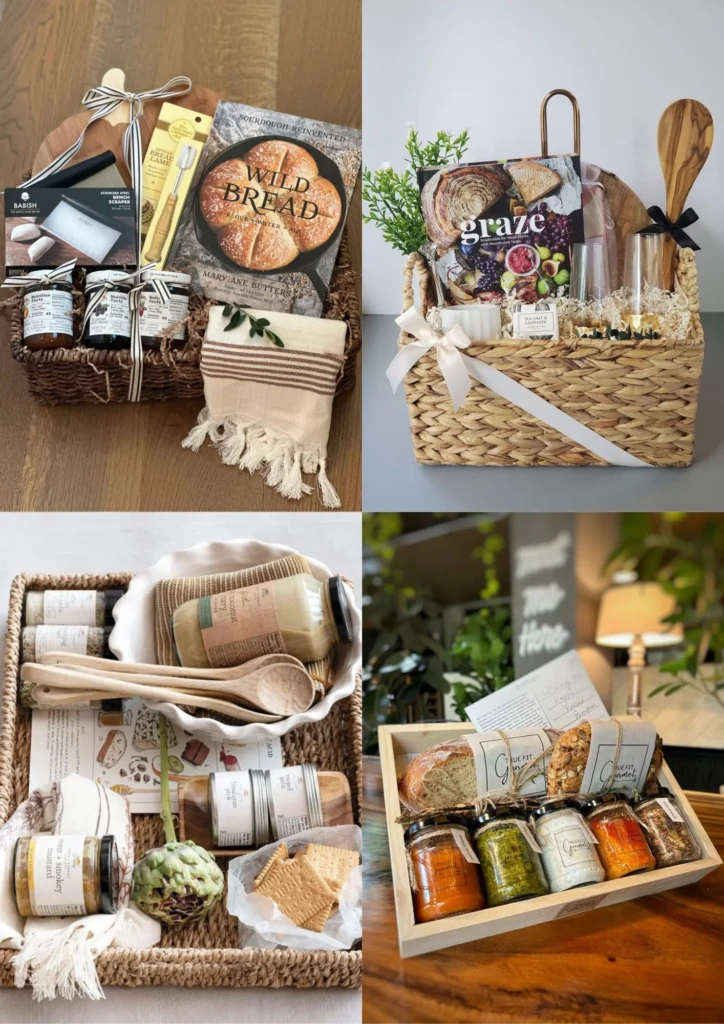
Budget: $28-$40
Mother’s Day breakfast in bed has become such a cliché that it’s almost lost meaning. This basket reclaims the concept by providing quality rather than just the gesture.
A wooden breakfast tray forms the foundation. Fill it with artisan pancake or waffle mix in an unexpected flavor—lemon ricotta, brown butter, anything beyond “buttermilk.” Add specialty syrup—bourbon barrel-aged if she drinks, lavender-infused if she doesn’t, or salted caramel as a universally safe choice.
Include small-batch jam from a local producer and her preferred coffee or tea. A set of cloth napkins elevates the experience beyond paper towels.
The unspoken agreement with this basket: you’re committing to actually making the breakfast. The ingredients are the promise, not the fulfillment.
The Spa She Can’t Afford (But Deserves)
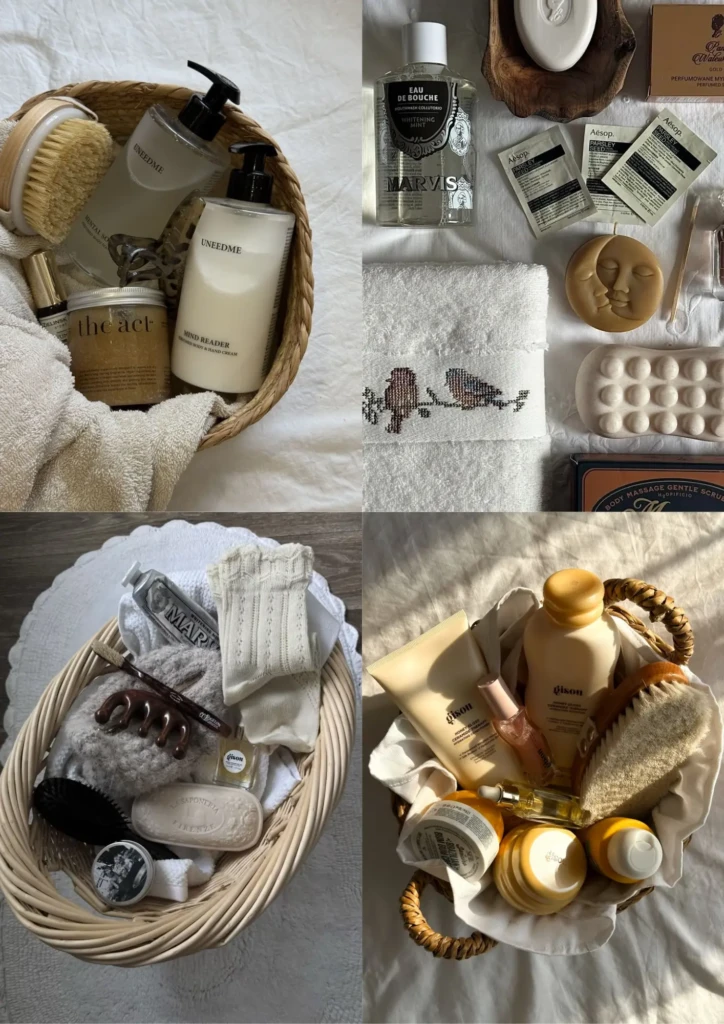
Budget: $55-$75
True luxury in contemporary life isn’t just about expensive products—it’s about time, quiet, and permission to be unavailable. This basket attempts to provide all three.
Use a substantial storage basket that will earn its keep organizing bathroom chaos after the products are used. Fill it with bath bombs from reputable makers—the kind that actually fizz and smell like something you’d choose rather than something a marketer decided women should want.
Add body butter or lotion from brands that don’t test on animals and use recognizable ingredients. Include Korean sheet masks—Korean beauty companies have perfected the art of the affordable yet effective face mask.
A proper scented candle matters here. Not the $5 variety that smells like “vanilla™️” in quotes, but something that costs enough to make you wince slightly and smells like actual things: fig, tobacco leaf, or rain. Add a plush bathrobe or proper spa slippers, and include a terrycloth headband for holding back hair during face masks.
The basket’s success depends on what you do after giving it: take the children somewhere else for several hours. Spa products without solitude are just expensive clutter.
For the Cook Who Actually Enjoys It
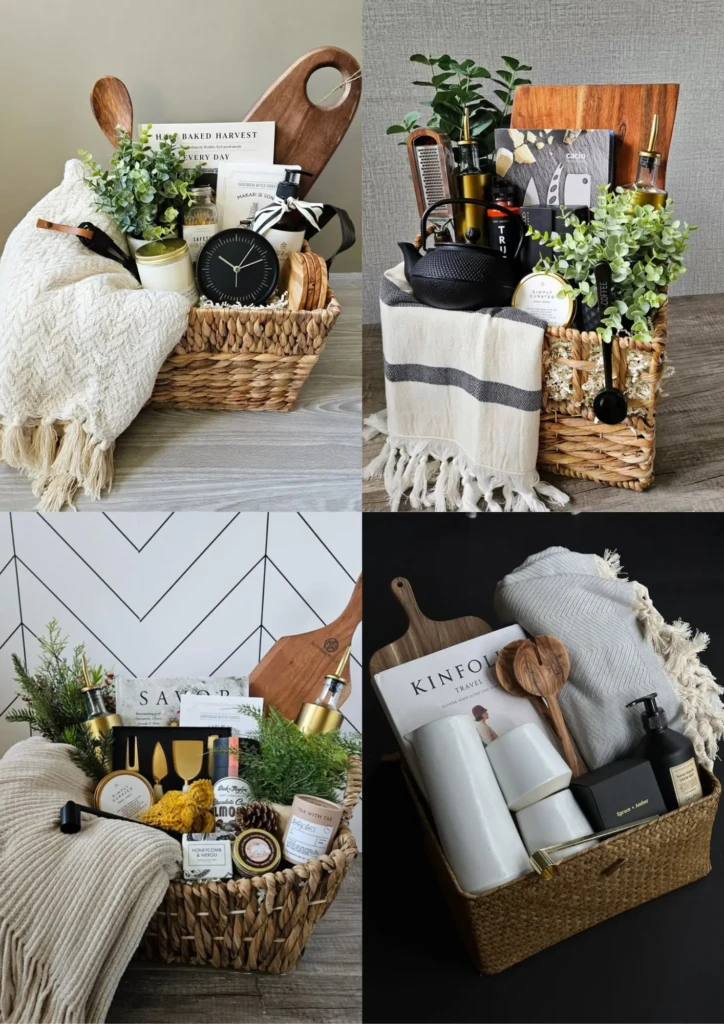
Budget: $50-$70
Most kitchen-themed gifts are garbage—cheaply made tools that break, novelty items that seem funny until you’re trying to store them, or “time-saving devices” that require more cleaning than the task they supposedly simplify. This basket contains none of that.
Start with a high-quality cutting board—bamboo or wood, substantial enough to handle actual use. Add a small bottle of excellent olive oil or aged balsamic vinegar from a specialty shop. These aren’t cooking oils; they’re finishing oils meant for drizzling over completed dishes. The difference is significant.
Include a small selection of quality spices—preferably from a spice company rather than the grocery store, where spices sit on shelves until they’re essentially decorative dust. Add one actually useful kitchen tool she doesn’t yet own—a proper microplane, a good garlic press that doesn’t require a degree in engineering to clean, or spring-loaded tongs that lock properly.
The cookbook matters most. Not a trendy diet book or celebrity chef vanity project, but something from a cook she respects. Read reviews. Check if your local independent bookstore will order it.
Finish with an apron—either beautiful or funny, never cute.
For the Woman Who Nurtures Plants
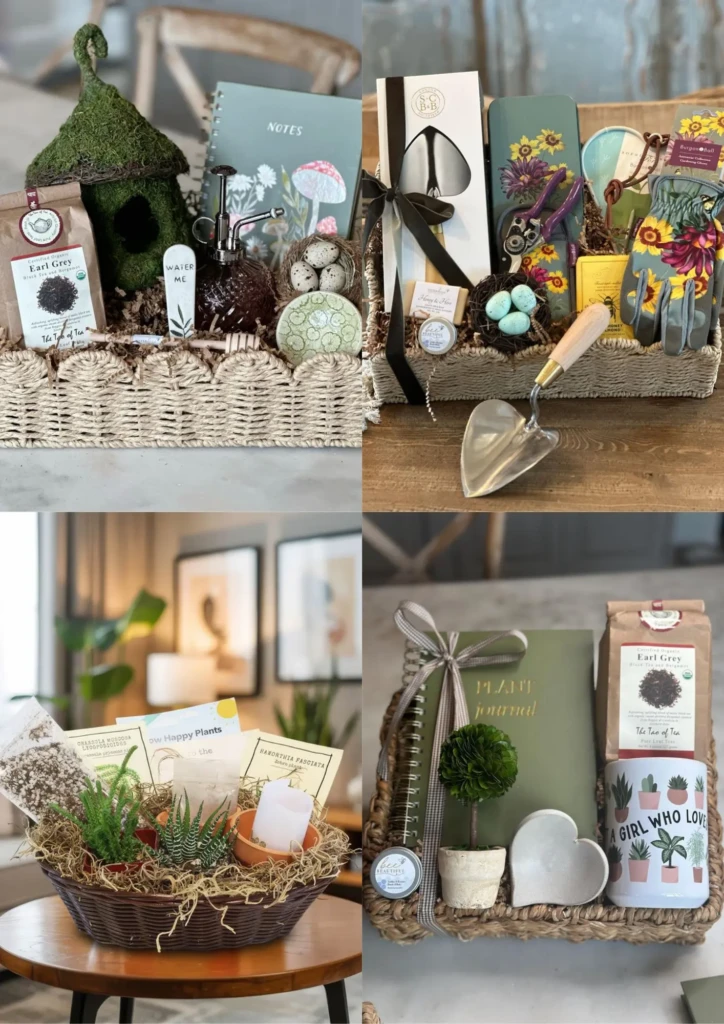
Budget: $50-$65
Plant parenthood has become its own cultural phenomenon, with dedicated social media accounts and terminology borrowed from actual parenting. Strip away the trend-speak and you’re left with people who find genuine joy in cultivating living things that can’t talk back or require college tuition.
A substantial ceramic planter serves as the basket. Fill it with two or three actual living plants—pothos for the beginner, snake plants for the forgetful, or monstera for the ambitious. Buy from local nurseries when possible; their plants are healthier and their staff can explain care requirements beyond “indirect light.”
Add proper plant food—not the sticks you jam in the soil, but actual liquid fertilizer that requires dilution and effort. Include a plant mister or small watering can, preferably in a color that isn’t plastic-bin beige.
Decorative planters in various sizes allow for future growth—because the thing about plant people is they’re never done acquiring plants. Add a plant care book that treats houseplants as the complex organisms they are rather than interior design elements.
Wellness Without the Wellness Industry
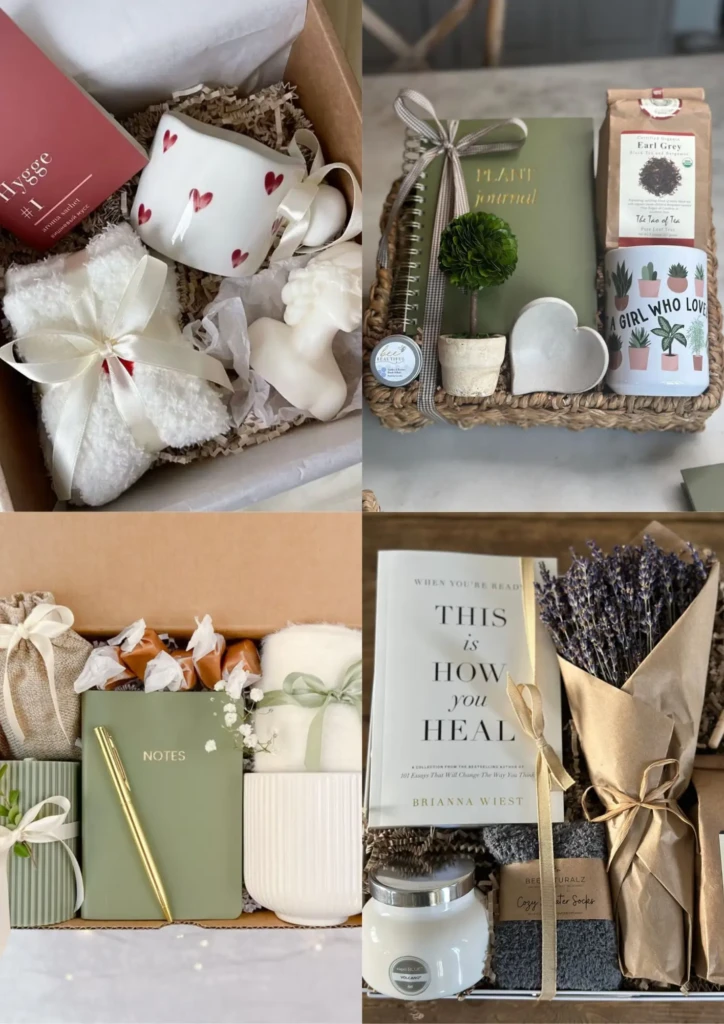
Budget: $55-$80
The wellness industry has commodified self-care to the point of meaninglessness, selling overpriced crystals and supplements alongside platitudes about “filling your own cup.” This basket strips away the nonsense while keeping what actually works: quiet, intentionality, and permission to pause.
Use a large woven basket as the base. Include a guided journal—not a gratitude journal that demands toxic positivity, but something that prompts genuine reflection. Add quality pens that make writing feel important.
An essential oil diffuser and set of oils provide ambiance without requiring belief in aromatherapy as medical treatment. A weighted eye mask or silk sleep mask addresses the practical reality that many women struggle with sleep.
Include a collection of good herbal teas and either a soft throw blanket or heating pad. Consider adding a gift card for a meditation app subscription—but only if she’s expressed interest. Don’t assign homework.
The basket’s message: you’re allowed to rest. No productivity required.
For the True Coffee Devotee
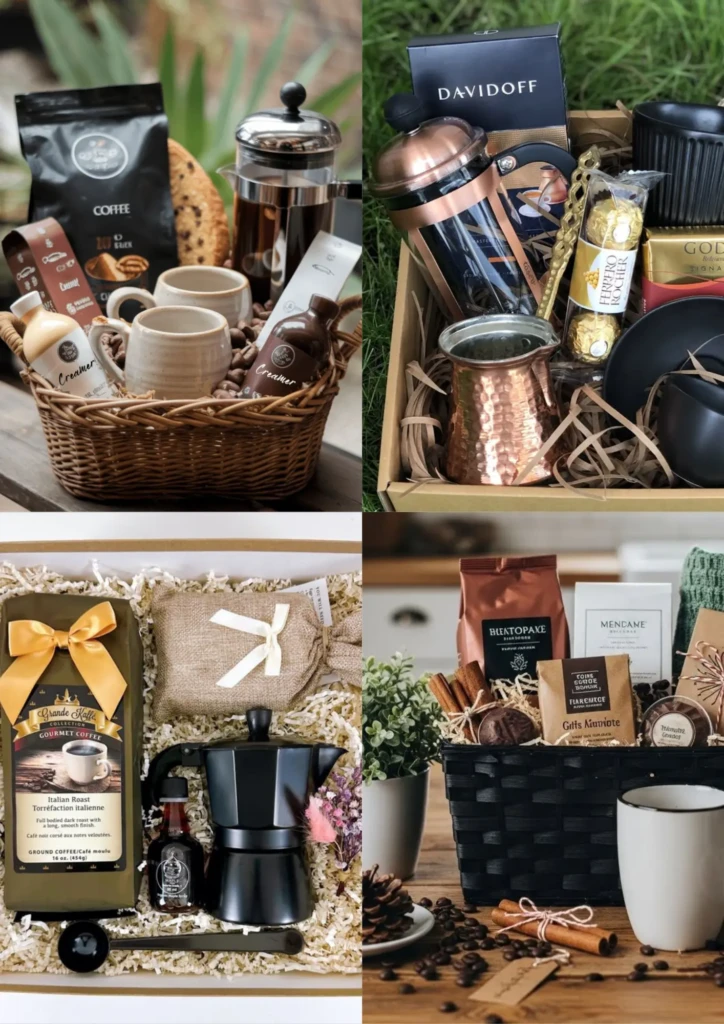
Budget: $60-$80
This differs from the earlier coffee basket in the same way a wine enthusiast differs from someone who drinks wine. These are the women who own pour-over equipment, who discuss water temperature, who perhaps roast their own beans in the garage while their family wonders if they’re part of a cult.
Use a coffee station organizer or wooden crate. Fill it with specialty coffee beans from reputable roasters—two or three different single-origin varieties so she can compare. If she doesn’t own a burr grinder, include one. If she does, add a pour-over coffee maker or French press in a style she doesn’t yet own.
A handheld milk frother transforms ordinary milk into something special. An insulated travel mug from a brand that actually keeps things hot should replace whatever corporate giveaway mug she’s currently using.
Consider including a gift card to a coffee subscription service. This acknowledges that her interest will outlast any static gift.
The Architecture of Assembly
Once you’ve gathered components, assembly matters. Professional gift basket designers understand principles that apply to any visual composition.
Height creates interest. Place tall items—bottles, bags of coffee—toward the back. Medium items occupy the middle ground. Small treasures nestle in front where they won’t be obscured. The eye needs to travel through the basket, discovering items rather than taking everything in at once.
Negative space isn’t empty space—it’s breathing room. Tissue paper or crinkled kraft paper serves as filler, but it also creates structure. Nestle items into it so they don’t slide around. Let some tissue peek over the basket’s edge. This isn’t carelessness; it’s intentional imperfection that makes handmade things feel handmade.
Color coordination matters, but too much matching looks corporate. If everything is pink and white, you’ve made a Pinterest board, not a gift. Aim for a color story rather than color matching: perhaps cream, natural wood, and one accent color that appears in multiple items without overwhelming them.
Cellophane wrapping splits opinion. Done well, it looks professional. Done poorly, it looks like you bought it from a grocery store floral section at 6 PM on Saturday. If you do wrap, use proper basket cellophane (not regular cellophane), gather it at the top, and secure with wired ribbon that you can twist into something resembling elegance. If you’re hand-delivering to someone who’ll immediately unwrap it anyway, skip the cellophane entirely.
The card deserves as much thought as any single item. Explain your choices. “I remembered you mentioning you wanted to try roasting coffee” or “This is the same gardening book you showed me at the bookstore last month” transforms a collection of purchases into evidence of attention paid.
Where to Source
The question of where to shop depends on what you’re buying and how much time you have.
Target excels at providing decent quality at reasonable prices across multiple categories. Their home section contains attractive baskets and storage items. Their beauty section stocks recognizable brands without premium markups. Their food section includes specialty items without specialty store prices.
TJ Maxx, Marshalls, and HomeGoods require more time but reward patience. Premium brands end up in these stores when they’ve overproduced, changed packaging, or simply exist. That $45 hand cream sells for $14.99. The trick is visiting regularly because inventory changes constantly.
Dollar stores work for certain items—tissue paper, cellophane bags, basic baskets—but skip anything that will touch skin or be consumed. Some corners shouldn’t be cut.
Amazon provides convenience and selection but lacks the serendipity of physical shopping. You find what you search for but miss what you didn’t know existed.
Local shops—nurseries for plants, coffee roasters for beans, bookstores for books, specialty food stores for oils and vinegars—cost more but offer quality and knowledge. Staff who care about what they’re selling can guide you toward better choices than algorithm-generated recommendations.
Farmers markets provide unique items you won’t find elsewhere, often from people who made them. This matters more than many people realize. Supporting small producers isn’t just ethical consumption theater; it’s how you find the really good jam.
What Not to Do
Avoid the trap of “more is better.” A basket crammed with 20 items looks like you cleared out a closeout sale. Seven thoughtfully chosen items arranged with space between them conveys more care than 20 random products jammed together.
Don’t buy things she won’t actually use. That lavender sleep spray seems lovely until you remember she hates lavender. The French press is useless if she only drinks instant coffee. The gardening basket falls flat for someone whose idea of plant care is “I hope it rains soon.” Know your audience.
Resist the urge to make everything match perfectly. Real life isn’t styled by Instagram influencers. Different textures, varied colors, and items from different sources create something that looks curated by a human rather than generated by an algorithm.
Skip the cheapest version of things that matter. Budget constraints are real, but a $3 box of tea from the grocery store sends a different message than a $12 selection from a tea company. Save money on the container or the filler, not the actual gifts.
Don’t neglect the card. Even expensive baskets feel hollow without explanation of choices. The difference between “Here’s a basket of stuff” and “I chose this because I know you’ve been wanting to start a garden” is significant.
The Purpose of It All
Gift baskets exist in a strange space between practical and ceremonial. They’re not strictly necessary—anyone can buy their own coffee or bath products. Their purpose isn’t utility but communication: I see you. I know what you like. I paid attention.
The best gift baskets tell a story about a relationship. They demonstrate understanding of who someone is beyond their role as mother—acknowledging that underneath the packed lunches and permission slips lives a person with interests, preferences, and a right to small luxuries.
Mother’s Day itself walks this same line between genuine appreciation and obligatory performance. Store-bought cards with generic sentiments, brunches that create more work than they alleviate, gifts that miss the mark entirely—these fulfill the obligation without honoring the person.
A thoughtfully made gift basket splits the difference. It requires effort but not excessive skill. It costs money but needn’t break budgets. It’s personal without being precious. Done right, it says: I know you. I value you. Here’s proof.
Which is, perhaps, all anyone really wants—to be known and valued. The coffee and chocolate are just the delivery mechanism.
More Mother’s Day Ideas:
15 Mother’s Day Gift Crafts Kids Can Make
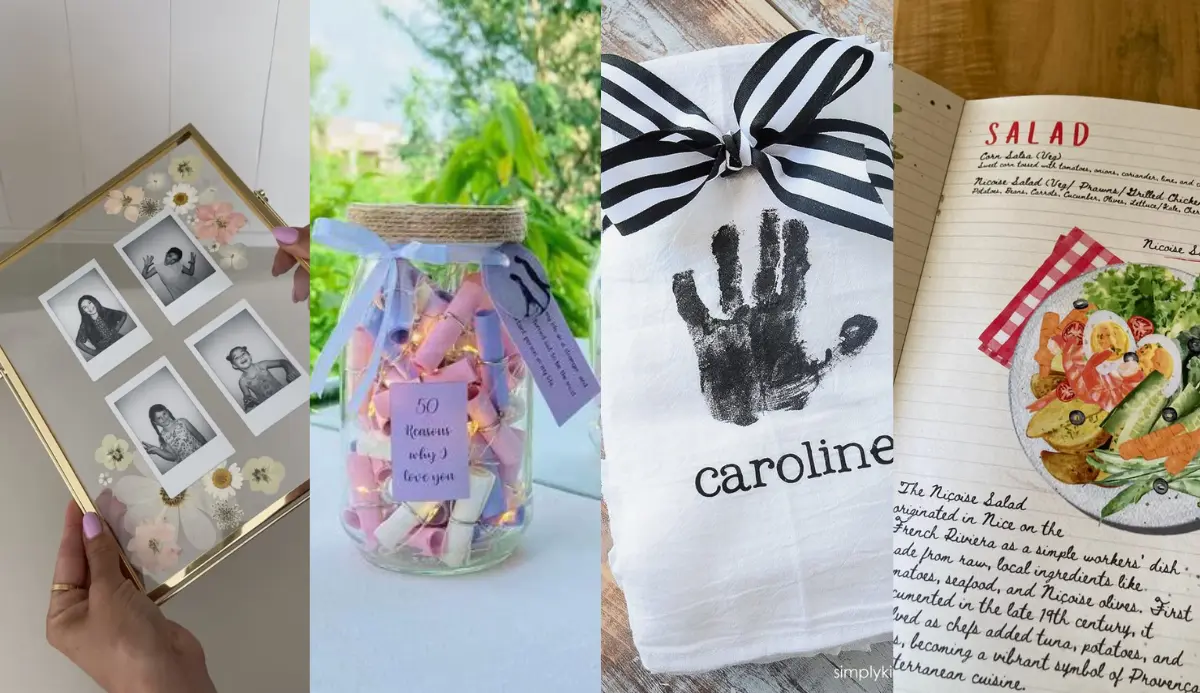
Easy Mother's Day craft ideas for kids ages 2-11. From fingerprint art to clay flower mirrors, these
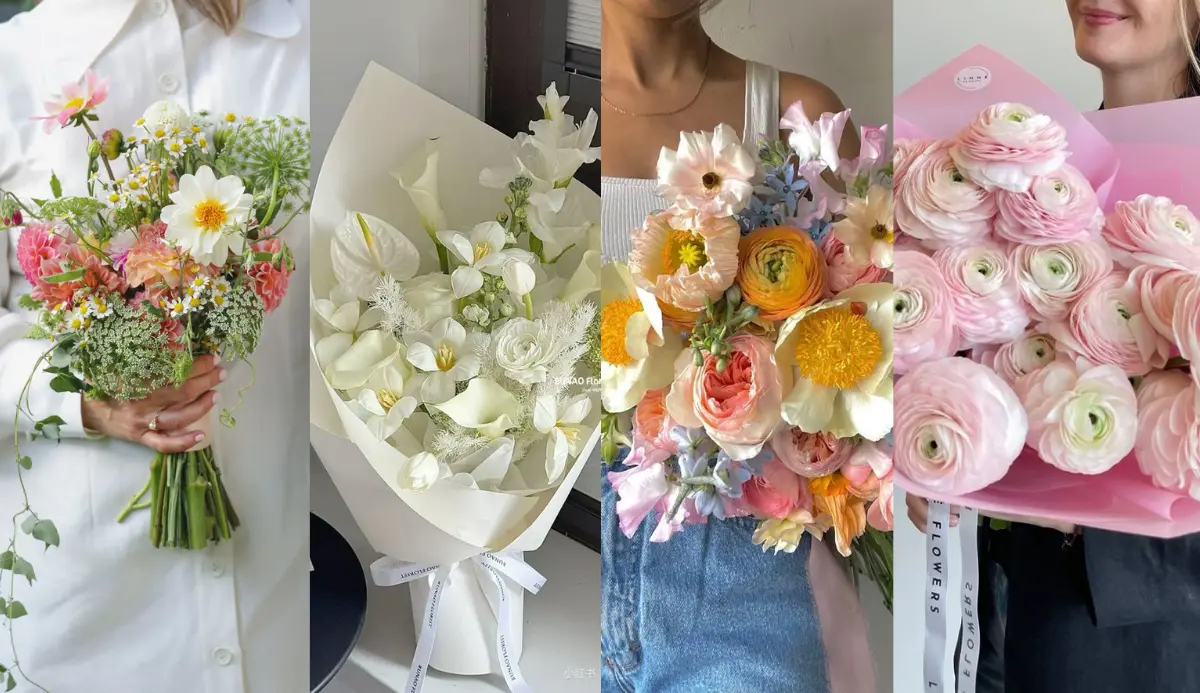
There’s a particular kind of panic that sets in around the second week of April, when you sudd
Leave a Reply