

15 7th Birthday Party Ideas With Teams Instead of Winners and Losers
Seven is the age when everything becomes a scoreboard. A boy who loses a race in front of his friends will remember it, loudly, for weeks. The fix is not to ban competition entirely, because these kids love it. The fix is teams, so the glory and the sting are always shared.
Every theme below puts children into groups from the first minute. Nobody stands alone at the end of a game wondering why they came last. The stakes feel real, the noise level is satisfying, and the birthday boy wins with his team or loses with his team, which at seven is a completely different emotional experience. For more game structures that work in groups, 25 Birthday Party Games for Kids That Burn Off the Sugar has formats you can drop straight into any of these themes.
Fifteen complete worlds below, grouped by the kind of energy each one needs. Pick one, commit to it fully, and let the teams sort out the rest.
This post contains affiliate links. If you buy through them, I may earn a small commission at no extra cost to you.
High-Energy Action Themes
These five themes run on movement and noise. Clear the furniture, lay out the zones, and expect the volume to climb fast. They suit a garden or a hired hall better than a small living room, though a few work indoors with minor adjustments.
The team structure is the same across all of them: divide the guest list before anyone arrives, give each team a name or a colour, and make sure the birthday boy is not captaining a team alone. Put him in the middle of a group and let the group carry him.
Spy Academy
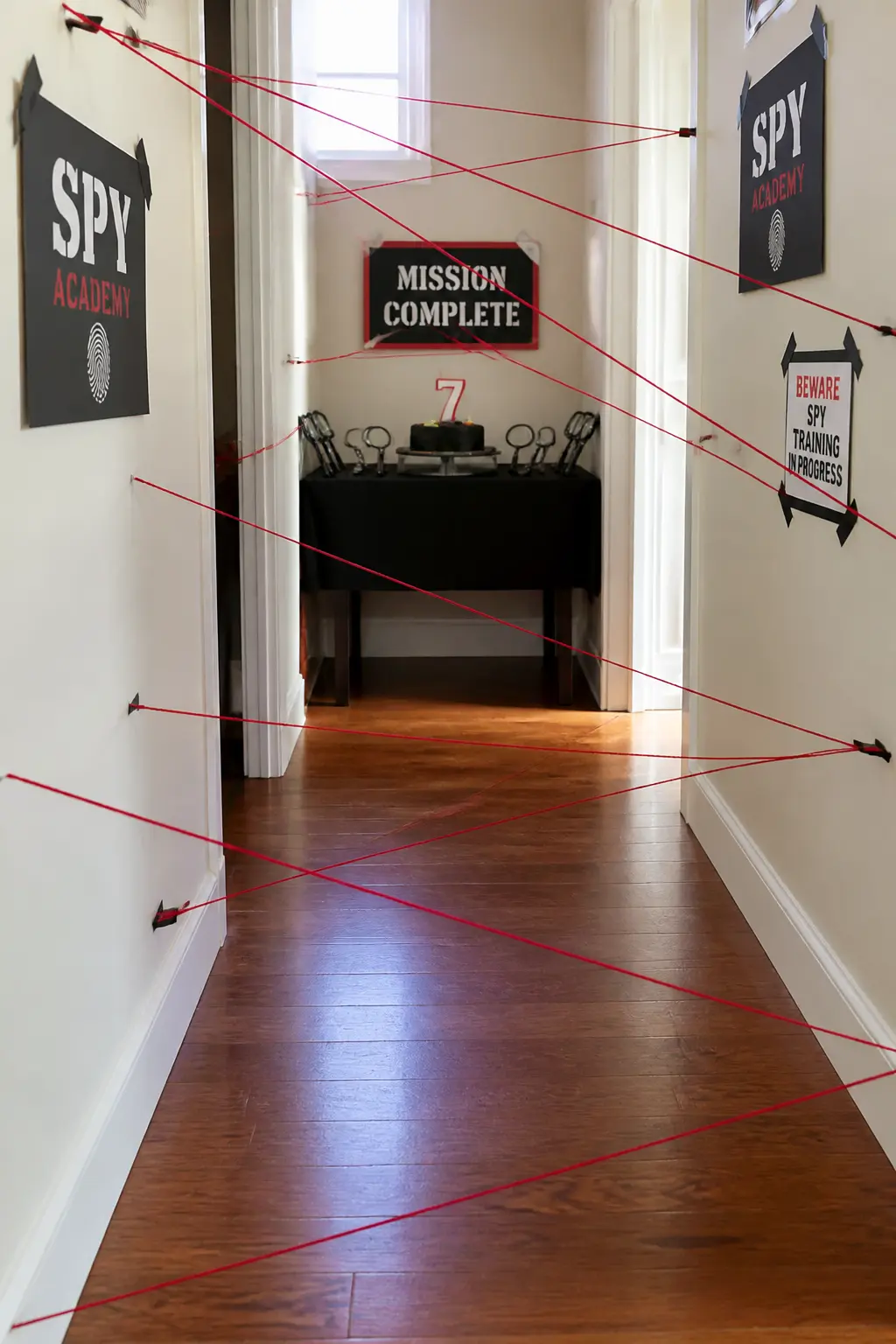
Divide the guests into two or three spy teams, give each a code name, and run them through a series of missions: a laser maze made from red yarn across the hallway, a memory tray of ten gadget items, a coded message to decode using a simple number cipher. Every mission awards points to the team, not to the individual agent.
The birthday cake arrives at the debrief. Pipe the number seven onto it in black fondant and add a row of fondant magnifying glasses, one per team. Each team plants their flag on their section before the candles go out. The photo moment is all agents in their team huddle around the cake, nobody isolated.
Cheap swap: skip printed dossiers and write missions on index cards in red marker. The mystery holds just as well.
🛍 Shopping guide
Football Tournament
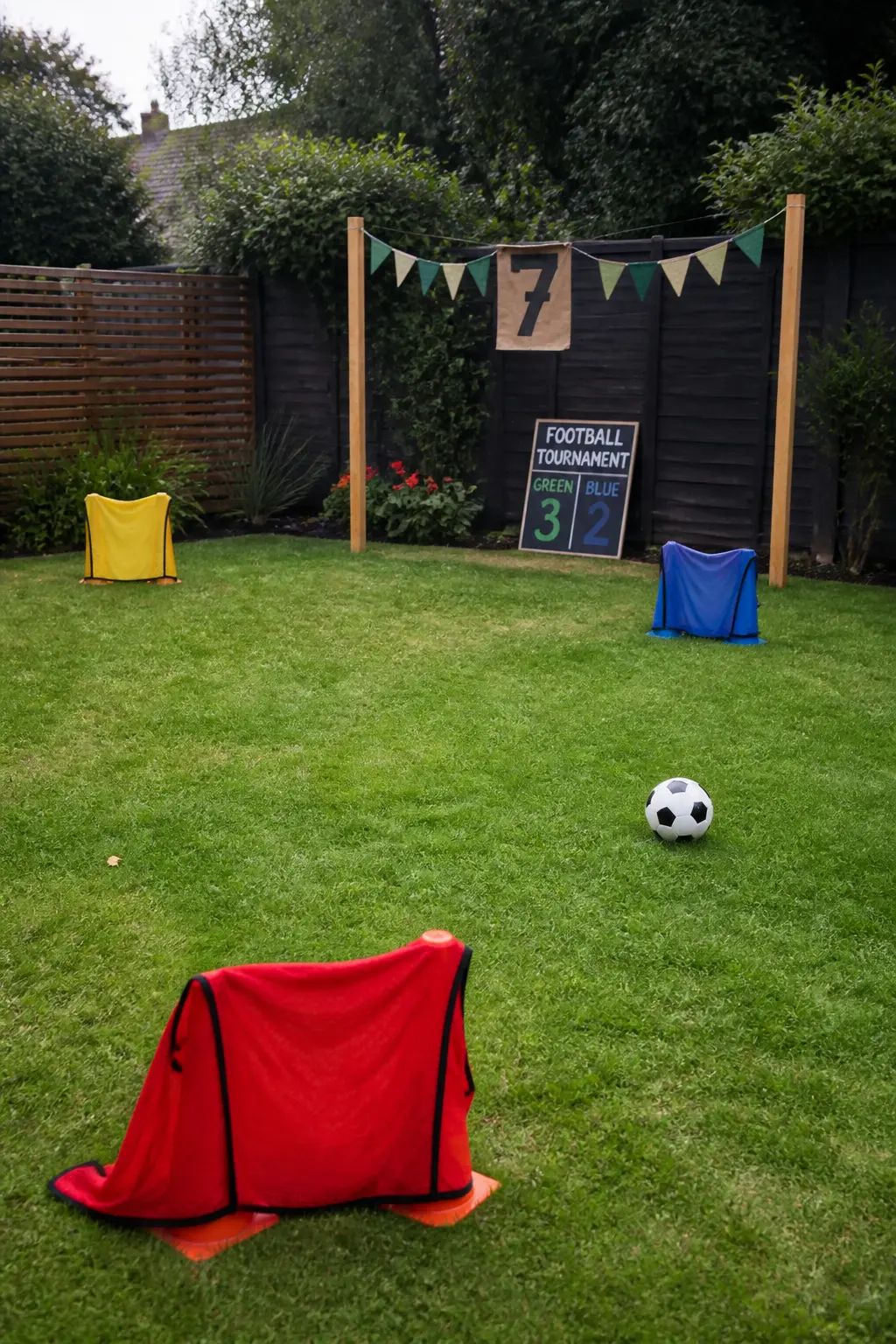
Divide guests into three or four small teams of two or three players. Run a round-robin on a small pitch, so every team plays every other team. No single child carries the result alone, and every child gets multiple games rather than one do-or-die moment.
Score on goal difference rather than straight wins, and add a bonus point for the team that cheers loudest. That last point is theatre, but it keeps the kids who are not strong players engaged and valued. The scoreboard should be large and visible on a piece of card taped to the fence throughout.
The number seven goes on a pennant above the pitch. The party hat on the goalkeeper cone makes the photo. Both are easy and free.
🛍 Shopping guide
Ninja Training
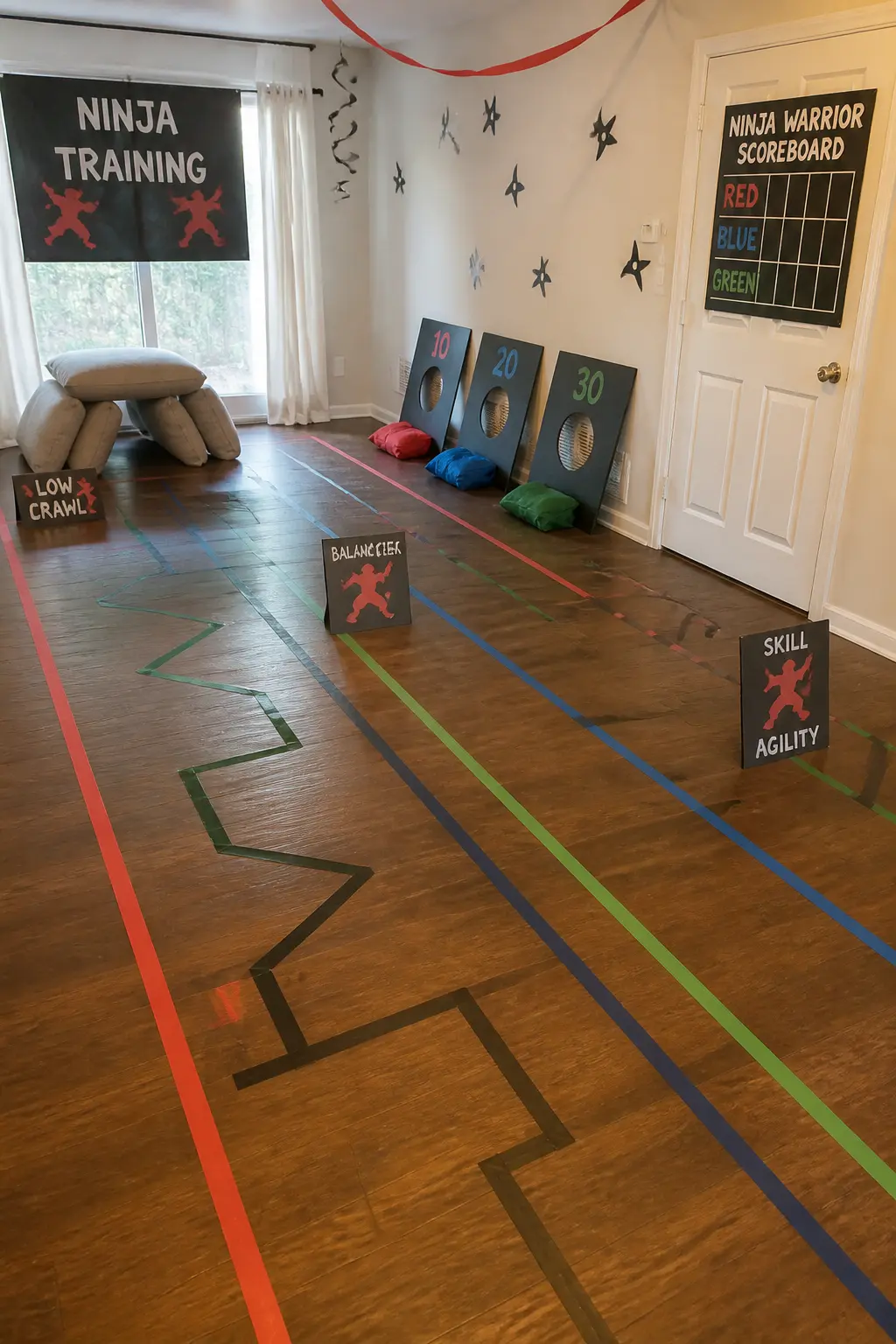
Teams rotate through a series of ninja challenges set up as stations: balance beams made from tape on the floor, a target-throw with beanbags, a still-as-a-statue hold, a rolling-and-crawling tunnel. Each station awards a team stamp rather than a personal score, so a child who struggles at one station is rescued by the collective performance.
The sensei (a parent with a clipboard and a headband) calls time at each station and stamps the team card. At the end, all stamps are counted. The team with the most earns the title of Grand Ninja Squad and each member gets a certificate, not a medal, so there is nothing to rank or compare in a pocket later.
🛍 Shopping guide
Race Track
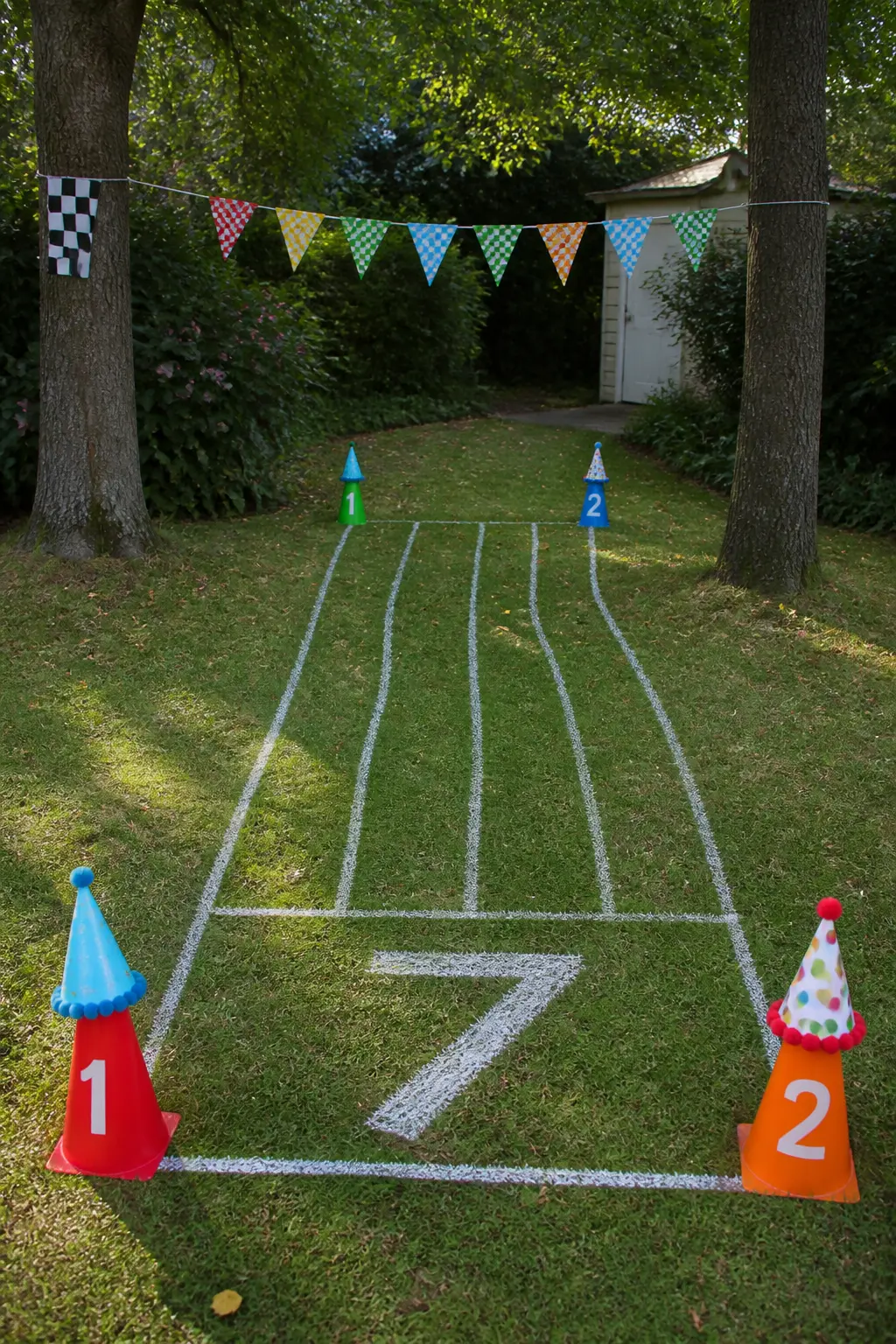
This works as a relay rather than an individual race. Teams of three run through a course in sequence: first leg sprints to a cone, second leg hops back, third leg carries a balloon between their knees to the finish. The team time is what counts, not any single runner’s speed.
Run three heats so every team races every other team at least once. Post the cumulative team times on a board after each heat. A child who is slow on leg one is not exposed, because two more teammates still run after them.
A party hat on the finish-line cone and the number seven chalked large on the ground make this worth photographing from above.
🛍 Shopping guide
Water Sports Afternoon
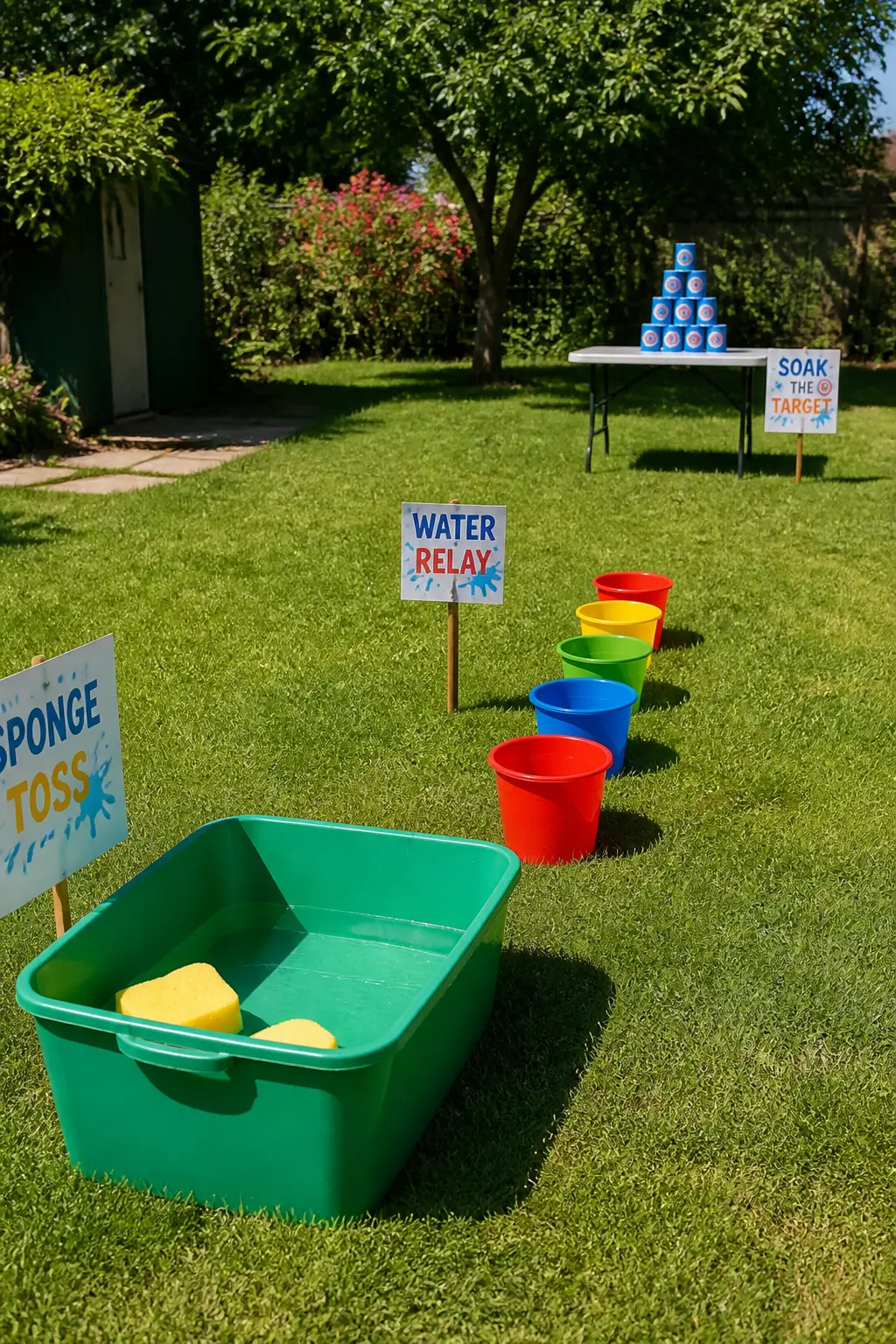
Set up three water stations in the garden: a bucket relay where teams fill a tank by running with sponges, a water-balloon toss that teams complete together (both partners must stay dry as long as possible), and a target squirt with water pistols. Teams rotate and collect points at each station.
The final event is a simultaneous sponge battle: the team whose bucket is fullest at the bell wins the round. Nobody singles out the child who dropped the sponge, because the bucket is a shared result. Warn parents at the invite stage so everyone brings a change of clothes.
Build, Think and Solve Themes
Not every seven-year-old wants to sprint. These themes reward the kids who like to think, construct and puzzle things out together. They also work beautifully indoors, which matters if the weather will not cooperate.
Teams still compete, but the currency is ideas and coordination rather than speed. A quieter child often becomes the leader here, which is worth engineering deliberately. Check 25 Birthday Party Games for Every Age and Any Budget for more puzzle-forward formats that fit this kind of group.
Lego Build Off
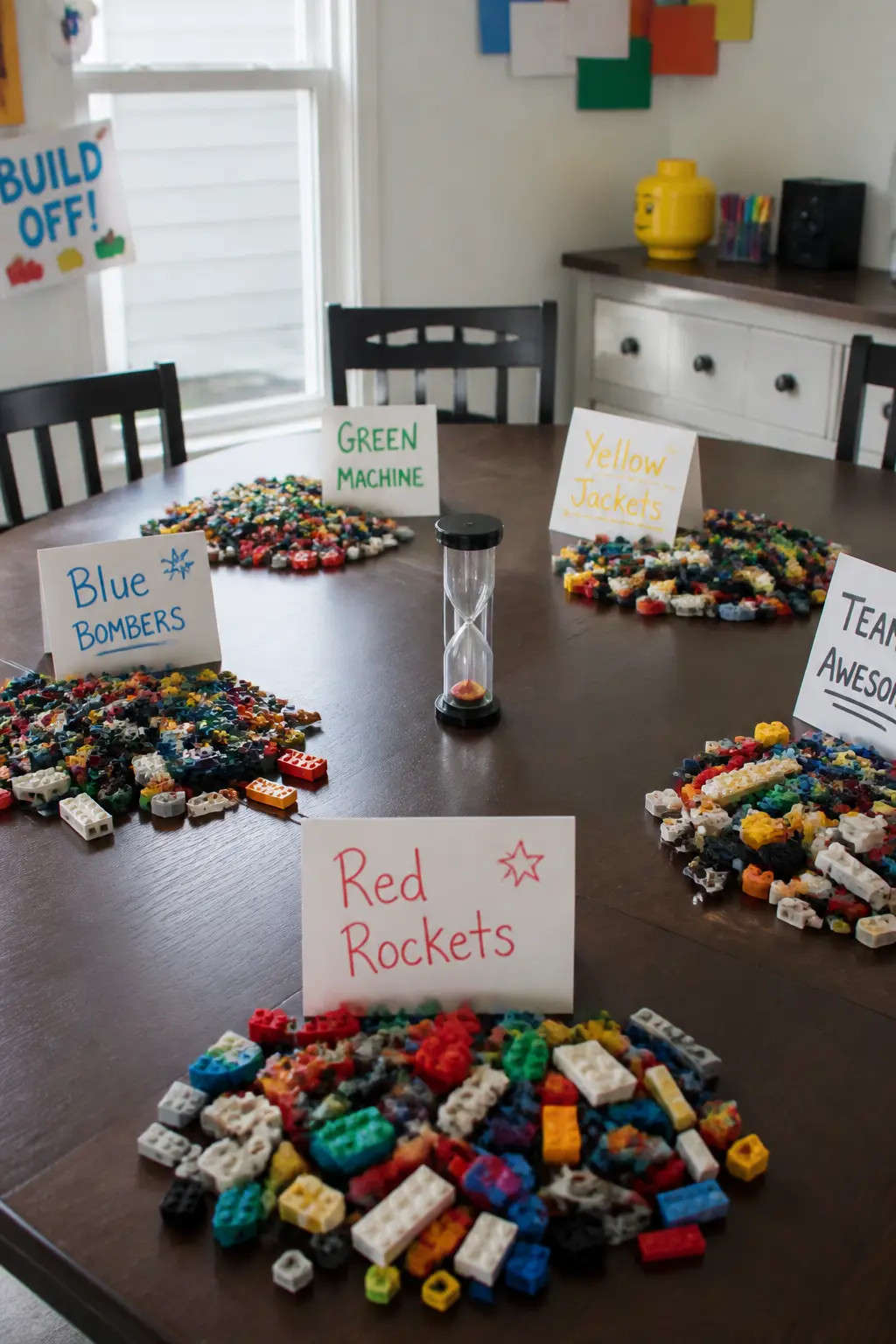
Give each team an identical set of bricks and a brief: build a vehicle that can roll, or a tower that holds a marble. Set a timer for fifteen minutes. At the end, each team presents their build to the group and explains one design choice. Points go to structural success, creativity and teamwork (judged by a panel of parents trying to look serious).
Every team earns a ribbon for their specific strength: sturdiest build, most creative, tallest, most colourful. No team leaves without a ribbon, and no ribbon is obviously ranked above another. The builds stay on display for the party food section so every child can point at their contribution.
🛍 Shopping guide
Detective Bureau
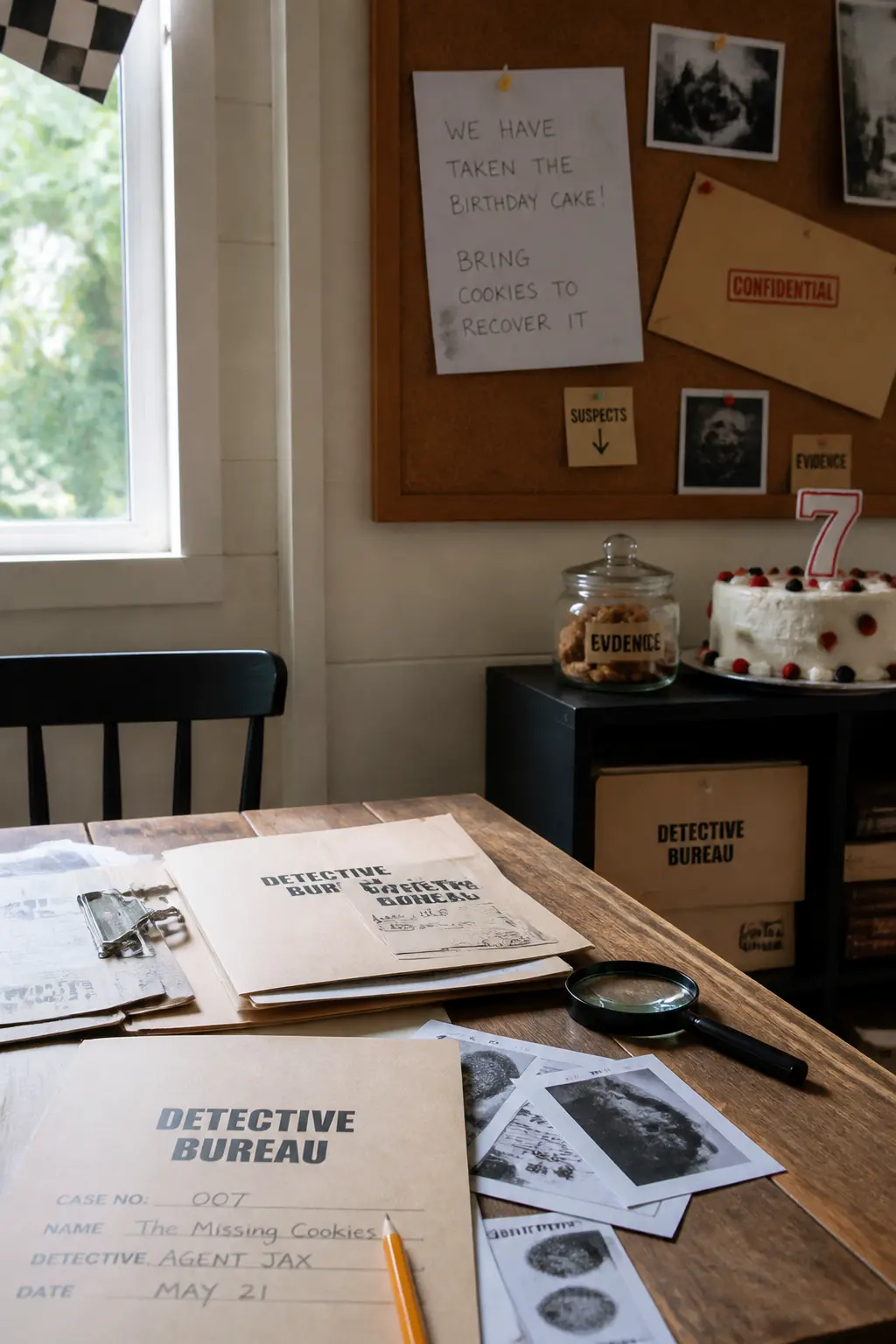
Stage a crime scene before guests arrive: a stolen item, a ransom note in large print, and four clues hidden around the party space. Teams each receive a case file with the same clues and must reach the solution together. The catch is that each clue is a puzzle (an anagram, a picture rebus, a simple map) so every team member can contribute something different.
The first team to crack the case wins the round, but every team that solves it within the time limit earns full points. That distinction matters: it means a slower team is not penalised for being second if they still got there. The numbered birthday cake is the final clue location. Nobody cuts it until the case is solved.
Gaming Tournament Without Screens
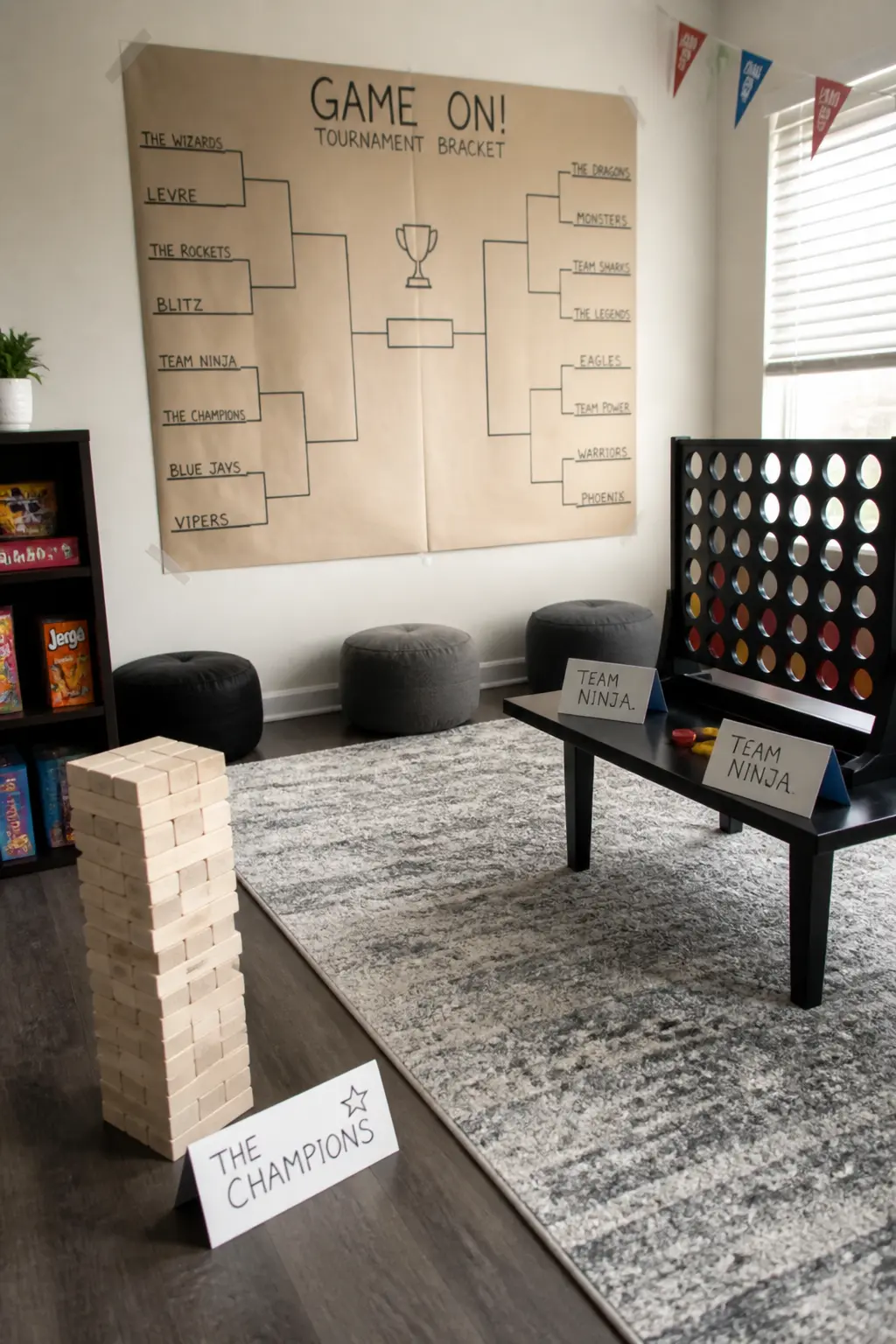
Run a bracket tournament across four or five tabletop or floor games: a giant Jenga round, a ring-toss, a Connect Four knockout and a card game like Snap or Go Fish. Teams play each game together, alternating which member takes each turn, so no single player carries the team’s entire score.
The bracket is pinned to the wall in large print and updated live after each round. Children at seven are gripped by a visible bracket, even if they are not entirely sure how it works. The team name goes up in marker, not individual names. For more game formats at this scale, 25 Birthday Party Games for Kids That Burn Off the Sugar covers the mechanics well.
🛍 Shopping guide
Adventure and Outdoor Themes
These themes need space and a tolerance for mild mess. They work best in a garden, a park or a community outdoor area. Teams move through stations together, which means no child is stranded alone at a task they cannot do.
Budget a wipe-down zone at the end. Seven-year-olds in an adventure theme will find the mud.
Archaeology Dig
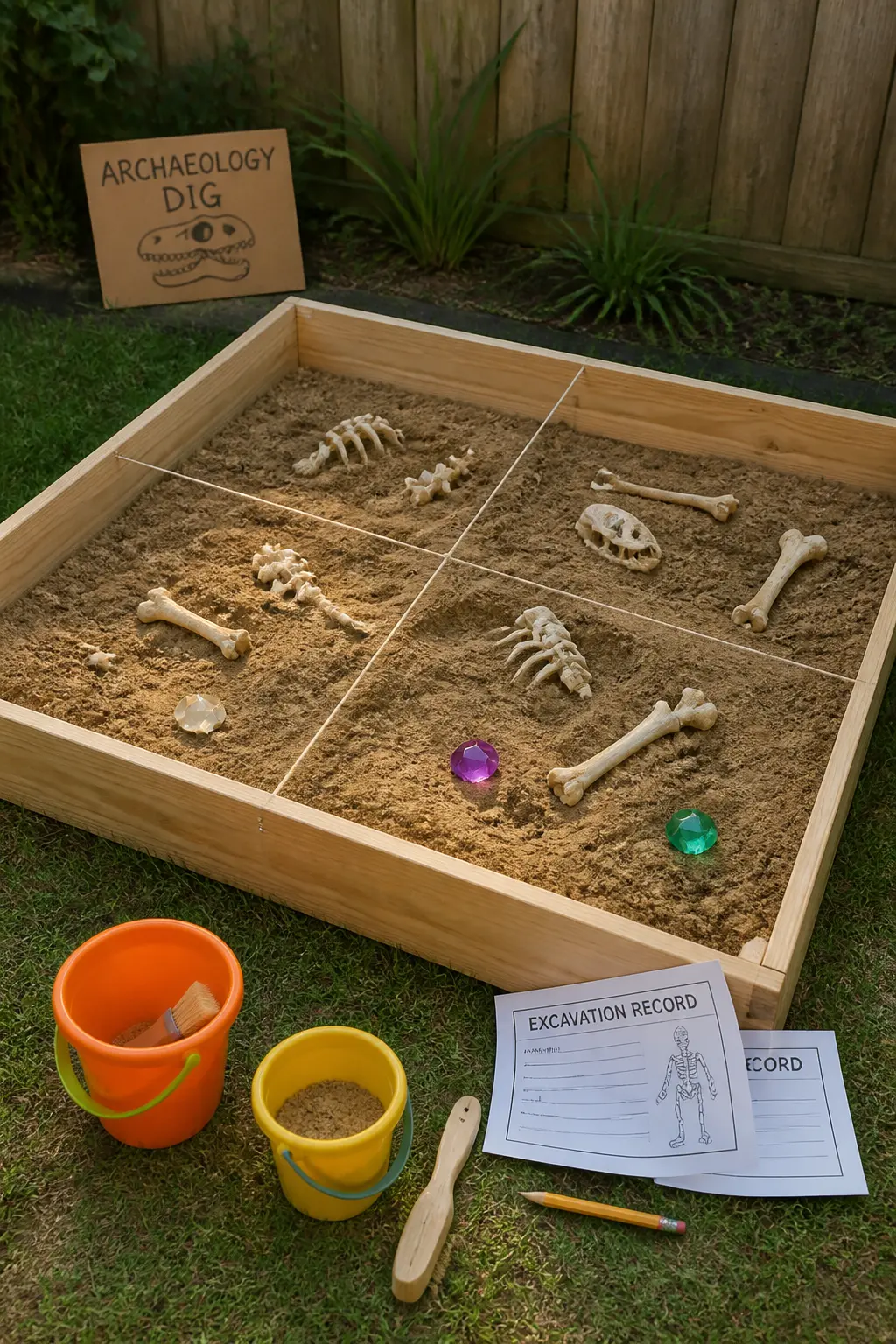
Fill a sandpit or a lined crate with sand and bury identical sets of small plastic artefacts (dinosaur bones, gem stones, coins) before the party. Each team gets a section of the dig site and must excavate, identify and catalogue their finds on a record sheet within the time limit. The team with the most complete catalogue wins the round.
Add a second round where teams must assemble their artefacts into a logical story and present it in thirty seconds. That part rewards imagination over digging speed, which reshuffles the rankings helpfully. Every team gets a small museum bag of their finds to take home.
🛍 Shopping guide
Camping Expedition
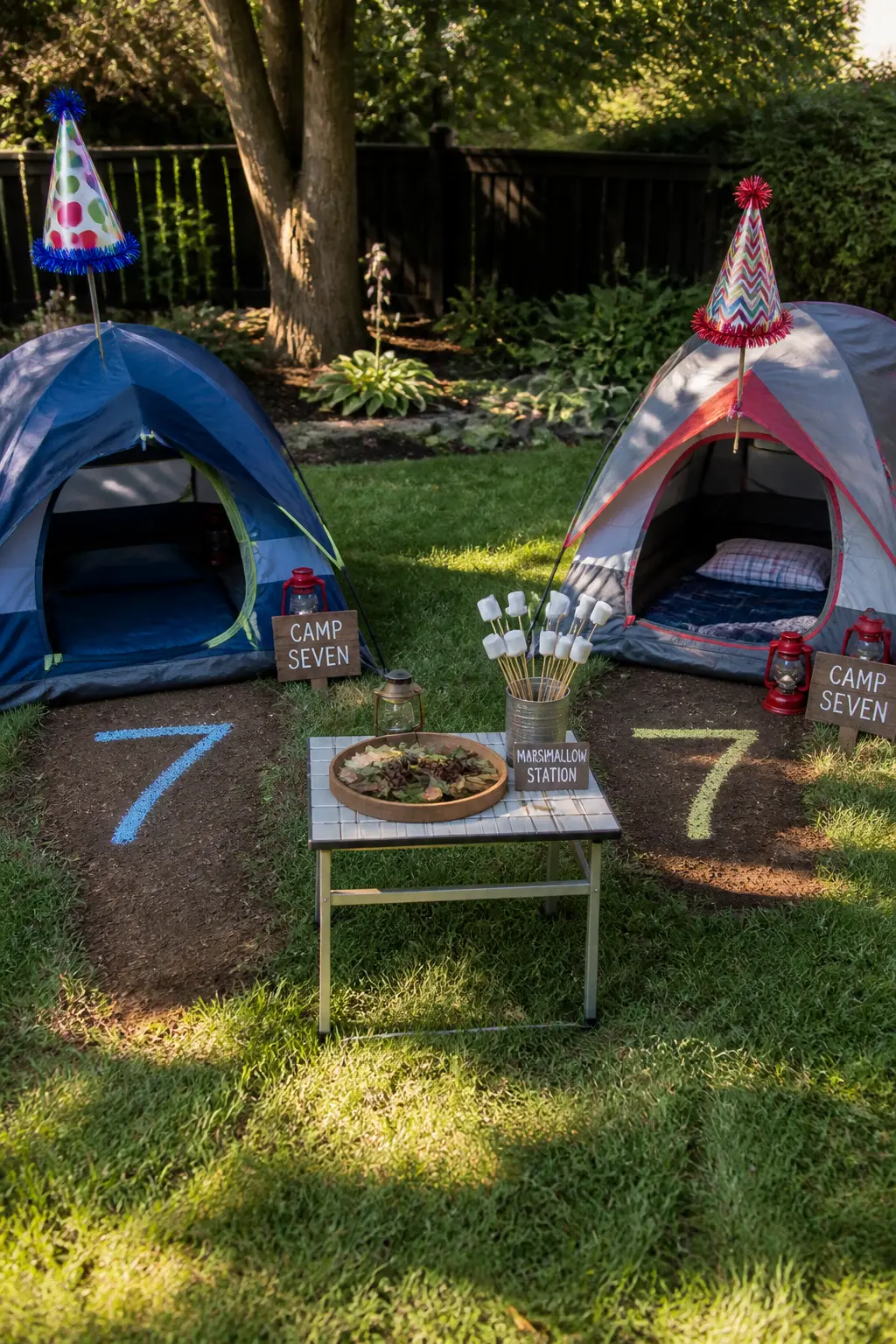
Pitch one tent per team in the garden or erect a den per team indoors using chairs and blankets. Teams earn points by completing camp tasks together: pitching fastest, cooking the best toasted marshmallow on a long stick over a safe gel burner, navigating a simple compass challenge, and identifying five items from a nature tray.
The meal is eaten by team around their own pitch, which creates a natural mini-community. A party hat on each tent pole and the number seven chalked on the path into each campsite tie the birthday into the setting without a tablecloth in sight.
🛍 Shopping guide
Survival Camp
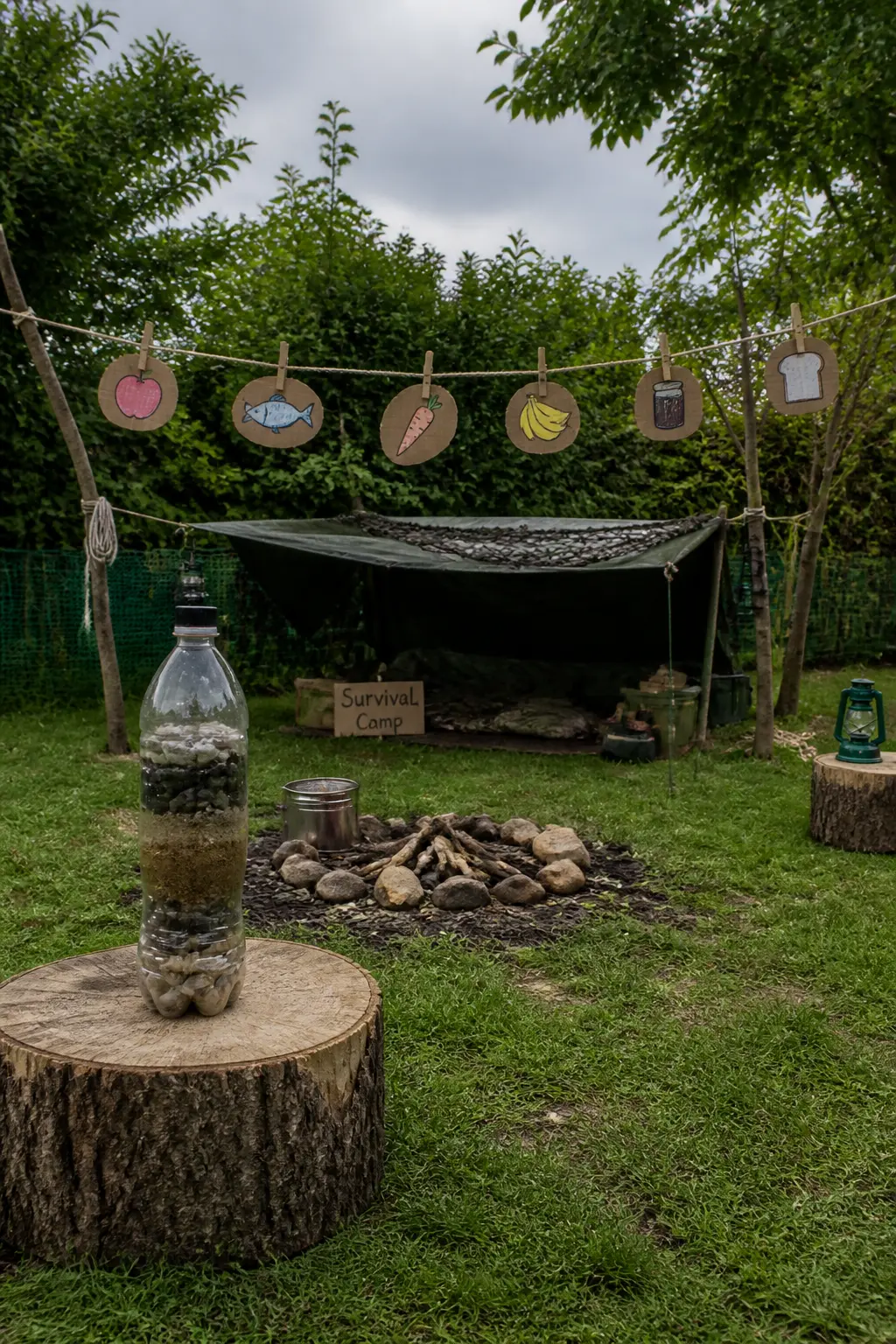
Frame this as a team mission: a storm has wiped out supplies and teams must complete survival tasks to earn food tokens before lunch. Tasks include building a shelter from tarpaulin and rope in under five minutes, starting a fire using a magnifying glass and paper (supervised, outdoors), filtering muddy water through sand and gravel in a bottle, and signalling with a mirror.
Every food token is a shared team achievement, and the lunch is literally unlocked by the team’s combined tokens. That mechanic makes every child feel the meal was earned collectively, which seven-year-olds find enormously satisfying.
🛍 Shopping guide
Story and Role-Play Themes
Some boys want to be inside a story. These themes hand each team a role and a mission rather than a score, so the competition is built into the narrative rather than announced at the end. The team that completes the story wins, not the individual who ran fastest.
Science Laboratory
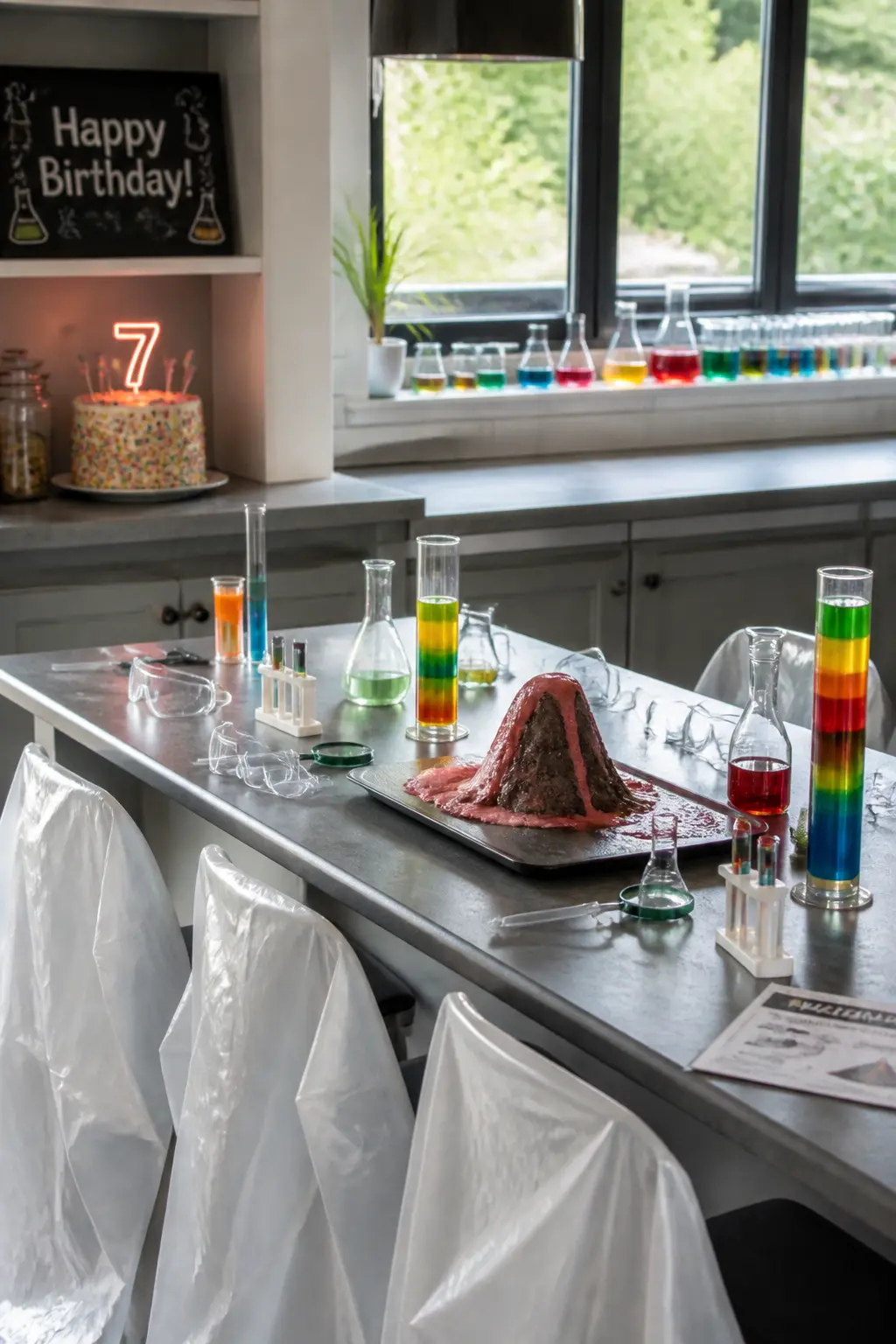
Each team is a research lab with a name and a mission. Rotate teams through three experiments: a baking-soda volcano (biggest eruption wins), a density column in a jar (most layers completed wins), and a paper-bridge load test (bridge holds the most pennies wins). Teams record results on a shared lab sheet and a parent announces the combined findings at the end.
The cake arrives as a final experiment: the birthday boy adds the candles in the shape of a seven and the team collectively counts down the blow. All lab coats (white bin bags with the sleeves cut to size) go home as a souvenir. The number seven piped on the cake in neon gel makes the photo.
Treasure Island
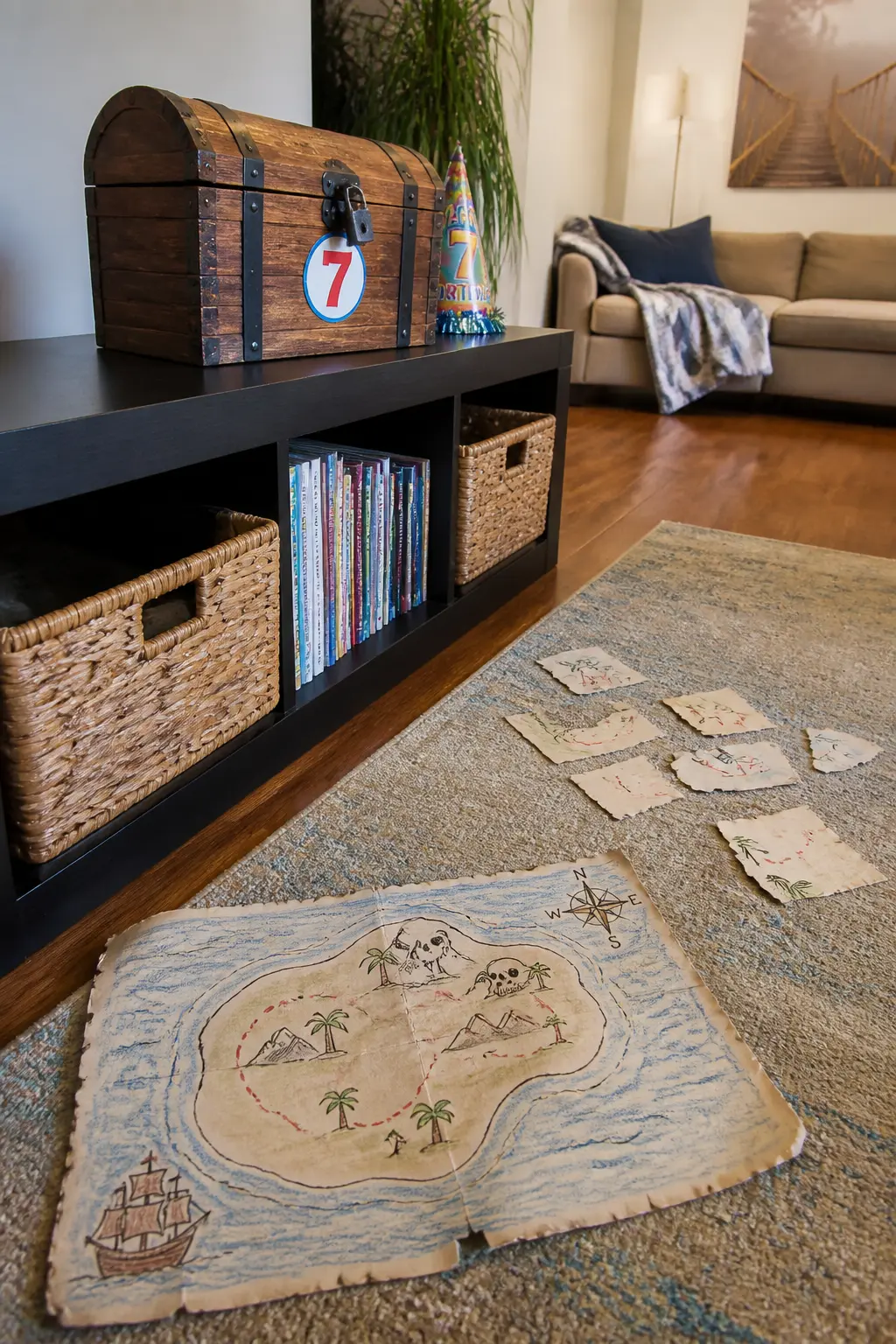
Each team is a crew sailing to find buried treasure. Give every crew a hand-drawn map of the party space with clues marking five locations. At each location they collect a token and a fragment of a final puzzle. The puzzle, assembled by all crews together at the end, reveals the treasure chest location.
That cooperative final step is the structural key: rival crews end the game as allies. The chest holds enough for everyone (small wrapped sweets or coins) and the sharing moment is the climax rather than the announcement of a single winner. The party hat on the treasure chest post and the number seven scorched into the chest lid (use a stamp or sticker) make it feel like a real find.
🛍 Shopping guide
Knights and Castles
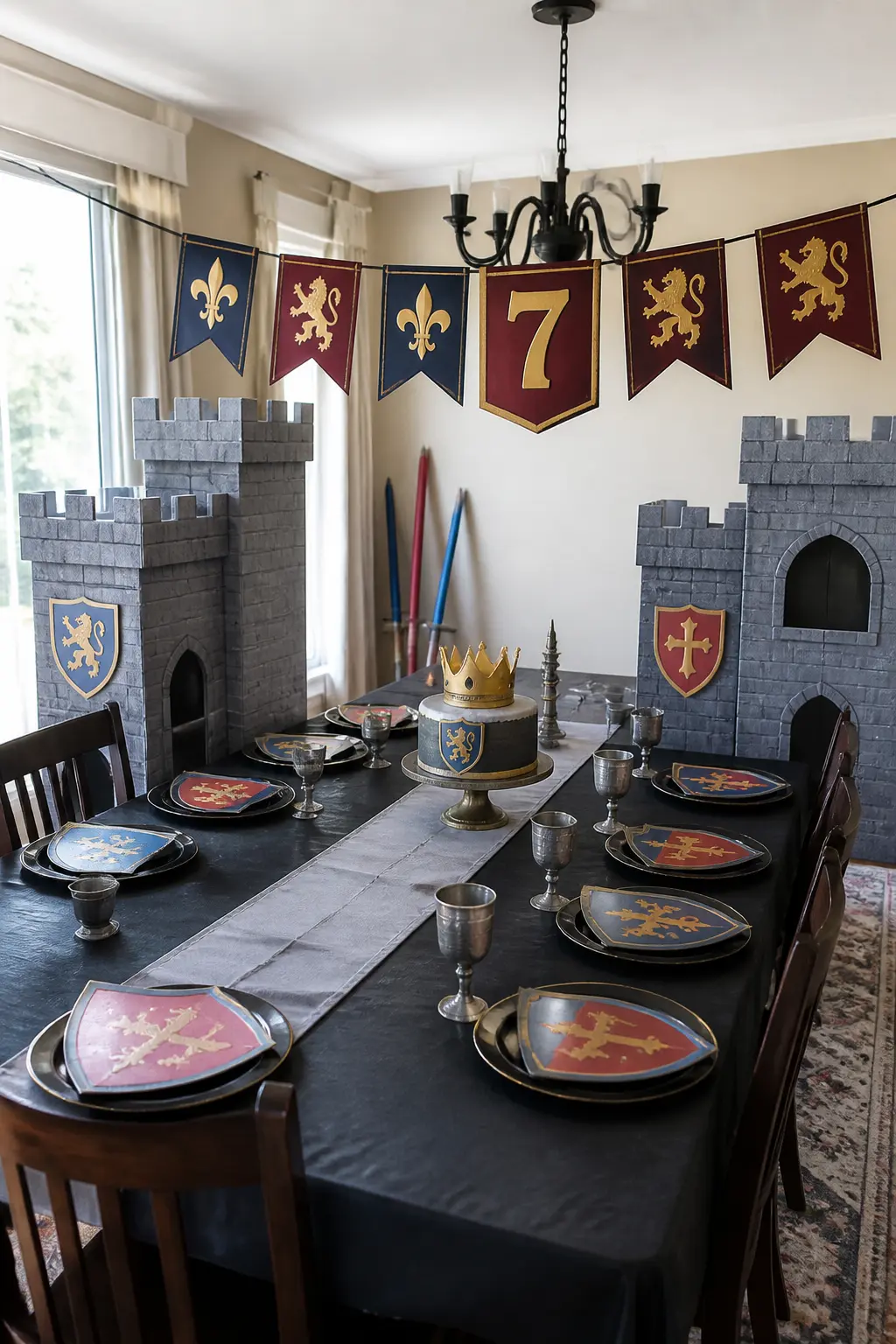
Divide guests into two or three kingdoms. Each kingdom must defend its castle (a cardboard box fortress on a table) while attempting to capture the other kingdoms’ flags by completing challenges: a jousting contest with pool noodles, a catapult accuracy test with a spoon and a pompom, and a herald relay where a message is carried and recited correctly.
Points go to the kingdom for each challenge, not to the individual knight. The final event is a shared feast where all kingdoms sit together, which breaks the rivalry cleanly before food time. A number seven banner above the feast table and a crown on the cake complete the look.
Space Cadets
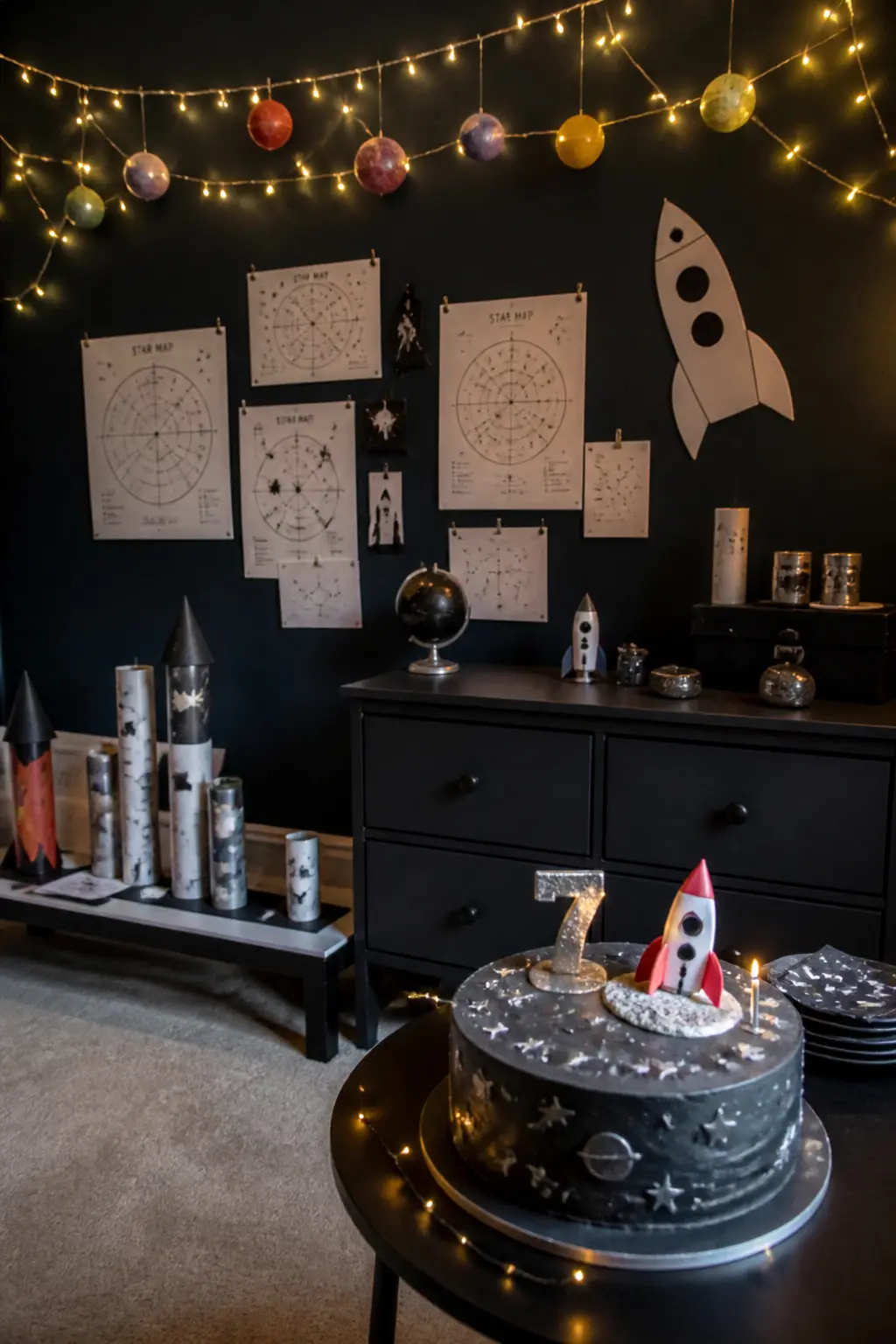
Each team is a crew aboard a named spacecraft. They complete a mission dossier together: a star map to identify (printed dot-to-dot constellations), a rocket assembly challenge (build the tallest stable rocket from cardboard tubes and tape in four minutes), and a launch sequence countdown where every crew member calls one number. The sequence is the team’s shared performance.
The numbered cake arrives as mission control signs off. Pipe the seven in silver on dark icing, add a fondant rocket, and photograph it under a string of white fairy lights to suggest a starfield. Every cadet gets a mission patch (an iron-on badge or a printed sticker on card) for their jacket. The patch names the crew, not the individual.
🛍 Shopping guide
Keeping Score the Right Way
One closing note on structure, because even a team-based party can go wrong at the scoreboard. Keep the running total visible throughout so no team is surprised at the end, offer a point for effort as well as outcome in every round, and never announce individual scores. The section below goes into the mechanics in detail.
Frequently Asked Questions
How many teams should a 7-year-old birthday party have?
Three teams of three or four children works well at this age. Two teams can feel binary and high-stakes. Four or more teams are hard to track on a visible scoreboard, which is the main tool keeping kids engaged between rounds. Aim for no team larger than four so every child gets a turn in each activity.
What if the group is mixed in ability and some children are much more competitive than others?
Split deliberately: put one very competitive child per team rather than letting them cluster together. Tell them before the first game that each team needs a different kind of player to win, which is true of any well-designed team format. Adding a non-skill point category (loudest cheer, best team name) gives less athletic children a genuine route to earning points.
How long should each activity last for a 7-year-old party?
Ten to fifteen minutes per game station is the practical ceiling before attention drifts. Plan five or six rounds, build in five minutes between each for the score update and a drink, and keep the total active time under ninety minutes. Leave the last thirty minutes for cake, food and collected prize distribution.
Do all these themes work indoors?
Spy Academy, Detective Bureau, Lego Build Off, Gaming Tournament Without Screens, Science Laboratory, Space Cadets and Knights and Castles all work comfortably indoors. The outdoor themes (Water Sports, Camping Expedition, Survival Camp, Football, Race Track) need a garden or a park. Archaeology Dig and Ninja Training can go either way with small adjustments.
What is the easiest of these themes to set up the night before?
Detective Bureau and Treasure Island require the most advance setup (planting clues, preparing maps) but all of it happens the night before and none of it needs specialist materials. Lego Build Off is the fastest to prepare: sort bricks into equal piles, set a timer, done. Water Sports Afternoon is the hardest to set up quickly because it needs multiple filled stations and a dry-off zone.

14 honest 19th birthday party ideas for the year no one throws a big ceremony. Most cost almost noth
Sixteen bold birthday party ideas sized for a full year group, with honest hire lists, food tips and
14 30th birthday party ideas sorted by how easy they are to leave early, because that is what gets b
Leave a Reply