

15+ Stunning Ceramic Jewelry Ideas to Inspire Your Next Creation (2026)
Okay, real talk for a second. You know that feeling when you create something with your own two hands and it turns out even better than you imagined? And then someone—maybe a friend, maybe a stranger at a craft fair—looks at it with actual stars in their eyes and asks “can I buy that?”
That’s the moment everything changes, isn’t it?
If you’re reading this, I’m guessing you’re either already making ceramic jewelry and wondering how to turn it into actual income, or you’re a pottery person thinking “hmm, maybe jewelry could be my thing?” Either way, hi! Welcome! You’re in exactly the right place, and I’m genuinely excited to share what’s working right now.
Here’s what we’re diving into today: 15+ gorgeous ceramic jewelry pieces that are actually selling (like, really selling) in 2025. But more importantly, we’re talking about the real stuff—the pricing strategies that won’t leave you broke, the business decisions that actually matter, and how to position YOUR unique work in a market that honestly needs more people like you.
And before you start with the “but I’m not good enough yet” thoughts—friend, stop. Every single artist you admire started exactly where you are right now. The only difference? They kept going. And you’re about to do the same thing.
Ready? Let’s do this. ✨
Why Ceramic Jewelry Might Be Your Perfect Creative Business (Yes, Really!)
Okay, so let me tell you why I think ceramic jewelry could be absolutely perfect for you—especially if you’re someone who loves working with clay but maybe feels a little overwhelmed by the idea of making functional pottery.
Here’s the thing about jewelry: it’s actually more forgiving than you think.
With mugs or bowls, you’re worried about food-safe glazes, exact sizing, whether it’ll leak… jewelry? You can go wild. Want to try that crazy experimental glaze that’s definitely not food-safe? Go for it! Want to make something purely sculptural? Do it! The creative freedom is honestly incredible.
But let’s talk about the practical stuff too (because bills are real, right?):
You Don’t Need a Huge Investment to Start:
Listen, I know buying a giant kiln and setting up a whole pottery studio feels impossible. But ceramic jewelry? Many makers started with a tiny tabletop kiln that cost less than a fancy laptop. You don’t even need a ton of space—seriously, I’ve seen people make successful jewelry lines from apartment corners.
You Can Actually Make Money Relatively Fast:
Small pieces fire quickly (we’re talking hours, not days). They cool faster. You can fit SO many pieces in one kiln load. This means you can test an idea on Monday and have finished pieces ready to photograph by Friday. Compare that to dinnerware that ties up your kiln for weeks? Yeah. Jewelry wins.
People Will Actually Pay Good Money:
And here’s something that might surprise you: customers GET that handmade jewelry is art. They understand paying $55 for a pair of unique ceramic earrings in a way they might balk at paying $55 for a mug. The perceived value is just different. You’re not fighting uphill battles on pricing.
So Many Ways to Make Money:
Online shop? Yes. Weekend craft fairs? Absolutely. Selling wholesale to cool boutiques? Why not! Custom commissions for brides? That too! You’re not locked into one revenue stream, which honestly feels really good when you’re building a business.
Plus—and this matters—more and more people want to buy handmade, sustainable alternatives to fast fashion jewelry. They’re literally looking for people like you. They want pieces with stories. They want to support real artists. They want what you’re making.
You just have to show them it exists. And I’m going to help you do exactly that. 💪
Minimalist Elegance: Simple Ceramic Jewelry Ideas That Sell
Minimalist Ceramic Charms and Ornaments (@ceramicsn)
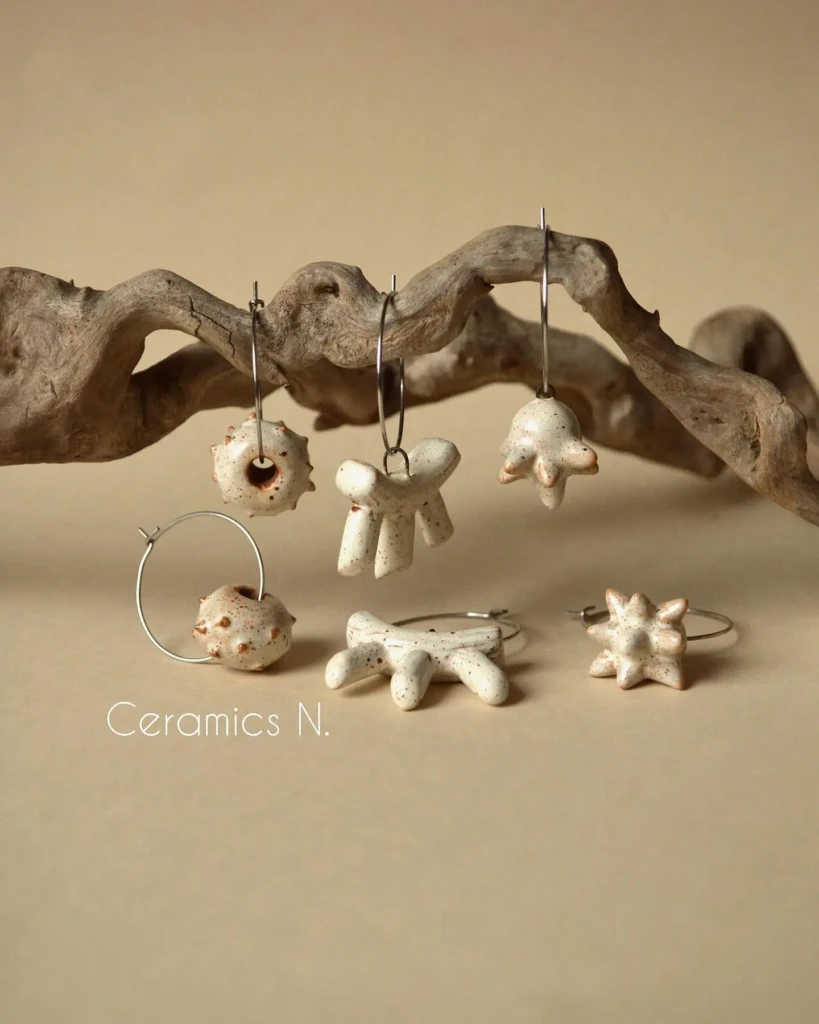
These tiny speckled ceramic charms displayed on driftwood by @ceramicsn_ demonstrate the power of “small and collectible.” Each charm has organic shape variations that celebrate handmade imperfection.
Market Insight: Small ceramic pieces work perfectly as add-on sales. When someone buys a necklace, they might add a charm. Or customers start with an affordable $15 charm and later invest in larger pieces.
Production Tip: Batch-produce small items efficiently. Roll out clay, cut multiple shapes, and fire dozens at once. Your time-to-profit ratio improves dramatically with small pieces.
Gift Market Gold: Small charms are perfect for:
- Stocking stuffers ($15-25)
- Birthday party favors (wholesale to event planners)
- “Just because” gifts
- Zipper pulls, keychains, plant stakes
Ceramic Jewelry Ideas with Impact
Celestial Disc Pendants with Star Imprints (@starry_zvir_studio)
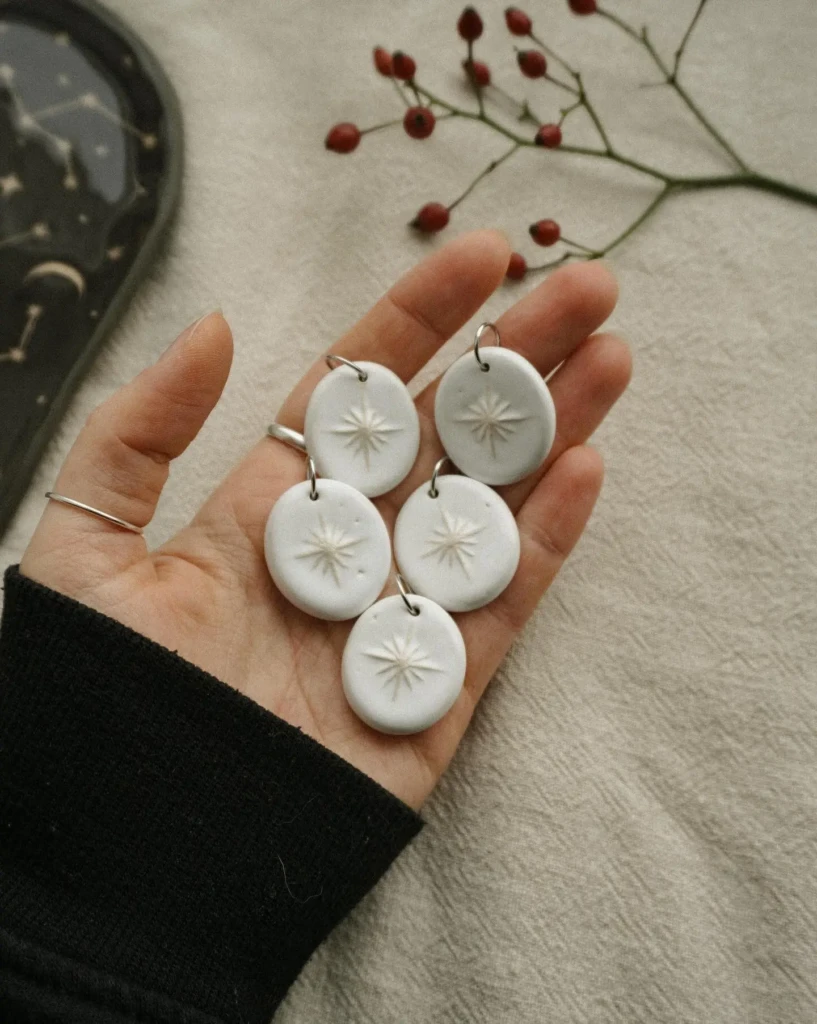
These elegant white ceramic disc pendants by @starry_zvir_studio feature delicate star imprints and tiered designs. The movement created by multiple connected discs makes them eye-catching without being heavy.
Design Psychology: Celestial themes never go out of style. Stars, moons, and suns tap into universal symbolism that resonates across cultures. This makes them easier to market than niche designs.
Pricing Strategy for Earrings:
| Earring Style | Production Time | Material Cost | Suggested Retail Price |
|---|---|---|---|
| Simple studs | 30-45 min | $2-3 | $20-30 |
| Small dangles | 45-60 min | $3-4 | $30-40 |
| Statement dangles | 1-1.5 hours | $4-6 | $45-65 |
| Sculptural pieces | 1.5-2 hours | $5-8 | $65-85 |
Weight Matters: When designing earrings, remember that comfort sells. Test your pieces yourself or with friends. If they’re too heavy for all-day wear, customers won’t buy repeats.
Red Mushroom Pendants (@starry_zvir_studio)
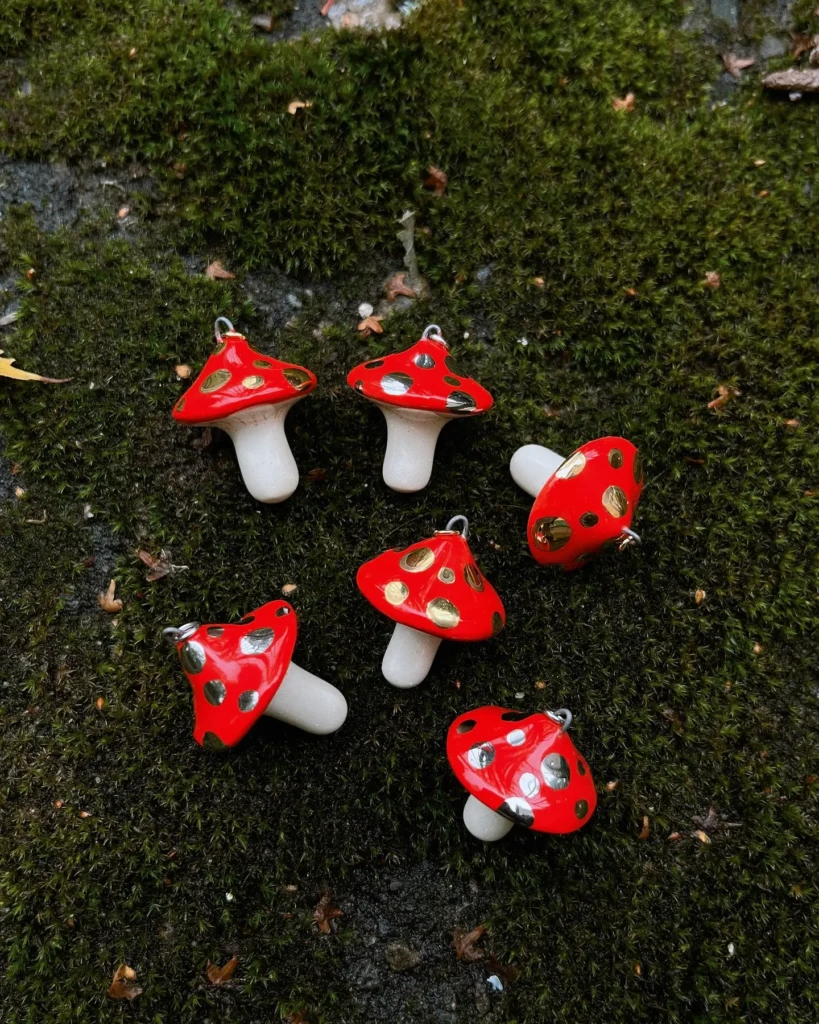
The vibrant red mushroom pendants by @starry_zvir_studio show how whimsy drives sales. That glossy red cap with white stems and gold accent details? Pure joy. These pieces make people smile, and that emotional connection is marketing gold.
Color Psychology: Red is powerful in jewelry. It commands attention, photographs beautifully, and works across seasons. While pastels trend in and out, classic red remains eternally saleable.
Collection Building: Notice how these mushrooms work as:
- Necklace pendants ($35-50)
- Earring dangles ($40-55 pair)
- Zipper pulls/bag charms ($20-30)
- Holiday ornaments ($25-35)
Creating variations of one design across multiple products maximizes your creative investment while giving customers options.
Romantic & Feminine: Ceramic Jewelry Ideas for Special Occasions
Pearl and Ceramic Flower Necklace (@annalaty_jewelry)
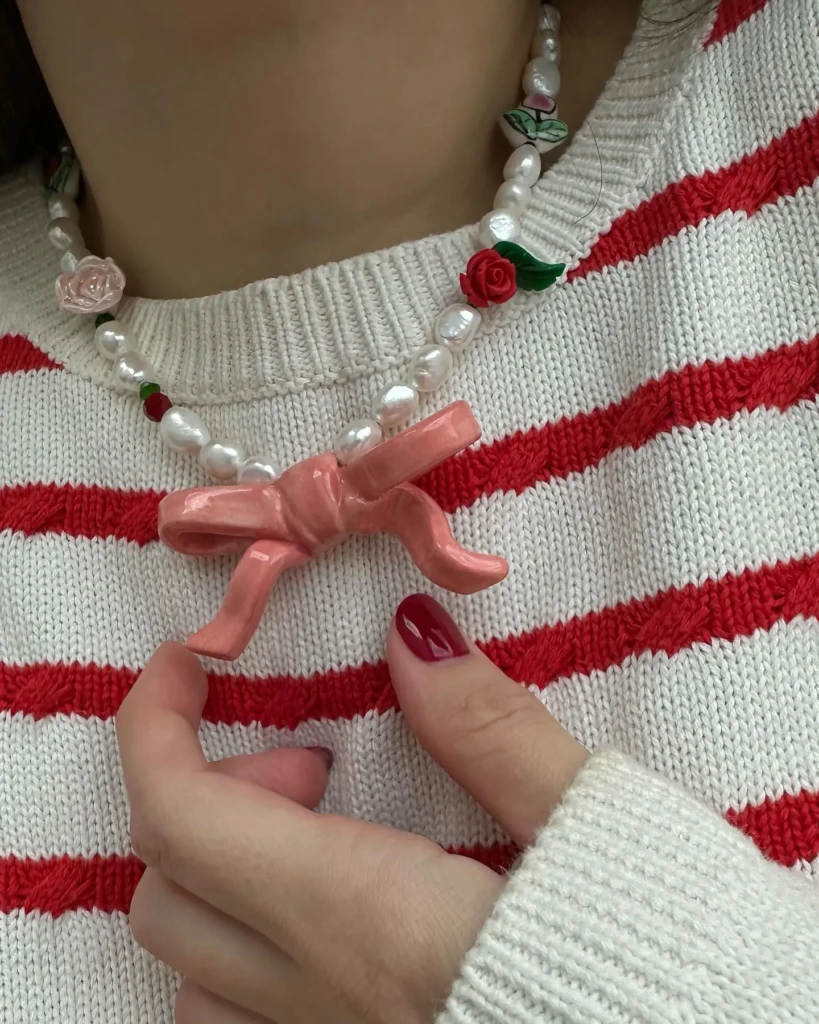
This stunning necklace by @annalaty_jewelry combines baroque pearls with hand-painted ceramic roses and leaves. The mixed materials elevate both components—the pearls make the ceramics feel precious, and the ceramics make the pearls feel artisanal.
Mixed Materials Magic: Don’t feel limited to only ceramic. Combining ceramic with:
- Fresh water pearls
- Brass or gold-filled findings
- Silk ribbons
- Semi-precious stones
- Vintage chains
…creates pieces that command higher prices and appeal to jewelry collectors who appreciate craftsmanship.
Pricing Premium Work: A necklace like this should retail for $120-180. You’re not just selling ceramic beads—you’re selling:
- Artistic vision
- Material sourcing and combination
- Intricate hand-painting
- Assembly expertise
- Wearable art
Wedding Market Opportunity: Ceramic jewelry works beautifully for weddings. Brides want unique pieces, bridesmaids need coordinating jewelry, and mothers-of-the-bride seek elegant accessories. Market toward this demographic with styled photoshoots.
Shell-Inspired Pendant (@naive__ua)
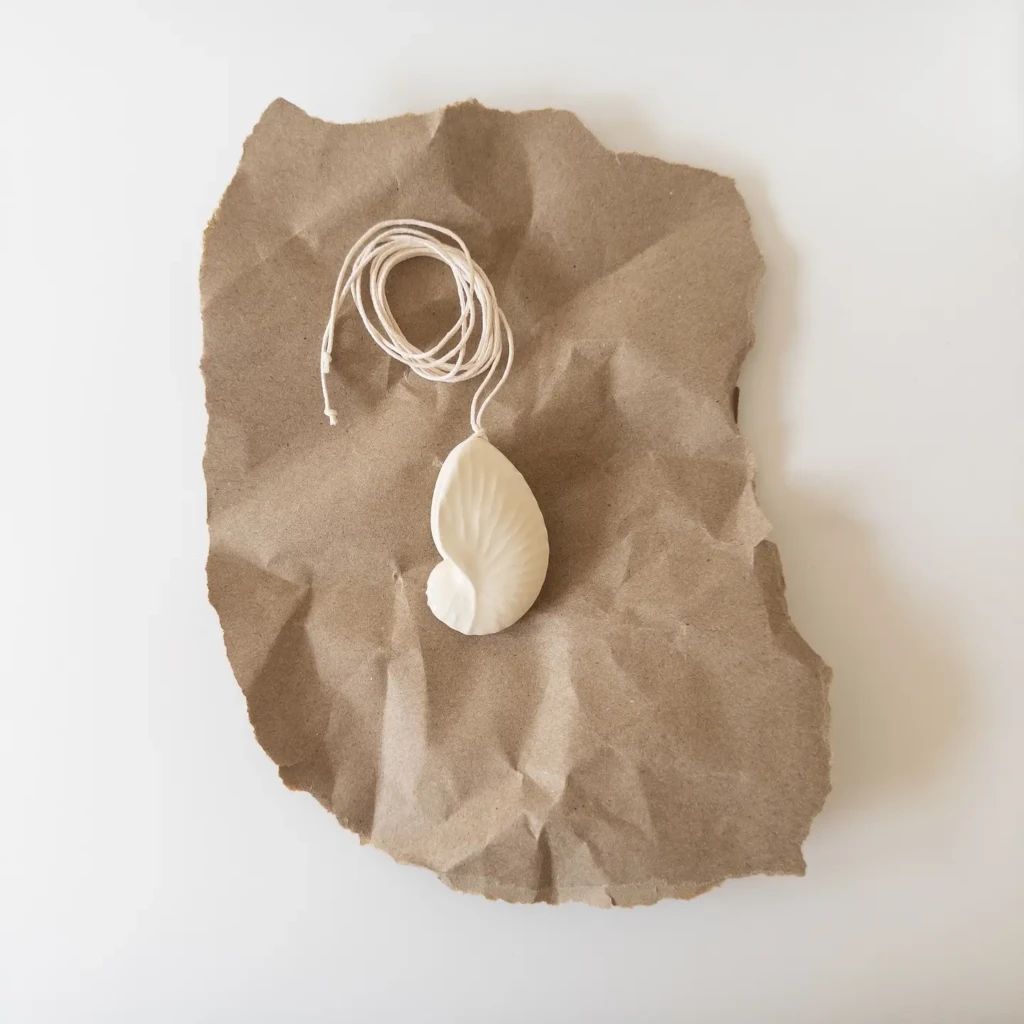
The organic shell form of this pendant by @naive__ua captures nature’s beauty in ceramic. That soft cream color and natural texture create versatile, wearable art that works with everything from jeans to evening wear.
Nature-Inspired Success: Botanical and natural forms consistently sell because they:
- Appeal to broad demographics
- Work across seasons
- Feel timeless rather than trendy
- Photograph beautifully
- Connect emotionally with customers
Marketing Language Matters: Instead of just “ceramic pendant,” describe it as “ocean-inspired ceramic pendant handcrafted from natural clay.” Story sells. Help customers imagine wearing your piece at the beach, on a nature walk, or as their everyday talisman.
Folk Art & Traditional Motifs: Cultural Ceramic Jewelry Ideas
Folk Art Heart Necklace with Dove Details (@annalaty_jewelry)
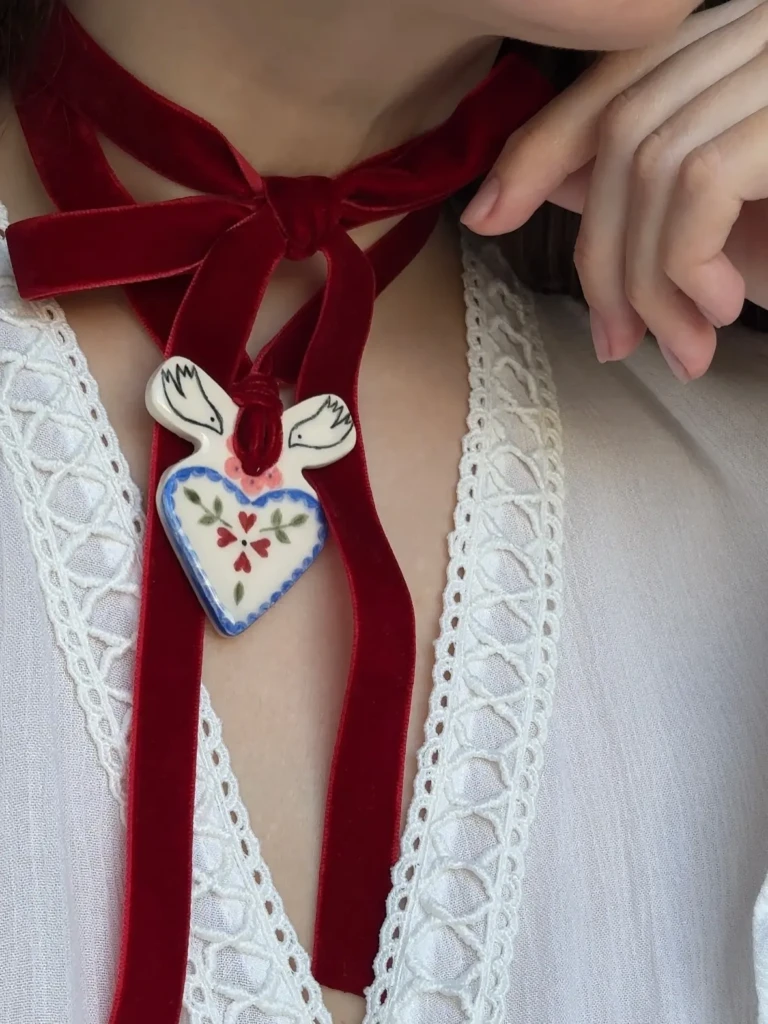
This charming folk art piece by @annalaty_jewelry features traditional motifs—a dove, heart, and hand-painted florals. The red ribbon adds festive appeal, making it perfect for holidays and celebrations.
Cultural Heritage Sells: Folk art-inspired jewelry taps into nostalgia and cultural pride. These pieces appeal to:
- Customers from specific cultural backgrounds
- Collectors of folk art
- People seeking meaningful, story-rich jewelry
- Gift-givers looking for unique, thoughtful presents
Holiday Markets: Folk art ceramic jewelry sells exceptionally well at:
- Christmas markets
- Cultural festivals
- Heritage celebrations
- Museum gift shops
- Boutiques in tourist areas
Pricing Painted Work: Hand-painting justifies premium pricing. A piece like this should retail for $55-75. Document your process with photos or video—showing the intricate painting helps customers understand the value.
Minimalist Ornament Collection (@naive__ua)
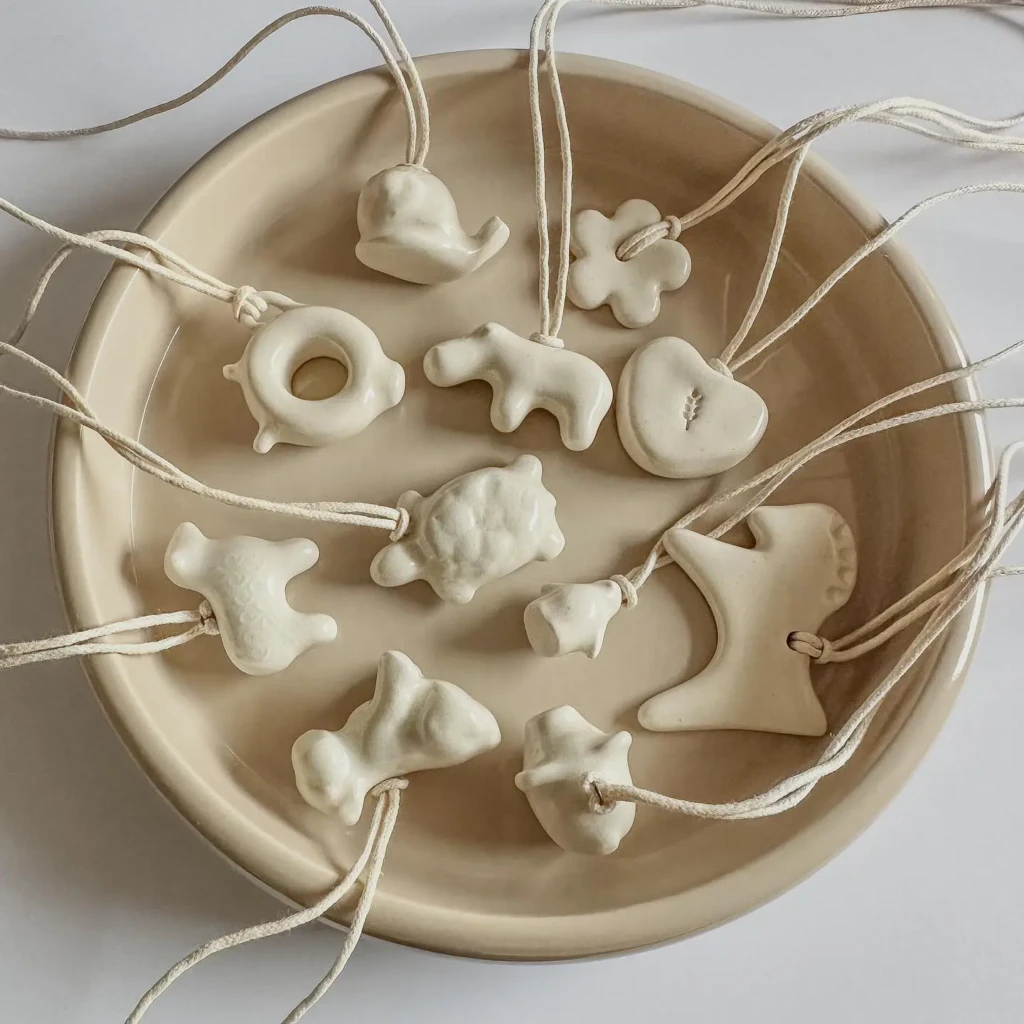
These simple white ceramic ornaments by @naive__ua prove that sometimes less is more. Each shape—heart, flower, star—is instantly recognizable yet distinctly handmade.
Ornament-to-Jewelry Crossover: Small ceramic ornaments easily transition to:
- Pendant necklaces (add a bail)
- Bracelet charms (adjust sizing)
- Earring dangles (create pairs)
- Wine glass charms (add a loop)
This flexibility maximizes your production. Make one design, sell it five ways.
White Clay Advantages:
- Appeals to minimalists
- Works with any wardrobe
- Photographs cleanly
- Shows texture beautifully
- Feels premium
Batch Production Strategy: White pieces fire together easily. Create 30-50 similar items in one session, then add varied surface treatments:
- Some with carved details
- Some with stamped patterns
- Some with painted accents
- Some left plain
This creates variety while maintaining efficiency.
Bold & Artistic: Statement Ceramic Jewelry Ideas
Red Statement Rings Collection (@marichka.studio)
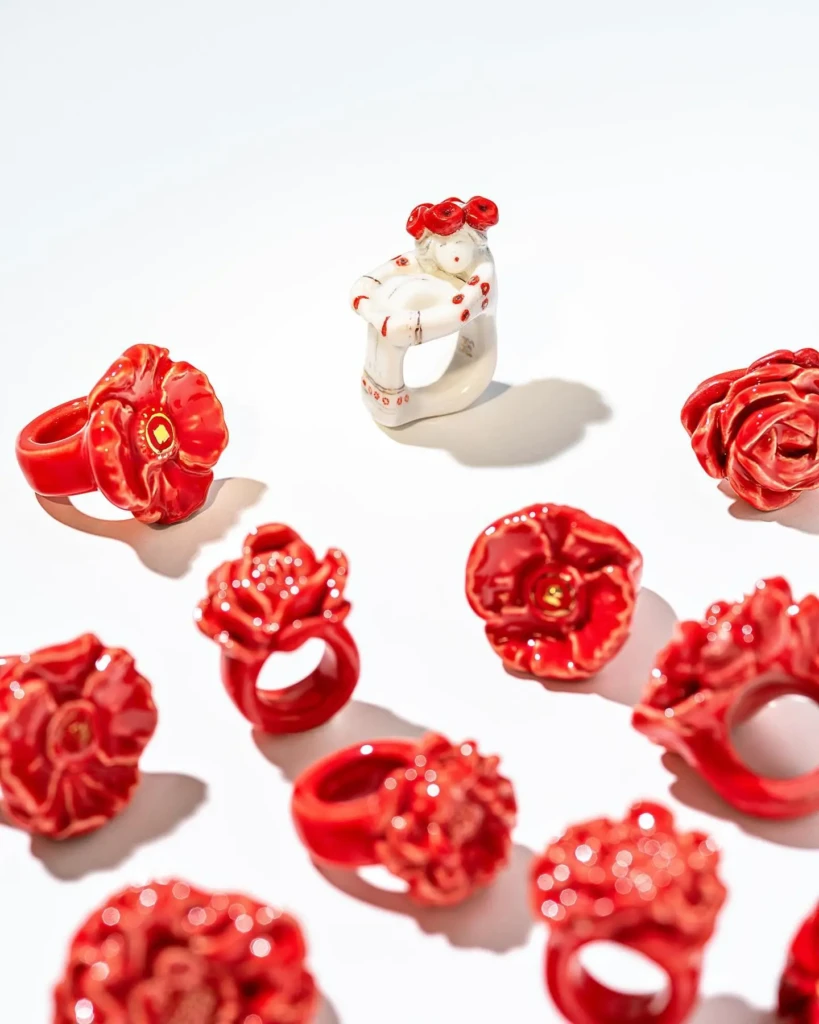
This collection of vibrant red ceramic rings by @marichka.studio is absolutely show-stopping. From sculptural roses to smooth character pieces with gold accents, each ring is wearable sculpture.
Statement Jewelry Economics: Bold pieces command bold prices. These rings could retail for $65-95 each because they:
- Require advanced technical skill
- Use multiple firing for gold accents
- Function as conversation starters
- Replace the need for other accessories
- Serve as confidence boosters
Target Customer: Statement jewelry appeals to:
- Creative professionals
- Artists and designers
- Women 35+
- Special occasion shoppers
- Collectors
Instagram Gold: Bold pieces photograph dramatically. One stunning photo can go viral, bringing thousands of new potential customers. Invest in good photography or learn to shoot your own work well.
Candy-Inspired Ceramic Pendants (@annalaty_jewelry)
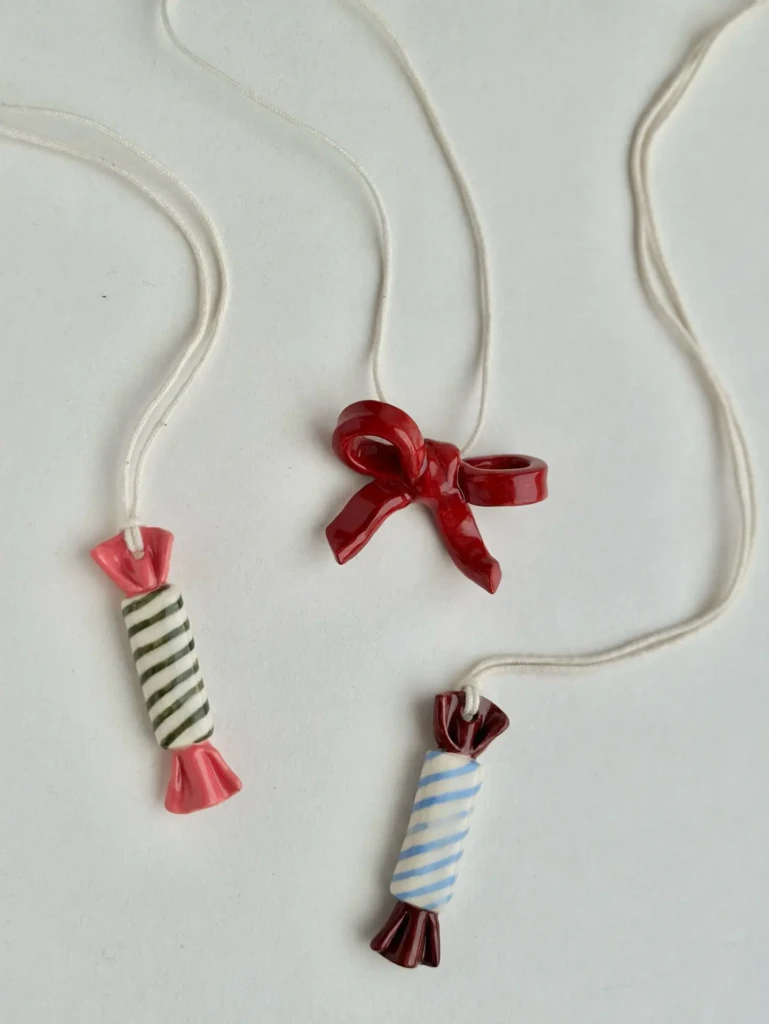
The whimsical striped candy pendants and red bow by @annalaty_jewelry show how playful designs create emotional connections. These pieces make customers smile and remember your work.
Playful Pricing Strategy: Fun, lighthearted pieces often sell better at slightly lower price points ($30-45) because they’re impulse purchases. Customers think “this makes me happy” rather than “this is an investment piece.”
Collection Themes: Create mini-collections around playful themes:
- Candy shop collection
- Garden collection
- Ocean treasures
- Woodland creatures
- Celestial magic
Collections encourage customers to buy multiple pieces and make marketing much easier. You can create photoshoots, stories, and seasonal campaigns around cohesive themes.
Luxury Details: Ceramic Jewelry Ideas with Gold Accents
Ceramic Bird Ornaments (@lovy_leva_)
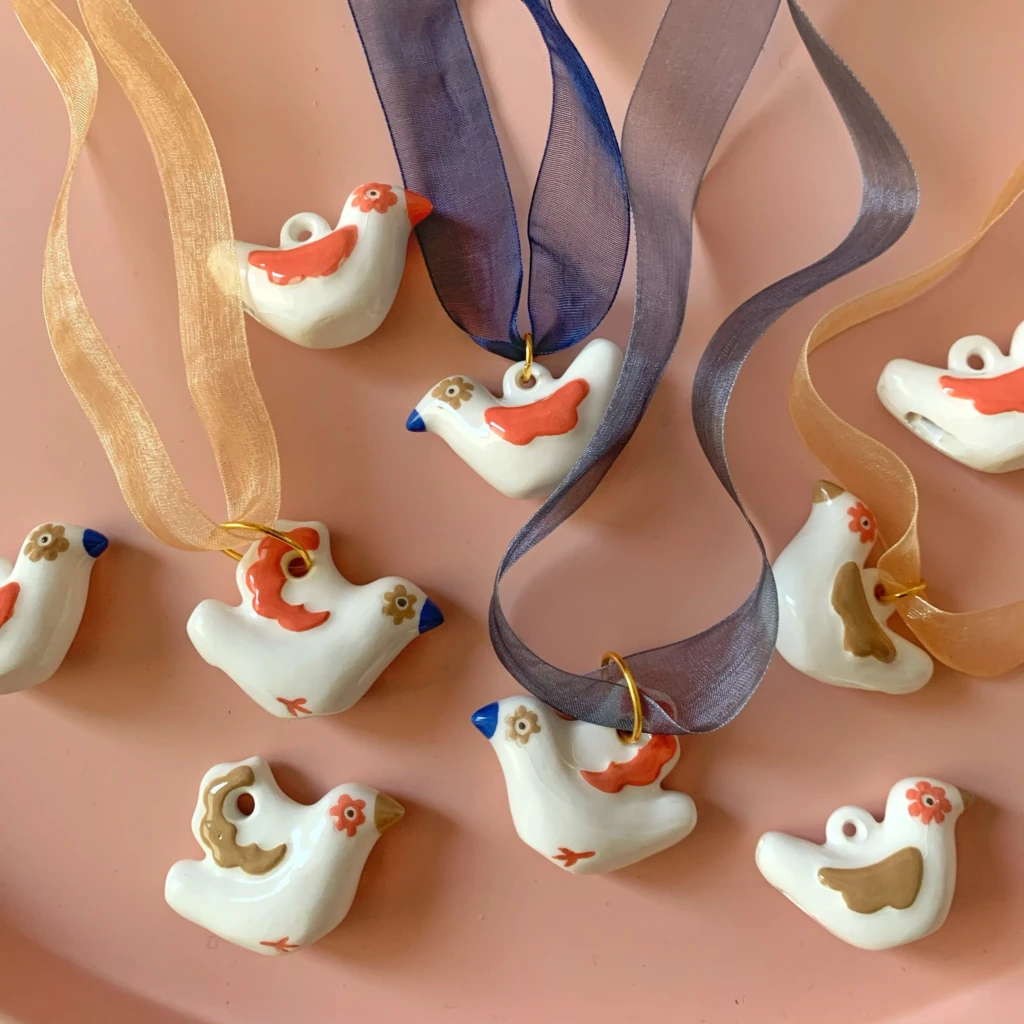
These adorable ceramic birds by @lovy_leva_ on decorative ribbons demonstrate how thoughtful finishing elevates pieces. The hand-painted details and folk art patterns create heirloom quality.
Finishing Touches Matter:
- Quality jump rings and findings
- Beautiful ribbons or chains
- Protective packaging
- Care instruction cards
- Artist signature or stamp
These details justify higher prices and reduce returns because customers perceive professionalism and care.
Gold-Framed Miniature Pendants (@starry.zvir.studio)
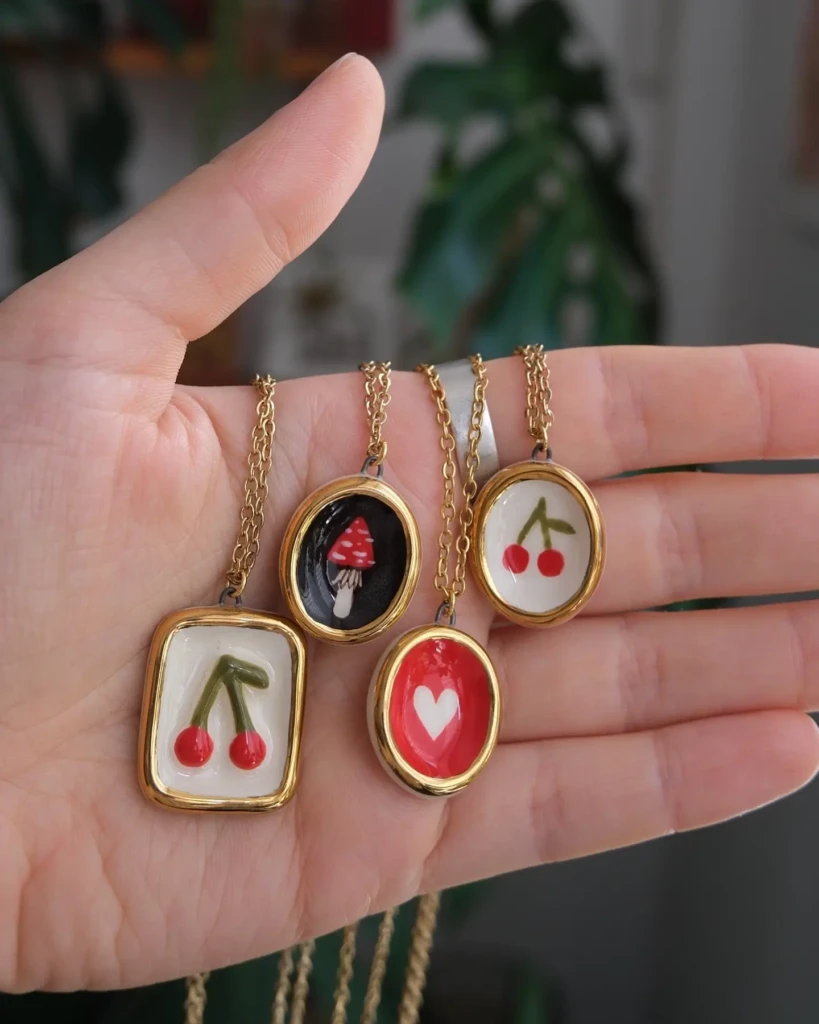
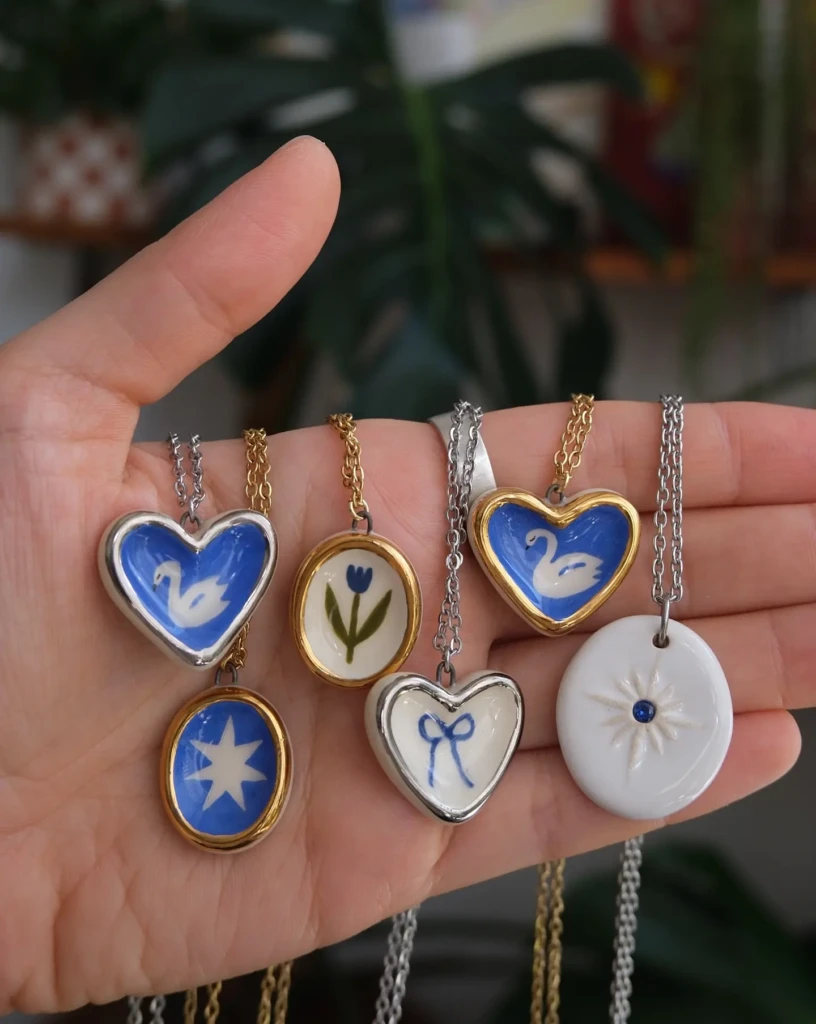
These tiny ceramic cameos by @starry.zvir.studio in gold frames show how combining ceramic with precious metal creates luxury positioning. The mushroom, cherries, and heart motifs in ornate frames feel collectible and special.
Luxury Pricing Framework:
| Detail Level | Base Price | With Gold Accent | With Gold Frame |
|---|---|---|---|
| Simple ceramic | $30-40 | $45-60 | $75-95 |
| Painted ceramic | $40-55 | $60-80 | $95-125 |
| Intricate work | $55-75 | $80-110 | $125-165 |
Gold Options:
- Gold leaf (affordable, delicate)
- Gold luster (fired on, durable)
- Gold-filled findings (quality, lasting)
- Gold-plated frames (accessible luxury)
- 14k gold (true luxury, custom orders)
Choose your gold technique based on target market and price point. You can offer different tiers to reach various customers.
Heart-Themed Designs: Romantic Ceramic Jewelry Ideas
Pearl and Ceramic Heart Rings (@good_eye_project)
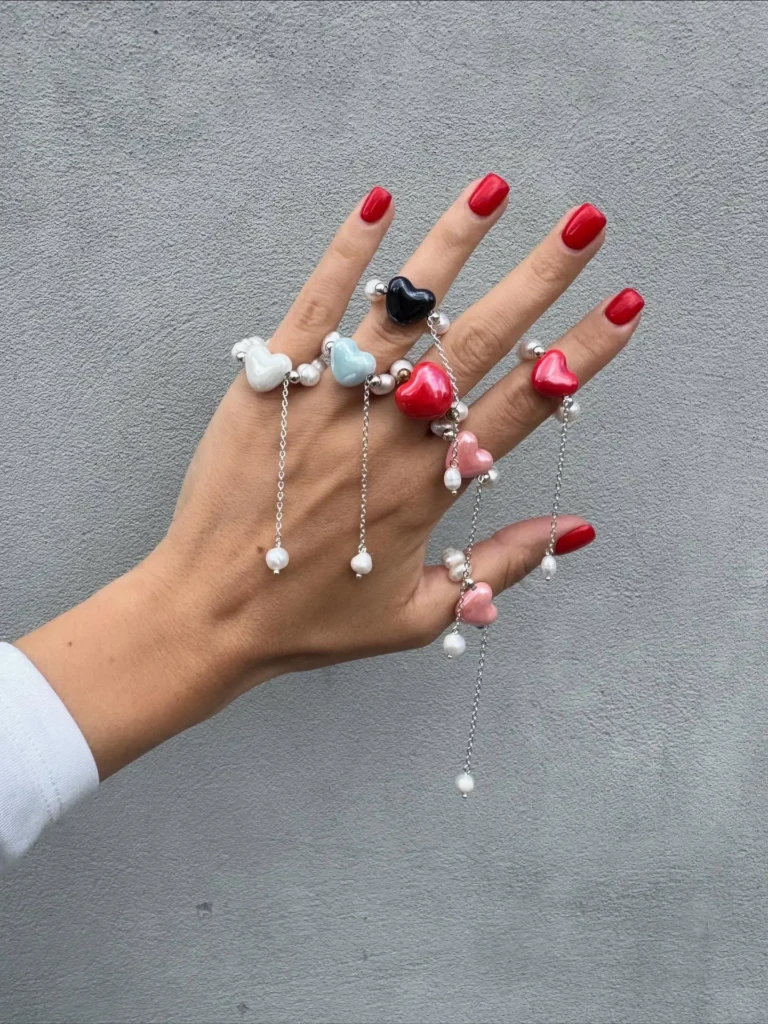
These gorgeous rings by @good_eye_project combining ceramic hearts in various colors with dangling pearls show expert craftsmanship. Each color tells a different story—passionate red, innocent white, sophisticated black, soft pink.
Color Psychology in Jewelry:
| Color | Emotion | Best Sellers | Target Customer |
|---|---|---|---|
| Red | Passion, love | Valentine’s, anniversaries | Romantic, bold |
| White | Purity, elegance | Weddings, formal | Classic, timeless |
| Black | Sophistication | Everyday luxury | Modern, edgy |
| Pink | Sweetness, youth | Gifts, self-purchase | Feminine, playful |
| Blue | Calm, trust | Professional wear | Serene, confident |
Ring Sizing Challenges: Adjustable rings work well for ceramic jewelry. Most ceramic rings use:
- Adjustable band bases
- One-size wire wrapping
- Size-specific custom orders
Be clear about sizing in product descriptions to prevent returns.
Ceramic Key Pendant with Hearts (@bigme.ua)
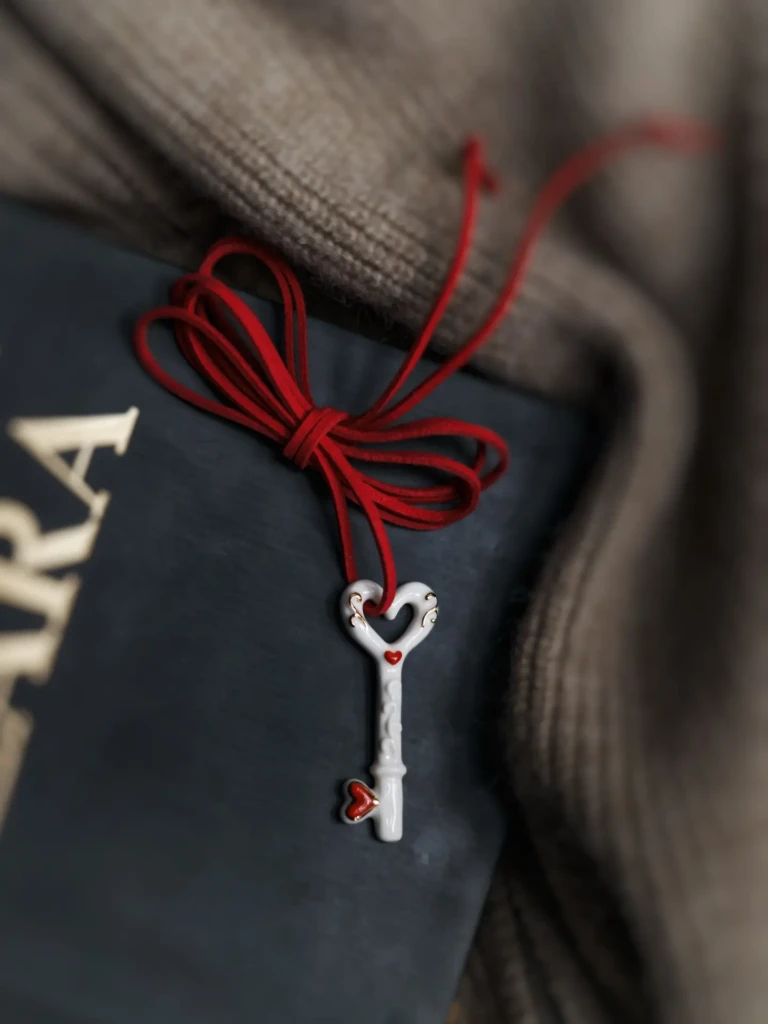
The white ceramic key pendant with red heart details by @bigme.ua taps into powerful symbolism. Keys represent mystery, new beginnings, and unlocking potential—meaningful motifs that customers connect with emotionally.
Symbolic Jewelry Sells Stories: When customers buy symbolic pieces, they’re buying:
- A reminder of personal strength
- A memorial or celebration
- A manifestation tool
- A connection to loved ones
- A personal talisman
Your marketing should honor these deeper meanings. Instead of just “ceramic key necklace,” try “hand-formed ceramic key pendant symbolizing new beginnings, crafted with intention for your journey.”
Building Your Ceramic Jewelry Business: Practical Strategies
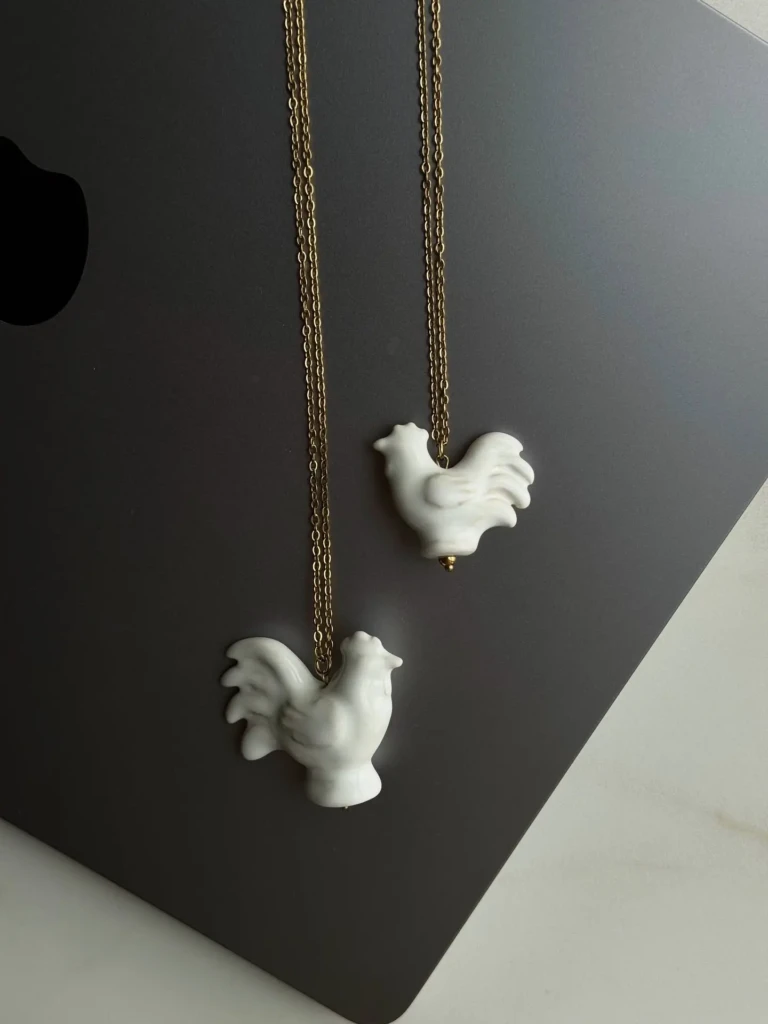
Now that you’ve seen what sells, let’s talk about actually building your business. Here’s a realistic roadmap for turning your ceramic jewelry passion into income:
Start Smart: Your First Collection
Don’t try to make everything at once. Choose ONE collection type to launch with:
Option 1: Earring Collection (3-5 styles)
- Lowest price point ($25-65)
- Fast sellers
- Easy to photograph
- Perfect for testing market
Option 2: Necklace Collection (3-4 styles)
- Mid-range price ($40-85)
- Gift market appeal
- Higher profit per piece
- Requires more inventory investment
Option 3: Mixed Collection (2 earrings, 2 necklaces, 1 ring)
- Shows range
- Appeals to different budgets
- Encourages multiple purchases
- More complex to produce
Most successful ceramic jewelers start with earrings because they’re easier to produce in quantity, ship safely, and customers often buy multiples as gifts.
Pricing Your Ceramic Jewelry for Profit
Here’s a simple formula that actually works:
Retail Price = (Materials + Hourly Rate × Time) × 2.5
Your hourly rate should be AT LEAST $30, ideally $40-60. The 2.5 multiplier covers:
- Overhead (kiln electricity, studio rent, packaging)
- Marketing time (social media, photography, emails)
- Administrative work (bookkeeping, inventory, customer service)
- Profit margin for business growth
Let’s Calculate a Real Example:
Painted Ceramic Earrings:
- Materials (clay, findings, glaze): $4
- Time (forming, drying, firing, painting, assembly): 1.5 hours
- Your hourly rate: $40
- Formula: ($4 + $40 × 1.5) × 2.5 = $154
Wait, that feels high! Let’s break it down:
- Wholesale price (if selling to shops): $60-65
- Retail price (your shop/website): $75-85
- Market price (what competitors charge): $70-90
See? Your math lands right in the acceptable market range. The problem most ceramic artists have isn’t overpricing—it’s UNDER-pricing and burning out.
Production Planning That Prevents Burnout
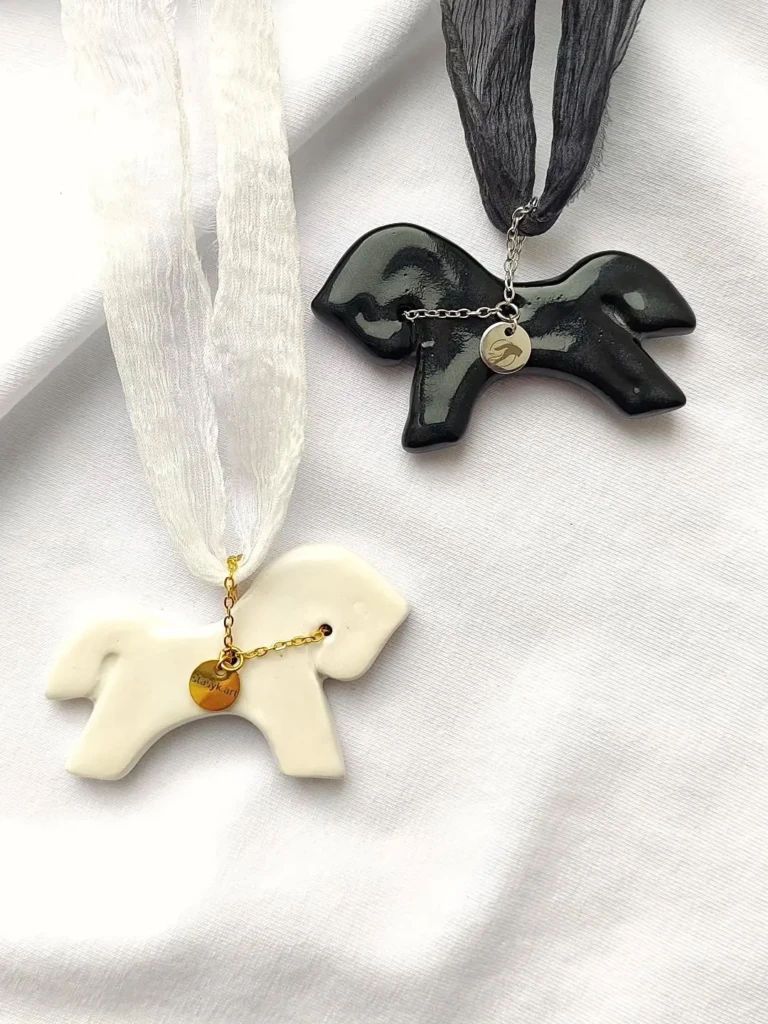
You can’t scale a jewelry business by working harder. You need smart systems:
Batch Production Schedule:
| Day | Activity | Output |
|---|---|---|
| Monday | Roll, cut, shape 50 pieces | Ready for drying |
| Tuesday | Trim, refine, make jewelry findings | 50 bisque-ready pieces |
| Wednesday | Load kiln, bisque fire | First firing |
| Thursday | Glaze or paint 50 pieces | Decorated, ready for final |
| Friday | Load kiln, glaze fire | Final firing |
| Weekend | Photography, assembly, listing | 40-45 finished pieces listed |
Reality Check: Not every piece survives firing. Budget for 15-20% loss from cracks, glaze issues, or pieces you reject for quality. This is NORMAL. Factor it into your pricing.
Where to Sell Your Ceramic Jewelry
Different platforms serve different purposes:
Etsy ($, Fast Start)
- Pro: Built-in traffic, easy setup, ceramic-friendly audience
- Con: 10% fees, high competition, algorithm changes
- Best for: Testing designs, building initial reviews
Your Own Website ($$, Long-term Investment)
- Pro: No per-sale fees, own your customer data, brand control
- Con: Must drive your own traffic, requires marketing skills
- Best for: Established artists, building email lists
Instagram/Facebook Shops (Free, Essential)
- Pro: Where customers already spend time, visual platform
- Con: Organic reach declining, requires consistent posting
- Best for: Building community, showcasing process
Craft Fairs & Markets ($$$, High Impact)
- Pro: Face-to-face sales, higher average orders, immediate feedback
- Con: Booth fees ($100-500), time-intensive, weather dependent
- Best for: Local brand building, testing new designs
Boutique Wholesale ($$, Steady Income)
- Pro: Consistent orders, brand exposure, less marketing work
- Con: 50% wholesale discount, minimum orders, payment terms
- Best for: Efficient producers with signature styles
Most successful ceramic jewelers use multiple channels, starting with one primary platform and gradually expanding.
Marketing Your Ceramic Jewelry Without Burning Out
You don’t need to be everywhere. Choose 2-3 marketing methods and do them consistently:
Instagram Strategy (3-5 posts/week):
- Finished pieces on neutral backgrounds
- Process videos (huge engagement)
- Behind-the-scenes studio shots
- Customer photos (always ask permission)
- Restock announcements
Pinterest Marketing (5-10 pins/week): Ceramic jewelry is PERFECT for Pinterest. Create pins showing:
- Your pieces styled with outfits
- Close-up detail shots
- Collection groupings
- “How to wear” guides
- Gift guides by occasion
Pinterest drives traffic for MONTHS. One good pin can send customers for an entire year. Learn more about leveraging Pinterest for your handmade business.
Email Marketing (1-2 emails/week): Build an email list from day one. Offer 10% off first purchase for signups. Email subscribers buy 3-5x more than social followers because:
- They already raised their hand as interested
- Email feels more personal
- You own the list (platform algorithms don’t matter)
- You can share stories and build relationships
Content Ideas:
- New collection launches
- Restock alerts
- Behind-the-scenes stories
- Care instructions and tips
- Customer spotlights
Dealing with Common Challenges
“My pieces keep cracking in the kiln.” This is the #1 frustration for new ceramic jewelers. Common causes:
- Clay too thick (keep jewelry pieces under 1/4 inch)
- Trapped air bubbles (wedge thoroughly)
- Firing too fast (slow your ramp rate)
- Uneven drying (cover pieces loosely while drying)
Don’t give up. Every ceramic artist loses pieces. It’s part of the craft.
“No one is buying.” If you’ve posted consistently for 3+ months with no sales:
- Reassess your pricing (too high OR too low)
- Improve your photography (seriously, this matters HUGELY)
- Clarify your target customer (who is this for?)
- Check your product descriptions (do they tell a story?)
- Seek feedback from successful makers (join communities)
“I’m overwhelmed by all the business stuff.” Start with the minimum viable business:
- Create 10-15 pieces
- Take good photos
- List on Etsy
- Share on Instagram
- See what sells
You don’t need a logo, professional photoshoot, email marketing software, or business cards on day one. You need SALES. Everything else can wait.
“How do I scale without losing the handmade quality?” You might not need to scale through volume. Consider:
- Raising prices (fewer sales at higher profit)
- Creating limited edition pieces (scarcity increases value)
- Teaching workshops (monetize your expertise)
- Licensing designs (passive income)
- Hiring production help (stay in your creative zone)
Growth doesn’t always mean making more pieces. Sometimes it means working smarter, not harder.
My Personal Take on Building a Ceramic Jewelry Business
I’ve watched so many ceramic artists struggle not because their work isn’t good enough, but because they don’t treat it like a real business. They undercharge, over-deliver, and burn out within a year.
Here’s what I want you to remember: Your art has value. Your time has value. Your expertise has value. Price accordingly. Market confidently. And please, please don’t compare your beginning to someone else’s middle.
That ceramic jeweler with 50k Instagram followers? They started where you are. They had pieces crack, sales slump, and moments of doubt. The difference is they kept going. They treated their craft as a legitimate business, learned from mistakes, and built slowly.
You can absolutely do this. Your unique artistic voice is your biggest asset—there’s only one YOU. Price your work properly, create consistently, and share your story authentically. The customers who appreciate handmade ceramic jewelry are actively looking for work like yours.
Start small. Start today. Your jewelry business is waiting for you to claim it.
Frequently Asked Questions About Ceramic Jewelry Business
What type of clay is best for making ceramic jewelry?
Porcelain and white stoneware work best for jewelry because they fire to a smooth, refined finish and stay relatively lightweight. Porcelain creates the most delicate, translucent pieces but requires more skill to work with as it’s less forgiving. White stoneware offers similar aesthetics with more durability and easier handling, making it perfect for beginners. Avoid heavily grogged clay (clay with sand/grit added) as it creates rough textures unsuitable for wearable pieces. For your first attempts, buy a smooth white stoneware labeled for hand-building—you’ll get beautiful results without fighting difficult clay. As you gain confidence, experiment with porcelain for those ethereal, high-end pieces.
How do I make ceramic jewelry waterproof?
Food-safe glazes fully fired to maturity make ceramic jewelry water-resistant for everyday wear including hand-washing and rain. However, avoid submerging glazed ceramic jewelry in water (showers, swimming) as prolonged water exposure can eventually compromise glaze surfaces. For unglazed ceramic, apply several coats of ceramic sealer or jewelry-specific varnish after firing. Many jewelers use a combination approach: glaze the decorative side fully, seal the back for extra protection. Always remove ceramic jewelry before swimming, showering, or exercising. Include care cards with each piece explaining this—customers appreciate guidance and it prevents negative reviews. The key is setting proper expectations: ceramic jewelry is durable for daily wear but isn’t indestructible like metal.
What tools do I need to start making ceramic jewelry?
Start with basics you might already have: rolling pin (or slab roller), craft knife, needle tool, sponge, and small cookie cutters or clay cutters for shapes. Jewelry-specific additions: small circle cutters (for earrings), texture stamps or found objects, sandpaper for smoothing edges, and a pin tool for making holes. For finishing, invest in quality jewelry findings (earring posts, jump rings, chains) from jewelry supply companies rather than craft stores—the quality difference matters. You’ll need a kiln eventually, but many beginners rent kiln space at local pottery studios or makerspaces for $5-15 per firing. This lets you test the business before investing $500-2000 in a tabletop kiln. Don’t feel pressured to buy everything immediately—start simple and add tools as your skills and sales grow.
How long does it take to make ceramic jewelry?
A simple pair of earrings takes approximately 2-3 hours total spread across several days: 30 minutes forming and cutting, overnight drying, 30 minutes trimming/smoothing, bisque firing (8-12 hours), 30 minutes glazing or painting, glaze firing (8-12 hours), 30 minutes for assembly with findings. More complex pieces with sculptural elements, multiple glaze layers, or gold accents can take 4-6 hours of hands-on time plus multiple firings. The actual timeline is usually 5-7 days from start to finished piece due to required drying and firing time. This is why batch production works so well—make 20 pairs of earrings in one session rather than one pair at a time. Your hands-on time per piece drops dramatically when working in batches, making the business more profitable and sustainable.
Can I sell ceramic jewelry on Etsy without business license?
Technically yes, but it’s not wise. Requirements vary by location, but most areas require a business license once you’re regularly selling (even online) and you definitely need to collect and remit sales tax. Operating without proper licensing risks fines and legal issues that could cost thousands. Getting legitimate is usually simple and affordable: most cities charge $50-150 annually for a home business license, and sales tax permits are often free. Proper licensing also allows you to deduct business expenses on your taxes (clay, kiln, supplies, photography equipment, portion of home rent/utilities) which can save you hundreds or thousands. Think of licensing as an investment in treating your craft professionally, not an obstacle. Check with your local city/county clerk’s office or Small Business Development Center for specific requirements in your area.
How do I price ceramic jewelry that I make as a hobby?
If you’re making jewelry as a hobby, you’re not trying to replace your income—you just want to cover costs and maybe have a little profit. Here’s a simplified approach: calculate your material costs (clay, glaze, findings, packaging) and multiply by 4. This covers your materials, compensates you modestly for time, and leaves room for the occasional sale or market booth discount. For example, if earrings cost you $5 in materials, price them at $20. This is lower than professional pricing but appropriate for hobbyists who value creative enjoyment over maximum profit. However, be mindful: severe underpricing hurts professional ceramic artists trying to make a living. If you start selling regularly and making decent income, reassess your pricing to reflect the true value of handmade work. Even hobbies deserve fair compensation for skilled work!
What are the best ceramic jewelry designs for beginners?
Start with simple geometric shapes—circles, ovals, rectangles, and teardrops. These shapes are forgiving to cut, easy to sand smooth, fire predictably, and look professional finished. Earrings are the perfect beginner project because small mistakes are less visible and you can experiment with different finishes quickly. Try making 5-10 pairs of simple disc earrings, varying the glazes, textures, or painted details. This teaches you the full process without overwhelming complexity. Avoid detailed sculptural work, thin delicate pieces, or complex assemblies until you’ve successfully completed several simple projects. Master the basics first: consistent thickness, smooth edges, properly placed holes, and successful firings. Once those fundamentals are solid, your creativity can soar because you’ll have technical confidence. Simple designs also sell extremely well—don’t assume “simple” means “less valuable.”
How do I ship ceramic jewelry safely?
Package ceramic jewelry in a rigid box (never padded envelopes) with multiple layers of protection: wrap each piece individually in tissue paper, then bubble wrap, then secure in a small box with additional padding. For earrings, use jewelry gift boxes or cardboard earring cards inside a slightly larger shipping box. The piece should NOT move when you shake the package. Include a care instruction card and your business card. Ship via tracked services (USPS First Class or Priority) and always purchase shipping insurance for pieces over $50. Budget shipping costs into your pricing—free shipping with prices $2-5 higher sells better than listing shipping separately. Proper packaging prevents damage and shows professionalism, but it adds to costs: factor in boxes ($0.50-1), padding ($0.25-0.50), tissue ($0.10), and postage ($4-8) when pricing. Returns due to damage are much more expensive than proper packaging!
Meta Description: Get 15+ profitable ceramic jewelry ideas with pricing strategies, business tips, and step-by-step guidance for turning your passion into income.
SEO Tags: ceramic jewelry ideas, handmade ceramic jewelry, ceramic earrings, pottery jewelry business, selling ceramic jewelry, ceramic pendant necklace, artisan ceramic jewelry

Hey there! I know starting a business can feel overwhelming, so let me share some really simple idea
Why Use a Website Template for Your Candle Shop? In my opinion, using a website template for your ca
Okay, so here’s what I discovered after spending way too many hours analyzing Etsy pottery sho
Leave a Reply