

Handmade Ceramic Dishware: 20 Inspiring Examples That Sell (Guide for Makers)
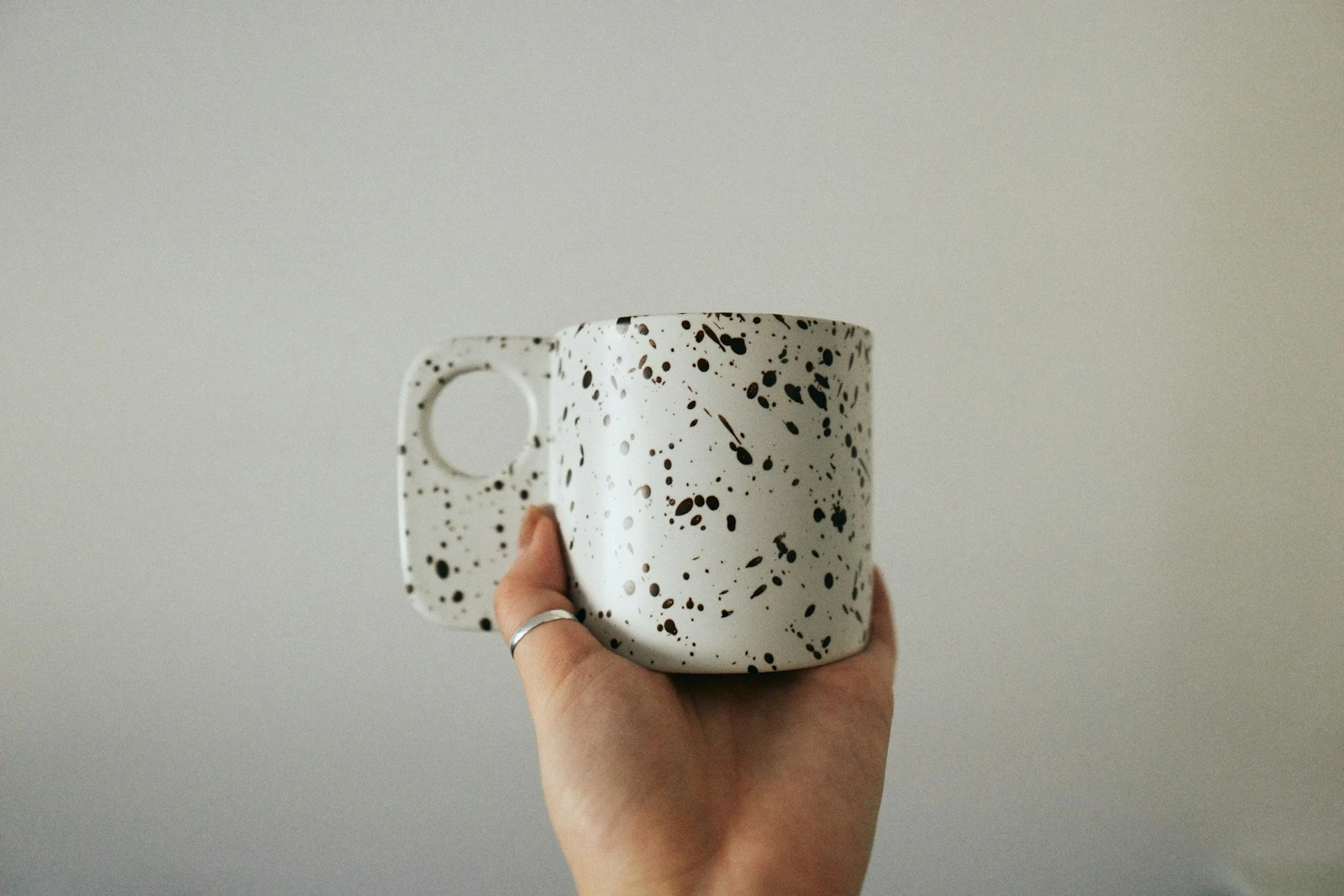
If you’re a ceramic artist dreaming of turning your passion into a thriving business, you’re in exactly the right place. Maybe you’re already selling a few pieces here and there, or perhaps you’re still in that exciting phase where friends keep saying “you should totally sell these!” Either way, you know that gorgeous handmade ceramic dishware has real market potential – you just need to figure out how to make it work as a business.
Today, I’m sharing 20 stunning examples of handmade ceramic dishware that actually sells, along with practical insights about what makes these pieces marketable. We’ll talk pricing strategies, customer psychology, and how to position your unique ceramic style in a crowded marketplace. Whether you’re working from a home studio or dreaming of expanding your pottery business, this guide will show you what’s working for successful ceramic artists right now.
The best part? Every single piece you’re about to see proves that there’s room for YOUR unique artistic voice in the handmade ceramic dishware market.
Why Handmade Ceramic Dishware Is a Smart Business Choice
Let’s talk business realities for a moment. The handmade ceramics market has been growing steadily, with consumers increasingly willing to pay premium prices for artisan-made pieces. According to recent craft industry reports, functional pottery – especially mugs, plates, and bowls – consistently ranks among the top-selling handmade items.
Why? Because handmade ceramic dishware hits that sweet spot between practical and special. People use these pieces daily, which means they’re willing to invest in quality. Plus, the rising interest in intentional living habits and mindful consumption means more customers actively seek out handmade alternatives to mass-produced items.
The key is understanding what makes certain pieces sell while others sit on the shelf. That’s exactly what we’re exploring today.
Whimsical Character Pieces: Creating Emotional Connections
Adorable Cat Mug with Scarf Detail (@ubo_decor)

This charming orange tabby cat perched on a cream-colored mug by @ubo_decor shows exactly why character pieces sell so well. The hand-painted details – from the plaid scarf to the tiny umbrella illustration – create an instant emotional connection. Customers don’t just see a mug; they see personality and story.
Business Insight: Character pieces typically command 30-50% higher prices than plain handmade ceramic dishware because of their “giftability factor.” People buy these for themselves AND as gifts. Consider creating small series of animal characters – cats, dogs, birds – that can become your signature style.
Pricing Strategy: A piece like this could easily sell for $45-65, especially if you market it as a “cozy autumn collection” or seasonal release.
Geese Family Mug (@ubo_decor)

The sculptural geese adorning this yellow mug with turquoise interior by @ubo_decor demonstrate the power of dimensional details. These aren’t just painted – they’re sculpted elements that make the piece interactive and tactile.
Marketing Angle: Three-dimensional handmade ceramic dishware photographs beautifully for social media. These pieces create that “scroll-stopping” effect that drives engagement and sales on platforms like Instagram and Pinterest.
Production Consideration: Yes, sculptural pieces take more time, but they also justify higher price points. If you’re running a small business, balance these labor-intensive pieces with simpler designs for steady income.
Hand-Painted Botanical Designs: Timeless and Marketable
Butterfly and Wildflower Plate (@jane_and_mery_potteryandglass)
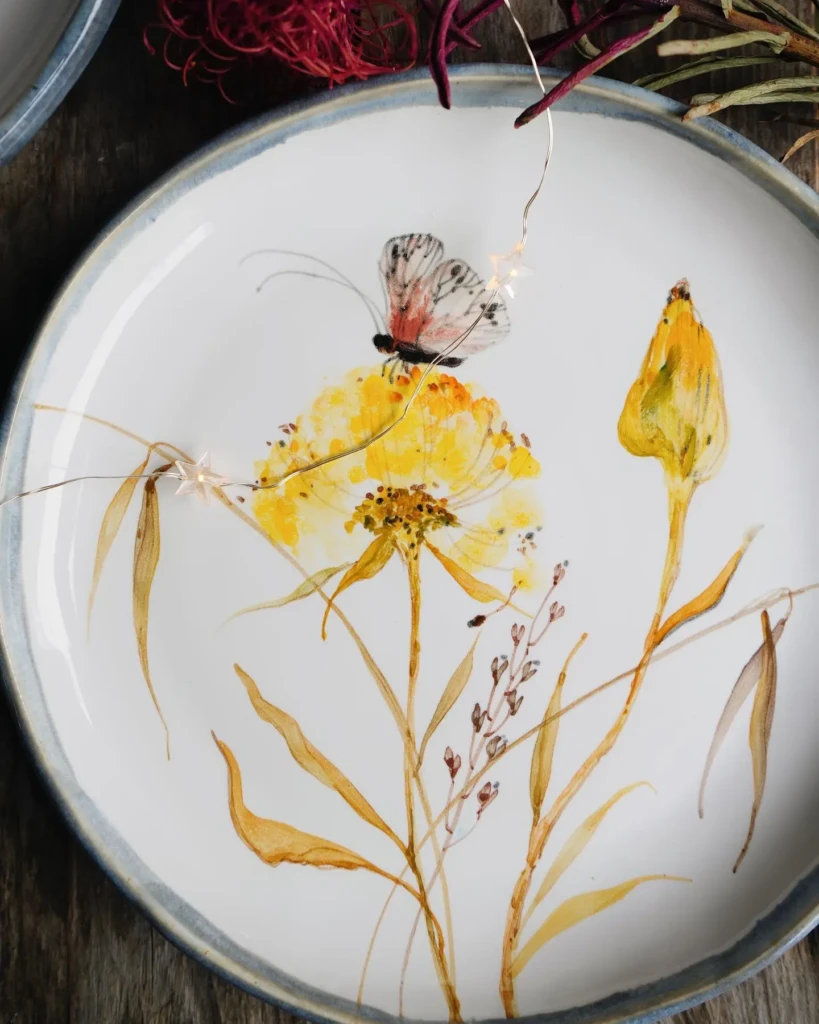
This delicate hand-painted plate by @jane_and_mery_potteryandglass featuring a butterfly on golden wildflowers represents a perennial bestseller category. Botanical designs appeal to a broad customer base and work across multiple seasons.
Why It Sells: The soft color palette and nature-inspired imagery tap into the “cottagecore” and natural living aesthetics that dominate current home décor trends. The blue rim detail adds just enough color contrast to make the piece feel complete.
Business Strategy: Create botanical plate series that customers can mix and match. Offer different flower varieties or insects so collectors can build their own custom set. This encourages repeat purchases.
Pricing Insight: Hand-painted dinner plates typically sell for $40-75 each, with dessert plates at $30-50. A four-piece place setting could command $200-300.
Bee and Botanical Collection (@jane_and_mery_potteryandglass)

The second plate in this series by @jane_and_mery_potteryandglass features a detailed bee among colorful wildflowers. Notice how the artist varies the composition while maintaining a cohesive style – this is crucial for building a collection that customers recognize as “yours.”
Collection Strategy: When developing your handmade ceramic dishware line, create variations within a theme. This plate coordinates with the butterfly piece but stands alone as a unique artwork. Customers love having options while staying within a cohesive aesthetic.
Artistic Statement Pieces: Positioning as Fine Art
Portrait Plate with Colorful Border (@ksenaceramics)
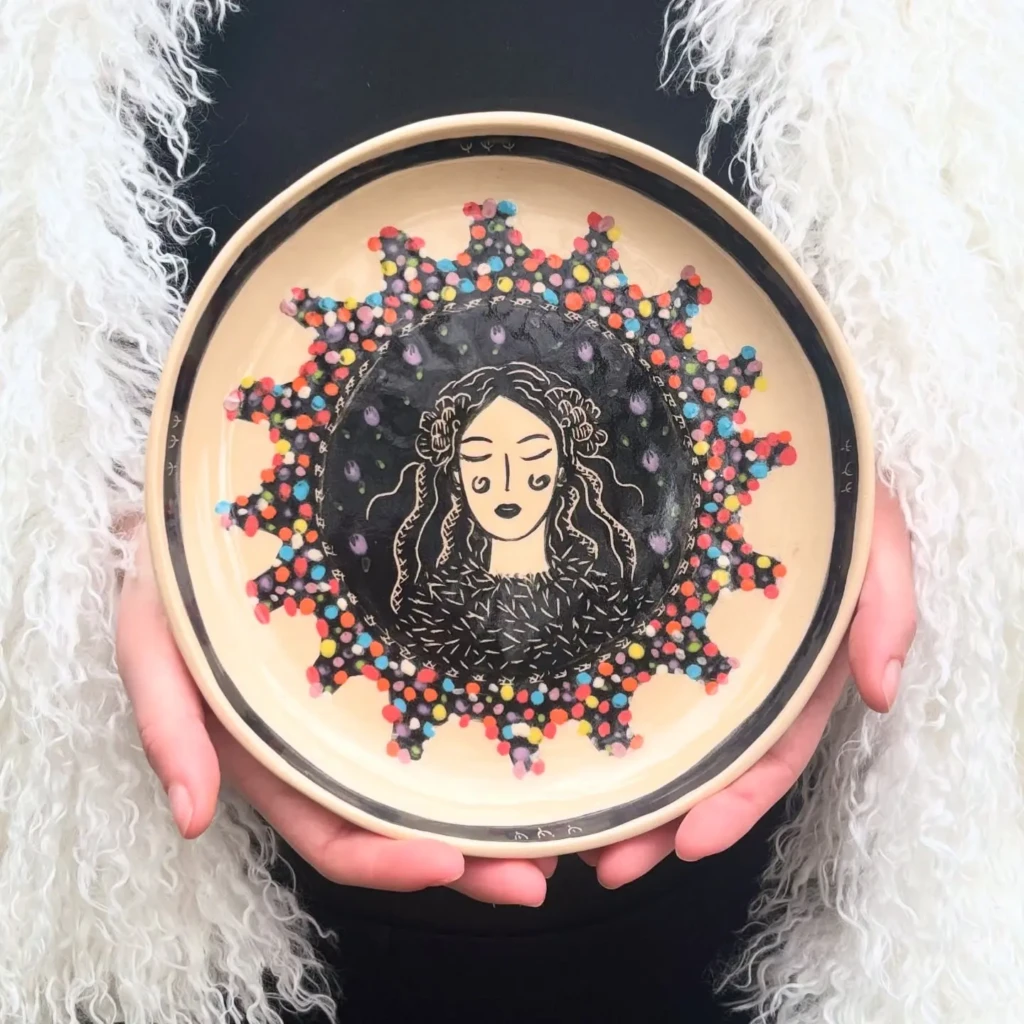
This striking portrait plate by @ksenaceramics with its intricate multicolored border represents handmade ceramic dishware positioned firmly in the “art piece” category. The contrast between the dark portrait and vibrant dotted border creates visual drama.
Premium Pricing: Pieces like this aren’t everyday dinnerware – they’re decorative art that happens to be functional. This distinction allows you to price them at $80-150+, appealing to art collectors and design-conscious customers.
Target Market: These pieces appeal to a different customer than your everyday mug buyer. Think interior designers, gallery collectors, and people decorating distinctive spaces. Your marketing language should reflect this positioning.
Vibrant Color Collections: Bold and Instagram-Worthy
Tropical Fruit-Inspired Bowls (@avokado_ceramic)


The explosion of color in these tropical-inspired bowls by @avokado_ceramic – bright greens, oranges, yellows – represents the “maximalist” trend in home décor. That perfect avocado-shaped bowl centerpiece? Pure genius for social media marketing.
Visual Appeal: Bright, saturated colors photograph incredibly well and create instant visual impact on product pages and social feeds. These pieces practically market themselves through shares and saves.
Business Application: Bold colored handmade ceramic dishware attracts younger customers (millennials and Gen Z) who embrace playful, eclectic home styling. Consider creating limited “summer collections” or “citrus series” to tap into seasonal buying patterns.
Wholesale Opportunity: Eye-catching pieces like these are perfect for boutique retailers and gift shops. The unique shapes and colors differentiate them from mass-market options.
Delicate Minimalist Designs: Understated Elegance
Speckled Tea Cup and Saucer Set (@izavgorodnia)
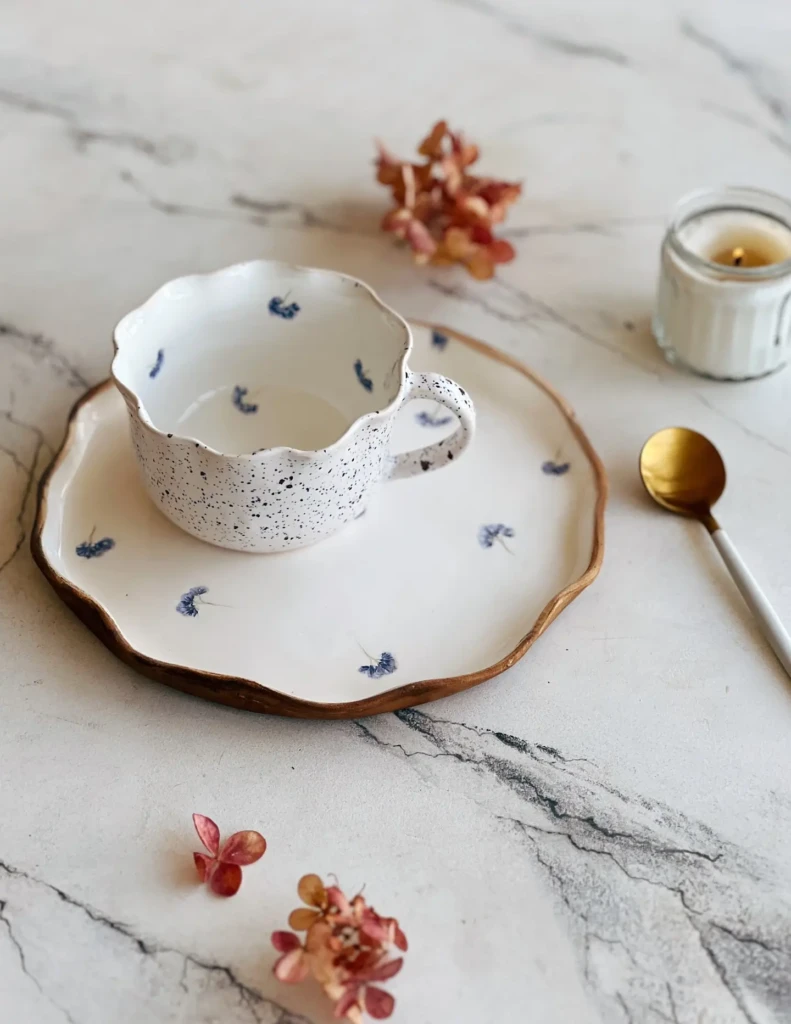
This charming tea set by @izavgorodnia with its speckled exterior and tiny blue flower details represents the “quiet luxury” aesthetic that’s trending hard right now. The organic wavy edge and exposed clay rim add artisanal character without overwhelming the design.
Why Minimalist Sells: Not everyone wants bold statement pieces. Many customers seek handmade ceramic dishware that feels special but works with any décor style. These pieces have broader appeal and sell consistently.
Production Efficiency: Simpler designs mean faster production times, allowing you to maintain inventory levels and fulfill orders more quickly. This is crucial when you’re building a business and managing cash flow.
Sentimental Designs: Emotional Purchase Triggers
Wheat and Grasses Collection with Hidden Messages (@izavgorodnia)
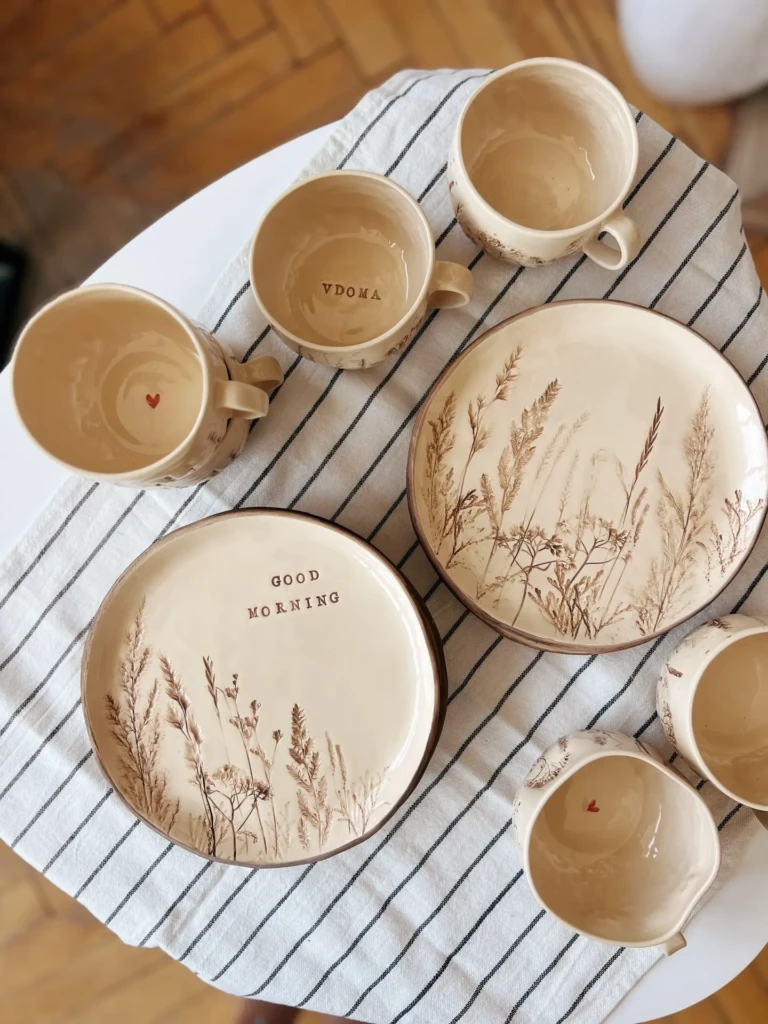
These cream-colored plates by @izavgorodnia featuring delicate wheat imprints and hidden text (“GOOD MORNING” ) tap into nostalgia and personal meaning. The matching mugs create a complete breakfast experience.
Storytelling Sells: Pieces with hidden messages, meaningful words, or symbolic imagery give customers a story to tell. “This mug has a little heart hidden inside” creates connection and makes gifting more meaningful.
Custom Opportunity: Consider offering personalized versions where customers can request specific words or dates. Custom handmade ceramic dishware commands premium prices and creates devoted customers who return for life events.
Marketing Copy: Emphasize the ritual and emotional experience: “Start every morning with an encouraging message hidden at the bottom of your coffee mug.”
Celestial Collection: Sun, Moon, and Stars (@druzi_ceramic)
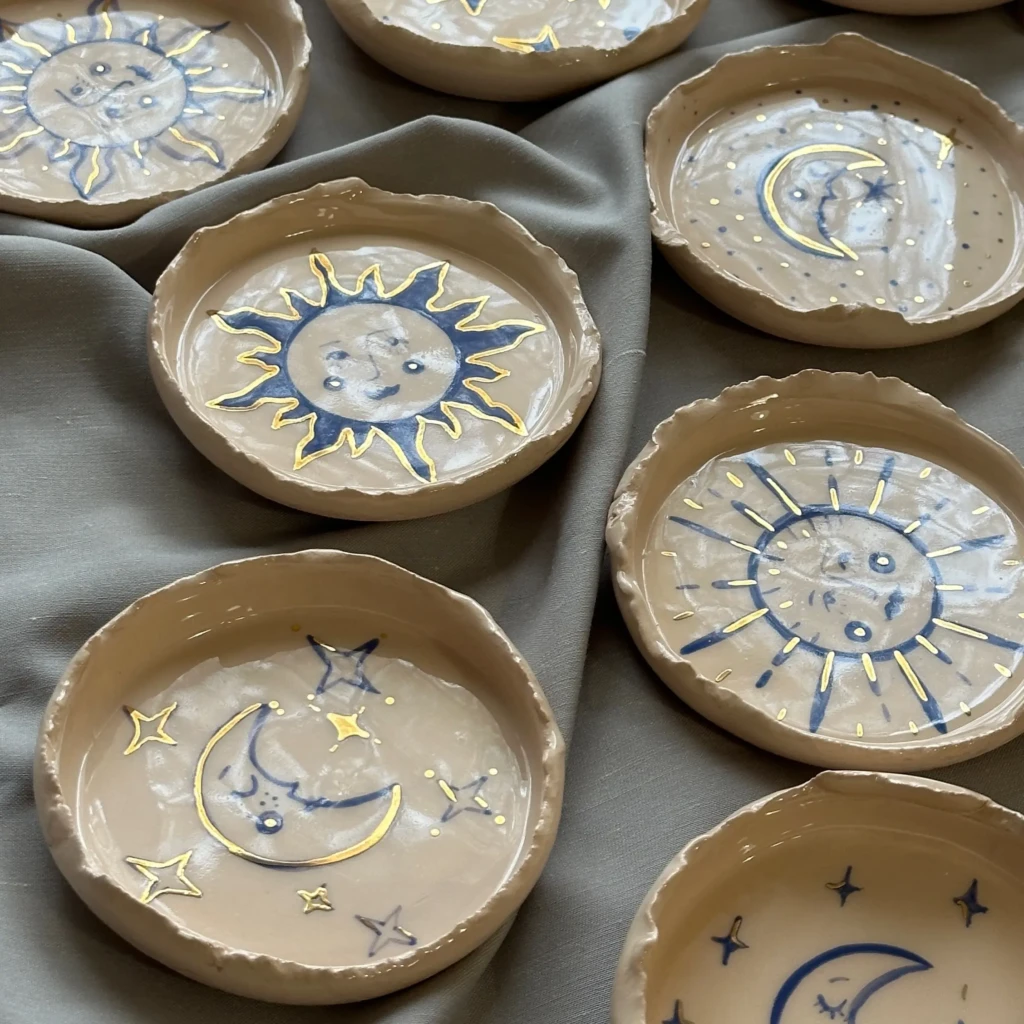
These whimsical plates by @druzi_ceramic featuring hand-painted suns, moons, and constellations represent the eternally popular celestial theme. The organic shapes and blue-and-gold color scheme create a magical, dreamy quality.
Trend Longevity: While specific aesthetics come and go, celestial imagery has decades of staying power. This makes it a safe investment for building inventory that won’t feel dated next season.
Gift Market: Celestial handmade ceramic dishware sells exceptionally well for birthdays (zodiac connection), housewarmings, and spiritual-minded customers.
Character Mugs: Signature Pieces That Build Brand Recognition
Portrait Mug with Black Hair and Flowers (@ksenaceramics)
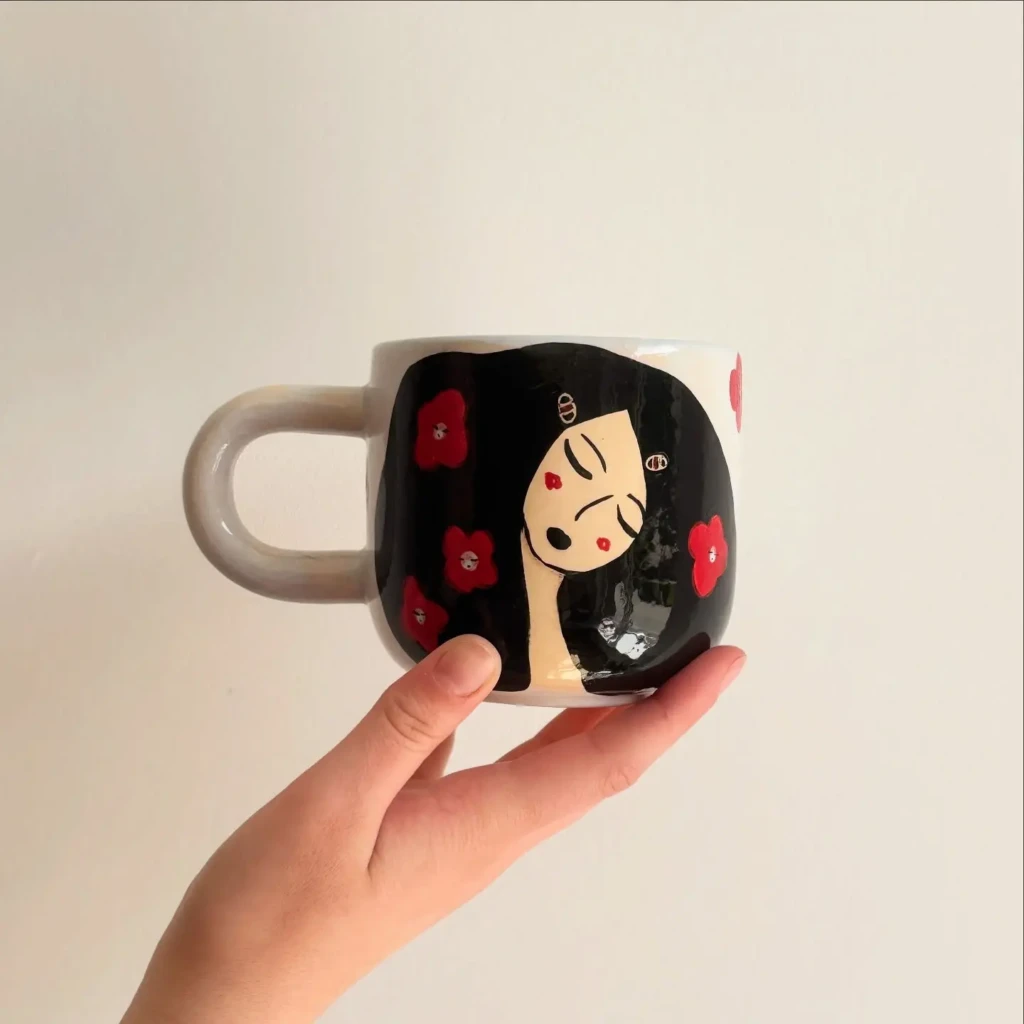
This artistic mug by @ksenaceramics featuring a woman’s portrait with black hair and red flowers demonstrates how character work can become your signature. The folk-art style and bold color blocking create instant recognition.
Brand Building: When customers can spot your work immediately – “Oh, that’s definitely a [your name] piece!” – you’ve achieved brand recognition. This allows you to raise prices and build loyal followings.
Series Potential: Create a series of portrait mugs representing different personalities, seasons, or moods. Collectors will want the whole set.
Harlequin Pattern Mug with Swan Medallion (@starry.zvir.studio)
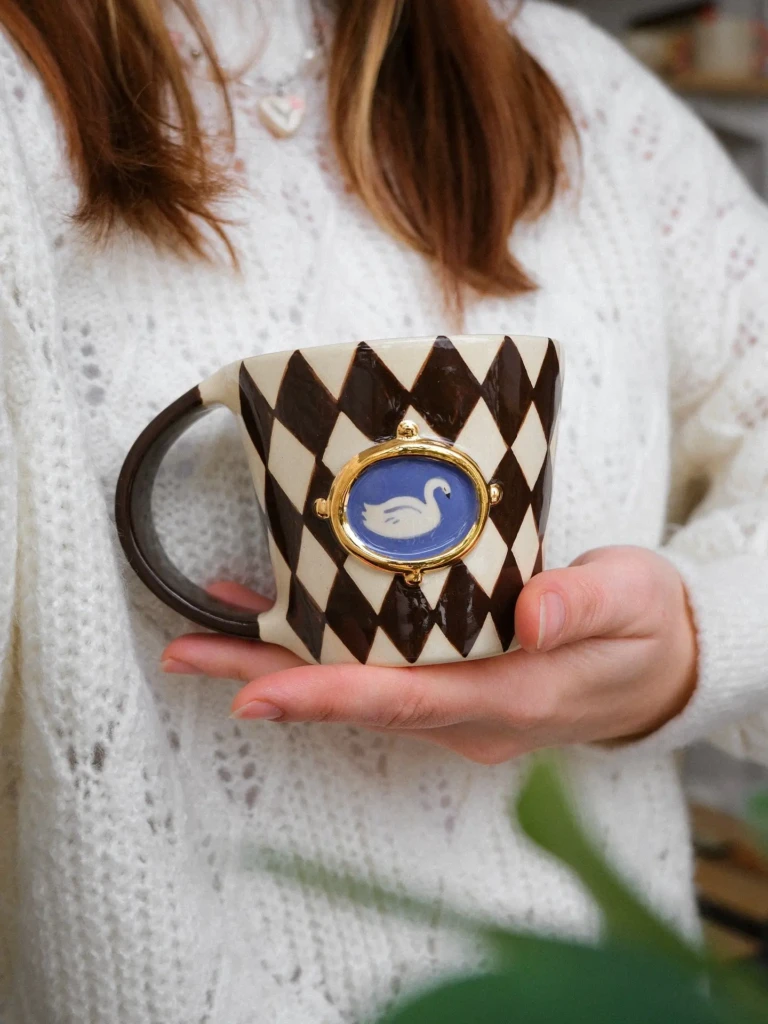
The dramatic black-and-white harlequin pattern with gold-framed blue swan medallion by @starry.zvir.studio creates luxury appeal. This piece positions itself firmly in the “collectible” category rather than everyday use.
Luxury Positioning: The gold accents and intricate hand-painting justify prices of $75-100+ per mug. These are investment pieces that customers display as much as use.
Production Note: Pieces requiring multiple firings for gold luster or special glazes take longer but command significantly higher prices. Calculate your true costs including kiln time and materials before pricing.
Striped Mug Collection with Cameo Details (@starry.zvir.studio)

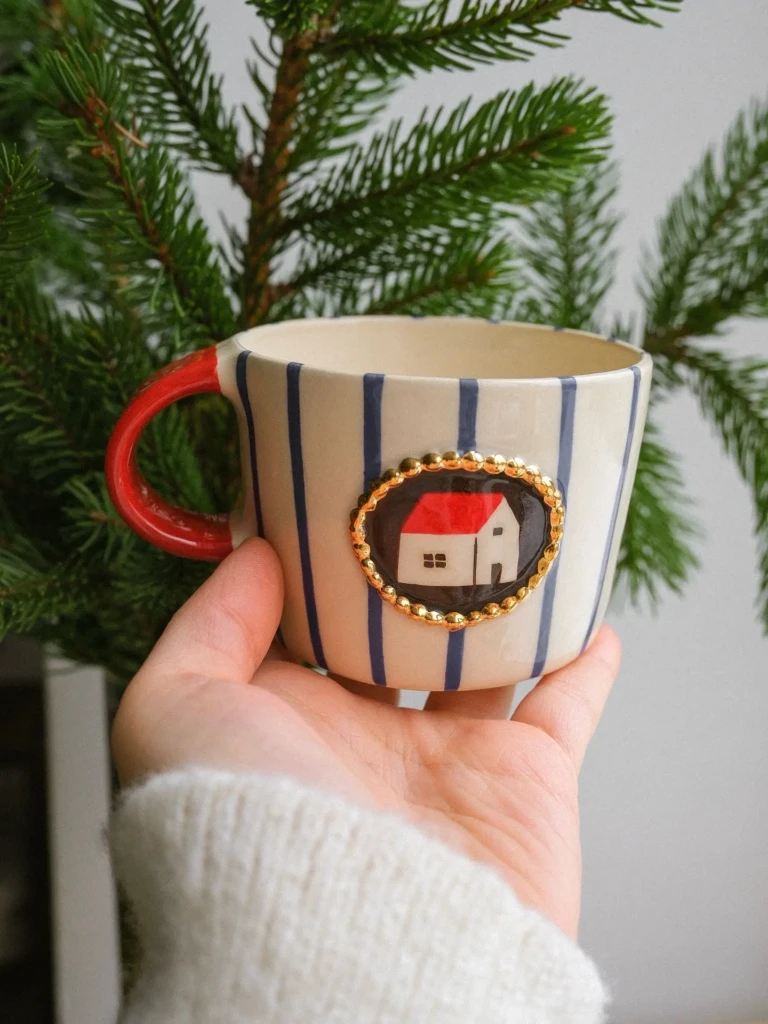
These striped mugs by @starry.zvir.studio (one with a red flower cameo, another with a house scene) show how you can create variation within a cohesive collection. The consistent striped background ties them together while the different medallions create individual character.
Collection Marketing: “Start with one, collect them all” is powerful psychology. When customers buy their first piece and love it, they’re much more likely to return for companions.
Pricing Strategy: Price collections so that buying 3-4 pieces offers a small discount compared to buying individually. This encourages larger orders.
Decorative Accent Pieces: Beyond Traditional Dishware
Speckled Oval Platters with Applied Details (@druzi.ceramic)

These organic-shaped platters by @druzi.ceramic with applied bird and heart details demonstrate how handmade ceramic dishware extends beyond plates and bowls. Serving pieces, trinket dishes, and decorative platters often have higher profit margins because they’re positioned as special-occasion items.
Multiple Functions: Market these as jewelry holders, ring dishes, soap dishes, or small serving platters. Multiple use cases expand your potential customer base.
Price Point: Small decorative dishes can sell for $25-40 – great for customers who love your work but aren’t ready to invest in full dinnerware sets.
Cheerful Pattern Work: Approachable and Joyful
Lemon Pattern Mug Collection (@tati_soltes_ceramics)
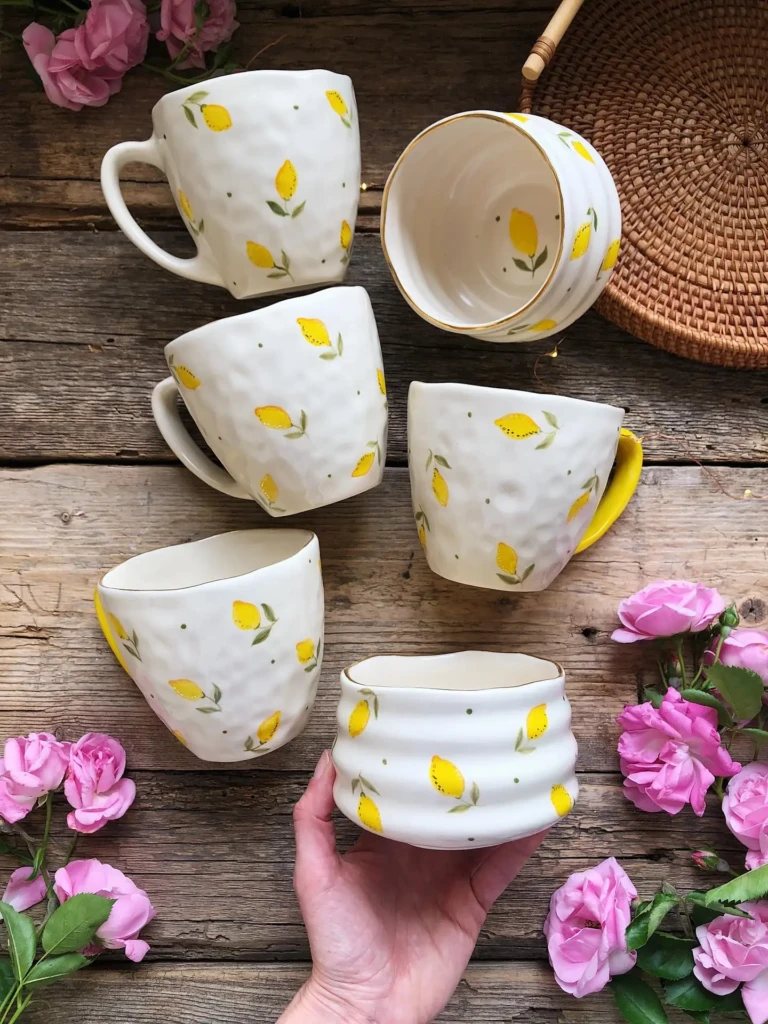
This delightful collection of mugs by @tati_soltes_ceramics covered in tiny painted lemons shows how pattern work creates visual interest without complex illustration. The various mug shapes (some with dimpled texture, some smooth) add variety while maintaining the cohesive lemon theme.
Pattern Appeal: All-over patterns feel abundant and joyful. They photograph well from any angle (important for online sales) and appeal to customers who want something cheerful but not overly complex.
Production Efficiency: While painting each lemon takes time, repetitive pattern work can become meditative and faster with practice. Consider this when balancing time investment with pricing.
Seasonal Marketing: Lemons work beautifully for spring/summer collections but can transition to year-round with the right styling.
Whimsical 3D Elements: Conversation Starters
Frog Mug Collection (@ubo_decor)
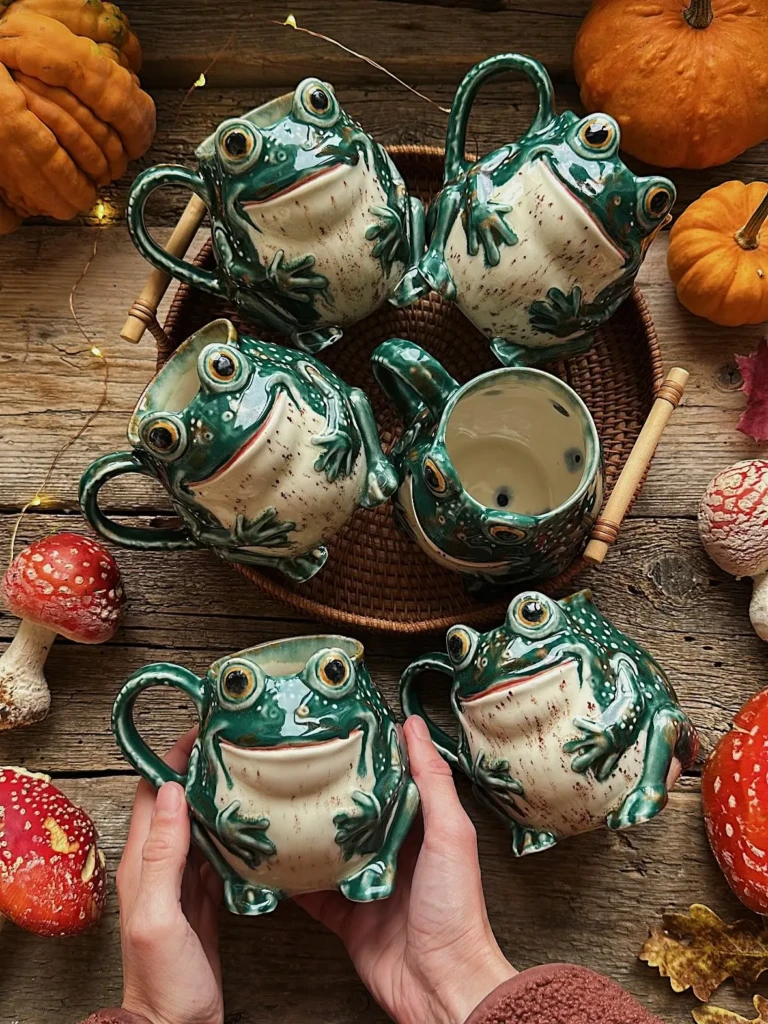
These absolutely charming frog mugs by @ubo_decor with their expressive eyes and sculptural details represent handmade ceramic dishware at its most playful. Each frog has distinct personality – some wide-eyed and alert, others more relaxed.
Personality Sells: People connect with pieces that make them smile. These mugs aren’t just functional – they’re companions for morning coffee. That emotional connection drives sales and creates devoted customers who become brand ambassadors.
Gift Market: Character mugs are gift-giving gold. They’re appropriate for almost any occasion and price point ($40-65), making them accessible impulse purchases.
Social Media Gold: These pieces generate user-generated content naturally. Customers will photograph them and tag you, providing free marketing.
Owl Mug Collection (@ubo_decor)
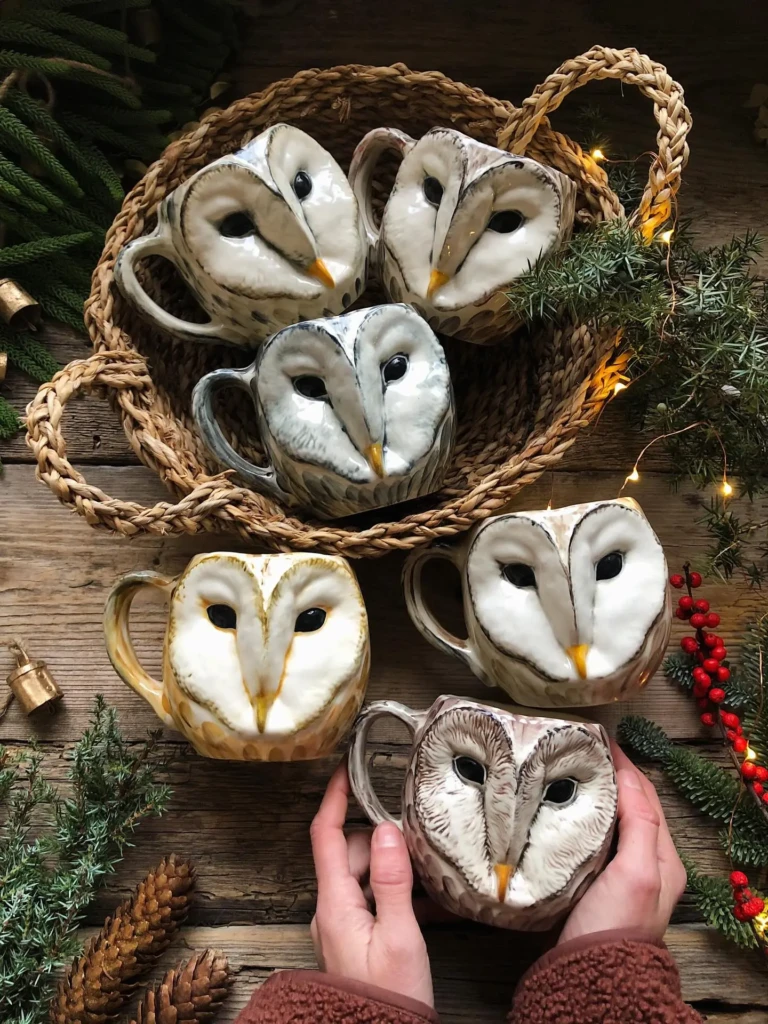
The stunning variety in this owl mug collection by @ubo_decor – from barn owls to great horned owls in different glazes and styles – demonstrates the power of creating variations on a theme. Each feels unique while clearly belonging to the same artistic family.
Collection Strategy: Notice how the artist offers different color ways (cream, brown, grey) and sizes. This allows customers to choose based on personal preference while staying within your design aesthetic.
Premium Pricing: The detailed feather work and realistic eyes justify premium pricing ($60-85 per mug). These are clearly labor-intensive art pieces.
Nature-Inspired Storytelling: Forest Floor Collection
Woodland Creature Plates with Gold Accents (@tati_soltes_ceramics)
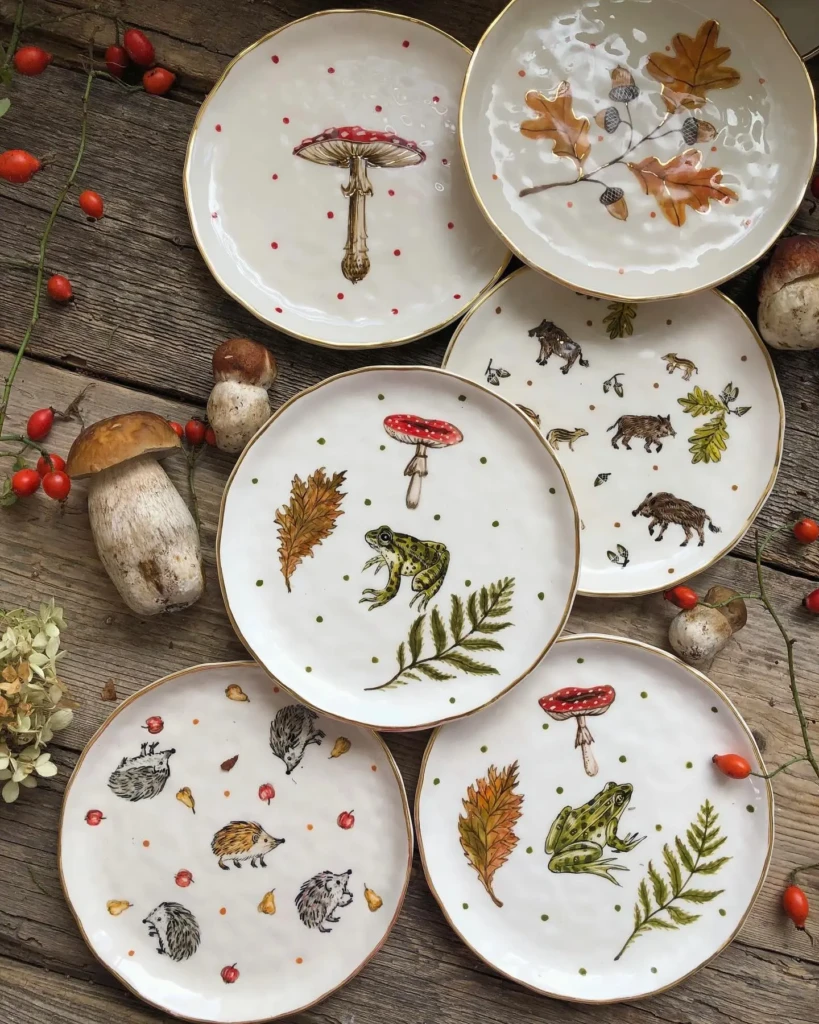
This enchanting collection by @tati_soltes_ceramics featuring mushrooms, frogs, oak leaves, hedgehogs, and forest details with elegant gold rims represents handmade ceramic dishware as storytelling. Each plate feels like a page from a fairy tale field guide.
Theme Cohesion: While each plate features different subjects, they all share the woodland theme, speckled background, and gold rim. This creates a collectible series that works beautifully displayed together.
Target Customer: These appeal to nature lovers, fantasy enthusiasts, cottage aesthetic fans, and anyone who appreciates detailed illustration. Understanding your target customer helps focus marketing efforts.
Pricing Structure: Hand-illustrated plates with gold accents justify $60-90 each. A set of four could sell for $220-280 with a small collection discount.
Production Planning: Detailed illustration work takes time. Consider offering these as limited drops or pre-orders to manage your time and create urgency.
Building Your Handmade Ceramic Dishware Business: Practical Strategies
Now that you’ve seen what sells, let’s talk strategy. Here’s a practical framework for turning your ceramic passion into sustainable income:
Pricing Your Work Properly
Many ceramic artists underprice their work dramatically. Here’s a simple formula:
Base Price = (Materials + Studio Time x Hourly Rate) x 2
Your hourly rate should be at least $25-35, and ideally $40-60 as you gain experience. The multiplier of 2 accounts for overhead, marketing time, and the reality that not every hour is billable.
| Item Type | Typical Material Cost | Production Time | Suggested Retail Price |
|---|---|---|---|
| Simple Mug | $3-5 | 1-1.5 hours | $35-50 |
| Character Mug | $4-6 | 2-3 hours | $55-75 |
| Dinner Plate (painted) | $5-8 | 2-3 hours | $60-85 |
| Small Bowl | $3-4 | 1-1.5 hours | $30-45 |
| Serving Platter | $8-12 | 3-4 hours | $95-140 |
These are starting points – adjust based on your market, complexity, and brand positioning.
Creating Collections That Sell
Random individual pieces are harder to market than thoughtful collections. Consider organizing your handmade ceramic dishware into these collection types:
Seasonal Collections: Spring florals, summer fruits, autumn harvest, winter holidays Theme Collections: Celestial, botanical, oceanic, woodland Color Collections: All neutrals, jewel tones, pastels Functional Collections: Complete place settings, tea sets, breakfast sets
Collections create multiple purchase opportunities and encourage customers to “complete the set.”
Where to Sell Your Ceramic Dishware
Different platforms serve different purposes in your business strategy:
Etsy – Great for starting out, built-in traffic, but high competition and fees (around 10% total). Best for testing what sells.
Your Own Website – Essential for long-term business building. Use Shopify, Squarespace, or WordPress + WooCommerce. No platform fees mean better margins.
Instagram/Facebook Shops – Where your customers are already spending time. Critical for building brand awareness and community.
Local Markets/Pop-ups – Build local following, get immediate feedback, no shipping hassles. Weekend markets can generate $500-2000+ per event.
Wholesale to Boutiques – Steady orders but typically 50% wholesale discount. Great for reliable income once you have efficient production.
Craft Shows/Juried Fairs – Higher-end shows attract serious buyers. Application fees and booth costs ($200-1000+) require careful planning but can generate $3000-10,000+ per weekend.
Most successful ceramic artists use a combination of channels, with their own website as the home base and other platforms driving traffic.
Production Planning for Profitability
You can’t scale a handmade business by just working harder – you need smart systems. Here’s how successful ceramic artists maintain profitability:
Batch Production: Create 10-20 mugs at once rather than one-offs. Efficiency increases dramatically.
Signature Styles: Focus on 3-5 distinct collections rather than making everything custom. Custom work is wonderful but time-intensive.
Production Schedule: Set specific “making days” vs “glazing days” vs “marketing days.” Context-switching kills productivity.
Waiting List Strategy: When demand exceeds capacity, create a waiting list or do periodic “shop updates” rather than burning out trying to keep everything in stock.
Automation: Use scheduling tools for social media, email automation for order confirmations, and pre-written responses for common questions.
Marketing Your Ceramic Art
Your handmade ceramic dishware won’t sell if people don’t know it exists. Here’s what works:
Instagram Strategy: Post 3-5 times weekly showing: finished pieces, process videos, behind-the-scenes, studio life, customer photos (repost with permission).
Pinterest Marketing: Your products are perfect for Pinterest. Create pins showing your pieces in styled settings. Link to your shop. This is exactly the kind of visual content that performs well on Pinterest, which is where many home décor shoppers discover products. If you’re looking to expand your online presence through this platform, check out resources on Pinterest marketing strategies.
Email List: Capture emails through your website (offer 10% off first purchase). Email subscribers typically convert 3-5x better than social media followers.
Customer Photos: Encourage customers to share photos. Repost with credit. User-generated content is your most powerful marketing tool.
Local Press: Reach out to local lifestyle magazines and bloggers. “Local artist creates whimsical ceramic creatures” is exactly the kind of story they love.
Managing Growth Without Burnout
As orders increase, you’ll face a critical decision point. Here’s how to scale sustainably:
Raise Your Prices: As demand increases, gradually raise prices 10-15% annually. This filters for serious customers and increases profit per piece.
Limit Production: Decide how many pieces you can comfortably make weekly and stick to it. Scarcity creates value.
Hire Help: Consider bringing in help for tasks like packing, social media, or even trimming/glazing if you have space for an assistant.
Workshop Revenue: Teaching workshops generates income without making more products. Charge $75-150 per student for 3-4 hour classes.
Licensing: Once established, consider licensing your designs to larger manufacturers for royalties.
My Personal Take on Building a Ceramic Business
I’ve watched many ceramic artists build sustainable businesses, and here’s what separates those who make it from those who burn out: they treat their art as a legitimate business from day one. That means tracking expenses, setting real prices, creating systems, and recognizing that “doing what you love” still requires business savvy.
Your unique artistic voice is your biggest asset. Those frog mugs or celestial plates or whatever makes YOUR work distinctly yours – that’s what customers can’t get anywhere else. Price accordingly. Market confidently. And remember that every successful ceramic artist started exactly where you are now.
The market for beautiful handmade ceramic dishware is strong and growing. There’s absolutely room for your work.
Frequently Asked Questions for Ceramic Artists
How much should I charge for my handmade ceramic dishware?
Calculate your price by adding materials cost plus your hourly rate (minimum $25-35) multiplied by production time, then double that total to cover overhead and profit margin. For example, if a mug costs $4 in materials and takes 2 hours to make at $30/hour, your minimum price is ($4 + $60) x 2 = $128. However, you also need to consider market positioning – simple mugs typically sell for $35-50, while detailed character mugs can command $55-75+. Don’t underprice just to compete with mass production. Your customers are buying art, craftsmanship, and the unique story behind handmade pieces.
What are the best platforms to sell ceramic dishware online?
Start with Etsy to test your products and gain initial sales while building your presence. Simultaneously create your own website using Shopify or Squarespace where customers can buy without platform fees (typically 10% on Etsy). Use Instagram and Pinterest to drive traffic to your own site – these platforms are perfect for showcasing handmade ceramic dishware visually. As you grow, consider wholesale relationships with boutiques and participating in juried craft shows for higher-end customers. Most successful ceramic artists use multiple channels, with 40-50% of sales coming from their own website once established.
How do I create a cohesive collection of ceramics that sells well?
Choose 3-5 distinct themes or aesthetics rather than making everything random. For example, you might focus on: botanical illustrations, celestial designs, and whimsical animals. Within each theme, create variations in size, color, and complexity so customers can mix and match while staying within your aesthetic. Use consistent elements like glaze colors, rim styles, or surface textures to tie pieces together. Photograph pieces together to show how they coordinate. Collections encourage repeat purchases because customers who love one piece often want to build a set. This is much more profitable than hoping someone discovers your work and buys a single random piece.
What ceramic pieces sell best for beginners?
Mugs are the highest-volume sellers for most ceramic artists because they hit multiple markets: daily use, gifts, collectibles, and they photograph beautifully for social media. Start with character mugs (animals, faces) as these command higher prices ($50-75) than plain mugs ($35-45). Small bowls and plates are also excellent sellers because the price point ($30-60) feels accessible while still being special. Avoid starting with full dinnerware sets – they tie up too much inventory and capital. Focus on pieces that can be made in batches, have clear gift appeal, and can be produced consistently. Once you establish which designs sell repeatedly, make those your core offerings.
How many pieces should I make before launching my ceramic business?
Start with 20-30 well-made pieces across 3-4 designs rather than 100 pieces of everything. This gives customers enough choice to purchase while not overwhelming you with inventory carrying costs. The key is having enough depth in your bestsellers to fulfill orders without long waits, but not so much inventory that cash is tied up in unsold pieces. Plan for a 6-8 week production cycle: spend 2-3 weeks creating inventory, then sell/market while making more pieces. This rhythm prevents both stockouts and overproduction. Remember that made-to-order works beautifully for handmade ceramic dishware – many customers willingly wait 2-4 weeks for custom pieces, which improves your cash flow significantly.
Do I need business licenses and insurance to sell ceramics?
Yes, treat your ceramic art as a legitimate business from day one. Requirements vary by location, but typically you’ll need: a business license from your city/county, a seller’s permit for collecting sales tax, and general liability insurance ($300-500 annually) to protect against accidents. If working from home, check zoning laws about home-based businesses and whether your homeowner’s insurance covers business equipment. Many cities require home occupation permits for businesses operating from residential properties. While this might seem overwhelming, proper licensing protects you legally and allows you to deduct business expenses on taxes. Consider it an investment in your sustainable business rather than an obstacle.
How do I photograph my ceramic dishware for online sales?
Invest in a simple setup: white foam boards ($10-15), natural window light, and your smartphone. Take photos from multiple angles showing the piece’s scale, details, and how it looks in use. Include lifestyle shots – a mug with steaming coffee and a cozy blanket dramatically outperforms plain white background shots, though you need both. Photograph your handmade ceramic dishware near windows with indirect natural light during midday for the most color-accurate images. Use your phone’s portrait mode to blur backgrounds and create professional depth of field. Take at least 6-8 images per item: overhead shot, angled shot, detail of hand-painting, size comparison with common object, in-use lifestyle shot, and any special features like interior glazes or hidden messages.
Should I sell through wholesale or just direct to consumers?
Both channels serve different purposes in a sustainable ceramic business. Direct-to-consumer (through your website, Etsy, markets) gives you full retail prices and direct customer relationships but requires more marketing effort. Wholesale (selling to boutiques/galleries at 50% retail price) provides steady orders and exposure to new customers but lower margins. Most successful ceramic artists do 70% direct sales and 30% wholesale. Start with direct sales to establish your retail prices and brand, then approach wholesale strategically – look for shops that align with your aesthetic and have customers who appreciate handmade work. Wholesale works best once you have efficient production systems and clear bestsellers you can produce in quantity.

Want to know a secret that literally changed my whole life? Living your best, most luxurious life do
Start a pottery business from home with this realistic beginner's guide. Equipment, pricing, sales t
Craft profitable polymer clay items with these 20 simple projects that consistently sell for $15-50
Leave a Reply