


A blank page holds the same promise as an unplanted garden—both await your willingness to begin. You’ve likely felt that quiet pull toward creating something, anything, with your hands. That impulse isn’t random. It’s your artistic instinct asking for attention. Whether you last picked up a paintbrush yesterday or two decades ago, the nine approaches ahead offer practical entry points into rekindling what may have grown dormant. Your creative awakening starts with a single, deliberate mark.
Start a Daily Sketch Journal

Before you invest in expensive art supplies or convince yourself you need formal training, understand this: a daily sketch journal isn’t about creating museum-worthy drawings. It’s about claiming creative territory. Your territory.
To establish a sketching routine that sticks, anchor it to an existing habit. Coffee at 7:15 AM? Your pencil moves by 7:20. Five minutes. That’s your non-negotiable.
The texture of cheap newsprint under graphite. The scratch of a ballpoint against a moleskin page. These sensations become your daily meditation, your power ritual.
Sketch daily habits compound like interest—within thirty days, you’ll notice your observational acuity sharpening, your confidence building stroke by deliberate stroke. This creative practice becomes a pathway to explore your core values and what truly matters to you as an artist.
Start tomorrow morning. One page. One commitment. Dominion over your creative life begins here.
Try Blind Contour Drawing
When you lock your eyes onto a subject and forbid them from glancing down at your paper, something remarkable happens—your hand learns to see. This practice strips away your need for perfection and hands you something far more valuable: pure observation. You’ll incorporate blindness into art as a deliberate advantage, not a limitation.
Your hand learns to see when your eyes refuse to judge the paper.
Your essential setup:
- A simple object with clear edges—a coffee mug, your non-dominant hand
- Uninterrupted five-minute blocks
- Permission to create “ugly” work
Explore meditative qualities inherent in this constraint. Your breathing slows. Your grip loosens. The line becomes continuous, wandering, honest.
Start with sixty seconds. Trace the contours without lifting your pen. The results will look distorted, even absurd. That’s the point. You’re training dominance over outcome-obsession—the artist’s greatest obstacle.
This focused attention on your subject while drawing mirrors the benefits of walking meditation, where each deliberate mark on paper serves as an anchor to the present moment just like each mindful step in nature.
Create a Vision Board From Magazine Clippings
Although digital tools offer endless possibilities for visualization, there’s something irreplaceable about the tactile act of tearing paper—the ragged edges, the glossy weight between your fingers, the commitment each cut demands.
You command your future when you create a vision board from photographs and text that speak to your ambitions. Gather five to seven magazines. Spend twenty minutes tearing pages—don’t overthink. Trust your instincts.
Now, craft personalized vision board sections: career dominance in the upper left, relationships centered, wealth anchoring the bottom. Overlap images deliberately, creating visual hierarchy that mirrors your priorities.
Use a glue stick, not tape. Permanence matters.
Mount your board where you’ll see it within ten seconds of waking. Daily exposure reshapes neural pathways. This practice activates your brain’s Reticular Activating System, training your mind to notice opportunities that align with your visualized goals. Your vision demands witness.
Experiment With Watercolor Painting

The permanence of glue gives way now to something far more forgiving—watercolor’s gentle insistence that you surrender control. This medium teaches you that power doesn’t always mean grip. Sometimes it means release.
You’ll need these essentials to begin:
- A cold-pressed watercolor pad, 140-lb weight minimum
- A basic pan set with twelve colors
- Three round brushes in sizes 4, 8, and 12
Use watercolor pencils first if pigment feels intimidating—sketch your outline, then activate with water. Watch boundaries dissolve. That’s the point.
When you paint watercolor landscapes, start with wet-on-wet technique for skies. Load your brush. Touch paper. Let gravity collaborate.
The pigment bleeds where it wants. Your job isn’t domination here. It’s negotiation. And in that negotiation, you’ll find unexpected command.
Consider painting Mediterranean terraces with their sun-drenched furniture and crystal-clear water views to practice capturing light and architectural details in your watercolor work.
Build Something With Found Objects
Found objects carry memory in their rust, their wear patterns, their accumulated silence—and you’re about to give them new purpose. This is dominion over the discarded. You’ll transform what others overlooked into something commanding.
Hour One: The Hunt
Gather deliberately. Old hinges, broken clock gears, weathered driftwood, bottle caps with stories. Each piece becomes raw material for your vision.
Hour Two: Assembly****
Construct miniature models from scrap materials by laying components across your workspace. Test arrangements. Wire wrapping at 9:00, epoxy bonding by 9:45. Build upward with intention.
Hour Three: Scale Up
Make garden sculptures from found items—bicycle chains become serpentine forms, rusted tools transform into industrial flora. You’re not recycling. You’re commanding resurrection.
If you find yourself drawn to working with metals and creating wearable art, consider that sustainable jewelry using recycled materials represents a thriving niche where your found-object sensibilities could evolve into a profitable craft.
The finished piece announces your creative authority. Undeniable.
Write a Short Story in One Sitting
A blank page holds no judgment—only possibility, waiting for your first brave sentence to break its silence. You’ll engage in stream of consciousness writing, letting raw thought flow unfiltered for the first fifteen minutes. Don’t edit. Don’t second-guess. Command the narrative.
Structure your session with intention:
- Minutes 1-20: Draft your opening scene, establishing one character’s urgent want
- Minutes 21-45: Introduce conflict that threatens everything they’ve built
- Minutes 46-60: Drive toward resolution with deliberate momentum
This practice sharpens your voice. Some writers later compose a short play from their strongest draft, transforming prose into dialogue that crackles with tension. The discipline of completion—beginning to end in one focused hour—builds creative authority you’ll carry into every project.
Take a Photography Walk in Your Neighborhood
Stories capture moments through language, but your camera captures them through light—and your neighborhood holds more visual stories than you’ve likely noticed.
6:45 AM: The Golden Hour Advantage****
Rise before your neighbors. This is when shadows stretch long and ordinary facades transform into dramatic compositions. Take black and white photos of fire escapes, peeling paint, forgotten doorways. The absence of color forces your eye to command the frame.
The Detail Hunt
Capture architectural details others dismiss—cornices, weathered brick patterns, the geometry of chain-link against concrete. Crouch low. Climb steps for elevation. Own your perspective.
Walk slowly. Stop every thirty paces. Your neighborhood isn’t mundane; you’ve simply stopped seeing it. Today, you reclaim that vision.
Consider setting your captured images as black iPhone wallpapers to create a minimalist showcase of your neighborhood discoveries that reduces eye strain while viewing your photographic work.
Learn Origami From Online Tutorials

Paper transforms under patient hands—and tonight, your kitchen table becomes a studio where flat sheets evolve into sculptural impossibilities. You’ll study traditional origami techniques through YouTube masters who’ve spent decades perfecting single folds. Start with the classic crane—fifteen minutes, sixteen folds, infinite satisfaction.
Your essential beginning toolkit:
- Kami paper (6×6 inches, dual-colored for visual guidance)
- Bone folder for commanding crisp edges
- Jo Nakashima’s channel for precise, unhurried instruction
By week two, you’ll explore modern origami designs that defy geometric logic—tessellations, modular spheres, wet-folded animals with organic curves. The progression feels deliberate. Earned.
What draws ambitious minds here? Control. Every crease represents a decision executed with precision. No undo button. No approximation. Just your fingers imposing order onto chaos, transforming humble rectangles into architectural declarations of patience and intent.
Between complex folds, pause for focused breathing techniques that center your mind and steady your hands for the intricate work ahead.
Design Your Own Greeting Cards
Those folded cranes now perch on your windowsill—proof you’ve mastered the art of transformation. Now channel that precision into personalized greeting card designs that command attention.
Materials Assembly (5 minutes)
Gather cardstock, a bone folder, fine-tipped markers, and embellishments. Quality paper matters—140 lb weight won’t buckle under watercolor washes.
The Foundation
Score your fold line at exactly center. This crease determines everything. Sloppy folds signal carelessness; crisp edges whisper competence.
Thematic Development
Consider thematic greeting card ideas that resonate: botanical motifs for spring birthdays, geometric patterns for milestone celebrations. Each choice reflects your understanding of the recipient. This is power—knowing what moves someone before they realize it themselves.
Final Touches (10 minutes)
Layer textures deliberately. A ribbon here. Pressed flower there. Restraint distinguishes sophistication from chaos.
Your hands now shape sentiment itself. Transform everyday correspondence into treasured keepsakes through hand lettering techniques that elevate simple birthday wishes into elegant, personalized works of art.
Try Your Hand at Pottery or Clay Sculpting
Three thousand years of human civilization have left their fingerprints in clay—and now it’s your turn to press meaning into this ancient medium. You’ll command earth itself, shaping raw material into lasting form.
Shape earth as ancient hands once did—press your legacy into clay that outlasts empires.
Begin with fundamentals that build mastery:
- Create clay pinch pots by pressing your thumb into a centered ball, rotating slowly while maintaining even wall thickness
- Sculpt miniature figures starting with basic armatures, adding mass in deliberate layers
- Wedge your clay for five minutes before each session, eliminating air pockets that destroy fired work
The cool, yielding weight against your palms. The satisfying resistance as forms emerge. This tactile dominance over material reconnects you to makers who shaped vessels for kings.
Your hands hold that same power now. Use it. Once you’ve mastered these ceramic fundamentals, consider turning your pottery passion into profit through a home-based bakery that specializes in handcrafted ceramic serving pieces alongside baked goods.
Create a Collaborative Art Piece With Friends
While solitary creation forges deep personal connection to material, something shifts when multiple hands shape a single vision. You command a different energy now—collective force amplified.
Hour One: Establish Territory****
Collaborate with neighbors to secure a large canvas, minimum 4×6 feet. Each participant claims a quadrant. No apologies. You’ll exchange artistic skills freely: your brushwork for their color theory, their texture techniques for your compositional eye.
Hour Three: The Merge****
Here’s where power concentrates. Work deliberately into each other’s sections, layering perspectives until boundaries dissolve. The piece becomes ungovernable by any single hand.
The Result
Something neither precious nor purely yours. Better. You’ve built visual evidence that collaboration doesn’t dilute authority—it multiplies reach. This creative process sharpens your problem-solving skills through real-time decision-making as you navigate competing artistic visions and find unified solutions.
Paint With Unconventional Tools
After you’ve discovered the power of shared creation, turn inward again—but bring chaos with you this time. Abandon your brushes. They’ve served you well, but now you command different instruments.
Consider these unconventional approaches:
- Use rubber stamps dipped in acrylics to build layered, textural foundations
- Incorporate natural elements—drag pine needles through wet paint, press fern fronds into gesso
- Wield kitchen sponges, credit cards, or balled aluminum foil as mark-makers
Each tool transfers energy differently. A crumpled newspaper dragged across canvas creates striations no bristle can replicate. Your fingertips, pressed firmly into cadmium yellow, leave prints that are unmistakably yours.
This isn’t recklessness. It’s calculated rebellion against predictability. You’re expanding your visual vocabulary, claiming dominion over materials others overlook.
Start a Creative Writing Prompt Challenge
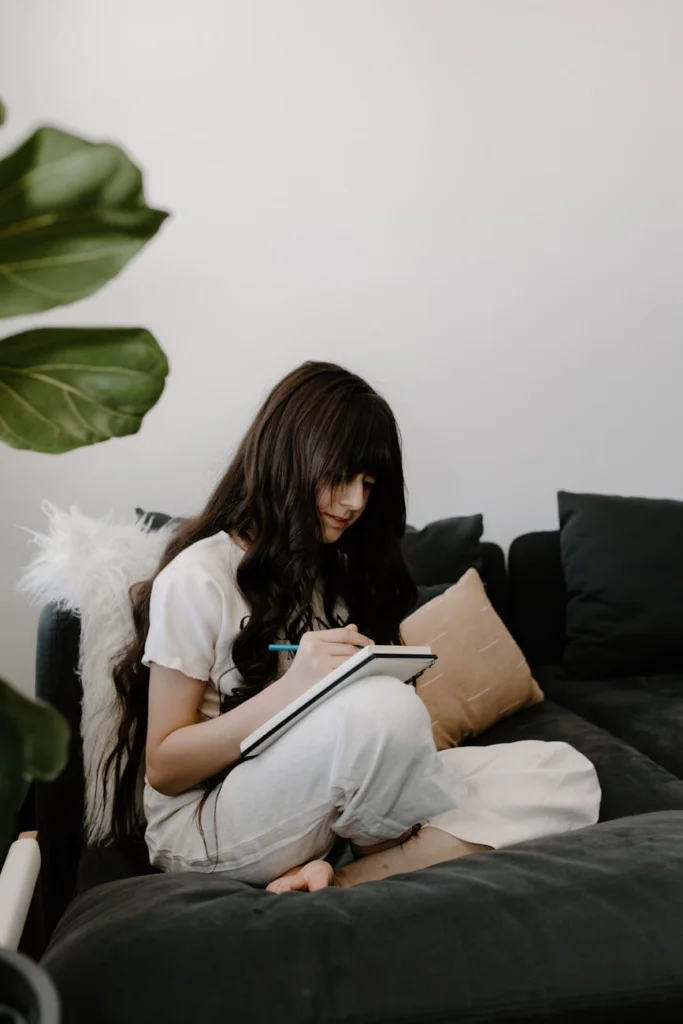
Because words possess the same raw potential as paint on canvas, you’ll find that writing prompts expose creative chambers that visual art can’t reach. This is your dominion now.
Words unlock creative depths that canvas cannot touch—claim this territory as your own.
Day 1, 6:00 AM: Write a daily story prompt before the world demands your attention. Set a timer for fifteen minutes. Let the pen move without judgment, without revision, without mercy.
Week 2: Explore creative writing workshops in your community or online. These spaces sharpen your craft against other minds. Iron meeting iron.
The discipline transforms you. Each prompt becomes a small conquest—two hundred words extracted from nothing, shaped by your will alone. Your creative authority expands with every completed challenge. Raw potential, finally realized.
Make Music With Household Items
Before you spend money on instruments you may never master, consider the percussion orchestra already waiting in your kitchen cabinets. You possess more sonic power than you realize.
Glass jars filled with varying water levels become tuned bells. Wooden spoons against overturned pots transform into commanding drums.
To create homemade musical instruments that rival store-bought options, gather these essentials:
- Empty oatmeal containers with plastic lids for deep, resonant tom-toms
- Rubber bands stretched across tissue boxes for pluckable strings
- Rice-filled plastic bottles for rhythmic shakers
Now, compose your own rhythms by layering sounds deliberately—start with a steady base beat, add melodic accents at four-second intervals, then introduce textural fills. This isn’t child’s play. It’s reclaiming creative authority over sound itself.
Explore Digital Art and Illustration Apps
Sound becomes light. Your fingertip becomes the brush you’ve always commanded.
Download Procreate, Sketchbook, or the free Krita app—each offers weapons for your creative arsenal. Within the first fifteen minutes, experiment with pressure sensitivity settings. This single adjustment transforms clumsy marks into strokes that obey your intent.
Mastering Digital Sketching Techniques
Begin with gesture drawings. Set a five-minute timer. Loose lines first, refinement later. Layer opacity at 30% for underdrawings, then build confidence on fresh layers above.
Claiming Your Space
Online drawing communities like DeviantArt and Instagram’s art circles aren’t just audiences—they’re proving grounds. Post your work. Watch engagement metrics. Adapt.
The screen glows. Your vision materializes in pixels and vectors, permanent yet infinitely editable. This is control. This is dominion over your creative output.
Design a Personal Logo or Monogram
When you distill your identity into a single mark, you’re engaging in one of design’s most ancient and demanding disciplines. This isn’t mere decoration—it’s concentrated authority. Your monogram becomes your seal, your signature of power rendered visible.
Begin by sketching your initials in twenty variations. Then experiment with custom type designs that capture your professional essence. Consider these foundational approaches:
- Interlock letters to suggest unity and strategic thinking
- Create a personalized icon or symbol that abstracts your initials into geometric forms
- Balance negative space to convey sophistication and restraint
The strongest logos communicate instantly. They command recognition before conscious thought engages. Spend forty-five minutes refining proportions until the mark feels inevitable, as though it always existed waiting for your discovery.
Create a Zine About Something You Love
Zines represent publishing stripped to its rebellious essence—photocopied pages folded and stapled, distributed hand to hand, answering to no editor but yourself. This is your platform. Your voice, unfiltered.
No gatekeepers. No algorithms. Just paper, ideas, and the audacity to say something worth passing hand to hand.
Start by choosing your obsession—vintage motorcycles, urban foraging, underground music scenes. Make a mini zine with photos you’ve captured yourself, grainy and authentic. Fold a single sheet into eight pages. That’s your canvas.
Craft a zine with personal stories that reveal what others miss. Include hand-drawn elements, collaged textures, typewritten confessions. The imperfection matters. It signals humanity in a polished world.
Number your issues. Build anticipation. Trade them at coffee shops, leave them in library books.
You’re not asking permission to publish anymore. You’ve claimed it.
Try Macro Photography of Everyday Objects
Before you invest in expensive equipment, understand this: macro photography transforms the mundane into the monumental, revealing worlds that exist millimeters from your fingernails yet remain perpetually invisible. Your smartphone’s camera, paired with a $15 clip-on macro lens, grants you dominion over hidden landscapes.
Start with macro photography of everyday textures:
- Kitchen salt crystals at 10x magnification become glacial formations
- Fabric weave patterns reveal architectural precision you command
- Rusted metal surfaces transform into alien topographies
Move outdoors. Macro photography of everyday nature—dewdrops on grass blades, pollen-dusted petals, lichen colonies—places extraordinary power in your hands. You’re not merely photographing. You’re excavating beauty others walk past.
Position your lens two inches from the subject. Breathe. Capture what only you now see.
Experiment With Collage Art
That magnified world you’ve captured through your lens now becomes raw material for something more tactile: collage art tears photography from its digital frame and grants it physical resurrection.
Your photographs refuse to stay trapped behind screens—they’re demanding texture, layers, and the honest imperfection of human hands.
Hour One: Gathering Your Arsenal****
Use recycled materials with intention—old magazines, weathered book pages, fabric scraps, transit tickets. Each fragment carries history you’ll command.
Hour Two: The Build****
Create mixed media collages by layering deliberately. Start with your largest background element. Add mid-sized pieces at angles that disrupt expectations. Finish with small, high-contrast accents that draw the eye where you decide.
The adhesive matters. Matte medium dries invisible. Rubber cement allows repositioning. Choose based on your commitment level.
The Deeper Truth
Collage grants you editorial power. You decide what survives, what overlaps, what disappears beneath other choices. Total creative control.
Learn Calligraphy or Hand Lettering
While collage empowers you to deconstruct and reassemble existing images, calligraphy demands you create beauty from nothing but ink, pressure, and breath—a return to the fundamental act of mark-making that humans have practiced for millennia.
When you learn modern calligraphy styles, you command a discipline that once belonged exclusively to scribes and scholars. This is power distilled into permanence.
Begin with these foundational elements:
- Tools: Experiment with different calligraphy tools—pointed nibs, brush pens, and flat-edge markers each yield distinct authority
- Practice strokes: Master thick downstrokes and whisper-thin upstrokes before attempting letters
- Paper selection: Choose smooth, heavy-weight stock that won’t bleed or feather
Each letter you form carries intention. Your hand steadies. Your breathing slows. The ink flows where you command it.
Build a Miniature World in a Shoebox
From a single discarded shoebox, you can architect entire universes—forests where moss becomes towering pines, cities where bottle caps serve as industrial water tanks, coastlines where aquarium gravel transforms into sun-bleached shores.
You command scale itself. Shadow box dioramas grant you dominion over perspective, while miniature fairy gardens let you sculpt ecosystems from wire and clay.
| Element | Material | Effect |
|---|---|---|
| Trees | Dried herbs, wire | Vertical drama |
| Water | Resin, blue film | Reflective depth |
| Structures | Cardboard, cork | Architectural weight |
Start with your backdrop—painted or collaged. Layer your ground materials next. Position focal elements last, adjusting until the composition breathes.
This small kingdom answers only to you.
Create Art Inspired by Your Favorite Song
Music doesn’t simply enter your ears—it colonizes your nervous system, triggering cascades of color, memory, and half-formed images that deserve physical form. You possess the power to translate sound into visual dominion.
Select a track that commands your attention. Play it three times consecutively, noting:
- The dominant colors each verse summons
- Physical sensations the bass line creates
- Specific memories surfacing at the 2:15 mark
Now claim your canvas. Create mixed media collages by layering magazine fragments, paint, and fabric scraps that mirror the song’s texture. Make abstract art based on song’s mood—aggressive slashes for crescendos, soft washes for bridge sections.
Your interpretation becomes irrefutable. No one else hears precisely what you hear. That’s your authority.
Try Abstract Painting Without a Plan
When you abandon the need for a predetermined outcome, something remarkable happens—your hand begins to think for itself. This is where your authentic creative authority emerges.
Minutes 0-5: The Setup
Gather your canvas. Now, use household objects as painting tools—fork tines, crumpled cardboard, the edge of an old credit card. These unconventional instruments strip away technique, leaving only instinct.
Minutes 5-20: The Release
Experiment with abstract shapes and colors without judgment. Drag. Scrape. Layer wet over wet. Let crimson bleed into ochre. Watch unexpected textures form beneath your fingertips.
The Truth
Control is an illusion you’re finally brave enough to release. Each unplanned stroke claims territory on that blank surface. Your canvas doesn’t need your permission. Neither do you.
Design Patterns for Fabric or Wallpaper
Though abstract painting celebrates chaos, pattern design demands a different discipline—the meditative precision of repetition. You’ll discover power in creating tessellating shapes that lock together seamlessly, each element commanding its place within an infinite grid.
Pattern design transforms single decisions into infinite echoes—each shape claiming its place in an endless, meditative grid.
Start with these foundational approaches:
- Geometric repetition: Draft a single motif, then duplicate it across a 6×6 grid to test visual rhythm
- Organic patterns: Sketch leaves, cellular structures, or wave forms that flow naturally into their neighbors
- Half-drop arrangements: Offset alternating rows to create sophisticated movement
The process reveals something essential. Control. Every mark you make multiplies across yards of fabric, across entire walls. Your single decision echoes endlessly.
Begin with pencil on graph paper. Fifteen minutes of sketching. Then scan, digitize, repeat. Watch your vision become environment.
Make Jewelry From Unexpected Materials
Ordinary objects hold secret identities as adornment—you’ve just never looked at them through a jeweler’s eye. When you upcycle household objects—vintage buttons, broken watch gears, copper wire scraps—you claim dominion over materials others discard. This is alchemy. This is authority.
Your Foundation (Minutes 0-15)
Gather your raw elements: hardware store washers, old keys, zipper pulls. Incorporate found natural materials like acorn caps, small stones with natural holes, or dried seed pods. Examine each piece. Feel its weight, its texture, its potential.
The Transformation (Minutes 15-45)
Drill small holes using a 1/16″ bit. Connect pieces with jump rings. Layer contrasting textures—industrial against organic, smooth against rough.
You’re not just making jewelry. You’re asserting creative sovereignty.
Create a Stop-Motion Animation
You’ve learned to see potential in discarded objects—now teach those objects to move. Stop-motion animation transforms you from creator to director, commanding inanimate figures through frame-by-frame choreography. Try claymation first—the medium forgives imperfection while rewarding patience.
Your essential toolkit:
- A smartphone with manual exposure lock and a sturdy tripod
- Moldable figures or articulated toys with stable bases
- Consistent lighting, preferably two soft sources at 45-degree angles
Capture 12 frames per second minimum. Move your subject millimeters between shots. This discipline builds empire-level patience.
After shooting, incorporate background music that matches your narrative’s emotional arc—tension demands minor keys, triumph calls for crescendo. Your first five-second clip will consume an hour. Worth it. You’re no longer observing art. You’re orchestrating it.
Paint on Unconventional Surfaces
Canvas has always been arbitrary—a convention, not a commandment. You hold dominion over your medium when you reject limitations others accept without question.
0:00–0:05 | Surface Selection****
Claim your territory: weathered wood planks, rusted metal sheets, leather scraps, or river stones worn smooth by decades. Each surface demands your adaptation. That’s the point.
0:05–0:15 | Preparation & Execution****
Sand rough edges. Prime porous materials with gesso, letting it cure for twenty minutes. Now paint with food coloring diluted in water for translucent washes on fabric, or use acrylics undiluted for bold opacity on metal.
The Deeper Practice
This discipline teaches resourcefulness. Tomorrow, you’ll create sculptures with household objects. Today, you master surfaces others overlook. True artists see potential everywhere.
Write Poetry Using the Cut-Up Technique
The surfaces you paint become mirrors of creative rebellion—but now, turn that same defiance toward language itself.
The Cut-Up Method: Seizing Control****
Gather a printed page—newspaper, old novel, junk mail. Cut the paper into words and phrases, letting scissors become your editorial blade. Scatter them across a dark surface.
Now, experiment with word combinations that conventional syntax would never permit:
- Juxtapose nouns against unexpected verbs
- Pair emotional words with clinical terms
- Fragment complete thoughts into raw syllables
This technique, pioneered by Burroughs and Gysin, dismantles language’s invisible authority. You’re not following grammar’s rules anymore. You’re rewriting them.
Arrange. Rearrange. Photograph each iteration at 10-minute intervals. Watch meaning shift beneath your fingertips like tectonic plates. The poem emerges when you stop forcing it.
Design Your Dream Tiny House
Where do you begin when the constraints themselves become liberation? In 240 square feet or less, every inch demands intention. This is your domain to command.
Constraints don’t confine—they clarify. In 240 square feet, every choice becomes deliberate, every inch becomes yours.
Hour 1: Vision Mapping****
Grab graph paper. Sketch your non-negotiables—sleeping loft, workspace, storage that disappears. Plan your tiny house layout with ruthless precision, measuring twice, questioning everything once.
Hour 2: Energy Sovereignty****
Design your solar powered tiny house with panels positioned for maximum exposure. South-facing. Unobstructed. You’re not renting power; you’re generating it.
Hour 3: Material Selection****
Choose reclaimed wood for warmth, steel framing for permanence. Touch samples. Smell the cedar. Your walls should speak.
The tiny house isn’t about sacrifice. It’s about dominion over your space, your resources, your future. Absolute control. Masterfully contained.
Create a Self-Portrait in a New Medium
Before you’ve even lifted a brush or shaped the clay, understand this: a self-portrait in an unfamiliar medium strips away your technical crutches and forces raw confrontation with how you actually see yourself.
Choose your unfamiliar territory deliberately:
- Use oil pastels if you’ve only known graphite’s precision
- Create a digital self portrait using tablet software you’ve never touched
- Work in collage when paint has been your dominion
The discomfort is the point. When your hands don’t automatically know what to do, your eyes must truly observe. That scar above your eyebrow. The asymmetry you’ve ignored.
Spend the first fifteen minutes just looking. No tools. Pure observation.
Then begin. Imperfectly. Powerfully.
Make Art Using Only Black and White
When you strip color from your palette, you don’t lose expression—you distill it. This constraint becomes your advantage, forcing every mark to carry undeniable weight.
Minutes 0-15: Foundation Work****
Begin by selecting your medium. Sketch abstracts with charcoal, letting your wrist move in decisive, commanding strokes. Or paint monochromes using acrylics thinned to ink-like consistency. The choice signals intent.
Minutes 15-45: Building Contrast****
Layer your darks deliberately. Notice how shadows pool like spilled secrets, how highlights cut through with surgical precision. Pure control.
Minutes 45-60: Refinement****
Step back every ten minutes. Assess the balance between void and light, between statement and silence.
Black and white work demands honesty. No color to hide behind. Just you, your vision, and the stark truth of contrast.
Try Zentangle or Meditative Doodling
The stark discipline of black and white naturally gives way to something gentler—a practice where control softens into surrender. Zentangle transforms mindful drawing into a doorway for commanding your creative energy. You don’t sketch pictures. You build patterns, one deliberate stroke at a time.
Begin with these foundational elements:
- The string: a light pencil line dividing your tile into sections, your territory to conquer
- The tangle: repetitive patterns filling each section with meditative precision
- The shading: soft graphite that breathes dimension into flat marks
Contemplative sketching demands your full presence. Each curve, each crosshatch becomes a declaration. The pen moves. Your breath slows. Fifteen minutes of focused pattern-making rewires your relationship with stillness.
This isn’t passive relaxation. It’s active mastery disguised as meditation.
Document Your Day Through Illustrated Journaling
How often have you reached evening unable to recall what made your morning meaningful? Illustrated journaling gives you command over fleeting moments, transforming ordinary hours into a visual archive you control.
Morning (7:00-9:00 AM): Sketch your coffee cup’s steam curling upward. Record personal reflections beside it—three sentences maximum. This anchors your day’s beginning.
Midday (12:00-2:00 PM): Explore nature sketches during lunch. A single leaf. A shadow’s angle. Quick, deliberate strokes capture what photographs miss.
Evening (6:00-8:00 PM): Review your page. Add color washes, marginal notes, or small icons marking emotional peaks.
The practice demands consistency, not perfection. Your visual vocabulary expands with each entry, building a personal lexicon of symbols and shorthand. Powerful documentation. Entirely yours.
Conclusion
You’ve discovered a universe of creative possibilities. Each activity—whether sketching at 6 a.m. or sculpting found objects by evening light—builds neural pathways you didn’t know existed. The truth? Your artistic side never actually slumbered. It awaited. Start with one practice this week. Then another. Let your hands recollect what your busy mind misplaced: you were made to create beautiful, imperfect things.
Discover 16 powerful motivational quotes perfect for your vision board. From "She Believed She Could
Discover 12 elegant hobbies starting with "P" that blend creativity with practicality, transforming
Leave a Reply