

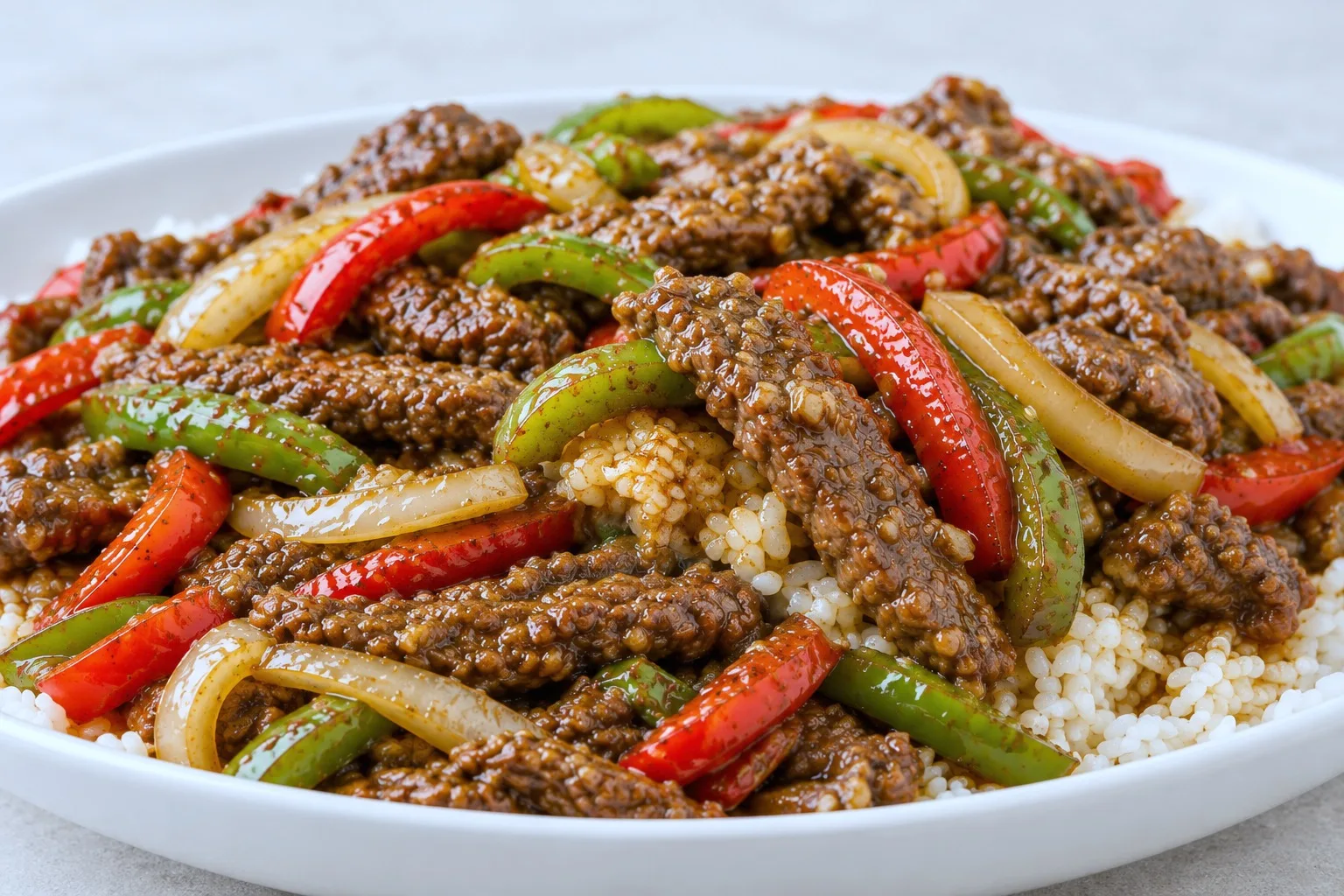
Pepper steak earns its keep on a party table because it moves fast: thin beef, crisp peppers, a sauce that turns glossy in under two minutes. Everything happens in one skillet, so you spend the evening talking instead of scraping pans. Serve it over rice and the whole pot disappears before the second toast.
This post contains affiliate links. If you buy through them, I may earn a small commission at no extra cost to you.
Table of Contents
A Stir-Fry Fast Enough for a Crowd
Nobody wants to be the host standing over a hot pan while the doorbell rings. Pepper steak gets around that problem: the beef sears in under three minutes, the sauce comes together in the same pan, and the whole dish lands on the table in the time it takes guests to find their seats.
Thin strips of sirloin curl and brown at the edges while the peppers stay glossy and a little crisp. The sauce clings instead of pooling, because the molasses and cornstarch do their job quietly rather than announcing themselves.
Slice the beef and chop the vegetables earlier in the day, keep them covered in the refrigerator, and the only thing left for party time is fifteen minutes at the stove. That is the kind of math that actually holds up once people start arriving!
Sirloin costs more per pound than a stewing cut, but you need less of it once it is sliced thin and stretched across rice and vegetables. If the butcher case looks thin on sirloin that day, flank steak slices just as well and costs less.
What Goes Into This Pepper Steak
Sirloin is the cut worth buying here: lean, quick to cook, and forgiving once it is sliced thin. A short stay in the freezer firms the meat just enough to slice it into clean ribbons instead of ragged chunks, which matters more for texture than the cut itself does.
Green and red bell pepper go in together because they do different jobs. The green one holds a little bitterness and bite, and the red one brings sweetness and a color that does not fade once it hits the hot pan.
Celery is the quiet addition most pepper steak recipes skip, and it is worth keeping. It gives the dish a clean crunch that outlasts the peppers in the pan, while onion wedges add sweetness underneath everything without turning the dish into onion soup.
The sauce is built from beef broth and soy sauce for salt and body, fresh ginger for heat that sits at the back of the throat, and a single spoon of molasses for deep color and a faint smoke that sugar alone cannot give. Cornstarch is what turns that mixture glossy rather than thin and watery.
White rice underneath is not an afterthought. It catches the sauce that would otherwise sit at the bottom of the bowl, and it stretches the dish further across a party where appetites vary.
How to Make It
Here is the whole process, start to finish, with the exact amounts and timings that make the sauce glossy instead of thin. Read it once before you turn on the stove, because once the beef hits the hot pan there is no time to measure anything.
Marinate the Sliced Beef
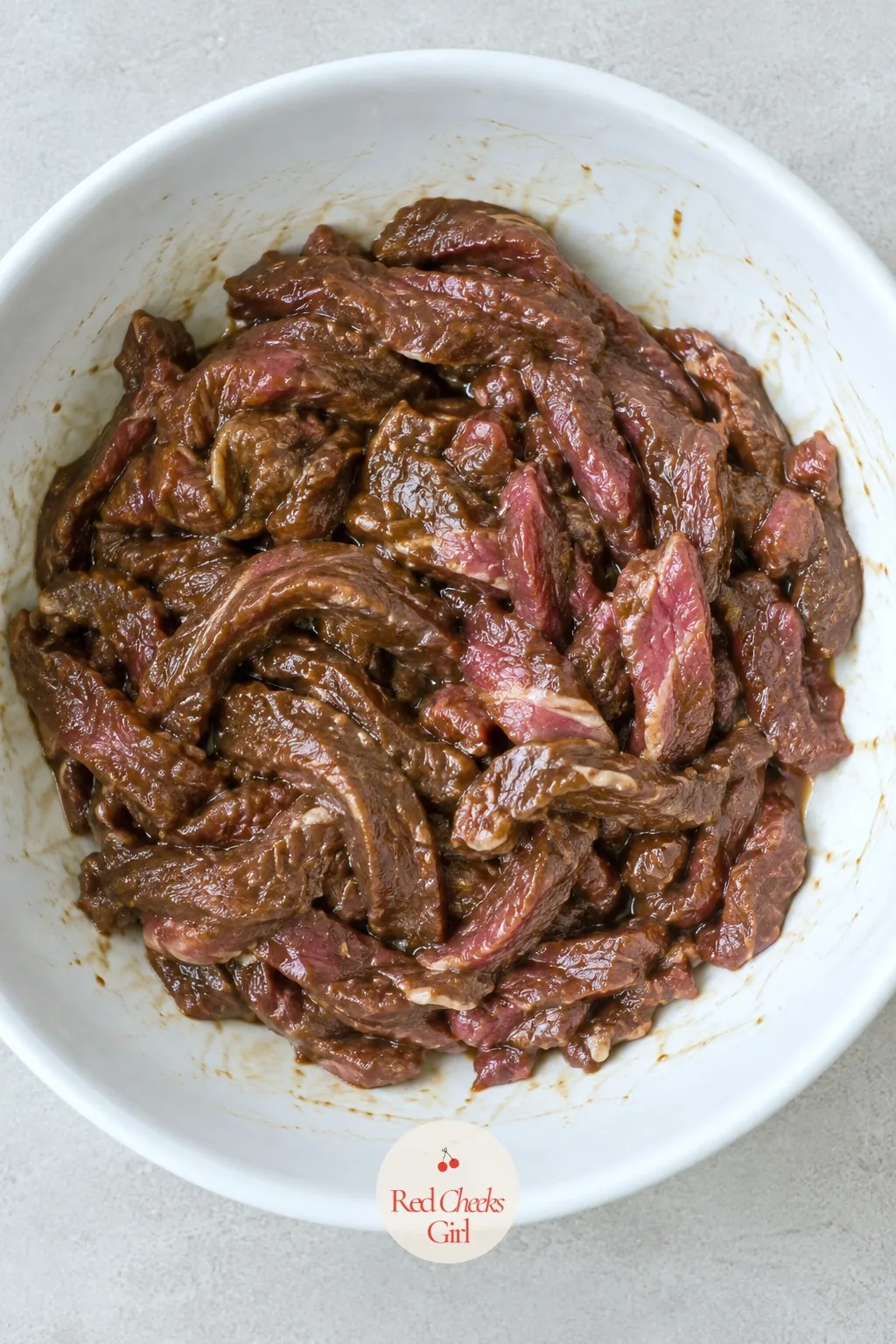
Toss the beef strips with one tablespoon of soy sauce and one tablespoon of cornstarch right in the bowl, coating every piece. Let it sit while you prep the vegetables; the coating should look wet and even, with no dry patches of cornstarch left in the bottom.
Cut the Peppers, Celery and Onion
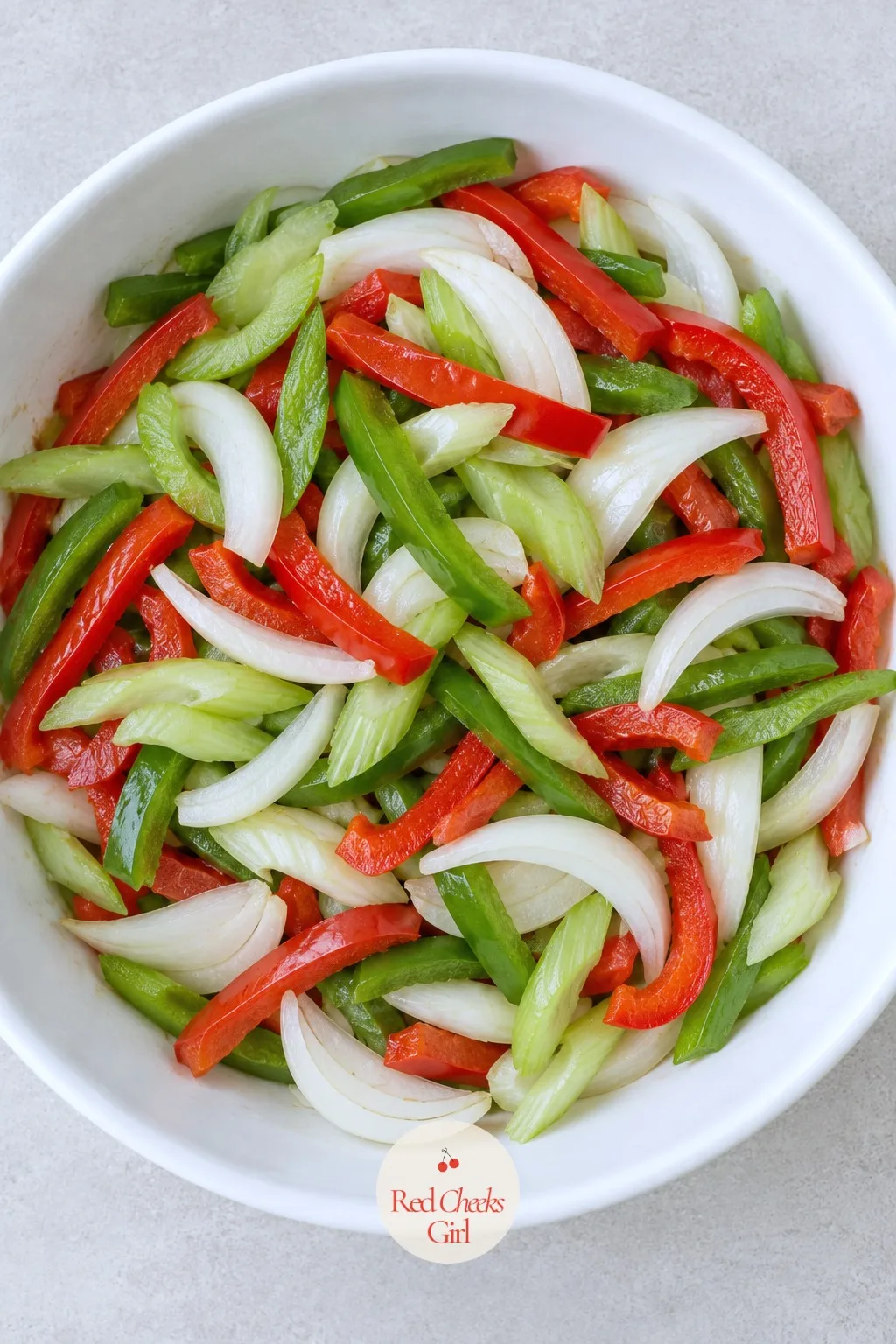
Cut the peppers and celery into strips about the same width as the beef, then cut the onion into thin wedges so everything cooks at the same speed. Keep the colors visible in the bowl so you can see at a glance that nothing is missing.
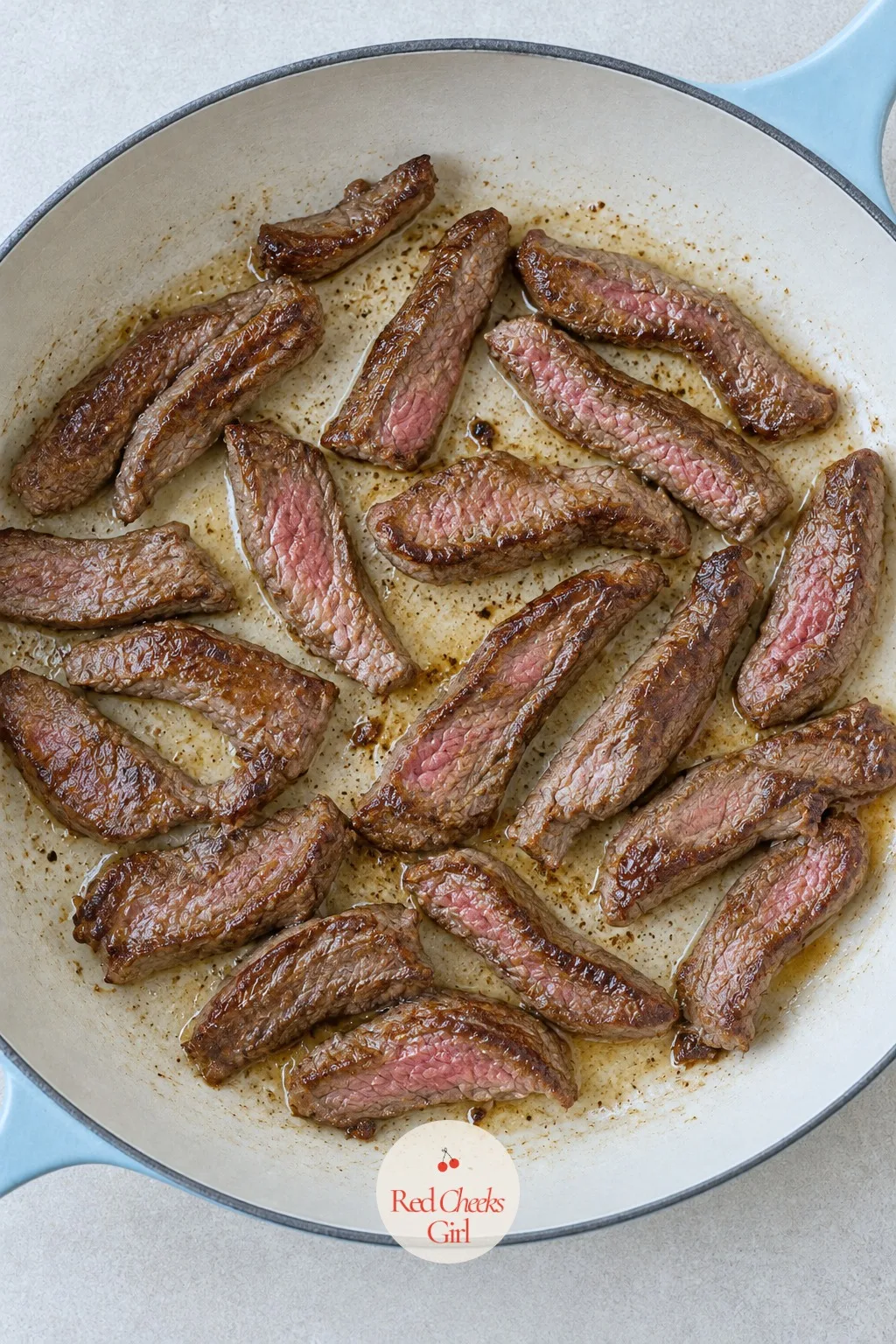
Sear the Beef in Batches
Work the beef in two batches so the strips touch the hot pan directly instead of steaming against each other. Two to three minutes per batch is enough: look for deep brown edges and only the faintest pink left at the center before you lift them out.
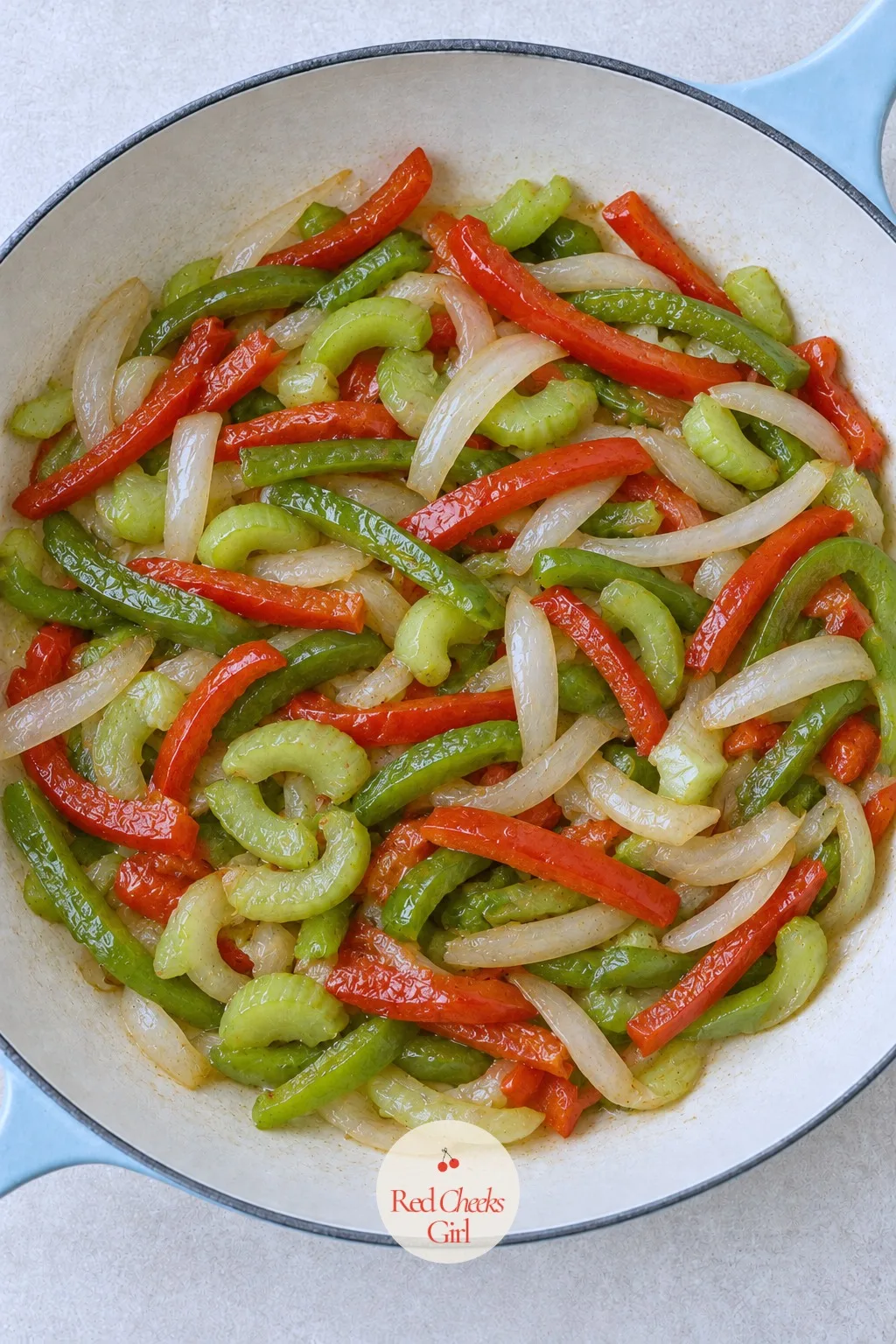
Soften the Peppers, Celery and Onion
Add the peppers, celery and onion to the same pan the beef cooked in, letting the leftover browned bits season the vegetables. Three to four minutes is the window: the peppers should turn glossy and slightly soft but still hold their shape and color.
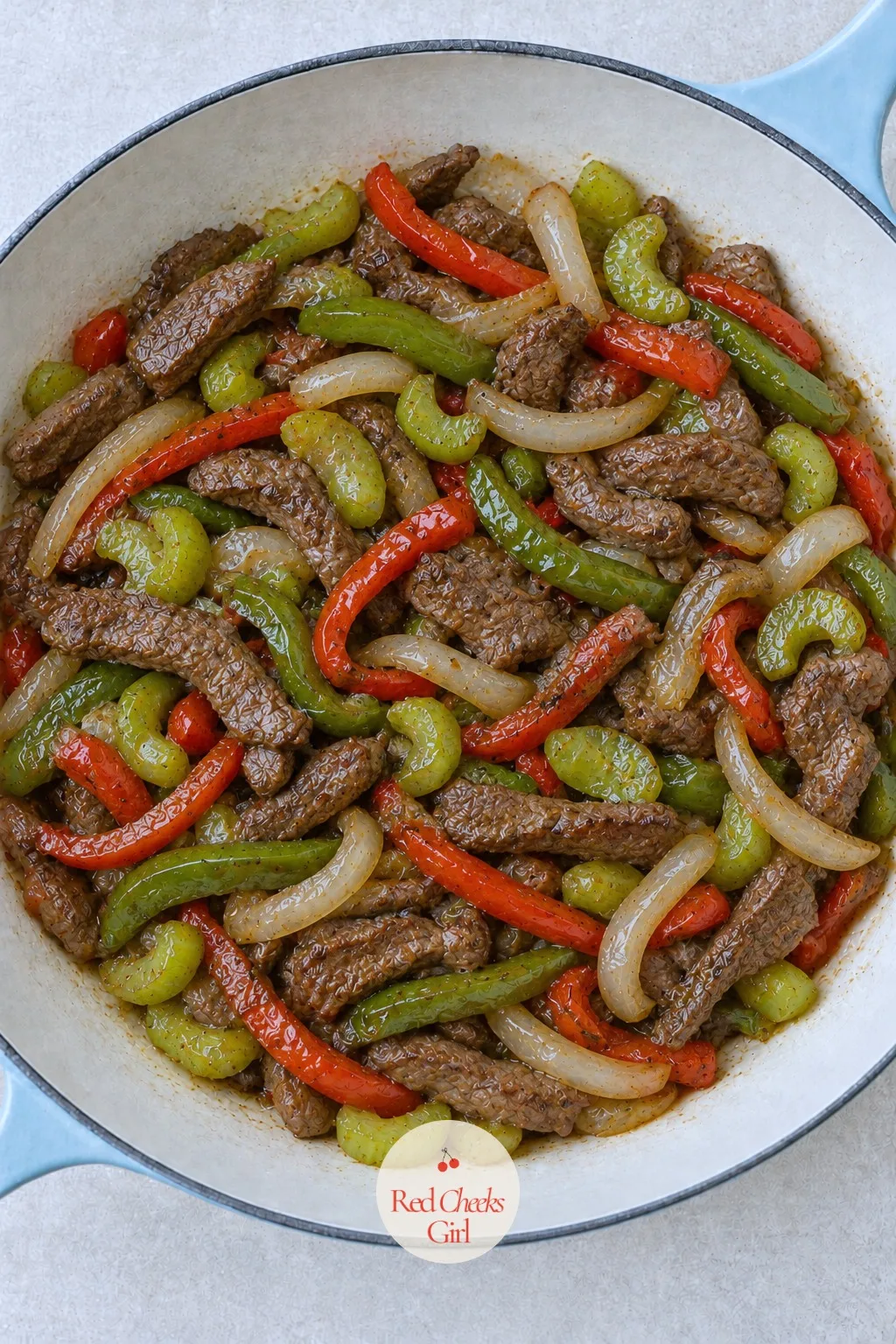
Combine the Beef and Vegetables
Slide the beef back into the pan with the vegetables and toss everything together over the heat for about a minute. Look for an even mix with no pale, uncooked beef hiding at the bottom of the pan.
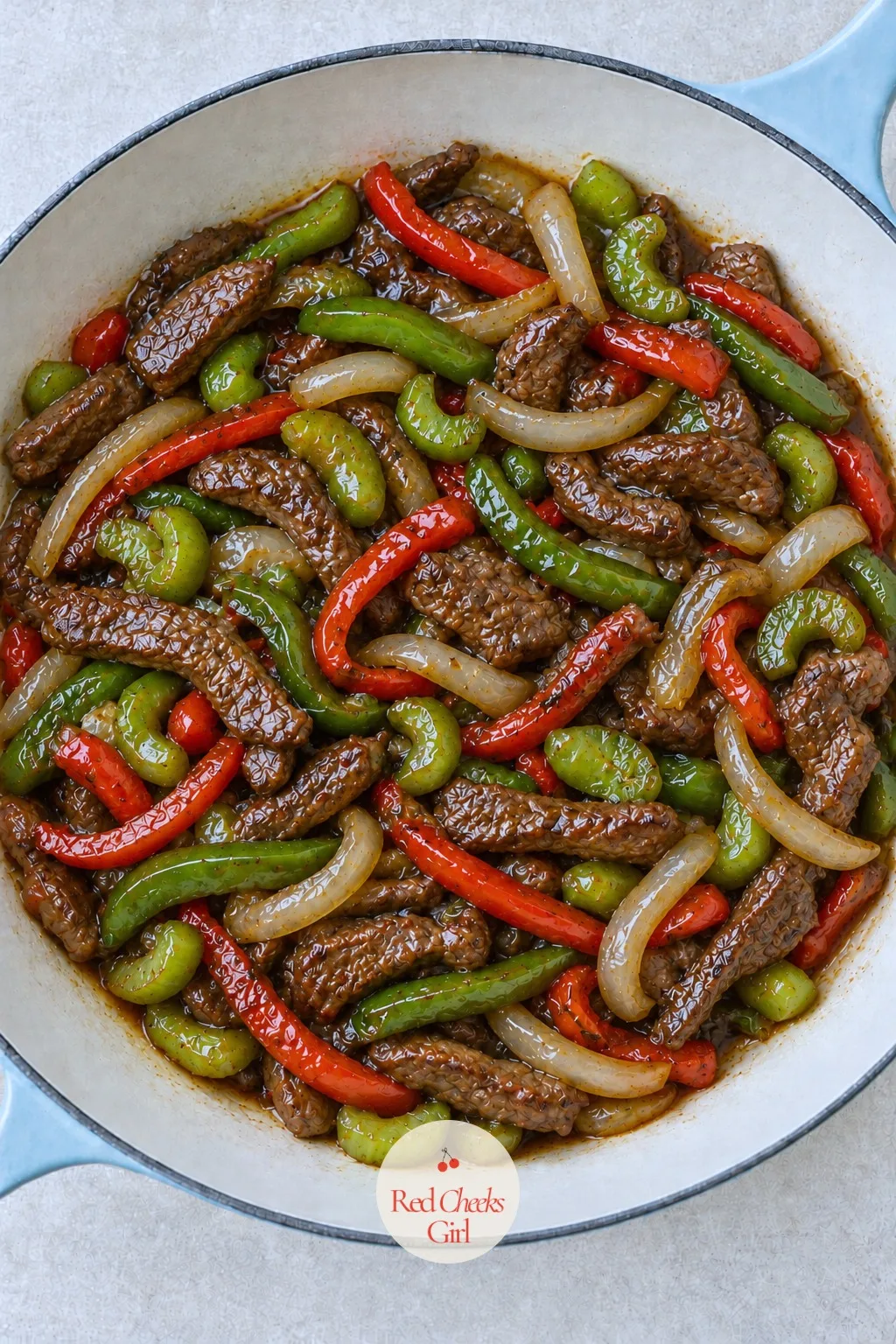
Pour in the Sauce Until Glossy
Pour the broth, soy sauce, ginger and molasses mixture over everything and stir constantly as it comes to a simmer. Give it one to two minutes: the sauce is ready the moment it turns glossy and thick enough to coat the back of a spoon rather than run off it.
Serve the Pepper Steak Over Rice
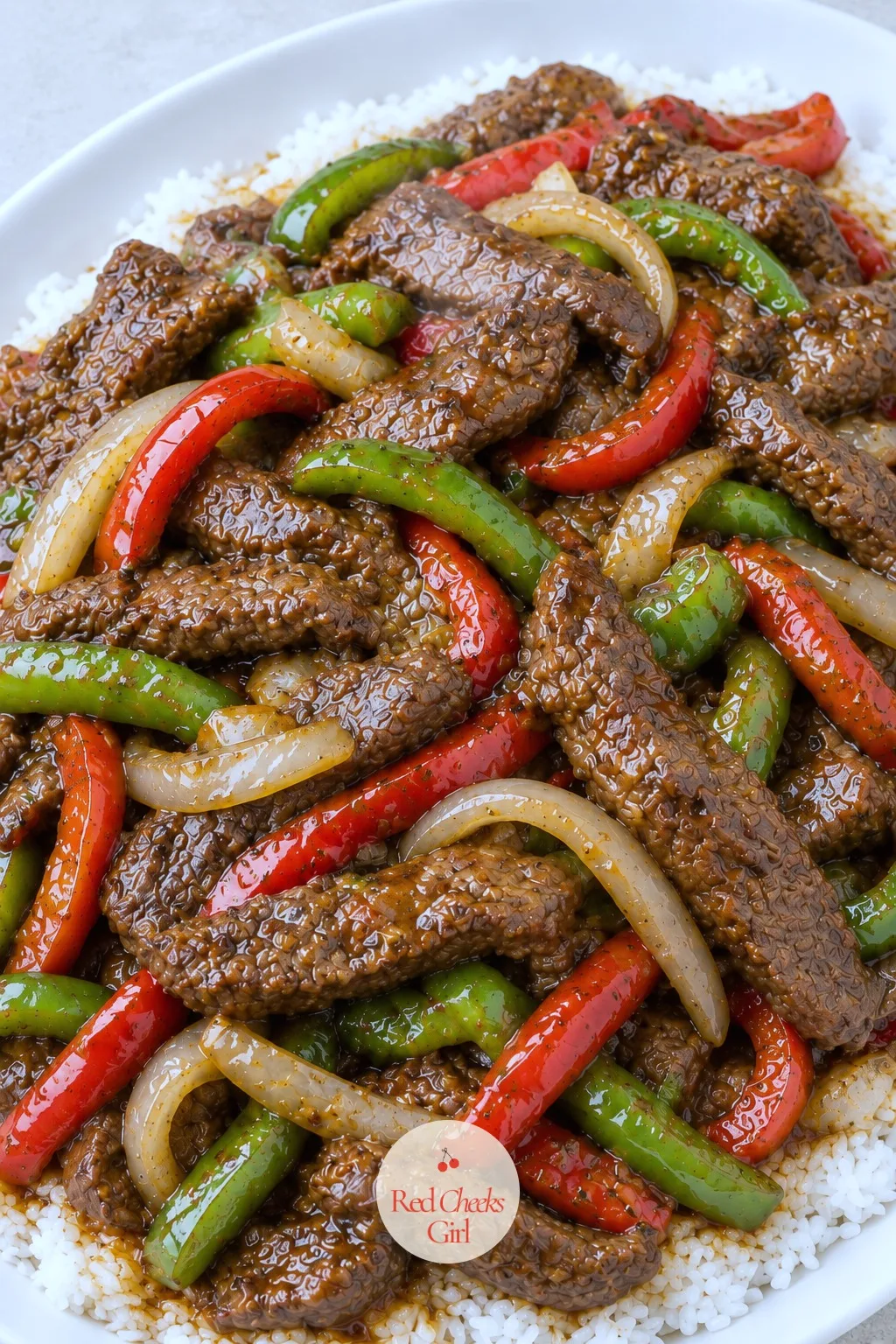
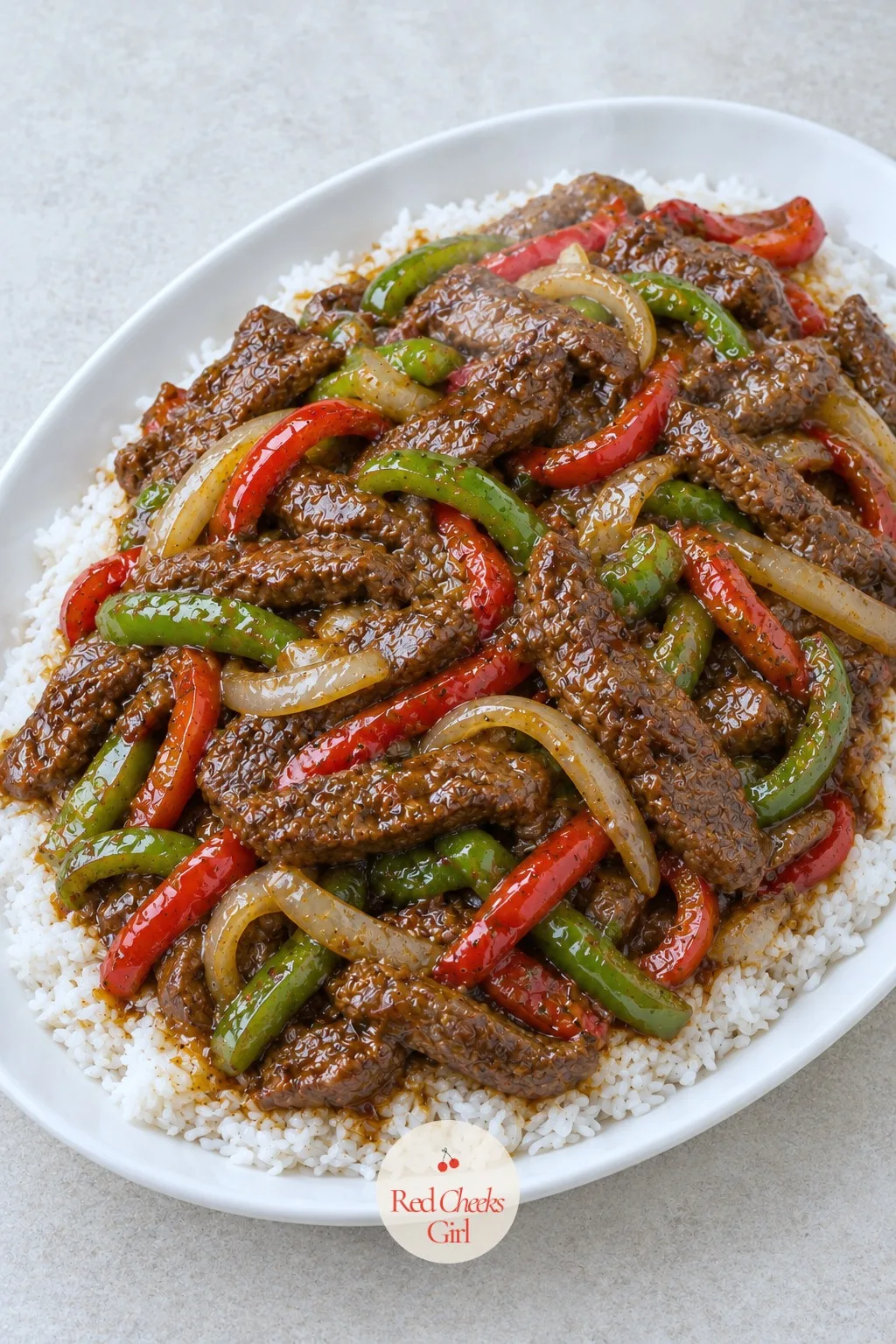
Spoon the pepper steak and its sauce over a bed of warm rice on the platter, letting some sauce pool at the edges. The beef should look deep brown and shiny, with the peppers still bright red and green.
🛍 Shopping guide
Getting the Sear and the Sauce Right
The single biggest mistake is crowding the pan. Dump all the beef in at once and it steams in its own juice instead of browning, turning gray instead of caramelized at the edges. Work in two batches with space between the strips.
Second mistake: slicing with the grain instead of against it. Look for the long parallel lines running through the raw steak and cut straight across them. Cut the wrong way and even a tender cut turns chewy no matter how fast you sear it.
Skip the freezer step and the knife drags through warm, wobbly meat, leaving thick, uneven strips that cook unevenly in the pan. Thirty minutes firms the muscle enough to slice clean ribbons about an eighth of an inch thick, no special knife skills required.
Do not let the sauce simmer much past the two minute mark once it thickens. Keep going and the cornstarch breaks down, the glossy finish turns gluey, and the sauce separates instead of clinging to the beef.
Swaps and Substitutions
No sirloin at the counter? Flank steak or top round both slice thin the same way and hold up to a fast sear; just add an extra minute per side since they are slightly tougher cuts. If you would rather skip slicing altogether, Korean Beef Bowl With Ground Beef in Fifteen Minutes leans on ground beef instead.
Swap celery for snap peas or sliced mushrooms if that is what is in the crisper drawer; both take the sauce well and keep their shape in the hot pan.
Tamari replaces the soy sauce one for one if gluten is a concern at your table, and honey stands in for the molasses when you want a lighter color and a cleaner sweetness.
Stir in sliced fresh chili or a shake of red pepper flakes with the vegetables if the table likes heat; the recipe as written stays mild enough for every plate otherwise.
What to Serve It With at a Party
Shrimp Fried Rice Recipe in One Hot Pan With Peas, Carrots and Egg turns the same stove time into a second dish if you want more than one protein on the table.
For a full spread rather than a single dish, pull a few more ideas from Game Day Party Food: 21 Recipes and Ideas for Your Spread and let the pepper steak sit as the main alongside smaller bites guests can graze on between courses.
If your crowd eats from bowls rather than plates, borrow the format from 19 Dinner Bowl Recipes: Healthy Recipes With a Grain, a Protein and Plenty of Color and build a rice base, a scoop of the steak and peppers, and a small dish of extra sauce on the side.
Keep the sides short: a plain cucumber salad or steamed broccoli needs no recipe at all and gives the rich sauce somewhere cool to land.
Pepper Steak
Ingredients
- 1 1/2 pounds sirloin steak
- 3 tablespoons soy sauce divided
- 2 tablespoons cornstarch divided
- 2 tablespoons vegetable oil divided
- 1 green bell pepper cut into strips
- 1 red bell pepper cut into strips
- 2 celery stalks sliced thin on the diagonal
- 1 medium yellow onion cut into thin wedges
- 1 cup beef broth
- 1 tablespoon fresh ginger grated
- 2 cloves garlic minced
- 1 tablespoon molasses
- 1/4 teaspoon black pepper
- 2 tablespoons water
- 3 cups cooked white rice for serving
Instructions
- Place a 1 1/2 pound sirloin steak in the freezer for 30 minutes, until it feels firm at the edges and resists a light press but does not freeze solid. Slice it against the grain into thin strips about 1/8 inch thick; the firm, chilled meat holds its shape under the knife far better than room temperature steak does.
- Toss the sliced beef in a white ceramic mixing bowl with 1 tablespoon of the soy sauce and 1 tablespoon of the cornstarch until every strip is coated and no dry cornstarch remains in the bottom of the bowl. Set the bowl aside while you prepare the vegetables.
- Cut 1 green bell pepper and 1 red bell pepper into strips about 1/4 inch wide, slice 2 celery stalks thin on the diagonal, and cut 1 medium yellow onion into thin wedges. Keep the vegetables together in a second bowl; they go into the pan all at once later.
- Whisk together 1 cup beef broth, the remaining 2 tablespoons soy sauce, 1 tablespoon grated fresh ginger, 2 minced garlic cloves, 1 tablespoon molasses and 1/4 teaspoon black pepper in a small bowl. In a separate small cup, stir the remaining 1 tablespoon cornstarch into 2 tablespoons water until smooth, then whisk this slurry into the broth mixture.
- Heat 1 tablespoon vegetable oil in the pale blue enameled skillet over high heat until it shimmers. Add half the beef in a single uncrowded layer and sear for 2 to 3 minutes, turning once, until deeply browned at the edges; lift it onto a plate and repeat with the remaining oil and beef.
- Add the peppers, celery and onion to the same hot skillet and cook for 3 to 4 minutes, stirring occasionally, until the vegetables turn glossy and just tender but still hold their shape and bright color.
- Return all the seared beef to the skillet with the vegetables and toss together over the heat for about 1 minute, until evenly combined and no pale beef remains hidden at the bottom.
- Pour the broth mixture into the skillet and stir constantly as it comes to a simmer. Cook for 1 to 2 minutes, until the sauce turns glossy and thick enough to coat the back of a spoon rather than run off it.
- Remove the skillet from the heat and let the pepper steak rest for 2 minutes; the sauce will thicken slightly further and cling more evenly to the beef as it sits.
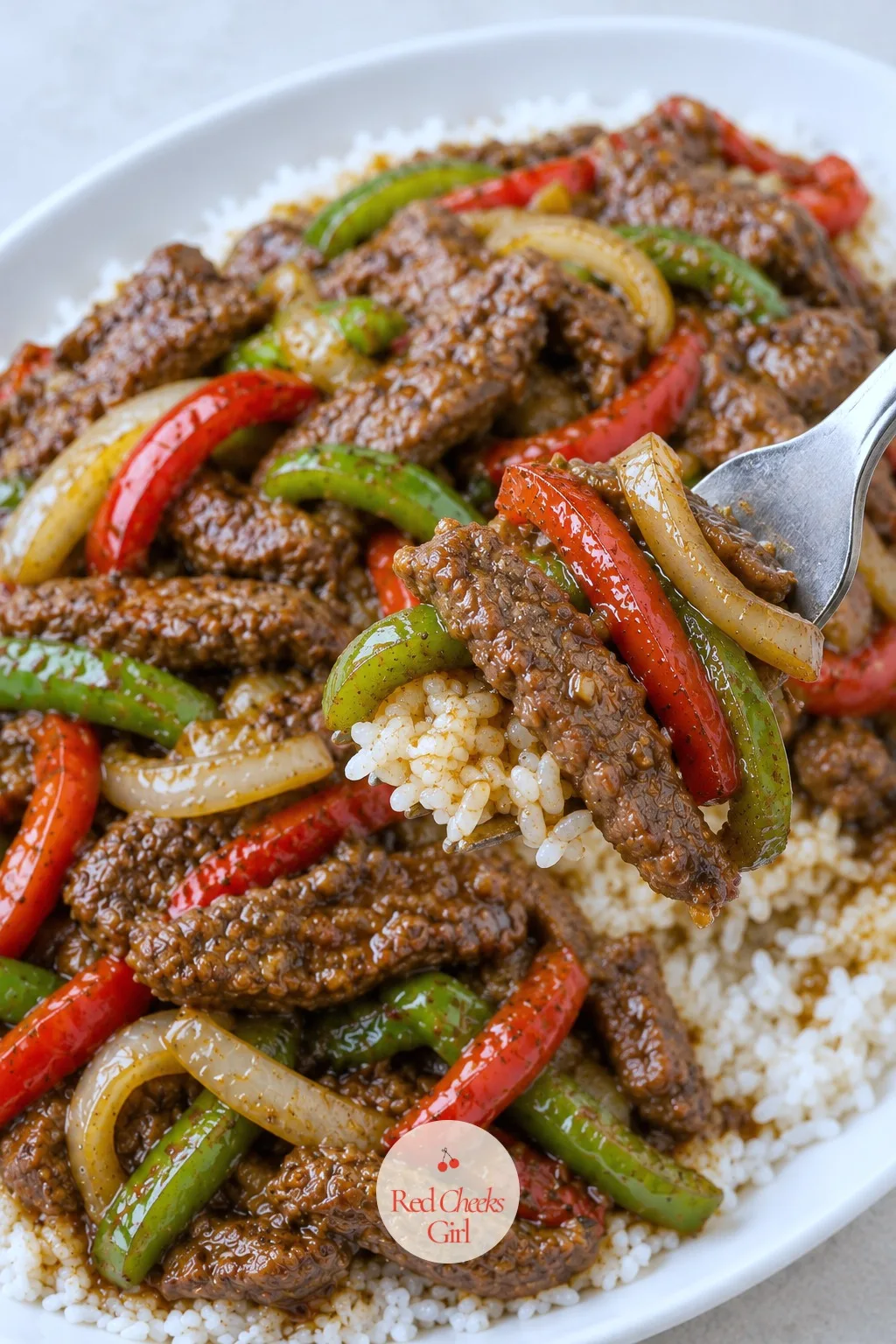
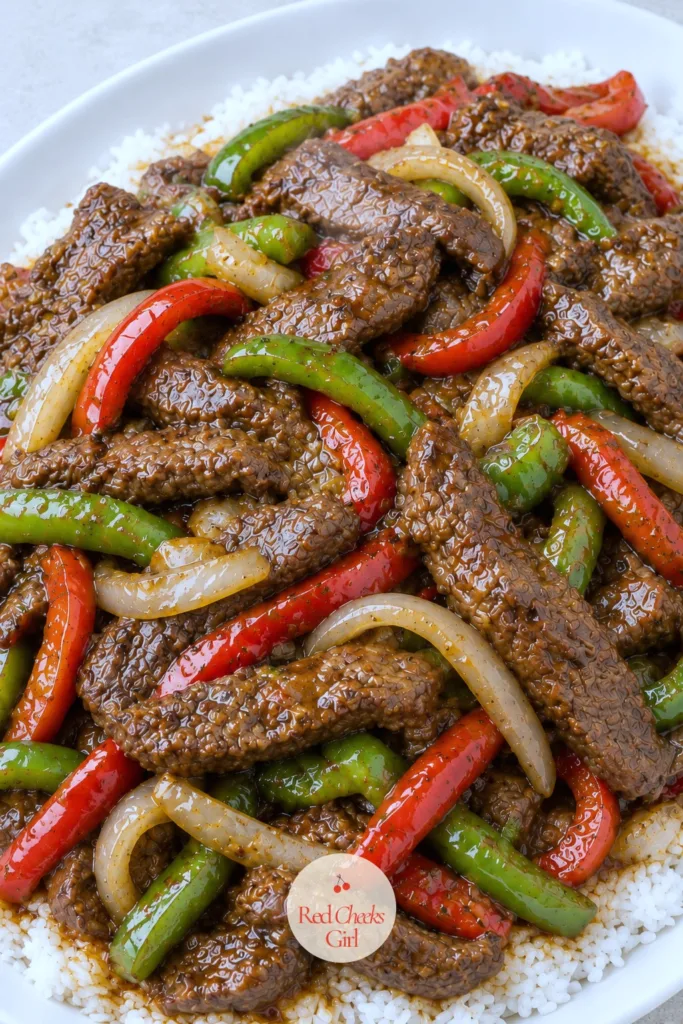
- Spoon the pepper steak and its sauce over 3 cups warm cooked white rice on a white ceramic serving platter and serve immediately while the sauce is still glossy and the beef is hot.
Good to Know
Frequently Asked Questions
What cut of beef is best for pepper steak?
Sirloin is the best balance of tenderness and price, though flank steak or top round work well too. Any lean, quick-cooking cut slices thin and sears fast as long as you cut against the grain.
Why is my pepper steak tough?
Pepper steak turns tough when the beef is sliced with the grain instead of against it, or when the pan is overcrowded and the meat steams instead of searing. Thin slices and a hot, uncrowded pan keep it tender.
Is pepper steak spicy?
Pepper steak is not spicy on its own; the name refers to the bell peppers, not chili heat. Add sliced fresh chili or red pepper flakes with the vegetables if your table wants some kick.
What is the difference between pepper steak and Mongolian beef?
Pepper steak leans savory and peppery with bell peppers front and center, while Mongolian beef is sweeter and usually skips the peppers for a hoisin-heavy sauce. Both use thin, quick-seared beef strips.
Can I make pepper steak ahead of time?
Yes, slice and marinate the beef and cut the vegetables up to a day ahead, storing them separately in the refrigerator. The actual cooking still takes only fifteen minutes once the pan is hot.
What vegetables go well in pepper steak?
Green and red bell peppers are the classic pair, and celery and onion add crunch and sweetness underneath them. Mushrooms, snap peas or baby corn all work too if that is what is on hand.
Seared scallops develop a deep golden crust in ten minutes flat, finished with lemon butter, garlic,
15 copycat restaurant recipes inspired by Olive Garden, Chipotle, Chick-fil-A and more, baked, saute
Creamy Cajun chicken pasta simmers in one skillet: seared chicken, three bell peppers, a smoky parme
Leave a Reply