

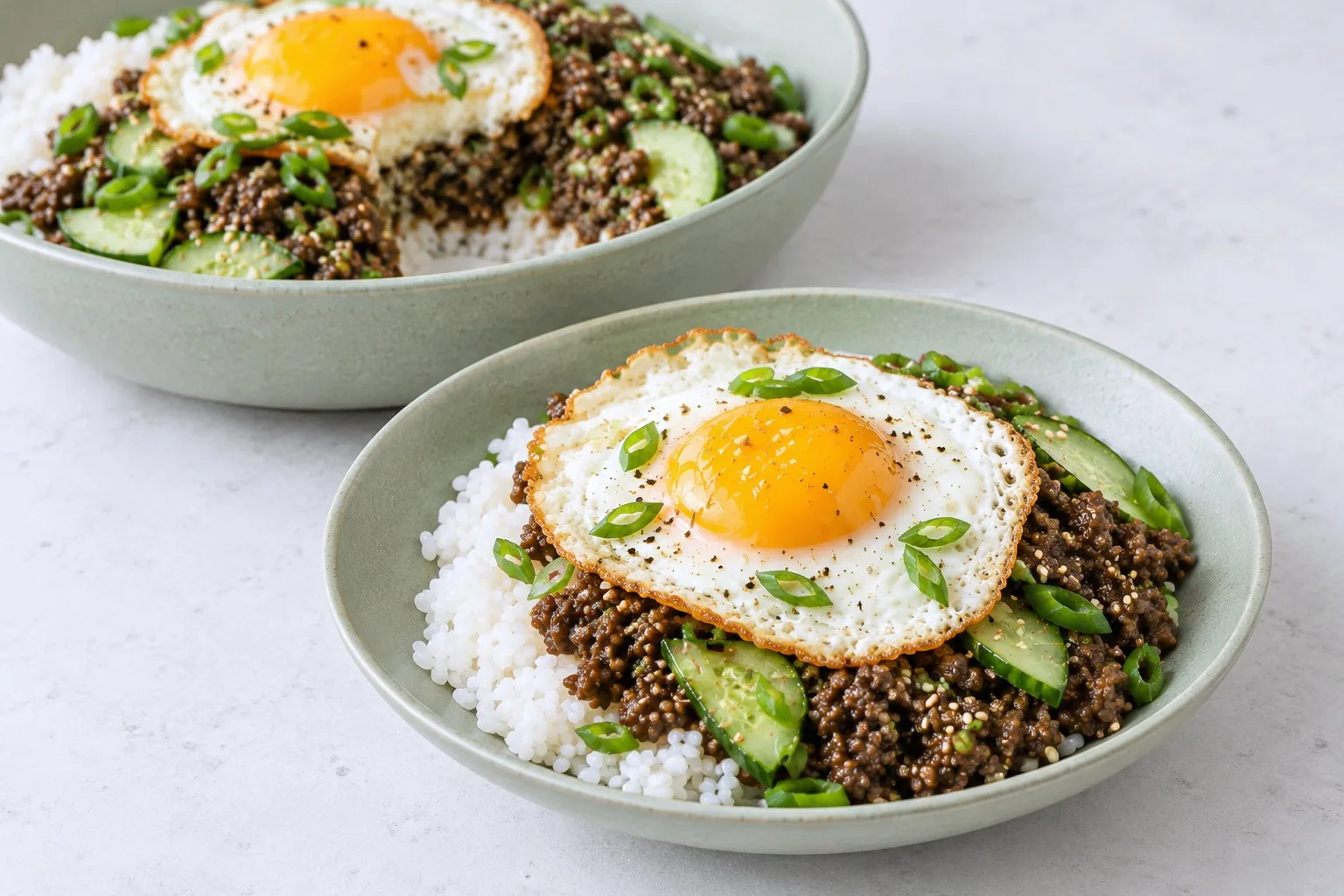
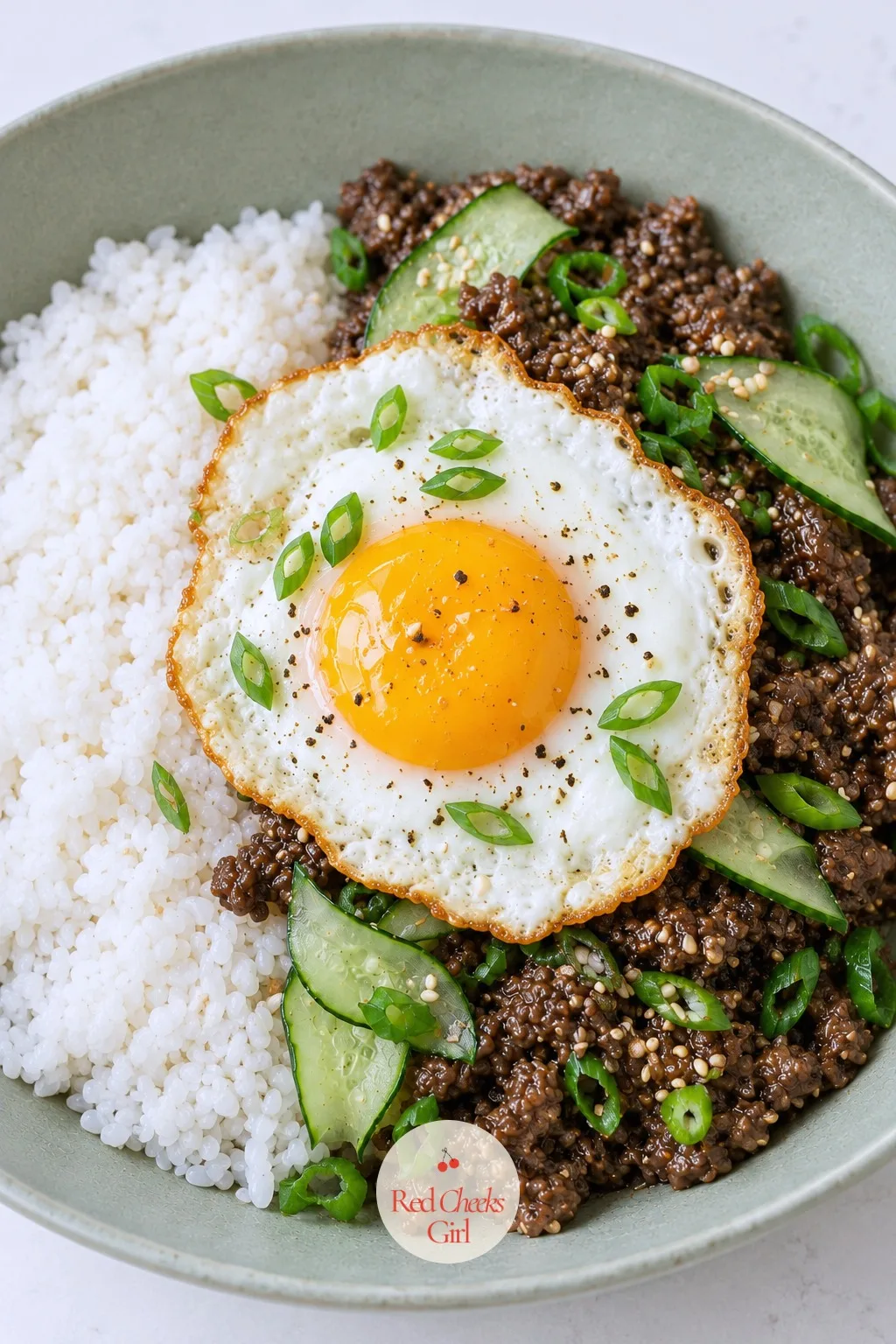
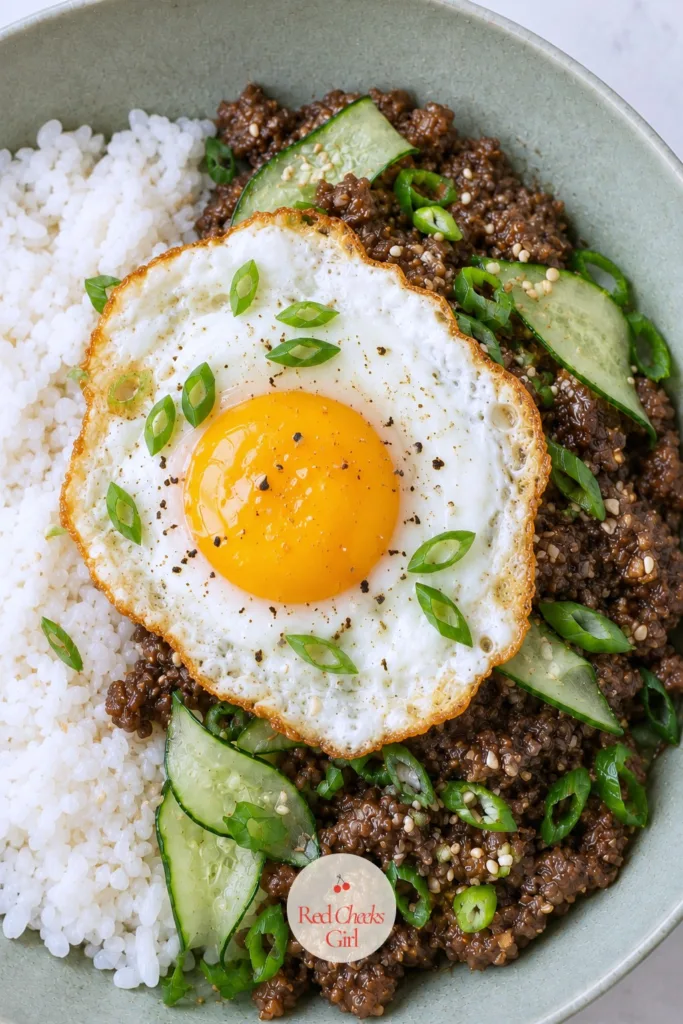
Korean beef bowl recipe ready in fifteen minutes solves the exact problem a weeknight throws at you: ground beef in the fridge, nothing else that looks like dinner yet. Garlic, ginger, brown sugar and soy sauce turn that beef into something glossy and a little sweet, piled over rice with cold cucumber, scallion and a fried egg on top.
Scale it up with a slow cooker chuck roast version or glaze it in gochujang for lettuce cups, and the same pan feeds a party as easily as a Tuesday.
This post contains affiliate links. If you buy through them, I may earn a small commission at no extra cost to you.
Table of Contents
A Dinner That Behaves Like A Treat
Some nights the fridge holds a pound of ground beef and not much else that resembles a plan. A korean beef bowl turns that exact situation into dinner that tastes like you tried, with a glossy brown sugar and soy glaze that clings to the meat instead of drowning it.
Nothing here calls for a trip to a specialty grocer. Garlic, ginger, soy sauce, brown sugar and sesame oil sit in most kitchens already, and the whole pan is done before the rice finishes steaming.
It holds up at a party too, if you would rather serve a crowd than a single pan. Keep the beef warm in the skillet it cooked in, set out rice, cucumber and a tray of fried eggs, and let people build their own bowl.
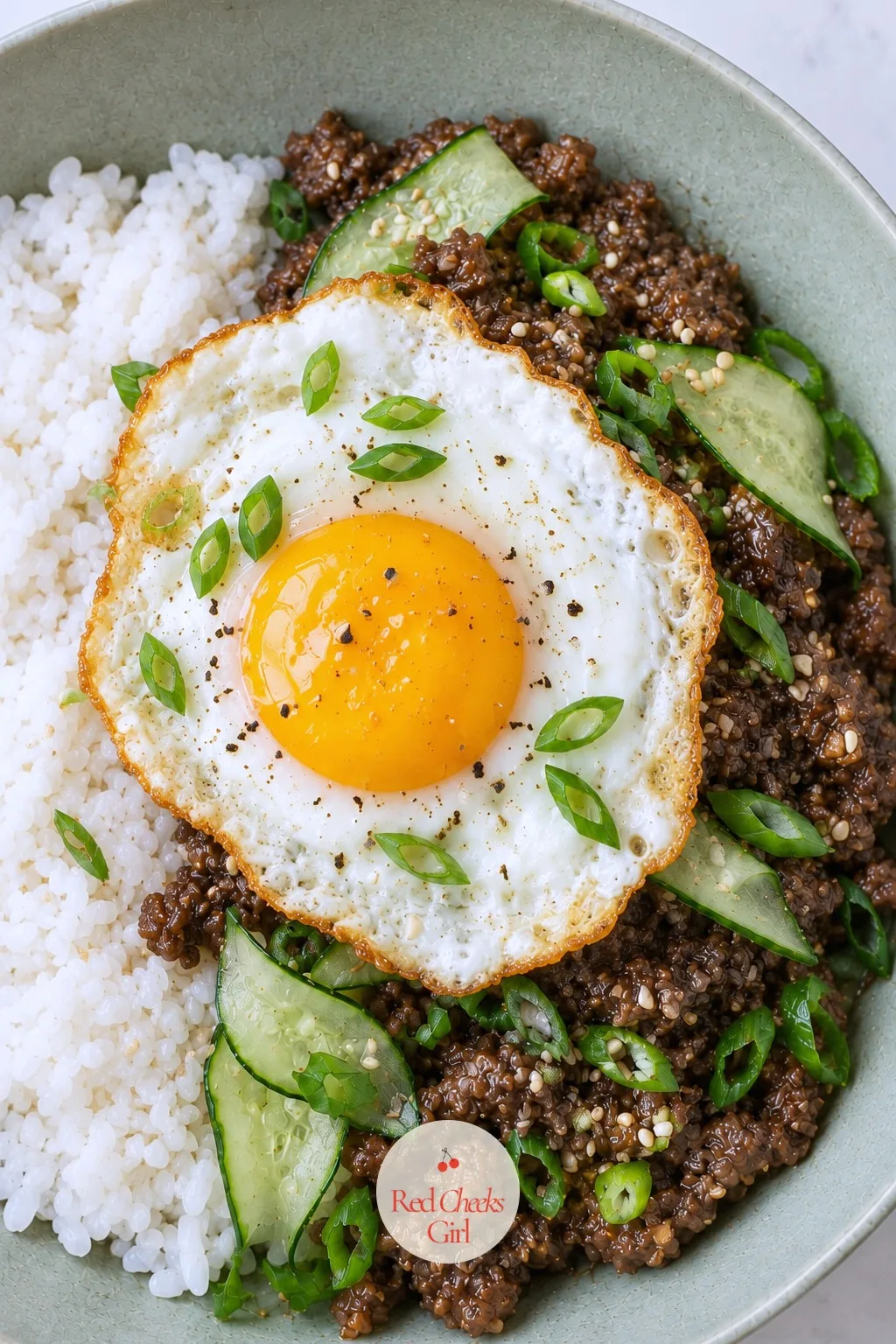
The fried egg on top is not decoration. Break the yolk into the rice and it works like a sauce, rich and a little savory, pulling the sweet beef and the cold cucumber together in one bite.
What Goes Into The Bowl, And Why
Garlic and ginger go in fresh, not from a jar of paste, because the ginger in particular carries a little heat that balances all that brown sugar. Mince both finely so they melt into the sauce instead of catching between your teeth.
Brown sugar, soy sauce and sesame oil are the glaze, and the ratio matters more than the order: sweet needs to be strong enough to stand up to the salt, and the sesame oil goes in for aroma, not as the main fat.
Plain white rice is the canvas on purpose. Nothing about it is special, and that is the point: it soaks up the sauce without competing with the beef, and it stays warm under everything else.
Cucumber, green onion and sesame seeds go on cold and raw, straight off the cutting board. The contrast matters: cold crisp cucumber against hot sweet beef keeps every bite from tasting the same.
The fried egg brings the richness a lean dinner usually lacks. A soft, runny yolk means something to break open at the table, and it is the cheapest way to make a bowl of rice and ground beef look like it took effort.
How to Make It
This is the pan that does the most work: one skillet, fifteen minutes of actual cooking, rice simmering alongside. Keep the heat honest and do not crowd the beef, and the glaze will cling instead of pool.
Brown the Beef
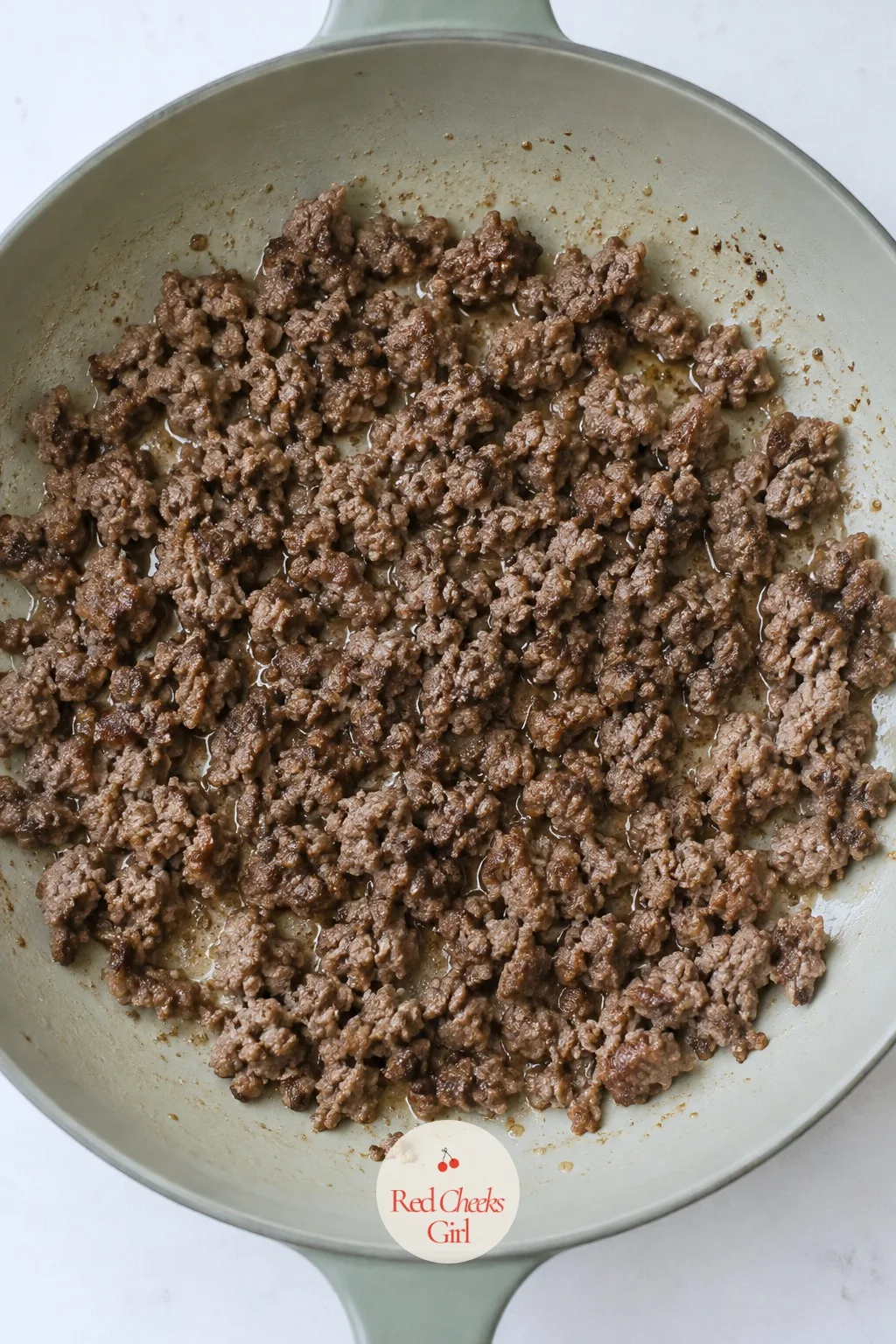
Break the beef into small crumbles as it cooks and keep stirring only occasionally. Look for deep brown edges and no pink left before you add anything else.
Glaze the Beef
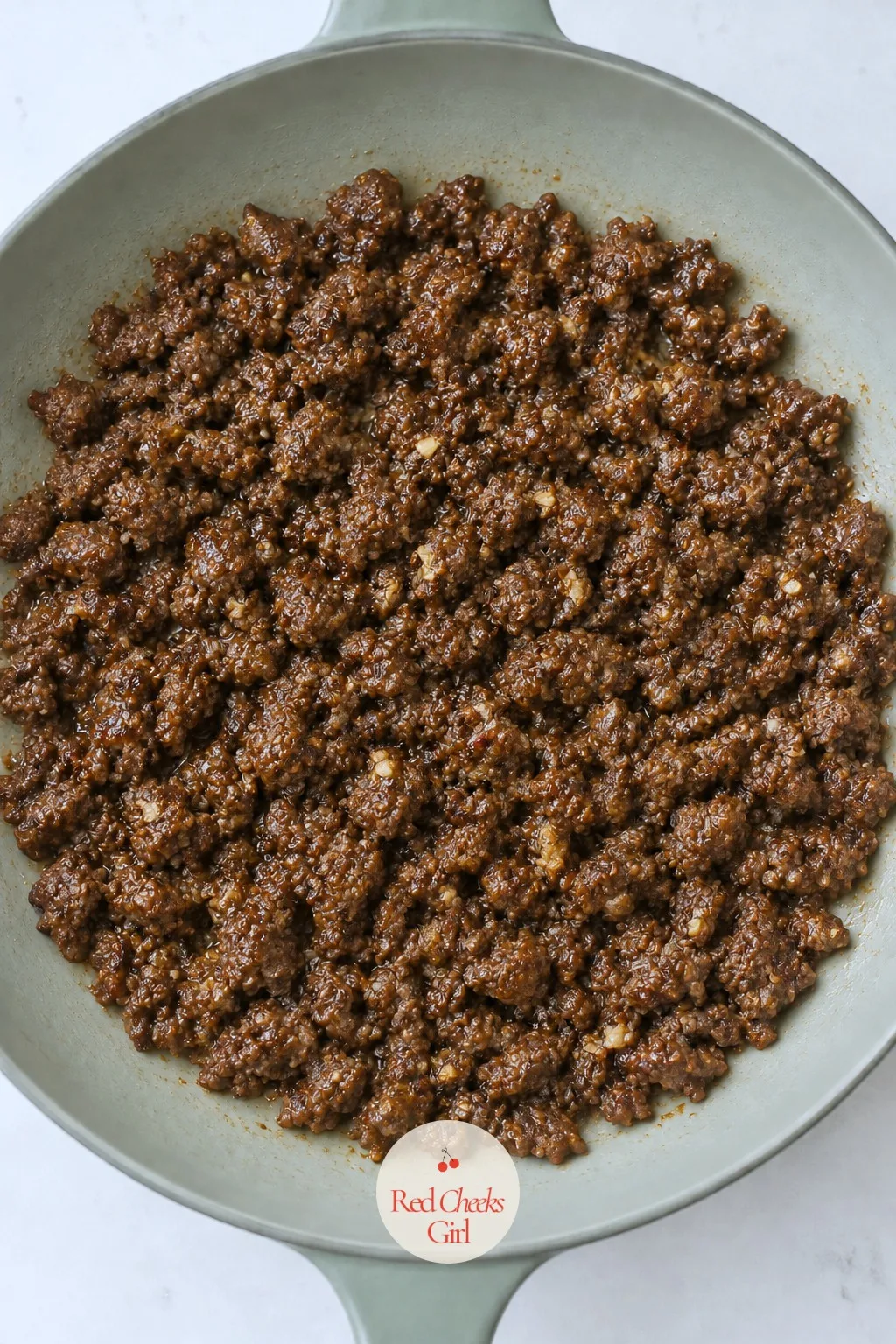
Stir the brown sugar, soy sauce and sesame oil through the beef and let it bubble gently. The sauce is ready once it clings to the meat instead of pooling at the edges.
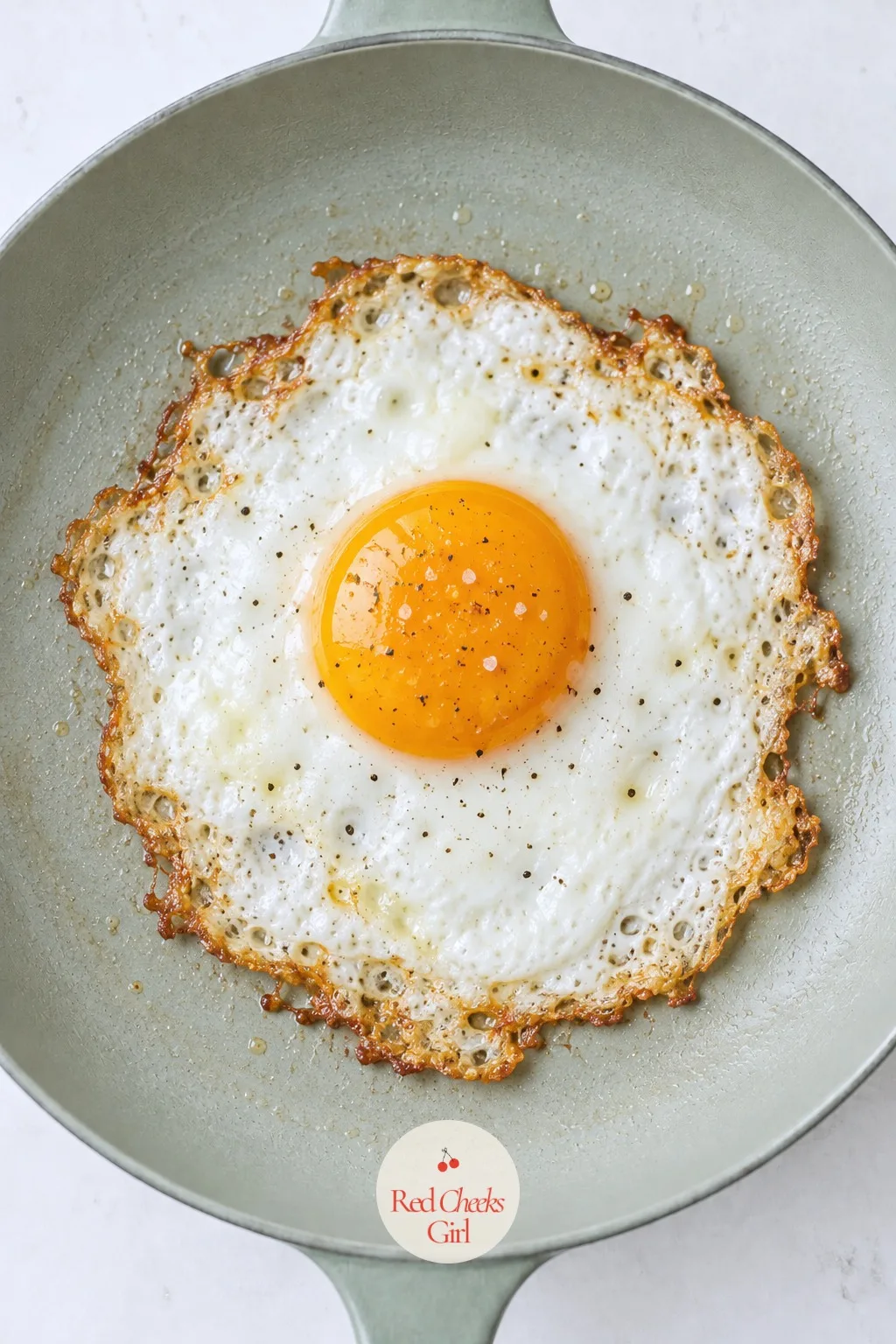
Fry the Eggs
Crack the eggs into hot oil and leave them alone. The whites should turn fully opaque and the edges lacy and golden while the yolk stays soft.
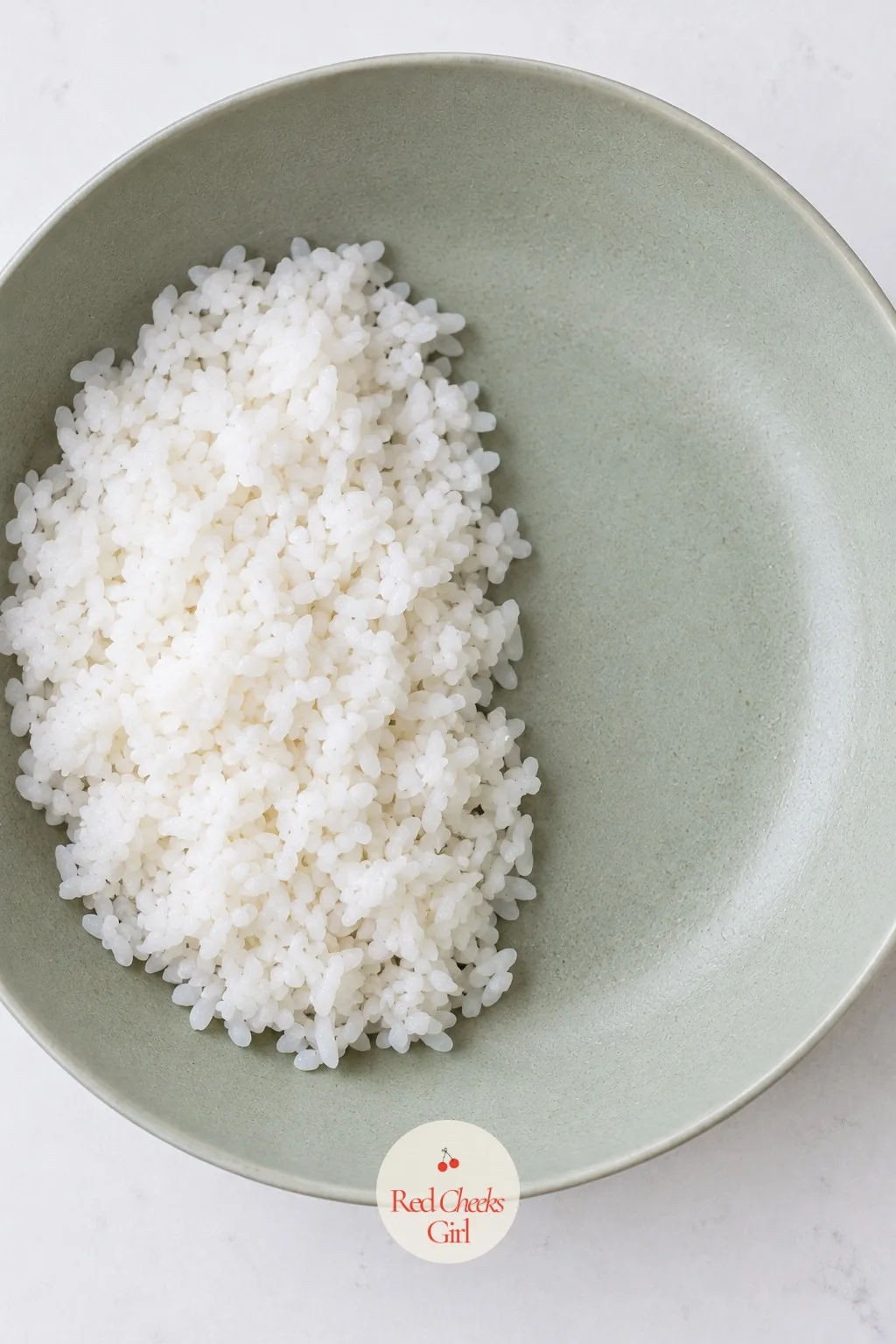
Build the Rice Base
Spoon warm rice into one side of the bowl, leaving room for the beef. This is the base every other layer sits on.
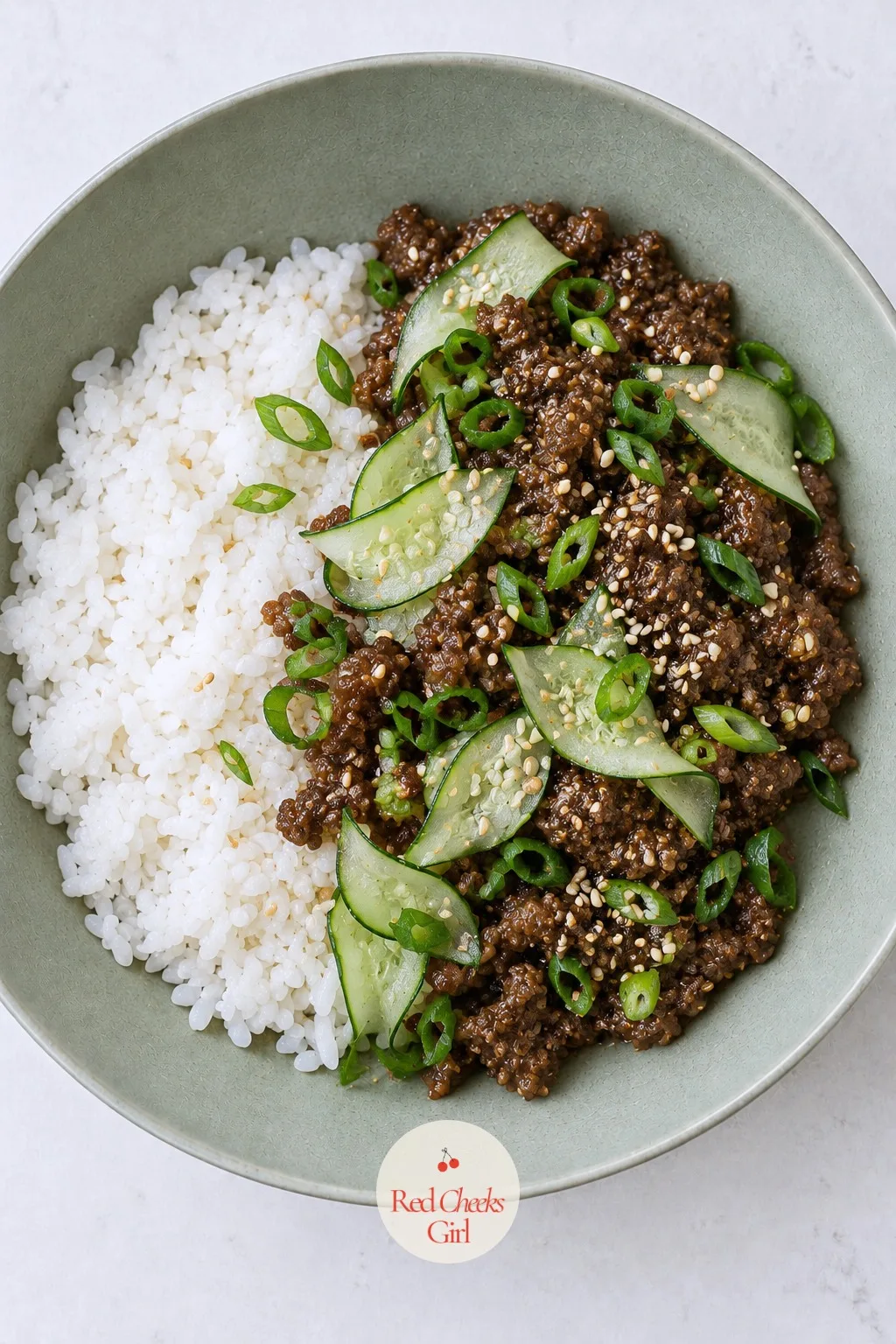
Add the Beef and Toppings
Spoon the glazed beef beside the rice, then scatter cucumber, green onion and sesame seeds over both. The colors should look distinct, not stirred together.
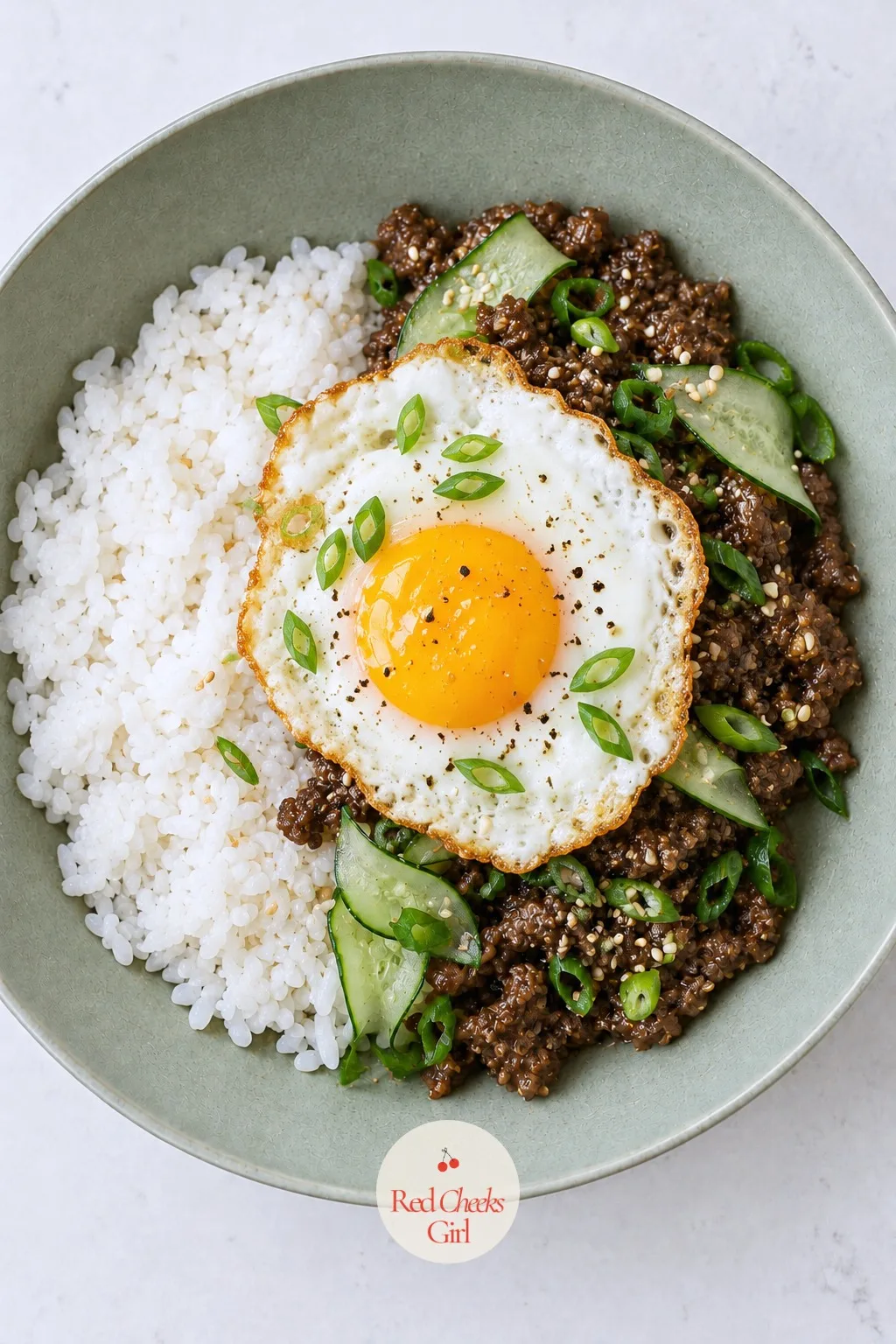
Finish With the Egg
Slide the fried egg on top just before serving so the yolk is still warm. Break it at the table and let it run into the rice and beef underneath.
🛍 Shopping guide
Tips For Getting It Right
The most common mistake is beef that steams instead of browns. A crowded, cool pan releases water before it ever colors, so give the meat room and let it sit a minute before stirring; listen for a hiss, not a simmer.
Skipping the fat drain is the second one. Ground beef with any real fat content leaves enough grease to make the sauce slide right off instead of clinging, so tilt the pan and spoon it out before the sauce goes in.
A sauce that never reduces is a watery bowl. Give it the full two to three minutes over real heat; it should thicken enough to coat the back of a spoon and stay there, not run straight back down.
Cucumber cut too thick turns the whole bowl heavy. Thin half-moons or ribbons give you crunch without weight, and they sit better on top of a hot bowl instead of sinking into it.
Soy sauce, sesame seeds and egg all count as common allergens worth flagging if you are feeding anyone outside your own kitchen; swap tamari for soy and leave the egg on the side if needed.
Swaps And Substitutions
Ground turkey, ground chicken or a plant based crumble all take the same garlic, ginger and soy treatment without any change to the method, if beef is not what is in the fridge.
For gluten free, swap the soy sauce for tamari or coconut aminos in the same amount; the glaze tightens and tastes almost identical.
For a hands off version, swap the ground beef for a 2 to 3 pound beef chuck roast.
Whisk 1/2 cup soy sauce, 1/3 cup brown sugar, 2 tablespoons gochujang, 4 cloves garlic and 1 tablespoon grated ginger, pour it over the roast in the slow cooker, and cook on low for 8 hours or high for 4 to 5, until the meat shreds with a fork.
Shred it right in the sauce, then simmer the whole thing on the stove for a few minutes if it looks thin.
For a lighter, spicier plate, glaze the same ground beef with 2 tablespoons gochujang stirred into the brown sugar and soy, then skip the rice and serve it in butter lettuce cups instead.
Quick pickle the cucumber first: toss thin slices with 2 tablespoons rice vinegar, 1 tablespoon sugar and a pinch of salt, and let them sit for 15 minutes while the beef cooks.
If gochujang is not something you keep on hand, sriracha stirred in a little at a time gets you most of the way there, with less fermented depth but the same heat.
What To Serve It With At A Party
Set the skillet out as is and let people build their own bowl; it holds heat well enough for a casual buffet line, and nobody has to wait for a plated version.
A plate of quick pickled vegetables or kimchi on the side gives guests something sharp to cut the sweetness. If the table already needs a toppings bar, the same logic that runs a good chili bar with toppings for every bowl works here too, with rice, egg and sauce set out in separate bowls so guests build their own.
For a full spread rather than one dish, pull ideas from a wider game day party food list and let the beef bowl anchor the table next to lighter bites.
Pair it with something crisp rather than heavy: a crunchy egg roll recipe for a game day spread keeps the same Asian inspired note going without repeating the same flavor twice.
For drinks, a cold beer or a dry soju cocktail both sit well against the sweet glaze if your crowd drinks; pour something non-alcoholic from a mocktail bar for a game day crowd for anyone who is not, and keep any alcohol to one serving an hour for guests who are driving home.
Korean Beef Bowl
Ingredients
- 1 tablespoon neutral oil such as avocado or vegetable oil
- 1 pound ground beef 85/15 blend
- 4 cloves garlic minced
- 1 tablespoon fresh ginger grated
- 1/4 cup packed light brown sugar
- 1/3 cup low-sodium soy sauce
- 1 tablespoon toasted sesame oil
- 1/2 teaspoon crushed red pepper flakes optional
- 1 cup uncooked white rice cooked (about 3 cups cooked)
- 1 English cucumber thinly sliced
- 3 green onions thinly sliced
- 2 tablespoons sesame seeds
- 4 large eggs
- 1 tablespoon oil for frying the eggs
- kosher salt as needed
Instructions
- Cook 1 cup uncooked white rice according to package directions in a medium saucepan, then cover and set aside; you want about 3 cups cooked rice ready before the beef goes in.
- Set a large ceramic skillet over medium-high heat and add 1 tablespoon neutral oil. Once it shimmers, add 1 pound ground beef and break it into small crumbles with a wooden spoon. Cook for 5 to 6 minutes, stirring occasionally, until no pink remains and the edges turn deep brown.
- Push the beef to one side of the skillet. Add 4 cloves minced garlic and 1 tablespoon grated ginger to the cleared space and cook for 30 seconds, just until fragrant, then stir them through the meat.
- Tilt the skillet and spoon off any excess fat, leaving just enough to keep the meat from sticking; this keeps the finished sauce glossy instead of greasy.
- Stir in 1/4 cup packed brown sugar, 1/3 cup soy sauce, 1 tablespoon toasted sesame oil and 1/2 teaspoon red pepper flakes if using. Simmer for 2 to 3 minutes, stirring often, until the sauce has thickened enough to cling to the beef rather than pool at the bottom of the pan.
- Remove the skillet from the heat and taste; add a pinch of kosher salt only if the soy sauce you used was low sodium and the sauce tastes flat.
- Wipe out a separate small skillet, add 1 tablespoon oil and set it over medium heat. Crack in the eggs, as many as fit without touching, and cook for 2 to 3 minutes until the whites are fully set and the edges turn lacy and golden, leaving the yolks runny.
- Divide the 3 cups cooked rice among four bowls, spooning it into one side of each bowl so there is room for the toppings.
- Spoon the glazed beef next to the rice in each bowl, then scatter sliced cucumber and green onion over the top and sprinkle with sesame seeds.
- Slide one fried egg onto each bowl just before serving, so the yolk is still warm and breaks over the rice and beef the moment a fork goes in.
Good to Know
Frequently Asked Questions
Is Korean beef bowl spicy?
Korean beef bowl is only as spicy as you make it, since the base sauce carries no heat on its own. Add crushed red pepper flakes or a spoon of gochujang if you want real warmth.
Why is my Korean beef bowl watery instead of glossy?
A watery sauce almost always means the pan held too much fat or the sauce never simmered long enough to thicken. Drain excess grease before adding the sauce, then let it reduce for the full two to three minutes.
Can I use ground turkey or chicken instead of beef?
Ground turkey or chicken both work in place of beef with no change to the method or cook time. Expect a lighter, slightly less rich bowl since poultry carries less fat than beef.
What rice works best for a Korean beef bowl?
Plain white or jasmine rice works best because it stays neutral under the sweet, salty glaze. Brown rice or cauliflower rice both work too, if you want more fiber or fewer carbs.
Is this recipe gluten free?
The recipe is not gluten free as written because regular soy sauce contains wheat. Swap in tamari or coconut aminos in the same amount and the rest of the method stays exactly the same.
What is the difference between gochujang and sriracha in this recipe?
Gochujang brings a deeper, slightly sweet and fermented heat, while sriracha is sharper and more purely spicy with less complexity. Either works, so use whichever one is already open in the fridge.
It’s 5:30 PM and it’s 87 degrees and nobody — including me — wants to stand

12 Christmas dinner party menus with starter, main, side and dessert, plus a day-of timeline, for ho
16 chicken breast dinner ideas that stay juicy, from a showstopping hasselback caprese chicken to a
Leave a Reply