

Japanese Souffle Pancakes That Stand Tall and Jiggle on the Plate
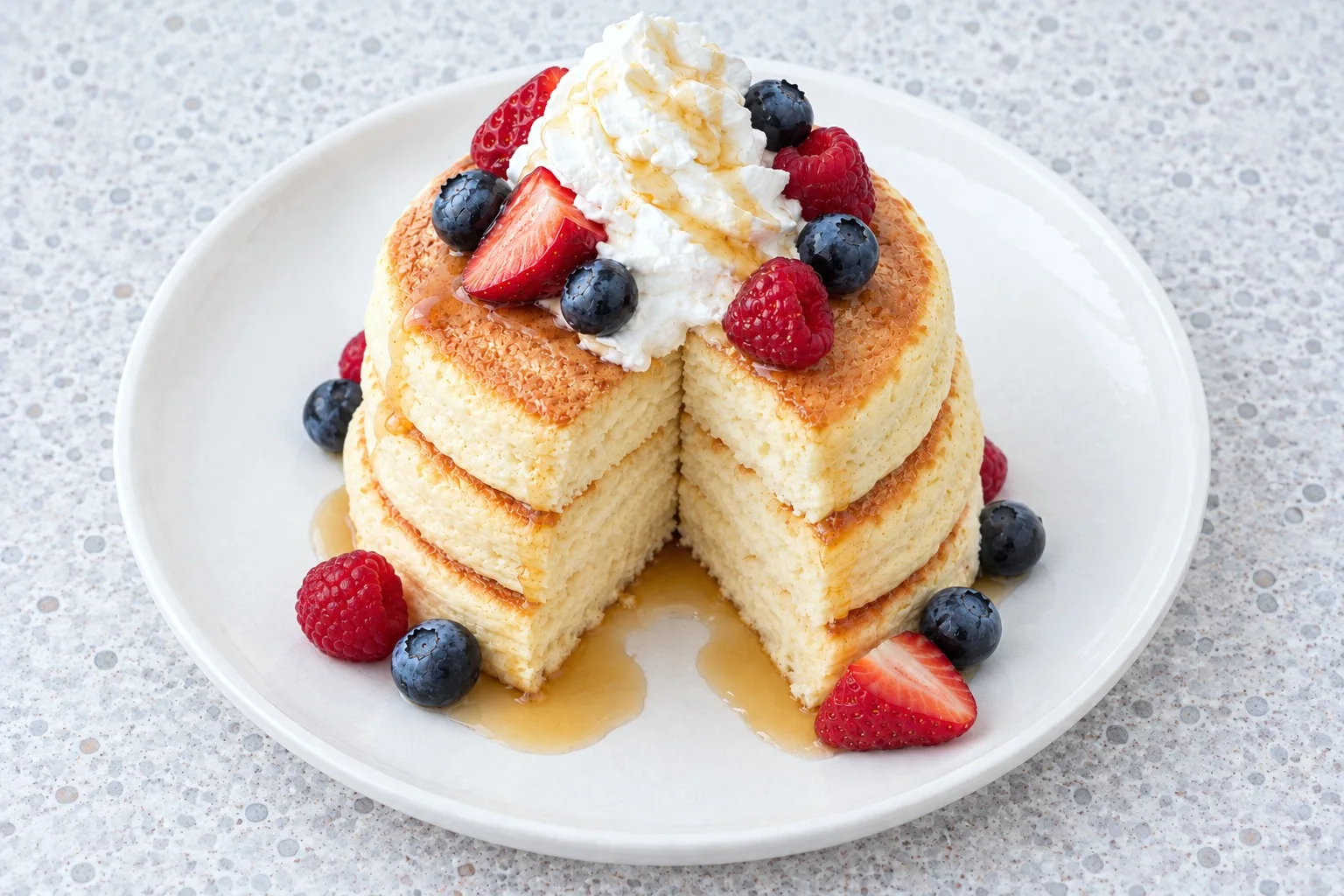
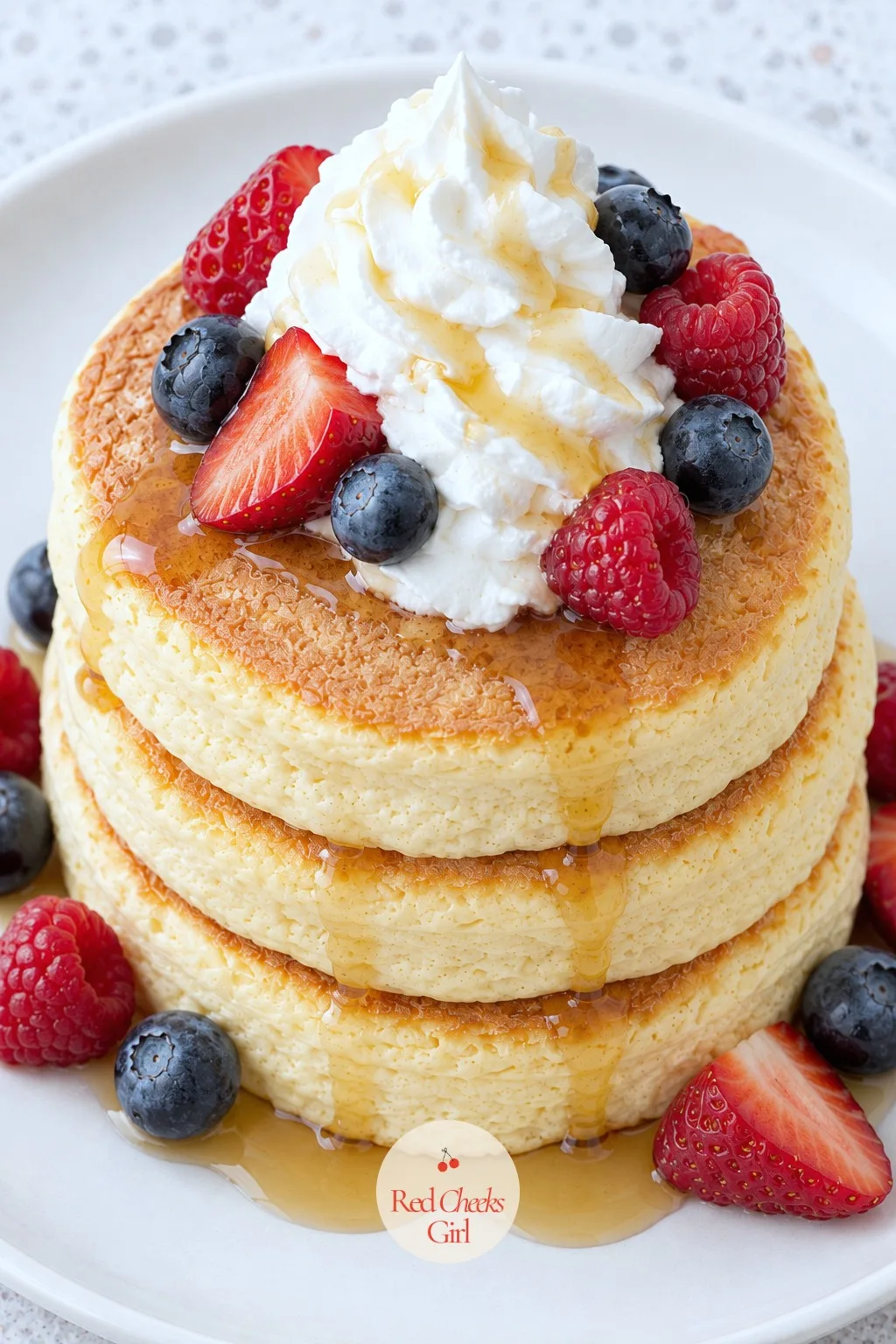
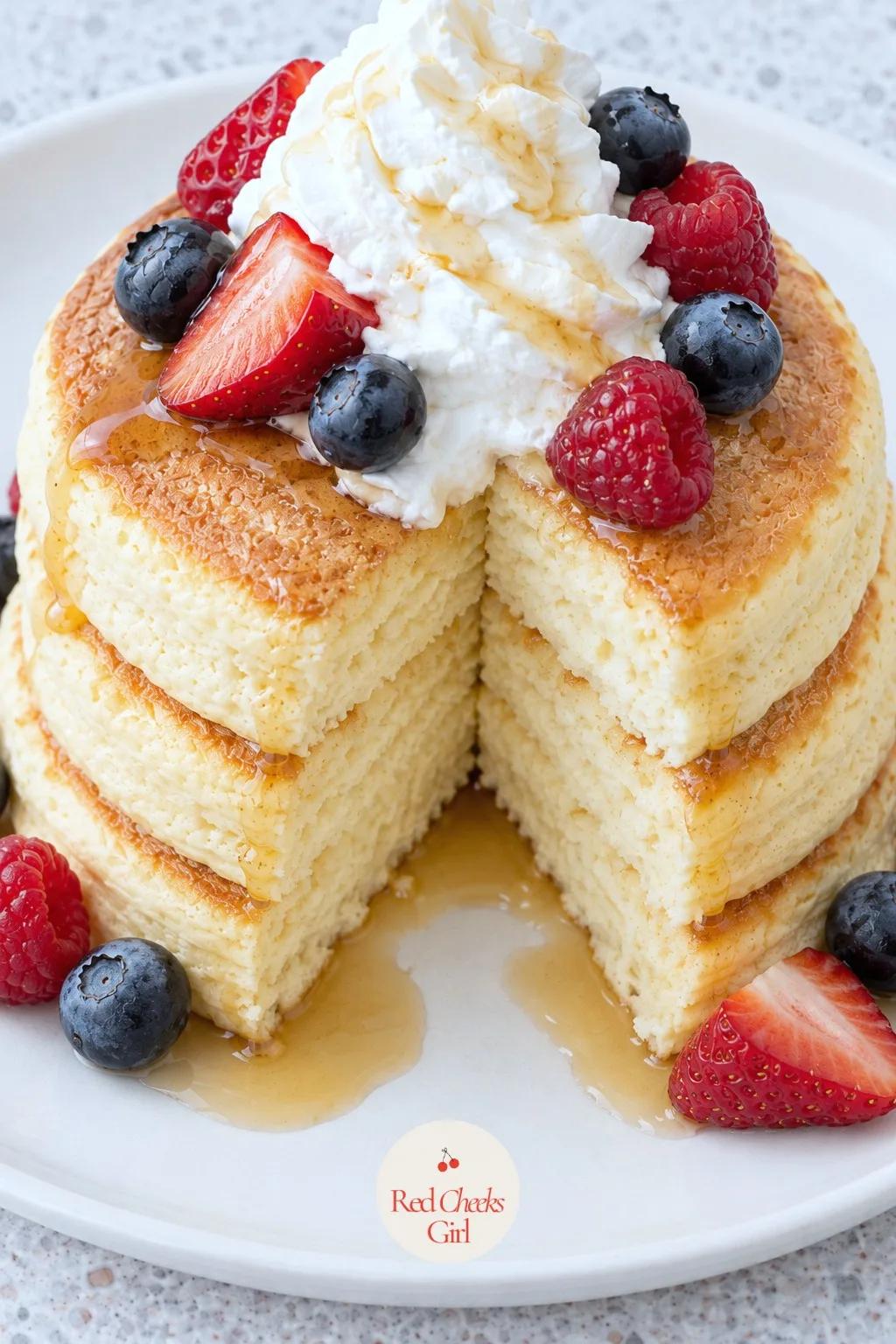
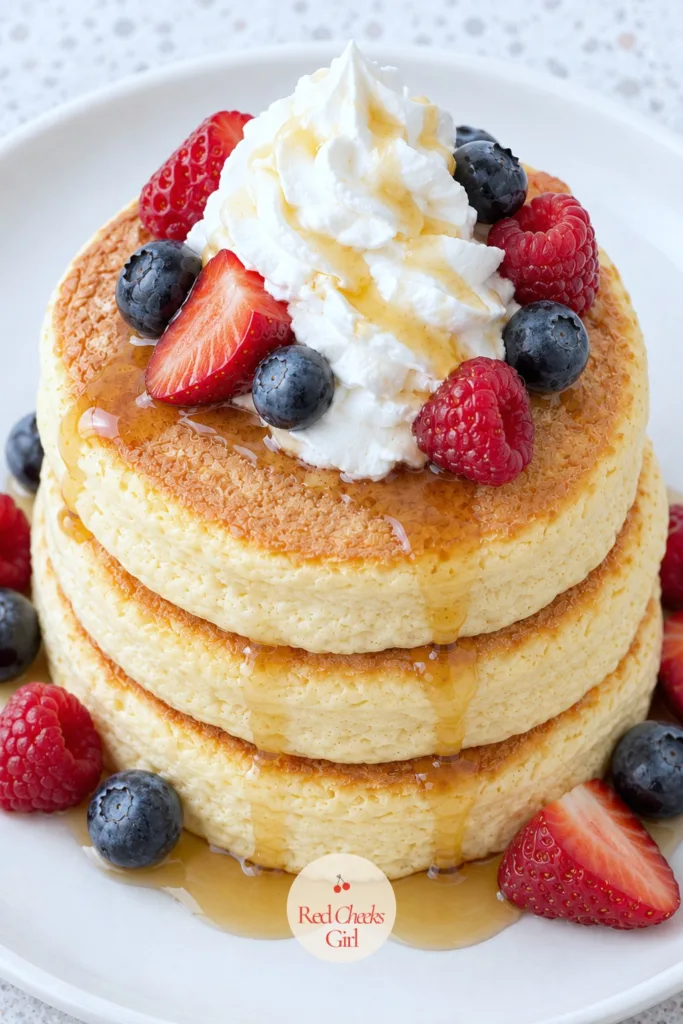
Japanese souffle pancakes earn every bit of their reputation: three tall discs that wobble the moment the plate lands, lighter than anything made with flour alone.
The trick lives almost entirely in the egg whites, whipped into a stiff meringue and folded in with a light hand. Build the stack with whipped cream, ripe berries and a slow pour of maple syrup, and the picture takes care of itself.
This post contains affiliate links. If you buy through them, I may earn a small commission at no extra cost to you.
Table of Contents
Why These Pancakes Are Worth The Fuss
Japanese souffle pancakes get their height from one trick: a stiff meringue folded into a thin yolk batter, then coaxed upward under a lid instead of spread out into a wide, flat circle. The payoff is a stack that jiggles when it lands on the table, somewhere between a pancake and a baked souffle.
They look like cafe food, the kind queued for behind a velvet rope, but the ingredient list is short and nothing in it is unusual. What takes practice is patience: low heat, a closed lid, and the discipline not to peek every thirty seconds.
Serve them for a slow Sunday or stack them for a small weekend gathering where the whole table wants a photograph before anyone picks up a fork. They stand up on their own, so there is no need to dress the rest of the menu around them.
What Goes Into The Batter
Two egg yolks and two whites split into two different jobs. The yolks go into a thin, almost crepe-like batter; the whites do the structural work once whipped into meringue, and cold eggs separated straight from the fridge whip into firmer, more stable peaks.
Cream of tartar is a small addition with an outsized job: it steadies the egg whites so they hold their shape longer once folded into a heavier batter. A few drops of lemon juice do roughly the same thing if the jar is not in the cupboard.
Cake flour, not all-purpose, gives the crumb its light, almost cottony texture. There is so little of it in the mix that the whole structure of the pancake depends on the egg foam, not the flour, and whole milk loosens the yolk batter just enough to fold evenly.
A splash of water added to the skillet, not the batter, is what builds the steam that cooks these through gently, the same idea behind a bain-marie under a baked souffle. This batter carries eggs, dairy and a little gluten from the flour, worth a mention if anyone at the table has allergies.
How to Make It
This batter comes together in two bowls and cooks in one covered skillet, three mounds at a time. Work quickly once the meringue is ready: it starts losing air the moment it is finished, so have the skillet warm and a piping bag or spoon ready before the last fold.
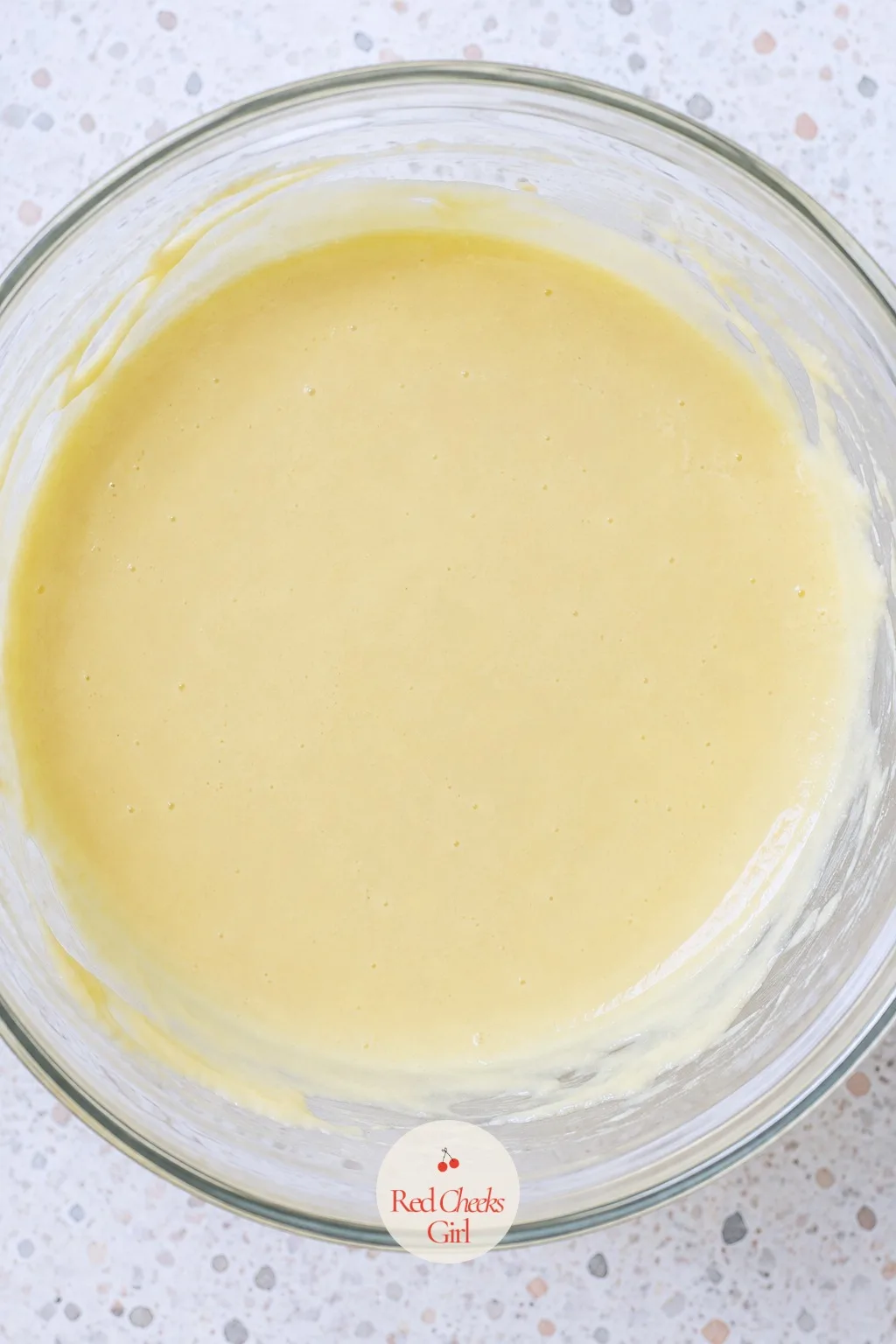
Whisk the yolk batter smooth
Whisk the egg yolks with milk and vanilla until smooth, then sift in the flour and baking powder. The batter should look pale yellow and silky, with no visible streaks of flour left.
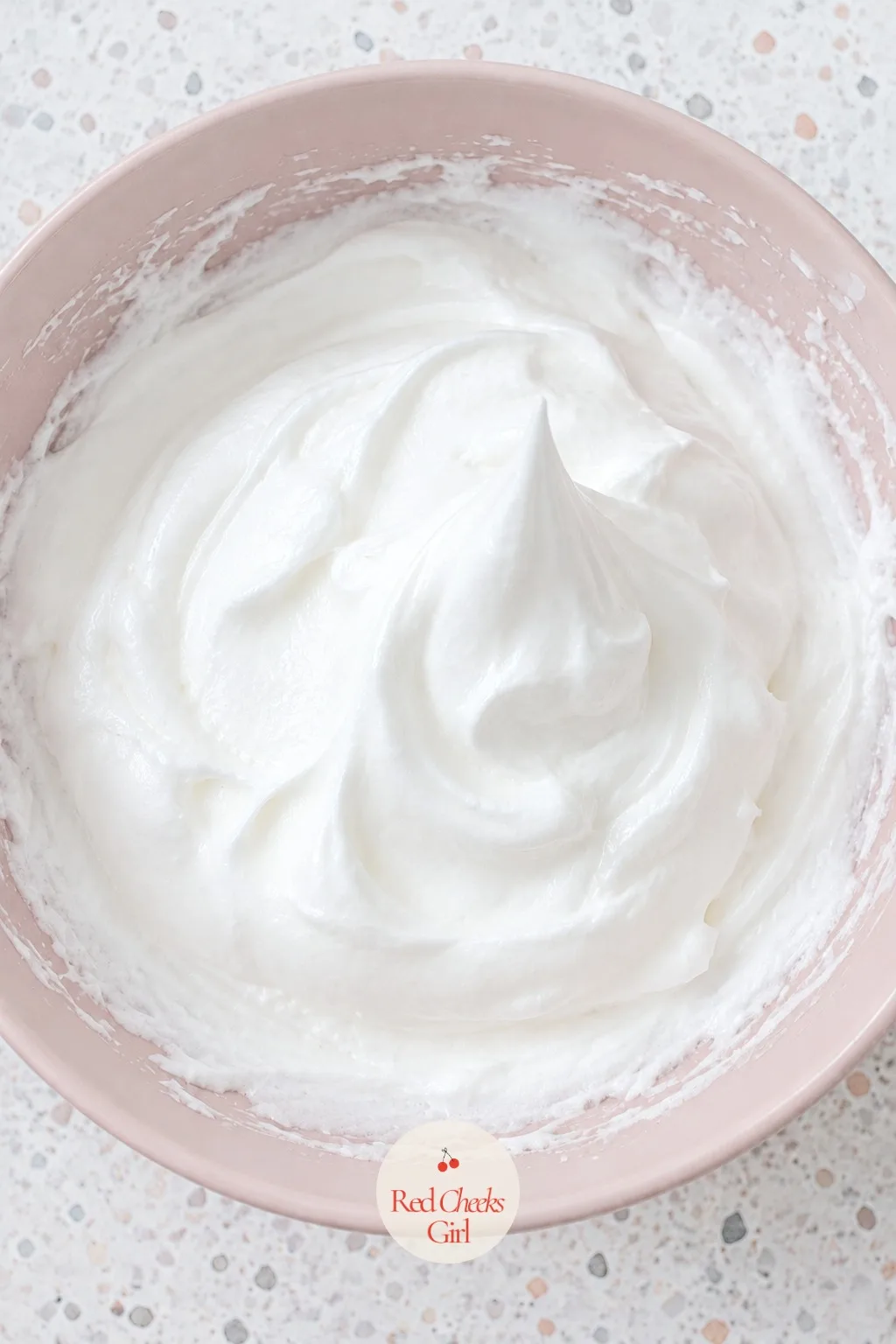
Whip the meringue to stiff peaks
Beat the chilled egg whites with cream of tartar and sugar until the foam turns thick and glossy. Lift the beaters out: the peak should stand straight up, not curl or slump.
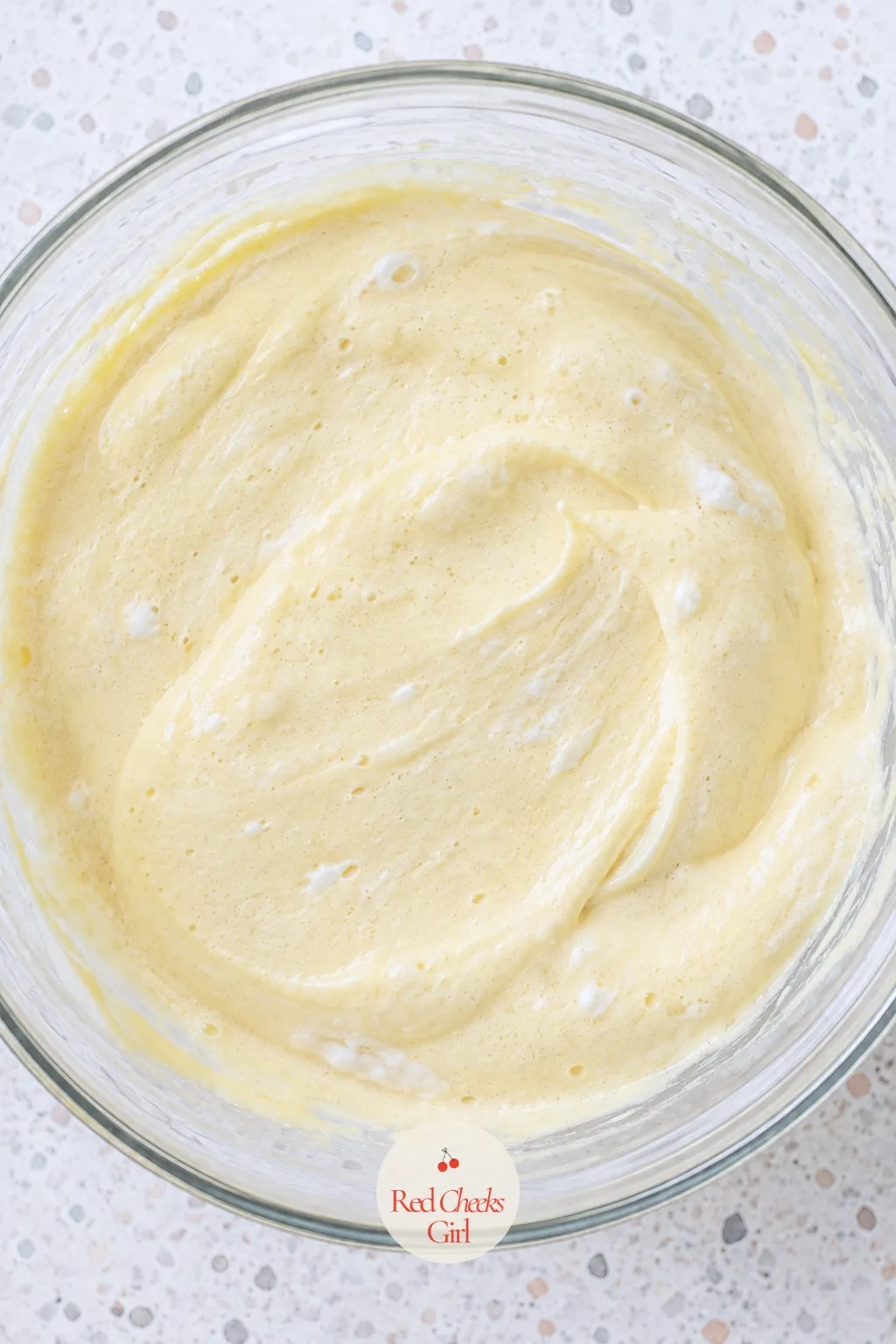
Fold the meringue into the batter
Fold the meringue into the yolk batter in two more additions, turning gently from the bottom up. Stop as soon as the white streaks disappear and the batter looks like a pale, airy mousse.
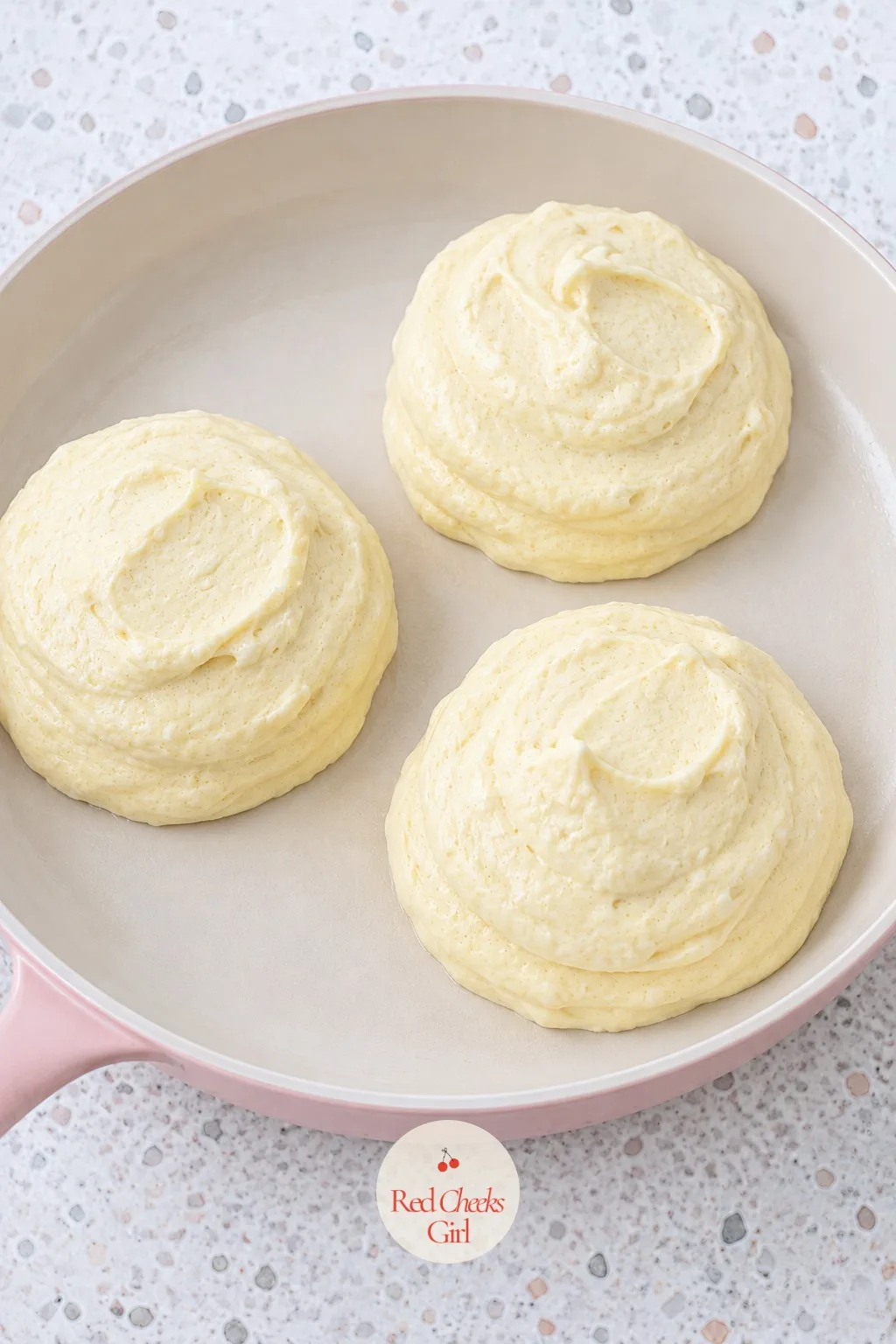
Pipe the batter into tall mounds
Spoon or pipe the batter into three tall mounds in the warm skillet, leaving space between them. Each mound should hold its shape and stand roughly two and a half inches high before the lid goes on.
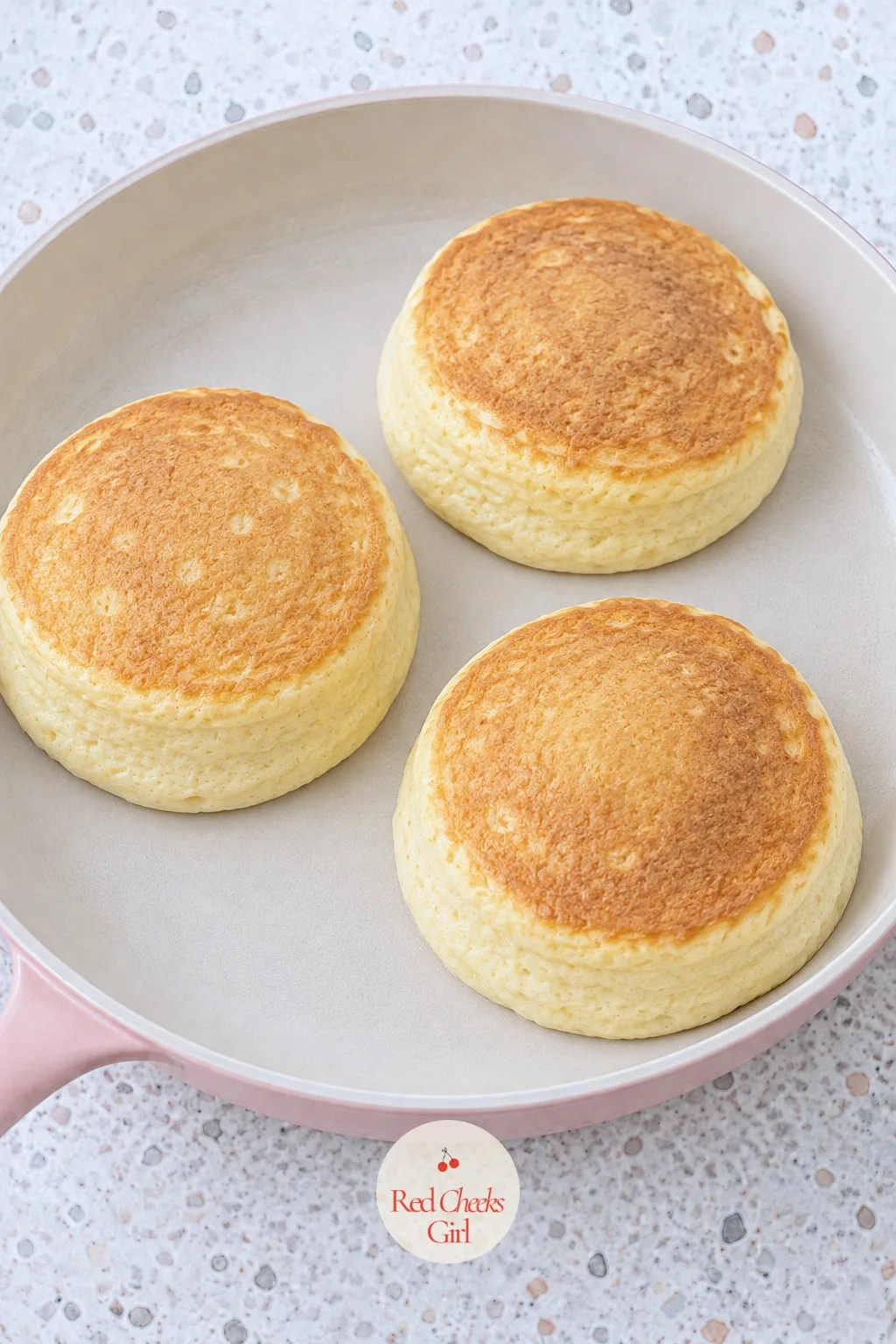
Flip and finish cooking
Flip each pancake gently once the bottoms set and the sides look matte. The flipped side should turn golden and the pancake should spring back at the touch instead of wobbling loosely.
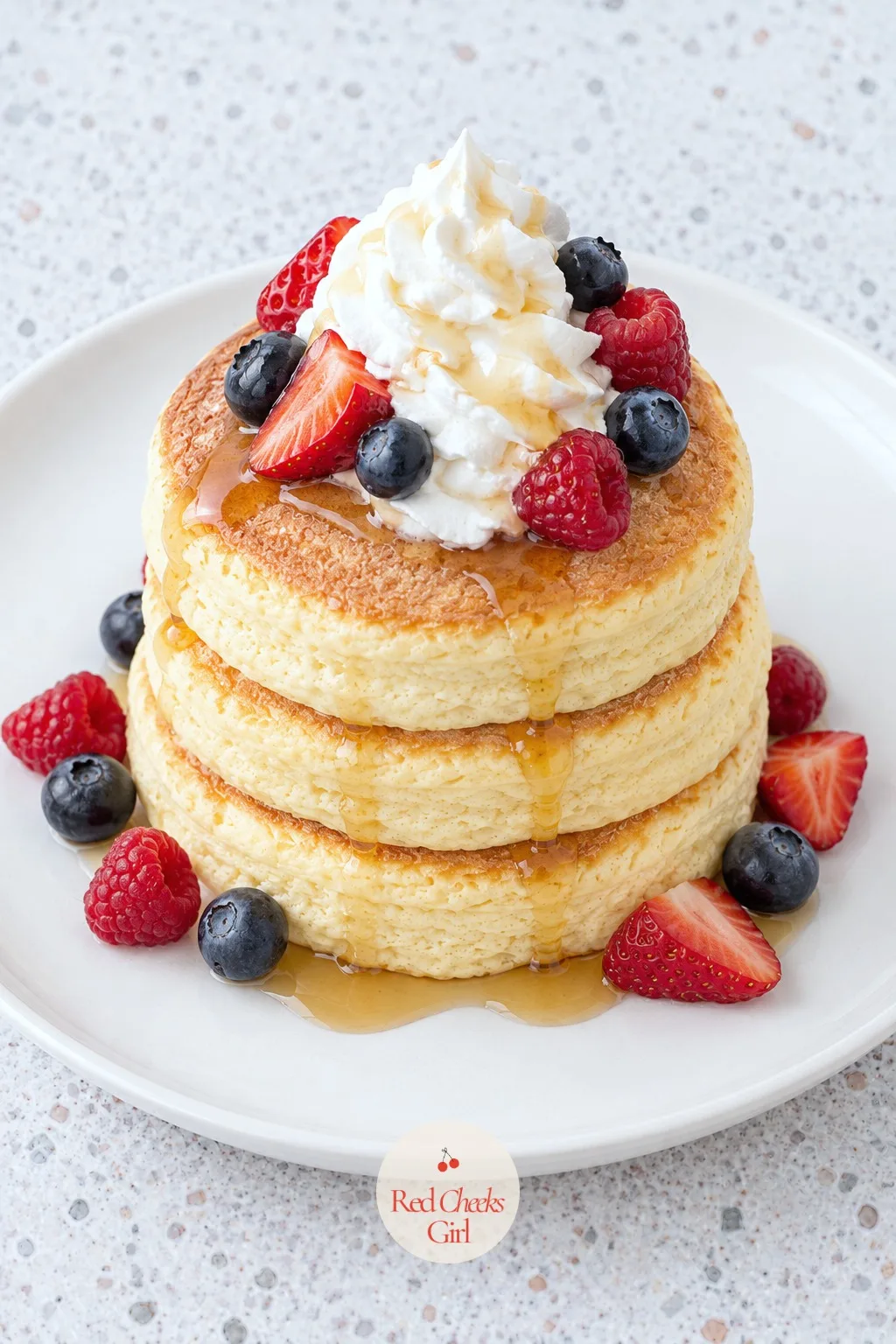
Stack and serve immediately
Stack three pancakes per plate and finish with whipped cream, fresh berries and a drizzle of maple syrup. Serve right away, while the stack stands at its tallest and still jiggles when the plate moves.
🛍 Shopping guide
Where Stacks Collapse And How To Stop It
The meringue stage is the real engine of this recipe: barely any flour goes into the batter, so the egg whites carry nearly all of the structure once whipped to stiff, glossy peaks. which is why this one stage deserves more attention than any other.
Ask anyone who has watched a stack sink on the way to the table and the answer is almost always the same. Soft, foamy whites fold into a batter with no scaffolding at all.
The second most common mistake is heat that runs too high. Keep the burner on its lowest setting and trust the time, not the color.
Even a flawless batch settles a little as it cools, and that is normal, not failure. Plate and serve within minutes of the pan, while the stack stands tallest. That wobble on the way to the table is the whole reward!
Swaps And Substitutions
No cake flour in the cupboard? than the cottony crumb cake flour gives. Either way, measure by spoon and level it off rather than scooping straight from the bag.
Out of cream of tartar, reach for a few drops of lemon juice or white vinegar instead; both steady the egg whites in roughly the same way, so whip just a few seconds longer to be sure the peaks hold.
Whole milk keeps the batter rich, but oat milk or another dairy-free milk works in the same quantity for anyone avoiding dairy; the pancakes still contain eggs, so this is not an egg-free recipe.
Berries and maple syrup are the classic finish, but a spoon of matcha syrup, sliced banana with honey, or a dusting of cocoa powder all sit well on top of the same stack.
What To Serve It With At A Party
Build a small table around the stack rather than serving it alone. A pot of hot coffee, a bowl of whipped cream on the side, and sliced fruit keep the focus on height and wobble, the two things people actually photograph.
If the meal needs more than pancakes, add something savory and already baked so the stove stays free: the Amish breakfast casserole holds warm in its own dish and needs no last-minute attention.
For a baby shower or bridal brunch, the stack works as the centerpiece dish next to lighter bites; the baby shower brunch ideas page has more dishes that do not need a chef in the kitchen.
Easter mornings or any holiday brunch suit the same format, and the Easter brunch recipes collection fills out the rest of a late-morning table around family.
For an adult birthday brunch, set the pancakes beside something that keeps overnight; the birthday treats for adults page lists options that beat a shop cake without extra oven time.
A small pitcher of mimosas suits the table too, for guests who drink; keep a non-alcoholic jug of orange juice alongside and pour the alcohol only for the adults who want it.
Japanese Souffle Pancakes
Ingredients
- 2 large eggs yolks and whites separated, whites chilled
- 1/4 cup whole milk
- 1/2 teaspoon vanilla extract
- 1/4 cup cake flour sifted (or all-purpose flour)
- 1/4 teaspoon baking powder
- 1/8 teaspoon cream of tartar
- 3 tablespoons granulated sugar
- 1 teaspoon neutral oil for the pan
- 3 tablespoons water divided, for steam
- 1/2 cup whipped cream for serving
- 1 cup mixed fresh berries strawberries and blueberries, for serving
- 2 tablespoons maple syrup for serving
- powdered sugar for dusting (optional)
Instructions
- Separate the 2 eggs, placing the yolks in a medium mixing bowl and the chilled whites in a large mixing bowl; cold whites whip into a more stable meringue.
- Whisk the 1/4 cup whole milk and 1/2 teaspoon vanilla extract into the yolks until smooth, then sift in the 1/4 cup cake flour and 1/4 teaspoon baking powder and whisk until no lumps remain; the batter should coat the back of a spoon in a thin, even layer.
- Beat the egg whites with a hand mixer on low speed until foamy, about 30 seconds, then add the 1/8 teaspoon cream of tartar.
- Raise the mixer to medium-high speed and add the 3 tablespoons granulated sugar one tablespoon at a time, beating 3 to 4 minutes total until the meringue holds a stiff, glossy peak that stands straight up when the beaters lift away.
- Scoop one third of the meringue onto the yolk batter and whisk it in firmly to loosen the base before the rest goes in.
- Add the remaining meringue in two more additions, folding gently with a rubber spatula from the bottom up until no white streaks remain; the batter should look like a pale yellow mousse and hold a soft peak on the spatula.
- Set a wide ceramic skillet with a lid over the lowest burner setting for 2 minutes to warm through, then wipe a thin film of the 1 teaspoon neutral oil across the surface with a paper towel.
- Spoon or pipe the batter into three tall mounds in the skillet, each about 3 inches wide and piled roughly 2 1/2 inches high, leaving space between them so they do not touch.
- Pour 2 tablespoons of the water into an empty corner of the skillet, away from the batter, cover with the lid, and cook over the lowest heat for 6 to 7 minutes, until the bottoms look set and the sides have turned matte instead of wet.
- Flip each pancake gently with a thin spatula, supporting the side with your free hand, add the remaining 1 tablespoon water to the pan, cover again, and cook 6 to 7 minutes more, until a toothpick inserted in the center comes out clean and the pancake springs back rather than jiggling loosely.
- Slide the finished pancakes onto a plate, wipe the skillet, and repeat steps 7 through 10 with the remaining batter to cook the second batch of three.
- Stack three pancakes on each plate, top with the whipped cream, mixed berries and a drizzle of the maple syrup, and serve immediately, while the stack stands at its tallest.
Good to Know
Frequently Asked Questions
Do I need a ring mold to make Japanese souffle pancakes?
No, a ring mold is optional. Parchment-lined metal rings keep the sides perfectly straight and add a touch more height, but mounds piped straight into a covered skillet still puff nearly as tall.
What is the difference between Japanese souffle pancakes and regular pancakes?
American pancakes rely on flour and baking powder cooked uncovered over medium heat, while souffle pancakes use far less flour and get their height from whipped egg whites, cooked low and covered instead.
Do Japanese souffle pancakes taste eggy?
Not when they’re made correctly. They do carry a stronger egg flavor than a flour-based pancake because of the higher ratio of eggs to flour, though vanilla and the sweet toppings balance it out.
Can I cook these on an electric griddle instead of a skillet?
Yes, as long as it holds a very low, steady temperature and takes a lid; a true stovetop burner still gives finer control over the lowest possible setting for even cooking.
How long does the meringue hold once it’s whipped?
Plan to pipe and cook within about 5 to 10 minutes of the final fold. The foam loses air quickly, and a meringue left too long turns runny and will not hold its shape.
17 Halloween breakfast ideas that look spooky and taste great: ghost pancakes, monster toast, mummy
Smoked salmon bagel platter with whipped lemon-dill cream cheese, capers and cucumber ribbons: an ea
Ever have one of those mornings where you’re staring into the fridge with zero energy to actua
Leave a Reply