

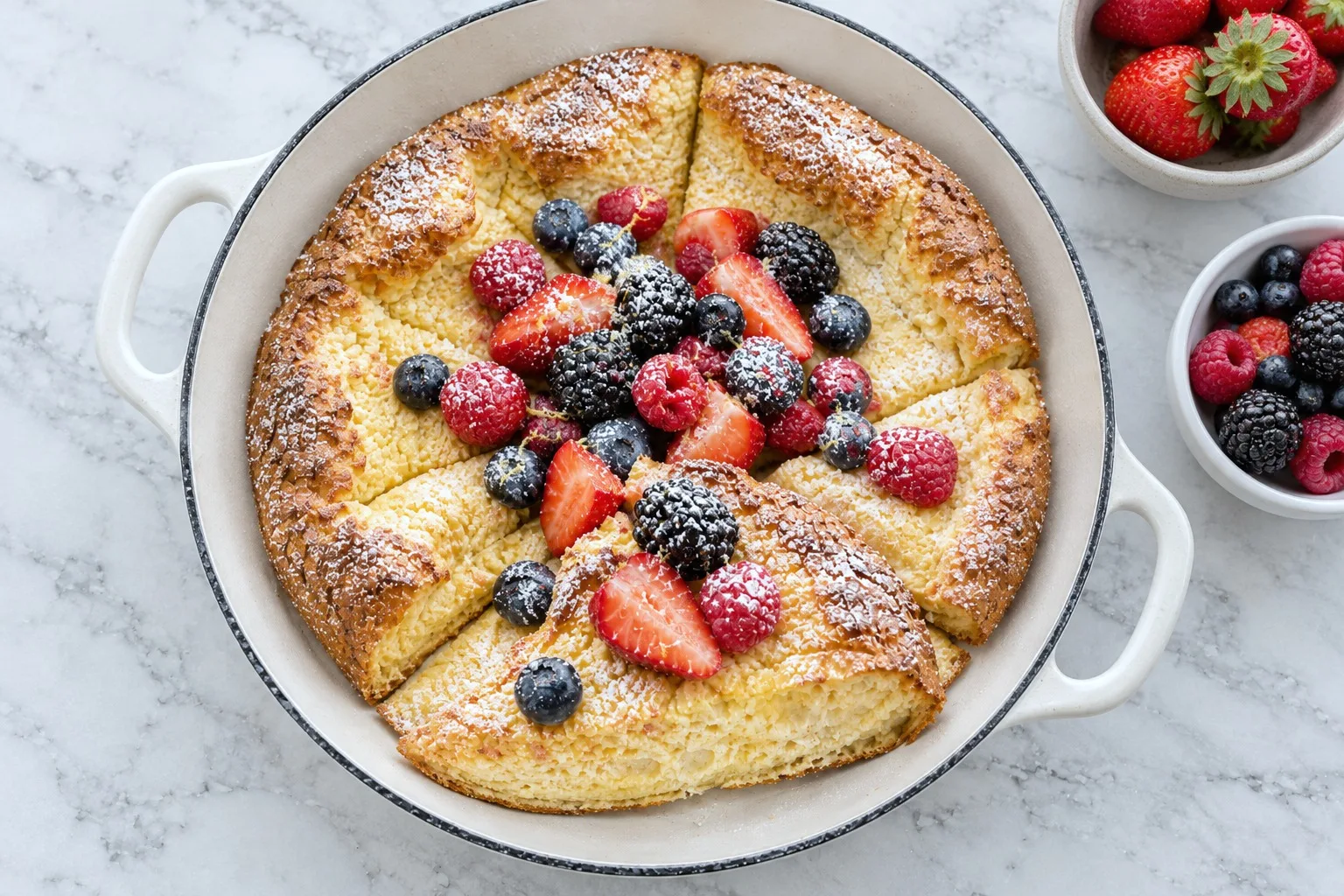
This dutch pancake recipe turns four pantry staples into a skillet centerpiece that climbs the sides of the pan on its own, no baking powder required.
Pour a smooth blender batter into sizzling butter and the oven does the dramatic part: the edges puff tall and gold while the center stays soft and custardy. Fifteen minutes of real work, then it lands on the table still sizzling, ready for lemon, sugar and whatever berries look best this week.
This post contains affiliate links. If you buy through them, I may earn a small commission at no extra cost to you.
Table of Contents
A Pancake That Does the Impressive Part Itself
Guests are due in twenty minutes and the fridge holds four eggs, a splash of milk and half a bag of flour. That is the entire shopping list, and it already sounds like more trouble than it is.
A Dutch baby is not a stack you flip one at a time at the stove while everyone waits and the first three turn out wrong. One blender, one hot skillet, one oven door that stays shut: the whole thing bakes itself tall while you set the table.
You will not need a stand mixer or a recipe you have already made a dozen times for this to work. The batter is forgiving, the bake is hands off, and the result looks like it came from a patisserie that charges by the slice.
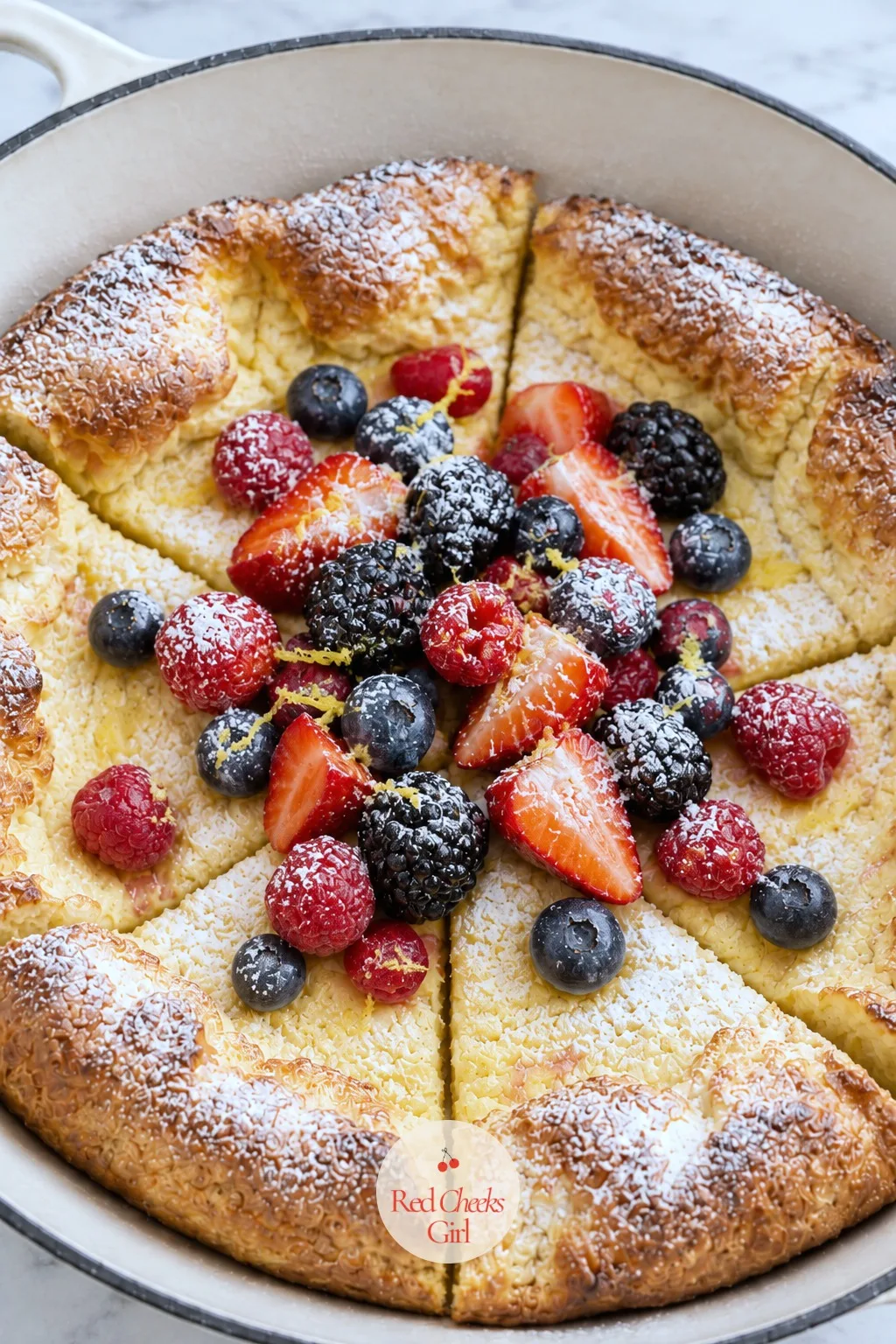
If a puffed pancake sounds fussy, picture a popover crossed with a crepe: crisp golden edges, a center soft enough to spoon lemon curd into. It survives being made by someone who has never made one before.
The Ingredients That Make It Puff
Eggs are the entire leavening system here, no baking powder and no baking soda involved. Their proteins set in the heat and trap the steam that forces the batter up the sides of the skillet, so do not skimp below three.
Milk thins the batter to a pourable, almost crepe-like consistency, and whole milk gives the richest puff. Flour supplies just enough structure to hold the climb without turning the center dense, so keep milk and flour roughly equal.
Butter does two jobs at once. It keeps the batter from welding itself to the cast iron, and its browned edges give the crust a faint nutty flavor under the powdered sugar; it has to be sizzling, not just melted, when the batter goes in.
A pinch of salt wakes up the eggs so the pancake does not taste flat under all that sugar, and a small amount of vanilla rounds out the custard note in the center. Neither needs to be generous, this is a backdrop for lemon and berries, not a competing flavor.
How to Make It
Have the skillet, blender and butter within reach before you start. Once the pan is hot, the next few minutes move fast and there is no pausing to hunt for a measuring spoon.
This recipe uses a 10-inch cast iron skillet, the size that gives the tallest, most dramatic rise without spreading the batter too thin across the pan.
Blend the batter until smooth
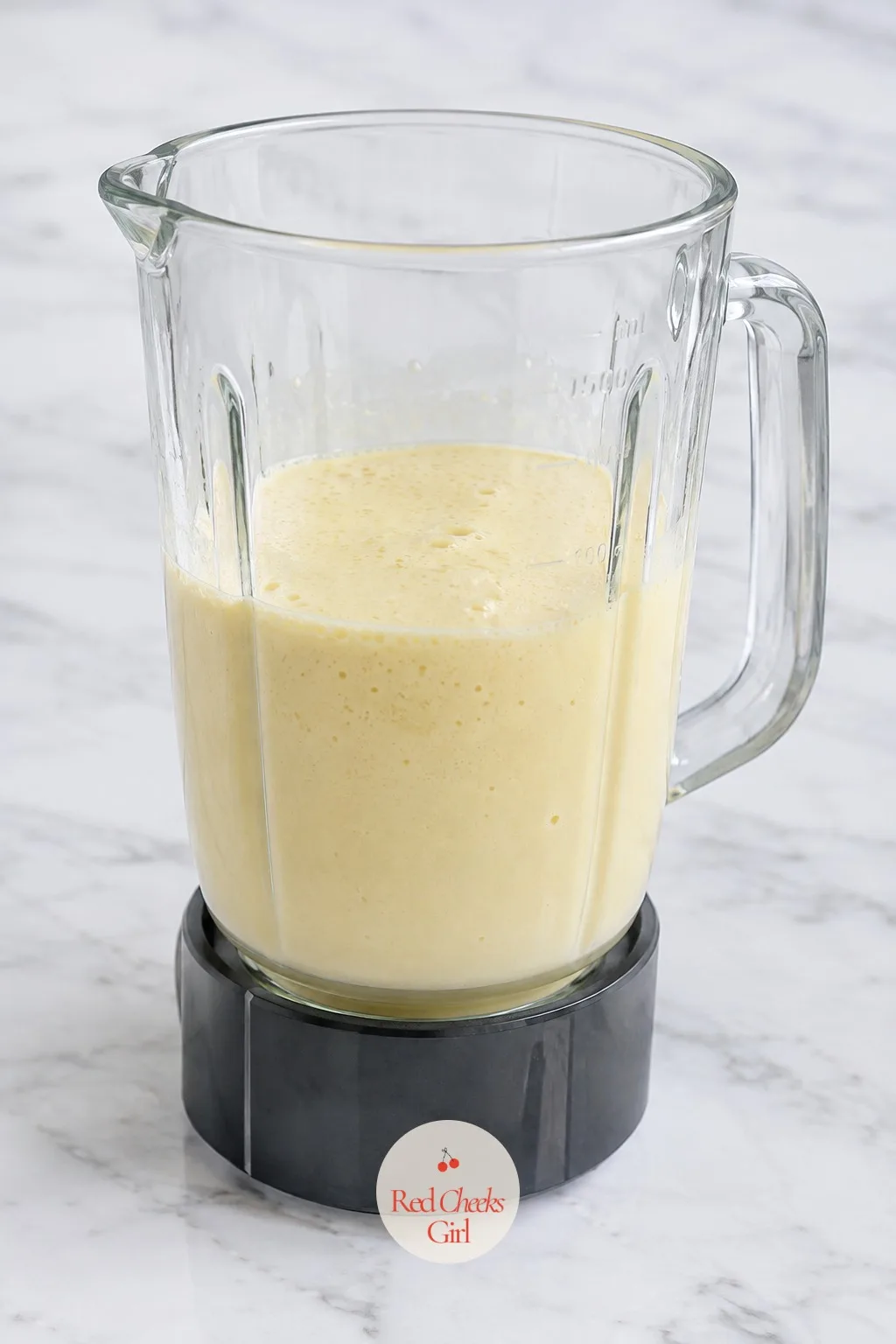
Combine the eggs, milk, flour, sugar, vanilla and salt in the blender and blend on high for about 30 seconds. Stop once the batter turns pale yellow and uniformly smooth, with no streaks of flour left anywhere.
Melt the butter in the hot skillet
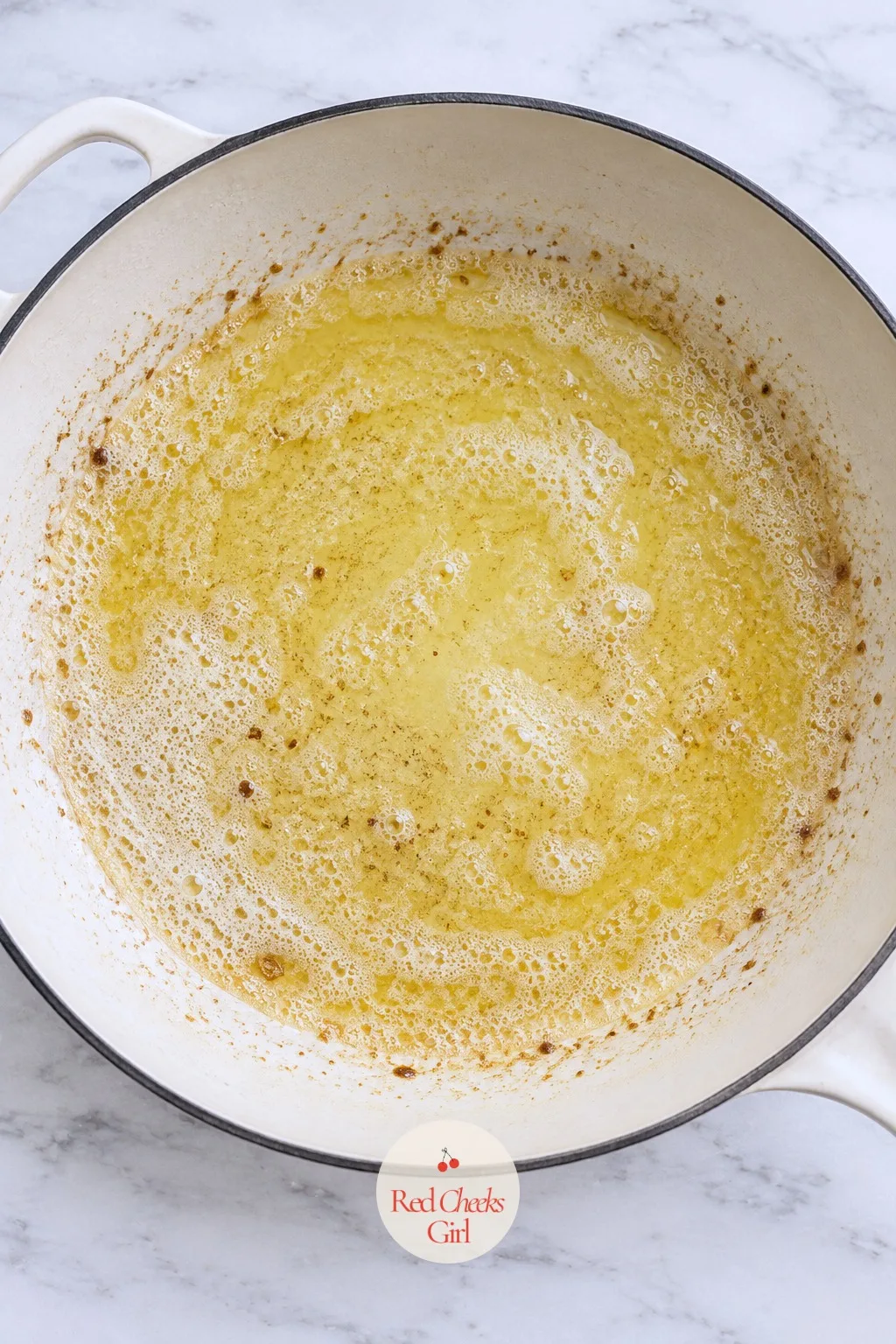
Pull the hot skillet from the oven and add the butter, swirling the pan until it melts completely and coats the bottom and sides. It should look foamy and slightly browned at the edges, not just liquid.
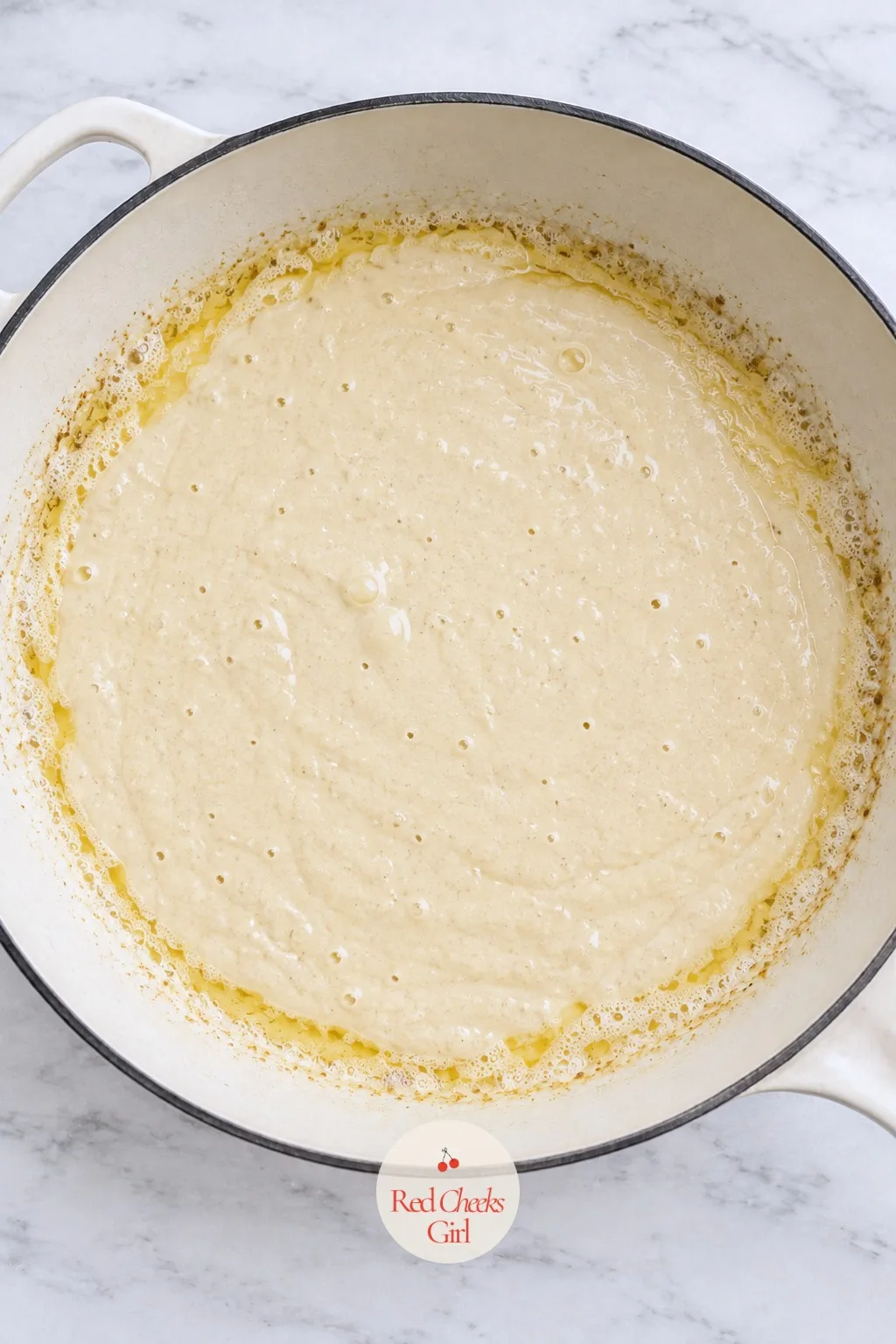
Pour the batter into the sizzling butter
Pour the rested batter straight into the center of the melted butter in one steady motion. Let it spread toward the edges on its own; the surface should look pale and even across the pan.
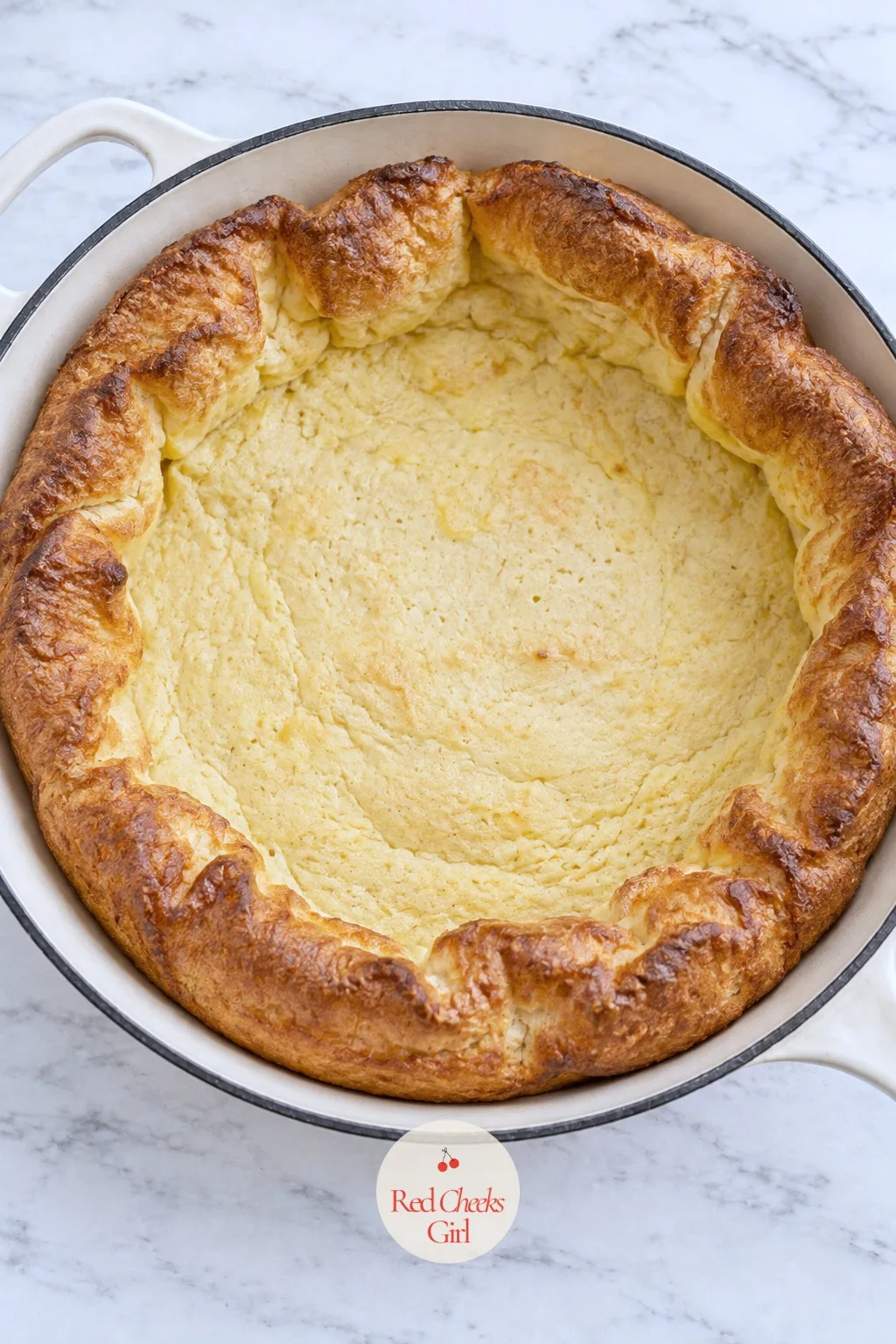
Watch the edges puff tall and golden
After 20 to 22 minutes in the oven, the edges should stand tall above the rim, deeply golden and crisp, while the center looks set rather than wet or shiny.
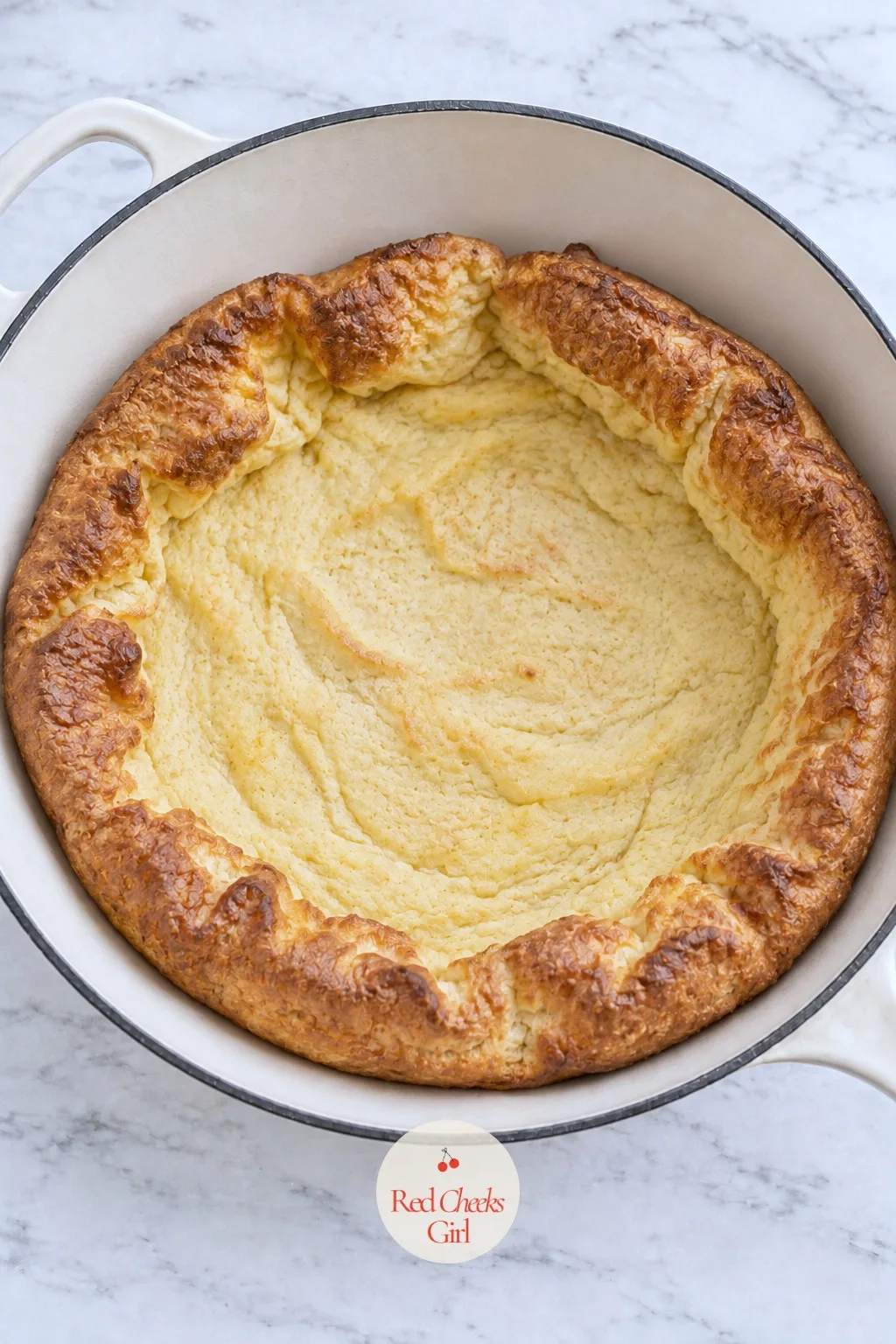
Let the pancake fall as it cools
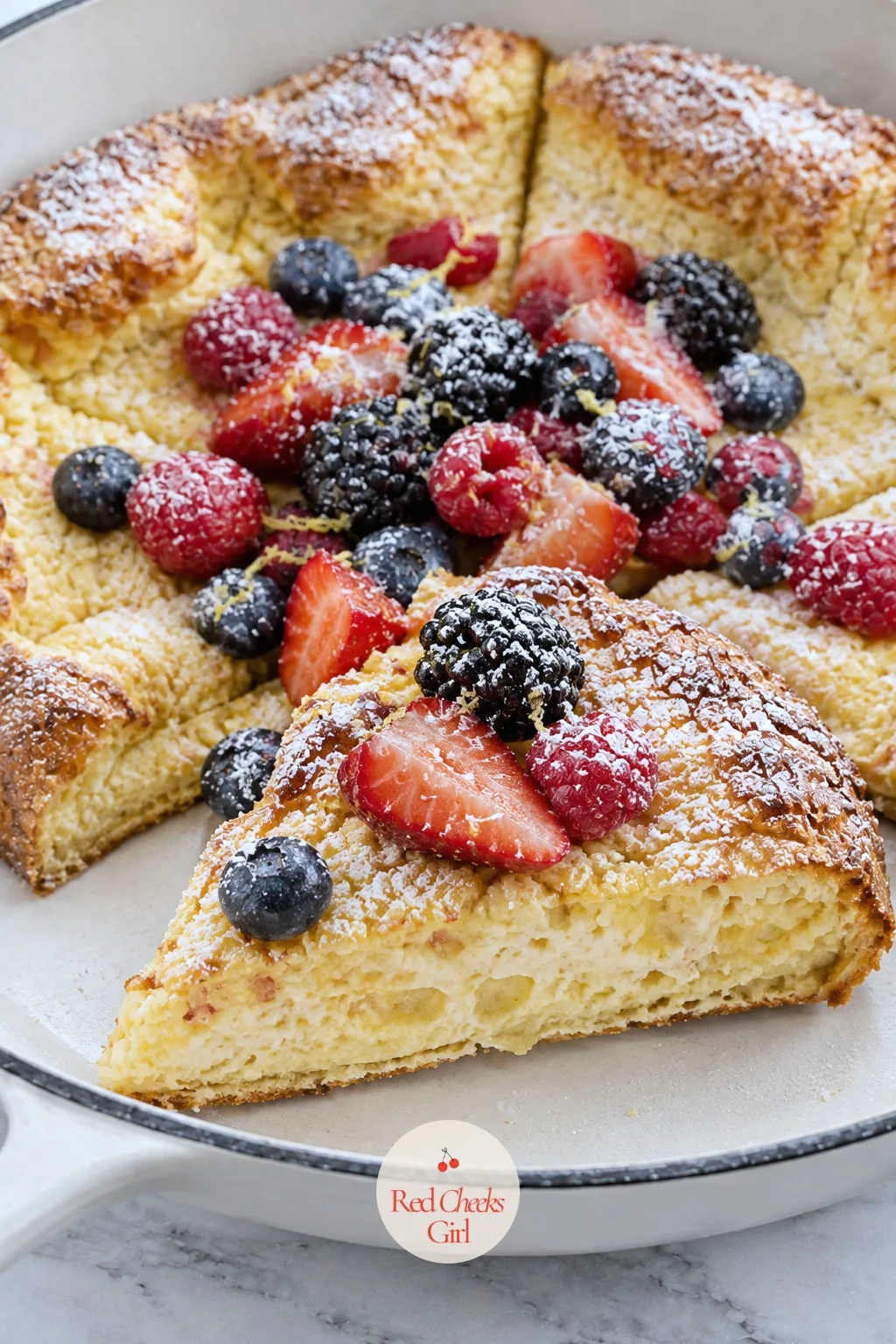
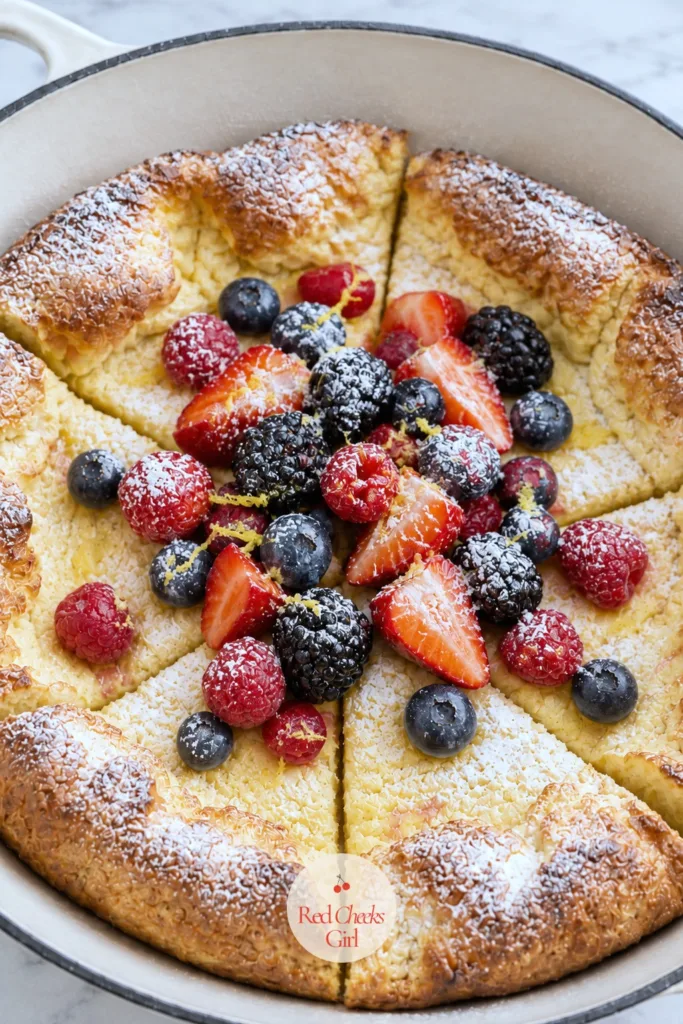
Within a minute or two outside the oven, the tall edges settle and the center sinks into a soft crater. This drop is steam escaping, not a mistake, and it is exactly what makes room for the toppings.
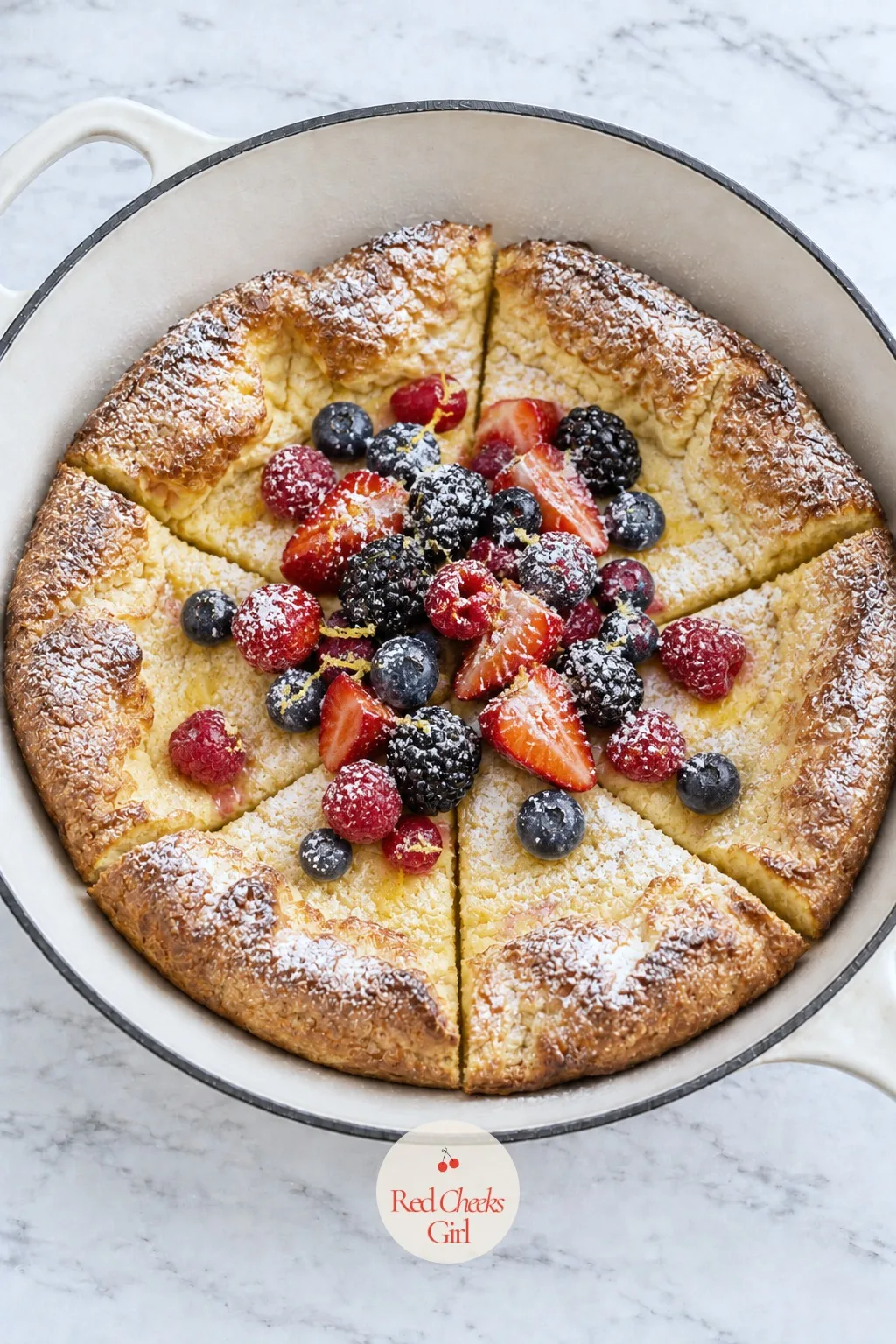
Top with lemon, sugar and berries, then serve
Squeeze lemon over the warm pancake, dust heavily with powdered sugar and scatter the berries across the center. Cut into six wedges right in the skillet and serve while the edges are still crisp.
🛍 Shopping guide
How to Get It Right
The single most common reason a Dutch baby refuses to climb is a skillet that was never properly hot. Give the empty cast iron a full 15 minutes in a 425°F oven before butter goes anywhere near it; a lukewarm pan bakes a thick crepe, not a tower.
Resist checking on it. Every time the door opens, heat escapes and the steam holding the batter up loses pressure, so the pancake sets low and never recovers that height.
Cold eggs and milk straight from the fridge blend into a stiffer batter that climbs less. Fifteen minutes on the counter, or a quick spin in warm water for the eggs still in their shells, makes a real difference.
Blend just until smooth, not for a full minute. Overworking the batter develops the gluten in the flour, and a tough batter resists the stretch it needs to balloon up the sides.
The pancake will sink within a minute or two of leaving the oven, and that is not a failure. Steam, not baking powder, pushed it up, and steam has nowhere to go once the pan starts cooling; the crater left behind is exactly where the berries belong.
Swaps and Substitutions
For a savory plate, drop the sugar and vanilla from the batter entirely and whisk in a pinch of black pepper instead. Scatter 1/2 cup shredded gruyere cheese and 2 tablespoons chopped fresh chives over the batter the moment it hits the hot butter, then bake exactly as written; the cheese toasts into the edges instead of sugar caramelizing there.
Whole milk gives the richest puff, but 2% works almost as well if that is what is already open in the fridge. Skip skim milk and anything plant-based with added gums, both tend to flatten the rise.
A measure-for-measure gluten-free flour blend can stand in for the all-purpose flour, though the climb will be a touch shorter and the texture slightly more delicate. This recipe as written contains eggs, dairy and gluten, so check in with anyone eating before serving.
Any soft fruit works in place of mixed berries: sliced peaches, pears or even sauteed apples with a little cinnamon all sit well in the crater. Swap the lemon for orange juice if the citrus is too sharp for younger palates.
What to Serve It With
A Dutch baby reads as the whole event, so keep the rest of the table light and mostly made ahead. A bowl of chia seed pudding needs nothing but a spoon and a stack of small glasses.
For a baby shower or a weekend crowd, build the rest of the spread around things that hold at room temperature. The ideas in 14 Baby Shower Brunch Ideas That Do Not Need a Chef work well alongside a skillet that needs the oven to itself right before serving.
In cooler months, set the Dutch baby next to warm drinks and a couple of dishes from 12 Cosy Fall Breakfast Ideas With Printable Recipe Cards, so the table feels seasonal without extra cooking the morning of.
Serve the gruyere and chive version as part of a savory brunch instead of a sweet one, with a simple green salad or roasted tomatoes on the side. It does not need syrup or sugar to feel finished.
Dutch Pancake Recipe
Ingredients
- 3 large eggs room temperature
- 3/4 cup whole milk room temperature
- 3/4 cup all-purpose flour
- 1 tablespoon granulated sugar
- 1/2 teaspoon pure vanilla extract
- 1/4 teaspoon kosher salt
- 3 tablespoons unsalted butter
- 1/2 lemon juiced
- 2 tablespoons powdered sugar for dusting
- 1 cup fresh mixed berries raspberries, blueberries or sliced strawberries
Instructions
- Preheat the oven to 425°F and set a 10-inch cast iron skillet on the center rack to heat for a full 15 minutes, so the metal is scorching before any batter touches it.
- In a blender, combine 3 large eggs, 3/4 cup whole milk, 3/4 cup all-purpose flour, 1 tablespoon granulated sugar, 1/2 teaspoon vanilla extract and 1/4 teaspoon kosher salt. Blend on high speed for 30 seconds, until the batter is smooth, pale yellow and the texture of heavy cream.
- Let the batter rest at room temperature for 10 minutes so the flour hydrates and the air bubbles settle; this keeps the pancake tender instead of gummy.
- Put on oven mitts, pull the hot skillet out and set it on a heatproof trivet. Add 3 tablespoons unsalted butter and swirl the pan until the butter is fully melted and foaming, coating the bottom and all the way up the sides.
- Pour the rested batter into the center of the melted butter in one steady stream. Do not stir: let the batter spread on its own toward the edges.
- Slide the skillet back onto the center oven rack immediately and close the door. Bake for 20 to 22 minutes without opening the door once, until the edges have climbed tall and gone deep golden brown and the center looks set, not wet.
- Pull the skillet from the oven (it is still blistering hot) and set it on a trivet. Watch the tall edges settle and the center dip into a soft crater within the first minute or two: that collapse is steam escaping, not a mistake.
- Squeeze the juice of half a lemon evenly over the warm pancake.
- Dust the top with 2 tablespoons powdered sugar through a small sieve, then scatter 1 cup fresh mixed berries over the center.
- Cut into six wedges directly in the skillet and serve immediately, while the edges are still crisp.
Good to Know
Frequently Asked Questions
Why didn’t my Dutch baby puff up?
A flat Dutch baby almost always means the skillet or oven wasn’t hot enough when the batter went in. Cold butter, a lukewarm pan or an opened oven door all stop the steam that forces the rise.
Can I make a Dutch baby in a pan other than cast iron?
Yes, any heavy oven-safe skillet or a deep pie dish works, though cast iron holds heat best for the tallest rise. A thin pan or glass dish without enough mass will puff less dramatically.
Can I make the batter ahead of time?
The blended batter holds covered in the refrigerator for several hours before baking, which helps with timing a brunch. Bring it back toward room temperature before pouring it into the hot butter.
What size skillet should I use for this recipe?
A 10-inch cast iron skillet is the right size for this batter, giving tall edges and a soft center. A 12-inch pan spreads the same batter thinner and bakes into a flatter, more crepe-like pancake.
Why did my Dutch baby stick to the pan?
Sticking usually means too little butter, or butter that never reached the sides of the skillet. Melt enough butter to coat the bottom and swirl it fully up the sides before the batter goes in.
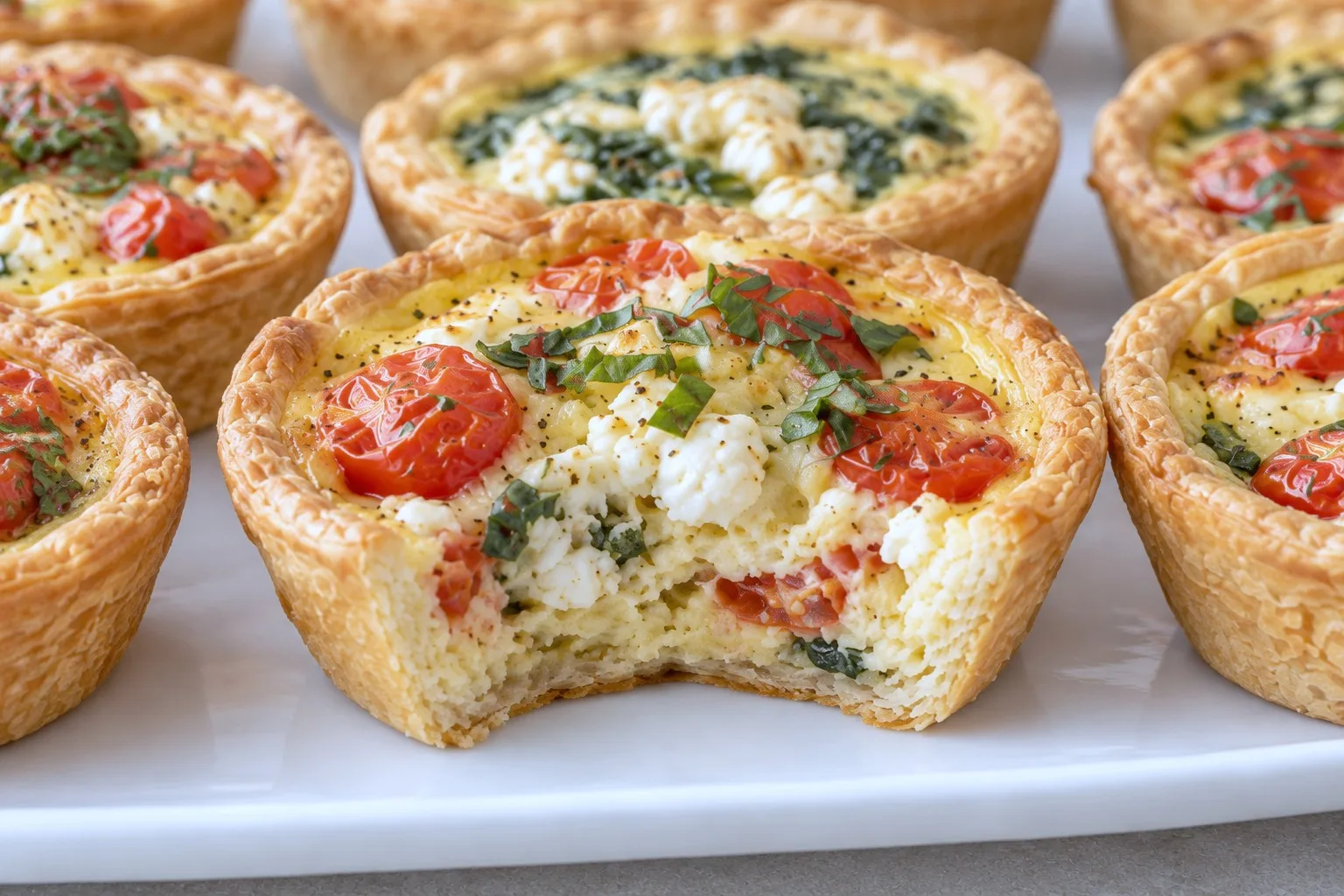
Mini quiche baked in a muffin tin with pie crust and egg custard, in bacon cheddar, spinach feta, an
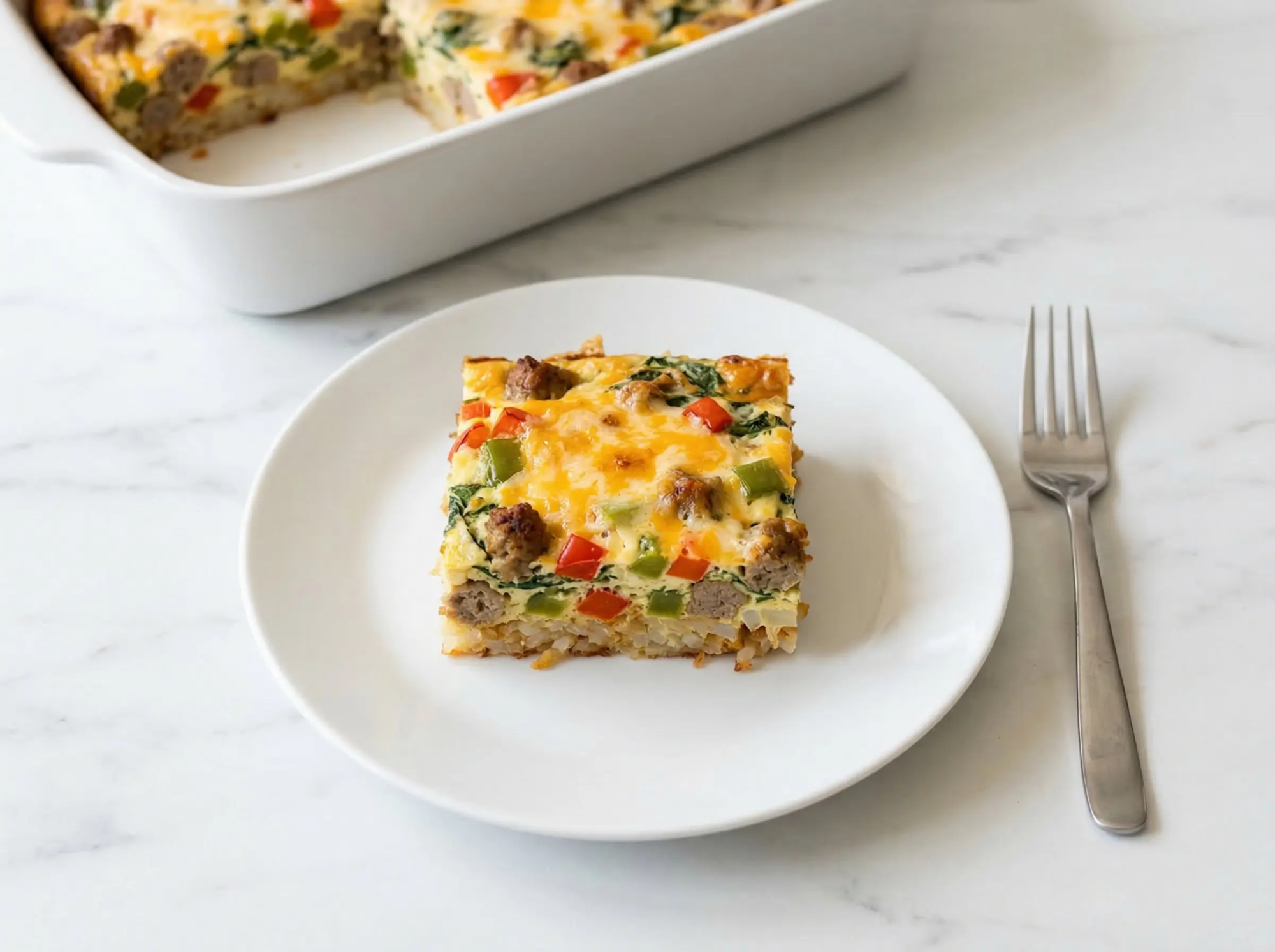
This high protein breakfast casserole has 30g of protein per serving! Made with turkey sausage, eggs
Croissant breakfast casserole with ham, gruyere and chives soaks overnight, then bakes golden for an
Leave a Reply