

Candied Pecans With Cinnamon and Vanilla for Gifts and Cheese Boards
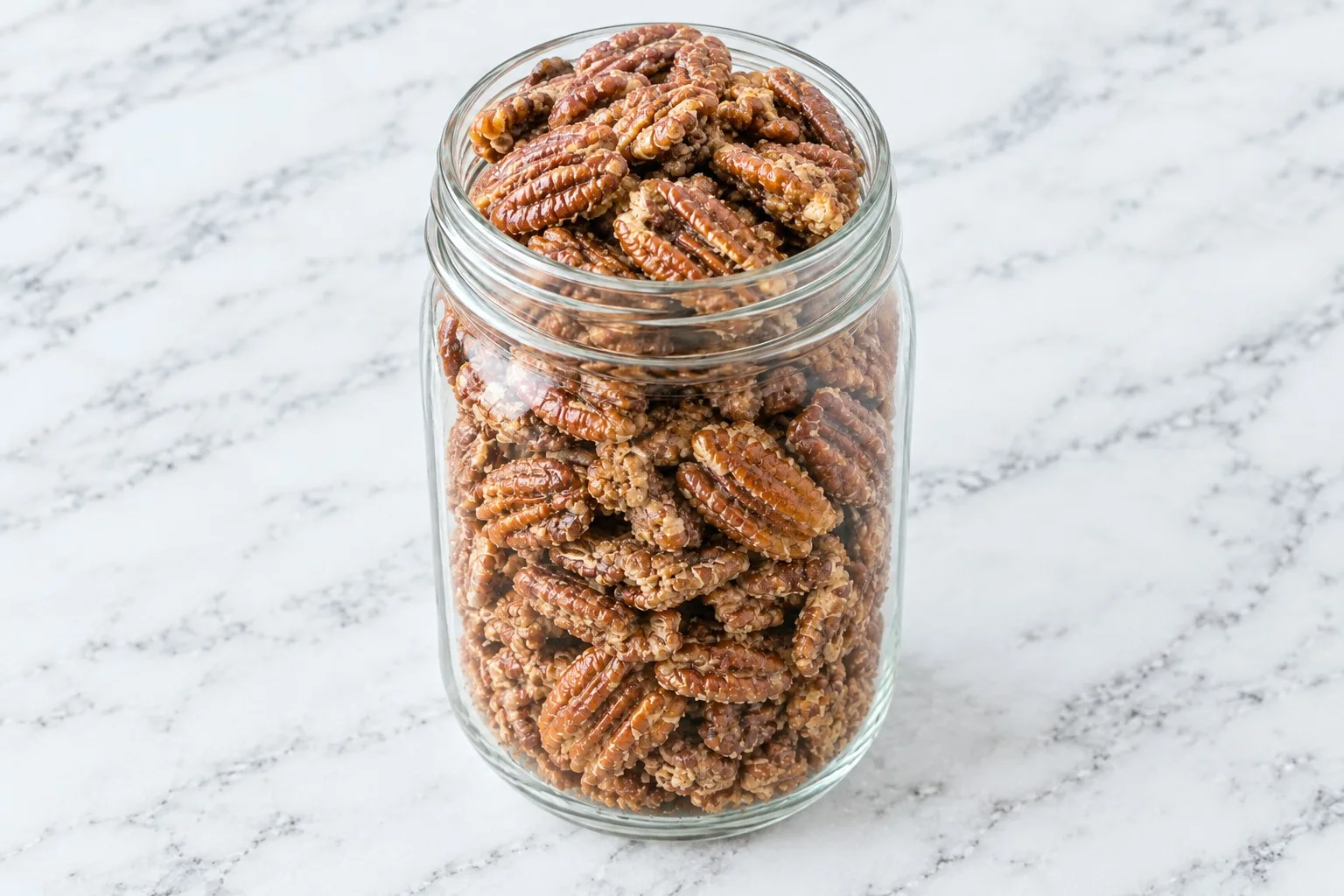
Candied pecans turn a bowl of plain nuts into something a hostess actually keeps on the counter, glossy, snapping crisp, and faintly warm with cinnamon and vanilla.
The method below cooks sugar and butter into a true soft ball syrup, no candy thermometer required, then dries the shell crisp in a low oven instead of leaving it sticky on the stovetop. Make one batch for the cheese board, another for the gift jars, and keep a handful back for yourself.
This post contains affiliate links. If you buy through them, I may earn a small commission at no extra cost to you.
Table of Contents
What Goes Into Candied Pecans
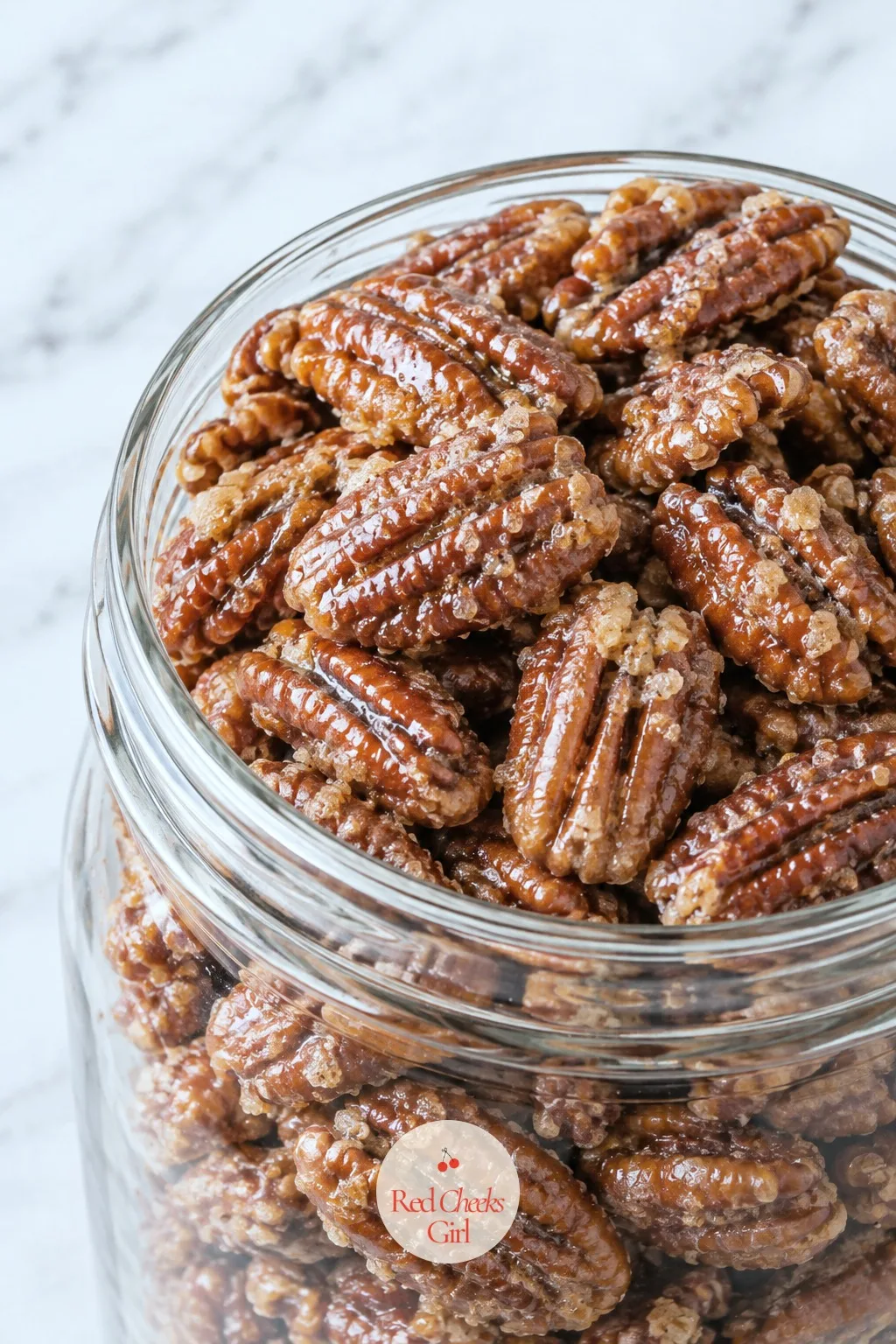
Buy halves, not pieces. A whole half holds the syrup shell in one clean sheet, so when you crack one in half for a cheese board, she sees a sharp amber line against ivory flesh instead of broken crumbs.
The base is nothing more than sugar and water, cooked to a true syrup. Plain granulated sugar gives a clear amber shell rather than the murkier, caramel-heavy coating brown sugar produces, which matters when the point is a glassy, jewel-like finish for a jar.
Cinnamon goes in with the sugar so it has time to bloom in the hot syrup instead of sitting raw and gritty on top. A full teaspoon reads as warm, not as pumpkin spice.
Butter and vanilla go in only after the syrup is off the heat. Butter adds the sheen and stops the shell from tasting like straight sugar, and it is the one dairy ingredient in the whole recipe, worth a mention if you are packing jars for someone with a dairy allergy.
A small pinch of salt at the start keeps the whole thing from reading as one-note sweet. Skip it and the first bite tastes like candy instead of a pecan that happens to be candied.
How to Make It
This batch makes about three cups, enough to fill three small gift jars or dress one big cheese board with plenty left for snacking. The whole thing, syrup and all, lives in one saucepan until the last minute, so cleanup is short.
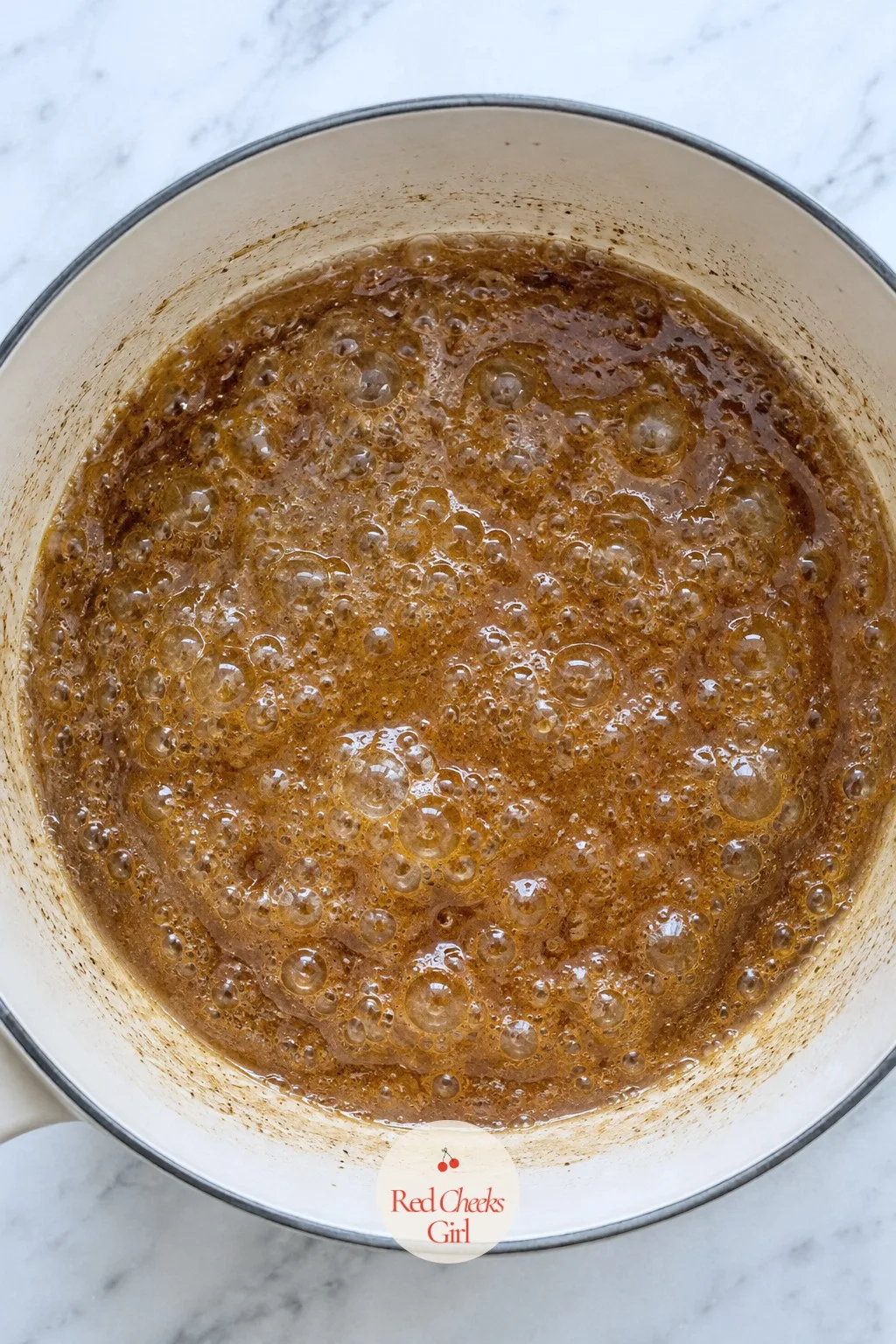
Cook the syrup to soft ball stage
The syrup should be boiling steadily and look clear rather than cloudy at this point. Test it often with the cold water method, since the difference between soft ball and too far is only a minute or two.
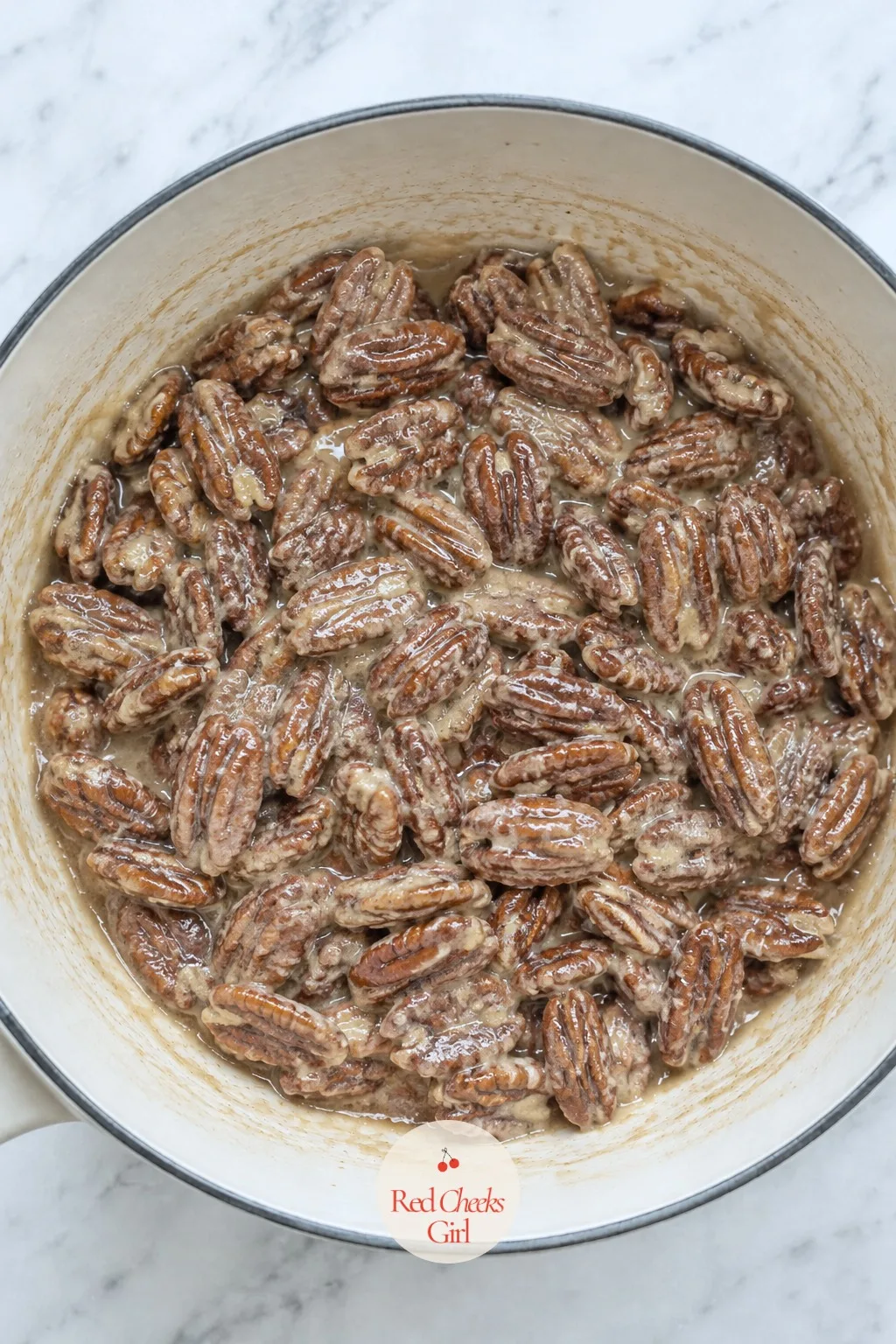
Coat the pecans in syrup
Stir constantly as the pecans go in, watching the syrup turn from glossy to cloudy and sandy around each half. Every nut should look coated, not pooled in loose syrup at the bottom.
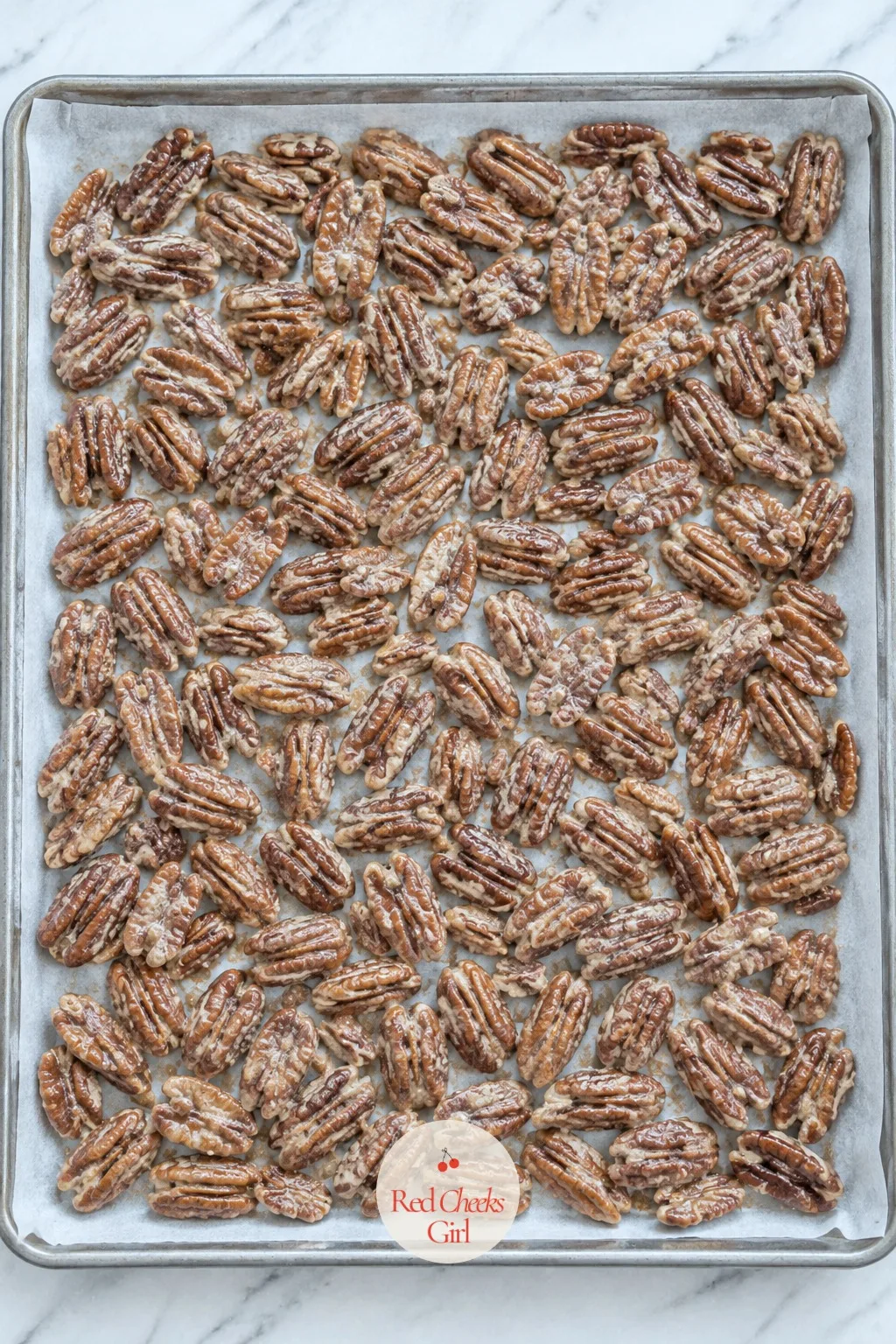
Spread the coated pecans before the oven
Spread the pecans into one even layer, pulling apart any clumps with the spoon. This is the pan going into the oven, so give each half a little space around it.
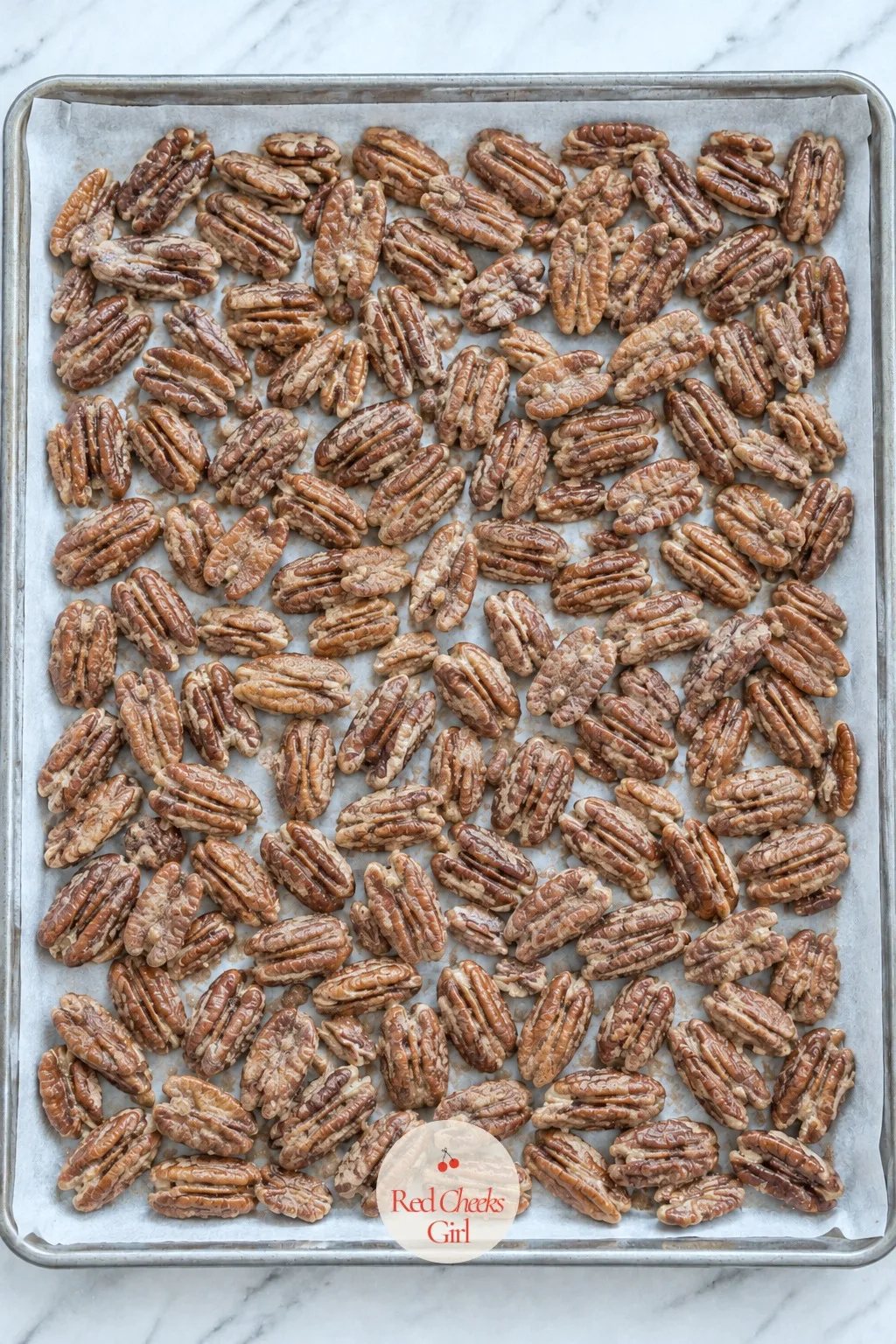
Dry the pecans until the shell turns crisp
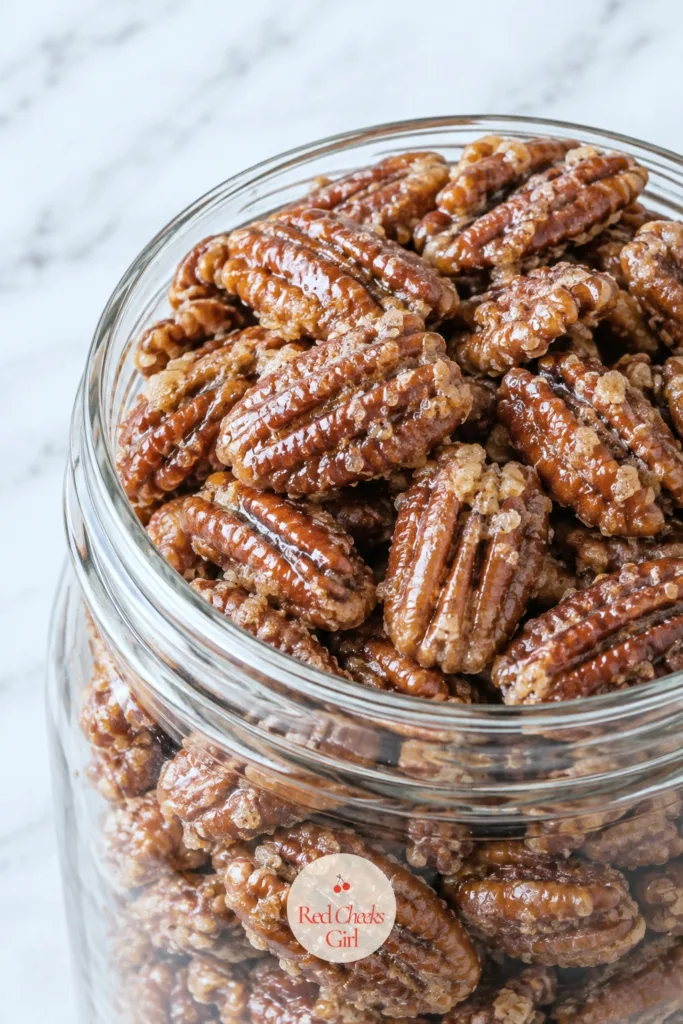
Out of the oven, the coating should look matte and dry rather than shiny and wet. Deep amber color across the whole pan is the sign the shell has set properly.
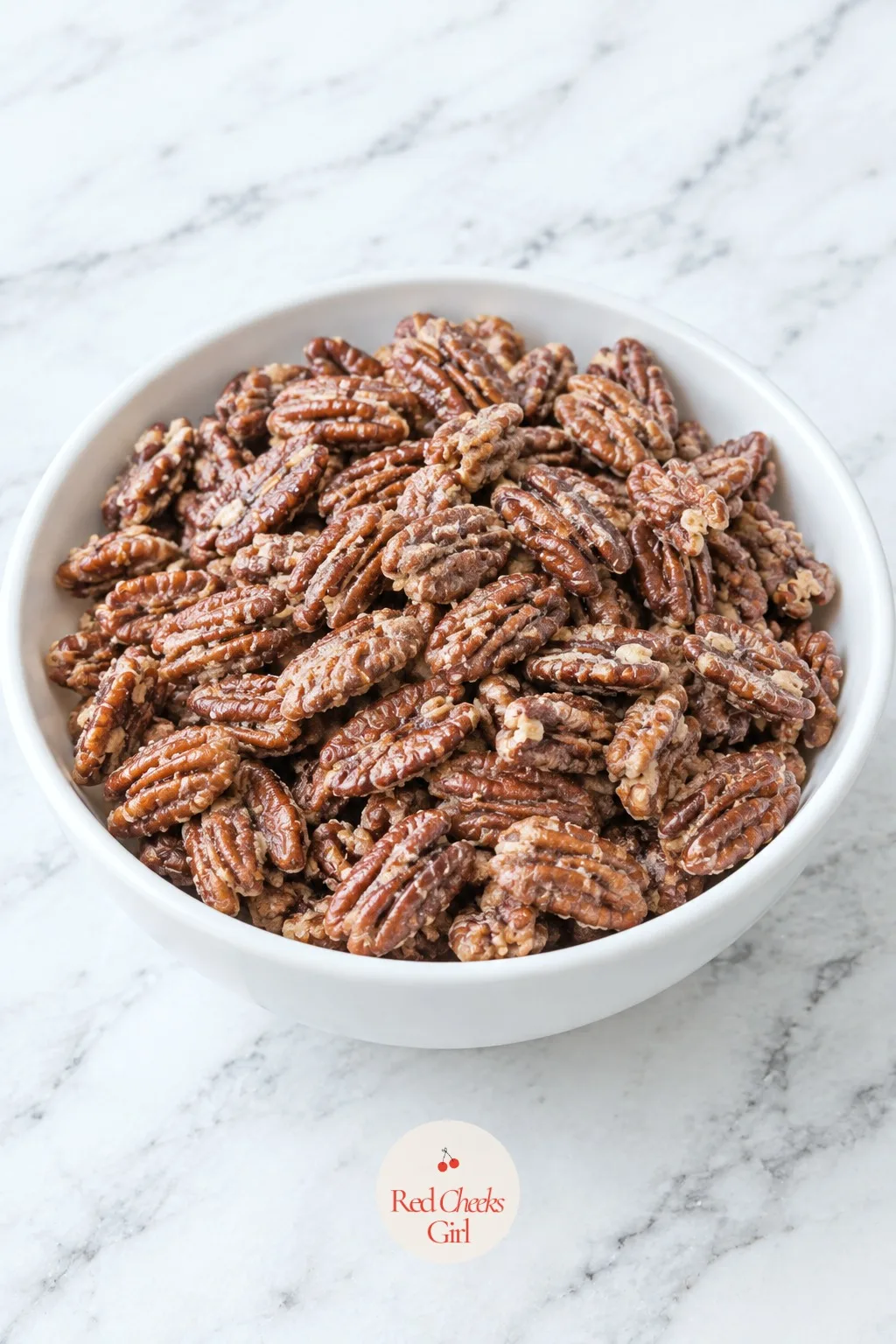
Cool and break the pecans apart
Once fully cool, the pecans separate easily with a light tap. Pile them into a bowl and check for any stubborn clumps still stuck together.
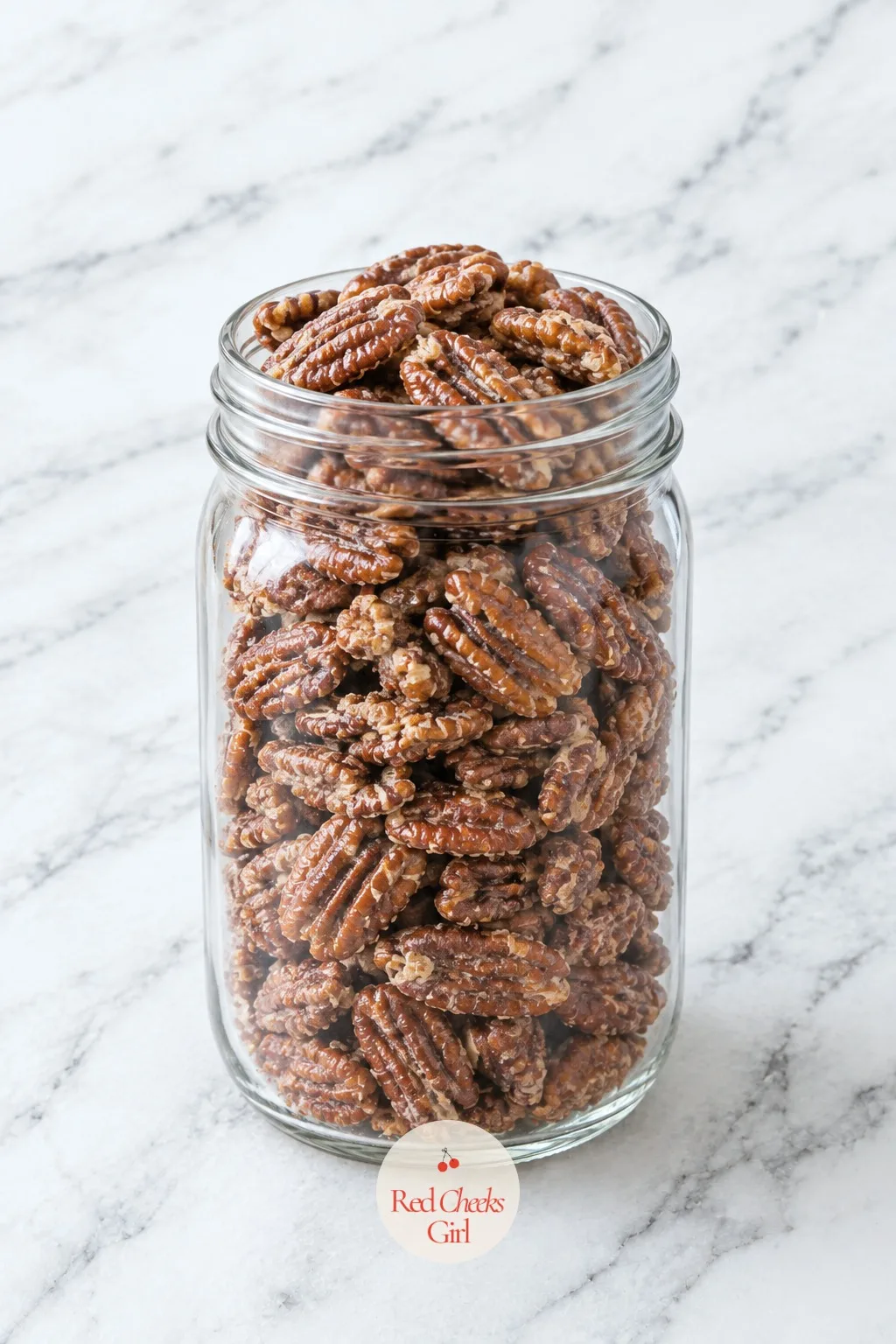
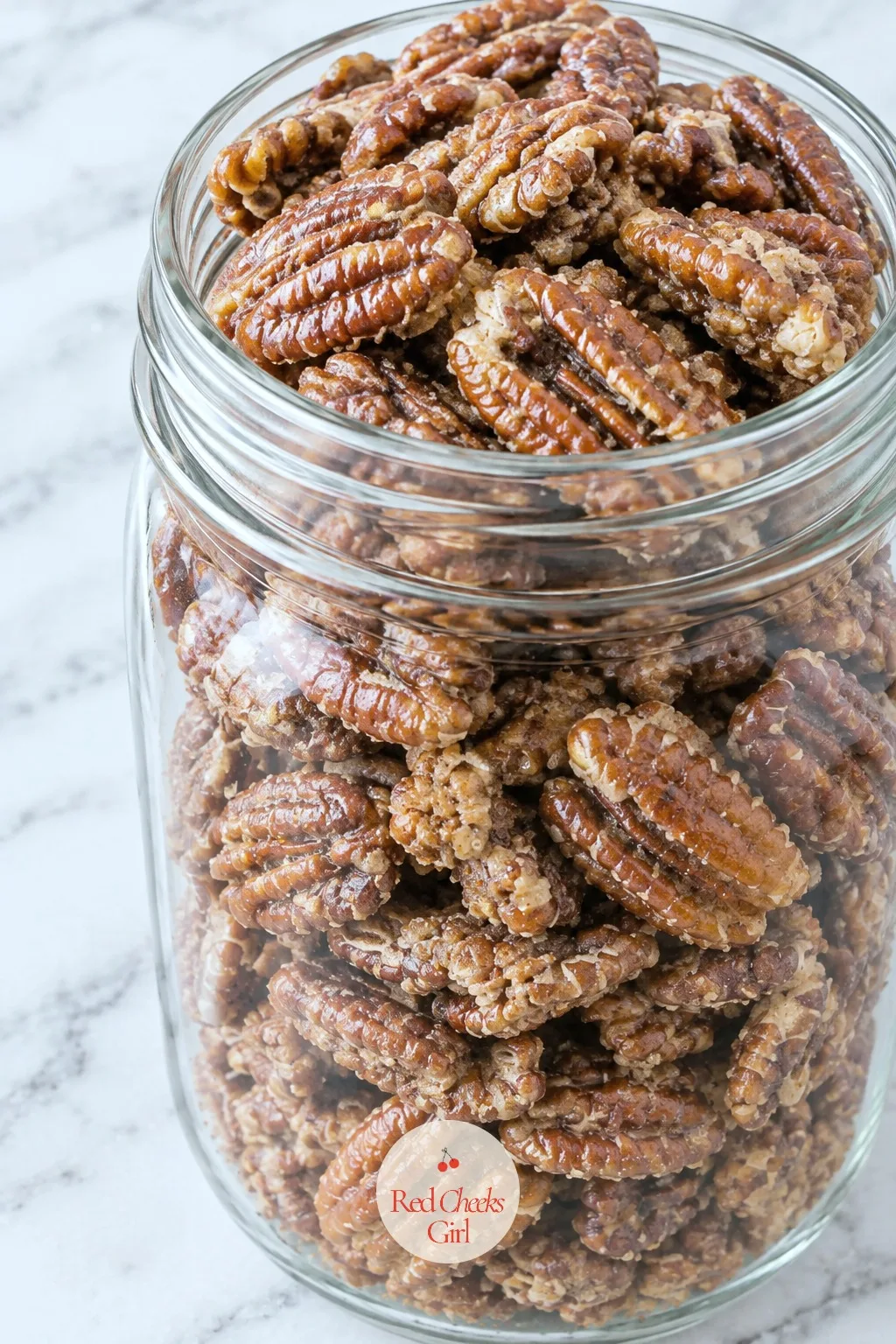
Pack the pecans into gift jars
Spoon the cooled pecans into a clean, dry jar, filling it right to the rim. This is the version that travels well as a hostess gift or a party favor.
🛍 Shopping guide
How To Get Candied Pecans Right Every Time
The most common mistake has nothing to do with the pecans: it is pulling the syrup too early or too late. Too early and the shell never sets, leaving every nut slick and wet. Too late and it hardens into something closer to peanut brittle than a tender candy shell, so test often once the syrup starts to thicken.
A humid kitchen slows sugar down and can make the cold water test harder to read. If your first drop just dissolves into the water with no shape at all, keep boiling and test again in a minute with fresh cold water each time, since reused water skews the result.
Skipping the low oven and calling it done straight from the saucepan is the second mistake. The syrup looks set within minutes of coating the nuts, but it is still soft underneath, and only the slow, dry heat of the oven turns that shell properly crisp instead of chewy.
Crowding the sheet pan is the quiet one. Pecans touching each other trap steam as they dry, and the shells facing each other stay tacky long after the exposed sides have crisped, so give every half a little breathing room.
Swaps And Substitutions
No pecans in the pantry, or someone at the party has a tree nut allergy she did not mention until the day of? Walnut halves take the same syrup well, though they taste sharper and slightly more bitter under the sugar.
Swap the plain cinnamon for a pumpkin pie spice blend if you want a rounder, more holiday-leaning flavor, or drop the cinnamon altogether and add a half teaspoon of almond extract alongside the vanilla for a different warmth entirely.
Salted butter works in place of unsalted if that is what is open in the fridge; simply leave out the added pinch of salt so the shell does not turn tinny. A dairy-free butter substitute candies the pecans just as well for guests avoiding dairy.
Short on vanilla extract? A split and scraped vanilla bean added to the syrup while it boils gives a deeper, speckled flavor, though a good extract is far less fuss for the same result.
What To Serve Candied Pecans With At A Party
On a cheese board, they do double duty as the crunchy, sweet counterpoint next to something sharp like aged cheddar or blue cheese, the kind of detail that makes a spread look finished rather than assembled in a hurry.
If you want the whole board planned out, the Christmas tree charcuterie boards stacked with rosemary, cheese and salami show how to build around them.
Scatter a handful over a green salad with soft goat cheese and sliced pear, and the pecans do the work a crouton usually does: crunch against something cold and creamy. For a full seasonal lineup, the Christmas salad recipes that bring color to the holiday table are an easy place to start.
Over vanilla ice cream, they melt slightly at the edges and turn the whole bowl into something closer to a praline sundae, no extra sauce required.
They also hold up fine on their own in a small dish by the drinks, which is the quiet option if you would rather not plan a whole course around them.
Candied Pecans
Ingredients
- 3 cups pecan halves about 12 ounces
- 1 cup granulated sugar
- 1/3 cup water
- 1 teaspoon ground cinnamon
- 1/4 teaspoon fine salt
- 4 tablespoons unsalted butter cut into pieces
- 1 teaspoon vanilla extract
Instructions
- Line a large rimmed sheet pan with parchment paper and set it right next to the stove: once the syrup is ready you will need both hands free to pour fast.
- In a cream enameled saucepan, stir together 1 cup granulated sugar, 1/3 cup water, 1 teaspoon ground cinnamon and 1/4 teaspoon salt over medium heat until the sugar dissolves completely and the grainy mixture turns into a clear, wet-looking syrup, about 2 minutes.
- Let the syrup come to a steady boil without stirring it again, swirling the pan by the handle every so often, until it reaches soft ball stage: every couple of minutes, drop a half teaspoon of hot syrup into a cup of very cold water and pinch it between your fingers. It is ready when it gathers into a soft, pliable ball that holds its shape for a few seconds before flattening on the counter, which takes about 8 to 10 minutes total of boiling.
- Pull the saucepan off the heat the second the syrup passes the cold water test: residual heat keeps cooking it even off the stove, and a few seconds too long will carry it past soft ball into a hard, brittle stage.
- Add 4 tablespoons unsalted butter and 1 teaspoon vanilla extract straight into the hot syrup and stir with a wooden spoon until the butter melts completely and the mixture turns glossy and pale gold, about 30 seconds (it will bubble up, so keep stirring and stand slightly back).
- Tip in 3 cups pecan halves all at once and stir constantly until every half is coated and the syrup clouds over, gripping the nuts in a sandy white coating rather than pooling loose around them, about 1 to 2 minutes.
- Scrape the coated pecans onto the prepared sheet pan and spread them into a single, even layer with the back of the wooden spoon, nudging apart any halves that clump together so the dry heat of the oven can reach all sides.
- Slide the sheet pan into a 250°F oven and dry the pecans for 20 to 25 minutes, turning them over with a spatula halfway through: they are ready when the sugar coating looks matte and feels dry rather than tacky to the touch (let one cool for a few seconds before you test it).
- Set the sheet pan on a wire rack and let the pecans cool completely where they are, about 20 minutes: the shell still feels slightly soft straight from the oven and only turns properly crisp as it cools.
- Once fully cool, break apart any pecans that stuck together with your hands, then pile them into a white ceramic bowl to serve right away or divide them among clean glass jars to gift.
Good to Know
Frequently Asked Questions
Can I freeze candied pecans?
Yes, candied pecans freeze well for up to three months in an airtight, freezer-safe container or bag. Let them return fully to room temperature before opening, or condensation will soften the crisp shell.
What is the difference between candied pecans and pecan pralines?
Candied pecans keep their shape under a thin, crisp sugar shell around each half, while pralines are poured as a soft, fudgy patty that sets around a cluster of nuts rather than coating each piece individually.
Can I double this recipe for a crowd?
Yes, but cook the syrup in a wider saucepan rather than simply doubling it in the same one, since a deeper pool of syrup takes longer to reach soft ball stage and can scorch at the bottom.
Do candied pecans need to be refrigerated?
No, a fully cooled, properly dried batch stays fine in a sealed jar at room temperature. Refrigeration actually introduces moisture that can turn the crisp sugar shell soft and sticky.
Can I make candied pecans without cooking a sugar syrup, using the egg white method instead?
Yes: whisk raw pecans with egg white first, then toss them in cinnamon sugar and bake low and slow, skipping the stovetop syrup entirely. The result has a lighter, more matte coating than the soft ball method here.
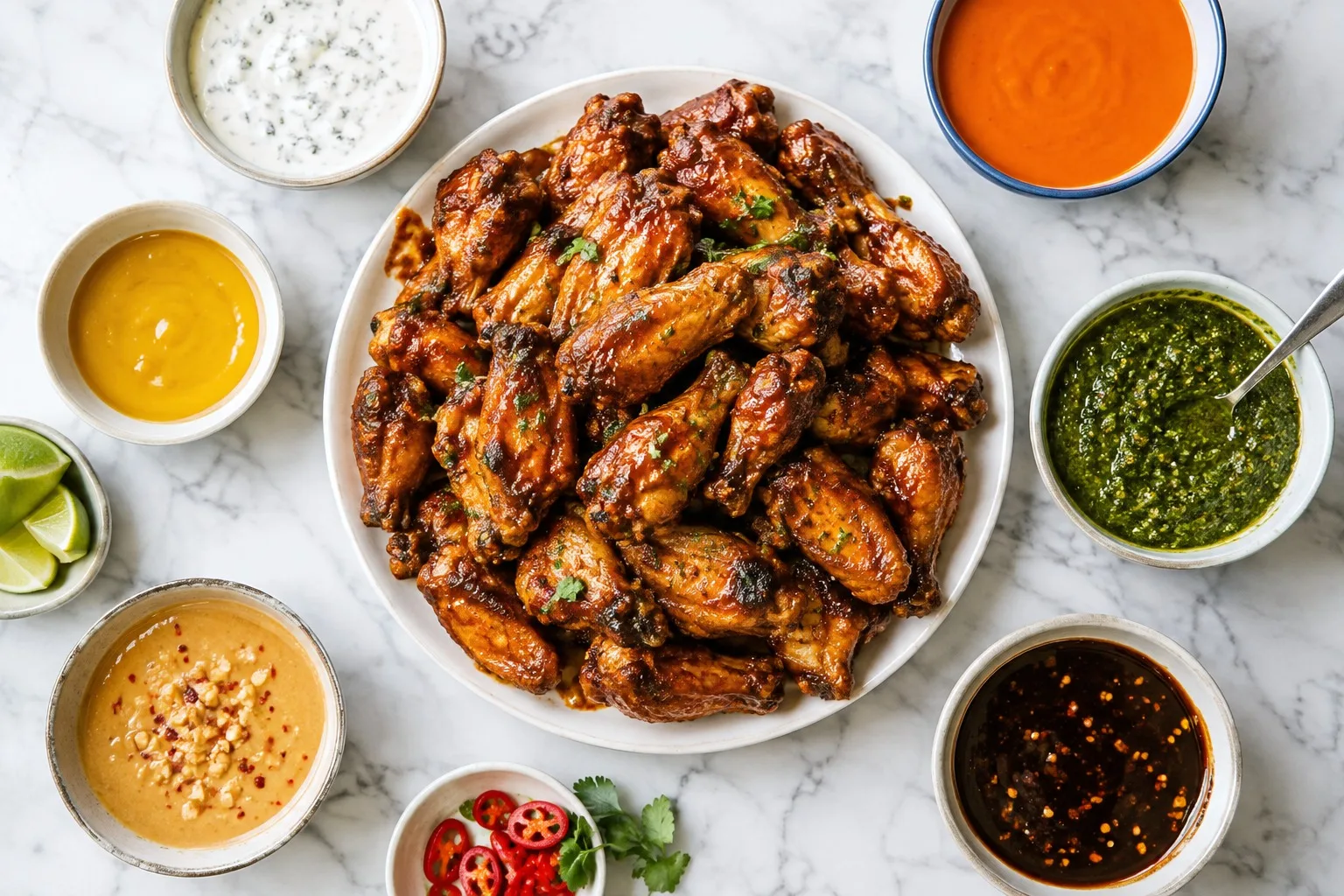
12 wing sauce recipes for oven baked or air fryer wings, from hot honey and gochujang to mango haban
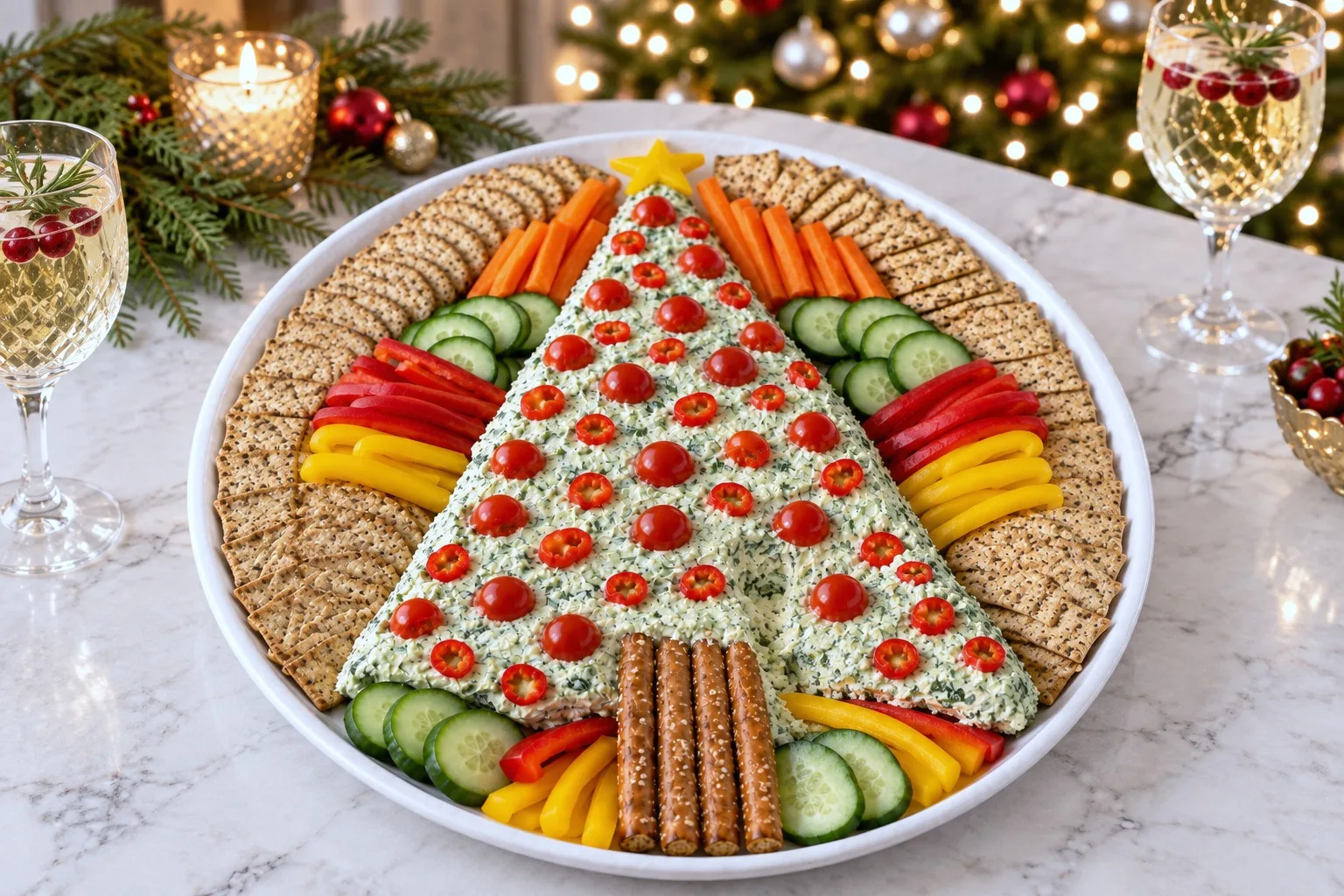
Christmas tree dip turns cream cheese, ranch, dill and spinach into a tree-shaped platter with peppe
6 layer taco dip stacks beans, guacamole, sour cream, salsa, cheddar, tomatoes and olives in a clear
Leave a Reply