

15 Boy 5th Birthday Party Themes for the Age Between Toddler and Big Kid
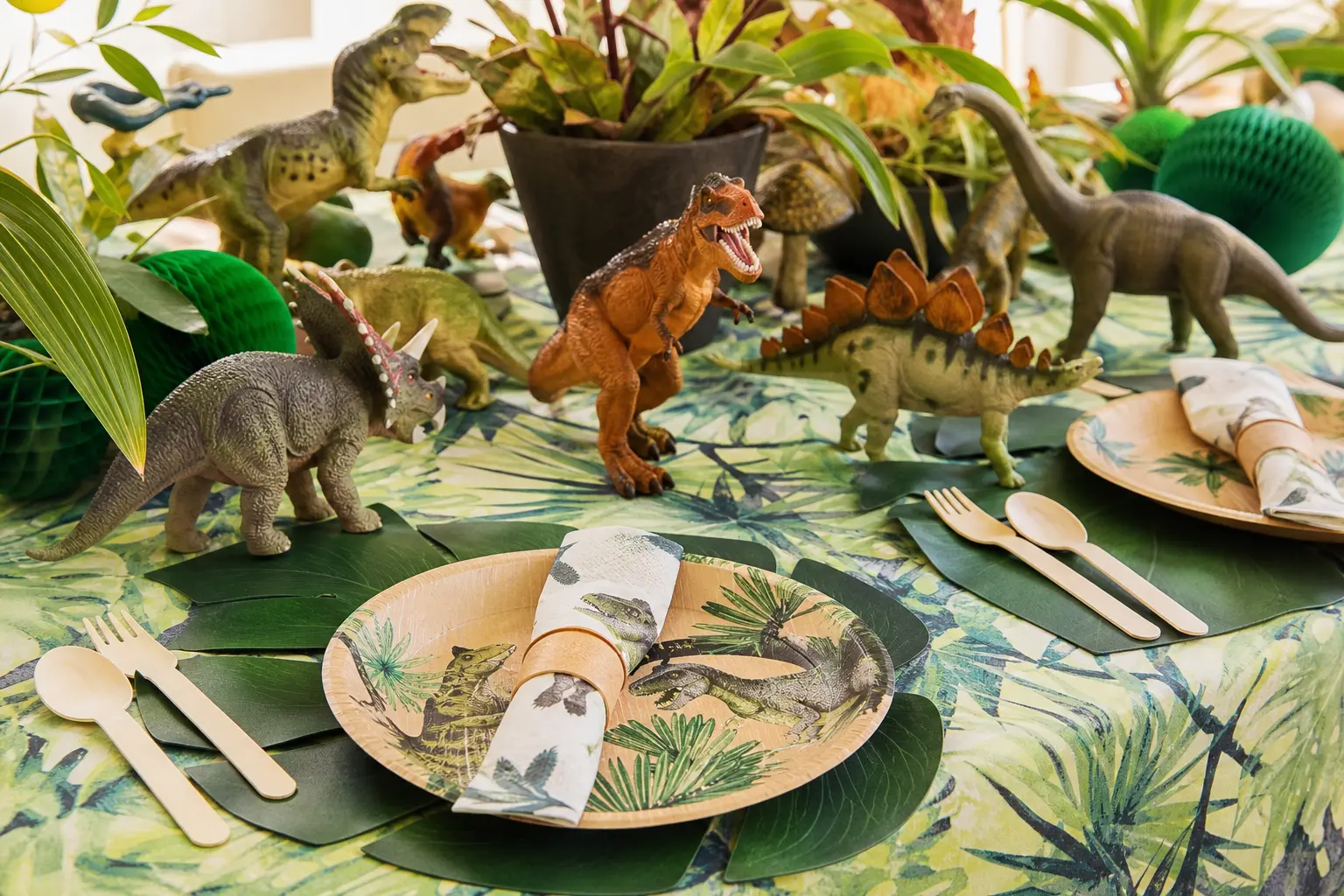
Boy 5th birthday party themes occupy a frustrating gap in most party-planning guides: the ideas either assume a two-year-old’s attention span or expect a child who can read, plan ahead and stay still for an hour. Five fits neither category, and that is exactly what makes it interesting.
At five, a child can follow a three-step rule, hold a conversation about why dinosaurs had hollow bones, and feel genuine pride when he finishes a real challenge. The fifteen themes below are built around that specific stage. Every entry includes one activity with actual structure, actual stakes and an actual result he can show off at the end.
Each idea links to the broader world of boy birthday party themes if you want to keep exploring after you find the one that fits. For now, start here, start with what he is obsessed with this week, and match the activity to what he can genuinely do.
This post contains affiliate links. If you buy through them, I may earn a small commission at no extra cost to you.
Action and Training Themes
These themes give a five-year-old a role with a title, a set of rules and a finish line. He is not playing pretend. He is completing a course, earning a rank or passing a test, and the distinction matters enormously at this age.
Keep each challenge short and physical. Five-year-olds can sustain focused effort for roughly eight to twelve minutes before the energy shifts, so build in a natural break between the training sequence and the celebration.
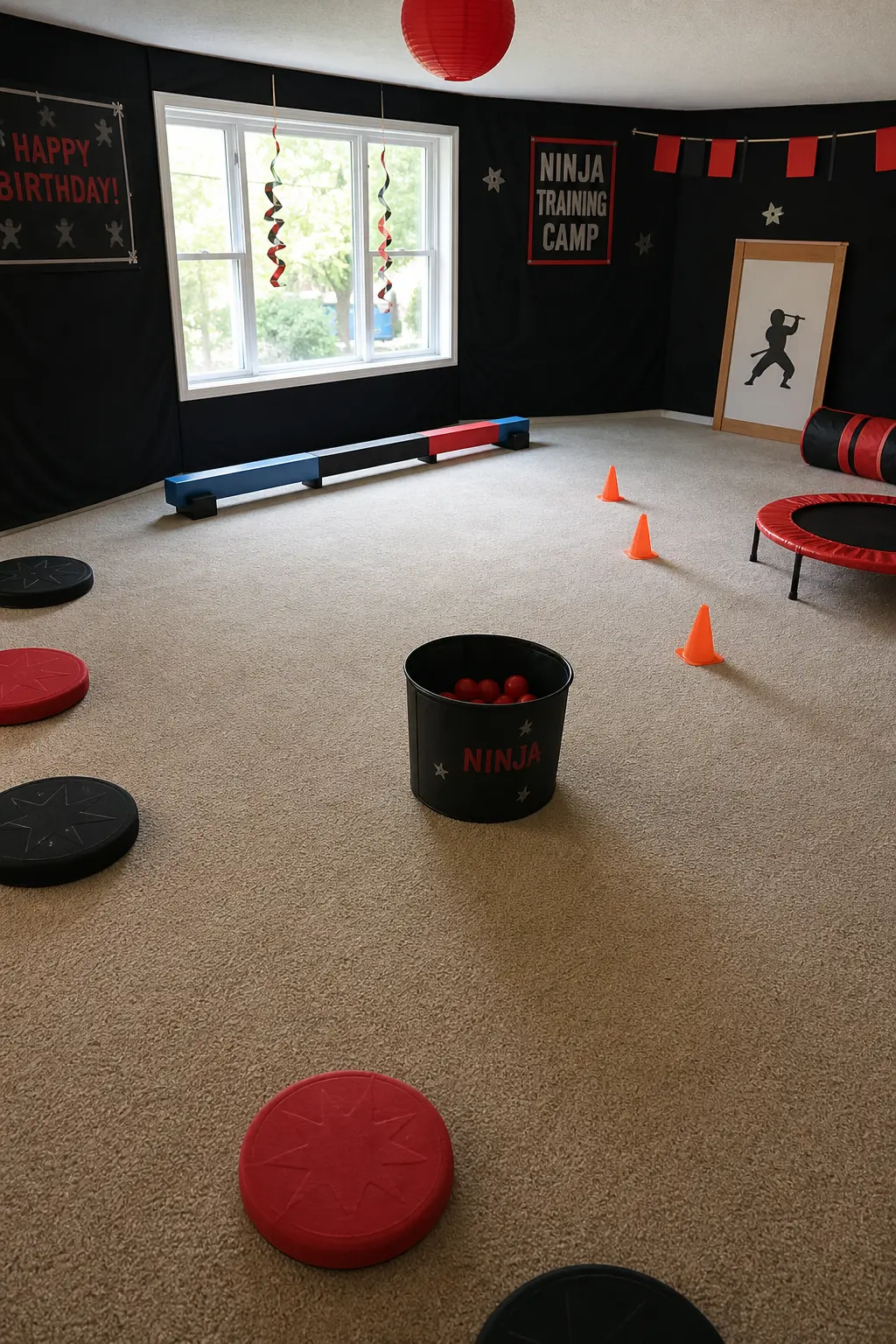
Ninja Training Camp
Palette: black, red and white. The room is a dojo for the afternoon: a strip of red tape on the floor marks the starting line, rolled yoga mats become the obstacles and a length of black fabric across the doorway turns the entrance into a threshold worth crossing.
The activity that respects the age: a five-station obstacle course with a different challenge at each post.
Crawl under a table draped in black fabric, balance across a low beam, toss a beanbag into a bucket, hold a pose for five seconds and roll across a mat. Each guest earns a coloured belt ribbon (a strip of fabric) for completing every station.
The birthday child sets the course record on his first run and guests try to beat it.
Five-year-olds can follow rules when the rules are physical and immediate. Posting the five-step sequence as pictures at each station, not words, keeps it moving without requiring anyone to read.
🛍 Shopping guide
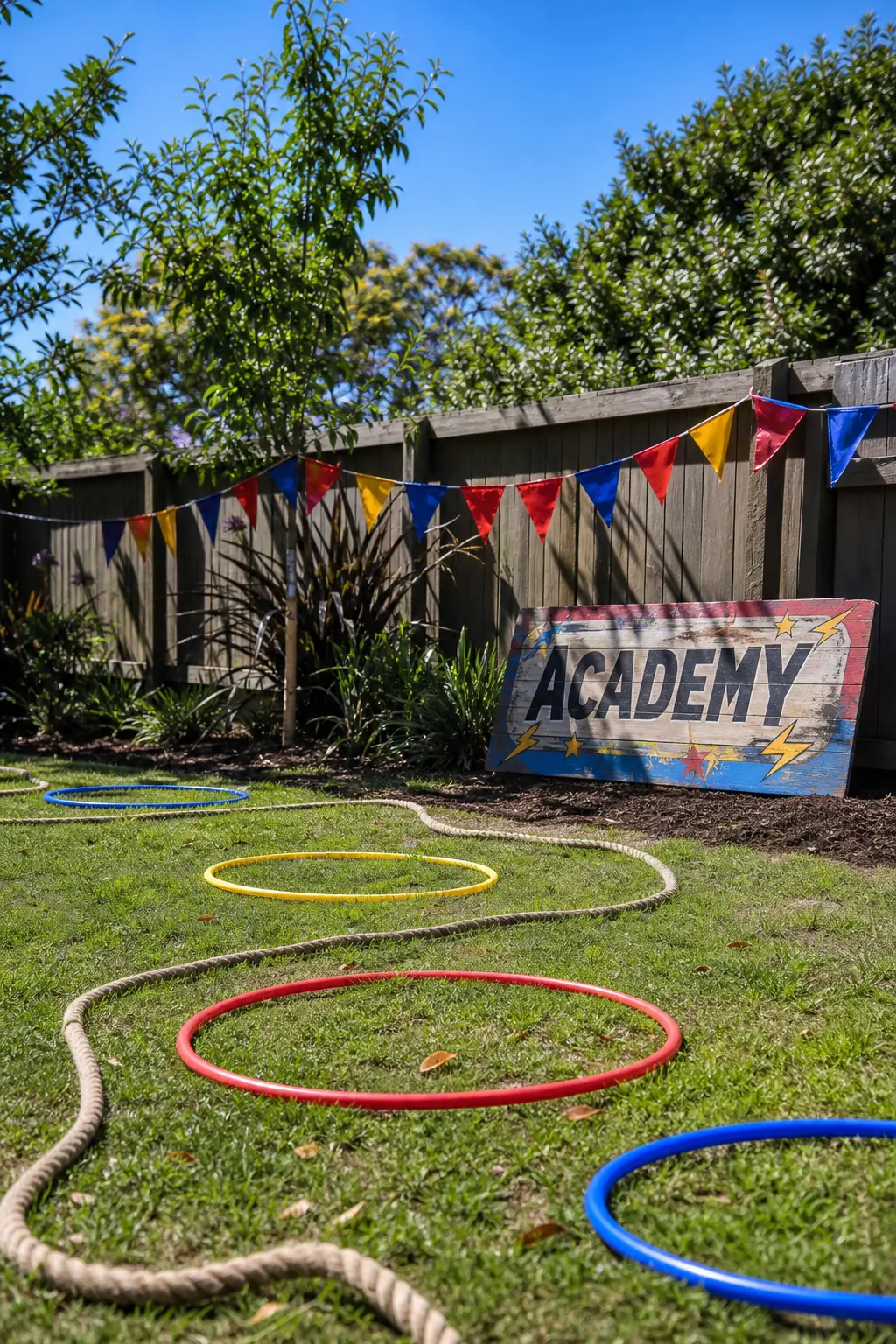
Superhero Academy
Palette: primary red, blue and yellow with a bold gold accent. Every guest arrives as a recruit. The birthday child is already a cadet who has earned one badge, and the party is his graduation test.
The activity that respects the age: a series of four real, achievable physical challenges set up as official academy stations.
Lift a weighted bag (a small tote with a book inside) and carry it ten steps, balance on one foot for five seconds, throw a foam disc through a hoop and sprint to a line and back.
Each completed challenge earns a stamp on an official-looking card made from plain card stock and a potato stamp. At the end, the birthday child presents each guest with a fabric cape cut from felt, no sewing required.
The key detail: the challenges must be genuinely possible but not automatic. A five-year-old who wobbles on one foot and tries again gets more from this than a child who sails through without effort.
🛍 Shopping guide
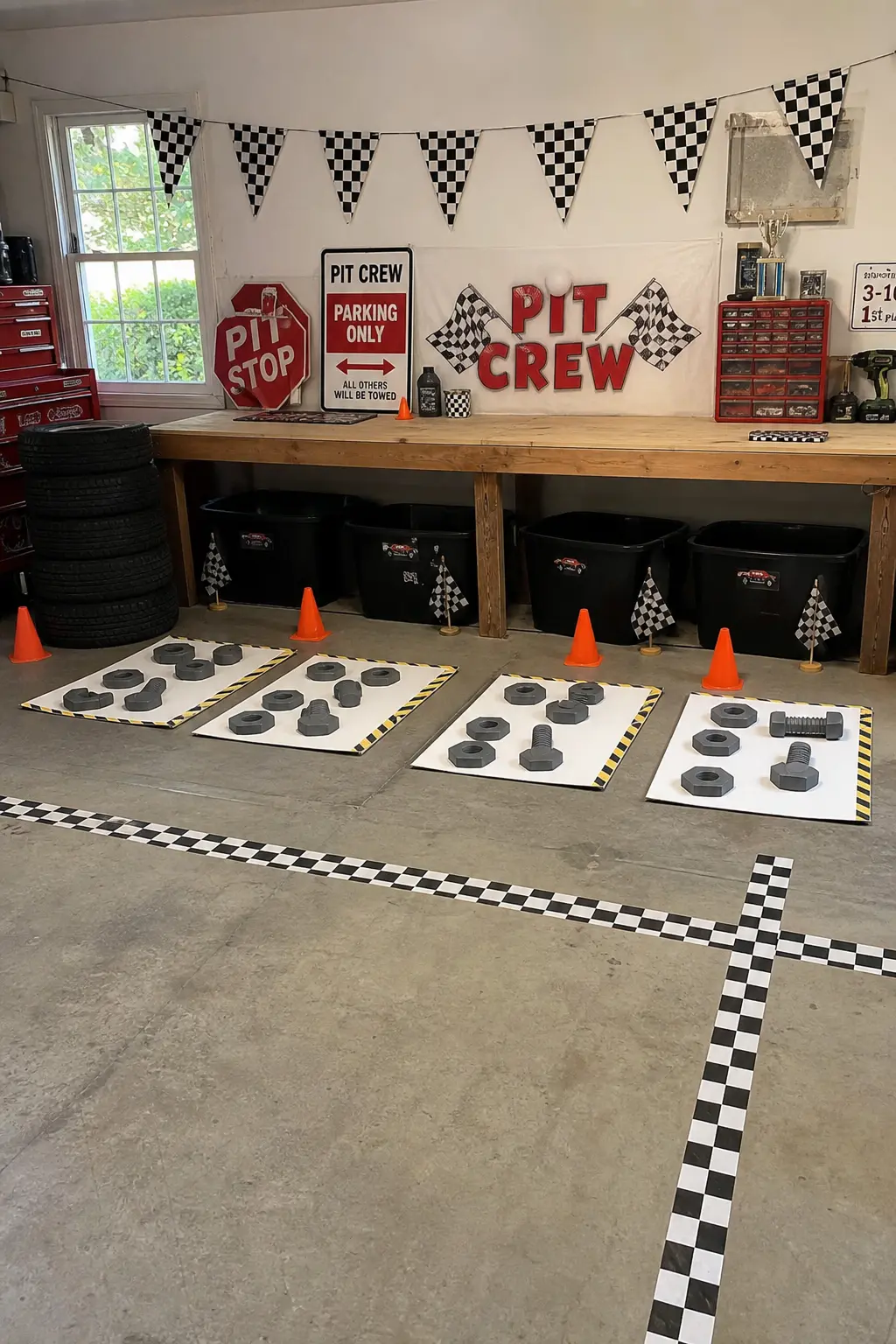
Race Car Pit Crew
Palette: racing red, black and chrome silver. The garage is wherever the party is: checkered tape on the floor, a tyre-change station on a low table and numbered helmets (paper party hats in black and white) hung on hooks by the door.
The activity that respects the age: a timed pit stop using real, scaled tools.
Each child gets a torque wrench toy or a chunky plastic spanner (both widely available), a set of four oversized foam ‘nuts’ on a wooden bolt board and a timer on a phone.
They tighten all four corners in the correct sequence, shown by colour not number, then call ‘done’. The birthday child goes first to demonstrate and sets the time to beat. Real tools, real sequence, real timer: the challenge is genuine.
Add a simple ramp and a few wooden toy cars for free-play between rounds. The structured activity and the open play can coexist without anyone managing the transition.
🛍 Shopping guide
Knight’s Academy
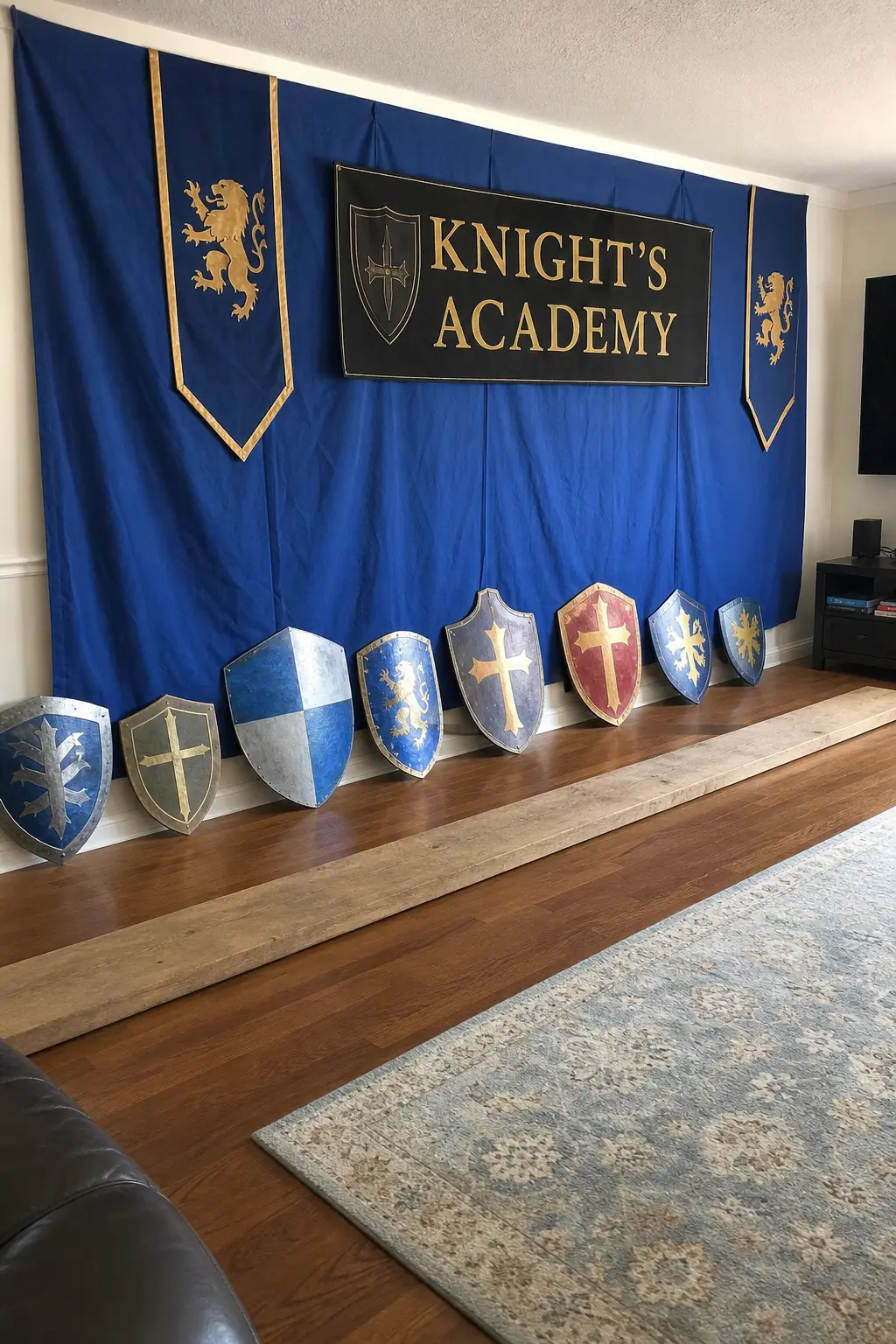
Palette: royal blue, silver and gold. The great hall is whatever room you have: two lengths of blue fabric on the walls, a foil-covered cardboard shield for each guest made the day before and a row of silver cardboard crowns at the entrance table.
The activity that respects the age: a sequence of four genuine challenges scaled to small bodies.
Walk the balance beam ‘bridge’ (a length of low two-by-four on the floor) without stepping off, carry a ‘shield’ from one end of the room to the other without dropping it while walking backwards, pass a ‘lance’ (a cardboard tube) through a suspended hoop and hold a standing bow for a count of five.
Each completed challenge earns a wax-sealed scroll (a rolled piece of paper with a sticker seal) naming the child a Junior Knight.
The scroll is the take-home. It sits alongside the party bag rather than inside it, which makes it feel like a document rather than a gift, and that distinction matters at five.
🛍 Shopping guide
Discovery and Science Themes
Five is the age of genuine questions. A child this age will ask why the volcano fizzes, not just watch it fizz, and he will remember the answer. These themes give him a real fact to carry home alongside the party bag.
Keep the science simple enough that he can explain it to a grandparent. If he cannot describe what happened in one sentence, the activity was probably aimed at an older child.
Dinosaur Paleontologist
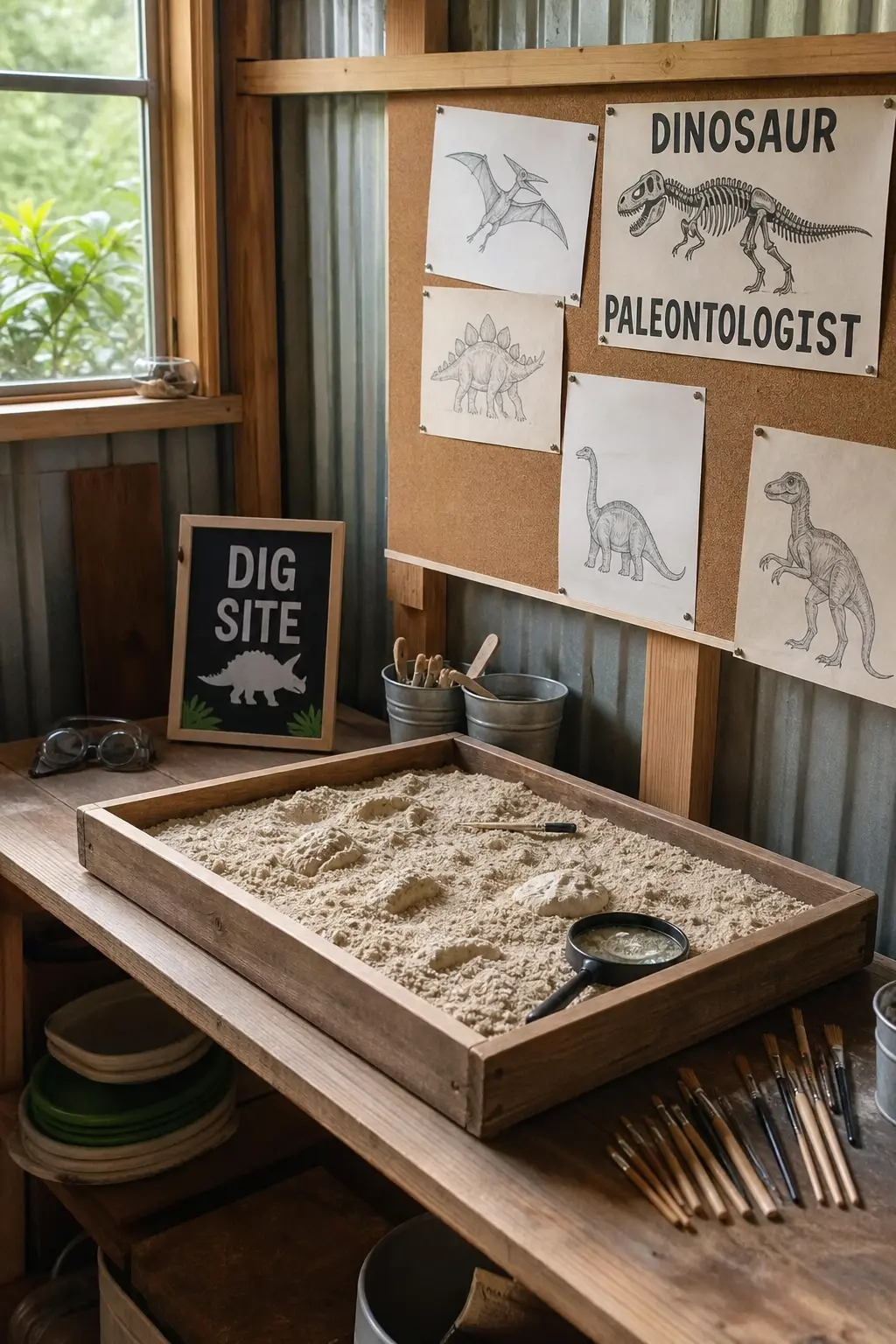
Palette: sandy tan, forest green and bone white. The room or garden becomes a field site, not a museum: rough brown paper covers the table, small brushes lie in a row and specimen trays hold the finds.
The activity that respects the age: a genuine dig site using a sandpit or a deep tray filled with kinetic sand. Bury three or four plastic dinosaur bones or full figures before guests arrive.
Each child uses a real pastry brush to uncover their find, then brings it to the birthday child, who acts as lead paleontologist and shares one real fact about that species.
Facts go on a small cue card in the birthday child’s pocket, printed in large type he can read or memorised in advance with a grown-up’s help.
The real fact is the whole point. A five-year-old saying ‘the T. rex had hollow bones like a bird so it could run faster’ is having a different kind of birthday than a five-year-old fishing plastic eggs from a sandpit with no context.
🛍 Shopping guide
Space Camp
Palette: deep navy, silver and a single vivid orange as the mission accent. The party room doubles as mission control: chairs face a simple ‘screen’ (a white sheet taped to the wall), and a laminated mission card sits at each seat.
The activity that respects the age: the birthday child leads a mission briefing. He stands at the front, holds a torch pointer and works through three mission objectives with an adult standing just off to the side for prompts.
Objectives might include identifying three planet pictures pinned to the wall, choosing a mission name by vote and assigning each guest a crew role (pilot, scientist, engineer). The briefing takes six minutes.
Then the crew completes a simple experiment: baking soda and vinegar in a foil tray labelled ‘rocket fuel test’.
Leading the room is the real skill here. A five-year-old who has practised his three lines and delivers them to an audience of ten children is building something that has nothing to do with space and everything to do with five.

🛍 Shopping guide
Detective Agency
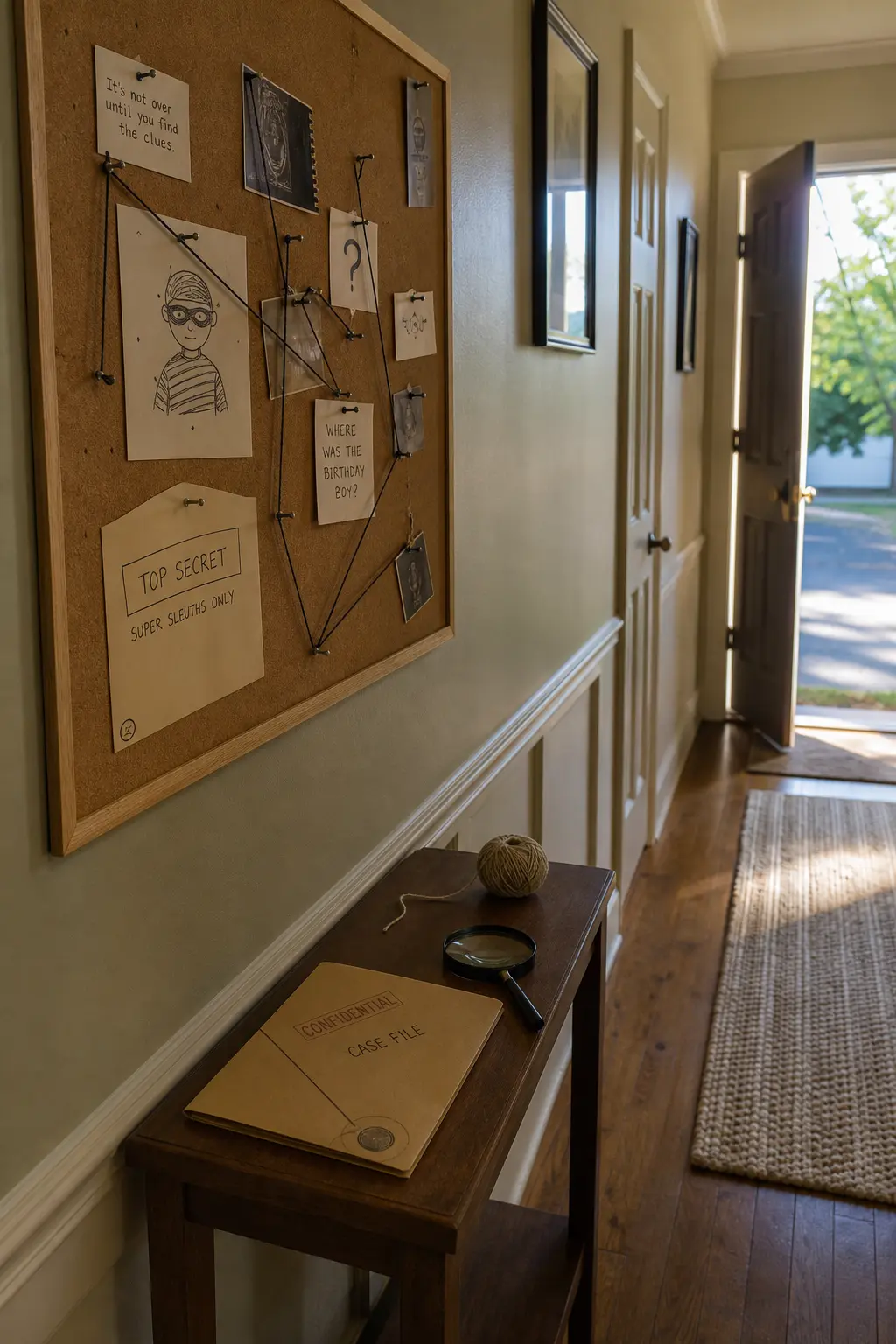
Palette: charcoal, cream and magnifying-glass gold. The case file sits in a manila envelope at each place. The clues are real: a footprint cut from black paper, a fibre (a piece of yarn), a torn corner of a ‘suspicious note’ and one photo of the crime scene (a missing toy bear, staged on a table in another room).
The activity that respects the age: a mystery a five-year-old can genuinely solve, built with exactly four clues and one red herring. The sequence leads the children to three locations in the house or garden, each with a physical clue they collect.
At the end they vote on the suspect from a board of three drawn characters: the postman, the neighbour’s cat and the visiting cousin. The birthday child announces the verdict.
He is right, because the mystery is designed so the four clues point clearly to the answer once collected together.
The distinction from a toddler activity: the children must use logic, not luck. Each clue genuinely eliminates one suspect. That step, even done simply, makes this feel like a real game.
🛍 Shopping guide
Weather Station
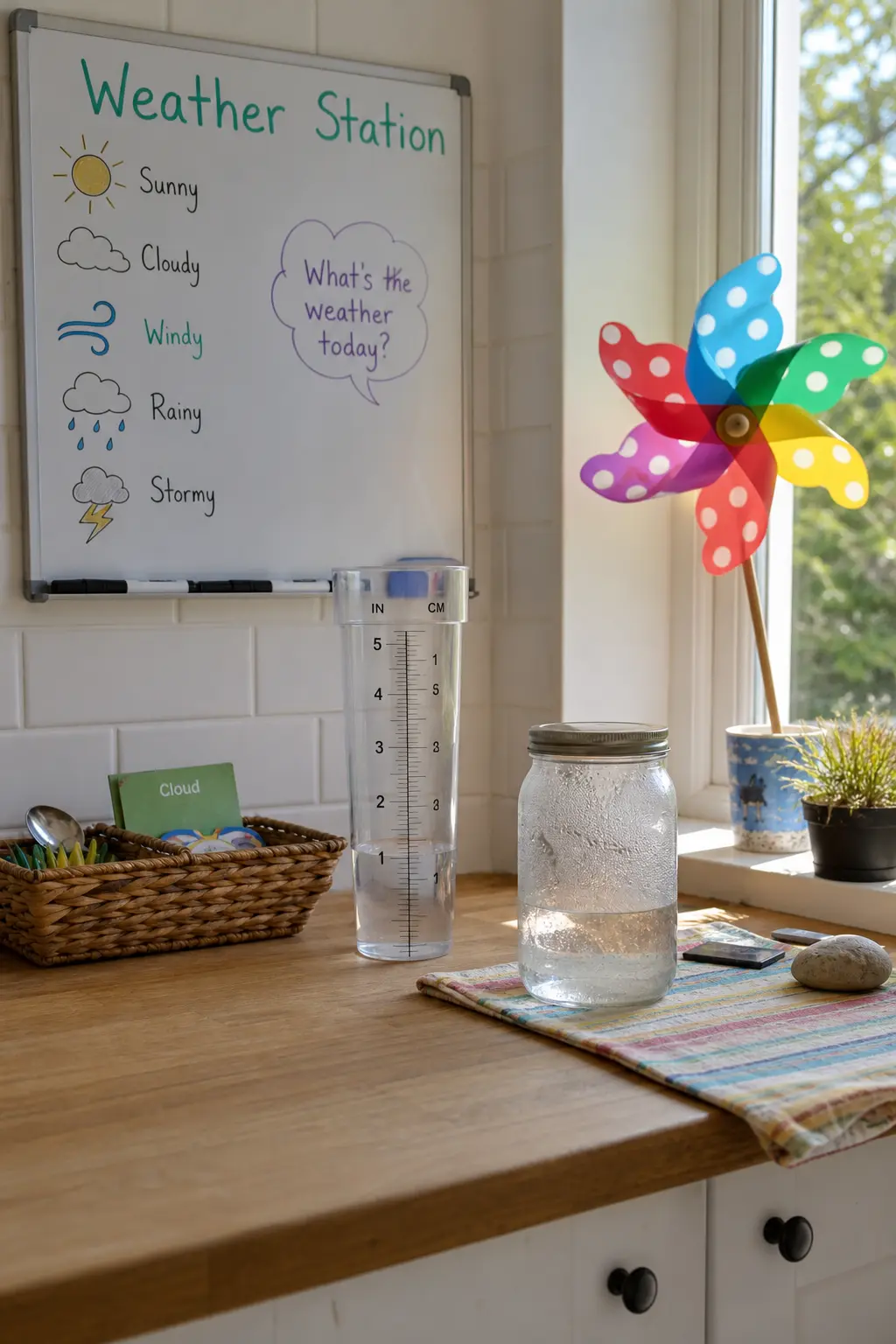
Palette: sky blue, cloud white and sunshine yellow. The party table is a working lab: a simple rain gauge made from a clear plastic bottle, a pinwheel wind meter at the window, a thermometer strip on the wall and a whiteboard for recording results.
The activity that respects the age: three simple experiments that five-year-olds run themselves, with the birthday child as chief meteorologist. First: make a cloud in a jar (warm water, hairspray, a bag of ice on top).
Second: build a rain gauge from a plastic bottle and ruler. Third: test wind direction by blowing on a suspended strip of tissue. After each experiment the birthday child records the result on the whiteboard with a drawn symbol, not a word.
The other children predict before each test and check their prediction against the outcome.
The prediction step is the crucial piece. Forming a hypothesis, however informal, and then checking it is real scientific thinking at a scale a five-year-old can manage without help.
🛍 Shopping guide
Build and Make Themes
Building themes work at five because the outcome is visible and portable. He made it, he can hold it, and he can take it home. That tangibility is the whole point.
Set a time limit and keep it honest: ten minutes is about right. A timer on the table makes the challenge feel real without turning it into stress. See also 16 5th Birthday Party Ideas That Stretch to the Whole Class for more structured activity formats that work at this age.
Lego Builder Challenge
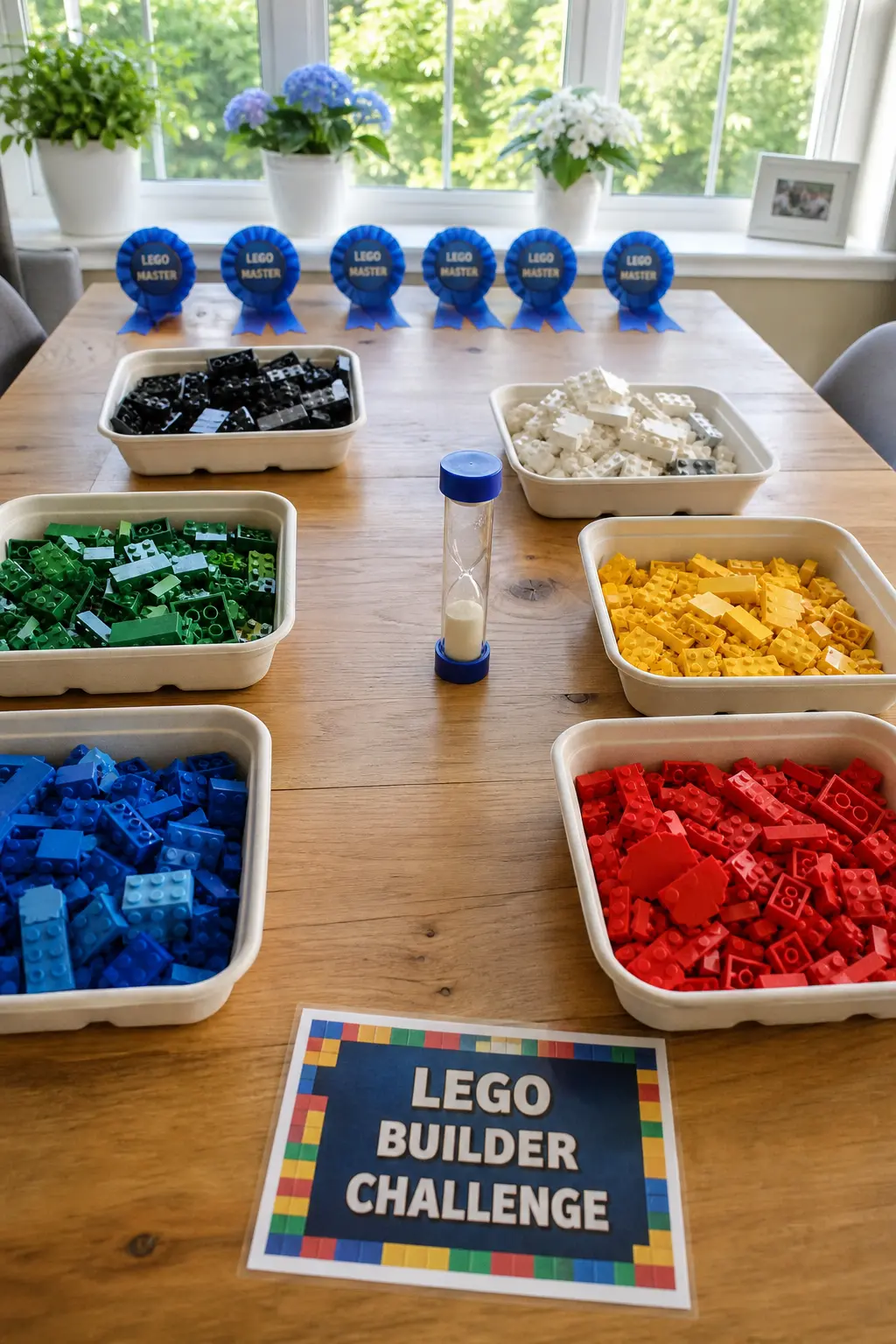
Palette: primary Lego yellow, red and blue on a white surface. Every seat has a small tray of bricks sorted by colour, a brief card showing the challenge (pictures only, no words needed) and a sand timer set to ten minutes.
The activity that respects the age: a genuine building challenge with a time limit and a judging panel. The brief might be ‘build the tallest tower that stays standing’ or ‘build something with wheels’.
Guests work independently, then the birthday child and one adult judge each build against three criteria shown as simple drawn icons: height, sturdiness and creativity.
Every entry gets a different ribbon so no child walks away empty-handed, but the winning criterion is real and the birthday child makes the call.
The judging step matters. At five, a child is ready to evaluate, explain his reasoning and accept a result. That is qualitatively different from a toddler build-and-knock-down session, and it is worth marking the difference explicitly.
🛍 Shopping guide
Robot Engineer
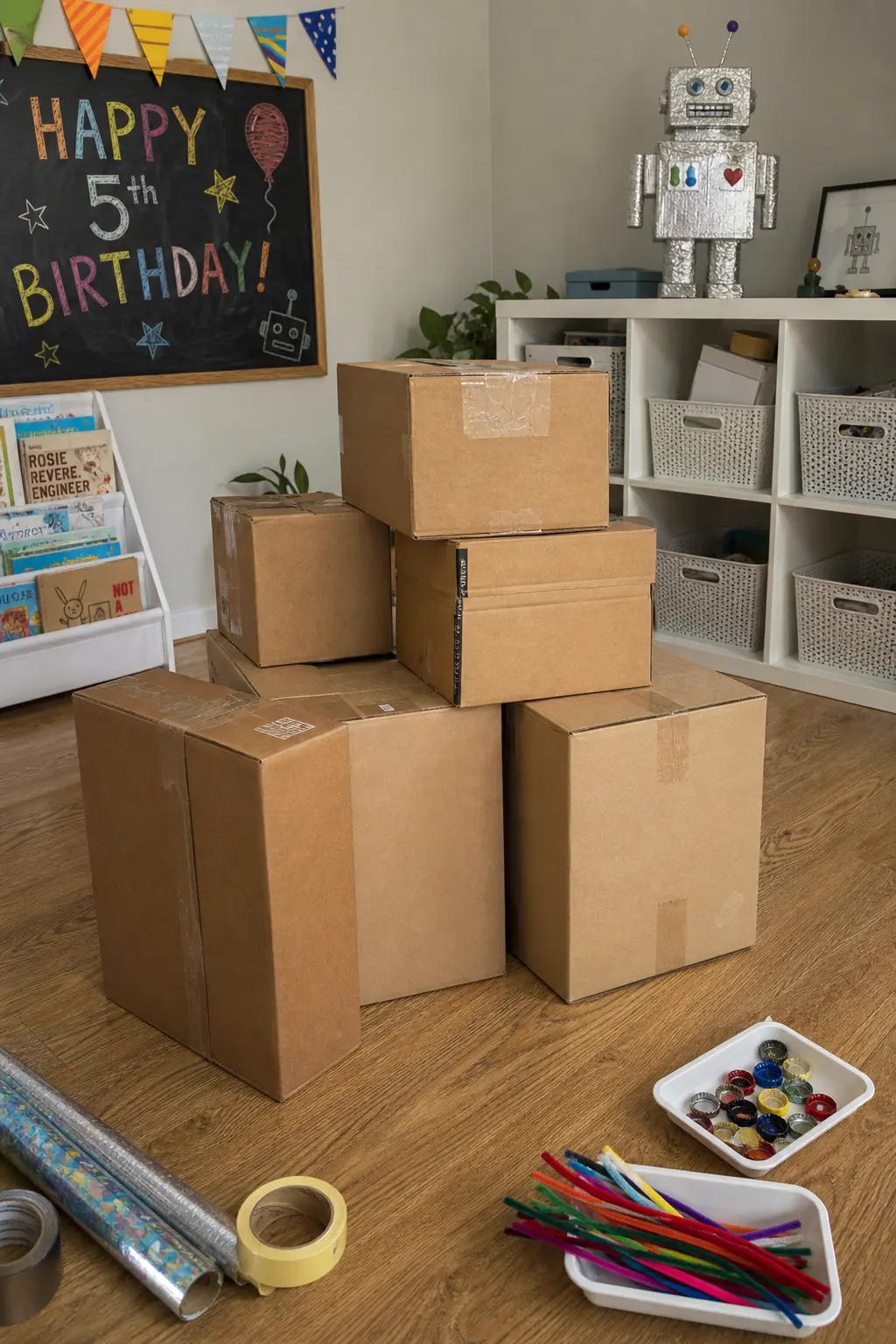
Palette: metallic silver, electric blue and neon green. Every guest builds one robot from a pile of shared materials: cardboard boxes in three sizes, foil, bottle tops, pipe cleaners, stickers and a roll of masking tape.
Each child gets a base box with their name already written inside (not on the outside, so the reveal is theirs) and chooses the rest from the communal pile.
The activity that respects the age: a genuine build with one engineering rule. The robot must stand up on its own. That single constraint, which a two-year-old’s version of this activity does not include, makes it real engineering.
The birthday child presents his robot first and names it. Other children follow. Each robot gets a card listing its three special powers, dictated by the child to an adult writing on the card.
The dictation step is important. At five, ideas outrun writing ability. Letting the child dictate his robot’s powers to an adult produces a richer result than asking him to write, and he will re-read that card for weeks.
🛍 Shopping guide
Construction Crew
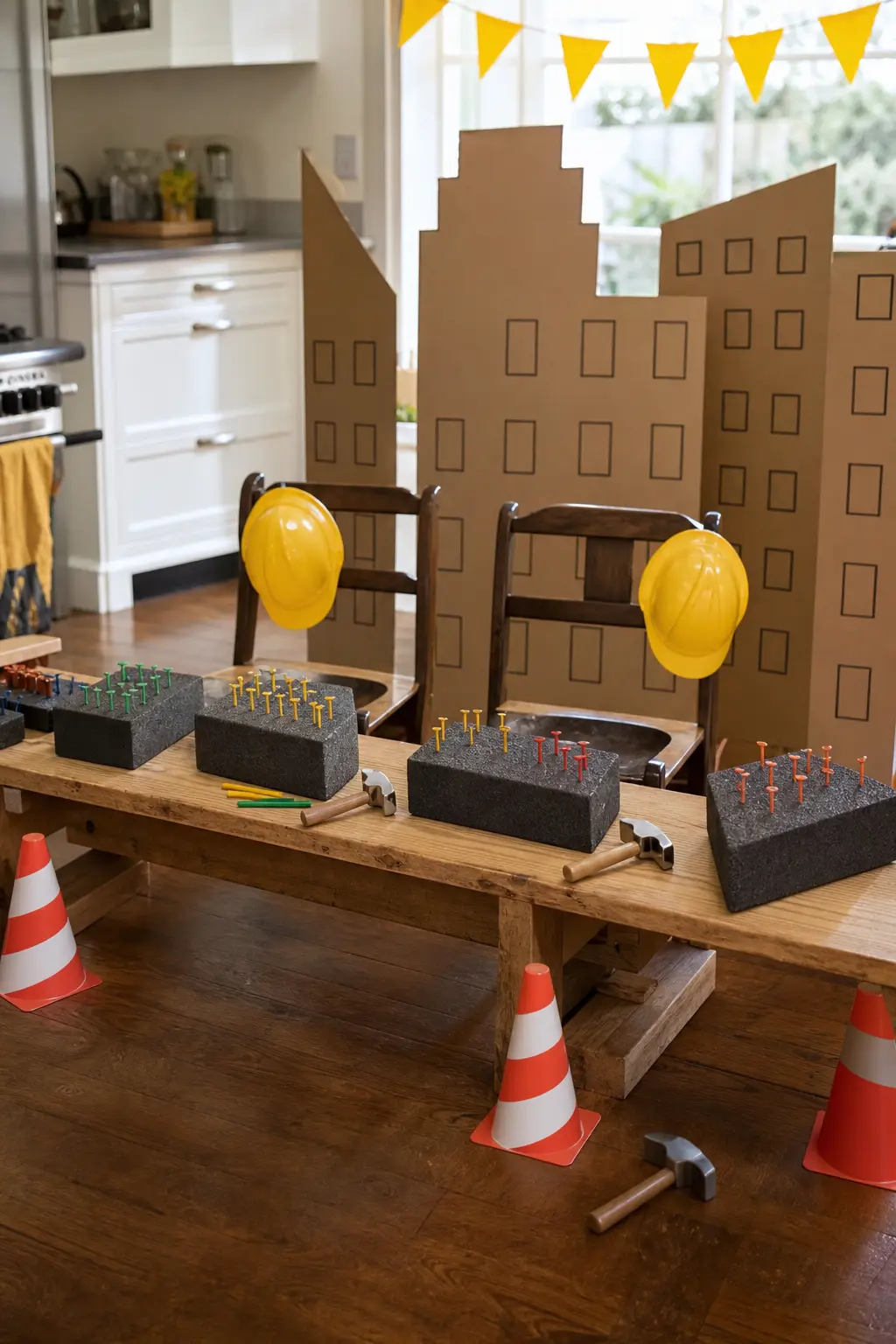
Palette: high-vis yellow, orange and concrete grey. Every guest gets a hard hat (yellow paper party hats reinforced with a strip of card inside the brim) and a small canvas tool belt with three pockets holding the tools for the day.
The activity that respects the age: a genuine build using real tools scaled to small hands. Each child uses a wooden mallet, a set of chunky golf tees and a foam block to complete a peg pattern shown on a simple picture card.
Then the group works together to assemble a cardboard city: pre-scored flat-pack cardboard buildings that slot together with no tape, designed so a five-year-old can fit the tabs without help. The birthday child places the final piece and the city stands on its own.
Real tools are the whole point. A child who has used a mallet with intention, hit what he aimed at and stepped back from a standing structure he built has had a fundamentally different afternoon than a child who decorated a pre-assembled craft.
See also 14 Small Birthday Party Ideas That Beat the Big Version for more formats that work in limited space.
🛍 Shopping guide
Adventure and Exploration Themes
An adventure theme needs a narrative with a beginning, a middle and a clear end. At five, children respond to a story they are inside rather than watching. Give every guest a role in the first two minutes and the rest runs itself.
Real clues, real maps and real obstacles do not need to be elaborate. A hand-drawn map on brown paper and three garden obstacles are more effective than a printed kit with twelve laminated cards.
Jungle Expedition
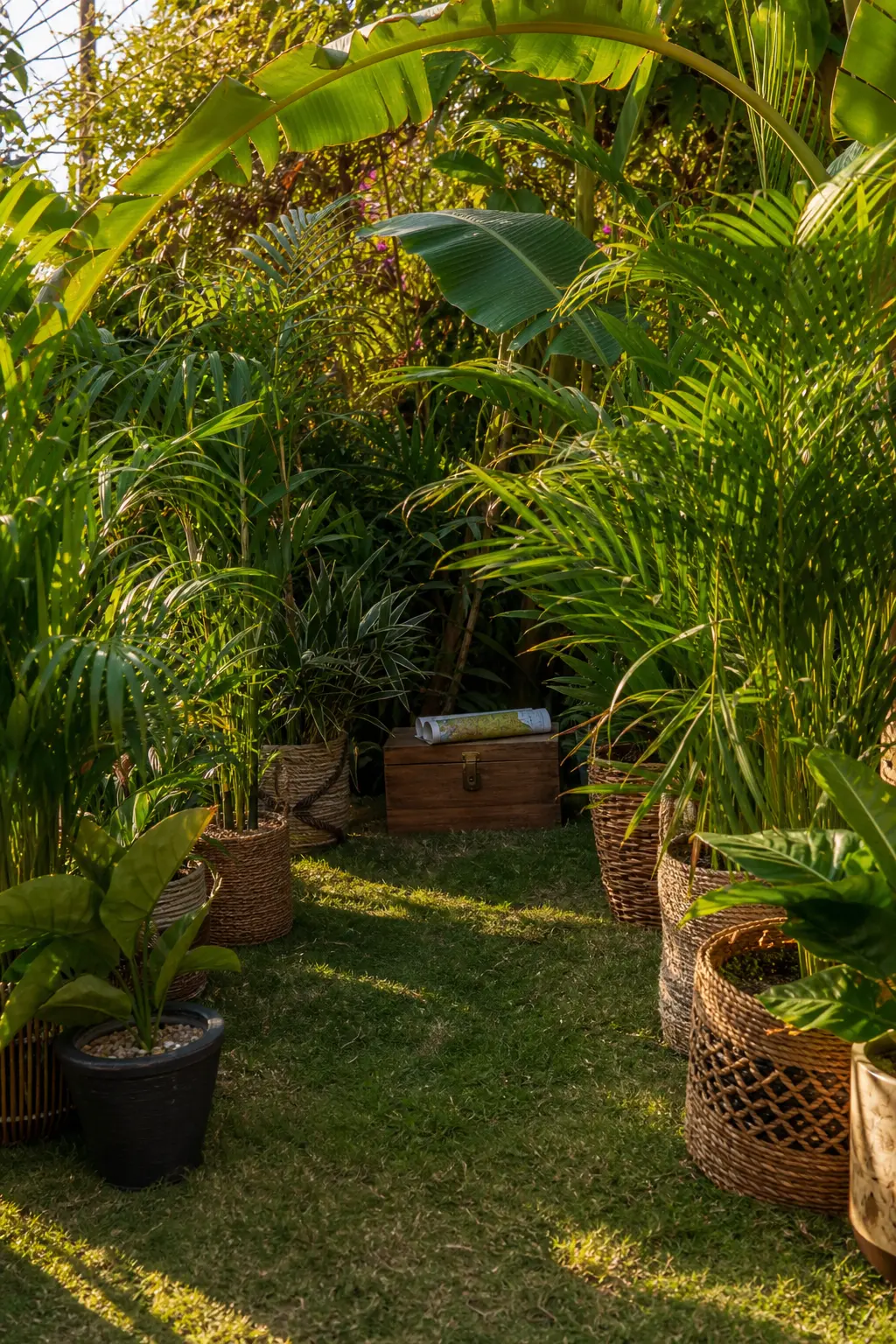
Palette: deep green, brown and a flash of bright parrot orange. The expedition begins at the front door: a hand-drawn map on brown packing paper, rolled and tied with twine, waits at each guest’s place.
The activity that respects the age: a scavenger hunt using actual clues, not just pictures to match.
Each clue is a short rhyme read aloud by the birthday child or an adult, and it sends the group to a real location: under the garden bench, behind the biggest plant, inside the red bag by the door.
At each location a small envelope holds the next clue and one ‘specimen’ to collect (a plastic animal, a pebble painted gold, a feather). The final location holds the party treasure: the cake table, revealed with a cloth pull.
The cloth pull is a detail worth keeping. Five-year-olds understand theatre, and a single dramatic reveal lands better than a gradual discovery.
🛍 Shopping guide
Treasure Hunter
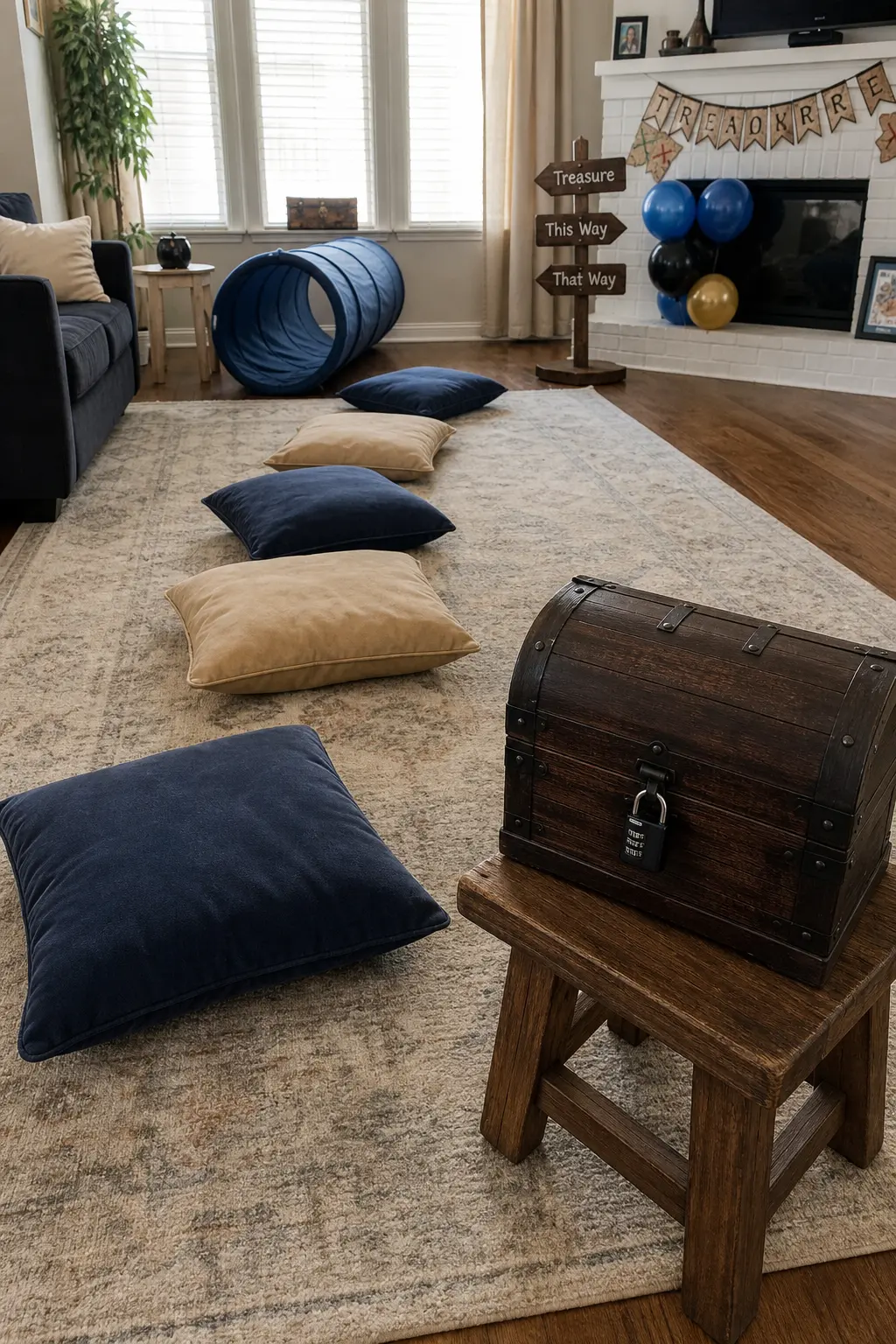
Palette: aged gold, brown and burgundy red. The map is hand-drawn on paper tea-stained the evening before: crinkle it, let it dry, roll it with the edges uneven. It costs nothing and looks completely authentic to a five-year-old.
The activity that respects the age: three real obstacles between the start and the treasure.
Crawl through a fabric tunnel, step across a row of floor cushions without touching the floor and solve a single combination lock (a three-digit version with the code on a clue card) to open the treasure box.
The treasure is the party favour bag, which makes the opening feel earned rather than distributed.
The combination lock is the age-appropriate detail. At five, a child can hold three digits in working memory, turn a dial to each one in sequence and feel the click. That physical cause-and-effect, repeated three times, is a small but real cognitive accomplishment.
🛍 Shopping guide
Performance and Skill Themes
These themes ask the birthday child to demonstrate something he has actually practised. That small shift from participation to performance lands differently at five: it produces real confidence rather than the muted satisfaction of collecting a sticker.
Keep the audience warm and the stakes low. Guests who cheer genuinely, not sarcastically, are the only prop that matters. For more party ideas across age groups, 25 Birthday Party Games for Every Age and Any Budget has formats that adapt well to a performance-style party.
Magic Show
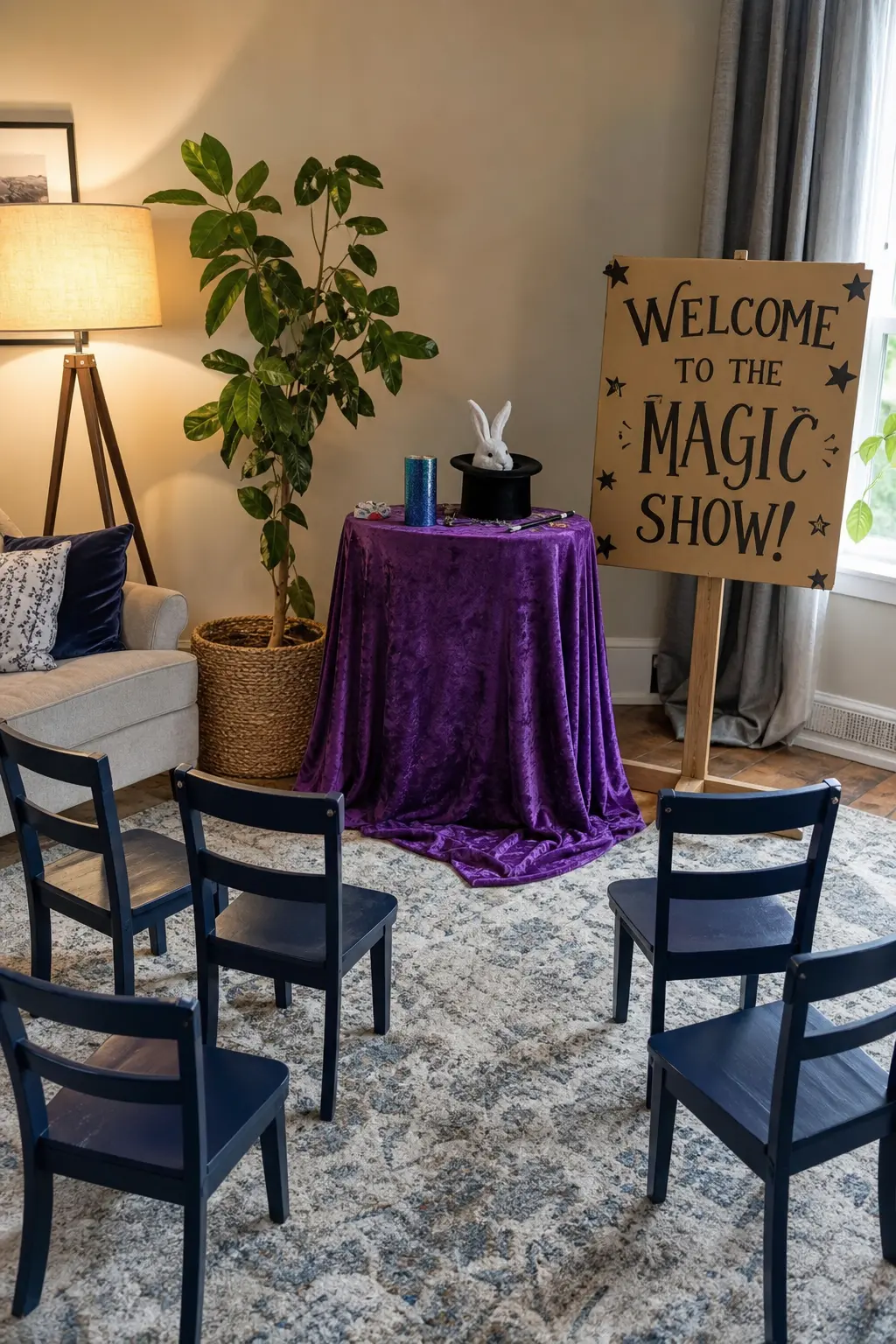
Palette: midnight purple, gold and scarlet. The stage is a cleared corner with a small table, a velvet cloth (or a dark fleece cut to size) and a hand-lettered sign saying the birthday child’s magician name. Chairs face the stage in a short row.
The activity that respects the age: the birthday child performs three simple tricks he has learned in the week before the party.
Recommended: the disappearing coin (palming, practised with a parent), the rising card (a key card trick requiring only one memorised card position) and the cups and balls (three cups and a small sponge ball, sequence memorised). Each trick is introduced by a straight-faced announcement.
Guests who want to learn are taught after the show, one trick each.
The performance direction matters. A five-year-old who has practised a trick genuinely does not know if it will work in front of people, and that tension is real. When it does work, the reaction from the room is different from any sticker or ribbon, and he will remember it.
🛍 Shopping guide
Chef’s Academy
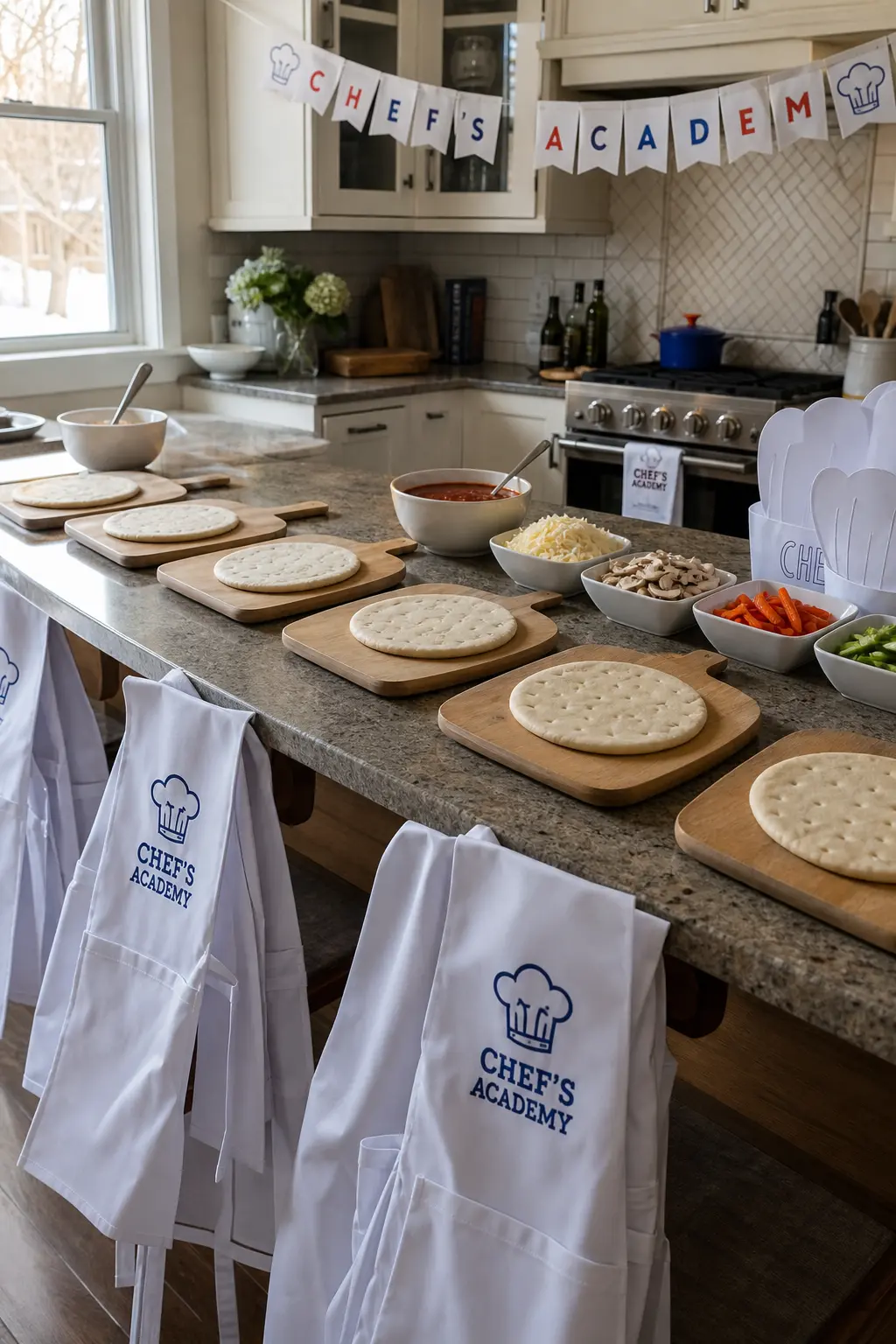
Palette: crisp white, tomato red and fresh herb green. Every guest wears a small apron (plain white cotton, name written on the pocket in fabric marker the morning of the party) and a paper chef’s toque. The kitchen counter is the stage.
The activity that respects the age: the birthday child helps make one simple dish for guests, chosen in advance and practised once.
Best options at five: individual pizzas on flatbread bases (children add their own toppings in the correct sequence: sauce, cheese, one vegetable), chocolate bark broken and plated, or a layered fruit cup assembled in order.
The birthday child leads the first demonstration on his own flatbread while guests watch, then each guest makes theirs. He announces when the dish is ready.
The leadership element, demonstrating before others try, is what separates this from a toddler cooking activity where every child does the same thing simultaneously with no hierarchy. Five-year-olds can stand in front of a group and explain what they are doing. That skill is worth practising, even at a birthday party.
🛍 Shopping guide
Frequently Asked Questions
How do I choose a birthday party theme?
Start with what the child talks about most in the month before the party, not what he liked six months ago. Five-year-olds’ interests shift quickly.
Narrow it to three options and let him pick from those three, not from an open list, which tends to produce indecision rather than genuine preference.
Once you have the theme, choose the activity first and build the decoration around it rather than the other way around.
What themes work for a mixed age group of children?
Themes with a physical challenge at the centre, such as a ninja course, a treasure hunt or a construction activity, adapt most easily to mixed ages because the challenge scales naturally: older children move faster or take on a harder variant, younger ones complete the basic version and feel included.
Avoid themes where the main activity requires a specific cognitive skill, such as reading clues or operating a combination lock, that not all ages share.
How much does a themed birthday party cost to decorate?
Most of the themes in this list cost between twenty and sixty dollars to decorate if you use what you have and buy selectively. The activities, which are the part children actually remember, typically cost less than the decorations.
Fabric from a remnant bin, brown paper, foil, cardboard boxes and coloured tape do the visual work of a themed room without a kit. Spend the budget on one or two props that photograph well and keep the rest simple.
Can siblings share one birthday party theme?
Yes, and it often works better than two separate themes. The most practical approach is a shared overarching theme, such as adventure or exploration, with each child leading a different activity within it.
For more detail on how to structure a party around two birthdays at once, the guide on birthday party themes for adults and the full article on combined birthday party sibling themes both cover the logistics.
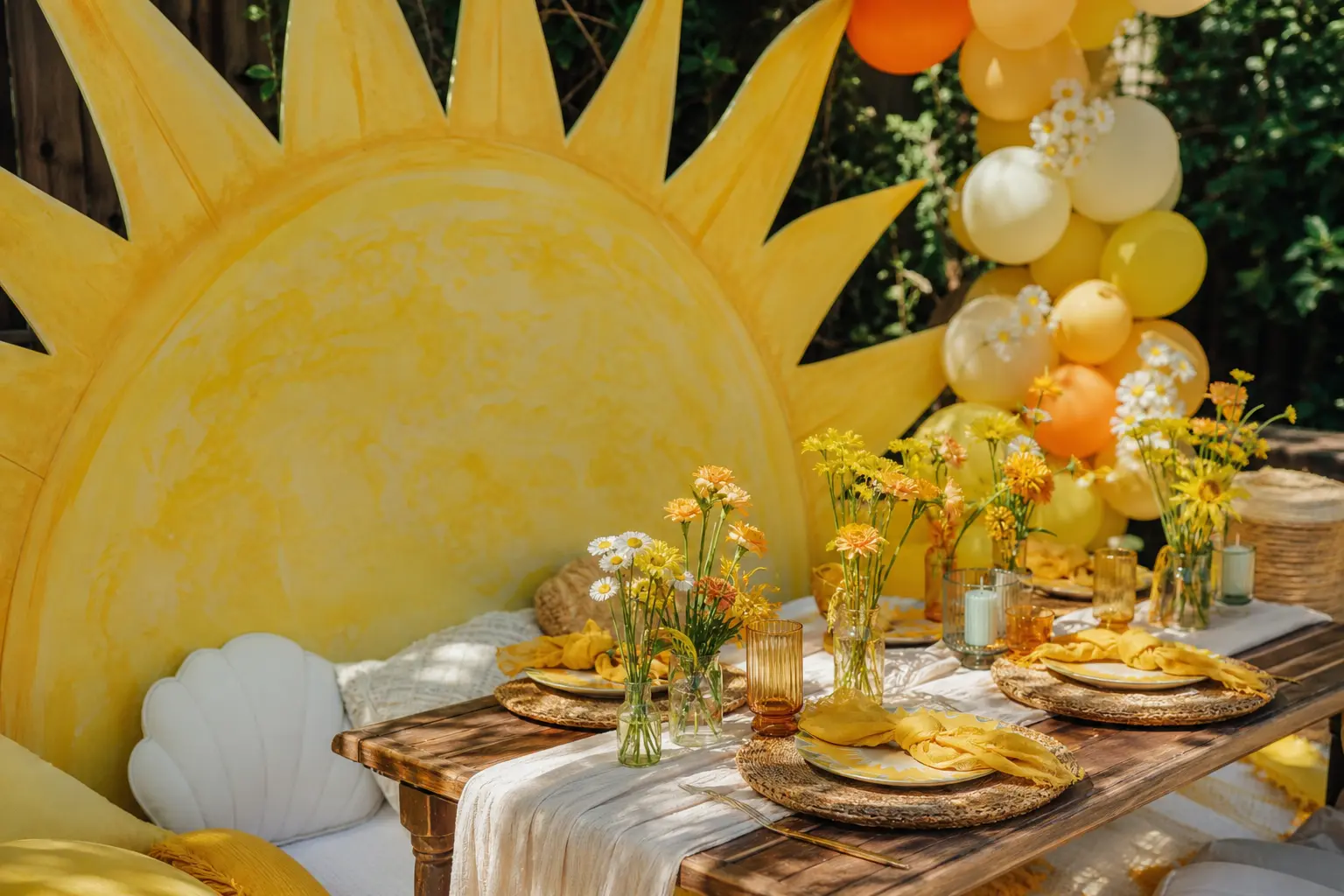
Plan a first trip around the sun birthday party that stays anchored to the sun and orbit pun, not ro
Thirteen additions you can drop into any birthday party already arranged to make the evening actuall
22 gummy bear birthday party ideas, all made at home: balloon backdrop, candy table, jelly treats, g
Leave a Reply