

13 Sweet 16 Birthday Party Ideas for the Proper, Dressed Up Version
A sweet sixteen is not just a birthday that happens to be bigger. It is the one birthday where the details are still talked about at thirty, and the photographs come out at her wedding. Every element either earns its place or becomes clutter nobody remembers.
This list covers thirteen named elements of the formal sweet sixteen, and for each one it tells you what it replaces from an ordinary party and why the swap is worth making. The palette throughout: pearl, warm ivory, soft sage, and the kind of gold that reads as candlelight rather than hardware-store spray paint.
If you are also planning a more relaxed celebration for a different age group, the 25 Birthday Party Games for Every Age and Any Budget roundup has ideas that travel well. But for tonight, dress code on the invitation, photographs that will be framed.
This post contains affiliate links. If you buy through them, I may earn a small commission at no extra cost to you.
Arrival
The first five minutes set the register for everything that follows. Guests who walk into a considered arrival sequence know immediately that this is a different kind of evening.
The Entrance With a Backdrop and a Queue
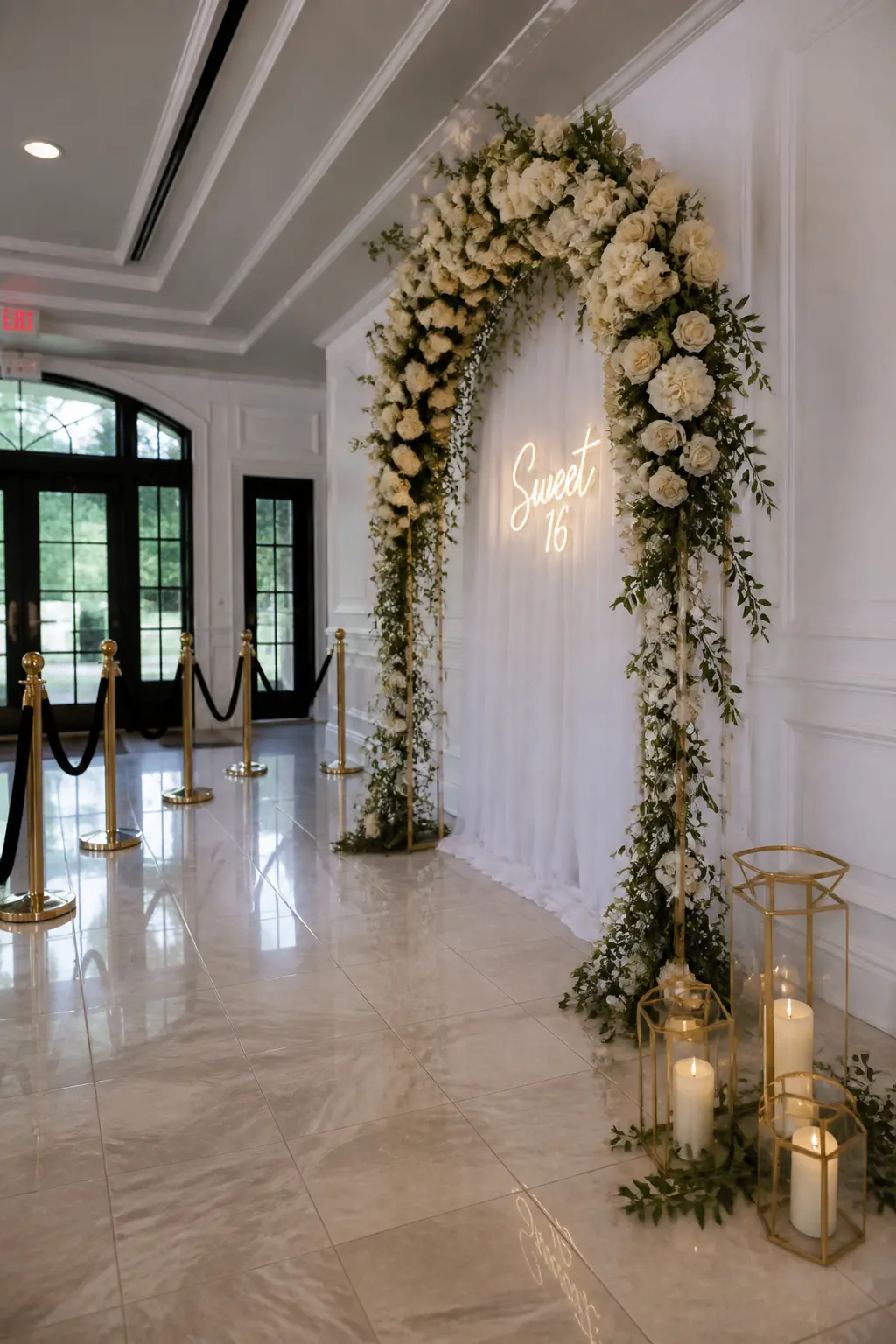
At an ordinary birthday, guests walk in through a door and look for someone they know. A backdrop and a short, managed queue replace that drift with a moment: each arrival pauses, is photographed, and then moves into the room.
The backdrop itself does not need to be elaborate. A rentable arch dressed with ivory florals and soft greenery, positioned two steps inside the venue entrance, gives every guest a reason to stop. A family member or hired attendant manages the flow so the birthday girl is never stuck posing alone for twenty minutes.
What this produces, besides the photographs, is a sense of occasion from the first second. Guests understand the register of the evening before they have found their seats.
🛍 Shopping guide
The Table
A table that has been properly dressed does the decorating for you. Every handwritten card and folded napkin tells a guest they were expected by name.
A Seated Dinner Instead of a Buffet
A buffet puts guests in charge of their own evening. A seated dinner puts the host in charge, and for a formal sweet sixteen that shift is the whole point.
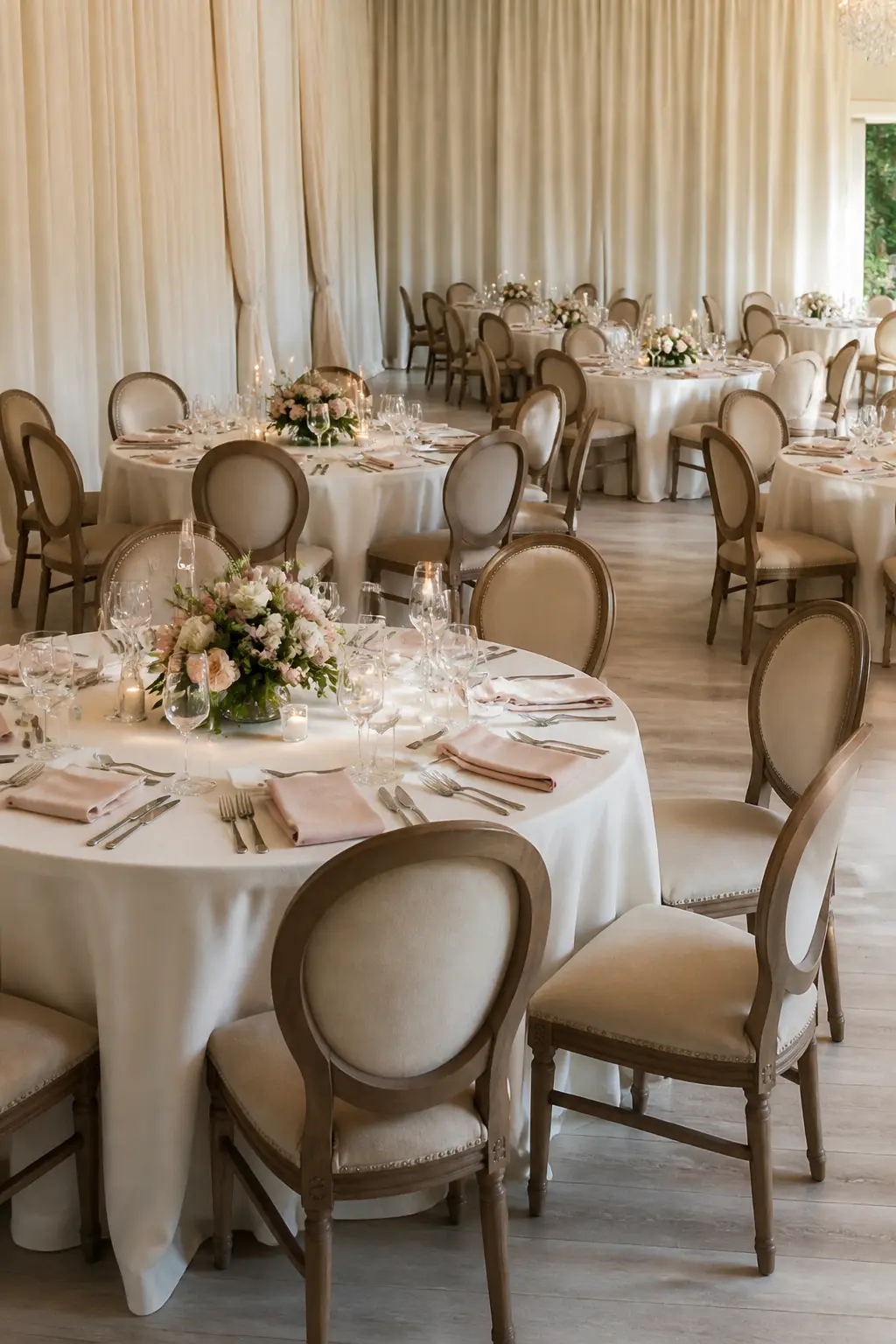
Guests assigned to seats arrive at a table that has already been dressed for them: a charger plate, a folded napkin, a place card, a small floral arrangement at eye level. They do not carry their own food or hunt for a chair. The formality is built into the structure before a word is spoken.
A three-course format works for most venues and most caterers. Starter, main, dessert, with the birthday cake arriving separately as its own moment rather than as one option among several sweets. The dinner becomes the pacing device for the whole evening.
The Dessert Table Built in Tiers
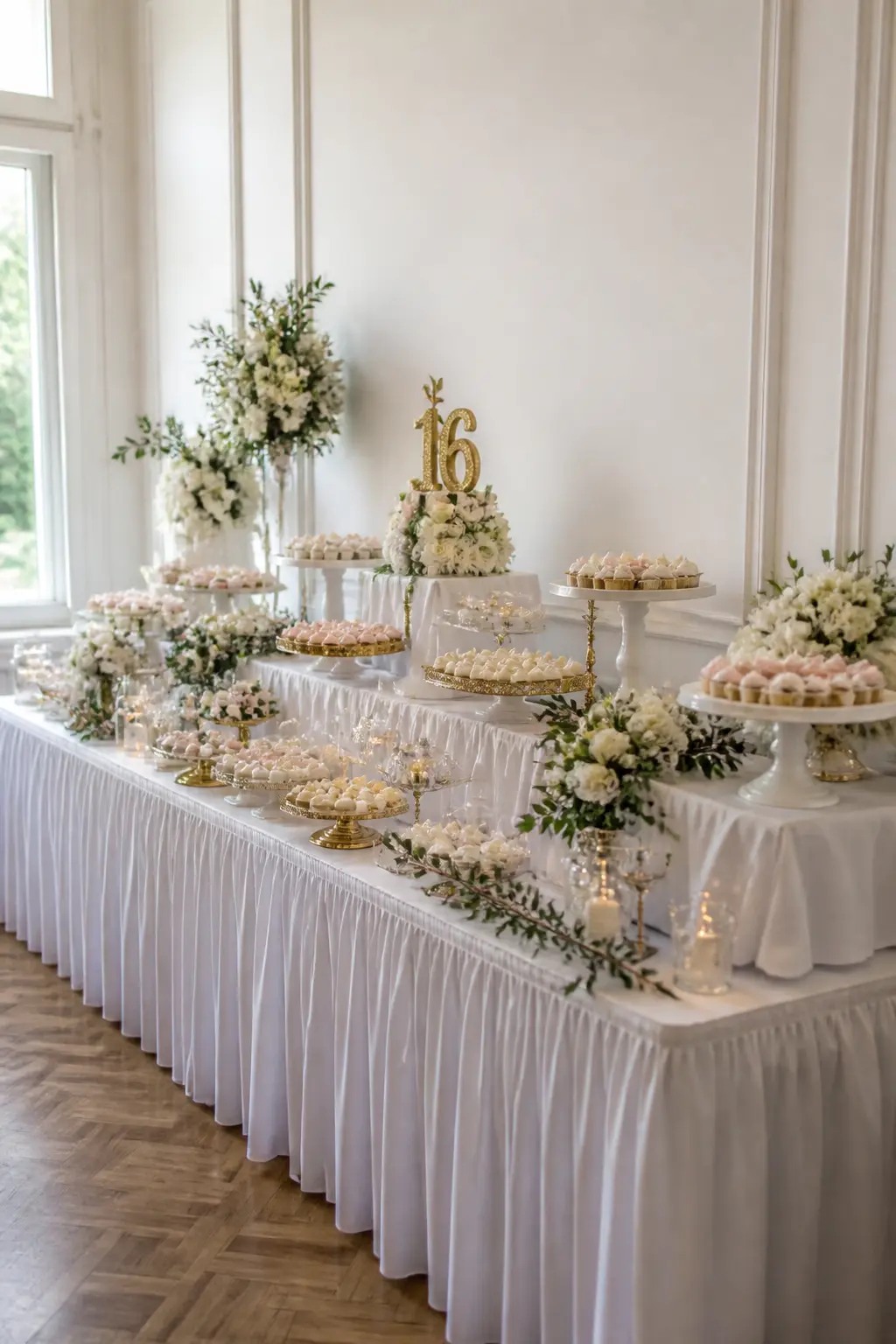
A flat dessert table is a cafeteria. A tiered one is a display, and the difference is height, not spending.
Three or four tiers built from cake stands, risers, and a few stacked boxes under a cloth give the table a visual structure that reads as intentional from across the room. Macarons, petit fours, chocolate-dipped strawberries, and one or two larger confections fill the levels. The palette stays within the party’s range: pearl, ivory, soft sage, warm gold.
Place a number sixteen somewhere in the arrangement, either as a pressed sugar decoration on the largest item or as a small gold foil numeral on a pick. It photographs well and keeps the table anchored to the occasion rather than looking like a patisserie window.
🛍 Shopping guide
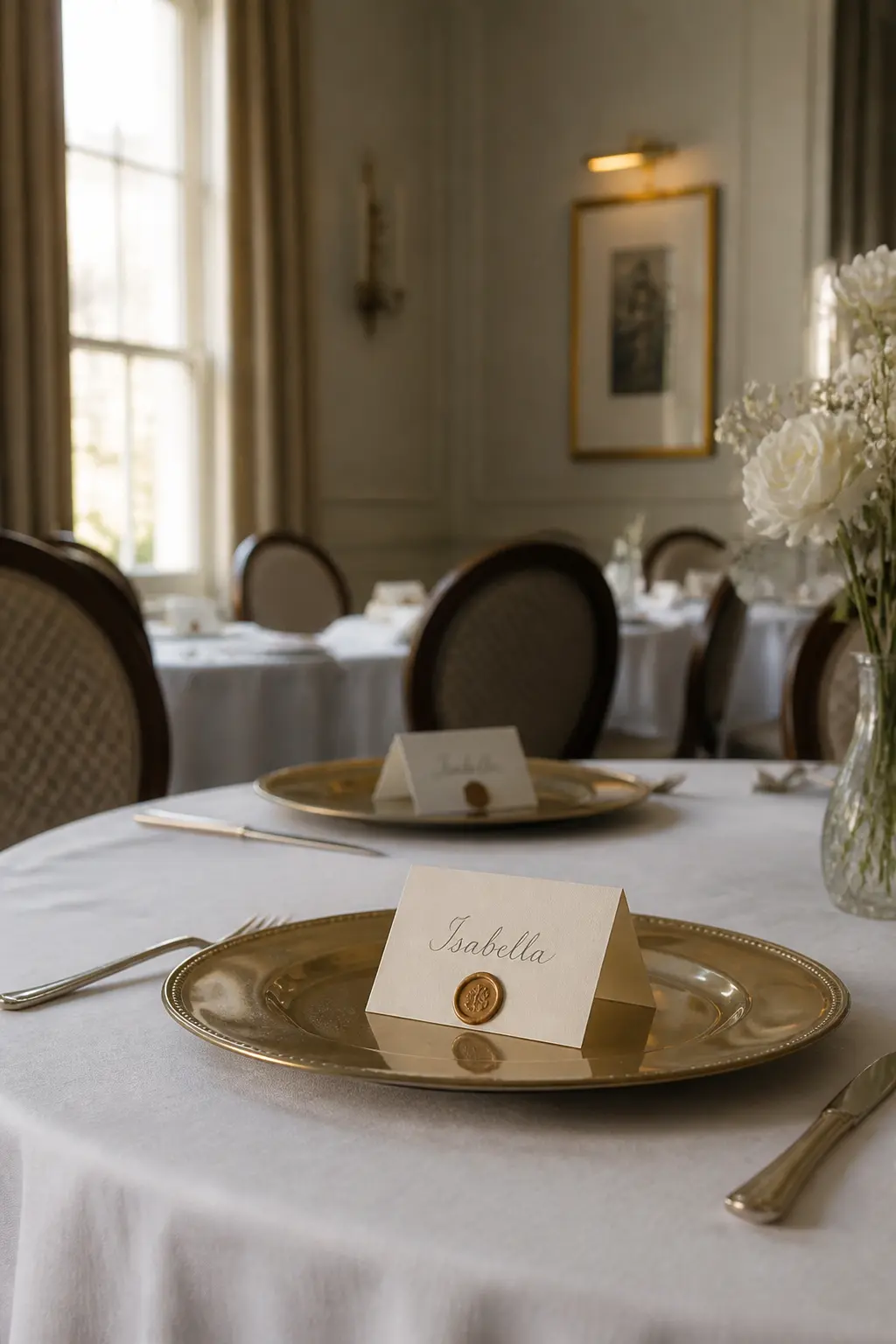
Place Cards Written by Hand
Printed place cards say the name was typed into a template. Handwritten place cards say someone held a pen and thought of that specific guest.
The card itself can be simple: a folded white or ivory card, a name in ink, a small wax seal or pressed flower on the front. What matters is the handwriting, which should be consistent and legible. If calligraphy is not in the budget, a careful hand in black ink on good card stock reads better than a font that pretends to be calligraphy.
For a large guest list, assign the writing task early and work in batches over several evenings. One hundred names in one sitting produces tired lettering by the end. Fifty names twice produces a consistent result throughout.
🛍 Shopping guide
The Ceremony Moments
These are the four or five minutes guests remember for years. They require almost no budget and almost no rehearsal, just a clear cue and a quiet room.
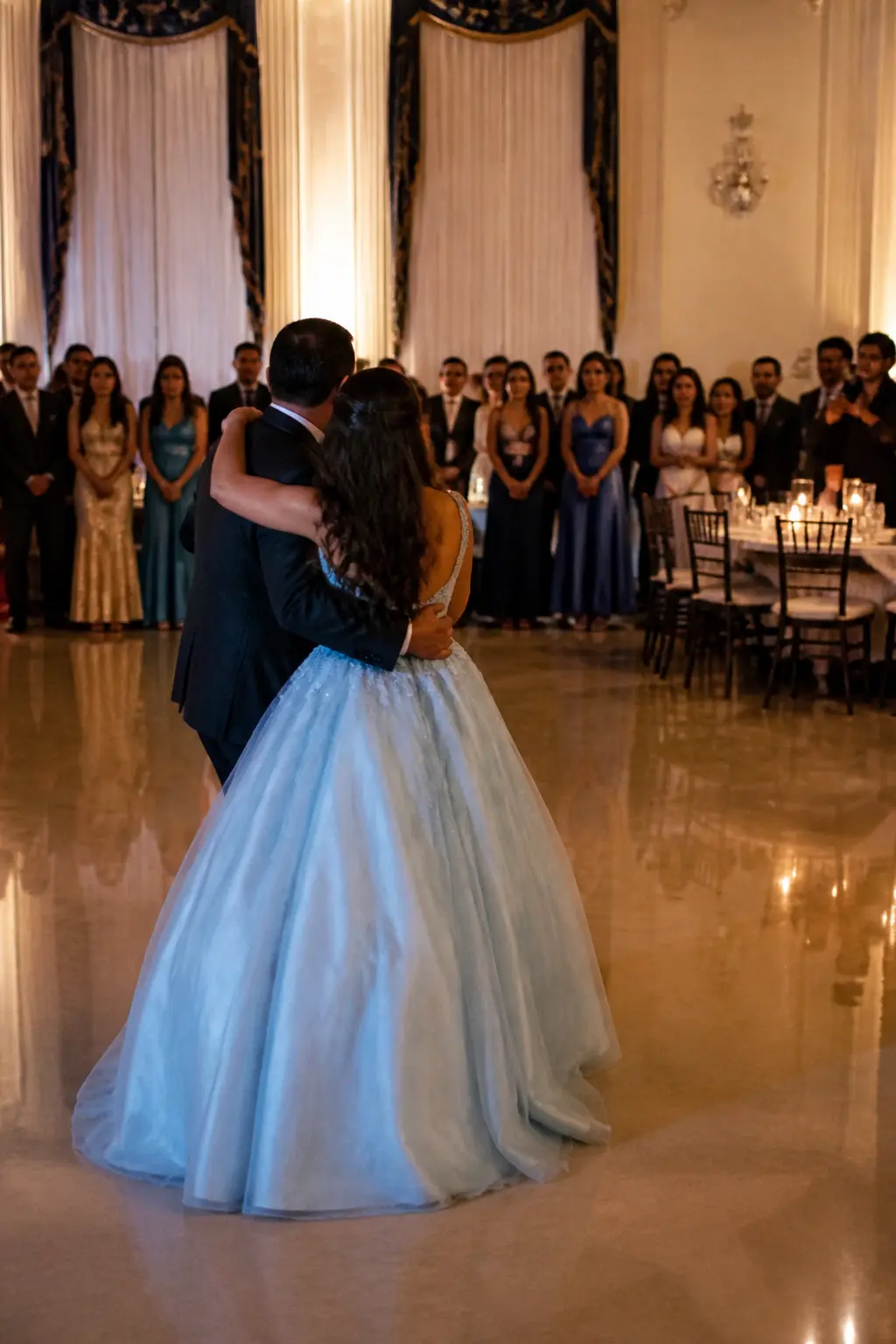
The First Dance With Her Father
Most birthday parties have dancing. A formal sweet sixteen has one dance that everyone watches, and that difference in structure turns background music into a ceremony.
The floor clears. Guests move to the edges of the room. A song chosen weeks in advance starts, and the birthday girl dances with her father for three minutes while everyone watches. No instructions needed, no MC script beyond a single sentence of introduction. The silence from the room does the rest.
The choice of song matters more than the choreography. A piece of music that already means something to the family lands harder than one chosen for tempo. Keep the dance to one song, never two. One song ends cleanly. Two songs outlast the room’s attention.
🛍 Shopping guide
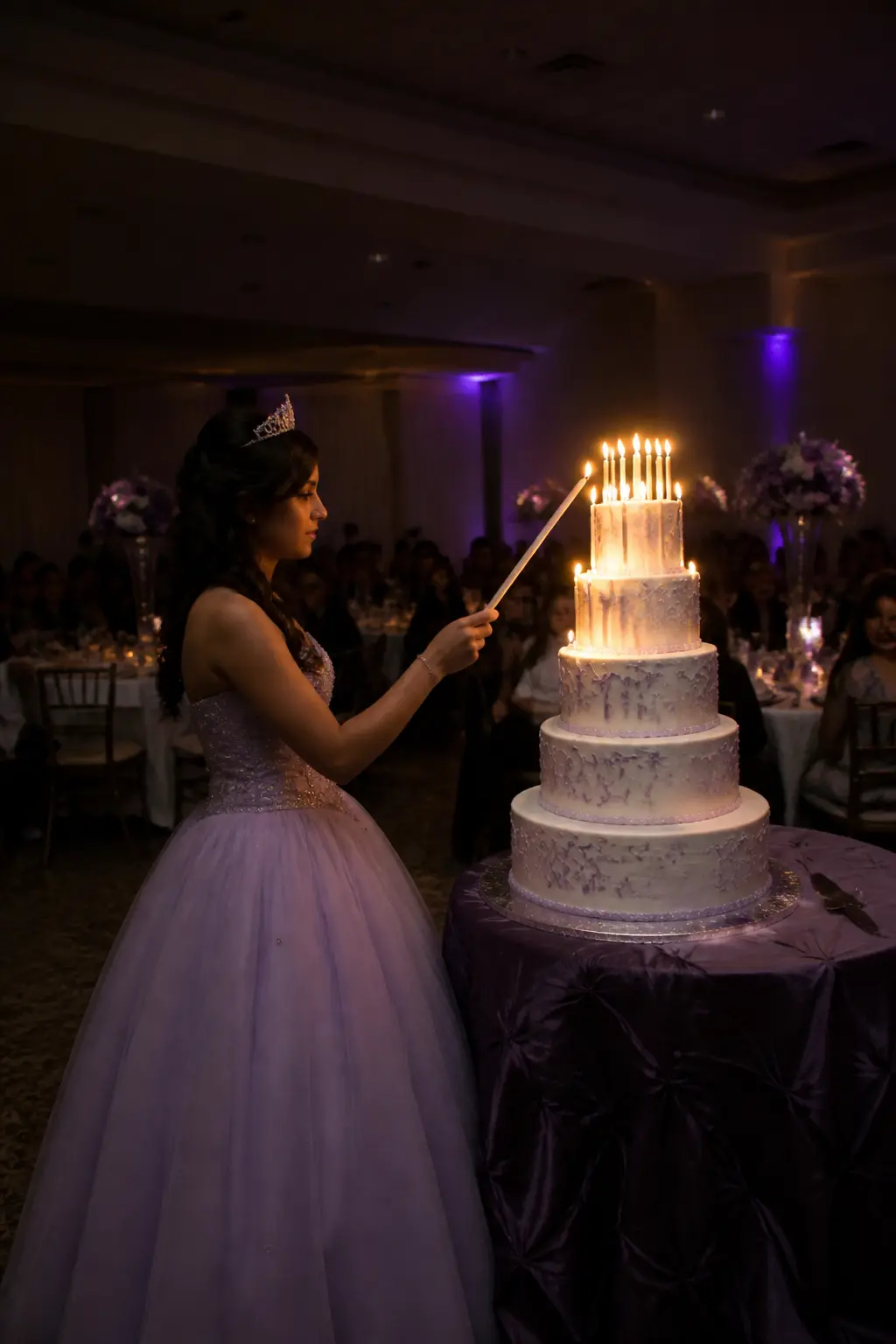
Candle Lighting for Sixteen People
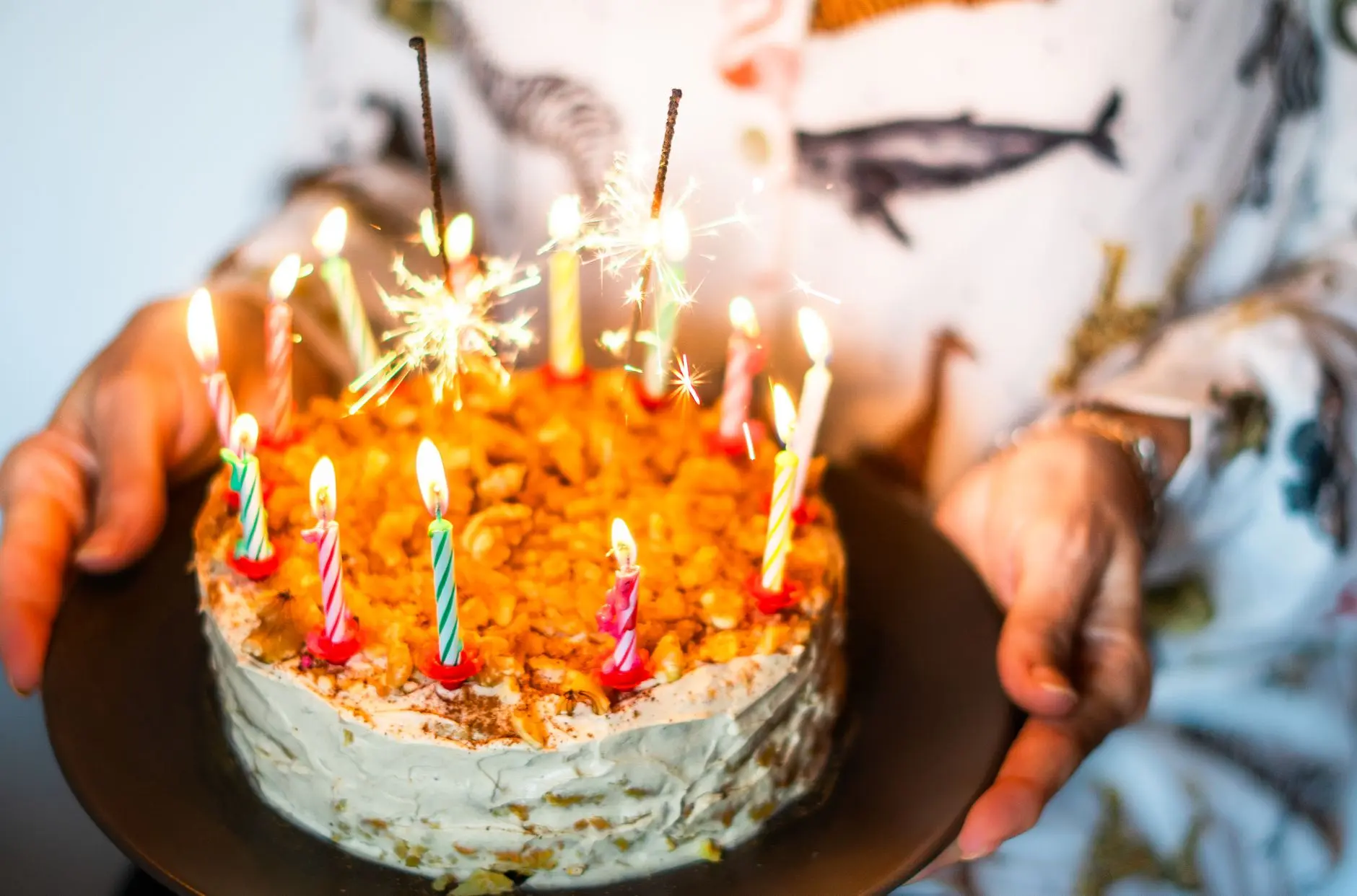
At a casual party, candles on a cake are blown out in a second. At a formal sweet sixteen, the candle lighting is its own choreographed segment: sixteen people called by name, each one walking up to light one candle on a tiered candelabra or on the cake itself.
Each person called receives a short dedication, spoken by the birthday girl or by an MC. Thirty seconds per person, no longer. Sixteen people at thirty seconds each is eight minutes, which is exactly the right length: long enough to feel significant, short enough that nobody shifts in their seat.
The birthday girl holds a taper. Each guest takes the flame from her. The visual builds from one lit candle to sixteen, and the room gets warmer and brighter as it goes. That progression is the whole point of the tradition, and no other element in the evening replicates it.
🛍 Shopping guide
The Camera Moments
Photographs made at a formal event look completely different from snapshots. The difference is almost never equipment. It is light, framing, and giving people a reason to stand still.
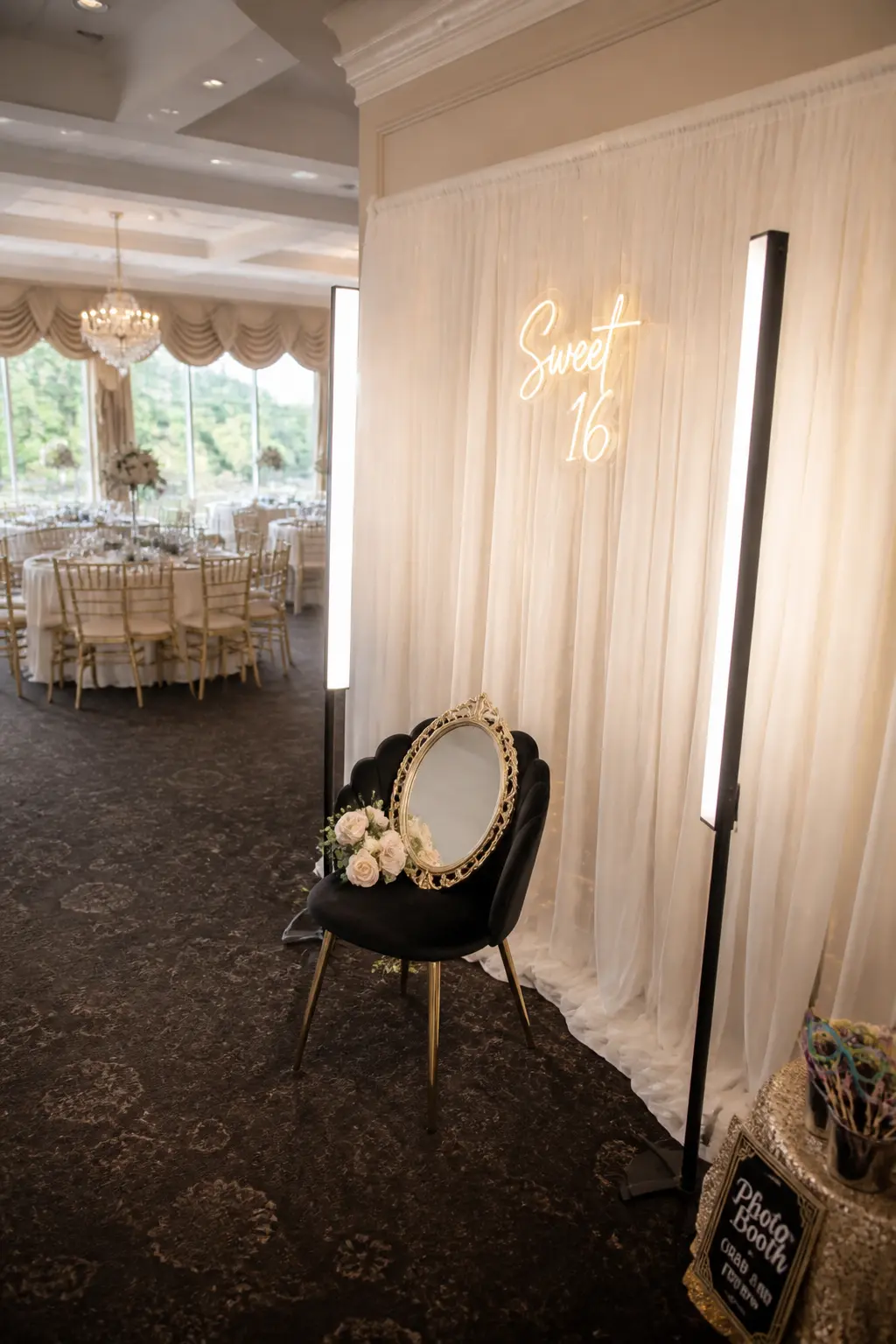
The Photo Booth With Proper Lighting
A photo booth at an ordinary party is a corner with a ring light and a basket of plastic props. A photo booth at a formal sweet sixteen is a considered space: a backdrop that matches the room, a softbox or two LED panels positioned at 45 degrees, and props that fit the dress code.
Feather fans, pearl-handled mirrors, small bouquets, a gold frame held at arm’s length: these read as party accessories rather than costumes, which means guests in formal wear will actually use them. A phone on a tripod with a remote shutter works perfectly. A hired photo booth attendant with a DSLR works better.
Position the booth away from the dance floor so the light is not competing with coloured party lights. The photographs will look like portraits, not outtakes, and that is what gets framed.
🛍 Shopping guide
The Getaway Photograph at the End
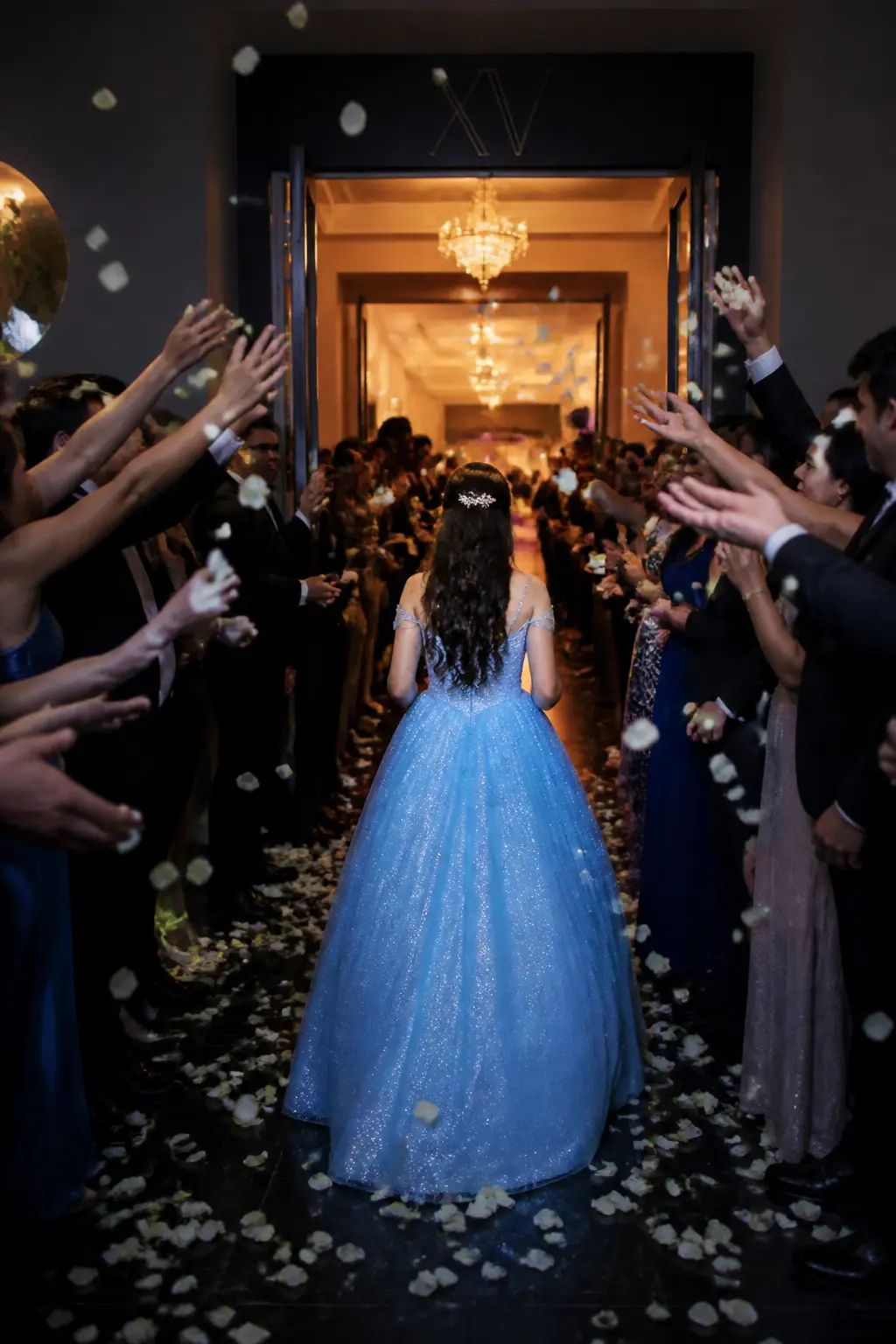
Most parties end with guests drifting out and the birthday girl standing by the door looking tired. The getaway photograph replaces that drift with a planned final image: the birthday girl leaving the venue, guests lined up on either side, a shower of petals or biodegradable confetti falling as she walks through.
This takes ten minutes to organise and produces one photograph that will be framed. Brief the photographer in advance. Gather the guests five minutes before the end. Hand out the confetti or petals at the door. One walk-through, one pass of the camera, and it is done.
She does not actually leave. She walks through, turns around, and comes back in. But in the photograph she is moving toward something, the dress is in motion, the light catches the confetti, and the room full of people she loves is behind her. That image is the one that goes on the wall, and it costs nothing beyond the planning to make it happen.
🛍 Shopping guide
Words and Keepsakes
Paper things and spoken things are the ones she keeps. A guest book from this party, a two-minute speech, a slideshow compiled once: these cost almost nothing and last the longest.
A Guest Book Signed on the Way In
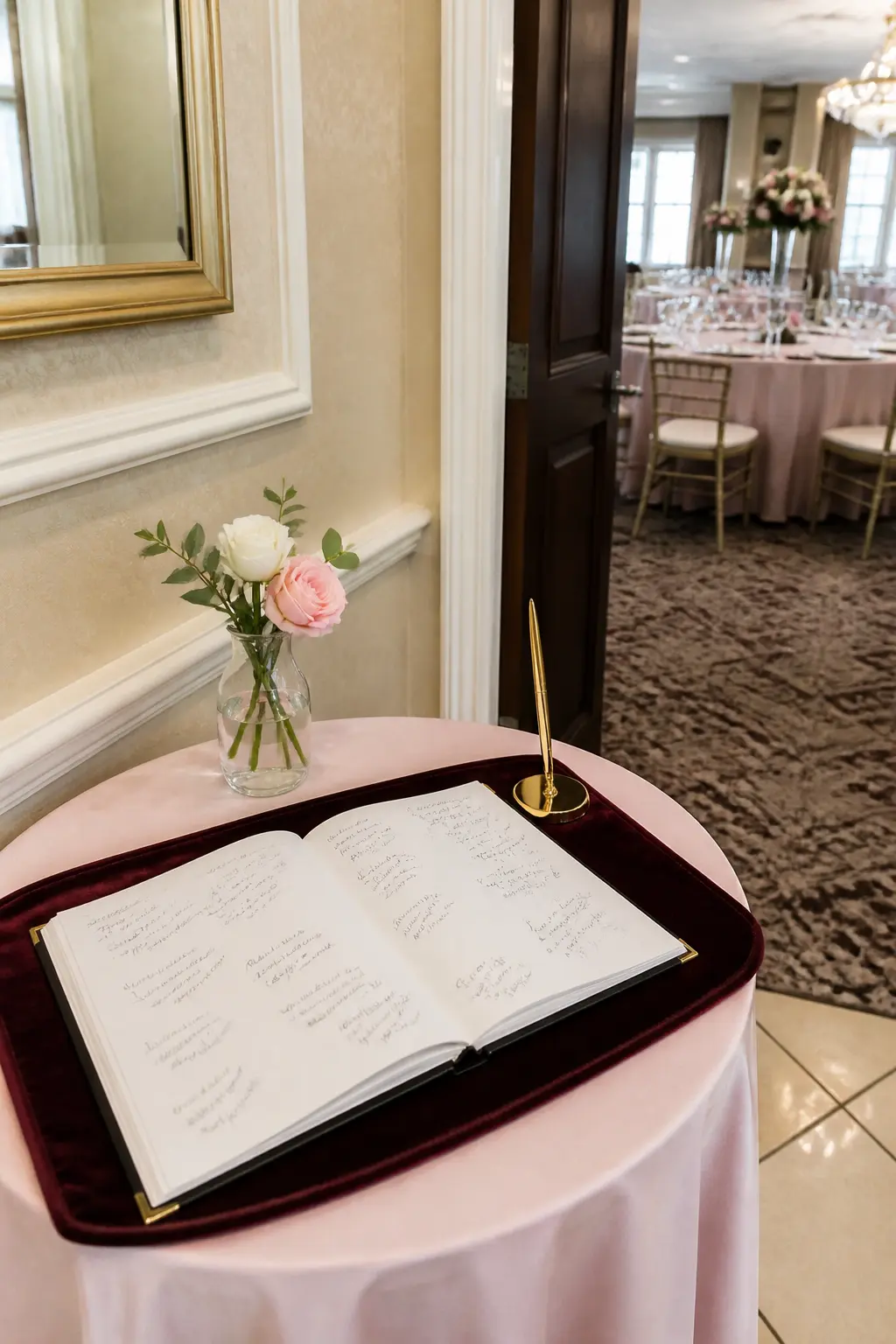
A guest book at the end of the night gets three signatures and a spilled drink. A guest book on the way in, staffed by a family member with a pen ready, gets everyone.
Position it at a small table just past the backdrop, so the signing happens as a natural next step after the entrance photograph. A fine-tipped pen in black or gold, a prompt printed at the top of the page (a single question: a memory, a wish, a piece of advice), and a family member on hand to encourage the shy ones.
The book itself should be hardbound and properly sized. A flimsy notebook reads as an afterthought. A bound journal with the birthday girl’s name embossed or printed on the cover reads as something worth keeping. She will read every entry by midnight and read them again at twenty-five.
🛍 Shopping guide
The Speech Kept to Two Minutes
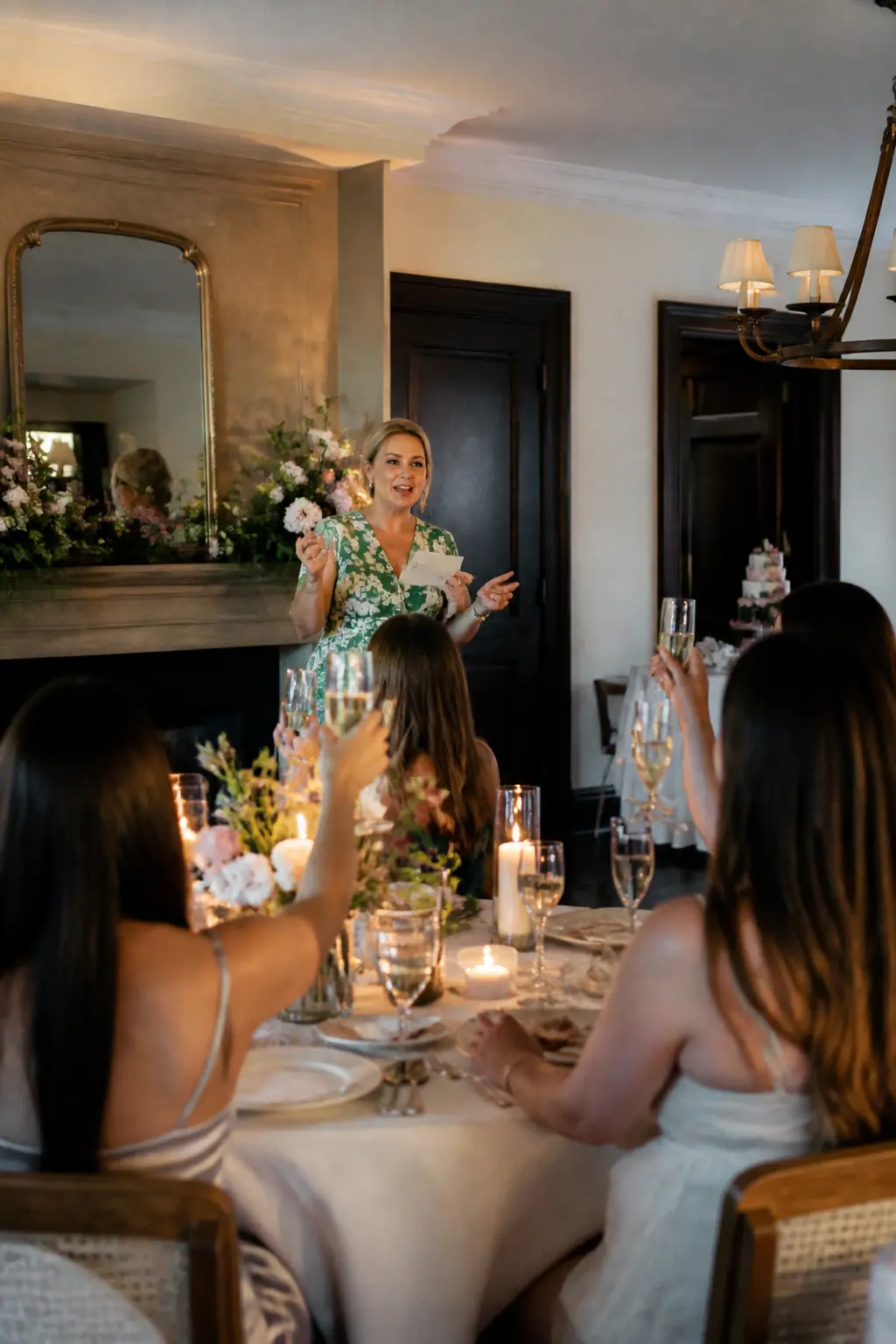
A long speech at a party is an act of generosity that stops feeling generous at the four-minute mark. Two minutes is exactly right: long enough for one story, one truth, and one wish.
Whoever gives it, parent or both parents or a close family friend, writes it down and reads from the page. Reading from a page is not a sign of nerves. It is a sign of respect for the room’s time. A prepared speech that runs two minutes is a gift. An improvised speech that runs seven is an endurance test.
End with a toast, not a question. A question directed at the room (“can we all agree she is amazing?”) loses the moment. A toast with raised glasses and a clean sentence closes the room in a single beat and sends the evening forward.
A Slideshow of the Sixteen Years
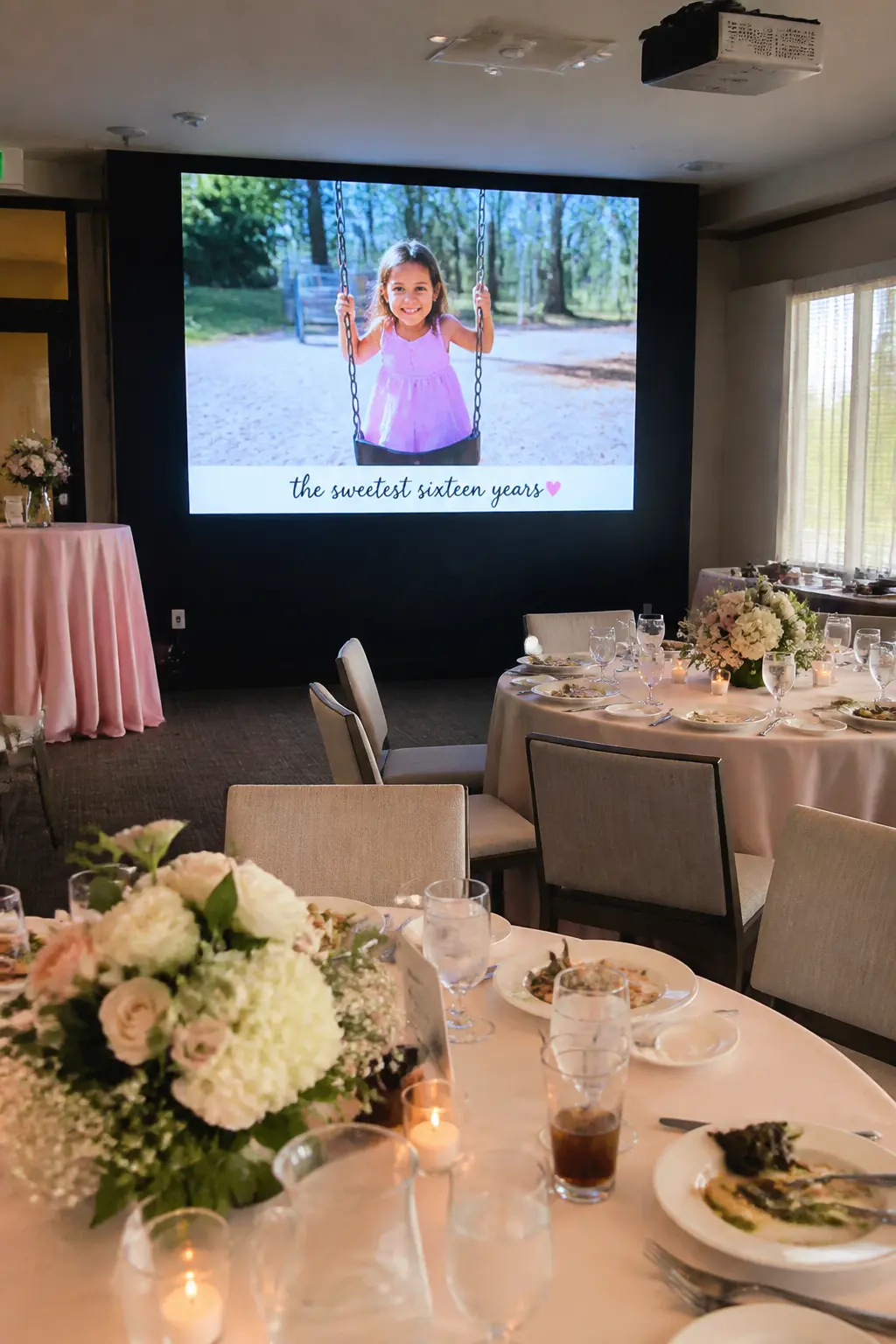
A slideshow at an ordinary party is photographs set to music on a laptop. A slideshow at a formal sweet sixteen is a five-to-seven-minute edited film with titles, a considered soundtrack, and photographs sourced from the whole family, not just the phone camera roll.
Contact grandparents, aunts, family friends. Ask for early photographs, school photographs, holiday snapshots, and any image that captures something that no longer exists: a room she grew up in, a pet, a beloved teacher. Those are the images that make the room go quiet.
Play it during dinner, not at the end. Guests watch while eating, which means their hands are occupied and their eyes are free. It runs, it finishes, the evening continues. If you save it for the end, half the room is thinking about the car park. For a party where the table design is also doing real work, the Baseball Drip Birthday Party article has useful notes on how to layer visual storytelling into a celebration that has a strong theme.
The Sweet Finish
The end of the party is as important as the beginning. A favour at the door, a cake cut while everyone is still present, a final photograph: these close the evening with the same intention it opened with.
Favours Wrapped and Handed Out at the Door
Favours left on a table get forgotten. Favours handed directly to a guest as they leave are the last impression of the evening, which makes them worth doing properly.
Station two people at the exit, each holding a small tray or basket of wrapped favours. The handoff takes three seconds and produces a moment of eye contact, a thank-you, and a small wrapped object the guest carries home. That sequence is worth more than a prettier favour left unattended on a table.
The favour itself: a small candle in a frosted glass, a tin of loose-leaf tea, a single macaron in a sealed box, a small bottle of locally made honey with a printed label. Keep it one thing, well-wrapped, with a small card that reads “Thank you for celebrating with us.” The wrapping should match the room: ivory tissue, a ribbon in the party’s palette, a wax seal if the budget allows.
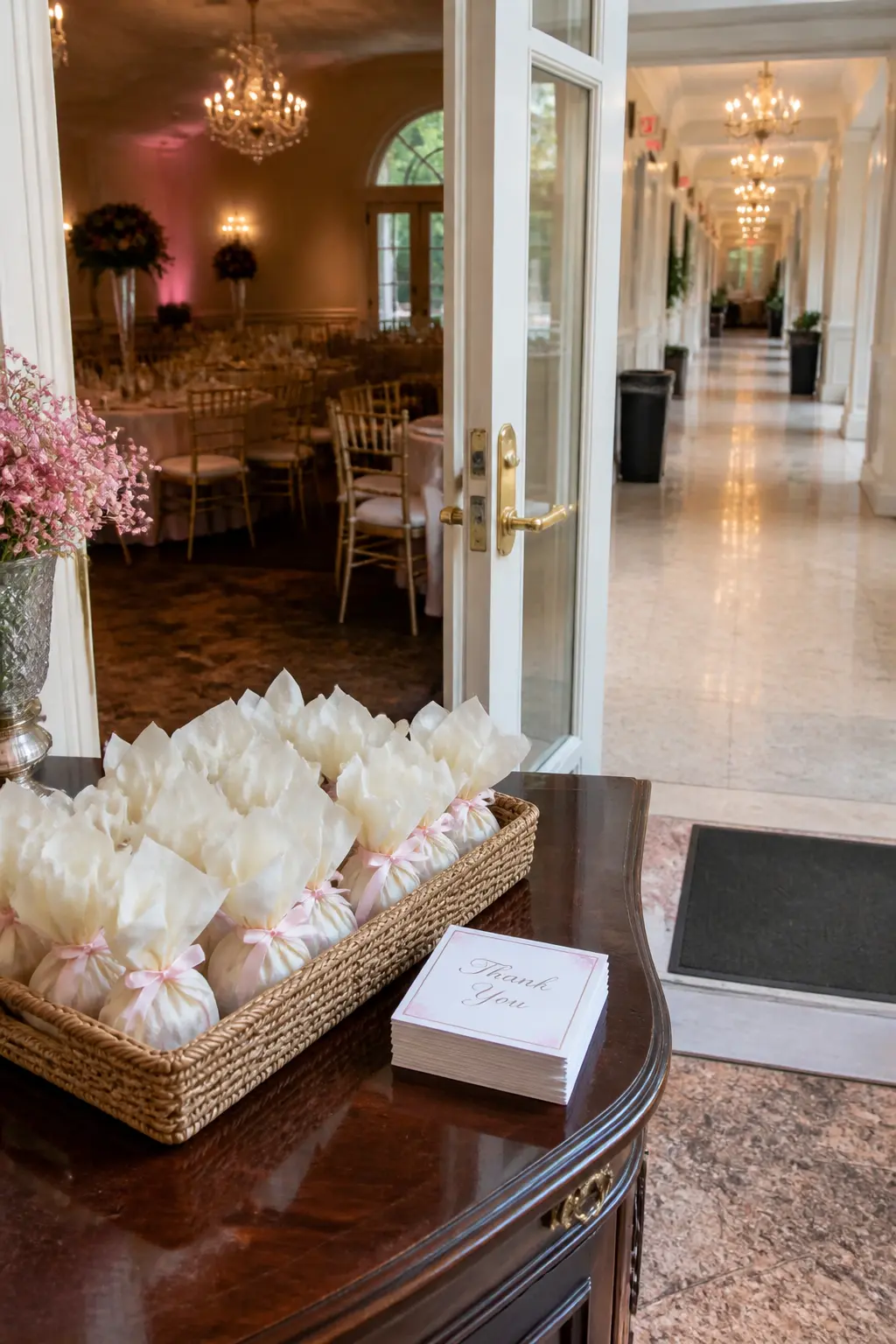
🛍 Shopping guide
The Cake Cut Before Anyone Leaves
At a casual party, the cake is cut when someone remembers. At a formal sweet sixteen, the cake cutting is a scheduled moment and it happens while the room is still full.
The MC announces it, the music lowers, the guests gather. The birthday girl holds the knife (usually with a parent’s hand over hers), the candles on the cake are the only ones still lit in that part of the room, and everyone sings. The whole thing takes four minutes.
A tiered cake with a gold number sixteen topper photographs from every angle. Distribute the slices immediately so guests are eating cake while still at the party, not wrapping it in a napkin to take home. A cake eaten in the room is a shared experience. A cake taken home in foil is a consolation prize.
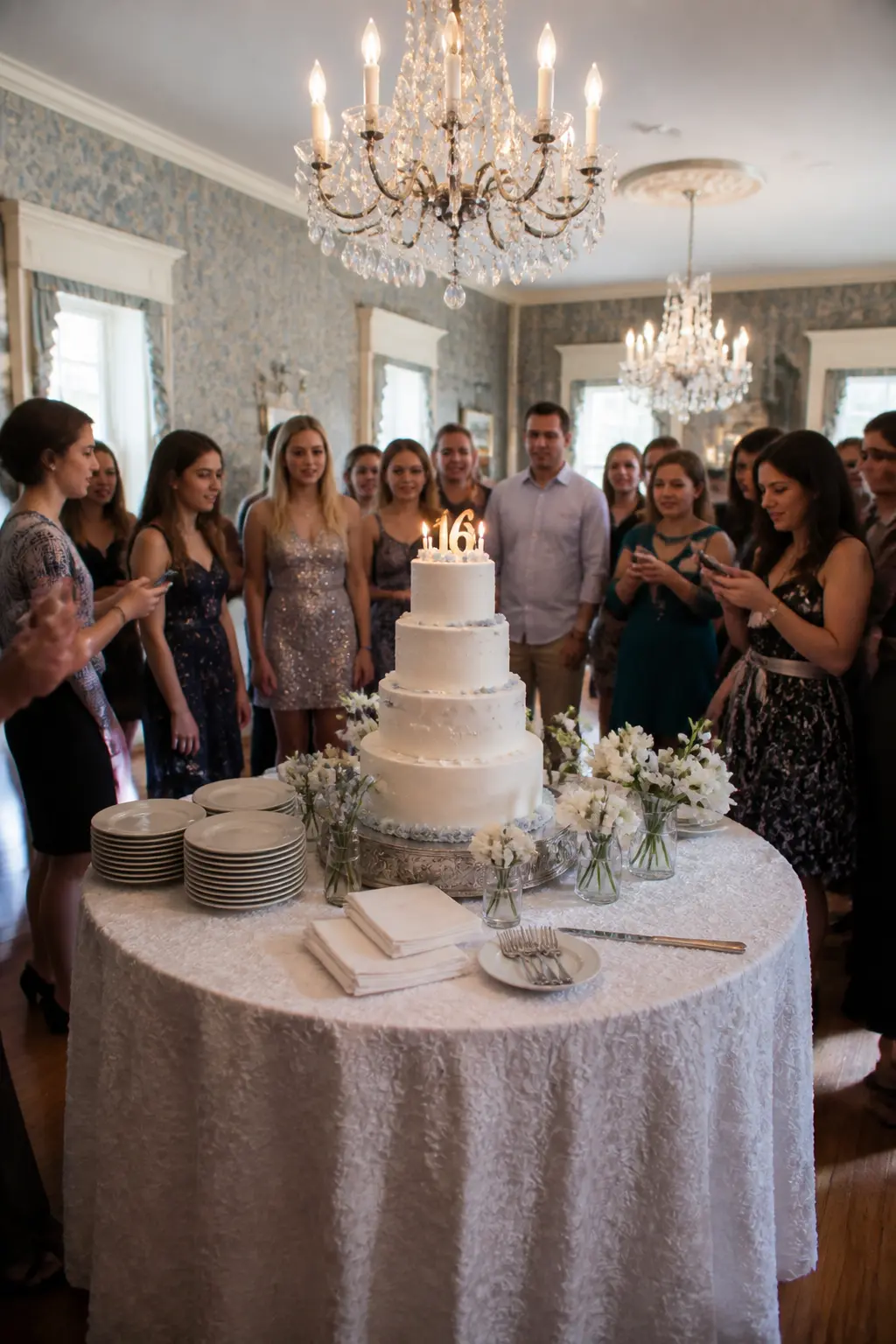
🛍 Shopping guide
What They Remember and What Nobody Notices
Guests remember three things from a formal sweet sixteen: the entrance, the candle lighting, and the first dance. Those are the moments that photograph well and carry an emotion that does not need explaining.
Nobody notices the exact shade of the napkins, whether the centrepieces were hired or owned, or whether the favours were tied with satin or grosgrain. If a detail only reads on close inspection, spend less on it than you planned.
The cake cut matters more than the cake design. The speech matters more than the speech-giver’s nerves. The guest book matters more at fifty than it does tonight. Put your energy where the memory lives, and let the rest be good enough.
Frequently Asked Questions
How far in advance should you book a venue for a formal sweet sixteen?
Twelve months is comfortable, eight months is manageable, and six months is the minimum for a weekend date at a proper venue with catering. Popular dates, particularly in spring and early summer, go earlier than that. Book the venue and the caterer first, then build everything else around those two confirmations.
How many guests is the right number for a formal sweet sixteen?
Between forty and eighty guests works well for the ceremony moments, particularly the candle lighting and the first dance. Fewer than forty makes the room feel empty even in a small venue. More than one hundred makes the candle lighting segment very long and the speeches harder to hear.
Does the birthday girl need to speak at her own party?
She should say something, but it does not need to be a speech. A brief thank-you to her parents and guests, thirty seconds at most, is enough. Writing it down in advance means she will not lose it in the moment. The parents’ speech does the heavier lifting.
What is a realistic budget for these thirteen elements?
The place cards, the speech, the slideshow, the getaway photograph, and the guest book on the way in cost almost nothing beyond time and materials. The venue, the seated dinner, the cake, and the photo booth with proper lighting are where the real spending happens. Prioritise the ceremony moments over the decorative details: the candle lighting costs almost nothing and is remembered by everyone.
Can the candle lighting work without a tiered candelabra?
Yes. Sixteen individual candle holders arranged on a low table, or sixteen candles placed directly on the birthday cake in a single tier, work just as well photographically. The candelabra looks more formal but is not essential. What matters is that the candles are lit one at a time by sixteen named people, in order, with a short dedication for each.
Thirteen formats that change what a fiftieth actually is, not just how it looks. Pick the shape that
Fourteen low-key setups for a 17th birthday at home: warm, low-lit, no ceremony, and every one tells
Fifteen 13th birthday party ideas for teens, each built around the one detail that makes guests reac
Leave a Reply