

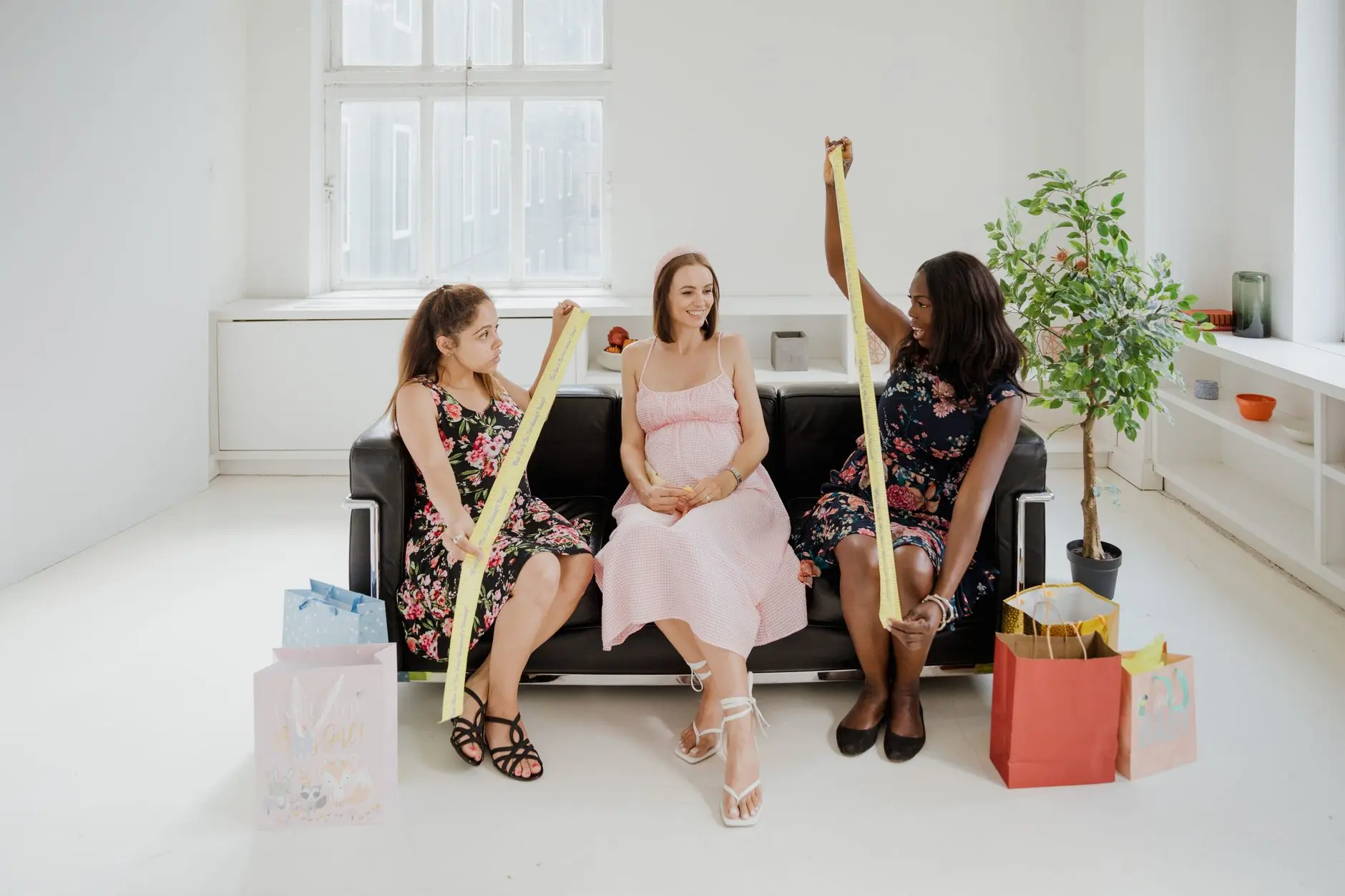
Baby shower games guess who formats give guests from different parts of the parents’ lives an easy reason to start talking. This set mixes printable sheets, quick group rounds and low-key card games, so nobody needs to know everyone before joining in.
This post contains affiliate links. If you buy through them, I may earn a small commission at no extra cost to you.
- Guess Who Said It, Mum or Dad
- Baby Photos Pinned Up With Numbers
- Guess Whose Baby Story
- The Voice Note Round Played Out Loud
- Two Truths About the Parents
- Find the Guest Bingo
- Guess Whose Handwriting on the Cards
- Who Is Most Likely To
- Guess Who Brought Which Gift
- The Handbag Round
- A Scorecard for the Whole Set
- Guess the Guest From the Story Clues
- Guess Who Will Claim the Baby Item
- Frequently Asked Questions
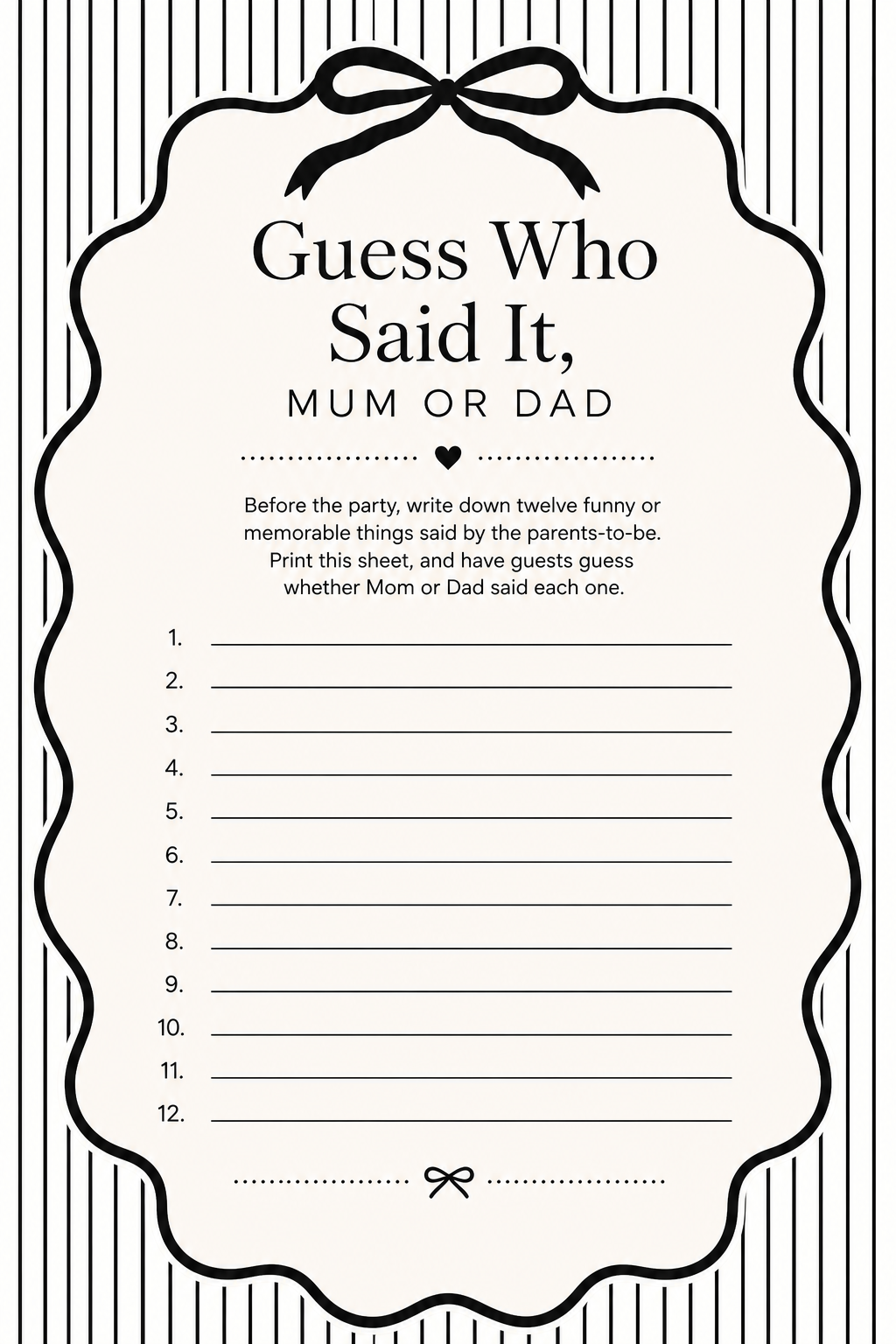
1. Guess Who Said It, Mum or Dad
Ask the parents to answer a set of statements before the shower, then hand each guest a quiz sheet. Guests decide whether Mum or Dad gave each answer, compare guesses in pairs and listen as the host reveals the results.
Allow 10 to 15 minutes for play, plus a few minutes for the reveal. Print one sheet per guest and collect the parents’ answers in advance, since the sheet works best when nobody can quietly interrogate the couple at the table.
The tricky part comes when both parents choose the same answer. Mark those as shared answers rather than forcing a winner, and award one point only for genuinely different responses. For more conversation, ask guests to explain one answer they found surprising.
For more low-cost printable options, browse these free printable baby shower games.
- Send the questions to both parents separately.
- Keep the answer reveal brisk and let the couple add one sentence of context.
2. Baby Photos Pinned Up With Numbers
Ask guests to bring or send a baby photo, pin every photo on a wall and give each one a number. Guests walk around, discuss family resemblances and write down which adult they think appears in each picture before the host reveals the owners.
Plan for 15 to 20 minutes, depending on the guest count. You need printed photos, number cards, removable tape or clips and a table for answer sheets. This works especially well when relatives and friends mingle in small groups instead of facing one silent wall alone.
Photos without clear faces make the round unnecessarily fussy. Ask for pictures where the person remains recognisable, and label any photo the host cannot identify before guests arrive. No printing is needed for the game itself beyond the photos and numbers, though guests may send digital images for the host to print.
- printed baby photos
- number cards from 1 to the guest count
- removable wall tape or small clips
🛍 Shopping guide
3. Guess Whose Baby Story
Before the shower, ask six guests to submit a short true story from their own babyhood. Read the stories aloud one at a time while everyone guesses which guest wrote each one, then let the writer explain the detail behind it.
Allow 15 minutes for six stories, or longer if the group loves a good detour. Ask for stories of two or three sentences, write each one on a card and keep the writer’s identity off the front so the guessing remains fair.
Long stories turn this into a reading assignment. Edit gently for length, avoid private medical details and choose stories with a small concrete detail, such as an unusual first word or a family nickname. This is one of the gentlest baby shower games guess who rounds for guests who prefer conversation to competition.
- mixed groups meeting for the first time
- guests who enjoy storytelling
- a quieter part of the shower

4. The Voice Note Round Played Out Loud
Invite guests to send a short voice note answering one baby-themed prompt, such as the first thing they remember about the parents. Play each recording without naming the sender, and let the room guess who is speaking before the owner claims the voice.
Give the host 20 minutes to collect and organise the recordings, then spend about 15 minutes playing them. A phone, speaker and simple numbered list will do the job. Keep each recording under 20 seconds so the round feels social rather than like a podcast nobody ordered.
Similar voices can make this harder than expected. Ask guests to include a distinctive phrase or detail, and let the host replay one recording once if the room is stuck. No printing is needed, just a phone, a speaker and permission from every person whose voice will play.
- Ask each guest to say their first name at the end, after the guessing pause.
- Use one prompt for everyone so answers remain easy to compare.
5. Two Truths About the Parents
Each card gives a guest space to write two true statements about the parents and one false statement. The host reads the cards aloud without naming the writer, and the group guesses both who wrote the card and which statement is untrue.
Use six cards for a 15-minute round, or add more cards for a larger shower. Give cards to guests who know the parents in different ways, such as a sibling, colleague, neighbour and university friend, so the details introduce people rather than repeating the same family lore.
Statements that reveal private information can flatten the mood quickly. Set a rule that every fact must be kind and suitable for the whole room, and encourage specific but harmless details, such as a strange food preference or a memorable travel mishap.
If you like table-friendly formats, these baby shower card games make a useful companion pack.
- Give the cards to writers before guests arrive.
- Ask writers to circle the false statement privately on the back.

6. Find the Guest Bingo
Give every guest a bingo card filled with facts such as has known Mum since childhood or has changed a nappy before. Guests circulate, ask questions and write a different person’s name in each matching square until someone completes a row.
Allow 15 to 25 minutes and print one card per guest. Explain that a person may sign only one square on each card, which prevents one enthusiastic aunt from solving the whole sheet before anyone else has found the drinks.
Generic squares make guests skim rather than talk. Mix family, work, travel and friendship prompts, and include a few that require a story rather than a yes-or-no answer. There is no answer key or call list because the answers depend on the real guests in the room.
- Find a guest who matches each square.
- Write that person’s name in the square.
- Complete a row, column or diagonal and call bingo.

7. Guess Whose Handwriting on the Cards
Ask guests to write one short answer to the same prompt, such as What will make the parents laugh during the first month. Gather the cards, read them aloud and let guests guess the writer from the handwriting before the owner explains the answer.
Allow 10 to 15 minutes for eight to ten cards. Use identical cards and one pen style if possible, then mix relatives, friends and colleagues so the room hears different perspectives rather than a chorus from one social circle.
Very neat handwriting makes the mystery less mysterious. Ask guests to write naturally, keep answers short and avoid showing the cards around before the reveal. No printing is needed if you use blank stationery already on hand.
- The prompt gives strangers an immediate topic.
- The reveal invites a natural follow-up question.
8. Who Is Most Likely To
Place one card on each table or read the prompts aloud. Guests choose which parent is most likely to do each thing, then compare answers with people sitting nearby and hear the couple defend or accept the verdict.
Use six cards for a 10-minute round, or read all six as a short reset between food and gifts. Print the cards six per page, cut them apart and put a small stack near the host rather than asking every guest to hold a full sheet.
Keep the prompts affectionate, not accusatory. A question about who will overpack the nappy bag creates laughter, while a question about money, work or parenting competence can make new acquaintances wish for an emergency fire drill.
- a mixed or coed shower
- small groups seated around tables
- a quick game between larger activities

9. Guess Who Brought Which Gift
As gifts arrive, place a numbered card beside each one and keep the giver’s name hidden. Guests fill in who they think brought each gift, then the host reveals the names as the parents open the presents.
Use one card for every numbered gift, with four cards per printed page. Guests can complete the sheet during the gift opening, so the activity adds a little conversation without demanding a separate block of party time.
Large gifts and obvious wrapping can make this nearly too easy. Ask guests to use modest wrapping or reusable bags, and do not reveal the gift giver through a thank-you announcement until everyone has made a guess. There is no answer key because the host’s real gift list determines every answer.
- Number gifts as they arrive, not after the pile grows.
- Keep a private record of the giver and number.

10. The Handbag Round
Call out an item that might live in a handbag, such as a receipt, lip balm or a spare hair tie. Guests who have it hold it up, and the host chooses one person to explain why that item is currently in the bag before the room guesses whose story sounds most convincing.
Plan for 10 minutes and use five to seven prompts. You need no supplies, though a small bowl can hold the selected items if the host wants a visual finale. Keep the prompts broad enough for different ages and lifestyles, since not every guest carries a baby-sized emergency kit.
Do not turn this into a public audit of personal belongings. Let guests pass on any prompt, avoid asking anyone to empty a bag and choose harmless objects that invite a quick story. No printing is needed.
- Use prompts such as a handwritten note, a snack or an item older than one year.
- Let guests answer from a coat pocket or tote bag too.
11. A Scorecard for the Whole Set
Give each guest one scorecard and use it to track results across the day’s guess who games. Guests record points from the Mum or Dad quiz, photo round, story round, bingo and gift guesses, then the host announces the overall score at the end.
Print one scorecard per guest and explain the scoring before the first round begins. Keep one spare copy for anyone who arrives late, and allow two minutes between games for guests to update their totals without making the shower feel like an accounts meeting.
Not every game produces neat points, especially bingo and open-ended story cards. Decide that bingo earns one point for a completed line and that story or handwriting guesses earn one point for a correct writer, then leave the other rows blank unless that round genuinely has scoring.
- Use one point for each correct Mum or Dad answer.
- Use one point for each correct photo or gift owner.
- Use one point for a completed bingo line.

12. Guess the Guest From the Story Clues
Invite three or four guests to stand or sit together while the host reads clues about one of them, such as has worked with Dad, owns a dog and once travelled with Mum. The group guesses the person, then that guest adds the missing detail that connects them to the parents.
Allow 10 minutes for five rounds. The host needs a few facts gathered before the shower and should choose clues that identify someone gradually rather than giving away the answer in the first sentence.
Clues about jobs or family roles can identify people too quickly. Start with a broad connection, add a harmless detail and stop as soon as the room has enough information. This version works well when several guests have never met because every reveal creates a second conversation.
- Prepare three clues for each selected guest.
- Ask permission before using personal details, even harmless ones.
13. Guess Who Will Claim the Baby Item
Place several ordinary baby items on a table, such as a muslin cloth, a pacifier case and a tiny sock. Guests privately choose which person in the room is most likely to have used each item recently, then compare guesses and invite the named guest to tell the real story.
Use five items and allow 15 minutes. The host can borrow the objects from the nursery setup or use clean everyday baby supplies, arranging them where everyone can see without turning the game into a product demonstration.
Some guests may not have children, so avoid making parenthood the only route to a funny answer. Include objects linked to grandparents, siblings, workmates and friends, and accept a plausible explanation when more than one person fits. No printing is needed.
- The objects give strangers something concrete to discuss.
- Every answer can lead to a short personal story.
Frequently Asked Questions
How do baby shower guess who games help guests mingle?
They give strangers a specific question to ask each other, so conversation starts with a clear purpose instead of awkward introductions. Choose formats that use real guest facts, shared stories or the parents’ answers.
Which baby shower games guess who formats need the least preparation?
The handbag round, voice note round and handwriting round need very little equipment. The host still needs to collect a few stories or recordings in advance if the game relies on personal clues.
Do these games work for a coed baby shower?
Yes. Photo matching, gift guessing, Find the Guest Bingo, voice notes and Two Truths About the Parents suit mixed groups because they focus on relationships and stories rather than gendered party roles.
How many games should a baby shower host actually play?
Choose four to six games for a typical two- to three-hour shower. Use one longer mingling game, two short printable rounds and one relaxed activity during food or gift opening.
Should every guest receive every printable sheet?
No. Print one sheet per guest for bingo and the full scorecard, but use six-up cards for story and opinion rounds. Gift cards work best as one card per numbered gift rather than one large packet.
Do any of these games need an answer key?
No universal key works for these formats because the answers depend on the parents, gifts, photos and real guests. Record the relevant answers privately before the shower, then reveal them during play.
Modern baby shower activities for an adult shower, including printable bingo, trivia, photo matching
Choose a twin baby shower theme with twelve polished looks, from boho rainbow to vintage teddy bear,
Baby shower balloon decorations do not have to take over the room. These 11 restrained ideas place o
Leave a Reply